Perspectives; Thoughts; Comments; Opinions; Discussions

Posts tagged ‘Campus’

Pro-Palestine Protesters Defy Columbia Deadline to Disband or Be Suspended


Monday, 29 April 2024 03:10 PM EDT

Read more at https://www.newsmax.com/newsfront/israel-palestinian-campus-student-protests-war/2024/04/29/id/1162810/

Colleges around the U.S. implored pro-Palestinian student protesters to clear out tent encampments with rising levels of urgency Monday, including an ultimatum from Columbia University for students to sign a form and leave the encampment by the afternoon or face suspension.

Columbia activists defied the 2 p.m. deadline with chants, clapping and drumming from the encampment of more than 300 people. No officials appeared to enter the encampment, with at least 120 tents staying up as the deadline passed.

The notice sent Monday by the Ivy League university in Manhattan to protesters in the encampment said that if they left by the deadline and signed a form committing to abide by university policies through June 2025 or an earlier graduation, they could finish the semester in good standing. If not, the letter said, they will be suspended, pending further investigation.

Early protests at Columbia, where demonstrators set up tents in the center of the campus, sparked pro-Palestinian demonstrations across the country. Students and others have been sparring over the Israel-Hamas war and its mounting death toll. Many students are demanding their universities cut financial ties with Israel. The number of arrests at campuses nationwide is approaching 1,000.

College classes are wrapping up for the semester, and campuses are preparing for graduation ceremonies, giving schools an extra incentive to clear encampments. The University of Southern California canceled its main graduation ceremony this spring. Others are asking the protests to resolve peacefully so they can hold their ceremonies.

Fewer new tent encampments have sprouted around the country as the school year winds down. But students have dug in their heels at tent encampments at some high-profile universities, with standoffs continuing between protesters and administrators at Harvard, the University of Pennsylvania, Yale and others.

Protesters at Yale set up a new camp with dozens of tents Sunday afternoon, nearly a week after police arrested nearly 50 and cleared a similar one nearby. Later Sunday, they were notified by a Yale official that they could face discipline, including suspension, and possible arrest if they continued the encampment on a grassy area known as Cross Campus, protesters and school officials said. No deadline to leave was set.

Yale said in a statement Monday that while it supports peaceful protests and freedom of speech, it does not tolerate policy violations such as the encampment. School officials said that the protest is near residential colleges where many students are studying for final exams, and that permission must be granted for groups to hold events and put-up structures on campus.

Protests were also still active at a number of other campuses. Near George Washington University, protesters at an encampment breached and dismantled the barriers Monday morning used to secure University Yard, the university said in a statement. The yard had been closed since last week.

About 275 people were arrested Saturday at various campuses including Indiana University at Bloomington, Arizona State University and Washington University in St. Louis.

In its letter to student protesters, Columbia officials noted that exams are beginning, and graduation is upcoming.

“We urge you to remove the encampment so that we do not deprive your fellow students, their families and friends of this momentous occasion,” the letter said.

Mahmoud Khalil, the lead negotiator on behalf of protesters, said university representatives began passing out the notices at the encampment shortly after 10 a.m. Monday. A spokesperson for Columbia confirmed the letter had gone out to students but declined to comment further.

Under the terms spelled out in the letter, students who leave the encampment would be put on disciplinary probation through June 2025. Students who are already receiving discipline, or who face harassment or discrimination charges for actions in the encampment, are not eligible for the offer.

Red and orange tents stayed up on the lawn as protesters considered the latest amnesty offer from the administration. A hundred feet away, a student cafe was open, and people enjoyed coffee in the warm spring sun.

On one side of the shuttered campus, students and staff lined up for security checks across the street from a cluster of TV trucks. At the other side, a police officer stood next to an unmarked black sedan with blue and red lights quietly flashing.

The demonstrations have led Columbia to hold remote classes and set a series of deadlines for protesters to leave the encampment, which they have missed. The school said in an email to students that bringing back police “at this time” would be counterproductive.

The students and administrators have negotiated to end the disruptions, but the sides have not come to an agreement, university President Minouche Shafik said in a statement Monday. The university said it will offer an alternative venue for the protests after exams and graduation.

Columbia’s handling of the protests has prompted federal complaints.

A class-action lawsuit on behalf of Jewish students alleges a breach of contract by Columbia, claiming the university failed to maintain a safe learning environment, despite policies and promises. It also challenges the move away from in-person classes and seeks quick court action requiring Columbia to provide security for the students.

Meanwhile, a legal group representing pro-Palestinian students is urging the U.S. Department of Education’s civil rights office to investigate Columbia’s compliance with the Civil Rights Act of 1964 for how they have been treated.

The plight of students who have been arrested has become a central part of protests, with the students and a growing number of faculty demanding amnesty for protesters. At issue is whether the suspensions and legal records will follow students through their adult lives.
Copyright 2024 The Associated Press. All rights reserved. This material may not be published, broadcast, rewritten or redistributed without permission.

Boston University Requires Faculty To Say They Should ‘Intervene’ If a Woman Is Encouraged To Have Children


Reported by Aaron Sibarium | December 14, 2021

Read more at https://www.conservativereview.com/boston-university-requires-faculty-to-say-they-should-intervene-if-a-woman-is-encouraged-to-have-children-2656024135.html/

Mandatory Title IX training violated school’s own free speech policies, critics say

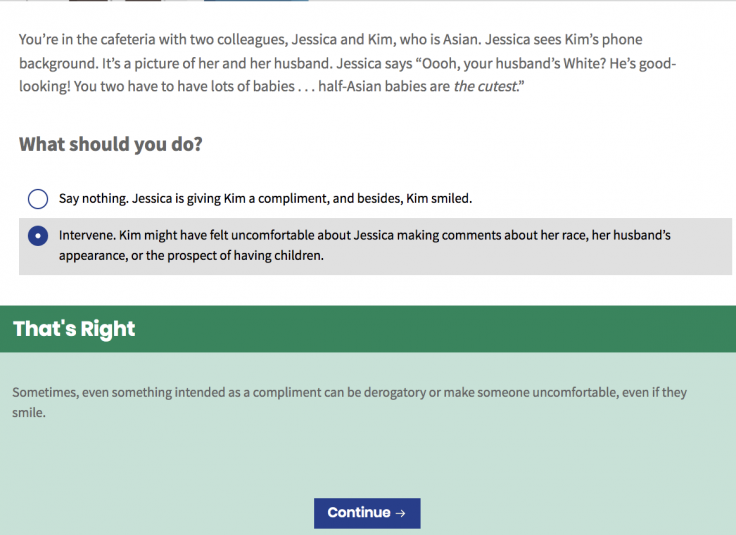
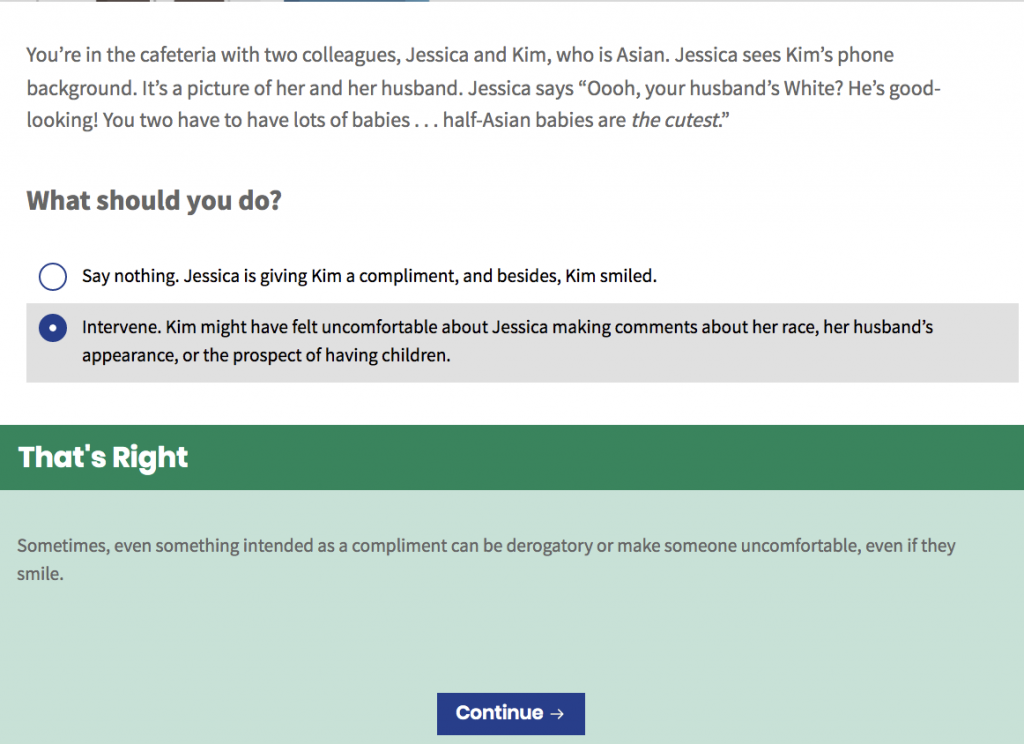
A screenshot of Boston University’s mandatory Title IX training this semester.

Boston University is requiring all students and faculty to affirm that they should “intervene” if a woman is complimented on her husband or encouraged to have children, guidance transmitted during a mandatory Title IX training this semester.

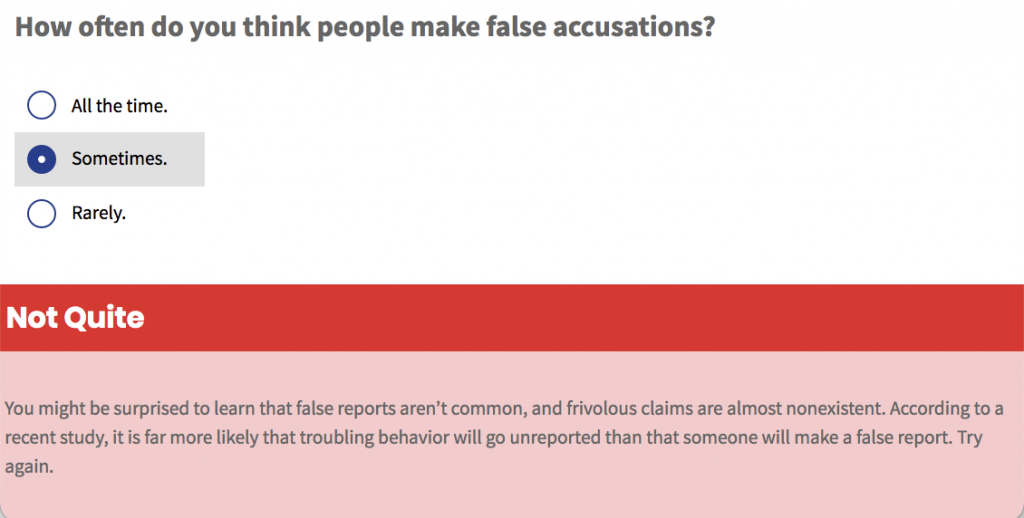
The training included multiple-choice questions that had to be answered correctly in order to complete it. Some questions were empirical—”How often do you think people make false allegations?”—while others asked about the appropriate course of conduct in a given scenario. Faculty who did not complete the training would “not be eligible for merit-based salary increases,” the school said in a campus-wide email, with further penalties possible for “continued non-compliance.” Students who did not complete it would “be blocked from registering next semester,” according to the university’s website.

Several scenarios involved “bystander intervention,” the idea that onlookers should prevent harassment by inserting themselves into potentially inappropriate encounters. In one vignette, an Asian woman is told that her white husband is “good-looking” and that “half-Asian babies are the cutest.” Asked “what should you do,” students and faculty were forced to select “Intervene” to advance through the training. Even though the woman “smiled” at the compliment, the training explains, she still “might have felt uncomfortable” about comments relating to “her race, her husband’s appearance, or the prospect of having children” itself.

The training also required students and faculty to affirm that people “rarely” make false accusations. “You might be surprised to learn that false reports aren’t common, and frivolous claims are almost nonexistent,” the training says. “Sometimes” was not an acceptable answer—though one study found that as many as two-thirds of hate crime accusations turn out to be false.

The training drew sharp criticism from the Foundation for Individual Rights in Education (FIRE), which told the Washington Free Beacon that Boston University was violating its own free speech policies.

“BU makes clear commitments to free expression and academic freedom, and that includes the right to be free from compelled speech,” FIRE’s Aaron Terr said. But to complete the training, students and faculty “must select the university’s preferred answers as their own,” Terr explained.

“This is compelled speech and has no place at a university that promises its faculty expressive freedom,” Terr said.

Boston University did not respond to a request for comment.

The training, which was created by the education consultancy EVERFI and appears on the school’s “compliance services” website, demonstrates how the antidiscrimination law can become a Trojan Horse for compelled speech. Universities frame such compulsion as a way of complying with Title IX and other civil rights statutes, even when it goes far beyond what the law requires. Simply quizzing students and faculty on their legal obligations does not violate academic freedom, Terr said. But the Boston University training, which requires “them to express agreement with particular viewpoints,” does.

Boston University has seen several such violations since the summer of 2020. Between July and November of last year, the university’s theater and playwriting programs both adopted a policy of requiring “land acknowledgment[s]” before performances, with the theater program also requiring all instructors to “include a [Diversity, Equity, and Inclusion] statement in their syllabus.” In October, FIRE sent the university a letter of concern about both policies but has yet to receive a response.

Statutes like Title IX can give administrators cover for this sort of overreach. After Yale Law School’s “discrimination and harassment coordinators” pressured second-year law student Trent Colbert to write a pre-drafted apology for a “triggering” email, the dean of the law school, Heather Gerken, claimed the administrators were merely “attempting to carry out their obligations under university policy whenever discrimination complaints are filed.” She also invoked Title VI of the Civil Rights Act, which “oblige[s] the law school to ensure a learning environment free of discrimination.”

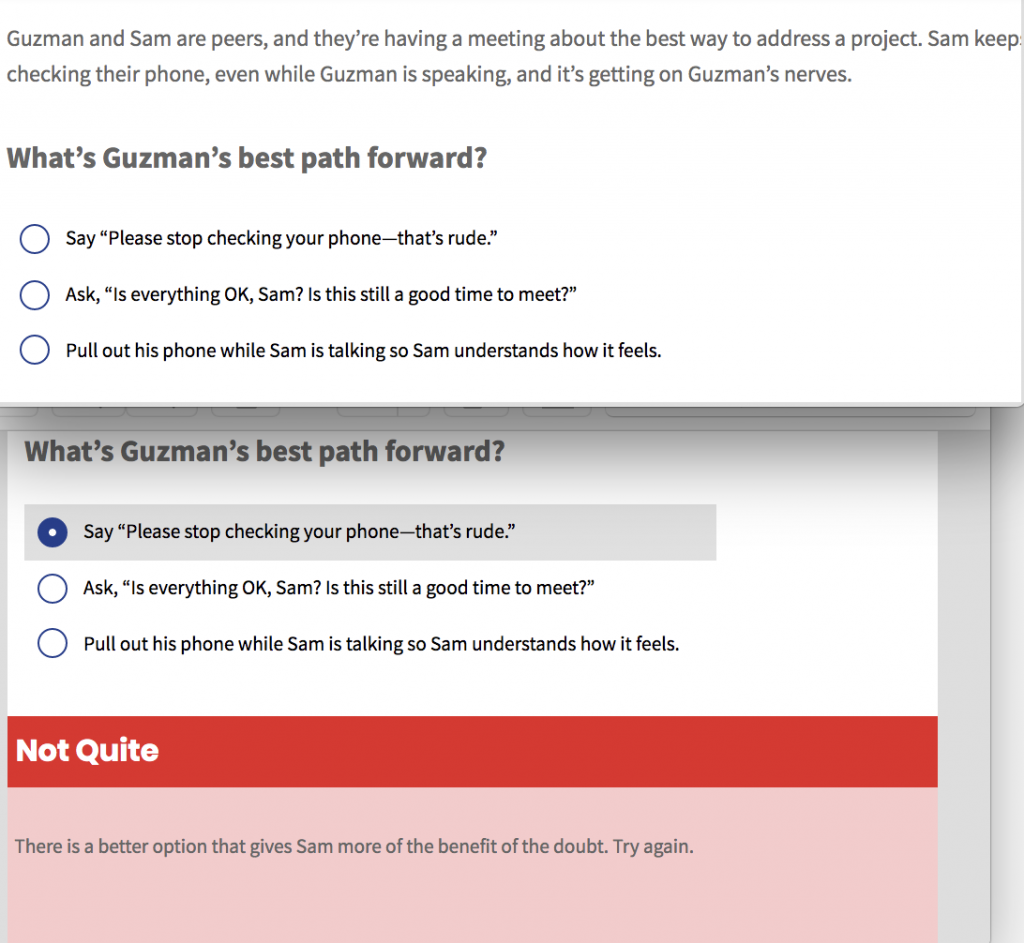
In the name of complying with these laws, universities have attempted to regulate a quotidian and constantly expanding list of behaviors. The BU training goes so far as to imply that telling someone to put their phone away could constitute illegal discrimination or harassment. One question asks about the “best path forward” when a classmate “keeps checking their phone” while working on a group project. The “right” answer involves giving the classmate “the benefit of the doubt”; the wrong one involves telling them to “stop checking your phone—that’s rude.”

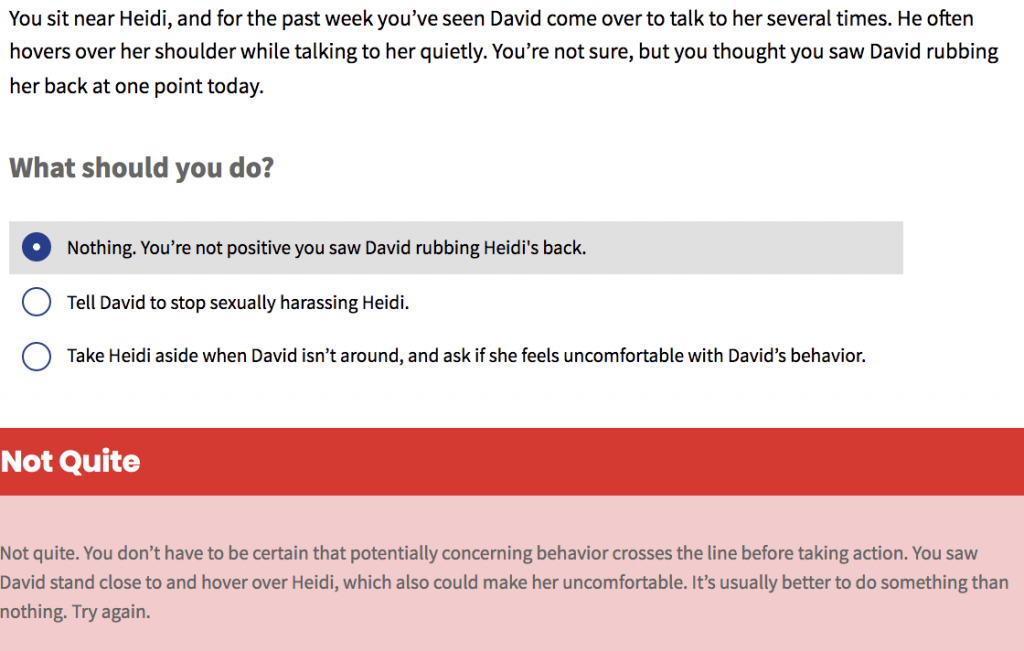
Other questions encourage people to police flirtatious encounters and potentially offensive jokes. “You sit near Heidi, and for the past week you’ve seen David come over to talk to her several times,” one scenario begins. “You’re not sure, but you thought you saw David rubbing her back at one point today. What should you do?” Students and faculty who said “Nothing” were told to “try again.”

“You don’t have to be certain that potentially concerning behavior crosses the line before taking action,” the training states.

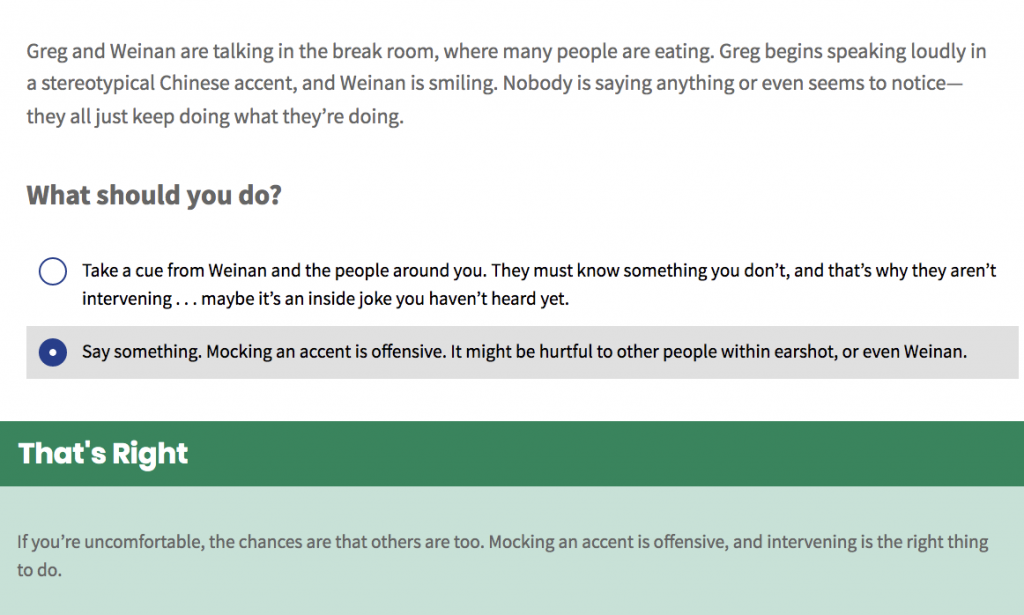
Nor must you be certain that anyone finds a joke offensive before speaking up about it. “What should you do” if “Greg begins speaking loudly in a stereotypical Chinese accent,” the training asks. “Say something. Mocking an accent is offensive”—even if nobody registers offense.

The training justifies such interventions by positing that “microaggressions” are more damaging to “employee well-being” than “overt harassment.” Even “[w]ell-meaning people can still cause harm,” one module says. “It’s important to separate someone’s intention from the impact of their actions.”

Tag Cloud