Rep. Andrew Clyde, R-Ga., told Newsmax on Tuesday he has two amendments for an appropriations bill to defund the prosecution efforts against former President Donald Trump. If enacted, his proposals would defund special counsel Jack Smith, Manhattan District Attorney Alvin Bragg, and Fulton County District Attorney Fani Willis’ prosecutions.
“We have not taken the Justice Department’s bill up in committee yet. I am on that committee, so I have the right to introduce an amendment to that committee, and I think when we do this amendment — that I will introduce — it will defund any federal prosecution of a presidential candidate prior to the November ’24 election.
“Also, a second amendment that I’m going to be adding to that is to defund any state or local prosecution — any federal money from going to that office if they decide to prosecute a presidential candidate prior to the 2024 election,” he adds. “And if we can do this, then I think it’ll work.”
The two proposed amendments to the Commerce, Justice, Science, and Related Agencies Appropriations Bill directly affects funding to the Justice Department.
Twelve Republicans disregarded their constituents’ wishes and aided Democrats in deriding the First Amendment rights of religious Americans by passing the deceptively-named Respect For Marriage Act without including any of their colleagues’ proposed protective amendments.
Of the 12 Republicanswho voted to advance the RFMA to a vote on the floor, three needed to change their minds before a final vote on the bill to keep the bill from passing. It is clear from the 61-36 vote on Tuesday night that Sens. Roy Blunt of Missouri, Richard Burr of North Carolina, Shelley Moore Capito of West Virginia, Susan Collins of Maine, Cynthia Lummis of Wyoming, Rob Portman of Ohio, Mitt Romney of Utah, Dan Sullivan of Alaska, Thom Tillis of North Carolina, Joni Ernst of Iowa, Lisa Murkowski of Alaska, and Todd Young of Indiana did not change their minds.
Instead of using amendments as prerequisites for their support, these Republicans opened the door for their congressional colleagues to reject three separate attempts to give the bill robust legal protections for religious Americans who believe marriage is between a man and a woman.
The RFMA as it stands doesn’t just repeal the Defense of Marriage Act, which defines marriage as between male and female, by codifying the Supreme Court’s approval of same-sex marriage in Obergefell v. Hodges. It goes further by enabling LGBT activists, who have already made a habit of exploiting the legal system to target religious Americans, and the politically motivated Department of Justice to bring civil action against anyone they say violates the terms of the legislation.
Under the guise of vague language, the RFMA could allow for the legal victimization of wedding vendors, adoption agencies, bakeries, and any other entities run by people of faith who refuse to offer services condoning same-sex marriage based on religious convictions.
Despite the RFMA’s problems, the 12 GOP senators echoed their support for the legislation by once again voting in favor of it.
For their willingness to cave to the Democrats’ agenda, those Republicans were thanked by Senate Majority Leader Chuck Schumer from the Senate floor ahead of the vote.
“I also want to acknowledge my Republican colleagues who voted in favor of advancing this legislation. Because of our work together, the rights of tens of millions of Americans will be strengthened under federal law,” he said. “That’s an accomplishment we should all be proud of.”
Other Republican senators, however, understood the risks the RFMA poses to Americans and offered solutions in the form of amendments that sought to clarify the bill’s cushioned language.
Sen. Mike Lee put forth an amendment that explicitly stated that the federal government “shall not take any discriminatory action against a person, wholly or partially on the basis that such person speaks, or acts, in accordance with a sincerely held religious belief, or moral conviction” that marriage is between one man and woman. The amendment would have also allowed anyone who is wrongfully targeted by the government over their beliefs about marriage to sue.
My amendment simply prohibits the Federal Government from retaliating against schools, businesses, and organizations because of their religious beliefs about same-sex marriage.
That amendment, which required 60 votes to be adopted, ultimately failed.
Sen. Marco Rubio and Sen. James Lankford also introduced amendments designed to clarify language and ensure religious liberty protections for all Americans.
Lankford’s amendment guaranteed that the RFMA’s obscurity would not be wielded against organizations with traditional marriage beliefs. Rubio’s amendment eliminated the private right to sue from the RFMA.
All Americans should be honored and no one should be discriminated against—no one. The Respect for Marriage Act isn’t about equality or maintaining the status quo. It is about silencing and disadvantaging people that disagree. pic.twitter.com/xp4JbZczdm
Both amendments required a simple majority but failed.
Now that the RFMA has passed the Senate, the House is expected to vote on the updated bill as soon as this week.
Rep. Kevin McCarthy, who will likely assume the position of House speaker in January, told reporters early on Tuesday that he agrees with the U.S. Conference of Catholic Bishops (USCCB) which says that the RFMA would “betray our country’s commitment to the fundamental right of religious liberty.”
“Catholic Bishops say religious protections in the Respect For Marriage Act are insufficient and far from comprehensive and treat religious liberty as a second-class right. As you know, that’s currently in the Senate. Do you agree with that assessment by the Catholic Bishops?” one reporter asked.
“I agree with them, yes,” McCarthy confirmed.
House GOP Leader Kevin McCarthy says he agrees with the U.S. Conference of Catholic Bishops, which says the Respect For Marriage Act would "betray our country’s commitment to the fundamental right of religious liberty.” pic.twitter.com/ZbJIOytynJ
McCarthy’s willingness to signal strong opposition to the bill, which garnered support from 47 House Republicans earlier this year, shows that he is listening to conservative voters who overwhelmingly reject this legislation.
Jordan Boyd is a staff writer at The Federalist and co-producer of The Federalist Radio Hour. Her work has also been featured in The Daily Wire and Fox News. Jordan graduated from Baylor University where she majored in political science and minored in journalism. Follow her on Twitter @jordanboydtx.
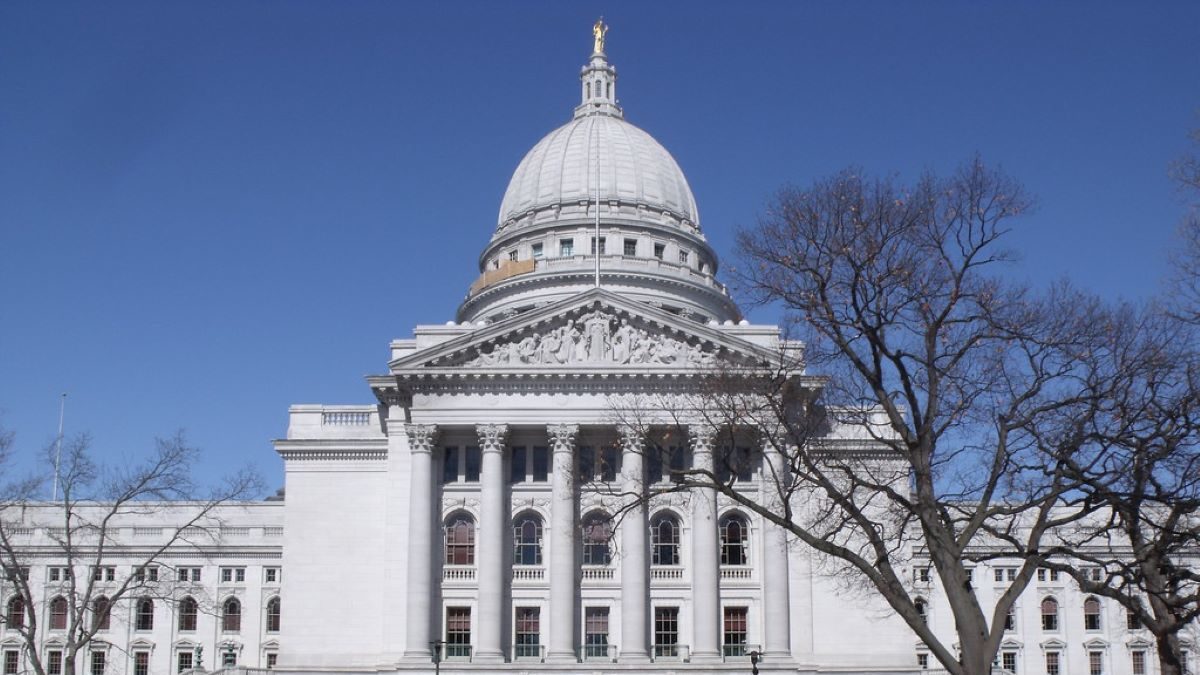
Wisconsin became the latest state to pass a resolution calling for an Article V convention of states on Tuesday, with the goal of proposing amendments to the U.S. Constitution that would limit the power of the federal government. Passed by the Wisconsin Assembly last year, the resolution was approved by the Senate in a 17-16 vote, with four Republicans joining all Democrats in opposition. According to the measure, Wisconsin’s legislature seeks to call a convention of states “limited to proposing amendments to the Constitution of the United States that impose fiscal restraints on the federal government, limit the power and jurisdiction of the federal government, and limit the terms of office for its officials and for members of Congress.”
As written in Article V of the U.S. Constitution, state legislatures are provided the power to call a convention to propose amendments to the nation’s founding document without the approval of Congress. Under the current process, two-thirds of states are required for a convention to be called, with three-fourths of states necessary for any amendment proposed to be ratified.
“Times like these are precisely why the Founders created the mechanisms in Article V,”said state Rep. Dan Knodl. “Federal overreach has thrown our country into chaos, and it’s time for the states to exercise their authority as granted to them in the constitution to restore order, states’ rights, and limited, constitutional government. I’m incredibly proud that our state has officially thrown its support behind this movement.”
State Sen. Kathy Bernier also expressed her excitement at the resolution’s passage, noting how thankful she is that the Constitution provides “the states and the people a framework to step in and save the Republic when Congress will not.”
“Today we sent a message that Wisconsin stands ready to rein in federal overreach,” she said.
In addition to Wisconsin, 15 other states have also passed similar resolutions calling for a convention to address federal term limits, spending, and governmental overreach.
Shawn Fleetwood is an intern at The Federalist and a student at the University of Mary Washington, where he plans to major in Political Science and minor in Journalism. He also serves as a state content writer for Convention of States Action. Follow him on Twitter @ShawnFleetwood
American Family Association
American Family Association (AFA), a non-profit 501(c)(3) organization, was founded in 1977 by Donald E. Wildmon, who was the pastor of First United Methodist Church in Southaven, Mississippi, at the time. Since 1977, AFA has been on the frontlines of Ame
NEWSMAX
News, Opinion, Interviews, Research and discussion
Opinion
American Family Association
American Family Association (AFA), a non-profit 501(c)(3) organization, was founded in 1977 by Donald E. Wildmon, who was the pastor of First United Methodist Church in Southaven, Mississippi, at the time. Since 1977, AFA has been on the frontlines of Ame
American Family Association
American Family Association (AFA), a non-profit 501(c)(3) organization, was founded in 1977 by Donald E. Wildmon, who was the pastor of First United Methodist Church in Southaven, Mississippi, at the time. Since 1977, AFA has been on the frontlines of Ame
You Version
Bible Translations, Devotional Tools and Plans, BLOG, free mobile application; notes and more
Political
American Family Association
American Family Association (AFA), a non-profit 501(c)(3) organization, was founded in 1977 by Donald E. Wildmon, who was the pastor of First United Methodist Church in Southaven, Mississippi, at the time. Since 1977, AFA has been on the frontlines of Ame
NEWSMAX
News, Opinion, Interviews, Research and discussion
Spiritual
American Family Association
American Family Association (AFA), a non-profit 501(c)(3) organization, was founded in 1977 by Donald E. Wildmon, who was the pastor of First United Methodist Church in Southaven, Mississippi, at the time. Since 1977, AFA has been on the frontlines of Ame
Bible Gateway
The Bible Gateway is a tool for reading and researching scripture online — all in the language or translation of your choice! It provides advanced searching capabilities, which allow readers to find and compare particular passages in scripture based on





 What Did You Say?
You must be logged in to post a comment.