Below is my column in the New York Post on the expanding controversy surrounding the disqualification of Fani Willis and Nathan Wade. In today’s legislative hearing in Atlanta, counsel Ashleigh Merchant testified that cellphone records on one occasion show “pings” on Wade’s cellphone from his home to the vicinity of Willis’s home followed by a call to Willis and then hours of silence. The next morning, she claims, the data shows him going back to his home and texting Willis. It is only the latest example of how evidence against the two prosecutors is growing and possible explanations are dwindling in the case. The greatest problem is how these allegations are beginning to mirror those against the defendants being prosecuted by Willis and Wade.
Here is the column:
When Fani Willis ran against her former boss Paul Howard in 2020, she highlighted the experience that she would bring to the position.
Howard was embroiled in a sexual harassment scandal involving his relationship with women in his office.
Willis offered both experience and ethical leadership, including pledging repeatedly that “I will certainly not be choosing to date people that work under me.”
Willis is now accused of the wrong type of relevant experience.
She and her lead prosecutor are not just accused of having an intimate relationship, but they are accused of some of the same underlying conduct that they are prosecuting in the election interference case against former President Donald Trump and other defendants. That includes allegations of filing false statements with courts and even influencing witnesses.
This week, another witness came forward with an explosive new allegation against Willis. In the prior hearings in Atlanta, Nathan Wade was confronted with what appears to be false statements made to the court in his divorce case, false statements that he repeated under oath in disqualification testimony. For example, Wade was asked about his denial of “a sexual relationship during the time of his marriage and separation” up to and including May 30, 2023.
That would obviously include the sexual relationship with Willis in 2022 and possibly earlier. Wade, however, denied any such sexual relationship and said he confined the question to sexual relations meaning an affair “in the course of my marriage.” Of course, his marriage was ongoing even during the divorce and the question asked about any relationship up to May 2023.
Wade and Willis have also been contradicted in their testimony by various witnesses who said they lied about their intimate relationship starting after he was hired in 2022. That includes prior text messages in which Wade’s former partner and lawyer Terrence Bradley repeatedly told opposing counsel that he was “absolutely” sure that the relationship began much earlier.
A former close friend of Willis also said they were lying.
Now another prosecutor has come forward to say that Bradley also told her repeatedly and with complete clarity and certainty that Wade and Willis were involved long before his hiring. Those conversations allegedly occurred as late as January 2024 with Cindi Lee Yeager, a co-chief deputy district attorney for Cobb County.
What is even more alarming is Yeager’s account that she overheard Willis tell Bradley on the telephone that “they are coming after us. You don’t need to talk to them about anything about us.” If true, that call could raise questions of influencing potential witnesses.
Willis can legitimately point out that the calls was allegedly in September 2023, before Bradley was called as a witness and the current proceedings had started. However, it would indicate that Willis was aware that Bradley would be asked questions about past payments and relationships with him and his partner Wade.
If that seems loose, you should take a look at the case Willis brought against these defendants. Many of us have been critical of the overarching racketeering conspiracy alleged by Willis among the 18 defendants.
The false statement charges often dismiss plausible alternative interpretations or the paucity of evidence of intent.
The question is whether Willis or Wade had other communications indirectly or directly with Bradley.
His testimony was widely panned and he showed all of the spontaneity and comfort of a hostage video.
Willis is a powerful political figure in Atlanta and Bradley did everything short of faking his death to avoid assisting in her disqualification.
The odds are that Judge Scott McAfee is not inclined to hold additional hearings. He is ready to rule.
It is hard to imagine these two prosecutors continuing with so many allegations hanging over the case. They have placed their personal interests before their office and their case.
However, the standard for disqualification is murky. For Willis, the case has become a modern political tragedy a la movie classic “All the King’s Men,” about a reformer who became everything that he once denounced in the corruption of powerful figures.
In her combative testimony, Willis attacked the media, opposing counsel and the public for questioning her actions. She declared, “You’re confused. You think I’m on trial. These people are on trial for trying to steal an election in 2020. I’m not on trial, no matter how hard you put me on trial.”
The question is whether the courts, prosecutors or bar officials will show the same vigor in pursuing these allegations against Wade and Willis that they have shown against their own defendants. If so, she could well find herself “on trial” as the allegations mount against her and her lead prosecutor.
Jonathan Turley is an attorney and professor at George Washington University Law School.
By Brian Freeman | Tuesday, 05 March 2024 10:03 AM EST
An Iranian intelligence officer is wanted in connection with planning to assassinate former and current U.S. officials in revenge for the 2020 killing of Islamic Revolutionary Guard Quds Force Cmdr. Qassem Soleimani, the FBI posted on X.
The FBI field office in Miami shared a wanted notice for Majid Dastjani Farahani in connection with the recruitment of individuals for various operations in the U.S., including for surveillance activities focused on religious sites, businesses, and other facilities in the U.S., according to Newsweek. The announcement by the FBI, which said Farahani is working directly or indirectly for Iran’s Ministry of Intelligence and Security, comes amid heightened tensions with Tehran as Iranian proxies inflame hostilities connected to the war in Gaza by attacking Israeli and American targets.
Although Tehran has denied its involvement in recent attacks against U.S. targets, two years ago Iranian President Ebrahim Raisi blamed former President Donald Trump and former Secretary of State Mike Pompeo for Soleimani’s killing and threatened that Muslims will take out martyr’s revenge against them, Newsweek reported.
In addition, Shahram Poursafi, a member of Iran’s Islamic Revolutionary Guard, was indicted in 2022 for an alleged revenge plot to kill former national security adviser John Bolton, according to the New York Post.
After news of the latest threat, Pompeo and Brian Hook, former President Donald Trump’s special envoy for Iran, were given around-the-clock security, Semafor reported.
The U.S. Treasury Department in December announced sanctions against Farahani and another Iranian intelligence officer Mohammad Mahdi Khanpour Ardestani.
Soleimani oversaw a number of militias that targeted U.S. troops in Iraq, and had more “American blood on his hands” than any terrorist since Osama Bin Laden, according to a 2021 Department of Justice report on the Baghdad airstrike that killed him, the New York Post reported.
Brian Freeman, a Newsmax writer based in Israel, has more than three decades writing and editing about culture and politics for newspapers, online and television.
An appeals court on Saturday reversed a lower court’s decision to block Texas from enforcing a new state law that would make illegal immigration a state crime. The 5th Circuit Court of Appeals went against U.S. District Judge David A. Ezra’s order to block Texas’ Senate Bill 4 but also put its own ruling on hold for seven days should the Biden administration want to appeal to the Supreme Court.
The new law allows state authorities to arrest and jail illegal immigrants and would give state judges the power to order deportations. The law was initially set to go into effect on March 5 but will now be put on hold until March 9 unless the Supreme Court intervenes.
Under Texas’ Senate Bill 4, state authorities could arrest and jail illegal immigrants and allow state judges to order deportations. (AP Photo/Eric Gay, File)
Ezra, who presides in the Western District of Texas, ruled last week that states “may not exercise immigration enforcement power except as authorized by the federal government.” Texas Gov. Greg Abbott, however, maintained that the state “has the right to defend itself” from the invasion at our southern border.”
“Texas will immediately appeal this decision, and we will not back down in our fight to protect our state – and our nation – from President Biden’s border crisis,” Abbott said in a statement at the time.
Asylum seekers cross the Rio Grande from Mexico into the United States on Sept. 30, 2023, in Eagle Pass, Texas. (John Moore/Getty Images)
The law was one of several moves by Texas to curb the flow of migrants into the state. Abbott has repeatedly accused the Biden administration of failing to enforce immigration laws amid record numbers of migrant entries and encounters at the southern border.
Fox News’ Louis Casiano contributed to this report.
Far left commentator Keith Olbermann vitriolically condemned the Supreme Court on Monday after the justices unanimously ruled individual states could not decide whether Donald Trump could be on their presidential ballots this fall. Pictured: Olbermann hosts a Trump impersonator on Comedy Central’s “The President Show” on April 27, 2017, in New York City. (Photo: Brad Barket/Getty Images)
Liberals on Monday bemoaned the Supreme Court overturning a state supreme court’s ruling tossing former President Donald Trump off the state’s ballot. The U.S. Supreme Court said that Congress alone had the power to enforce the “insurrection clause” of the 14th Amendment in a 9-0 ruling that was unsigned. The Colorado Supreme Court had decided that Trump was disqualified under the provisions of the 14th Amendment in a 4-3 ruling Dec. 19.
“The Supreme Court has betrayed democracy,” former MSNBC host Keith Olbermann posted on X. “Its members including [Ketanji Brown] Jackson, [Elena] Kagan, and [Sonia] Sotomayor have proved themselves inept at reading comprehension. And collectively the ‘court’ has shown itself to be corrupt and illegitimate. It must be dissolved.”
The Supreme Court has betrayed democracy. Its members including Jackson, Kagan and Sotomayor have proved themselves inept at reading comprehension. And collectively the "court" has shown itself to be corrupt and illegitimate.
“Supreme Court rules that an adjudicated insurrection can still be president, unless Congress acts,” MSNBC legal analyst Glenn Kirschner posted. “Not unexpected, but more proof that our institutions of government are not up to the task of saving American democracy. Once again, it’s up to We The People. #VoteLikeHell”
Supreme Court rules that an adjudicated insurrection can still be president, unless Congress acts. Not unexpected, but more proof that our institutions of government are not up to the task of saving American democracy. Once again, it’s up to We The People. #VoteLikeHellpic.twitter.com/mK8kAe3TPE
MSNBC contributor Anand Giridharadas called the decision “another corrupt Supreme Court ruling” while linking to an article offering what he put forth as a course of action to counteract what he called “another round of despair bait.”
Another day, another corrupt Supreme Court ruling, another round of despair bait in the news.
The Ink is trying to do something different: offering tangible actions you can take today to help save and more fully realize democracy.
“The Supreme Court has decided to keep Donald Trump on the Presidential ballot. We knew this was coming,” Democratic congressional candidate Eugene Vindman posted. “Today’s Supreme Court decision won’t impact what will happen in November. We are going to defeat Donald Trump and take back the House from MAGA extremists.”
The Supreme Court has decided to keep Donald Trump on the Presidential ballot. We knew this was coming.
Today's Supreme Court decision won't impact what will happen in November.
We are going to defeat Donald Trump and take back the House from MAGA extremists.
Also on MSNBC, former acting Solicitor General Neal Katyal tried to spin the ruling.
“What it doesn’t put aside is the 14th Amendment, Section 3, is not just about courts, it’s not just about—you know, about ballot—you election officials disqualifying someone. It’s also a rule of thumb for you and me,” Katyal told MSNBC host Ana Cabrera. “I mean, one of the most important moments in our history after the Civil War, our nation came together and said, ‘Look, insurrectionists should not be on the ballot.’ The court today is not saying that Donald Trump is free of the charges of being an insurrectionist.”
“It may be that Congress hasn’t implemented legislation to enforce it, but you and I enforce the 14th Amendment, too, by what we do at the ballot box,” Katyal added.
Democratic Secretary of State Jena Griswold of Colorado expressed disappointment in the ruling on X.
“I am disappointed in the U.S. Supreme Court’s decision stripping states of the authority to enforce Section 3 of the 14th Amendment for federal candidates,” Griswold posted. “Colorado should be able to bar oath-breaking insurrectionists from our ballot.”
I am disappointed in the U.S. Supreme Court’s decision stripping states of the authority to enforce Section 3 of the 14th Amendment for federal candidates. Colorado should be able to bar oath-breaking insurrections from our ballot.
In its affidavit supporting criminal charges, the Justice Department showed Air Force lieutenant colonel Larry Rendall Brock on the Senate floor on January 6, 2021 in a helmet and combat gear. That outfit only magnified the anger of many of us over the riot and the interruption of our constitutional process of certification. However, while there was little question of the validity of the charges against him, U.S. District Judge John Bates in March 2023 imposed a two year sentence based on a common enhancing factor cited by the government in many of these cases for the “substantial interference with the administration of justice.” A panel on the D.C. Circuit has now ruled against the use of that enhancer in a decision that could compel the resentencing of dozens of defendants from the January 6th riot.
The Justice Department has long been accused of excessive charging and abusive detention conditions for January 6th defendants. The heavy-handed treatment was apparently by design. In a controversial television interview, Justice official Michael Sherwin proudly declared that “our office wanted to ensure that there was shock and awe … it worked because we saw through media posts that people were afraid to come back to D.C. because they’re, like, ‘If we go there, we’re gonna get charged.’ … We wanted to take out those individuals that essentially were thumbing their noses at the public for what they did.”
District court judges just went along with the use of the enhancement, even though it was based on a highly attenuated claim. As the D.C. Circuit found, “Congress’s certification of electoral college votes does not fit the ‘administration of justice’ mold.” It then noted:
“Considered in context, Congress’s counting and certification of electoral votes is but the last step in a lengthy electoral certification process involving state legislatures and officials as well as Congress. Taken as a whole, the multi-step process of certifying electoral college votes—as important to our democratic system of government as it is—bears little resemblance to the traditional understanding of the administration of justice as the judicial or quasi-judicial investigation or determination of individual rights.”
The argument of the Biden Administration always seemed curious to me given the claims of former President Donald Trump that Vice President Michael Pence had the authority to reject state certifications. I disagreed with that view. However, arguing that this is a type of judicial proceeding would seem to enhance the Trump argument. Yet, that is what the Justice Department did in many of these cases to enhance sentencing.
Ultimately, Judge Bates’ sentencing was not as high as what the Justice Department wanted. Judge Bates detailed the considerable evidence against Brock in his preparation for violence. He wrote before the riot “Do not kill LEO [law enforcement officers] unless necessary… Gas would assist in this if we can get it.” It was also short of the maximum under the guidelines of 30 months. The sentence may have been reduced by as much as nine months without the enhancer.
There could also be substantial reductions for a couple of hundred of other defendants who were sentenced with the enhancer. It is not clear if the government will appeal the ruling.
We are also waiting for the oral argument in Fischer v. United States, which will consider the use of the felony charge of obstructing an official proceeding against defendants tied to the January 6th riot. Trump is also being prosecuted in part for that crime.
Brock is currently serving his two-year prison term at MCFP Springfield in Missouri.
Below is my column in the Hill on a controversial criminal case involving a conservative journalist who was arrested after the January 6th riot. The prosecution of Steven Baker exposes the growing tensions in the media over the role of reporters as advocates.
Here is the column:
Former New York Times writer (and now Howard University journalism professor) Nikole Hannah-Jones declared recently that “all journalism is activism.” Advocacy journalism is all the rage in journalism schools and on major media platforms. Given that shift in journalism, one would think that these editors and journalists would love Steven Baker.
Baker was arrested for covering what he viewed as a citizen protest defying the government and demanding justice. He did not hide his support for their cause as he reported on what became a riot. Baker, however, is a conservative journalist and the protest that he was covering became the Jan. 6th riot. Now, the Biden administration has arrested Baker on four misdemeanor charges linked to his entry into the Capitol on that day.
Baker would later not only supply stories to his main media outlet, Blaze News, but also sell videos to The New York Times and HBO.
Journalists often accompany protesters and even mobs as stories unfold. Indeed, there were many reporters in the crowd that entered the Capitol. But Baker, the conservative journalist, was charged while others were not. The response from most media figures and groups has been crickets.
The Justice Department leaves little doubt why they pursued Baker. The criminal complaint and an FBI agent’s affidavit repeatedly reference Baker’s support for those who stormed the Capitol. Entering through a broken door like hundreds of others, he walked past Capitol police, who stood by and even directed some protesters. Baker was in the building for only approximately 37 minutes before police led him out.
The government claims that the Texas-based writer “antagonized” police officers when they blocked his effort to get through a door. They quote him as asking “Are you going to use that (gun) on us?” They also quote him as later stating, in an interview with a local television station, that he was “quite excited to see this going on. Do I approve of what happened today? I approve 100 percent.”
He also pointed out his image in footage while emphasizing that his red hat was not a MAGA hat but a Yorktown, Virginia hat. He would joke about what a shame it was that he did not get his hands on Nancy Pelosi’s computer, given what he might have found.
In any other context, Baker might be the poster boy for the new journalism. “J-schools” now encourage students to leave “neutrality behind” and push “solidarity [as] ‘a commitment to social justice that translates into action.’”
A recent series of interviews with over 75 media leaders by Leonard Downie Jr., former Washington Post executive editor, and Andrew Heyward, former CBS News president, reaffirmed this shift. As Emilio Garcia-Ruiz, editor-in-chief at the San Francisco Chronicle, stated: “Objectivity has got to go.” But that advocacy seems to depend heavily upon what ideology you are advocating.
For example, NPR employees objected to efforts to maintain a neutral tone in reporting and declared that “civility is a weapon wielded by the powerful.” The NPR leadership went even further to unleash the advocates within journalists, by allowing them to cross over from covering to participating in protests. The public-subsidized NPR declared that reporters could join political protests when the editors believe the causes advance the “freedom and dignity of human beings.”
Something tells me that NPR editors would not have found Baker’s brand of advocacy to be “dignified.”
NPR recently hired a new CEO, Katherine Maher, who has declared that “white silence is complicity” and has publicly denounced Trump and his supporters. The message seems clear about what kind of protests would be considered advancements of freedom.
Would the government have charged an NPR reporter who accompanied Black Lives Matter rioters in the police station they occupied in Seattle? If not, then what exactly is the dividing line between crime and advocacy journalism? Is it an ideological line?
In the George Floyd riots, at least 126 journalists were arrested or detained in 2020. Virtually all of the charges against them were dropped. Des Moines Register reporter Andrea Sahouri was tried on simple misdemeanors for failure to disperse and interference with official acts. She was acquitted. The difference is that a long list of journalistic organizations came to her aid. That is not the case for Baker.
Before Baker’s arrest, Washington media was already facing criticisms over double standards. Recently, CBS was embroiled in a controversy after it fired acclaimed investigative journalist Cathrine Herridge, who had clashed with the liberal network over her work on stories unpopular with the Biden White House and many Democratic establishment figures. Not only did they lay Herridge off, but CBS brass even seized her files and forced her union to take legal action before giving them back. The files contained confidential source information. While this was unfolding, Herridge was in court, fighting to protect her confidential sources. After CBS fired her, she was held in contempt this week for refusing to violate journalistic confidentiality. The same week, despite firing Herridge and seizing her files, CBS President Ingrid Ciprian-Matthews was honored at the 33rd annual First Amendment Awards.
Likewise, this week, Julian Assange is facing deportation and prosecution for publishing the Wikileaks files, exposing abuses in the U.S. government. Although legacy media routinely publish classified material from whistleblowers, Assange has embarrassed many in Washington and will have to pay for it.
That brings us back to Baker. He is not charged with property damage or violence. The question is whether, on that day, he was an advocate, a journalist or an advocate journalist.
So, what exactly is journalism? Major media figures have actively erased the distinction between advocates and journalists. It is now subject to the same test that Supreme Court Justice Potter Stewart once used to identify pornography in the case Jacobellis v. Ohio, 378 U.S. 184 (1964): “I shall not today attempt further to define [it]…But I know it when I see it.”
Jonathan Turley is the J.B. and Maurice C. Shapiro Professor of Public Interest Law at the George Washington University Law School.
Democrats’ targeting of political opponents entered its next phase Friday, when the FBI arrested Blaze Media investigative reporter Steve Baker over covering the Jan. 6, 2021, demonstrations at the U.S. Capitol.
“This is the most humiliated I’ve ever been in my life,” Baker told independent reporter Breanna Morello following his release. My arrest “is for things I said. … That’s what they’re after; they’re [trying] to suppress our speech.”
Just caught up with journalist Steve Baker just moments after being released from federal custody.@TPC4USA details what he’s had to endure at the hands of the corrupt DOJ.
As The Federalist reported, federal authorities informed Baker and his legal team on Tuesday of a signed warrant for his arrest and instructed him to self-surrender for “alleged J6 crimes” in Dallas, Texas, on Friday morning. Baker has been at the forefront of reporting on the more questionable aspects of the Jan. 6 demonstrations.
While told he was being charged with “non-violent misdemeanors,” federal authorities declined to disclose to Baker or his lawyers what specific crimes underlie the arrest. According to Blaze News, the feds refused to reveal the charges ahead of Friday’s arrest because “they believe[d] Baker [would] post them on social media.” The Sixth Amendment to the U.S. Constitution guarantees individuals accused of a crime a right to “be informed of the nature and cause of the accusation.”
After being transported to the courthouse on Friday morning in shackles, Baker was charged on four counts related to reporting on the Jan. 6 demonstrations: Knowingly entering or remaining in any restricted building or grounds without lawful authority; Disorderly and disruptive conduct in a restricted building or grounds; Disorderly conduct in a capitol building; and Parading, demonstrating, or picketing in a capitol building.
Blaze Media Investigative Journalist @TPC4USA has now been taken into FBI custody for his J6 reporting
While egregious, Baker’s arrest is sadly unsurprising. The Marxists running Biden’s Democrat administration have gone to extreme lengths to weaponize the powers of government to target and prosecute their political opponents.
Former President Donald Trump is facing 91 indictments from Democrat prosecutors across four different venues, two of which involve charges from the Biden DOJ. These efforts coincide with Democrat attempts to kick Trump — Biden’s primary political opponent — off the ballot ahead of the 2024 election.
The Biden regime has also targeted faithful Christians. Not only have federal authorities infiltrated Catholic churches to surveil Christians attending Latin Mass, they’ve also imprisoned pro-life Christians who peacefully protested outside of an abortion clinic.
Don’t forget the federal government’s censorship-industrial complex. This heavily funded system is strategically designed to censor and silence dissenting voices online — even if the information these users share is true.
.@TPC4USA's first interview since being taken in by federal authorities with @SteveDeaceShow: "All of this is about the suppression of speech and teaching those of us on the Right side of the political spectrum what we can and cannot say and what is allowed." pic.twitter.com/kl12Ol7zPN
Shawn Fleetwood is a staff writer for The Federalist and a graduate of the University of Mary Washington. He previously served as a state content writer for Convention of States Action and his work has been featured in numerous outlets, including RealClearPolitics, RealClearHealth, and Conservative Review. Follow him on Twitter @ShawnFleetwood
“You have my answer under oath and under the penalty of perjury,” Hunter Biden declared a half-dozen times during closed-door questioning by the joint House Oversight and Judiciary Committees on Wednesday, a transcript of which was released Thursday. His protestations of truth-telling lacked conviction, though, because the facts and logic proclaimed a different reality.
Here are the highlights of Hunter Biden’s most unbelievable testimony.
1. It’s All a MAGA-Orchestrated Conspiracy Theory
Hunter Biden opened by claiming the committees had “hunted” him as part of a “partisan political pursuit” of his father.
“You do not have evidence to support the baseless and MAGA-motivated conspiracies,” he continued before claiming the only basis for the claims of Biden family corruption came from criminals, fugitives, or other liars.
But no matter how many times Hunter evoked the name of Alexander Smirnov — the recently indicted FBI confidential human source who allegedly lied about Burisma paying the Bidens bribes, as memorialized in the FD-1023 — bank records and the testimony of Biden-friendly witnesses negate Hunter’s claims of a conspiracy theory.
There are only so many coincidences the American public will buy before realizing they’re being sold a bag of malarkey. Evidence of large deposits to Hunter Biden-connected businesses from foreigners in Joe Biden’s wake leaves Hunter’s claim of a conspiracy unbelievable.
2. I Called Upon the Wrong Guy
Probably the most incredible area of Hunter’s testimony was his explanation for a text he sent to Raymond Zhao, asking him to have the director of CEFC call him. “I’m sitting here with my father,” Hunter texted Zhao, “and we would like to understand why the commitment made has not been fulfilled. I’m very concerned that the chairman has either changed his mind or broken our deal without telling me or that he’s unaware of the promises and assurances that have been made have not been kept.”
“Tell the director I would like to resolve this now before it gets out of hand, and now means tonight,” Hunter continued, adding that “if I get a call or text from anyone involved in this other than you, Zhang, or the chairman, I will make certain that between the man sitting next to me and every person he knows and my ability to forever hold a grudge that you will regret not following direction. All too often people mistake kindness for weakness, and all too often I’m standing over the top of them saying, I warned you.”
“I will call you on WhatsApp,” Zhao replied.
This text exchange was incredibly damning because the players involved were connected to the communist Chinese energy company CEFC, which later transferred $5 million in capital to a company Hunter Biden created only a few days after the above text exchange.
But don’t worry, Hunter assured the committee. His text went to the wrong guy because he was “so out of his mind” from his addiction, he had accidentally sent the threat to “Henry Zhao,” who was not connected to CEFC.
“And I, like an idiot, directed it towards Henry Zhao who had no involvement, who had no understanding or even remotely knew what the hell I was even Godd-mn talking about. Excuse my language,” Hunter told the committee.
First, given the quick response to Hunter’s text from CEFC, it is unbelievable that the text didn’t go to the CEFC-connected Zhao. Second, even if Hunter basically drunk-dialed the wrong mark, that doesn’t exonerate him or his father — the latter of whom, the evidence establishes, helped Hunter by showcasing his accessibility to his son’s business partners.
In short, the text shows Hunter intended to shakedown CEFC, and the $5 million suggests he succeeded.
3. Burisma Wanted Me to Call My… Teen Daughters?
A close second for the most outrageous storyline concerned the call to D.C. that Hunter Biden’s business partner and friend Devon Archer claims Hunter made at the request of Burisma executives.
Archer, a Biden-friendly witness, had previously testified to the House Judiciary Committee that in early December 2015, after a Burisma board meeting, the founder of the Ukrainian energy company had asked Hunter to call D.C. because of pressure being placed on the company. In a follow-up question, Archer confirmed the Burisma request was for “help from the United States Government to deal with the pressure they were under from their prosecutor, and that entailed the freezing of assets at the London bank and other things that were going on in Ukraine.”
According to Hunter’s friend and former business partner, Hunter stepped away with the Burisma executives to make the call to D.C. But when asked about the call on Wednesday, Hunter testified, “I never would have called, and never did my father on behalf of Burisma.”
So, whom did he call?
Hunter didn’t remember but suggested it was his wife or his high school-aged daughters.
Sure, Jan.
4. The Big Guy = The Big Lie?
Revisiting Archer’s testimony from last year added another improbability to Hunter Biden’s testimony — this one concerning “the big guy” moniker.
When questioned about the reference to 10 percent being “held by H for the big guy,” Hunter claimed not to know what that meant. And when questioned by Democrats on the committee about Joe Biden’s nicknames, Hunter denied his family referred to Joe as “the big guy.”
Tony Bobulinski, however, testified previously that “the big guy” was Joe Biden’s nickname. And while Hunter Biden claimed Bobulinski was a liar and not to be believed, Archer also used that nickname in an apparent reference to Joe Biden in his testimony, saying Burisma wasn’t “specific, you know, can the big guy help? It was — it’s always this amorphous, can we get help in D.C.?”
5. ‘My Chairman’ is Absolutely, Positively Not Daddy
Also ringing hollow was Hunter Biden’s assertion that “my chairman” was not his father. House investigators asked Hunter about a text he had sent to Bobulinski, in which he said, “In light of the fact that we are at an impasse of sorts, and both James’ lawyers and my chairman gave an emphatic no — I think we should all meet in Romania on Tuesday next week.”
Hunter went on to say that “my chairman” was Chairman Ye of the Chinese company CEFC. Hunter then testified that he didn’t ever refer to his father as “my chairman,” calling the suggestion “laughable.”
The Republican committee members confronted Hunter with a text his business partner Rob Walker had sent to Bobulinski that said, “When he said his chairman, he was talking about his dad.”
Hunter sought to negate Walker’s testimony by claiming it was merely one “third party that was talking with another third party” who was “making a judgment about what I was talking about.”
Hunter then reverted to, “[Y]ou have my answer under oath that I did not refer and never have referred to my father as chairman.”
His “under oath” guarantee isn’t very assuring, however, given that Hunter had earlier stressed his long-standing relationship with Rob Walker — the third party who identified “my chairman” as Joe Biden.” “Rob Walker has known me since 1998,” Hunter testified. In fact, Hunter claimed Walker would have told their other business partners they were “way out of bounds” if Walker knew they were suggesting getting Joe Biden involved in their business deals.
So it sure seems like Walker would know whether Hunter would refer to his father as “my chairman.”
6. The Laptop Was a Plant
While many of Hunter’s explanations were unbelievable, his claims about the laptop the FBI seized from a Delaware repair shop were surreal.
When asked about his laptop from hell, Hunter claimed first not to remember dropping one off at a repair store in 2019. Then, when asked if he ever dropped off a laptop at a repair shop, Hunter spoke of dropping one off at a place three blocks from his D.C. office and at an Apple store in Georgetown. When pushed on whether he had ever left a laptop for repair in Delaware, Hunter replied that “the largest Apple store in America is at the Christiana Mall,” and that if he were “to drop off a laptop” — not that he “ever remember[ed] doing that, but if [he] was going to drop off a laptop” — he “would have gone to the Apple store, which was 7 minutes from [his] parents’ home there.”
In other words, Hunter is claiming he wouldn’t have dropped his laptop off at Mac Isaac’s store to suggest he didn’t. This outrageous assertion is part of a conspiracy theory that suggests the laptop abandoned at the Delaware repair shop was a plant.
Hunter also pushed another false narrative by suggesting much of the evidence recovered from the laptop was fake.
“Many different things” on the laptop were “either fabricated, hacked, stolen, or manipulated.” “100 percent,” Hunter testified on Wednesday.
Of course, when it came to identifying which ones, Hunter insisted, “I can’t go through them all right now.”
7. My Resume Is Real — And It’s Spectacular
Throughout the transcribed interview, Hunter also attempted to deflect questions about his lucrative service on Burisma’s board of directors by touting his resume. But when pushed on what he actually did for Burisma for a million-dollar paycheck, Hunter’s explanation of attending board meetings and “providing the best advice that I could give” convinced no one.
That was especially true given that the one thing Hunter should have been giving advice about — Burisma’s various legal problems — the president’s son claimed to know nothing about. Specifically, according to his Wednesday testimony, he did not know Burisma was under investigation in the U.K. for money laundering and had $23 million of assets frozen until “it became public.”
One would think a board member bearing the impressive resume of Hunter Biden and charged with overseeing corporate governance would know about an investigation and frozen assets before “it became public.”
8. That’s Not My Money… Until It Is My Money
Another eyebrow-raising refrain from Hunter Biden concerned payments into accounts held in the name of Rosemont Seneca Bohai and Rosemont Seneca Thornton. Those entities were Devon Archer’s, and as such, the money deposited into those accounts from foreigners wasn’t Hunter’s, the president’s son suggested.
“I have no authority over those accounts, and I have no view inside of it,” he testified.
Never mind that Archer transferred large sums from those accounts to Hunter Biden-connected accounts or, in one case, used the $142,300 a Kazakhstani oligarch deposited into the Rosemont Seneca Bohai account to pay for a car for Hunter Biden. While Hunter tried to downplay the shifting of funds from one business to another, at the end of the day, it was all unbelievable.
The totality of Hunter Biden’s testimony also rendered his opening line unbelievable. That line—“I did not involve my father in my business” — seems false at every angle.
Margot Cleveland is an investigative journalist and legal analyst and serves as The Federalist’s senior legal correspondent. Margot’s work has been published at The Wall Street Journal, The American Spectator, the New Criterion, National Review Online, Townhall.com, the Daily Signal, USA Today, and the Detroit Free Press. She is also a regular guest on nationally syndicated radio programs and on Fox News, Fox Business, and Newsmax. Cleveland is a lawyer and a graduate of the Notre Dame Law School, where she earned the Hoynes Prize—the law school’s highest honor. She later served for nearly 25 years as a permanent law clerk for a federal appellate judge on the Seventh Circuit Court of Appeals. Cleveland is a former full-time university faculty member and now teaches as an adjunct from time to time. Cleveland is also of counsel for the New Civil Liberties Alliance. Cleveland is on Twitter at @ProfMJCleveland where you can read more about her greatest accomplishments—her dear husband and dear son. The views expressed here are those of Cleveland in her private capacity.
The decision of the Supreme Court to review the immunity question in the Trump prosecution has brought forth the usual (and a couple not so usual) attacks on the integrity of the Court. While some are calling the justices now part of the “insurrection,” others are accusing them of “slow-walking” the appeal to push any trial past the election. MSNBC legal analyst Lisa Rubin added that, due to the delay for a review of the matter, she was “beyond terrified for our country.”
In reality, the claim that the Court is moving slowly is factually and historically untrue. Indeed, in comparison to most cases, this is a NASCAR pace for an institution that is more focused on issuing right rather rapid decisions.
Some of the usual voices immediately came forward to declare that, once again, the justices are exposing themselves as raw partisans. MSNBC anchor Rachel Maddow was declared the review of the matter as “BS” and exposes “the cravenness of the court.” She further declared, again, that the action undermined “legitimacy of the court.”
Mary Trump, the niece of the former president, went further and declared that “the Supreme Court of the United States just reminded us with this corrupt decision that the insurrection did not fail–it never ended.”
Former Wyoming Rep. Liz Cheney, R., Wyo., said that the review effectively “suppresses critical evidence that Americans deserve to hear.”
Regular MSNBC guest Elie Mystal (who previously called the Constitution “trash”) had a more novel take. With MSNBC host Alex Wagner nodding in apparent agreement, Mystal explained to viewers that this was just an effort of Justice Clarence Thomas (and possibly Samuel Alito) to retire. The theory goes something like this: Thomas does not want to have a Democrat fill his seat, so he is going to postpone the appeal, which will delay a trial for Trump, which will allow Trump to be elected, which will permit Trump to appoint his successor, which will allow Thomas to drive off in his RV for an unending retiree roadtrip. See, it’s that simple.
There is, of course, another possible explanation. Some justices have serious concerns about the lower court decision. At the outset, there are a couple of glaring problems with the claim of “slow-walking” to push the trial past the election.
First, the Court did not create this collision with the election. Both state and federal prosecutors have waited until shortly before the election to bring charges for actions taken almost four years ago. They are now demanding expedited and in some cases abridged reviews due to an urgency that they created.
Second, this matter has already been curtailed and expedited. Special Counsel Jack Smith has repeatedly pushed to deny Trump standard appellate options and time to present his case. After the Supreme Court refused to effectively cut off his right to an appellate review, the D.C. Circuit did so by pressuring Trump to file directly with the Supreme Court rather than seeking the review of the entire court in an en banc appeal. That standard en banc option was all but eliminated by an order that would have returned the mandate to the district court within days — forcing Trump to argue an appeal while being forced into the resumption of pre-trial proceedings.
Third, the Court has expedited the matter. The fact is that this is a much shorter schedule and the Court is fitting the case in the middle of a long scheduled and crowded calendar. It allowed the parties a few weeks to fully brief a question with major implications for our constitutional system.
It ordinarily takes months for the Court to even accept a case. The Court has set this matter for argument in April to allow the parties to fully brief the issue and will likely rule by June.
Some have pointed out that there are cases where the Court moved more swiftly. However, those cases have important distinctions.
For example, Michael Waldman, president of New York University’s Brennan Center for Justice, noted that in 1974 the Court considered United States v. Nixon “in a matter of weeks.” That is a valid point, but there are a couple of missing relevant facts.
The district court issued the subpoena to Nixon to turn over the famous White House tapes in April 1974. He then ordered compliance in May 1974 when Nixon refused. In allowing a direct appeal, the Court then held oral argument on July 8, 1975. It issued its unanimous decision on July 24, 2975. That was roughly two months after the initial appeal.
That is certainly a faster track by a few weeks. However, the Court was unanimous and this was not an appeal by a criminal defendant. While there was always the chance of an indictment of Nixon (until his pardon by Gerald Ford after he left office), the case concerned the access to evidence in the Watergate investigation. Criminal defendants are afforded the highest level of protection and review in cases.
Critics also cite the Bush v. Gore decision where the Supreme Court decided the matter in days. Once again, that is true. I covered that decision for CBS News as a legal analyst and it was a rocket pace. However, the Court was not looking at an approaching election but an approaching inauguration of the next president. The case was decided on December 12, 2000 — roughly three weeks away from the certification of the election by Congress.
This case is not going to decide whether an election can be held or whether a candidate can be certified. The original March trial date has already been discarded. It is not clear if a trial will occur before the election. It could still theoretically occur even with a June decision of the Court, though it is admittedly less likely with every delay.
That trial could cut both ways. Trump could be acquitted or convicted or it could result in a hung jury. The Court, however, rarely engages in such political calculations. Indeed, some justices may not agree with the exceptional treatment given this case by the appellate panel and may be resent the pressure to dispatch these claims to allow for a trial that may influence an election.
Notably, the Court has previously rejected expedited appeal requests from Trump, including some issues related to the last presidential election. This appeal is not dependent on the election or tied to its certification.
It is clear that, unlike the Nixon case, the court is not likely to be unanimous on this question. I have previously expressed doubt over the sweeping claim of immunity presented by the Trump team. However, justices may have good-faith concerns over the implications of the lower court decision as well.
Some justices have long supported a robust view of executive privilege and power. They may want to delineate the scope of this privilege with greater precision. In that sense, the Court could uphold the result of the D.C. Circuit while offering a different or more nuanced view of the immunity.
Of course, none of that is nearly as captivating as calling the justices “insurrectionists” or spinning tales of some retirement conspiracy with the RNC and the AARP.
Jonathan Turley teaches a course on the Supreme Court at George Washington University.
Jonathan Turley is the Shapiro professor of public interest law at George Washington University and a practicing criminal defense attorney. He is a Fox News contributor.
Thirty years ago, the incendiary columnist Sam Francis coined the term “anarcho-tyranny” to describe a state of affairs in which the government cannot or will not enforce laws against serious criminals and instead exerts excessive and often arbitrary force on ordinary citizens.
Francis’s coinage, conceived against the backdrop of the crack epidemic and attendant crime wave of the late ’80s and early ’90s, was provoked by a series of feckless gun laws ostensibly designed to curb armed crime. But in practice, they were used to harass ordinary gun owners. The original column appeared in December 1992, a few months after an off-the-grid Vietnam vet was entrapped by an undercover ATF agent for the illegal sale of a shotgun, leading to a raid on his cabin in Ruby Ridge, Idaho, and the murder of his dog, son, and wife by federal agents.
Anarcho-tyranny is not an intentional conspiracy to subvert the rule of law. There are no smoke-filled rooms where the anarcho-tyranny white paper is passed around among policymakers. It is simply the natural devolution of a government undergoing a crisis of authority: As power slackens in one direction, it must tighten in another.
After a two-decade respite, the days of anarcho-tyranny have returned, perhaps more explicitly than ever. Since at least 2016, leftist DAs around the country have made it their explicit aim to decriminalize every offense short of murder (and sometimes that, too) and empty the prisons of even the most dangerous felons. Violent crime is once again a mainstay of big-city life. Drug addicts and psychopaths haunt the subways. Flagrant theft is forcing businesses to shutter and lock away their goods behind walls of plexiglass. In San Francisco alone, roughly 2,000 car break-ins are committed per month — with a less than 1 percent arrest rate. The George Floyd riots of 2020 amassed upward of $2 billion in damage, while its perpetrators were rewarded with tens of millions in exculpatory payouts.
The state, which is currently controlled by a party whose political clients are the agents of this disorder, has responded by cracking down on anyone who tries to intervene (murder charges brought against Kyle Rittenhouse, Jacob Gardner, and Daniel Penny demonstrate the point) and has mercilessly prosecuted red Americans who have responded in kind (compare the millions in payouts for Black Lives Matter rioters to the excessive sentencing of Jan. 6 defendants for example). Even more insidiously, the state, in the absence of neutral enforcement of the laws as they exist, is employing an expansive reading of civil rights law to punish their political enemies and flex their tyrannical authority.
Currently, the Department of Education’s Office of Civil Rights is investigating conservative activist Christ Rufo for refusing to play the pronoun game with his colleagues at the New College in Florida. Elon Musk, whose purchase of Twitter and subsequent release of a trove of internal documents exposed the hand-in-glove relationship between the federal government and (former) Twitter executives to suppress conservative speech, now faces a civil rights lawsuit for the crime of not hiring refugees to work at SpaceX.
These targeted prosecutions are scandals in their own right, but they pale in comparison to the treatment of Douglass Mackey, whose recent conviction is the canary in the coal mine for what’s coming down the pike.
Douglass Mackey’s Memes
Mackey, the man behind the now-defunct Twitter persona Ricky Vaughn, was convicted on March 31 of this year of “conspiracy against rights” in violation of 18 U.S.C. § 241, a Reconstruction Era law designed to counteract the violent voter suppression tactics of the Ku Klux Klan. In October, Mackey was sentenced to seven months in federal prison.
Mackey’s alleged conspiracy? Posting a joke meme on Twitter.
The offending tweet features an image of a mock political flier, which, according to federal prosecutors, was aimed at deceiving Hillary Clinton voters with the text, “Avoid the line. Vote from home. Text ‘Hillary’ to 59925.” Another tweet, also named in the suit, instructs readers to cast their vote by posting the word “Hillary” to Facebook and Twitter alongside the hashtag #PresidentialElection.
It’s a mildly provocative troll, a wry jab at the absurdity of get-out-the-vote efforts, which target the most civically illiterate members of the public. But never mind whether the joke is good or bad, it is obviously a joke, obvious enough that posters far less clever than Mackey have made it before. Kristina Wong, a semi-prominent Twitter Democrat, posted a nearly identical tweet during the same election cycle encouraging her fellow “Chinese Americans for Trump and people of color for Trump” to vote on “Super Wednesday,” adding, “TEXT in your vote! Text votes are legit.”
Fair play, in other words. Jokes, trolls, accusations, deceptions, outright lies of the most salacious, malicious, and truly deplorable nature are all part of the daily maelstrom of political informational warfare. You may find this kind of partisan mud-slinging degrading, even regrettable, but the grand spectacle of American democracy has always been this way. We take the good with the bad, the funny with the cringe. If you want something different, a system of laws and norms that promises a little more dignity, well… that’s another conversation for another time. For now, this is the game we’re all playing, and the rules, enshrined by the First Amendment, are the rules.
Or so we thought. If you are a Trump supporter like Mackey, rather than an obedient party apparatchik like Wong, the rules no longer apply. When, as Mackey’s case demonstrates, the state can expand the purview of a law meant to thwart acts of Klan violence to include online “disinformation,” it can render almost any action illegal. Every utterance, to the extent it has a political valence, is a potential crime. Everything is against the law, but the law only applies to the state’s political enemies.
If this is an exaggeration, it is so only barely.
Here are some more facts that provide a fuller picture of the circumstances of Mackey’s alleged crime and their implications. Mackey’s meme first appeared on Twitter on Nov. 1, 2016. It wasn’t until January 2021, two days after the inauguration of Joe Biden, that charges were filed. Despite Mackey living in Florida, the DOJ used a dubious legal reading to have the case tried in the hostile Eastern District of New York, under the auspices of newly appointed U.S. Attorney Breon Peace, in front of a Democrat activist judge who in 2017 issued an emergency stay to block Trump’s executive order on refugee resettlements, and in front of a Brooklyn jury pool that voted 4 to 1 in favor of Joe Biden.
The most astonishing fact is that the case was brought in the absence of any victim. According to the Justice Department, 4,900 people texted the fake number in the tweet. Out of these, the Justice Department found not a single person who claimed to have been deceived by the meme or who thought that texting “Hillary” to 59925 constituted a valid vote.
Mackey’s real crime, his real sin, was being an effective right-wing provocateur. According to an analysis from MIT Media Labs, Mackey’s Twitter account, @TheRickyVaughn, with a little over 50,000 followers at the time of the election, was one of the most influential social media accounts in the country, ranking higher than NBC News and prominent Democrat mouthpieces like Stephen Colbert.
Mackey’s prolific output and acerbic wit, his unique ability to proselytize the ideological foundations of Trumpism with native digital fluency, is what made him a target. It is also true that Mackey could be blatantly offensive, but the need to protect offensive speech only underscores the principles of free expression at stake. Ultimately, he represented the breakup of the informational monopoly held by the state’s preferred opinion makers, and that is why he was prosecuted. The candidacy of Donald Trump, a sui generis figure in a hundred different ways, and whose own subsequent legal entanglements operate from the same logic of excessive prosecutorial zeal, was animated, at least in part, by the unconstrained energy of online troublemakers like Mackey.
And like Trump, Mackey had to be held to account for exposing these vulnerabilities in the system. Again, where power slackens in one direction (losing control of the electorate), it must tighten in another (stringing up meme makers). The likeness here isn’t merely symbolic. Remember 18 U.S.C. § 241? This same law, which according to legal scholar Eugene Volokh has never been used to prosecute a speech act, is precisely the law federal prosecutor Jack Smith is relying on to indict Trump. Douglass Mackey’s case isn’t a standalone act of prosecutorial aggression; it is the foundation for a new legal regime that intends to cast a net over the entire ocean of online speech.
Broadening the Law’s Scope
The precedent set in the Mackey case eschews any limiting principle on how the law can be applied. Any “disinformation” — that is, any untrue statement, even crude jokes, like jesting that Michelle Obama is a man, or that [insert politician] is really an alien lizard in a human skinsuit — so long as it might deter someone from voting, is a potential crime. Even the mild suggestion that voting is irrational, a belief long held by many mainstream political scientists, could count as a criminal act under this reading of Section 241. This broadening of scope is precisely the point.
In his 1964 book The Morality of Law, legal theorist Lon L. Fuller tells the parable of King Rex, an ambitious though naive ruler who attempts to reform his kingdom’s legal system from the ground up. First, his legal code is too narrow, then too broad, too abstruse, then too plain. His subjects’ dissatisfaction mounts, until the king realizes that by making his laws impossible to obey, he can bring his enemies to heel whenever he chooses.
“It was made a crime, punishable by 10 years’ imprisonment, to cough, sneeze, hiccough, faint or fall down in the presence of the king,” Fuller writes. In other words, there was no law, only the king’s discretion concerning who deserved punishment or mercy.
The 17th-century polemicist Leveler “Free Born” John Lilburne called such a state of affairs a “lawless unlimited power.” It eventually led to a revolution. We’re not there yet, but when one of our fellow citizens faces federal prison time for a joke, we are forgiven for being reminded of dear King Rex.
In the coming year, we will be treated to a warmed-over buffet of sermons by our intellectual betters on the sanctity of Our Democracy™. We will be relentlessly hounded to check under our beds and in our closets for purveyors of “disinformation.” While the streets are overrun with another round of election year “mostly peaceful protests,” the border is swamped by a deluge of illegal immigrants, and our major metros are ravaged by wanton criminality, we will do well to consider what we stand for, and where we will draw the line.
While outlets like The Washington Post have tried to convince Americans that “Democracy Dies in Darkness,” it actually dies in Illinois courthouses where judges whose expertise revolves around parking tickets kick former presidents off ballots.
In the left’s latest attempt at election interference, Cook County Judge Tracie Porter kicked former President Donald Trump off the primary ballot on Wednesday — but put her own order on hold because she knows it won’t stand. Porter ruled Trump must be removed from the state’s March 19 primary ballot but stayed her own order until Friday pending a likely appeal.
Porter said the quiet part out loud, ruling that the board of elections, whichunanimously votedagainst removing Trump from the ballot, “shall remove Donald J. Trump from the ballot for the General Primary Election on March 19, 2024, or cause any votes for him to be suppressed.”
The suit was brought by the left-wing group Free Speech For People, which argued Trump is ineligible based on the 14th Amendment’s insurrection clause. Trump has not been charged with nor convicted of inciting or partaking in insurrection. Still, that hasn’t stopped left-wing activists from attempting to — as Porter would phrase it — suppress voters’ choice for president. The U.S. Supreme Court recently heard oral arguments challenging the Colorado Supreme Court’s decision to remove Trump from the ballot. A similar case is underway in Maine.
Free Speech for People received donor support from the Tides Foundation, which funnels dark money to left-wing organizations intent on changing the way elections are run to boost Democrat chances. The Tides Foundation received more than $22 million from George Soros.
Trump spokesman Steven Cheung lambasted Porter’s decision, saying the campaign will appeal.
“The Soros-funded Democrat front-groups continue to attempt to interfere in the election and deny President Trump his rightful place on the ballot. Today, an activist Democrat judge in Illinois summarily overruled the state’s board of elections and contradicted earlier decisions from dozens of other state and federal jurisdictions,” Cheung said. “This is an unconstitutional ruling that we will quickly appeal.”
Prior to kicking a former president and 2024 front-runner off the ballot, Porter focused on traffic tickets. The state’s Supreme Court appointed Porter in 2021 to be the “At-Large Cook County Circuit Court Judge.” According to the Cook County Democratic Party, Porter has spent time presiding “over minor traffic violations and Class A misdemeanor matters” in the downtown Chicago area.
Judging by Chicago’s ongoing crime crisis, Porter would better serve Illinois residents by continuing to focus on traffic violations — plus gang violence, illegal immigration, and theft — before telling them for whom they’re allowed to vote.
Brianna Lyman is an elections correspondent at The Federalist.
New York Attorney General Letitia James is suing JBS USA, the world’s largest producer of beef, over the company’s emissions and for “greenwashing” by allegedly misleading the public about its environmental impact.
In an announcement, James noted that beef production has the largest greenhouse gas footprint of any major food commodity, and that animal agriculture accounts for 14.5% of global greenhouse gas emissions. According to James, JBS USA’s various net-zero pledges for 2030 and 2040 are therefore misleading and “not feasible” given the scope of its worldwide beef production operations.
“As families continue to face the daily impacts of the climate crisis, they are willing to spend more of their hard-earned money on products from brands that are better for the environment,” James said in a statement. “When companies falsely advertise their commitment to sustainability, they are misleading consumers and endangering our planet.”
“JBS USA’s greenwashing exploits the pocketbooks of everyday Americans and the promise of a healthy planet for future generations,” she added. “My office will always ensure that companies do not abuse the environment and the trust of hardworking consumers for profit.”
New York Attorney General Letitia James speaks during a news conference in New York on Sept. 21, 2022. (AP Photo/Brittainy Newman, File)
The lawsuit was applauded by state Democrats and national climate advocacy organizations like Earthjustice, Mighty Earth, Friends of the Earth US, Citizens Campaign for the Environment and Stand.earth.
“JBS repeatedly claims that it will reach net zero by 2040. This claim was found to be misleading and yet JBS continues to assert it,” said Peter Lehner, an attorney at Earthjustice. “While it is critical for every company to reduce its climate change impact, JBS would need to implement enormous operational changes to achieve this goal. However, JBS is doing very little and is not taking anywhere close to the steps that would be required.”
In her announcement and lawsuit, James pointed to several instances in which JBS USA and its executives made pledges to reduce the company’s impact on the environment. She also stated the company — which has a market cap of more than $10 billion and whose North American beef business earns tens of billions of dollars annually — has acknowledged consumers are more interested in sustainable products.
A JBS pork plant is pictured in Worthington, Minnesota. (Michael Siluk/UCG/Universal Images Group via Getty Images)
For example, in March 2021, JBS announced a pledge to achieve net-zero greenhouse gas emissions by 2040 across global operations and including indirect downstream emissions. The company then began a publicity campaign touting the pledge, running a full-page advertisement one month later in The New York Times stating “it’s possible” for meat production to be “part of the climate solution.”
Since then, JBS and its subsidiaries have continued to tout the 2040 pledge and other sustainability goals. The company even presented at the United Nations climate summit in Dubai late last year, announcing additional sustainability initiatives and investments.
“JBS takes its commitment to a more sustainable future for agriculture very seriously,” JBS USA spokesperson Nikki Richardson said in an email to Fox News Digital. “We disagree with the action taken today by the New York Attorney General’s office.”
“JBS will continue to partner with farmers, ranchers and our food system partners around the world to help feed a growing population while using fewer resources and reducing agriculture’s environmental impact,” she continued. “Our belief that American agriculture can help sustainably feed the world is undeterred.”
Cows and calves are herded to pasture on a ranch near Boulder, Colorado. (Reuters/Rick Wilking)
James’ lawsuit comes as environmental groups and lawmakers worldwide increasingly set their sights on the agriculture industry. The global food system — which includes land-use change, actual agricultural production, packaging and waste management — generates about 18 billion tons of carbon dioxide per year, the equivalent of 34% of total worldwide emissions, according to a 2021 study published in the Nature Food journal.
President Biden’s international climate envoy John Kerry warned last year that decarbonization would be impossible without a concerted effort from the agriculture industry to achieve green goals.
“We can’t get to net-zero, we don’t get this job done unless agriculture is front and center as part of the solution. So all of us understand here the depths of this mission,” Kerry said.
Thomas Catenacci is a politics writer for Fox News Digital.
Blaze News investigative journalist Steve Baker said the FBI wants him to self-surrender to the agency Friday morning in Dallas over his January 6 reporting.
🚨BREAKING🧵- This time, it’s really happening.
Unlike the two previous threats my attorneys received from @FBI / @thejusticedept (Nov. 21 and Dec. 23), my self-surrender for alleged J6 crimes is set for this Friday morning in Dallas, TX. There is now a signed arrest warrant.⬇️
Baker told Blaze News he’s been instructed to turn himself in at the agency’s field office at 7 a.m. wearing “shorts and sandals” — which he said signals that the plan likely is to go for “humiliation” and place him in an orange jumpsuit, handcuff him, and do the “prisoner transport routine.”
He added that after he’s taken to the Dallas courthouse, he’ll appear at a 10 a.m. hearing before a federal magistrate.
“They didn’t have to go this route,” Baker told Blaze News on Tuesday evening. “We have been told that my charges are only misdemeanors. And my attorneys have been assured that this will be an ‘in and out’ affair with ‘no intention’ to detain me. But rather than issuing a simple order to appear, they went the ‘arrest warrant’ route.”
What’s more, Baker said he still does not know what the charges against him are, noting to Blaze News that the powers that be won’t tell his attorney about the charges because they believe Baker will post them on social media. Baker’s Dallas attorney, James Lee Bright, added to Blaze News that withholding the nature of the charges against his client is a “really unusual” move. Bright also said he’s hoping to get a copy of the complaint against Baker as early as possible Friday morning. Baker also said his legal team was told there was no request to the court for detention, no need for bail, and the expectation is that he’ll be released after the proceedings. Bright told Blaze News that he anticipates Friday’s hearing to be simple.
“We do not know if there will be pretrial travel restrictions, although that has been the norm for J6 defendants — even for misdemeanor defendants,” Baker also said. “It has also been universal that no J6ers are allowed to travel to Washington, D.C., which for obvious reasons will have a deleterious impact on my work. We also do not know if there will be any other accompanying restrictions or orders: gag order from talking about my case, no social media, limited social media, order to surrender devices and/or firearms. All unknowns.”
‘Absolute chilling effect’
Bright told Blaze News that he’s “disturbed” about what’s transpiring with his client, especially given that Baker has been “in full compliance” all this time. Bright also said the federal government “three-plus years later going after people who were legitimate functioning journalists that day” appears designed to have an “absolute chilling effect.”
“I’m not a depressive person, but I’m not happy about this,” Baker added to Blaze News. “I have prayed, ‘Lord, let this cup pass from me,’ but apparently it’s not going to.” However, he also said it will be a “relief” to get this first step over with.
Baker added that when he asked his other attorney, William Shipley, why the federal government is treating him like this, Shipley replied, “You know why. You’ve been poking them in the eye for three years”
Blaze Media editor in chief Matthew Peterson couldn’t agree more, saying in a Tuesday evening statement that “the federal government’s treatment of Steve Baker is outrageous.”
“He’s had unknown charges hanging over his head for years, but after we started working with him the government sprang back into action. There is no need to put him in a jumpsuit or handcuffs except as a humiliation ritual or a show, which seems to be exactly what they are planning on doing on Friday,” Peterson added.
“We will be showing the world footage from January 6 that shows Steve was clearly present that day as an independent journalist. Government retaliation such as this against journalists contradicts the very idea of a free press, the purpose of our form of government, and what once was the American way of life,” Peterson also noted, adding that “this should not be happening in America.”
What’s the background?
Baker announced in December that the FBI said the U.S. Department of Justice would be charging him for his Jan. 6 reporting — but two days later, he noted that the FBI said his self-surrender was postponed until after Christmas.
It’s been a waiting game ever since.
Here’s an interview BlazeTV’s Sara Gonzales conducted with Baker in December:
Last month, attorneys representing Baker told Blaze News that the U.S. Department of Justice may be orchestrating a “retaliation” against Baker over his Jan. 6 reporting.
“Steve’s actions on January 6 have been known to the Department of Justice for 3 years,” Baker’s attorneys said in a January news release. “But it is only now — after Steve has broken two major stories greatly embarrassing to the DOJ — that he is possibly being targeted for arrest and possibly felony prosecution. Any action taken to put him in handcuffs, hold him in custody, and have him transported to court by federal law enforcement will be nothing other than retaliation for his recent reporting.”
Baker discussed his legal saga in a pair of October commentary pieces for Blaze News (here and here), detailing the ins and outs of the federal investigation he’s been under following his independent journalistic work on Jan. 6, which began before he joined Blaze News.
What has been uncovered as a result of Baker’s investigations?
Baker’s first Jan. 6 analysis for Blaze News came last October, following countless hours in a House subcommittee office looking at frame after frame of Jan. 6 closed-circuit video — and it had him wondering: did Capitol Police Special Agent David Lazarus perjure himself in the Oath Keepers trial?
In December, Baker alleged he uncovered major irregularities involving Dunn, Capitol Police, the press, and U.S. Rep. Jamie Raskin (D-Maryland).
In January, Baker asserted that just-released U.S. Capitol closed-circuit TV video clips from Jan. 6 show Lazarus gave false testimony in the Oath Keepers trial.
Also in January, Baker and others were asking what the U.S. government has to hide in regard to the pipe bomb found on Jan. 6 at the Democratic National Committee headquarters. Baker followed up on that in February with another analysis titled “Capitol Police diverted all CCTV cameras away from DNC pipe bomb investigation — except one.”
Former law firm partner and divorce attorney Terrance Bradley on Tuesday testified under oath regarding what he knew about Fulton County, Georgia, District Attorney Fani Willis and special prosector Nathan Wade’s personal relationship. Bradley took the stand after Judge Scott McAfee determined Bradley couldn’t claim attorney-client privilege.
Bradley, when pressed under oath, said he couldn’t recall several details and timelines about conversations he had with former client Wade about Wade’s romantic relationship with Willis. Defense attorney Ashleigh Merchant at one point referenced text messages between her and Bradley in which she had asked Bradley if he thought the relationship started before Willis hired Wade in 2021. Bradley responded “absolutely” in the text exchange.
When confronted with a record of those texts in court Tuesday, Bradley appeared to mutter “dang.” But then he said he was “speculating” in those comments.
Fani Willis, the district attorney for Fulton County, Georgia, is accused of having an “improper” romantic relationship with special prosecutor Nathan Wade. (Getty Images)
Attorney Richard Rice later asked Bradley if he makes a habit of passing on “lies about your friends.”
“Do you tell lies about your friends? About a case of national importance?” Rice asked.
“I could have had, I don’t know,” Bradley responded.
Bradely said he couldn’t recall key details or specific information more than two dozen times in the roughly two-hour testimony in Fulton County Superior Court on Tuesday. He also said he had only ever discussed Wade’s relationship with Willis once with Wade.
Bradley this month avoided answering certain questions, citing attorney-client privilege. McAfee said he would hold an “in-camera” meeting with Bradley to determine if his privilege assertions are accurate. He said it appeared that Bradley may have been misusing his attorney-client privilege.
Bradley is the former law firm partner of Wade, who is accused of having an affair that financially benefited Willis after she hired him to help prosecute the election interference case against former President Donald Trump.
On Tuesday, Bradley said he hadn’t spoken to Wade in two years after having been friends for more than 10 years.
Terrence Bradley, divorce lawyer and former law partner of Nathan Wade, testifies during a hearing into misconduct allegations against Fulton County District Attorney Fani Willis at the Fulton County Courthouse in Atlanta on Tuesday. (Brynn Anderson/Pool/AFP via Getty Images)
Bradley had refused to answer some of the questions asked by defense counsel about what he knew about Wade and Willis’ relationship and when he knew, citing attorney-client privilege. Bradley, for a brief time, was Wade’s lawyer during Wade’s divorce.
McAfee determined after the in-camera meeting that Bradley’s testimony was not covered by privilege, leading to Tuesday’s testimony, which is likely the last installment of evidentiary hearings before both sides present final arguments Friday.
Lawyers for Trump and his co-defendants who are accusing Willis of having had an “improper” affair with Wade will try to connect evidence that Willis and Wade lied about when their relationship began and should therefore be disqualified from the case.
Earlier this month, Willis’ father, John C. Floyd III, took the stand and confirmed what Willis testified to — that her father taught her to keep large amounts of cash on hand at all times. She said it was from these funds that she reimbursed Wade for luxury trips, which is why she had no record of the payments.
Floyd also said he did not meet Wade until 2023 and that he was unaware his daughter had a romantic relationship with Wade until about seven weeks ago, when allegations of Willis’ impropriety were first made in court filings.
During their romantic relationship, which ended last summer, Wade and Willis vacationed in wine country in California, the Caribbean and other destinations.
Michael Roman, a GOP political operative and co-defendant in the Trump case, first alleged that Willis had a conflict of interest in the case because she benefited financially from hiring her lover. Four co-defendants have made similar accusations.
The crux of the defense’s case is whether it can prove with a money trail that Willis has a conflict of interest in the case against Trump and should thus be disqualified.
Willis testified that she reimbursed Wade for her share of vacation expenses in cash, but she and Wade testified there were no receipts for those transactions.
The defense, led by Merchant, is also trying to prove Willis and Wade were romantically involved prior to Wade’s employment in the DA’s office.
Both Willis and Wade insisted that their relationship started in 2022, after Wade was hired. But they contradicted testimony from Robin Yeartie, a former “good friend” of Willis and past employee at the DA’s office.
Fulton County District Attorney Fani Willis testifies during a hearing in the case of the State of Georgia v. Donald John Trump at the Fulton County Courthouse in Atlanta on Feb. 15 (Alyssa Pointer)
Yeartie said she had “no doubt” Willis and Wade’s relationship started in 2019, after the two met at a conference.
She testified to observing Willis and Wade “hugging” and “kissing” and showing “affection” prior to November 2021 and that she had no doubt that the two were in a “romantic” relationship starting in 2019 and lasting until she and Willis last spoke in 2022.
Willis dismissed Yeartie’s testimony and said she no longer considers Yeartie a friend.
The highlight of the two-day proceeding was Willis’ own — and unexpected — testimony, which was described by one expert as “belligerent.”
She verbally sparred with lawyers for hours, at one point prompting the judge to threaten to strike her testimony. She also raised eyebrows by appearing to wear her dress backward. She did not return to the witness stand the following day.
McAfee said at the start of the proceedings this month that it’s “clear that disqualification can occur if evidence is produced demonstrating an actual conflict or the appearance of one.”
Fox News Digital’s Chris Pandolfo contributed to this report.
Brianna Herlihy is a politics writer for Fox News Digital.
A transgender rights supporter protests outside the Indiana Statehouse on Feb. 20, 2023, in Indianapolis. (Photo: Jeremy Hogan/SOPA Images/Light Rocket/Getty Images)
A federal appeals court on Tuesday allowed Indiana’s child sex change ban to take effect.
The order, issued by the 7th U.S. Circuit Court of Appeals, lifts a June 2023 injunction by the U.S. District Court for the Southern District of Indiana against the law. Indiana Gov. Eric Holcomb, a Republican, signed the legislation banning child sex changes in the state last April.
“Our commonsense state law, banning dangerous and irreversible gender-transition procedures for minors, is now enforceable following the Seventh Circuit Court of Appeal’s newest order. We are proud to win this fight against the radicals who continue pushing this horrific practice on our children for ideological and financial reasons,” Indiana Attorney General Todd Rokita, a Republican, said Tuesday in a statement.
The injunction was previously issued under the presumption that the law may violate the First Amendment and 14th Amendment.
Some 23 states in the U.S. have passed bans on child sex changes or other transgender procedures, including Montana, Idaho, Utah, and North Dakota. Ohio Gov. Mike DeWine, a Republican, issued an executive order implementing a child sex-change ban in January after vetoing a similar bill, a move that was subsequently overridden by the state legislature.
“This ruling is beyond disappointing and a heartbreaking development for thousands of transgender youth, their doctors, and their families. As we and our clients consider our next steps, we want all the transgender youth of Indiana to know this fight is far from over, and we will continue to challenge this law until it is permanently defeated and Indiana is made a safer place to raise every family,” the American Civil Liberties Union of Indiana wrote Tuesday in a news release.
“Hoosiers who are too young to drive shouldn’t be subjected to these permanent and drastic procedures. Proud of our state for leading the way!” U.S. Rep. Jim Banks, R-Ind., said when the law was passed.
Voters in a few months are supposed to cast a ballot for their preferred presidential candidate. Meanwhile, we just watched one of our major political parties attempt to literally bankrupt the likely nominee of the other and seize his property. Whatever you want to say of America anymore, it can’t possibly be called free, and our elections aren’t anything close to fair.
A Democrat judge linked up with a Democrat district attorney in New York last week, ruling that Donald Trump, who earned more votes in 2020 than any sitting president in history, pay the city about half a billion dollars in penalties and fines, plus forego his right to conduct business or borrow money in the entire state. The pretext for the obscenity is that Trump in his years as a real estate developer routinely defrauded lenders by inflating the value of his assets, a hideous crime that resulted in his victims’ insolvency and buried by insurmountable debt.
Wait, that’s not right. Let me check my notes. Sorry, what actually happened is that the banks who took the risk of financing Trump’s ventures raked in fistfulls of profits and continued chasing him to continue their lucrative partnerships. In other words, the parties “wronged” by Trump got richer.
With each passing day, nearly $100,000 in interest is tacked onto the sentence and the D.A., Letitia “peek-a-boo” James (as Trump calls her for hilarious yet unknown reasons), has gone so far as to threaten state seizure of the former president’s marquee real estate properties should he fail to pay the sum. Trump’s legal team has promised to appeal. But to do that, they would have to secure a bond that’s even higher than amount he’s been ordered to pay.
This is a former president. This is a former president who exponentially increased his support for reelection in 2020, earning 7 million more votes than any sitting president before. This is a former president running for a non-consecutive second term and who has all but in name locked up the Republican nomination. This is a former president whose polling numbers currently show him likely to defeat the sitting one in virtually every swing state that will decide the election.
They’re taking his money — potentially all of the cash he has on hand — revoking his right to participate in an entire state’s economy and threatening to snatch his private property. That’s just in New York. Elsewhere, Democrats are trying to keep his name off the ballot or, if that doesn’t work, put him in prison.
Trump did business in New York for decades. This isn’t a coincidence or a matter of karma catching up. James campaigned for her job promising to pursue the former president, explicitly because he became president.
If becoming president means potentially seeing your whole life’s work confiscated by the political opposition, then elections aren’t fair. This country isn’t free.
Rep. Jim Jordan, R-Ohio, speaks to the media as he leaves a closed-door House Republican meeting at the U.S. Capitol on Oct. 20, 2023, in Washington, D.C. (Photo: Anna Moneymaker/Getty Images)
Rep. Jim Jordan, R-Ohio, hinted Wednesday that the Department of Justice is operating under a double standard after it moved to indict an FBI informant who allegedly provided false evidence of corruption involving President Joe Biden, while letting the author of the debunked Steele dossier off the hook.
Special counsel David Weiss indicted Alexander Smirnov—who told the FBI in 2020 about alleged corruption involving Ukrainian energy company Burisma, Joe Biden, and Hunter Biden—on one count of making a false statement and on one count of creating a false and fictitious record.
Jordan appeared to suggest this as a double standard because Christopher Steele, a former operative of the Secret Intelligence Service, never got charged for the discredited Steele dossier, which was used to try and remove former President Donald Trump from office.
“I don’t believe that David Weiss had even approached the FBI, looked at this—this issue with this confidential human source,” Jordan said in an interview with Fox Business’ Maria Bartiromo. “I’m not sure he had done that until he’s named special counsel. You know, they—they’ve had this investigation going for four and a half, five years. So we’ll have to see how that—that all shakes out.”
Smirnov told the FBI that Burisma executives had talked about paying millions of dollars to Hunter Biden and Joe Biden to guarantee the elder Biden would employ his political clout to safeguard the company’s interests. James Biden, the president’s younger brother, laughed off a suggestion that the Biden family’s Chinese business dealings could harm its reputation, citing “plausible deniability,” according to the transcript of a closed-door testimony released Friday. James Biden is scheduled to testify before the House Oversight and Accountability Committee on Feb. 21 about the family’s alleged influence-peddling scheme.
“What I do know is, again, with Christopher Steele, who gives false information about President Trump to the FBI, he continues to get paid,” Jordan added. “With this Smirnov guy, he gives false information to the FBI about the Biden’s and he gets indicted. Doesn’t seem to me to be the—the same standard. But again, we’ll have to wait and see.”
The FBI offered in October 2016 to pay Steele $1 million for proof to back up claims made in his dossier about then-candidate Trump’s 2016 campaign, FBI supervisory analyst Brian Auten testified, according to CNN. Steele failed to “prove the allegations” and never received the $1 million.
Former New York City Mayor Rudy Giuliani told Newsmax on Monday that the New York Court of Appeals should “unanimously” reverse the $355 million judgment levied against former President Donald Trump on Friday in the New York civil fraud trial brought by Attorney General Letitia James.
“Oh, my goodness, I can’t imagine if the Court of Appeals is anywhere near a straight court — that’s the highest court in New York — that this wouldn’t be reversed unanimously,” Giuliani said during an appearance on “Wake Up America.” “We’ve seen some Democrat courts now turn on their distortion of the Constitution. … [Judge Arthur] Engoron, for example, went so far that, I think, to reclaim its honor, the New York court system is going to have to reverse that case. The man acted like a … I don’t know what he acted like. He didn’t act like a judge, let’s put it that way.”
“Also, the number bears no relationship to reality,” he continued. “When you put a judgment against someone, there’s got to be some reality to it, to be upheld on appeal.
“Where did the number come from? Nobody lost money. Nobody had any claims against him. In fact, you might argue he should get money because he made money for the banks. So, maybe they didn’t pay him the right amount. He made up that number, literally pulled it out of his … you know.”
Trump will reportedly appeal the $355 million fine imposed by Engoron in New York’s civil fraud trial by challenging his definition of fraud. He was ordered to pay the massive fine after Engoron, a Democrat, found the Republican former president, The Trump Organization, top executives, and his adult sons liable for fraud.
Giuliani also commented on the election interference case against Trump in Georgia and whether Fulton County District Attorney Fani Willis will remain on the case after it was discovered she hired a special prosecutor with whom she was having an improper relationship.
“Not if Georgia wants to have a slim hope of being thought of as a state that has a fair justice system,” he said. “I know Wade. I spent five hours with him in the grand jury and walked away long before this incident saying what the heck did she hire him for? He doesn’t know what he’s doing. And that was not particularly adversarial.”
“He couldn’t ask a question that made any sense; his people had to help him out,” he continued. “So, my lawyer, Bob Costello, and I kept wondering, What’s this guy doing here? We didn’t think about what happened, but we both thought this is weird. In this important case they’ve got a guy that’s kind of … He didn’t seem comfortable even in a grand jury.”
About NEWSMAX TV:
NEWSMAX is the fastest-growing cable news channel in America!
Find Newsmax channel in your home via cable and satellite systems – More Info Here
Watch Newsmax+ on your home TV app or smartphone and watch it anywhere! Try it for FREE — See More Here: NewsmaxPlus.com
Nicole Wells, a Newsmax general assignment reporter covers news, politics, and culture. She is a National Newspaper Association award-winning journalist.
On Thursday, Special Counsel David Weiss unsealed an indictment charging a longtime confidential human source (CHS) with making false statements. But it wasn’t Christopher Steele, the CHS who threw the country into turmoil for four years by peddling the fraudulent Steele dossier. Former CHS Stefan Halper, who helped further the Russia-collusion hoax, also wasn’t the subject of the indictment. Nor was CHS Rodney Joffe, who sought to destroy the Trump presidency with the Alfa Bank hoax.
No, it was the CHS who, on June 26, 2020, told his handler that the owner of Burisma claimed he had paid Hunter and Joe Biden each $5 million in bribes in exchange for protection from being investigated by the Ukrainian prosecutor.
Thursday’s indictment revealed the name of that CHS for the first time — Alexander Smirnov — and alleged that Smirnov’s aforementioned statements, which were memorialized in an FD-1023 report, were false.
False Statements Allegations
Since news first broke of the existence of that FD-1023 last summer, House Republicans championed the CHS’s reporting as further evidence of Biden family corruption, while Iowa Sen. Chuck Grassley focused on the Department of Justice’s apparent failure to investigate the veracity of the FD-1023 as part of their probe into Hunter Biden’s business affairs.
Weiss’s indictment presents a powerful case that Smirnov lied on June 26, 2020, when the CHS told his handler he’d had conversations with Burisma executives in 2015 and 2016: An investigation by Weiss’s team concluded Smirnov did not meet the Burisma executives until March 1, 2017, meaning the earlier conversations could not have occurred. The indictment references introductory emails that established the alleged accurate timing of events, as well as travel records of other individuals, which contradict Smirnov’s claims. That evidence, the special counsel’s office concluded, was sufficient to charge Smirnov with making false statements and creating a false record.
If Smirnov lied to his handler in June 2020 about his conversations with Burisma executives, the indictment is well deserved. Not only did Smirnov’s alleged lies violate the federal criminal statute that prohibits false statements, but they also proved especially damaging to society as a whole by interfering in the House’s impeachment inquiry.
The harm here is not merely that investigators wasted time chasing apparently false leads, or that Hunter and Joe Biden suffered from Smirnov’s allegedly false accusations, but also that Smirnov’s lies may overshadow the other unrelated — and substantial — evidence implicating the Bidens in a pay-to-play scandal, rendering it more difficult to obtain justice.
What About Other CHS Lies?
Smirnov, however, is but one CHS whose alleged lies have created havoc for our country.
Consider the lies peddled in the Steele dossier to our FBI. CHS Christopher Steele represented his sourcing as trusted, reliable, and well-placed when it was none of those things. That dossier led to the DOJ obtaining four unconstitutional surveillance warrants against an innocent American, resulted in our government spending millions investigating a hoax, and impaired the functioning of the Trump administration. Yet even after Grassley and Sen. Lindsey Graham referred the matter to the Department of Justice for a criminal investigation, Steele reaped no consequences for the lies he sowed.
Then there was CHS Stefan Halper who, according to an electronic communication, told the FBI the Russian-born Svetlana Lokhova had “latched” onto Michael Flynn at a Cambridge academic gathering and then, after the dinner, “surprised everyone and got into [Flynn’s] cab and joined [Flynn] on the train ride to London.” Halper, however, never attended the dinner, so he could not have witnessed any of the happenings, and the supposed cab ride was completely fictional.
The FBI’s summary of his debriefing also memorialized Halper claiming Trump volunteer Carter Page asked Halper during a July 18, 2016, meeting whether he “would want to join the Trump campaign as a foreign policy adviser.” In an exclusive interview with The Federalist in 2020, however, Page, “unequivocally denied asking Halper ‘to be a foreign policy advisor for the Trump campaign.’”
Add to those two sources Rodney Joffe, the CHS who helped concoct the Alfa Bank hoax. That fairytale went that the Trump organization had a secret communication channel with Putin operating through the Russian-based Alfa Bank. Joffe peddled that tale to the FBI and, with the help of former Clinton campaign lawyer Michael Sussmann, pushed the CIA to investigate this second Russia hoax just as the Trump presidency was beginning.
While the double standard is infuriating, assuming the allegations against Smirnov are true, charges are eminently justified. Also justified? Impeaching David Weiss.
Thursday’s indictment established that no one in U.S. Attorney Weiss’s office investigated Smirnov’s serious claims against Hunter and Joe Biden until after Grassley released a copy of the FD-1023 on July 20, 2023. It would be over a month later before FBI investigators would speak with Smirnov’s handler about the FD-1023. And, according to the indictment, it was not until Sept. 27, 2023, that the FBI interviewed Smirnov. That timeline confirms the incompetence of Weiss in handling the investigation into Hunter Biden because in October 2020, Weiss’s Delaware office received “a substantive briefing” concerning the FD-1023 from the Pittsburgh U.S. attorney’s office.
In the run-up to the 2020 election, then-Attorney General William Barr tasked then-Pittsburgh U.S. Attorney Scott Brady with screening evidence related to Ukraine. Last year, Brady testified before the House Judiciary Committee about that screening process, including how his team handled the FD-1023.
Brady explained the Pittsburgh FBI office sought to corroborate anything they could from the FD-1023, but he noted that his office lacked the authority to use a grand jury for the screening process. Brady’s team nonetheless succeeded in obtaining travel records of the CHS and “interfaced with the CHS’s handler about certain statements relating to travel and meetings to see if they were consistent with his or her understanding.”
What they were able to identify, Brady testified, was consistent with the CHS’s representations in the FD-1023. Additionally, the CHS was a longtime source for the FBI and considered “highly reliable” — something the indictment confirms given his length of service and the government authorizing Smirnov to commit crimes while operating as a CHS.
Brady further testified that his office had vetted the FD-1023 and the CHS “against known sources of Russian disinformation.” To conduct that analysis, his team worked with the Eastern District of New York. “It was found that it was not sourced from Russian disinformation,” Brady told the House Judiciary Committee.
Then when his team finished screening the FD-1023 and other evidence related to Ukraine, a Pittsburgh assistant U.S. attorney briefed Weiss’s office on the evidence, explaining how they had screened it, and noting they concluded it had “some indicia of credibility” and should be investigated further.
Thursday’s indictment of Smirnov suggests the Delaware U.S. attorney’s office sat on the FD-1023 for nearly three years, until after Grassley released a copy to the public. Instead, Weiss’s office offered Hunter Biden a sweetheart plea agreement, which fell apart only because the federal judge assigned to the case inquired into the strange arrangement that appeared to give Hunter Biden blanket immunity in a pretrial diversion agreement — something she had never seen before.
Special Counsel Weiss clearly knows how bad this looks because, in the indictment, he tried to spin the assessment into the FD-1023 as being closed out by the Pittsburgh FBI office, implying that is why his office did not conduct any further investigative steps.
“By August 2020, FBI Pittsburgh concluded that all reasonable steps had been completed regarding the Defendant’s allegations and that their assessment, 58A-PG-3250958, should be closed,” Weiss wrote. “On August 12, 2020, FBI Pittsburgh was informed that the then-FBI Deputy Director and then-Principal Associate Deputy Attorney General of the United States concurred that it should be closed.”
However, as former Attorney General Barr has made clear numerous times, the Pittsburgh office was merely charged with screening the evidence, and the investigation into the FD-1023 “wasn’t closed down.”
“On the contrary,” Barr stressed, “it was sent to Delaware for further investigation.”
No further investigation occurred, however. That alone should justify Weiss’s removal — and not merely for what he failed to do, but also because the country can’t trust that his special counsel team will follow all the leads, including the ones we don’t know about.
Margot Cleveland is an investigative journalist and legal analyst and serves as The Federalist’s senior legal correspondent. Margot’s work has been published at The Wall Street Journal, The American Spectator, the New Criterion (forthcoming), National Review Online, Townhall.com, the Daily Signal, USA Today, and the Detroit Free Press. She is also a regular guest on nationally syndicated radio programs and on Fox News, Fox Business, and Newsmax. Cleveland is a lawyer and a graduate of the Notre Dame Law School, where she earned the Hoynes Prive—the law school’s highest honor. She later served for nearly 25 years as a permanent law clerk for a federal appellate judge on the Seventh Circuit Court of Appeals. Cleveland is a former full-time university faculty member and now teaches as an adjunct from time to time. Cleveland is also of counsel for the New Civil Liberties Alliance. Cleveland is on Twitter at @ProfMJCleveland where you can read more about her greatest accomplishments—her dear husband and dear son. The views expressed here are those of Cleveland in her private capacity.
A Harvard professor said that “all hell broke loose” and he was forced to go out in public with armed security after he published a study that found no evidence of racial bias in police shootings.
During a sit-down conversation with Bari Weiss of The Free Press, Harvard Economics Professor Roland Fryer discussed the fallout from a 2016 study he published on racial bias in Houston policing. The study found that police were more than twice as likely to manhandle, beat or use some other kind of nonfatal force against blacks and Hispanics than against people of other races. However, the data also determined that officers were 23.8 percent less likely to shoot at blacks and 8.5 percent less likely to shoot at Hispanics than they were to shoot at whites.
When Fryer claimed the data showed “no racial differences in officer-involved shootings,” he said, “all hell broke loose,” and his life was upended.
Professor of Economics at Harvard University, Roland Fryer speaks during the annual Clinton Global Initiative in New York, New York. ((Photo by Ramin Talaie/Corbis via Getty Images))
Fryer received the first of many complaints and threats four minutes after publication.
“You’re full of s—t,” the sender said.
Fryer said people quickly “lost their minds” and some of his colleagues refused to believe the results after months of asking him not to print the data.
“I had colleagues take me to the side and say, ‘Don’t publish this. You’ll ruin your career,'” Fryer revealed.
The world-renowned economist knew from comments by faculty that he was likely to garner backlash. Fryer admitted that he anticipated the results of the study would be different and would confirm suspicions of racial bias against minorities. When the results found no racial bias, Fryer hired eight new assistants and redid the study. The data came back the same.
After the report was published, Fryer lived under police protection for over a month. He had a seven-day-old daughter at the time and went shopping for diapers.
Former Harvard President Claudine Gay, who made headlines for refusing to say if genocide of Jews was against Harvard policy during a congressional hearing, was also accused of multiple accounts of plagiarism. (Kevin Dietsch/Getty Images)
“I was going to the grocery store to get diapers with the armed guard. It was crazy. It was really, truly crazy,” he said.
Fryer, who became the youngest tenured Black professor at Harvard at age 30, was suspended for two years from the university in 2019 after he allegedly engaged in “unwelcome conduct of a sexual nature. He continues to deny the allegations. At the time, then-Harvard dean Claudine Gay claimed Fryer’s research and conduct with other employees “exhibited a pattern of behavior” that failed to meet expectations within the community.
“The totality of these behaviors is a clear violation of institutional norms and a betrayal of the trust,” she said.
Gay resigned from her position as Harvard president in early January after widespread plagiarism allegations and criticism of her testimony to Congress, where she failed to fully clarify whether calling for the genocide of Jews violates Harvard’s policies against bullying and harassment.
Weiss, referencing Gay in her conversation with Fryer, asked him if he believes in karma.
A New York judge ruled Friday against Donald Trump, imposing a $364 million penalty over what the judge ruled was a yearslong scheme to dupe banks and others with financial statements that inflated the former president’s wealth. Trump also was barred from serving as an officer or director of any New York corporation for three years.
Judge Arthur Engoron issued his decision after a 2½-month trial that saw the Republican presidential front-runner bristling under oath that he was the victim of a rigged legal system.
The stiff penalty was a victory for New York Attorney General Letitia James, a Democrat, who sued Trump over what she said was not just harmless bragging but years of deceptive practices as he built the multinational collection of skyscrapers, golf courses and other properties that catapulted him to wealth, fame and the White House.
Trump’s lawyers had said even before the verdict that they would appeal.
In a statement Friday, lawyer Alina Habba said this: “This verdict is a manifest injustice – plain and simple. It is the culmination of a multi-year, politically fueled witch hunt that was designed to ‘take down Donald Trump,’ before Letitia James ever stepped foot into the Attorney General’s office. Countless hours of testimony proved that there was no wrongdoing, no crime, and no victim.
“Given the grave stakes, we trust that the Appellate Division will overturn this egregious verdict and end this relentless persecution against my clients.”
James sued Trump in 2022 under a state law that authorizes her to investigate persistent fraud in business dealings. The suit accused Trump and his co-defendants of routinely puffing up his financial statements to create an illusion his properties were more valuable than they really were. State lawyers said Trump exaggerated his wealth by as much as $3.6 billion one year. By making himself seem richer, Trump qualified for better loan terms, saved on interest and was able to complete projects he might otherwise not have finished, state lawyers said.
Even before the trial began, Engoron ruled that James had proven Trump’s financial statements were fraudulent. The judge ordered some of Trump’s companies removed from his control and dissolved. An appeals court put that decision on hold.
In that earlier ruling, the judge found that, among other tricks, Trump’s financial statements had wrongly claimed his Trump Tower penthouse was nearly three times its actual size and overvalued his Mar-a-Lago estate in Palm Beach, Florida, based on the idea that the property could be developed for residential use, even though he had surrendered rights to develop it for any uses but a club.
Trump, one of 40 witnesses to testify at the trial, said his financial statements actually understated his net worth and that banks did their own research and were happy with his business.
“There was no victim. There was no anything,” Trump testified in November.
During the trial, Trump called the judge “extremely hostile” and the attorney general “a political hack.” In a six-minute statement during closing arguments in January, Trump proclaimed “I am an innocent man” and called the case a “fraud on me.”
Trump and his lawyers have said the outside accountants that helped prepare the statements should’ve flagged any discrepancies and that the documents came with disclaimers that shielded him from liability. They also argued that some of the allegations were barred by the statute of limitations.
The suit is one of many legal headaches for Trump as he campaigns for a return to the White House. He has been indicted four times in the last year — accused in Georgia and Washington, D.C., of plotting to overturn his 2020 election loss to Democrat Joe Biden, in Florida of hoarding classified documents, and in Manhattan of falsifying business records related to hush money paid to porn actor Stormy Daniels on his behalf.
On Thursday, a judge confirmed Trump’s hush-money trial will start on March 25 and a judge in Atlanta heard arguments on whether to remove Fulton County District Attorney Fani Willis from his Georgia election interference case because she had a personal relationship with a special prosecutor she hired.
Those criminal accusations haven’t appeared to undermine his march toward the Republican presidential nomination, but civil litigation has threatened him financially.
On Jan. 26, a jury ordered Trump to pay $83.3 million to writer E. Jean Carroll for defaming her after she accused him in 2019 of sexually assaulting her in a Manhattan department store in the 1990s. That’s on top of the $5 million a jury awarded Carroll in a related trial last year.
In 2022, the Trump Organization was convicted of tax fraud and fined $1.6 million in an unrelated criminal case for helping executives dodge taxes on extravagant perks such as Manhattan apartments and luxury cars.
James had asked the judge to impose a penalty of at least $370 million.
Engoron decided the case because neither side sought a jury and state law doesn’t allow for juries for this type of lawsuit.
Because it was civil, not criminal in nature, the case did not carry the potential of prison time.
James, who campaigned for office as a Trump critic and watchdog, started scrutinizing his business practices in March 2019 after his former personal lawyer Michael Cohen testified to Congress that Trump exaggerated his wealth on financial statements provided to Deutsche Bank while trying to obtain financing to buy the NFL’s Buffalo Bills.
James’ office previously sued Trump for misusing his own charitable foundation to further his political and business interests. Trump was ordered to pay $2 million to an array of charities as a fine and the charity, the Trump Foundation, was shut down.
Trump incorporated the Trump Organization in New York in 1981. He still owns it, but he put his assets into a revocable trust and gave up his positions as the company’s director, president and chairman when he became president, leaving management of the company to sons Eric and Donald Trump Jr.
Trump did not return to a stated leadership position upon leaving the White House in 2021, but his sons testified he’s been involved in some decision making.
Engoron had already appointed a monitor, retired federal judge Barbara Jones, to keep an eye on the company.
Copyright 2024 The Associated Press. All rights reserved. This material may not be published, broadcast, rewritten or redistributed without permission.
Fulton County District Attorney Fani Willis takes the stand as a witness. (AP)
Fulton County District Attorney Fani Willis took the witness stand Thursday and forcefully pushed back against what she described as “lies” about her romantic relationship with a special prosecutor during an extraordinary hearing over misconduct allegations that threaten to upend one of four criminal cases against Donald Trump.
A visibly upset Willis, who originally fought to stay off the witness stand, agreed to testify after a previous witness said her relationship with special prosecutor Nathan Wade began earlier than they had claimed. The district attorney’s testimony grew heated under questioning from a defense attorney who’s trying to remove Willis from Trump’s 2020 election interference case, with the prosecutor at one point raising papers in front of her and shouting: “It’s a lie!”
“Do you think I’m on trial? These people are on trial for trying to steal an election in 2020. I’m not on trial no matter how hard you try to put me on trial,” Willis told defense attorney Ashleigh Merchant. At another point, Willis said, “Merchant’s interests are contrary to democracy.”
Willis is expected to return to the witness stand on Friday to continue to answer questions.
The probing questions for Willis and for Wade, who testified before her, underscored the extent to which the prosecutors who pledged to hold Trump accountable are themselves now under a public microscope, with revelations about their personal lives diverting attention away from Trump’s own conduct and raising questions about the future of the case as Trump vies to reclaim the White House.
The revelation of Willis and Wade’s romantic relationship has provided an opening for Trump and his Republican allies to try to cast doubt on the legitimacy of Willis’ case, which the former president has characterized as politically motivated. Other Republicans have cited them in calling for investigations into Willis, a Democrat who’s up for reelection this year.
Trump and his co-defendants have argued that the relationship presents a conflict of interest that should force Willis off the case. Wade sought to downplay the matter, casting himself and Willis as private people.
“There is nothing secret or salacious about having a private life,” Wade said. “Nothing.”
Robin Yeartie, a former friend and co-worker of Willis, testified earlier Thursday that she saw Willis and Wade hugging and kissing before he was hired as special prosecutor in November 2021. Wade and Willis both testified that they didn’t start dating until 2022, and that their relationship ended months ago.
During personal and uncomfortable testimony that spanned hours, Wade also admitted to having sex with Willis during his separation from his estranged wife, even though he had claimed in a divorce filing that wasn’t the case. That admission and Yeartie’s testimony together threaten to undermine the prosecutors’ credibility as they prepare for trial in the case accusing Trump and others of conspiring to overturn the 2020 presidential election results in Georgia.
If Willis were disqualified, a council that supports prosecuting attorneys in Georgia would find a new attorney to take over who could either proceed with the charges against Trump and 14 others or drop the case altogether.
Willis and Wade’s relationship was first revealed by Merchant, an attorney for Trump co-defendant Michael Roman, a former campaign staffer and onetime White House aide. Merchant has alleged that Willis personally profited from the case, paying Wade more than $650,000 for his work and then benefiting when Wade used his earnings to pay for vacations the pair took together.
Wade, who took the stand after the judge refused to quash a subpoena for his testimony, testified that he and Willis traveled together to Belize, Aruba and California and took cruises together, but said Willis paid him back in cash for some travel expenses that he had charged to his credit card.
“She was very emphatic and adamant about this independent, strong woman thing so she demanded that she paid her own way,” Wade said.
Wade was pressed by defense attorneys to answer uncomfortable questions about his relationship with Willis, prompting objections from the district attorney’s office. The hearing began with lengthy sparring between lawyers over who must answer questions.
Willis’ removal would be a stunning development. Even if a new lawyer went forward with the case, it would very likely not go to trial before November, when Trump is expected to be the Republican nominee for president. At a separate hearing in New York on Thursday, a judge ruled that Trump’s hush-money criminal case will go ahead as scheduled with jury selection starting on March 25.
In a court filing earlier this month, Willis’ office insisted that she has no financial or personal conflict of interest and that there are no grounds to dismiss the case or to remove her from the prosecution. Her filing called the allegations “salacious” and said they were designed to generate headlines.
McAfee said during a hearing Monday that Willis could be disqualified “if evidence is produced demonstrating an actual conflict or the appearance of one.” He said the issues he wants to explore at the hearing are “whether a relationship existed, whether that relationship was romantic or nonromantic in nature, when it formed and whether it continues.” Those questions are only relevant, he said, “in combination with the question of the existence and extent of any personal benefit conveyed as a result of the relationship.”
Copyright 2024 The Associated Press. All rights reserved. This material may not be published, broadcast, rewritten or redistributed without permission.
Fulton County Superior Court Judge Scott McAfee said Monday that it’s “possible” the evidence that surfaced against District Attorney Fani Willis could disqualify her from the prosecuting the election interference case against Donald Trump and the remaining co-defendants. At issue is whether Willis’ admitted relationship with top prosecutor Nathan Wade “resulted in a financial benefit” to Willis by hiring him, McAfee said.
“What remains to be proven is the existence and extent of any financial benefit, again if there even was one,” McAfee said regarding his decision to move forward with a hearing.
“Because I think it’s possible that the facts alleged by the defendant [Mike Roman] could result in disqualification [for Fani Willis]. I think an evidentiary hearing must occur to establish the record on those core allegations,” the judge said.
Willis had asked McAfee to quash the subpoenas against her, Wade, and employees in the DA’s office and cancel Thursday’s hearing. McAfee rejected that.
The attorney for Roman filed a motion weeks ago for Willis to be disqualified over the relationship, which Willis finally admitted to on Feb. 2. The situation took a turn Friday when Roman’s attorney said Wade’s former law partner will “refute” claims Willis and Wade made that their relationship started after the prosecutor was appointed to lead the case against the former president.
“(Terrance) Bradley has non-privileged, personal knowledge that the romantic relationship between Wade and Willis began prior to Willis being sworn as the district attorney for Fulton County, Georgia in January 2021,” wrote Ashleigh Merchant, Roman’s lawyer.
Friday’s filing asserts their relationship began in 2019. Wade’s firm has been paid more than $653,000 since being hired by Willis in November 2021.
Records show that Wade purchased plane tickets for he and Willis to Aruba in October 2022 and San Francisco in April 2023. Roman alleges Wade spent more than $16,000 on cruises and trips in his filing, which accuses Willis of honest services fraud.
Supreme Court Justice Ketanji Brown Jackson quickly abandoned her “insurrection” questioning on Thursday when former President Donald Trump’s lawyer Jonathan Mitchell pointed out that the term, although used widely by corporate media, Democrats, and Colorado’s lawyers, does not accurately describe the events of the Jan. 6, 2021 Capitol riot.
The exchange occurred during oral arguments for the presidential frontrunner’s challenge to the Colorado Supreme Court’s December 2023 ruling affirming Democrats’ decision to remove Trump from the Centennial State’s 2024 primary ballot.
After going back and forth with Mitchell several times about what constitutes eligibility for constitutional disqualification from holding office, Jackson pivoted to the definition of insurrection.
In a question about “the violent attempts of the petitioner’s supporters in this case to ‘halt the count’ on January 6 qualified as an insurrection as defined by Section 3,” Jackson asked Mitchell to clarify his position on whether or not Trump engaged in “insurrection” during the Capitol riot in 2021.
Jackson clearly sourced her framing from the corporate media and Democrats who, mere minutes into the 2021 Capitol riot, deemed the bedlam a criminal product of Trump.
They immediately lumped the patriotic, law-abiding citizens with concerns about the 2020 election’s legitimacy protesting in D.C. with the people who vandalized Capitol property. Big Tech weaponized this mischaracterization to justify its censorship of Trump’s social media calls for peace. President Joe Biden’s Department of Justice also adopted the sweeping insurrection accusations as its primary motivation to prosecute any and every one of its political enemies in or near the federal building that day.
“I read your opening brief to accept that those events counted as an insurrection but then your reply seemed to suggest that they were not,” Jackson said.
“We never accepted or conceded in our opening brief that this was an insurrection,” Mitchell retorted. “What we said in our opening brief was President Trump did not engage in any act that can plausibly be characterized as insurrection.”
Justice Jackson: "So, your point is that a chaotic effort to overthrow the government is not an insurrection?"
Jonathan Mitchell: "We didn't conceded that it's an effort to overthrow the government either…this was a a riot. It was not an insurrection." pic.twitter.com/dq7gEX9au5
Jackson, unsatisfied with Mitchell’s prompt rejection of her assertion, doubled down.
“So why would it not be?” Jackson pressed. “What is your argument that it’s not? Your reply brief says that it wasn’t because, I think you say, it did not involve an organized attempt to overthrow the government.”
Mitchell conceded “an organized concerted effort to overthrow the government of the United States through violence” is one of the defining factors of an insurrection but said Trump’s actions never met that standard.
“My point is that a chaotic effort to overthrow the government is not an insurrection?” Jackson asked.
“We didn’t concede that it’s an effort to overthrow the government either, Justice Jackson,” Mitchell replied. “None of these criteria were met.”
“This was a riot. It was not an insurrection,” Mitchell concluded. “The events were shameful criminal violence, all of those things, but did not qualify as insurrection as that term is used in Section Three.”
Mitchell continued but was interrupted by Jackson who hurriedly ended her questioning time.
Jordan Boyd is a staff writer at The Federalist and co-producer of The Federalist Radio Hour. Her work has also been featured in The Daily Wire, Fox News, and RealClearPolitics. Jordan graduated from Baylor University where she majored in political science and minored in journalism. Follow her on Twitter @jordanboydtx.
According to Special Counsel Robert Hur’s report on President Biden’s mishandling of classified documents released Thursday, Biden could not remember key details, such as when he was vice president, during interviews with investigators.
Hur has been investigating Biden’s improper retention of classified records since last year. The papers included classified documents about military and foreign policy in Afghanistan, among other national security and foreign policy records, which Hur said implicated “sensitive intelligence sources and methods.” He announced he would not seek criminal charges against Biden.
The report, however, also contains an eye-opening portion on how Biden struggled to remember when he served as vice president in the Obama administration while being interviewed for the investigation. Additionally, Hur’s office believed Biden’s lawyers would use those “limitations” in his recall if it went to trial.
President Joe Biden speaks during a meeting of the National Infrastructure Advisory Council in the Indian Treaty Room of the White House in Washington, DC, US, on Wednesday, Dec. 13, 2023. (Al Drago/Bloomberg via Getty Images)
“In his interview with our office, Mr. Biden’s memory was worse,” the report states. “He did not remember when he was vice president, forgetting on the first day of the interview when his term ended (‘if it was 2013 – when did I stop being Vice President?’), and forgetting on the second day of the interview when his term began (‘in 2009, am I still Vice President?’).”
“He did not remember, even within several years, when his son Beau died,” the report continued. “And his memory appeared hazy when describing the Afghanistan debate that was once so important to him. Among other things, he mistakenly said he ‘had a real difference’ of opinion with General Karl Eikenberry, when, in fact, Eikenberry was an ally whom Mr. Biden cited approvingly in his Thanksgiving memo to President Obama.”
“In a case where the government must prove that Mr. Biden knew he had possession of the classified Afghanistan documents after the vice presidency and chose to keep those documents, knowing he was violating the law, we expect that at trial, his attorneys would emphasize these limitations in his recall,” the report said.
President Joe Biden speaks during a press conference after meeting with Chinese President Xi Jinping during the Asia-Pacific Economic Cooperation (APEC) Leaders week in Woodside, California on November 15, 2023. (BRENDAN SMIALOWSKI/AFP via Getty Images)
While Biden will not face charges, Hur said his investigation “uncovered evidence that Biden willfully retained and disclosed classified materials after his vice presidency when he was a private citizen.”
The materials included “marked classified documents about military and foreign policy in Afghanistan, and notebooks containing Mr. Biden’s handwritten entries about issues of national security and foreign policy implicating sensitive intelligence sources and methods.”
Hur said FBI agents recovered the materials from “the garages, offices, and basement den in Mr. Biden’s Wilimington, Delaware home.”
President Joe Biden arrives for a memorial service for former first lady Rosalynn Carter at Glenn Memorial United Methodist Church at Emory University on November 28, 2023 in Atlanta, Georgia. (Brynn Anderson-Pool/Getty Images)
He added that the evidence “does not establish Mr. Biden’s guilt beyond a reasonable doubt.”
The White House did not immediately respond to Fox News Digital’s request for comment.
Joe Schoffstall is a politics producer/reporter for Fox News Digital. Story tips can be sent to Joe.Schoffstall@Fox.com and on Twitter: @joeschoffstall
President Joe Biden “willfully” retained and disclosed highly classified materials when he was a private citizen, including documents about military and foreign policy in Afghanistan and other sensitive national security matters, according to a Justice Department report that nonetheless says no criminal charges are warranted for him or anyone else.
The report from special counsel Robert Hur, released Thursday, represents a harshly critical assessment of Biden’s handling of sensitive government materials, but also details the reasons why he should not be charged with the crime.
The findings will likely blunt his ability to forcefully condemn Donald Trump, Biden’s likely opponent in November’s presidential election, over a criminal indictment charging the former president with illegally doing much the same thing with classified records at his Mar-a-Lago estate in Florida.
“Our investigation uncovered evidence that President Biden willfully retained and disclosed classified materials after his vice presidency when he was a private citizen,” Hur wrote.
Hur’s report says evidence suggests that many of the classified documents recovered by investigators at the Penn Biden Center, in parts of Biden’s Delaware home, and in his Senate papers at the University of Delaware were retained by “mistake.”
The report comes after a yearlong investigation into the improper retention of classified documents by Biden, from his time as a senator and as vice president, that were found at his Delaware home, as well as at a private office that he used in between his service in the Obama administration and becoming president.
Though the allegations look similar, the investigation into Biden is separate from special counsel Jack Smith’s inquiry into the handling of classified documents by Trump after Trump left the White House. Smith’s team has charged Trump with illegally retaining top secret records at Mar-a-Lago home and then obstructing government efforts to get them back. Trump has said he did nothing wrong.
A notable distinction raised by Trump’s legal representatives and by the ex-president: Trump, when president, had authority to declassify documents, while Biden, who was vice president at the time of the security breaches, did not.
In an afternoon statement on Hur’s report, Biden’s lawyers did take exception to the special counsel’s characterization of their client’s memory as hazy and lacking precision, calling the language highly prejudicial in referring to a common occurrence among witnesses: a lack of recall over years-old events.
The lawyers said the president did well, considering the Oct.7 Hamas attack on Israel had just happened the day before and he was focused on that and other matters of state.
“Your treatment of President Biden stands in marked contrast to the lack of pejorative comments about other individuals.”
Background
After Biden’s lawyers uncovered classified documents at his former office, Biden’s representatives promptly contacted the National Archives to arrange their return to the government. The National Archives notified the FBI, which opened an investigation. Biden made his homes available to agents to conduct thorough searches, and that is how the most sensitive documents came to the attention of the Justice Department.
Hur assessed that the evidence did not support that Biden willfully retained some of the classified documents that were recovered — including the ones at the Penn Biden Center that sparked the probe.
Biden could not have been prosecuted as a sitting president, but Hur’s report states that he would not recommend charges against Biden regardless.
“We would reach the same conclusion even if Department of Justice policy did not foreclose criminal charges against a sitting president,” the report said.
We are pleased that this investigation has concluded and that the Special Counsel found “no criminal charges are warranted in this matter,” even if the President were out of office and a private citizen.
White House lawyer Richard Sauber said Biden takes classified information seriously and “strives to protect it,” but making mistakes when packing documents at the end of an administration can be a common occurrence, as the report noted.
“We disagree with a number of inaccurate and inappropriate comments in the special counsel’s report. Nonetheless, the most important decision the special counsel made — that no charges are warranted — is firmly based on the facts and evidence,” Sauber said.
Part of the report centers on Biden’s handling of classified documents about Afghanistan — specifically, the Obama administration’s decision to send additional troops there — that he retained after he left office as vice president in his Delaware home. Biden preserved materials documenting his opposition to the troop surge, including a 2009 classified handwritten memo to then-President Barack Obama.
“These materials were proof of the stand Mr. Biden took in what he regarded as among the most important decisions of his vice presidency,” the report said.
The documents have classification markings up to the Top Secret/Sensitive Compartmented Information Level and were found in a box in Biden’s Delaware garage “that contained other materials of great significance to him and that he appears to have personally used and accessed.”
Photographs included in the report showed some of the classified Afghanistan documents stored in a worn cardboard box stored in his garage, apparently in a loose collection with other household items, including a ladder and a wicker basket.
Classified documents from the Obama administration were also found in Biden’s basement den, according to the report. Classified documents from his time in the Senate in the 1970s and 1980s were also found in his garage .
Multiple reasons
Despite signs that Biden knowingly retained and disclosed classified materials, Hur’s report said criminal charges were not merited for multiple reasons. Those include the fact that as vice president, and during his subsequent presidency when the Afghanistan records were found, “he had the authority to keep classified documents at his home.”
As part of the probe, investigators reviewed a recording of a February 2017 conversation between Biden and his ghostwriter in which, referring to the 2009 memo to Obama, Biden said that he had “just found all the classified stuff downstairs.” Biden was renting a home in Virginia at the time and consolidated his belongings in Delaware when he moved out in 2019. Prosecutors believe that Biden’s comment was a reference to the same classified records that FBI agents later found in his Delaware home.
Though the best case for charges could involve his possession of the Afghanistan documents as a private citizen, prosecutors said, it was possible that Biden could have found those records at his Virginia home in 2017 and then forgotten about them soon after.
“This could convince some reasonable jurors that he did not retain them willfully,” the report.
The report said there was some evidence to suggest that Biden knew he could not keep classified handwritten notes at home after leaving office, citing his deep familiarity “with the measures taken to safeguard classified information and the need for those measures to prevent harm to national security.” Yet his kept notebooks containing classified information in unlocked drawers at home.
“He had strong motivations to do so and to ignore the rules for properly handing the classified information in his notebooks,” the report said. “He consulted the notebooks liberally during hours of discussions with his ghostwriter and viewed them as highly private and valued possessions with which he was unwilling to part.”
While the report removes legal jeopardy for the president, it is nonetheless is an embarrassment for Biden, who placed competency and experience at the core of his rationale to voters to send him to the Oval Office.
“Mr. Biden was known to remove and keep classified material from his briefing books for future use, and his staff struggled — and sometimes failed — to retrieve those materials,” the report states. “And there was no procedure at all for tracking some of the classified material Mr. Biden received outside of his briefing books.”
In declining to prosecute Biden, Hur’s office also cited what it said was Biden’s “limited memory” both during his 2017 recorded conversations with the ghostwriter and in an interview with investigators last year.
“Given Mr. Biden’s limited precision and recall during his interviews with his ghostwriter and with our office, jurors may hesitate to place too much evidentiary weight on a single eight-word utterance to his ghostwriter about finding classified documents in Virginia, in the absence of other, more direct evidence.”
“We have also considered that, at trial, Mr. Biden would likely present himself to a jury, as he did during our interview of him, as a sympathetic, well-meaning, elderly man with a poor memory,” investigators wrote.
There is recent Justice Department precedence for criminal charges against individuals accused of sharing classified information with biographers or ghostwriters. Gen. David Petraeus pleaded guilty to doing exactly that in 2015 and was sentenced to probation. Yet in this instance, prosecutors say, Biden could have plausibly believed that the notebooks were his personal property and belonged to him, even if they contained classified information.
In an interview with prosecutors, the report said, Biden was emphatic with investigators that the notebooks were “my property” and that “every president before me has done the exact same thing.”
White House lawyers and Biden’s personal attorney were given the opportunity to review and comment on the report. Biden chose not to assert executive privilege over any portion of the report, White House counsel’s office spokesman Ian Sams said.
Attorney General Merrick Garland in January 2023 named Hur, a former U.S. attorney for Maryland, to handle the politically sensitive Justice Department inquiry in an attempt to avoid conflicts of interest. It is one of three recent Justice Department investigations into the handling of classified documents by politically prominent figures.
Newsmax contributed to this report.
Copyright 2024 The Associated Press. All rights reserved. This material may not be published, broadcast, rewritten or redistributed without permission.
The social media platforms say, on the one hand, they have every right to act as publishers to curate their platforms any way they see fit. On the other hand, they say they are not publishers to gain legal immunity under Section 230. They can’t be allowed to have it both ways. (Photo: Jonathan Raa/Nur Photo/Getty Images)
Appealing from a big loss they suffered at the 5th U.S. Circuit Court of Appeals, social media platforms are challenging Texas’ social media law that prohibits those companies from engaging in viewpoint discrimination when curating their platforms.
They claim Texas’ law violates their First Amendment rights for compelling them to host content. In other words, the platforms are saying that prohibiting a platform’s viewpoint censorship is effectively the same as forcing students in public schools to salute the American flag and recite the Pledge of Allegiance.
HUH??? What, WHAT?
It’s an odd argument for myriad reasons, but mainly because Big Tech has continually said that they serve as neutral platforms that merely transmit information from one point to another, like an internet service provider or a telephone.
They don’t claim to be publishers, like a newspaper or broadcaster. For example, Mark Zuckerberg told The New York Times that Facebook “explicitly view[s] [itself] as not editors … .” Nor “does [Facebook] want to have editorial judgment over the content that’s in your feed.”
Zuckerberg’s view is consistent with Big Tech’s court representations when seeking legal immunities under Section 230 of the Communications Act. Meta, the parent company of Facebook and Instagram; X, the former Twitter; and Google have all stated that they are neither responsible for, nor materially contribute to, their users’ content to avoid liability for hosting it.
In other words, they are conduits of others’ speech, not speakers themselves.
It’s why their First Amendment argument is patently confusing: You have to be speaking to avail yourself of its protection.
It’s also why the First Amendment has long allowed the government to apply nondiscrimination laws, as Texas did, on communications platforms that merely transmit the speech of others. For instance, telephone companies are prohibited from discriminating against callers.
The courts have upheld nondiscrimination provisions imposed on internet service providers. And the Supreme Court has held that even a property owner must allow expressive activities on his property.
However, platforms say, on the one hand, they have every right to act as publishers to curate their platforms any way they see fit. On the other hand, they say they are not publishers to gain legal immunity under Section 230.
Not only are these two positions contradictory, but they are also inconsistent with the First Amendment’s history and its jurisprudence. The relevant part of the First Amendment states that “Congress shall make no law … abridging the freedom of speech … .” James Madison, when drafting the Free Speech Clause, intended it as a bulwark against government influence over what we can say or do. It doesn’t provide for tech exceptionalism.
Indeed, the opposite is true. Yes, the First Amendment does derive, in part, from Madison’s—and the nation’s—distrust over the concentrated power the government wields. But Madison also knew that private operators, too, could be a source of concentrated authority, and, if left unchecked, could amass more power than the government itself.
Today’s tech behemoths have proven Madison’s skepticism warranted. The power of social media platforms have over speech eclipses that of any sitting president or government. As Supreme Court Justice Clarence Thomas succinctly put it, social media companies can “remove [an] account ‘at any time for any or no reason.’” In this case, Twitter, now X, “unapologetically argues that it could turn around and ban all pro-LGBT speech for no other reason than its employees want to pick on members of that community … .”
And recent history shows that the tech titans aren’t shy at doing just that with impunity.
YouTube blocks and demonetizes users who support certain political candidates or content creators that Google does not favor. What was then still Twitter censored The New York Post for accurate reporting ahead of a consequential election. Facebook even removed posts that shared a study published by the British Medical Journal—one of the oldest and most prestigious medical journals in the world—because the platform believed the study was disinformation for calling some of Pfizer’s data on its COVID-19 vaccines’ effectiveness into question.
It’s clear from their advocacy in this case that Big Tech companies don’t truly care about free speech. What they really care about is liability. If Texas is now going to hold them accountable for these decisions to censor users, then they are going to need another liability shield for that.
Big Tech thinks the First Amendment is the vessel to ensure they have complete immunity from any scrutiny. Candidly, it’s hard to imagine that Madison drafted the First Amendment as a corporate instrument to cut down an individual’s speech, but that’s what they argue. Not to mince words, their aim in this case is to contort the application of the First Amendment to create more protections to void every legislative proposal directed at them. It has almost nothing to do with free speech.
Judge Florence Pan of the Court of Appeals for the District of Columbia will be hearing Trump cases despite her husband making clear his current opposition to another Trump presidency. Pictured: the District of Columbia Court of Appeals building in Washington, D.C. (Photo: Rex Wholster/Getty Images)
Washington glitterati assembled at the John F. Kennedy Center for the Performing Arts in October to celebrate federal employees making a difference in government. Hosted by CNN anchor Kate Bolduan, the black-tie affair featured in-person appearances by top Biden White House officials, including Chief of Staff Jeffrey Zients, Deputy Attorney General Lisa Monaco, and Secretary of Agriculture Thomas Vilsack.
Midway through the evening’s festivities, Max Stier, president of the group sponsoring the event—the Partnership for Public Service, a $24 million nonprofit based in Washington that recruits individuals to work in the civil service—took the stage to thank his high-profile guests.
“Great leaders are the heart and soul of effective organizations,” Stier said, “which is why I am so thankful to see so many of our government’s amazing leaders here tonight.”
Stier also acknowledged one federal employee, his wife, Judge Florence Y. Pan, who sits on the Court of Appeals for the District of Columbia. Pan would soon need no introduction. Earlier this month she made headlines by asking former President Donald Trump’s lawyers whether the presidential immunity he sought in connection with alleged Jan. 6 crimes was absolute.
“Could a president order SEAL Team Six to assassinate a political rival?” Pan asked Trump lawyer John Sauer. “That’s an official act—an order to SEAL Team Six?” she clarified.
Although the back and forth between Pan and Sauer was inconclusive as to the question about a president’s criminal liability, many mainstream outlets misconstrued the exchange while lionizing Pan for posing a question that they then used to advance their description of Trump as a lawless menace.
The exchange, which Pan prompted when she posed the pre-arranged hypothetical at beginning of the hearing, has raised new questions about the impartiality of judges hearing politically charged cases.
For months progressives have been insisting that Supreme Court Justice Clarence Thomas should recuse himself from any case that involves Trump because of his wife Ginni Thomas’ political involvement and participation in the events of Jan. 6. Those same interests have yet to express similar worries about Pan’s objectivity, despite her husband’s longtime political activism and current opposition to another Trump presidency.
Power couples are the lifeblood of Washington so it’s not unusual for political activists, judges, and White House bigwigs to rub elbows at fancy soirees like the October gala at the Kennedy Center. But Stier’s longtime ties to the Democratic Party, his access to key Biden administration officials, and his suggestion that Trump represents a threat to democracy at the same time his wife is handling sensitive matters related to the Department of Justice’s prosecution of the former president should raise questions about her impartiality.
A member of former President Bill Clinton’s legal team during the Monica Lewinsky scandal, Stier, 57, has been a Democratic Party fixture for nearly three decades. Since 2001, he has run the Partnership for Public Service, which is funded by some of the most generous benefactors of progressive causes, including the Gates Foundation, Democracy Fund, and the Ford Foundation.
In 2020, the Partnership launched an effort tied to the diversity, equity, and inclusion movement, pledging to demand what it considers greater diversity in government agencies and institutions.
In a letter to mark the group’s 20-year anniversary, Stier lamented the country’s democratic “crisis” caused by “a violent insurrection against Congress and growing suspicions about the results of a legitimate election.”
Recently, Stier has joined the growing chorus of Beltway voices warning that a second Trump presidency would pose a unique “threat” to the country’s future. Stier and others are particularly concerned with Trump’s promise to convert tens of thousands of federal bureaucrats into political appointees, meaning they could be fired without cause by the president. Such a plan, according to Stier, undermines the Constitution and the law.
“You wind up with a workforce that is not only going to deliver poor service, but also that is going to be a tool for retribution and actions that are contrary to our democratic system,” Stier said in a December 2023 Politico interview. “If you are selecting people on the basis of their political persuasion or their loyalty as opposed to their expertise and their commitment to the public good, you’re going to wind up with less good service and more risk for the American people.”
“I don’t think we have a deep state today,” he said. But “the proposals that are on the table would create a deep state, rather than the effective state that we all should be pursuing.”
Stier is doing more than just discussing the issue in media interviews; he is working directly with Biden officials to prevent Trump from following through on his pledge if he wins in November. Stier has called Trump’s plans to reform so-called Schedule F employees “an assault on our civil service, the core to our system of government and democratic institutions.”
When Republicans threatened to shut down the government last year over disagreements with Democrats on federal spending levels, Stier warned it would sideline what unions estimate as 4 million government employees. “[It] is the equivalent of burning down your own house,” he said of a potential shutdown.
But Stier is perhaps best known for his involvement in attempting to thwart Brett Kavanaugh’s nomination to the Supreme Court. Stier and Kavanaugh attended Yale University together in the mid-1980s. In September 2019, while reporting on a sexual abuse accusation made by another Yale student, Deborah Ramirez, The New York Times disclosed Stier’s account of an incident he allegedly witnessed during their freshman year.
Two Times reporters, in their first-person-plural “analysis” favoring Kavanaugh’s accusers, wrote:
A classmate, Max Stier, saw Mr. Kavanaugh with his pants down at a different drunken dorm party, where friends pushed his penis into the hand of a female student. Mr. Stier, who runs a nonprofit organization in Washington, notified senators and the F.B.I. about this account, but the F.B.I. did not investigate and Mr. Stier has declined to discuss it publicly. We corroborated the story with two officials who have communicated with Mr. Stier; the female student declined to be interviewed and friends say she does not recall the episode.
Stier’s still unproven allegations are included in a new documentary, “Justice,” about the Kavanaugh scandal. The film, which premiered at the 2023 Sundance Film Festival, centers on Ramirez and features a recording of Stier’s never-before-heard 2018 call to the FBI tip line detailing what he claimed to have seen and heard.
Washington Post entertainment reporter Jada Yuan wrote in January 2023:
In the previously unheard recording, Stier says classmates told him not just that Kavanaugh stuck his penis in Ramirez’s face, but that afterward, Kavanaugh went to the bathroom to make himself erect before allegedly returning to assault her again, hoping to amuse an audience of mutual friends, In the film, Ramirez says she’d suppressed the memory so deeply she couldn’t recall this second incident. … Stier’s message to the FBI also cites another incident involving a different woman, which he says he witnessed “firsthand”: A severely inebriated Kavanaugh, his dorm mate, pulling his pants down at a different party while a group of soccer players forced a drunk female freshman to hold his penis.
Stier did not appear as an interview subject in the film. Some speculated that Stier’s involvement in the Kavanaugh matter was retaliation against former Senate Majority Leader Mitch McConnell, R-Ky., for allowing his wife’s earlier nomination as district judge to expire with the end of the Obama administration.
Pan, 57, a Taiwanese American, has longstanding ties to the Democratic Party. A graduate of Stanford Law School, Pan worked for Clinton’s departments of Justice and Treasury before joining the U.S. Attorney’s Office for the District of Columbia in 1999.
After Trump left office in 2021, Pan became one of President Joe Biden’s first judicial nominees, tapped again to serve as a U.S. district judge in Washington. Less than a year later, Biden promoted her to the D.C. appellate court; in both instances, Pan replaced Ketanji Brown Jackson as she made her way to the Supreme Court. She is the first Asian American to serve on both benches.
“This is a perfect example of how the deep state defends its interest,” Russell Vought, president of the Center for Renewing America, one of the organizations pushing for the Schedule F reforms, told RealClearInvestigations. “In and out of government, multiple branches of government, relying on personal networks, even marriages, to defeat President Trump and thereby protect a permanent, unaccountable bureaucracy.”
During her brief tenure on the appellate court, Pan has found herself on an unusually high number of politically charged cases.
A panel of three judges initially hears appeals before the full court selected out of 11 sitting judges. Pan has been seated on two such panels regarding cases involving Jan. 6 and Trump. In both cases she provided the key vote in a split 2-1 decision that sided with the government.
In Fischer v. USA, Pan acknowledged that the government was making a “novel” use of a post-Enron statute that addressed tampering with documents to increase the legal jeopardy of individuals who disrupted the Electoral College count on Jan. 6.
“To be sure, outside of the January 6 cases brought in this jurisdiction, there is no precedent for using 1512(c)(2) to prosecute the type of conduct at issue in this case.” Nonetheless, Pan applied a “broad reading of the statute” to allow application of the law.
Pan reached the same conclusion in Robertson v. USA on the same matter in another 2-1 decision.
Her opinion in the Fischer case is now before the Supreme Court; legal observers predict the court might reverse her opinion, essentially overturning how the Justice Department has interpreted the statute’s language to charge more than 300 Jan. 6 protesters with the felony count. (This would put Kavanaugh in the unique position of voting against a decision written by the spouse of one of his accusers.)
Unusual GOP Dissent on Court
Pan also upheld another controversial lower court ruling that favored the DOJ and worked against Trump, one that recently resulted in a harsh rebuke from some of her colleagues on the circuit court.
U.S. District Court Judge Beryl Howell, another Obama appointee, in 2023 authorized an application from special counsel Jack Smith to obtain a search warrant for Trump’s Twitter data in his Jan. 6 case against the former president. Not only did Howell force the company to produce the records, which included direct messages and draft posts, she signed a nondisclosure order to prevent Twitter—now X and owned by liberal bête noire Elon Musk—from notifying its customer, Trump, about the warrant for 180 days.
X appealed Howell’s nondisclosure order; Pan backed Howell’s decision and ruled against the company’s appeal, citing the need to “safeguard the security and integrity of the investigation” and “avoid tipping off the former President about the warrant’s existence.”
But Pan’s conclusions were wrong, four Republican-appointed judges on the D.C. Circuit Court wrote last month in what legal observers described as an unusual 12-page statement related to the appeal.
“The Special Counsel’s approach obscured and bypassed any assertion of executive privilege and dodged the careful balance Congress struck in the Presidential Records Act,” Judges Neomi Rao, Justin Walker, Gregory Katsas, and Karen Henderson wrote in an order filed Jan. 16.
“The district court and this court permitted this arrangement without any consideration of the consequential executive privilege issues raised by this unprecedented search. We should not have endorsed this gambit. Rather than follow established precedent, for the first time in American history, a court allowed access to presidential communications before any scrutiny of executive privilege.”
But it was Pan’s exchange with Trump’s defense attorney during oral arguments related to Trump’s claims of presidential immunity against criminal prosecution that caught the media’s attention. Trump is seeking to dismiss Smith’s Jan. 6 indictment on immunity grounds; Judge Tanya S. Chutkan issued a landmark ruling in December denying Trump’s motion and concluded that presidents are subject to criminal prosecution.
Roughly one minute into the Jan. 9 discussion, Pan interrupted Trump lawyer Sauer with her hypothetical question. The exchange went as follows:
Pan:Could a president order SEAL Team Six to assassinate a political rival? That’s an official act, an order to SEAL Team Six?
John Sauer: He would have to be and would speedily be impeached and convicted before the criminal prosecution.
Pan: But if he weren’t … there would be no criminal prosecution, no criminal liability for that?
Sauer: Chief Justice’s opinion in Marbury against Madison … and the impeachment judgment clause all clearly presuppose what the Founders were concerned about …
Pan: I asked you a yes or no question. Could a president who ordered SEAL Team Six to assassinate a political rival who was not impeached, would he be subject to criminal prosecution?
Sauer: If he were impeached and convicted first.
Pan:So your answer is … no.
Sauer: It is a qualified yes.
Despite Sauer’s answer, figures in major media nonetheless reported that Sauer claimed a president could not be prosecuted for ordering the assassination of a political rival. (It was unclear whether Pan suggested the order or the act itself was illegal.) Legal analysts, cable news hosts, and columnists praised Pan regardless of the plausibility of such a scenario.
Former federal prosecutor Harry Litman told MSNBC host Chris Hayes that “after Judge Pan asked that hypo about SEAL Team Six, Sauer … was a dead man walking. He will lose. He should lose.”
Writing for The Atlantic, former federal prosecutor and Trump antagonist George Conway described Pan’s hypothetical as a way of setting a “trap” for Team Trump. He further suggested Pan could host “Meet the Press” if she decided to pursue a different career outside the judiciary.
Conway continued to praise Pan in a CNN interview, calling her SEAL Team Six line of inquiry an “intellectual tour de force.”
Democrats also seized on Sauer’s response. Rep. Adam Schiff, currently running for the U.S. Senate in California, denounced Trump and his legal team, insisting “there is no immunity for murder.”
A reporter asked Trump about the exchange during an appearance on Jan. 11. “Do you agree with your lawyers, what they said on Tuesday, that you should not be prosecuted if you ordered SEAL Team Six to kill a political opponent?” Trump replied that presidents “have to have immunity,” otherwise every president would be prosecuted by that leader’s successor of the opposite political party.
Some pundits took Pan’s hypothetical a step further. MSNBC contributor Elie Mystal misrepresented Sauer’s answer, then proposed that Biden could “launch a preemptive strike on a rebel stronghold at Mar-a-Lago” under Trump’s way of thinking.
Paul Rosenzweig of the anti-Trump conservative site The Bulwark wrote that Trump’s reasoning meant Biden could assassinate Trump without any consequences.
The controversy presumably will continue to swirl until Pan’s panel issues its ruling. It could be weeks until the opinion is filed. Until then, Trump’s March 4 trial date is on hold and looks less likely by the day, which is why Smith asked the court to fast-track the announcement to expedite the process as it inevitably heads toward the Supreme Court.
Considering the political composition of the three-judge panel—two judges appointed by Democratic presidents—most observers expect the appellate court to uphold Chutkan’s ruling.
Meanwhile, Pan’s hypothetical scenario of a presidentially ordered hit likely will figure prominently in any opinion.
Donald Trump took to Truth Social to excoriate the $88.3 million verdict against him in the E. Jean Carroll defamation case on Friday and vowed an appeal, calling it a “Biden directed witch hunt.” A federal jury ordered Trump to pay damages to Carroll for allegedly destroying her reputation as a trustworthy journalist after she accused him in 2019 of raping her nearly three decades ago. Another jury last May ordered Trump to pay Carroll $5 million over a similar October 2022 denial, finding that he had defamed and sexually abused Carroll. Trump is appealing that decision.
“Absolutely ridiculous! I fully disagree with both verdicts, and will be appealing this whole Biden Directed Witch Hunt focused on me and the Republican Party. Our Legal System is out of control, and being used as a Political Weapon. They have taken away all First Amendment Rights. THIS IS NOT AMERICA!” Trump posted very shortly after the verdict came down.
Carroll was seeking at least $10 million more in this trial and awarded more than eight times that. This trial was solely to determine how much more Trump should pay to Carroll. Carroll, 80, sued Trump in November 2019 over his denials five months earlier that he had raped her in the mid-1990s in a Bergdorf Goodman department store dressing room in Manhattan.
Trump, 77, claimed that he had never heard of Carroll, and that she made up her story to boost sales of her memoir. His lawyers said Carroll was hungry for fame and enjoyed the attention from supporters for speaking out against her nemesis.
Another jury last May ordered Trump to pay Carroll $5 million over a similar October 2022 denial, finding that he had defamed and sexually abused Carroll. Trump is appealing that decision. In the current trial, Carroll had sought at least $10 million more, saying Trump had “shattered” her reputation as a respected journalist who told the truth. She also sought punitive damages, in part to keep Trump from repeating his denials.
TRUMP’S CAMPAIGN
U.S. District Judge Lewis Kaplan, who oversaw both trials, said the earlier verdict was binding for the second trial, meaning the only issue for jurors was how much Trump should pay.
Trump, a Republican, has tapped into outrage over Carroll’s case and his other legal travails to bolster his campaign to retake the White House in the November election in a likely showdown against Democrat Joe Biden, who beat him in 2020.
Trump faces 91 felony counts in four criminal indictments, including two cases accusing him of trying to illegally overturn his 2020 election loss. He has pleaded not guilty in all of the cases, and has portrayed himself as the victim of politically motivated lies and an out-of-control judicial system.
During the Carroll trial, Trump was heard saying in court that the case was a “con job” and “witch hunt” and that he still did not know who Carroll was, prompting the judge to twice admonish him to keep quiet.
Trump stormed out of the courtroom during the closing argument on Friday by Carroll’s lawyer, Roberta Kaplan, but returned for his own lawyer’s argument.
Kaplan, who is not related to the judge, had argued that Trump acted as though he wasn’t bound by the law.
“This trial is about getting him to stop, once and for all,” she added. “Now is the time to make him pay for it dearly.”
‘COCOON OF LOVE’
Trump’s lawyer Alina Habba countered that it was the publication of excerpts from Carroll’s memoir in New York magazine that triggered the attacks, not Trump’s denials that began five hours later. She also argued that Carroll enjoyed her newfound fame and was “happier than ever,” citing her testimony that she had entered a “cocoon of love” from her supporters.
A Northwestern University damages expert who testified on Carroll’s behalf estimated the reputational harm from Trump’s statements was $7.3 million to $12.1 million.
On Thursday, Trump spent only four minutes defending himself on the witness stand after Judge Kaplan forbade him and his lawyers from revisiting issues that the first trial had settled. Trump was allowed to confirm his October 2022 deposition testimony, which jurors had been shown, in which he called Carroll’s claims a “hoax” and said she was “mentally sick.”
Carroll wrote the “Ask E. Jean” column for Elle from 1993 to 2019, and often appeared on such programs as NBC’s “Today” and ABC’s “Good Morning America.” She said those appearances dried up because of Trump.
By a vote of 5-4, with two conservative justices joining the liberals, the Supreme Court has ruled that federal agents can cut razor wire installed along the Texas-Mexico border while a lawsuit over the wire continues. The Border Patrol Union and its agents who have spoken to reporters favor the razor wire installation because it is working in that section of the state in keeping migrants, criminals, and fentanyl out, but that apparently doesn’t matter to the court.
While the emergency appeal of a lower court ruling upholding the action by Texas did not require an explanation for their votes, it likely is because the majority felt the Constitution grants power to the federal government over individual states when it comes to border control. The obvious question which the court did not address: why is the federal government not enforcing immigration laws which migrants are breaking to enter the country?
Suppose a Mexican army — no, forget an army — suppose a ragtag bunch of drug dealers decided to invade Texas, the governor acted to stop them — including installing more razor wire — and the Biden administration did nothing to stop them? Would the High Court be OK with that? The effect is the same as if an army of any kind was crossing the border.
How many more murders, rapes and drug deaths are to be tolerated before the administration begins to enforce laws passed by Congress and signed by presidents of both parties? If this is not a violation of Biden’s Oath of Office, what would qualify?
A statement from White House spokesperson Angelo Fernandez Hernandez is laughable: “Texas’ political stunts, like placing razor wire near the border, simply makes it harder and more dangerous for frontline personnel to do their jobs.” Except, as anyone can plainly see from watching pictures of tens of thousands of migrants streaming across the border, they are not doing their jobs because the Biden administration won’t let them.
Even President Biden recently stated the obvious when he said after months of denials by himself and his Homeland Security Secretary Alejandro Mayorkas that the bord er is not secure. If his previous statements weren’t lies, we need a new definition of the word.
Texas Republican Gov. Greg Abbott said in response to the court ruling that the razor wire is an “effective deterrent” to the illegal crossings and “I will continue to defend Texas’ constitutional authority to secure the border.”
Local police and the Department of Public Safety officers have been arresting migrants on trespassing charges, but ultimately they will be turned over to Immigration and Customs Enforcement (ICE) which is likely to continue releasing them into the country. From there they will likely head to already overcrowded cities seeking low-paying jobs, taking playground and other spaces from school children and in the case of New York, depositing human waste in parks, in the streets and in some cases in cups they leave on the doorsteps of local residents.
That this will — and already is — a major issue in this year’s presidential race is clear. According to a new Harvard CAPS-Harris poll. “More voters pointed to immigration than to inflation as a top policy concern. The survey found that 35 percent of respondents listed immigration as their paramount concern among an array of issues, with inflation in a close second, named by 32 percent of respondents.”
Beware Democrats. You are on the wrong side of this issue.
A Georgia judge has scheduled a hearing to address the misconduct allegations against Fulton County District Attorney Fani Willis (D). On Thursday, Fulton County Superior Court Judge Scott McAfee scheduled a Feb. 15 hearing to address the serious allegations of misconduct that surfaced against Willis last week. He ordered Willis to respond to the allegations in writing by Feb. 2
Last week, Michael Roman, one of the co-defendants in the election interference case targeting former President Donald Trump, filed a motion to disqualify Willis and to dismiss the case.
The filing argues that such action is required because Willis and special prosecutor Nathan Wade “have been engaged in an improper, clandestine personal relationship during the pendency of this case, which has resulted in the special prosecutor, and, in turn, the district attorney, profiting significantly from this prosecution at the expense of the taxpayers.”
Moreover, the filing claims that Willis personally benefited from the “lucrative” contract the DA’s office signed with Wade — benefits that include vacations and cruises — and that she was the sole authorizer of that contract. Public records show that Wade has been paid at least $653,880 to work on the case, more than a half-million dollars more than other special prosecutors working the case, WXIA-TV reported.
While Roman’s filing is short on direct evidence, it repeatedly cites “sources” close to both Willis and Wade as the basis of the allegations. Roman’s attorney, Ashleigh Merchant, has promised that “concrete evidence” will be presented in court. Some of that evidence, she has said, is found in Wade’s divorce proceedings, which were sealed in 2022.
Importantly, Willis has been subpoenaed to give a pretrial deposition in that divorce case. But she filed a motion on Thursday arguing her testimony is not necessary. In her filing, Willis claimed that Joycelyn Wade is “obstructing and interfering with an ongoing criminal prosecution,” accusing her of having “conspired with interested parties in the criminal election interference case to use the civil discovery process to annoy, embarrass and oppress District Attorney Willis.”
The filing, however, “did not address the nature of the relationship between Willis and Wade,” the Atlanta Journal-Constitution observed.
For her part, Willis attributed the scrutiny of her personal life to racial animus.
On Wednesday, a Manhattan judge denied a motion to dismiss several indictments filed against Marine Daniel Penny in relation to the death of an erratic ex-convict.
The incident in question occurred on May 21, when Jordan Neely — who had been arrested 44 times for “criminal conduct” and, at the time, “had an outstanding warrant for felony assault” — began threatening and getting violent with NYC subway passengers. During the episode, Neely allegedly kept repeating the phrases, “I’m going to kill you,” “I’m prepared to go to jail for life,” and “I’m willing to die.”
In response, Penny and two of his fellow passengers attempted to restrain Neely, which involved the former placing the latter in a headlock. Neely ultimately died during the encounter, with NYC’s medical examiner ruling the death a homicide.
Penny — who is currently free on $100,000 bail — was indicted by a grand jury in June “on one count each of criminally negligent homicide and second-degree manslaughter.” If convicted, the former Marine could face up to 19 years in prison, according to the New York Post.
In his Wednesday ruling, Judge Maxwell Wiley reportedly denied Penny’s motion to dismiss the manslaughter case “because of alleged issues with prosecutors’ instructions to the grand jury and claims that the medical examiner didn’t establish that Penny’s actions killed Neely.” According to the Post, Wiley claimed Neely’s death certificate and testimony from the case’s medical examiner provided enough corroboration to “establish that defendant’s actions caused the death of Neely.”
Penny’s next court hearing is scheduled for March 20.
Unequal Application of the Law
Whereas Penny‘s ongoing prosecution and the criminalization of defending oneself and others against a threatening agitator is egregious, what’s particularly offensive iscity residents’ unequal application of a single standard of justice for individuals who partake in similar acts of alleged misconduct.
Similar to Penny, Queens resident Jordan Williams — who is black — was charged by a Brooklyn prosecutor in June for his role in the death of an ex-convict on a Brooklyn subway. Video footage of the incident reportedly showed ex-con Devictor Ouedraogo “choking Williams and slugging his girlfriend,” actions which resulted in Williams stabbing Ouedraogo and the latter’s death.
This led prosecutors to charge Williams with “manslaughter and criminal possession of a weapon.”
Unlike Penny, however, prosecutors’ request that Williams be placed on a $100,000 cash bail was denied by a local judge. Less than a month later, a grand jury dismissed Williams’ charges altogether.
Neither Penny nor Williams should have been charged in the first place. Both men were clearly defending themselves and others against threatening, violent agitators. But NYC residents’ decision to indict Penny and not Williams is further emblematic of Democrats’ hierarchical worldview.
The American left doesn’t believe in a single standard of justice. Rather, it supports and actively fosters a system that levies punishment based on one’s political affiliation or identitarian features such as race or sexual orientation — not the merits of the case. It’s through this distorted worldview that NYC Democrats believe that Williams — who is black and therefore “oppressed” — should go unpunished while Penny — who is white, therefore privileged and an “oppressor” — should have the book thrown at him.
For Democrats, the facts of a case don’t matter. All that matters is whether the person on trial is wearing their team’s jersey. Everything else is secondary.
Shawn Fleetwood is a staff writer for The Federalist and a graduate of the University of Mary Washington. He previously served as a state content writer for Convention of States Action and his work has been featured in numerous outlets, including RealClearPolitics, RealClearHealth, and Conservative Review. Follow him on Twitter @ShawnFleetwood
A judge in the election interference case against former President Donald Trump in Georgia set a hearing next month regarding accusations that the Fulton County district attorney and her lead prosecutor had an improper relationship and mishandled public money, according to a court document.
The planned Feb. 15 hearing follows accusations by co-defendant Michael Roman, who is seeking to have his indictment dismissed, that Fani Willis and the prosecutor, Nathan Wade, engaged in “an improper, clandestine personal relationship,” the Thursday court filing said.
Representatives for Willis could not be immediately reached for comment on the accusations or the hearing. Willis’ spokesman previously said the district attorney’s office would respond to the accusations through court filings.
“Sources close to both the special prosecutor and the district attorney have confirmed Willis and Wade had an ongoing, personal and romantic relationship during the pendency of Wade’s divorce proceedings,” the filing said, without naming the sources or offering any other details.
The 127-page filing also alleges that the pair profited “significantly from this prosecution at the expense of the taxpayers,” adding that Wade has been paid $653,881 as of December 2023.
Then-Sens. Bob Dole, R-Kansas (left), and Birch Bayh, D-Ind., confer at a hearing in Washington, D.C., on Aug. 21, 1980. That same year, the two lawmakers, now both deceased, co-authored a patent law that the Biden administration is now seeking to subvert. (Photo: Arnie Sachs/CNP/Getty Images)
If it ain’t broke, break it.
That’s Joe Biden’s guiding principle. He took President Donald Trump’s much-tighter southern border and ripped it as wide open as a gutted trout’s belly.
Biden turned Trump’s energy independence into begging Iran and Venezuela to pump more oil. And Biden devolved Trump’s peace in the Middle East into a five-front Arab war on Israel, even as the ayatollahs’ Houthi pals ignited the Red Sea with anti-ship missiles and anti-American drones.
And for his next trick, Biden wants to impersonate a Latin autocrat.
On December 7, a date that shall live in infamy, Biden’s Commerce Department proposed a mechanism to invoke the so-called “march-in” clause of the 1980s-era bipartisan Bayh-Dole Act. This would empower Uncle Sam to capture and control patents that fully or partially were funded with federal research grants if Washington bureaucrats disliked the market prices or rollout speeds of their ensuing technologies.
“March-in” authority. What a perfect image: Jackbooted thugs stomping on private property and seizing it for Big Government.
As usual, Biden hopes to capsize the efficient, productive status quo. Since then-Sens. Birch Bayh, D-Ind., and Bob Dole, R-Kan., secured this legislation, universities and other institutions have owned the patents that emerged from federally funded research. Many then license those patents to companies and entrepreneurs who nurture them into goods and services. (Officially, the law is the University and Small Business Patent Procedures Act of 1980.)
“Since its passage more than 40 years ago, the Act has spurred nearly 300 new drugs and discoveries that have driven the innovation economy—contributing $1.7 trillion to the U.S. gross industrial output and adding more than 5.9 million jobs,” according to Laura Savatski, former chair of AUTM, an intellectual-property licensing group.
Before Bayh-Dole, under 5% of federally supported patents were licensed. By 2022, AUTM data show, 9,884 licenses and options arose among that year’s 16,857 U.S. patent applications. By that measure, 58.6% of patents typically are licensed each year, nearly 12 times the pre-Bayh-Dole pace.
The resulting embarrassment of riches has improved lives from Kansas to Kazakhstan:
Google’s pioneering search algorithm
Firefighting drones
HDTVs
Honeycrisp apples
Nicotine patches
Rotavirus vaccines
Taxol cancer therapy
Touch screens
Windows software
Zerit anti-AIDS treatments
Now, imagine life with few new amusements, business tools or medical cures. The ever-meddlesome Biden now wants new powers to reassign or simply nationalize patent licenses if his pests decide that these items are not marketed quickly or cheaply enough.
“Bayh-Dole did not intend that government set prices on resulting products,” its authors explained in The Washington Post. “The law makes no reference to a reasonable price that should be dictated by the government. This omission was intentional.”
Such Big Government caprice would karate-chop private investment. Why would venture capitalists license new patents if federal busybodies could march in, expropriate and award them to politically connected competitors?
Even worse, anti-capitalist bureaucrats could snatch licenses and sit on them while chanting “Equity!” “Social justice!” or “Climate!”
As it happens, no administration—Democrat or Republican—has marched in on a patent since Bayh-Dole blossomed. While screaming “Democracy!” Biden lusts for a nightstick to bash to bits this 44-year-old precedent.
Biden & Co. argue that when the state goes marching in, cheaper medicines will flow like the mighty Mississippi. This will prove to be yet another Marxist mirage, as drug companies avoid licensing patents for fear of being fleeced by the Everything for All crowd.
Taxpayers also will suffer if these patents cannot be harnessed. They never will taste the fruits of scientific developments that stay theoretical. They also will not collect the corporate taxes that commercialization now yields. In that sense, taxpayers’ return on federal research investment would dwindle, potentially to zero.
While America faces a $34 trillion national debt, and $875.5 billion in annual debt service, the marginal corporate taxes from these new products represent federal revenues generated by economic growth, rather than higher tax rates. Even the late, great Milton Friedman would bless such tax receipts. Assuming today’s 21% corporate tax, Bayh-Dole’s $1.7 trillion in blessings already would have rendered unto Ceasar up to $357 billion.
Bayh-Dole was “possibly the most inspired piece of legislation to be enacted in America over the past half-century,” The Economist swooned in 2002. It “unlocked all the inventions and discoveries that had been made in laboratories throughout the United States with the help of taxpayers’ money. More than anything, this single policy measure helped to reverse America’s precipitous slide into industrial irrelevance.”
But 22 years later, Biden is not amused. As he bans gas stoves and incandescent bulbs, mandates electric vehicles, censors his critics, and labors to imprison the leader of the opposition, he increasingly resembles the late, but not-so-great Latin dictator Hugo Chavez. Giving Biden and his comrades the power to smash patents and grab them for “better uses” would imperil property rights and endanger innovation. It could cripple the conveyor belt that speeds modern marvels from university labs to Best Buys, Walgreens and Whole Foods across America.
Biden should peel his sticky fingers off Bayh-Dole.
Barred from giving a formal closing argument, Donald Trump still got a brief chance to speak in court at the conclusion of his New York civil trial Thursday, calling the proceedings “a fraud on me” before the judge cut him off.
“We have a situation where I am an innocent man,” the former president said. “I’m being persecuted by someone running for office and I think you have to go outside the bounds.”
After about six minutes, Judge Arthur Engoron — who had denied Trump permission earlier to give a closing statement at the trial — cut him off and recessed for lunch.
The exchange took place hours after authorities responded to a bomb threat at the judge’s house.
Police checked out the threat at Engoron’s Long Island home, which came a day after he denied the former president’s extraordinary request to deliver his own courtroom close, officials said. The proceedings were not delayed.
Trump, the leading contender for the Republican presidential nomination, has repeatedly disparaged Engoron, accusing him in a social media post Wednesday night of working closely with the New York attorney general “to screw me.”
“At this moment the judge is not letting me make the summation because I’ll bring up things he doesn’t want to hear,” Trump said as he walked into the courtroom, characterizing the decision as “political interference.”
“Forty-four days of trial — not one witness came into this courtroom, your honor, and said there was fraud,” Trump lawyer Christopher Kise said, contending his client “should get a medal” for his business acumen instead of punishment he deemed the “corporate death penalty.”
At 5:30 a.m. on Thursday, hours before the trial’s final day was to begin, Nassau County police said they responded to a “swatting incident” at Engoron’s Great Neck home. Nothing amiss was found at the location, officials said.
The false report came days after a fake emergency call reporting a shooting at the home of the judge in Trump’s Washington, D.C. criminal case. The incidents are among a recent spate of similar false reports at the homes of public officials.
Taking the bench a few minutes late, Engoron made no mention of the incident at his home.
On Wednesday, Engoron had nixed an unusual plan by Trump to deliver his own closing remarks in the courtroom, in addition to summations from his legal team, after lawyers for the former president would not agree to the judge’s demand that he stick to “relevant” matters.”
That left the last words to the lawyers in a trial over allegations that Trump exaggerated his wealth on financial statements he provided to banks, insurance companies and others.
New York Attorney General Letitia James, a Democrat, wants the judge to impose $370 million in penalties. Trump says he did nothing wrong. He contends outside accountants that helped prepare the statements should’ve flagged any discrepancies and that the documents came with disclaimers that shield him from liability.
The former president had hoped to make that argument personally, but the judge — initially open to the idea — said no after a Trump lawyer missed a deadline for agreeing to ground rules. Among them, Engoron warned that Trump couldn’t use his closing remarks to “deliver a campaign speech” or use the opportunity to impugn the judge and his staff.
“This entire case is a manufactured claim to pursue a political agenda,” Kise said in his closing argument. “It has been press releases and posturing but no evidence.”
Lawyers from James’ office were to deliver their closing argument Thursday afternoon.
Trump returned to court as a spectator Thursday despite the death of his mother in-law, Amalija Knavs, and the launch of the presidential primary season Monday with the Iowa caucus.
Since the trial began Oct. 2, Trump has gone to court nine times to observe, testify and complain to TV cameras about the case, which he called a “witch hunt and a disgrace.”
He clashed with Engoron and state lawyers during 3½ hours on the witness stand in November and remains under a limited gag order after making a disparaging and false social media post about the judge’s law clerk.
Thursday’s arguments were part of a busy legal and political stretch for Trump.
On Tuesday, he was in court in Washington, D.C., to watch appeals court arguments over whether he is immune from prosecution on charges that he plotted to overturn the 2020 election — one of four criminal cases against him. Trump has pleaded not guilty.
In New York, James sued Trump in 2022 under a state law that gives the state attorney general broad power to investigate allegations of persistent fraud in business dealings.
Kise argued the case amounted to the “weaponization” of a consumer protection statute and, urging Engoron to consider his legacy as a judge, warned that a ruling in the state’s favor would have a chilling effect on every company doing business in the state.
Engoron decided some of the key issues before testimony began. In a pretrial ruling, he found that Trump had committed years of fraud by lying about his riches on financial statements with tricks like claiming his Trump Tower penthouse was nearly three times its actual size.
The trial involves six undecided claims, including allegations of conspiracy, insurance fraud and falsifying business records.
Trump’s company and two of his sons, Eric Trump and Donald Trump Jr., are also defendants. Eric Trump was also in court for closing arguments.
Besides monetary damages, James wants Trump and his co-defendants barred from doing business in New York.
State lawyers say that by making himself seem richer, Trump qualified for better loan terms from banks, saving him at least $168 million.
Kise, however, said the bank didn’t lose out on anything.
He pointed to testimony from bank officials that the former president more than qualified for special services afforded to ultra-rich people, and that the bank adjusted his numbers downward and still loaned him hundreds of millions of dollars.
Kise, praising Trump as “part of the fabric of the commercial real estate industry” for a half-century, pointed to Trump’s testimony that he intended lenders to do their own research and vetting after receiving his financial statements.
The lawyer also argued that the documents understated — rather than overvalued — the former president’s net worth.
Kise acknowledged that some holdings may have been listed “higher by immaterial” amounts, but he added” “there’s plenty of assets that were undervalued by substantial sums.”
Engoron said he is deciding the case because neither side asked for a jury and state law doesn’t allow for juries for this type of lawsuit. He said he hopes to have a decision by the end of the month.
Last month, in a ruling denying a defense bid for an early verdict, the judge signaled he’s inclined to find Trump and his co-defendants liable on at least some claims.
“Valuations, as elucidated ad nauseum in this trial, can be based on different criteria analyzed in different ways,” Engoron wrote in the Dec. 18 ruling. “But a lie is still a lie.”
Copyright 2024 The Associated Press. All rights reserved. This material may not be published, broadcast, rewritten or redistributed without permission.
Exploitation of children by the powerful, such as the late financier Jeffrey Epstein, is a moral abomination. It reflects the corrupting nature of power and requires resolute responses. Pictured: A protester holds a photo of Epstein in front of the federal courthouse on July 8, 2019, in New York City. (Photo: Stephanie Keith/Getty Images)
Children are not property to be exploited; they are gifts from God—and what do you do with a gift? You cherish it, grow it, and protect it. Yet, in a world marred by moral decay and power imbalances, the most vulnerable among us, children, often fall prey to the darkest desires of influential figures.
The Jeffrey Epstein case, among others, lays bare a troubling pattern: a fascination among certain powerful individuals for underage boys and girls. This is not a new phenomenon; history is replete with instances where those in positions of power, be they priests or potentates, have succumbed to this heinous proclivity.
But why? The answer perhaps lies in the corrupting nature of power itself. As Lord Acton famously said, “Power tends to corrupt, and absolute power corrupts absolutely.”
In the case of the exploitation of children, power becomes a vehicle not just for corruption but for the perversion of the most sacred trust.
Let us consider priests, traditionally seen as moral guides and protectors of the flock. When they succumb to such vile desires, it is not only a betrayal of their sacred duty but an affront to the very tenets of faith and morality they are meant to uphold.
Similarly, when influential figures like Epstein and his band of unknown powerful figures, most of whom are men, engage in such acts, it reflects a gross abuse of power and privilege, a twisted assertion of dominance over the most defenseless.
This reprehensible behavior is not just a violation of law but a moral abomination that should be met with the severest of punishments. In this context, the call for the death penalty for child predators might seem a fitting retribution.
The argument is straightforward: Such an act is so fundamentally against the natural order, so damaging to the very fabric of society, and so irreparably harmful to the victims that only the most extreme form of punishment would suffice.
As we grapple with these dark realities, we must remember that the true measure of a society is found in how it treats its most vulnerable. In safeguarding our children, in nurturing their growth and in fiercely defending their innocence, we uphold not just a legal duty but a moral imperative.
For, in the words of Charles Dickens: “In the little world in which children have their existence, there is nothing so finely perceived and so finely felt as injustice.”
Children, the purest embodiment of innocence, should be the cherished treasures of our society, protected from the snares of those who would do them harm. However, as cases like Epstein’s tragically illustrate, often the mighty have the most depraved of desires, exploiting the defenseless and leaving an indelible scar on the tapestry of humanity.
Why do such abominations occur, especially among the powerful? The intoxicating nature of power distorts the moral compass, leading some to exploit the innocent in a perverse display of control. This is not only a breach of legal boundaries but, more critically, a profound moral failure.
As Edmund Burke wisely noted, “The only thing necessary for the triumph of evil is for good men to do nothing.” Thus, it becomes imperative for society to act decisively.
The psychological and societal impact of these crimes is catastrophic. The betrayal of a child’s trust can fracture the foundation of their world, often leaving lifelong emotional and mental scars. Beyond the individual tragedy, such violations erode public trust in institutions and figures of authority, undermining the social fabric that binds communities.
In facing this grim reality, our justice system must be unyielding in its pursuit of those who prey on children. While some advocate the ultimate punishment, the death penalty, we must tread cautiously.
The pursuit of justice must be balanced with the principles of fairness and the potential for rehabilitation. As Alexander Pope eloquently put it, “To err is human, to forgive divine.” Our approach must reflect a balance between the gravity of the crime and the principles of a just and humane society.
The solution lies not only in punishment but in prevention and education. It requires creating environments where children are informed, empowered, and encouraged to speak out. We must cultivate a culture that prioritizes the welfare and protection of children above all else.
The exploitation of children by the powerful is a stark reminder of the moral and ethical failings that can permeate any society. Our response must be resolute, not only in punishing the guilty but in safeguarding the innocence of the young.
Through vigilant protection, education, and moral guidance, we can strive to build a world where the innocence of childhood is not just a fleeting moment but a lasting legacy treasured and protected by all.
The House Judiciary Committee passed a resolution to hold Hunter Biden in contempt of Congress for defying a congressional subpoena as part of the House impeachment inquiry against President Biden, setting up a full vote on the House floor in the coming days that would recommend the first son for prosecution.
The House Oversight Committee also met for a markup Wednesday at 10 a.m. to consider their own resolution that recommends contempt proceedings against the first son after he refused to comply with a subpoena compelling him to appear for a closed-door deposition.
Hunter Biden, son of President Biden, listens to his attorney Abbe Lowell as they depart following a surprise appearance at a House Oversight Committee markup and meeting to vote on whether to hold Biden in contempt of Congress for failing to respond to a request to testify to the House last month, on Capitol Hill in Washington, Jan. 10, 2024. (REUTERS/Kevin Lamarque)
The House Oversight Committee’s resolution has not yet been passed, and the panel’s mark-up meeting is ongoing.
The House Judiciary Committee’s resolution will go to the House Rules Committee. If the House Oversight Committee passes its separate resolution, it will also go to the House Rules Committee.
It is unclear, at this point, whether each committee’s resolution will be considered on the floor for a full vote, or if the House Rules Committee will combine both resolutions into one for consideration for a contempt of Congress vote.
A source familiar tells Fox News Digital a full House floor vote could come as early as next week.
Hunter Biden made a surprise appearance at the House Oversight Committee markup with his attorneys Abbe Lowell and Kevin Morris.
Hunter Biden (L), son of U.S. President Joe Biden, with lawyer Abbe Lowell departs a House Oversight Committee meeting on January 10, 2024 in Washington, DC. The committee is meeting today as it considers citing him for contempt of Congress. (Photo by Kent Nishimura/Getty Images)
Hunter Biden, ahead of his subpoenaed deposition on Dec. 13, had offered to testify publicly. House Oversight Committee Chairman James Comer and Judiciary Committee Chairman Jim Jordan rejected his request, stressing that the first son would not have special treatment and pointed to the dozens of other witnesses that have appeared, as compelled, for their interviews and depositions. Comer and Jordan vowed to release the transcript of Hunter Biden’s deposition.
The first son, though, defied the subpoena, ignored the offer and delivered a public statement outside the Capitol. At the time, he said his “father was not financially involved in my business.”
House Oversight Committee Chairman James Comer, R-Ky., said Wednesday that Hunter Biden “blatantly defied two lawful subpoenas.”
Hunter Biden, son of President Biden, sits with his attorney Abbe Lowell as he makes a surprise appearance at a House Oversight Committee markup and meeting to vote on whether to hold Biden in contempt of Congress for failing to respond to a request to testify to the House last month, on Capitol Hill in Washington, Jan. 10, 2024. (REUTERS/Kevin Lamarque)
Comer said “Hunter Biden’s willful refusal to comply with the committees’ subpoenas is a criminal act” that “constitutes contempt of Congress and warrants referral to the appropriate United States Attorney’s Office for prosecution as prescribed by law.”
“We will not provide Hunter Biden with special treatment because of his last name,” Comer said. “All Americans must be treated equally under the law. And that includes the Bidens.”
During the meeting Wednesday, lawmakers acknowledged Biden was in the audience, with Democratic lawmakers asking to have Biden take questions during the session — a request Republicans rejected.
Rep. Jared Moskowitz, D-Fla., said if the committee wants to hear from Biden, the panel should vote and “hear from Hunter right now.”
From left, House Judiciary Committee Chairman Jim Jordan, R-Ohio, Rep. Marjorie Taylor Greene, R-Ga., and House Oversight and Accountability Committee Chairman James Comer, R-Ky., speak to reporters after Hunter Biden, President Biden’s son, defied a congressional subpoena to appear privately for a deposition before Republican investigators who have been digging into his business dealings, at the Capitol in Washington, Wednesday, Dec. 13, 2023. (AP Photo/J. Scott Applewhite)
“Who wants to hear from Hunter right now, today? Anyone? Come on,” Moskowitz said. “Who wants to hear from Hunter? Yeah, no one. So I’m a visual learner, and the visual is clear. Nobody over there wants to hear from the witness.”
Biden and his attorneys ultimately left the markup session before the vote on the resolution.
“Hunter chose a hearing where Republicans could not distort manipulate, or misuse that testimony,” his attorney Abbe Lowell said, calling the move to consider a resolution to hold Hunter Biden in contempt of Congress “unprecedented” in light of his offer to “publicly answer all their proper questions.”
“The question there is, what are they afraid of?” Lowell asked, before departing the Capitol.
Meanwhile, the White House refused to answer questions on whether it was told in advance that Hunter Biden would attend the House Oversight’s mark-up session on Wednesday.
“So here’s what I’ll say. And I’ve said this many times before: Hunter, as you all know, as a private citizen, he’s not a member of this White House,” Jean-Pierre said. “He makes his own decisions like he did today about how to respond to Congress.”
White House Press Secretary Karine Jean-Pierre in the Brady Press Briefing Room at the White House on January 03, 2024 in Washington, DC. (Chip Somodevilla/Getty Images)
She went on to refer “any further questions, any additional questions about this process” to Hunter Biden’s attorneys.
When pressed again on whether the White House was informed in advance, Jean-Pierre said: “I don’t have anything — we don’t have anything else to share beyond that.”
President Joe Biden speaks during an event at the National Institutes of Health (NIH) in Bethesda, Maryland, US, on Thursday, Dec. 14 2023. (Chris Kleponis/CNP/Bloomberg via Getty Images)
Last month, House Oversight Committee Chairman James Comer, R-Ky., and Judiciary Committee Chairman Jim Jordan, R-Ohio, expanded their investigation to probe whether President Biden was involved in his son’s “scheme” to defy his subpoena for deposition earlier this month, which, they say, “could constitute an impeachable offense.”
This is a developing story. Please check back for updates.
Brooke Singman is a political correspondent and reporter for Fox News Digital, Fox News Channel and FOX Business.
The Supreme Court has declined Friday to issue an expedited ruling on whether former President Trump has immunity from prosecution related to the 2020 election interference case. Appellate courts are hearing the immunity case, but the Supreme Court ruled on Friday that it would proceed as normal.
Trump’s criminal trial in Washington, D.C. was scheduled to begin on March 4, but it’s unclear if the Supreme Court ruling will force a delay. Special Counsel Jack Smith initially asked the Supreme Court to expedite arguments in the presidential immunity case. The U.S. Court of Appeals for the D.C. Circuit has already indicated it would expedite its consideration of the immunity case.
Former President Donald Trump speaks at a campaign rally Dec. 16 in Durham, N.H. (AP Photo/Reba Saldanha)
Trump’s legal team earlier this week filed a written response to Smith’s request, urging the Supreme Court not to rush things.
“This appeal presents momentous, historic questions,” the brief states. “An erroneous denial of a claim of presidential immunity from criminal prosecution unquestionably warrants this Court’s review. The Special Counsel contends that ‘[i]t is of imperative public importance that respondent’s claims of immunity be resolved by this Court.'”
Special Counsel Jack Smith arrives to give remarks on a recently unsealed indictment including four felony counts against former President Donald Trump on Aug. 1, in Washington, D.C. (Drew Angerer/Getty Images/File)
“That does not entail, however, that the Court should take the case before the lower courts complete their review. Every jurisdictional and prudential consideration calls for this Court to allow the appeal to proceed first in the D.C. Court.”
Former President Donald Trump speaks after exiting the courtroom for a break at New York Supreme Court, Dec. 7, in New York. (AP Photo/Eduardo Munoz Alvarez)
Trump is charged with conspiracy to defraud the United States, conspiracy to obstruct an official proceeding, obstruction of and attempt to obstruct an official proceeding and conspiracy against rights.
Former Attorney General Ed Meese has presented arguments to the Supreme Court that they should reject Special Counsel Jack Smith’s requests because he was unconstitutionally appointed in the first place. Meese, along with law professors Steven G. Calabresi and Gary S. Lawson, filed a friend-of-the-court brief Wednesday to present the case that Attorney General Merrick Garland’s appointment of Smith — a private citizen — is in violation of the Appointments Clause of the Constitution.
“Not clothed in the authority of the federal government, Smith is a modern example of the naked emperor,” the brief states.
“Improperly appointed, he has no more authority to represent the United States in this Court than Bryce Harper, Taylor Swift, or Jeff Bezos,” they argued.
Special Counsel Jack Smith arrives to give remarks on a recently unsealed indictment, including four felony counts against former President Donald Trump in Washington, D.C., on Aug. 1. (Drew Angerer/Getty Images)
The brief was filed in response to Smith’s request to the court to expedite former President Donald Trump’s case arguing presidential immunity for his actions on Jan. 6, 2021, which are connected to criminal charges brought by Smith. Meese argues that the “illegality” of Smith’s appointment is “sufficient to sink Smith’s petition, and the Court should deny review.”
Messe and company noted in the brief that Smith was appointed “to conduct the ongoing investigation into whether any person or entity [including former President Donald Trump] violated the law in connection with efforts to interfere with the lawful transfer of power following the 2020 presidential election or the certification of the Electoral College vote held on or about January 6, 2021.”
While Garland cited as statutory authority for this appointment, Meese argues that “none of those statutes, nor any other statutory or constitutional provisions, remotely authorized the appointment by the Attorney General of a private citizen to receive extraordinary criminal law enforcement power under the title of Special Counsel.”
“Second, even if one overlooks the absence of statutory authority for the position, there is no statute specifically authorizing the Attorney General, rather than the President by and with the advice and consent of the Senate, to appoint such a Special Counsel,” the former AG wrote.
Former Attorney General Edwin Meese delivers remarks after being awarded the National Medal of Freedom by President Donald Trump during a ceremony in the Oval Office at the White House in Washington, D.C., on Oct. 8, 2019. (Chip Somodevilla/Getty Images)
“Under the Appointments Clause, inferior officers can be appointed by department heads only if Congress so directs by statute… and so directs specifically enough to overcome a clear-statement presumption in favor of presidential appointment and senatorial confirmation. No such statute exists for the Special Counsel,” he added.
Meese, who served as attorney general under former President Reagan, said “the Special Counsel, if a valid officer, is a superior (or principal) rather than inferior officer, and thus cannot be appointed by any means other than presidential appointment and senatorial confirmation regardless of what any statutes purport to say.”
Earlier this month, Smith petitioned the high court to decide Trump’s immunity claims in his case facing charges related to his efforts to overturn the 2020 election results.
The Supreme Court in Washington, D.C. (AP Photo/Jacquelyn Martin)
Smith asked for expedited consideration of the case to essentially have the high court take over jurisdiction before the lower federal courts have fully decided the matter.
The U.S. Supreme Court must overturn the Colorado Supreme Court’s ruling that Donald Trump cannot appear on the ballot for the state’s Republican presidential primary in March. Otherwise, more states will do the same and the country will stop being a democracy, Judge Andrew Napolitano told Newsmax on Wednesday.
The former New Jersey Superior Court judge told “Wake Up America” that “it’s not the way the system is supposed to work … when judges are at the center of the democratic process, the voters should be at the center of the democratic process.
The 4-3 ruling from the Colorado Supreme Court, whose seven judges were all appointed by Democrats, makes Trump the first presidential candidate ever to be declared ineligible for the presidency under a rarely used provision of the U.S. Constitution that bans officials who have taken part in “insurrection or rebellion” from holding office.
But Napolitano pointed out that “the president has not only not been convicted of participating in or supporting or aiding an insurrection, he has not even been charged with it,” adding that the January 6 charges are not charges of aiding or abetting an insurrection.
If the Colorado Supreme Court’s decision “is not disturbed by the Supreme Court of the United States … then the ballgame will be over for Donald Trump, because other states will do the same thing,” Napolitano said. “That’s why it is vital that the Supreme Court of the United States interfere with this decision, put it on hold and reverse it and let the voters decide … otherwise we don’t have a democracy.”
Napolitano said he was confident the U.S. Supreme Court will take up the issue in the next few days, because ballots will soon begin to be printed” for the primary in Colorado.
He noted there was a trial in Colorado in which a judge found that Trump did participate in and did incite the insurrection on January 6. The Colorado Supreme Court upheld that decision.
About NEWSMAX TV:
NEWSMAX is the fastest-growing cable news channel in America!
Find Newsmax channel in your home via cable and satellite systems – More Info Here
Watch Newsmax+ on your home TV app or smartphone and watch it anywhere! Try it for FREE — See More Here: NewsmaxPlus.com
Brian Freeman, a Newsmax writer based in Israel, has more than three decades writing and editing about culture and politics for newspapers, online and television.
Follow America’s fastest-growing news aggregator, Spreely News, and stay informed. You can find all of our articles plus information from your favorite Conservative voices.
On Friday, a jury in Washington, D.C., issued a significant judgment against former New York City Mayor Rudy Giuliani in a defamation case brought forward by two 2020 Georgia election workers, Ruby Freeman and Wandrea “Shaye” Moss.
CNN reported that the unanimous verdict included damages for each of the plaintiffs who had accused Giuliani of falsely accusing them of aiding to steal the election from then-President Donald Trump. The lawsuit revealed that both Freeman and Moss experienced immense harassment, racist attacks, and death threats as a result of being falsely accused. This resulted in their need to flee their homes, resign from their positions as election workers, and fear using their real names.
The jury awarded them more than $148 million in damages.
Following the verdict, the former mayor had to also cover the attorney fees of both plaintiffs. He subsequently gave a statement to reporters.
“Possibly will move for a new trial, certainly will appeal,” Giuliani, a former federal prosecutor, said. “The absurdity of the number merely underscores the absurdity of the entire proceeding where I’ve not been allowed to offer one single piece of evidence in defense, of which I have a lot.
“So I am quite confident when this case gets before a fair tribunal, it will be reversed so quickly. That will make your head spin. And the absurd number that just came in will help that, actually,” he added.
“Why did you think it was unfair?” one reporter asked.
“I cannot go into the details. I didn’t testify because the judge made it clear that if I made any mistake or did anything wrong, she was considering contempt,” Giuliani responded. “And this judge does have a reputation for putting people in jail. And I thought, honestly, it wouldn’t do any good.
“Do you still believe what you said about these two women in the wake of the 2020 elections?” another reporter asked.
“I have no doubt. I have no doubt that my comments were made,and they were supportable and are supportable today,” Giuliani added.
“I just did not have an opportunity to present the evidence that we offered,” he said.
“Did you notice we were not allowed to put in one piece of evidence in defense? Do you also realize that liability is not based on any trial? My ability is based on her disagreement with me on discovery, which is absurd. Get it? Because I believe the judge was threatening me with the strong possibility that I’d be held in contempt or that I’d even be put in jail,” he said.
“So, it didn’t seem like it was going to do much to persuade anybody, and it could give her what she seemed to be threatening. Do you believe the women’s testimony? All right. That’s all I have to say,” he added.
“Do you have regrets about some of the comments that the women received?” a reporter then asked.
“Well, of course the comments they received, I had nothing to do with those comments, [they] are abominable. They’re deplorable,” Giuliani insisted.
This $148 million verdict against Giuliani is just one among numerous lawsuits awaiting resolution over “false claims” associated with the 2020 election, Mediaite reported on Friday.
For Democrats to succeed with their 2024 presidential campaign strategy of imprisoning the current front-runner in the race, they need a massive assist from key judges.
District Court Judge Tanya Chutkan has done everything in her power to speed up the process for one of the complicated cases Democrats have filed against former President Donald Trump. Whereas the standard federal fraud and conspiracy case takes about two years to get to trial, controversial Special Counsel Jack Smith and Chutkan have worked in concert to get the trial started in March, a breathtaking seven months after Trump’s indictment.
Likewise, D.C. Circuit Court of Appeals Judge Florence Pan is doing her part to assist the effort to give Trump far less time than other defendants to prepare for a trial against him. Last week, she led a panel to fast-track an appeal in order to facilitate Smith’s goal of securing a quick conviction before one of Washington, D.C.’s notoriously partisan juries.
“Any fair-minded observer has to agree” that Smith and Chutkan are acting based on the election schedule, conceded former federal prosecutor and left-wing pundit Elie Honig. “Just look at Jack Smith’s conduct in this case. The motivating principle behind every procedural request he’s made has been speed, has been getting this trial in before the election.”
Election interference isn’t incidental to this prosecution, then, it’s the entire point.
While hundreds of defendants in the relatively simple Jan. 6 cases brought by the Department of Justice have had a few years to prepare for trial, Trump and his attorneys have to prepare for one of the most complicated and unprecedented cases in American history in just a matter of months. “Donald Trump is being given far less time to prepare than other defendants,” Honig said.
In September, Trump’s legal team asked Chutkan to recuse herself due to her personal bias against the former president and his supporters. Chutkan, the foreign-born “scion of Marxist revolutionaries,” has received attention for her partisan and incendiary commentary against Trump and his supporters. She denied the request. In October, Trump’s attorneys asked for the suit to be dismissed on multiple grounds, including presidential immunity, violation of the freedom of speech clause, violation of the double jeopardy clause and due process clause of the Fifth Amendment, and several other issues. By Dec. 1, Chutkan ruled against Trump in each case.
A week later, Trump announced his plan to appeal Chutkan’s ruling. The next court to hear the case would be the D.C. Circuit Court of Appeals.
On Dec. 11, Smith did two things. He asked the D.C. Circuit to expedite Trump’s appeal, and he asked the Supreme Court to expedite an appeal as well. He explained to the lower court that while the Supreme Court is considering the petition, the D.C. Circuit has jurisdiction. The singular goal of rushing the process is to make sure that one way or another, Democrats can ram through the trial and conviction of their main political opponent to control the outcome of the election.
In the D.C. Circuit Court, Smith asked that Trump’s attorneys be forced to prepare and file their opening brief within 10 days, that the government get an additional week to respond, and that Trump’s attorneys have three days to respond to that government brief.
Trump’s team was given two days to prepare an argument against Smith’s request for this shockingly abbreviated schedule. In its 16-page response, Trump’s legal team noted that the case was among the most complex and unprecedented in history, that it presented serious constitutional questions, and that rushing the process would violate Trump’s due process and Sixth Amendment rights. Trump’s lawyers also noted how the issues in this trial would affect every president, not just the one Democrats are consumed with hatred toward.
“Could President George W. Bush face criminal charges of defrauding the United States and obstructing official proceedings for allegedly giving Congress false information about weapons of mass destruction in Iraq, to induce war on false premises? Could President Obama be charged with murder for allegedly authorizing the drone strike that killed Anwar Al-Awlaki and his sixteen-year-old son, both U.S. citizens?” Trump’s attorneys asked.
The team noted how rarely the circuit court expedites such legal procedures, and never in cases even close to the sensitivity of this one. Trump’s attorneys said Chutkan’s speed contributed to her making sloppy mistakes and failing to give thoughtful consideration to arguments.
Citing the court’s own “handbook of practice and internal procedures,” Trump’s attorneys said the court should set a reasonable schedule of providing Trump 40 days to serve and file his initial brief, 21 days to file a reply brief, and 45 days to prepare for oral argument.
“Anything less would result in a heedless rush to judgment on some of the most sensitive and important issues that this Court may ever decide,” Trump’s attorneys wrote.
Instead, the three judges on the D.C. Circuit did precisely what Smith asked them to. They gave Trump until Saturday, Dec. 23 to file his initial brief.
Liberal Panel Lassos the Case for Itself
Each month, the D.C. Circuit has a panel of three judges who consider motions that come before the court. The panel changes each month. While many of the motions that come before the court are simple and administrative, others relate to complicated cases that will require hearings and other court actions. The panel of judges that begins hearing appeals usually keeps the case as it progresses.
This is important because the December panel is particularly left-wing, even for the left-leaning D.C. Circuit. Karen Henderson, the 79-year-old appointee of George H.W. Bush, is on the panel. More importantly, two relatively young Biden appointees named J. Michelle Childs and Florence Pan are also on the panel.
Panels in the coming months will reportedly not be as left-wing as the December panel. The scheduling question, then, becomes one of how hostile the panel of judges will be to Trump’s appeal. By setting an aggressive schedule, the December panel can keep with the case and help ensure Democrats can get their conviction in time for it to affect the election.
Judge Florence Pan has shown a particular interest in lassoing the case for herself. Appointed in 2022, Pan is the wife of Max Stier, a longtime associate of Bill and Hillary Clinton. Stier is also known for being one of the Democrats eager to join the smear campaign against Supreme Court Justice Brett Kavanaugh. Stier and Kavanaugh had been on opposite sides of the Whitewater investigation in the late 1990s. When Democrats ran their unseemly attack on Kavanaugh, Stier told the FBI and two anti-Kavanaugh reporters at The New York Times a weird story about how freshmen at Yale might have done something to an inebriated Kavanaugh and a young woman that was inappropriate. The woman, for her part, told friends she has no recollection of what Stier claimed.
“Stier has always held himself out as a consummate civil servant and above politics, but he provided information wildly irrelevant but calculated to inflame the situation. He’s a malign actor,” said one attorney about the stunt.
Pan is also the judge who wrote the D.C. Circuit’s opinion upholding the reinterpretation of an obscure financial crimes statute to imprison Republican protesters for years. The Supreme Court announced it would be hearing an appeal of her decision in the current term. Many constitutional scholars agree with the dissent, which stated the government’s use of the statute to go after protesters is “implausibly broad and unconstitutional.”
On December 18, the D.C. Circuit announced it was scheduling oral argument for January 9, another example of the way Democrats are rushing to give Trump less time to prepare for argument than other defendants receive. Judge Henderson, the lone Republican appointee on the panel, took the rare step of publicly noting she disagrees with the extreme path chosen by her Democrat-appointed colleagues on the panel.
“Judge Henderson would stay any further action by this court until the United States Supreme Court has taken final action on the Government’s Petition for Certiorari before Judgment now pending before it in this case,” noted the Court order.
The Supreme Court takes the case of Jan. 6 defendants to determine whether the charge of obstructing an official proceeding was applicable. Donald Trump was charged with the same crime, so the court’s decision could affect his legal battle. Pictured: Former President Trump gestures during a campaign rally at the Reno-Sparks Convention Center on Dec. 17 in Reno, Nevada. (Photo: Justin Sullivan/Getty Images)
John G. Malcolm is the vice president of the Institute for Constitutional Government and director of the Edwin Meese III Center for Legal and Judicial Studies, overseeing The Heritage Foundation’s work to increase understanding of the Constitution and the rule of law.
The Supreme Court agreed on Wednesday to hear a case that does not involve Donald Trump as a defendant but which could, nonetheless, have a dramatic impact on one of the criminal cases that is pending against the former president.
Here’s the background.
On Jan. 6, 2021, over 2,000 Trump supporters entered the U.S. Capitol and disrupted Congress as it attempted to certify the results of the presidential election. Joseph Fischer, Edward Lang, and Garret Miller were among them. The three were subsequently charged in separate indictments with various offenses. While they do not contest the validity of many of the charges that are still pending against them, each filed a motion to dismiss a charge common to each of them: obstructing an official proceeding in violation of 18 U.S. Code § 1512(c)(2). That statute provides:
(c) Whoever corruptly—
(1) alters, destroys, mutilates, or conceals a record, document, or other object, or attempts to do so, with the intent to impair the object’s integrity or availability for use in an official proceeding; or
(2) otherwise obstructs, influences, or impedes any official proceeding, or attempts to do so,
shall be fined under this title or imprisoned not more than 20 years, or both.
This statute, passed in 2002 as part of the Sarbanes-Oxley Act, was part of the government’s response to the Enron scandal in which executives at Arthur Andersen, Enron’s outside auditor, ordered the destruction of “tons” of documents over a two-week period—literally bringing in a mobile shredding truck and shredders from another company so that they could shred documents around-the-clock at a rate of 7,000 pounds per hour—after the failed energy trading company learned that its accounting practices were the subject of an investigation by federal regulators.
While this law was clearly aimed at corporate wrongdoing that involves an attempt to obstruct a government investigation or proceeding by destroying potential documentary evidence or tampering with witnesses, the government has, on occasion, attempted to broadly apply this law to other, less common circumstances. For example, in Yates v. United States, the government charged a fishing boat captain with violating a similar provision in Sarbanes-Oxley for “destroying” allegedly undersized fish (by tossing them overboard) in order to “impede” a federal investigation being conducted by an official acting on behalf of the National Oceanic and Atmospheric Administration. In 2015, a closely divided Supreme Court held that “destroying” a fish did not fit within the type of evidence to which the statute applies.
The federal trial judge in Miller’s case granted his motion to dismiss the obstruction count, holding that, while the joint session of Congress on Jan. 6 was an “official proceeding,” the conduct alleged in the indictment fell outside the scope of the statute. The court concluded that the language in the first subsection modified the scope of the second subsection and that the indictment was deficient because the government did not allege that Miller “took some action with respect to a document, record, or other object in order to corruptly obstruct, impede, or influence Congress’s certification of the electoral vote.” For this reason, the judge also dismissed the obstruction counts against Fischer and Lang.
However, a divided panel of the D.C. Circuit Court reversed the district court’s decision.
The majority opinion, written by Judge Florence Pan (a Biden appointee) and joined by Judge Justin Walker (a Trump appointee), adopted the government’s argument that the use of the word “otherwise” in subsection (c)(2) was meant as a “catchall” to encompass any and all forms of obstructive conduct designed to impact any federal investigation or other “official proceeding.”
Judge Greg Katsas (a Trump appointee) dissented, arguing that the word “otherwise” was meant to convey that the obstructive act must be of the same type, and in a similar manner, as those items listed immediately beforehand in subsection (c)(1)—all of which deal with tampering with or impairing the acquisition of relevant evidence, such as witness tampering or destroying, altering, or fabricating a document—and that, at the very least, any ambiguity in the statute ought to be resolved in favor of the accused (a well-established principle in criminal law known as the Rule of Lenity).
The eventual decision by the Supreme Court in Fischer v. United States could have a far-reaching impact not only on the more than 300 individuals who have been charged with violating that statute in connection with their actions on Jan. 6, but also on the criminal case that Special Counsel Jack Smith has brought against former President Trump that is pending in federal court in the District of Columbia before Judge Tanya Chutkan.
In that case, Trump has been charged with committing four crimes, including conspiracy to obstruct an official proceeding (Count Two) and obstruction of and attempt to obstruct an official proceeding (Count Three), both of which would likely fall if the Supreme Court rules against the government in the Fischer case. That is because, setting aside the issue of whether Trump bears any responsibility for what happened at the Capitol on Jan. 6, it is clear that what happened did not involve document destruction or witness tampering.
The remaining charges also rest on a tenuous legal footing.
Count One alleges that Trump engaged in a conspiracy to defraud the United States in violation of 18 U.S. Code § 371 by using dishonesty to obstruct the procedures by which votes are collected, counted, and certified. In recent years, in cases like Kelly v. United States (2020), Ciminelli v. United States (2023), and Percoco v. United States (2023), the Supreme Court has taken a dim view of more amorphous theories of what constitutes fraud against the United States. As Justice Clarence Thomas wrote for a unanimous Supreme Court in Ciminelli, “Federal fraud statutes criminalize only schemes to deprive people of traditional property rights,” i.e., money or property. As the court said, federal “fraud statutes do no not vest a general power in ‘the Federal government … to enforce (its view of) integrity in broad swaths of state and local policymaking.’”
Fulton County leftist poll worker, Ruby Freeman, caught shoving the same ballots into the scanner over & over. pic.twitter.com/z0GOrywpiw
Here, there is no claim in the indictment that Trump was attempting to defraud anyone of money or property, which the Supreme Court has suggested is a necessary precondition of any claim under any federal fraud statute, including this one.
Count Four alleges that Trump engaged in a conspiracy against rights in violation of 18 U.S. Code § 241. This statute, which was part of the Enforcement Act of 1871, also known as the Ku Klux Klan Act, was designed to stop the terrible violence, threats, and intimidation being committed against newly freed blacks and their white allies in the South. The act prohibits anyone from conspiring to “injure, oppress, threaten, or intimidate” any person from “the free exercise or enjoyment of any right or privilege secured to him by the Constitution or laws of the United States.”
The theory behind this charge seems to be that it was unlawful to attempt to deprive people who voted for Joe Biden, who was ultimately declared the winner, of their votes. The indictment suggests that merely questioning the conduct of an election or the propriety of election procedures, including raising such issues in court, could constitute an attempt to “disenfranchise” all the people who voted for the person who was—rightly or wrongly—declared the winner, in this case, Joe Biden.
One could easily imagine how this would have a chilling effect on the First Amendment rights of anyone who dares to question the conduct of our elections or the results in a particular election.
I don’t recall anyone claiming that then-Vice President Al Gore or anyone connected with his campaign could or should be charged with conspiring to overturn an election in 2000 when he mounted numerous legal challenges against George W. Bush, which could, under this indictment’s theory, be characterized as an attempt to disenfranchise those who voted for Bush. Lest anyone forget, Al Gore lost the initial vote count in Florida and every single recount in every single county in Florida, including Palm Beach County. Yet Gore continued to contest the election until the Supreme Court put an end to the litigation in Bush v. Gore.
The same could be said for those who said rigged voting machines in Ohio cost John Kerry the election in 2004 as well as those who urged Trump electors to vote for Hillary Clinton following the 2016 election because Trump was an “illegitimate” president who had colluded with Russian intelligence agents to steal the election.
This is not the first time that Jack Smith has been overly aggressive in his attempts to unreasonably expand the text of a criminal statute in a case involving a public official. In 2016, a unanimous Supreme Court overturned the bribery conviction that Smith had obtained against former Virginia Gov. Bob McDonnell, concluding that many of the acts that McDonnell engaged in did not constitute “official acts” and that adopting Smith’s reading of the federal bribery statute would likely chill the interactions of public officials with their constituents out of fear of prosecution, making it difficult for them to do their jobs.
Proceedings in the D.C. case are currently on hold pending Trump’s appeal of Chutkan’s decision denying his motion to dismiss all the charges on the grounds of presidential immunity and double jeopardy. This threatens to delay the trial, currently scheduled to begin on March 4, which is why Smith has filed an “extraordinary request” urging the Supreme Court to hear that appeal on an expedited basis, bypassing review by the D.C. Circuit. The Supreme Court’s decision to hear the Fischer case is yet another reason why the trial is likely to be delayed.
With the trial dates of other three criminal cases against Trump up in the air, it is far from clear that any of these trials will occur anytime soon, much to the dismay and disappointment of liberals and Never-Trumpers.
The Virginia Supreme Court unanimously voted Thursday to revive a lawsuit filed by a teacher who was terminated for declining to use male pronouns to refer to a female student.
In 2018, Peter Vlaming was fired from his job of seven years as a French teacher at West Point High School because he would not address a student by biologically inaccurate pronouns. Vlaming “told his superiors his Christian faith prevented him from using male pronouns” for the student. The student complained, leading to a four-hour hearing with the school board, which ultimately voted 5-0 to fire Vlaming for “discrimination.”
“That discrimination then leads to creating a hostile learning environment,” claimed West Point Schools Superintendent Laura Abel. “And the student had expressed that. The parent had expressed that. They felt disrespected.”
Vlaming sued the school board in 2019. After a circuit court judge dismissed the suit in 2021, the seven justices on the Virginia Supreme Court ruled that Vlaming’s case alleging that his rights to free religious exercise and free speech were violated deserves to move forward.
“Peter wasn’t fired for something he said; he was fired for something he couldn’t say,” said Chris Schandevel, a senior defense counsel for the Alliance Defending Freedom (ADF), who represents Vlaming. “The Virginia Supreme Court rightly agreed that Peter’s case against the school board for violating his rights under the Virginia Constitution and state law should proceed.”
In December last year, another teacher represented by ADF filed a lawsuit challenging her termination for refusing to refer to a student by inaccurate pronouns. Ohio middle school teacher Vivian Geraghty was fired over her religious objections to addressing two students by names and pronouns contradictory to their biology.
“Schools can’t force teachers to set their religious beliefs aside just to keep a job and they also can’t force teachers to say things that are untrue and harmful to students,” ADF legal counsel Logan Spena told the Daily Caller.
In California, a Christian teacher was let go for her refusal to conceal students’ attempts to dress and act as the opposite sex from parents. Jessica Tapia was a physical education teacher who would not permit male students to use women’s locker rooms and objected to district policy mandating that teachers hide students’ gender confusion from parents.
“[The district] called me back to work but presented me with various directives, to which I responded I would not be able to comply with some of them based on my beliefs, such as having to call students by their preferred gender/pronoun and withhold that information from their parents,” Tapia told the Daily Caller. “I believe God is love and the most loving thing we can do is affirm one another in who God made us to be.”
Tristan Justice is the western correspondent for The Federalist and the author of Social Justice Redux, a conservative newsletter on culture, health, and wellness. He has also written for The Washington Examiner and The Daily Signal. His work has also been featured in Real Clear Politics and Fox News. Tristan graduated from George Washington University where he majored in political science and minored in journalism. Follow him on Twitter at @JusticeTristan or contact him at Tristan@thefederalist.com. Sign up for Tristan’s email newsletter here.
Constitutional law expert Alan Dershowitz told Newsmax on Thursday that the Jan. 6 case the Supreme Court has agreed to take up “probably” applies to former President Donald Trump, in addition to a number of other Jan. 6 defendants, including his client.
“Look, these were not obstructions of justice,” Dershowitz said during an appearance on “National Report.” “These were attempts to exercise First Amendment rights to petition the government for a redress of grievances. Some of the people went too far and destroyed property, but those people who just tried to influence the congressional hearings were exercising their constitutional right.
“They’re entitled to do it, and I think the court will render a ruling in which it says that the indictments of many of the people went too far by charging obstruction of justice.”
“It doesn’t apply to everybody, but I think it probably does apply to President Trump,” he continued. “He, too, as a citizen, had the right to petition his government for what he believed was a redress of grievances.
“He was wrong, in my view, but that doesn’t affect his legal claim of acting under the First Amendment. So, I think the Supreme Court may very well render a ruling that helps former President Trump, helps my client and helps many others who were swept up in this.
“It’s very important that everybody be treated as individuals. If you did something, if you went in there and you destroyed property deliberately, that’s one thing. But if you simply objected to the way in which the votes were counted, even if you were wrong, that’s a complete defense under the Constitution.”
On Wednesday, the Supreme Court agreed to decide if a man involved in the Jan. 6, 2021, breach of the U.S. Capitol Building can be charged with obstructing an official proceeding. Defendant Joseph Fischer, who was indicted on seven charges following the Jan. 6 protest, is 1 of at least 325 people facing that charge for their alleged roles in the incident. The charge has also been brought against Trump in the federal case charging him with trying to overturn the 2020 election results.
In agreeing to take up the case, the justices made no mention of the Trump prosecution, but legal experts say Trump’s lawyers could argue that the court’s move should delay the start of the trial, slated to begin in March.
Dershowitz said everything, for both Trump and the Department of Justice, comes down to “timing,” given next year’s November presidential election.
“The prosecutors want a down and dirty conviction to affect the election, before the election, knowing that they very well may be reversed on appeal, but that will be too late to affect the election,” he said. “And so both sides are playing the timing game and timing is always up to the judges themselves — how quickly they put the case on, how quickly they decide the case. There’s very little anybody can do to affect the timing of judges.”
“But it really affects all of us because there are many Americans who won’t vote for somebody who has been convicted of a serious felony, whether it be on the Democratic side or the Republican side,” he continued. “So, the criminal justice system has been weaponized by both sides to try to influence the election and the losers are the American public.
“We’re not getting fair justice on either side. We’re getting politicized, weaponized, partisan justice.”
Nicole Wells, a Newsmax general assignment reporter covers news, politics, and culture. She is a National Newspaper Association award-winning journalist.
Hunter Biden is facing intense backlash after holding a Capitol Hill press conference on Wednesday in which he refused to sit for a deposition before Congress, and declared his father, President Biden, was never “financially involved” in his business dealings. Calls to hold Hunter in contempt of Congress began almost immediately following the end of the press conference, while other critics pointed to the claims concerning his father’s relationship to his business dealings as “goalpost shifting.”
“They belittled my recovery, and they have tried to dehumanize me, all to embarrass my father, who has devoted his entire life to public service,” Hunter said. “For six years I have been a target of the unrelenting Trump attack team. ‘Where’s Hunter?’ Well, here’s my answer. I am here.”
He added that “my father was not financially involved in my business,” saying the elder Biden was not involved in his dealings with Ukrainian natural gas firm Burisma Holdings, or his Chinese investments and others in the United States.
A recent column from New York Times columnist Frank Bruni claimed that the media and Biden allies ignoring the Hunter Biden scandal and other Biden administration corruption are being “dishonest” and “dangerous.” (ANDREW CABALLERO-REYNOLDS/AFP via Getty Images)
“We have moved from Joe Biden saying he never discussed business with Hunter to a new argument of Joe Biden wasn’t financially involved at all with Hunter’s business & most media haven’t covered the changing stories. Hold Hunter in contempt & impeach Joe,” OutKick founder and Fox News contributor Clay Travis wrote on X.
We have moved from Joe Biden saying he never discussed business with Hunter to a new argument of Joe Biden wasn’t financially involved at all with Hunter’s business & most media haven’t covered the changing stories. Hold Hunter in contempt & impeach Joe: pic.twitter.com/Mpnmohweld
Hunter Biden refuses to comply with @JamesComer's subpoena to be deposed behind closed doors and demands a public hearing so he can tell sob stories on TV.
Reminder that Don Jr. testified behind closed doors for over 40 hours about the Russia hoax.
“Hunter Biden refuses to comply with [Rep. James Comer’s, R-Ky.] subpoena to be deposed behind closed doors and demands a public hearing so he can tell sob stories on TV. Reminder that Don Jr. testified behind closed doors for over 40 hours about the Russia hoax. Hold him in contempt!” conservative commentator Greg Price wrote.
Republicans on the House Oversight Committee quickly reacted on social media, pushing back against Hunter’s “stunt.” Reps. Paul Gosar, R-Ariz., and Lauren Boebert, R-Colo., both echoed those calls to hold Hunter in contempt, accusing him of mocking Congress with a “stunt” and calling his refusal an “obstruction of justice.”
“Hunter Biden, this ain’t Burger King. You can’t Have It Your Way when it comes to congressional subpoenas. Quit the stunts, make your way to the deposition room, and let’s talk,” Rep. Byron Donalds, R-Fla., wrote.
Donalds also responded to Hunter’s claim he was being targeted by “MAGA Republicans,” declaring, “‘MAGA Republicans’ did not impugn Hunter Biden’s character. Hunter Biden did that to himself.”
“What’s Hunter Biden so afraid of?” wrote Rep. Nancy Mace, R-S.C.
“This is one HELL of a new qualifier from Hunter Biden. Hunter now says, “My father was not financially involved in my business” FLASHBACK: Joe Biden used to say he has never talked about business with his family. This is a major shift from the Bidens,” GOP communications strategist Steve Guest wrote.
So we've gone from Joe Biden claiming he never even discussed business with Hunter to Hunter claiming Joe was never *financially* involved in his business.
Big goalpost shifting and lots of lies from the Bidens.
Abigail Jackson, the communications director for Sen. Josh Hawley, R-Mo., echoed Guest, noting that “we’ve gone from Joe Biden claiming he never even discussed business with Hunter to Hunter claiming Joe was never *financially* involved in his business. Big goalpost shifting and lots of lies from the Bidens.”
Hunter Biden, the son of President Biden, is seen after making a statement during a news conference outside the U.S. Capitol about testifying publicly to the House Oversight and Accountability Committee on Wednesday. (Tom Williams/CQ-Roll Call, Inc via Getty Images)
“First, Joe Biden had no knowledge, then he had no involvement, and now he has no ‘financial’ involvement. Time to explain ‘10 held by H for the big guy,’ the reported bank records showing a money trail to Joe Biden, and Hunter’s messages saying Joe Biden financially benefited,” Republican National Committee strategic communications director Tommy Pigott wrote.
Fox News’ Brooke Singman contributed to this report.
Brandon Gillespie is an associate editor at Fox News. Follow him on X at @BGillespieAL
The U.S. Supreme Court agreed Wednesday to decide whether a man involved in the Jan. 6, 2021, U.S. Capitol assault can be charged with obstructing an official proceeding, a case with potential implications for the prosecution of Donald Trump.
The man is one of at least 325 people facing that charge for their alleged roles in the attack, which has also been brought against the Republican former president in the federal case charging him with trying to overturn his 2020 election defeat by Democrat President Joe Biden.
The justices said nothing about the Trump prosecution in agreeing to take up the case, but legal experts said Trump’s lawyers could argue that the court’s move should delay the start of his Washington trial on election subversion charges, currently due to begin in March.
Trump, the front-runner for the 2024 Republican nomination to challenge Biden, is facing four concurrent criminal prosecutions. But the Washington case brought by U.S. Special Counsel Jack Smith is scheduled to begin first and is seen as the likeliest to be resolved before the Nov. 5 election.
The case taken up Wednesday by the justices involves defendant Joseph Fischer, who was indicted on seven charges following the Jan. 6 riot. Among his charges is one count under a provision of federal criminal law for anyone who “corruptly … obstructs, influences and impedes any official proceeding.”
The Supreme Court is expected to hear arguments in the case in the coming months and issue a ruling by the end of June.
It was not immediately clear how the Supreme Court’s action on Wednesday might affect Trump’s case. His lawyer did not immediately respond to a request for comment.
Typically, the Supreme Court agreeing to review an issue in one case would not be a basis for pausing a separate case that raises the same issue, said Barbara McQuade, a law professor at the University of Michigan and former top federal prosecutor appointed by then-President Barack Obama. Still, McQuade said she expects Trump’s legal team to make the argument because delay “has been his strategy throughout all of these cases.”
LIMITED FOCUS FOR CHARGE?
U.S. District Judge Carl Nichols, a Trump appointee, granted Fischer’s pretrial motion to dismiss his obstruction charges, ruling that the statute applied only in cases in which a defendant had taken “some action with respect to a document, record or other object.”
Federal prosecutors appealed that ruling to the U.S. Court of Appeals for the District of Columbia Circuit. A divided three-judge panel on the D.C. Circuit in April reversed Nichols’ ruling, saying the statute was not limited to documents and records, but instead “applies to all forms of corrupt obstruction of an official proceeding.”
The charge carries a maximum sentence of up to 20 years in prison with a conviction.
Fischer is awaiting trial on his other criminal charges, including one count of assaulting, resisting or impeding officers and one count of civil disorder, among other charges.
After the election, Trump and his allies made claims that it had been stolen from him through widespread voting fraud. On Jan. 6, 2021, when Congress met to certify Biden’s victory, protesters stormed the Capitol, broke through barricades, attacked police officers, and vandalized the building, prompting lawmakers and others to flee for safety.
In federal charges brought by Special Counsel Smith, Trump faces four counts related to his efforts to overturn the 2020 election results: conspiracy to obstruct an official proceeding; obstruction of and attempt to obstruct an official proceeding; conspiracy to defraud the United States; and conspiracy to deprive citizens of their voting rights.
Trump has pleaded not guilty to his election-related charges, as well as charges stemming from three other ongoing state or federal criminal prosecutions.
Rep. Brian Babin, R-Texas, told Newsmax on Tuesday that the automatic granting of American citizenship to anyone born in the U.S. is based on a “misinterpretation” of the Constitution, and that he would correct it.
Babin, appearing on “National Report,” claimed that birthright citizenship “came out of a misinterpretation of the 14th Amendment,” which, he said, “had led to the implementation of this birthright citizenship by which children born to foreign nationals from illegal migrants, to tourists, to refugees, are automatically granted United States citizenship.”
Babin acknowledged that his bill to end birthright citizenship for the children of those who illegally entered the country is likely to stall.
“If it passes the House, will probably have a real hard time coming through the Senate, and then an enormously hard time to be signed into law by President Joe Biden,” Babin said.
Babin added that “this is something that we have to do. We’ve got to stand up and have courage to fight against the open border and all the policies that have … developed around it.”
Babin on Tuesday also denounced attempts to send more aid to Ukraine as it attempts to fight off the ongoing invasion by Russia, saying that the U.S. should prioritize its own border before sending money elsewhere.
Former President Donald Trump insisted Tuesday that he “wanted to testify” in his civil fraud trial in New York on Monday, but said he couldn’t because of the limited gag order from Judge Arthur Engoron.
“I wanted to testify on Monday, despite the fact that I already testified successfully, answering all questions having to do with the Fake, No Victims, No Jury lawsuit, thrown at me by the Corrupt Racist A.G., Letitia James, and presided over by a Trump hating judge who suffers from a massive case of Trump Derangement Syndrome, and is a puppet for the CROOKED A.G.,” Trump wrote on his Truth Social page.
Trump added that Engoron “put a GAG ORDER on me, even when I testify, totally taking away my constitutional right to defend myself,” and said his side is appealing. “How would you like to be a witness and not be allowed free and honest speech. THE TRIAL IS RIGGED. I DID NOTHING WRONG!!!”
Trump on Sunday said he wouldn’t testify, saying that the evidence in his case is strong.
In a statement to ABC News on Monday, Trump attorney Chris Kise said he also partially blamed the limited gag order for Trump’s decision against taking the stand.
“There is really nothing more to say to a Judge who has imposed an unconstitutional gag order and thus far appears to have ignored President Trump’s testimony and that of everyone else involved in the complex financial transactions at issue in the case,” Kise said.
Meanwhile, Engoron said Tuesday that he will allow James to call two witnesses during the state’s rebuttal after the Trump team rests its case, and Kise argued that the “government has held these witnesses back. “
State Attorney Kevin Wallace said the rebuttal witnesses — former Trump Organization executive Kevin Sneddon and Cornell professor Eric Lewis — will only discuss arguments made in court, but Kise said they’ll be “filling a hole” left by the defense team’s lack of evidence.
Engoron, though, said he saw “no reason not to allow these two purported experts to testify.” Trump attorneys said they may present an additional witness after the state’s rebuttal.
A federal appeals court in Washington on Friday upheld a gag order on former President Donald Trump in his 2020 election interference case but narrowed the restrictions on his speech. The three-judge panel’s ruling modifies the gag order to allow the Republican 2024 presidential front-runner to make disparaging comments about special counsel Jack Smith. But the court upheld the ban on public statements about known or reasonably foreseeable witnesses concerning their potential participation in the case.
“Mr. Trump is a former President and current candidate for the presidency, and there is a strong public interest in what he has to say,” read the decision, which was posted by Politico’s Kyle Cheney on X, formerly known as Twitter.
“But Mr. Trump is also an indicted criminal defendant, and he must stand trial in a courtroom under the same procedures that govern all other criminal defendants. That is what the rule of law means.”
Trump, who has described the gag order as unconstitutional muzzling of his political speech, could appeal the ruling to the full court or to the Supreme Court.
U.S. District Judge Tanya Chutkan imposed the gag order in October, barring Trump from making public statements targeting Smith and other prosecutors, court staff and potential witnesses. The U.S. Court of Appeals for the D.C. Circuit had lifted the gag order while it considered Trump’s challenge. Prosecutors have argued the restrictions are necessary to protect the integrity of the case and shield potential witnesses and others involved in the case from harassment and threats inspired by Trump’s incendiary social media posts.
The order has had a whirlwind trajectory through the courts since prosecutors proposed it, citing Trump’s repeated disparagement of the special counsel, the judge overseeing the case and likely witnesses.
Copyright 2023 The Associated Press. All rights reserved. This material may not be published, broadcast, rewritten or redistributed without permission.
American Family Association
American Family Association (AFA), a non-profit 501(c)(3) organization, was founded in 1977 by Donald E. Wildmon, who was the pastor of First United Methodist Church in Southaven, Mississippi, at the time. Since 1977, AFA has been on the frontlines of Ame
NEWSMAX
News, Opinion, Interviews, Research and discussion
Opinion
American Family Association
American Family Association (AFA), a non-profit 501(c)(3) organization, was founded in 1977 by Donald E. Wildmon, who was the pastor of First United Methodist Church in Southaven, Mississippi, at the time. Since 1977, AFA has been on the frontlines of Ame
American Family Association
American Family Association (AFA), a non-profit 501(c)(3) organization, was founded in 1977 by Donald E. Wildmon, who was the pastor of First United Methodist Church in Southaven, Mississippi, at the time. Since 1977, AFA has been on the frontlines of Ame
You Version
Bible Translations, Devotional Tools and Plans, BLOG, free mobile application; notes and more
Political
American Family Association
American Family Association (AFA), a non-profit 501(c)(3) organization, was founded in 1977 by Donald E. Wildmon, who was the pastor of First United Methodist Church in Southaven, Mississippi, at the time. Since 1977, AFA has been on the frontlines of Ame
NEWSMAX
News, Opinion, Interviews, Research and discussion
Spiritual
American Family Association
American Family Association (AFA), a non-profit 501(c)(3) organization, was founded in 1977 by Donald E. Wildmon, who was the pastor of First United Methodist Church in Southaven, Mississippi, at the time. Since 1977, AFA has been on the frontlines of Ame
Bible Gateway
The Bible Gateway is a tool for reading and researching scripture online — all in the language or translation of your choice! It provides advanced searching capabilities, which allow readers to find and compare particular passages in scripture based on


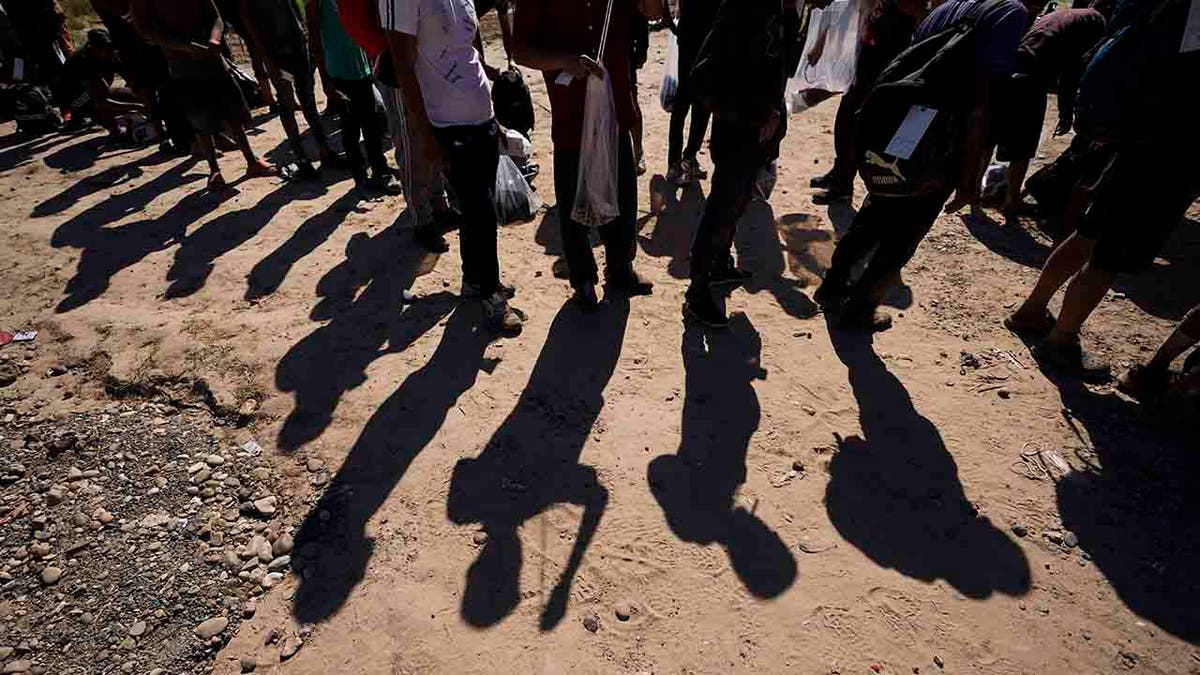
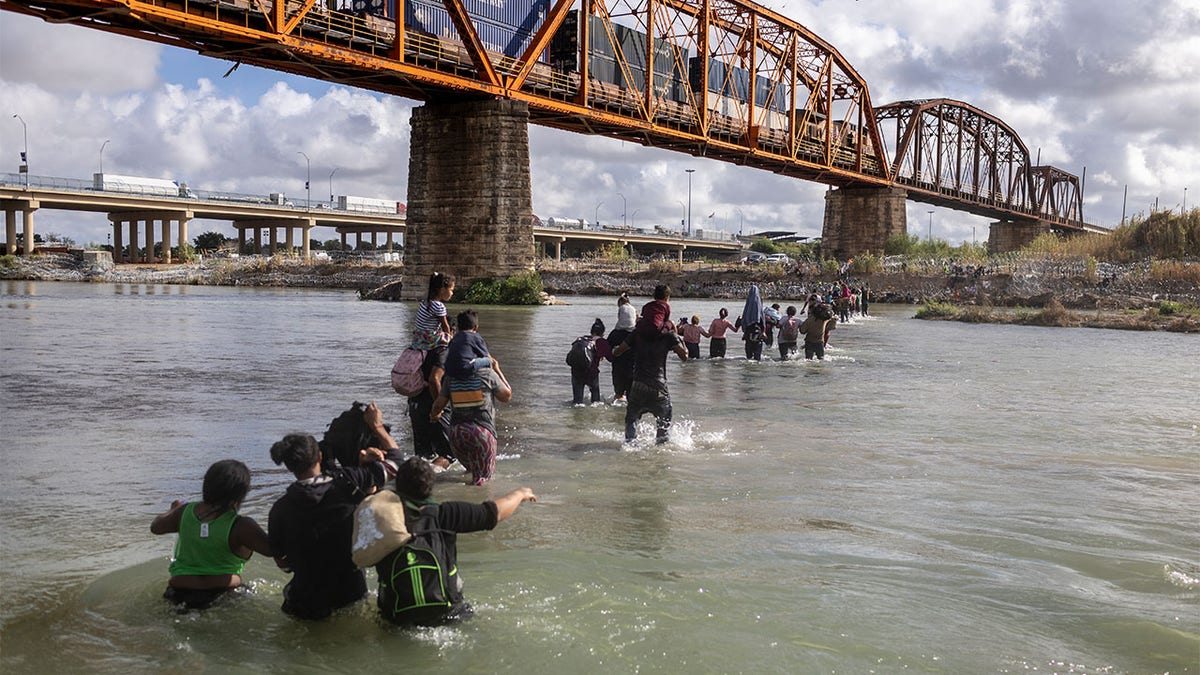



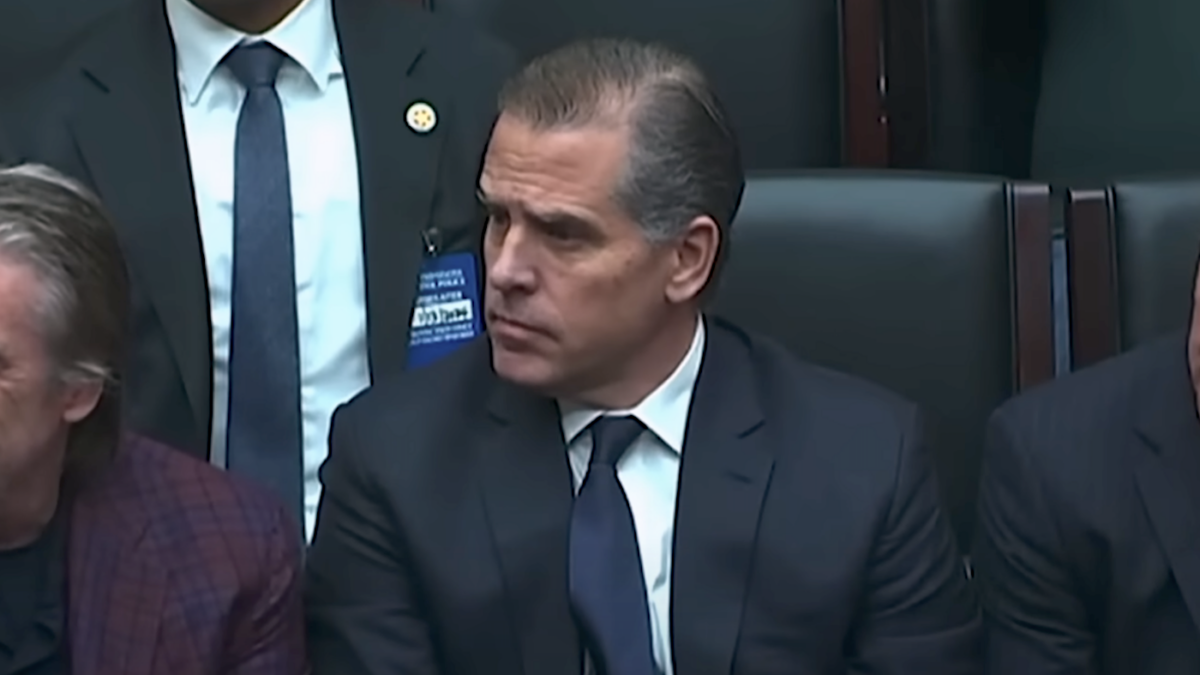


 By
By 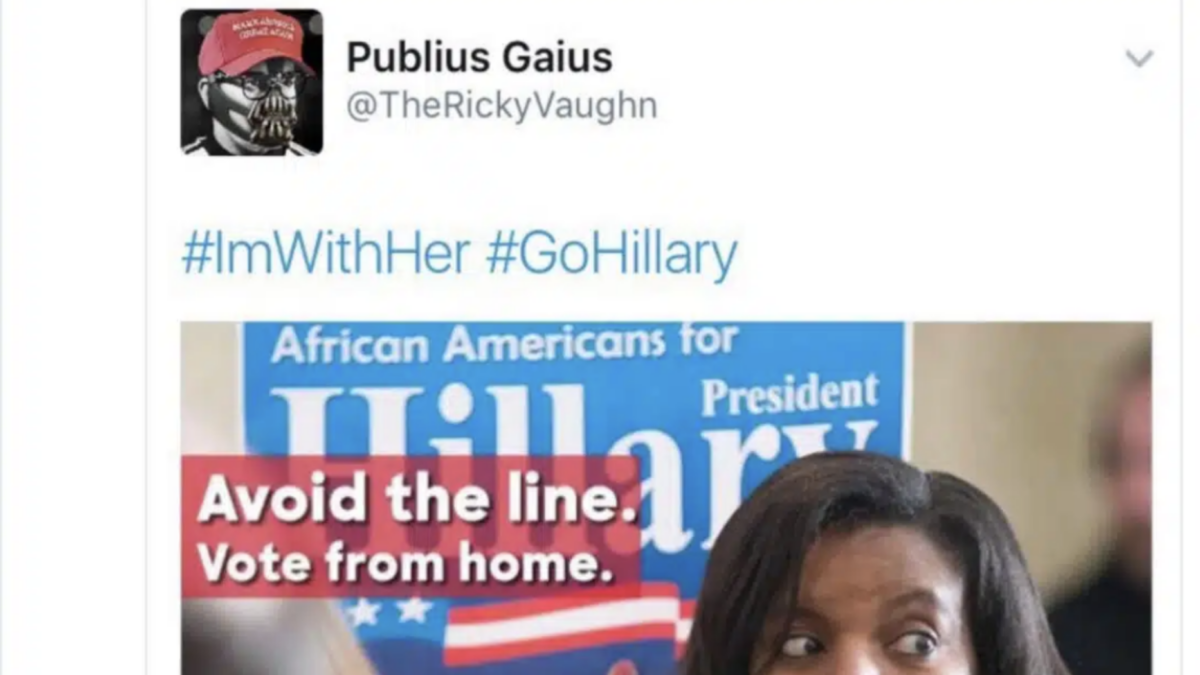


 By
By 
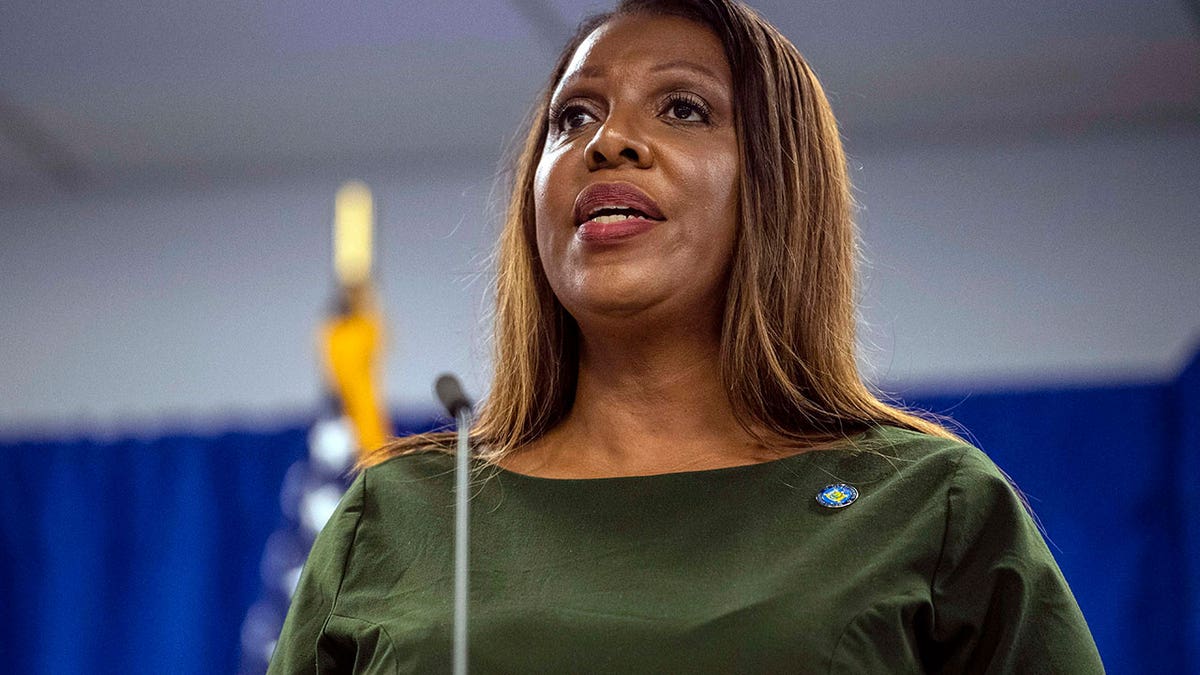


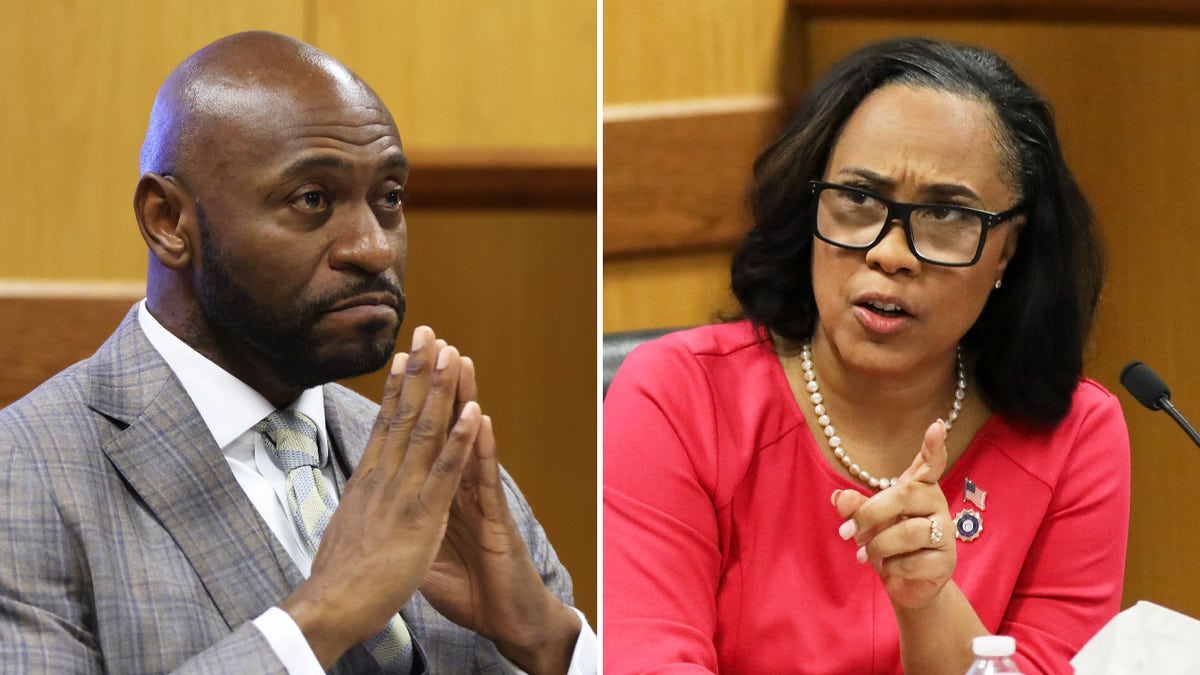
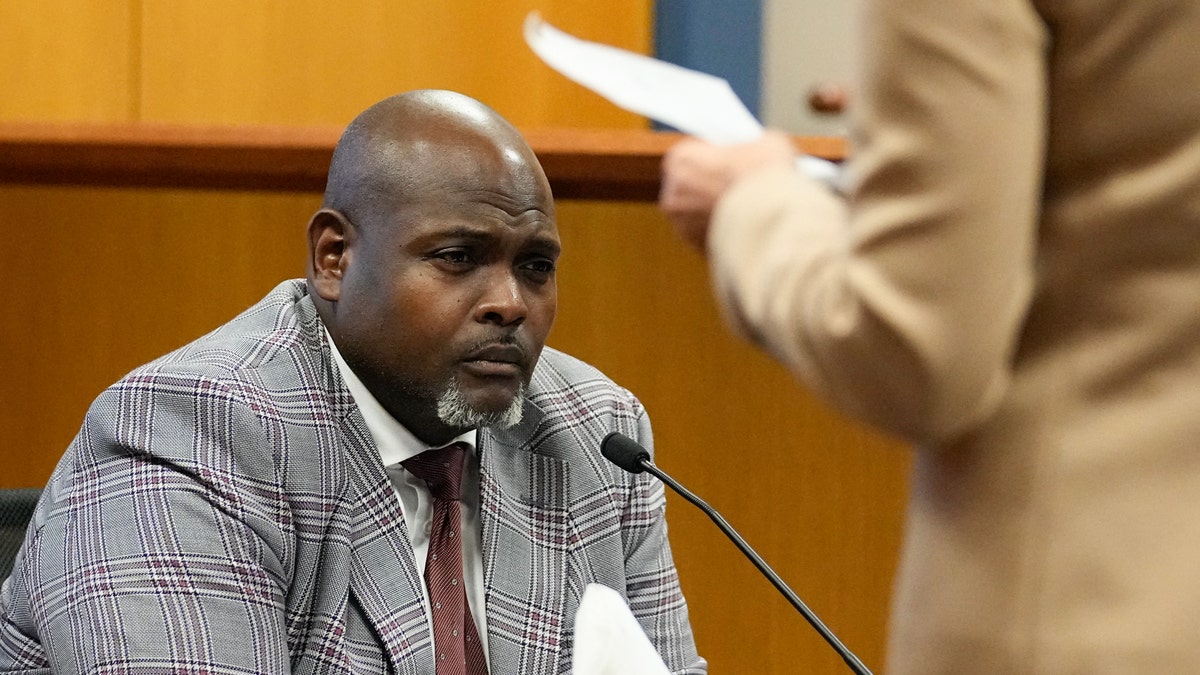
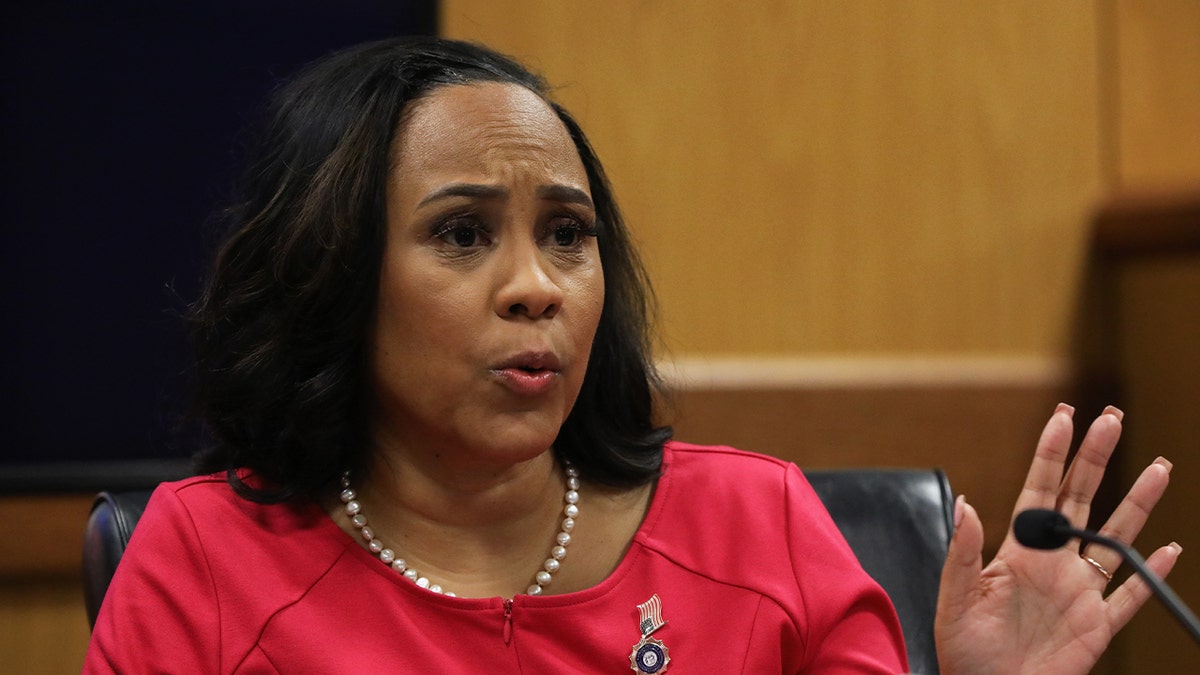


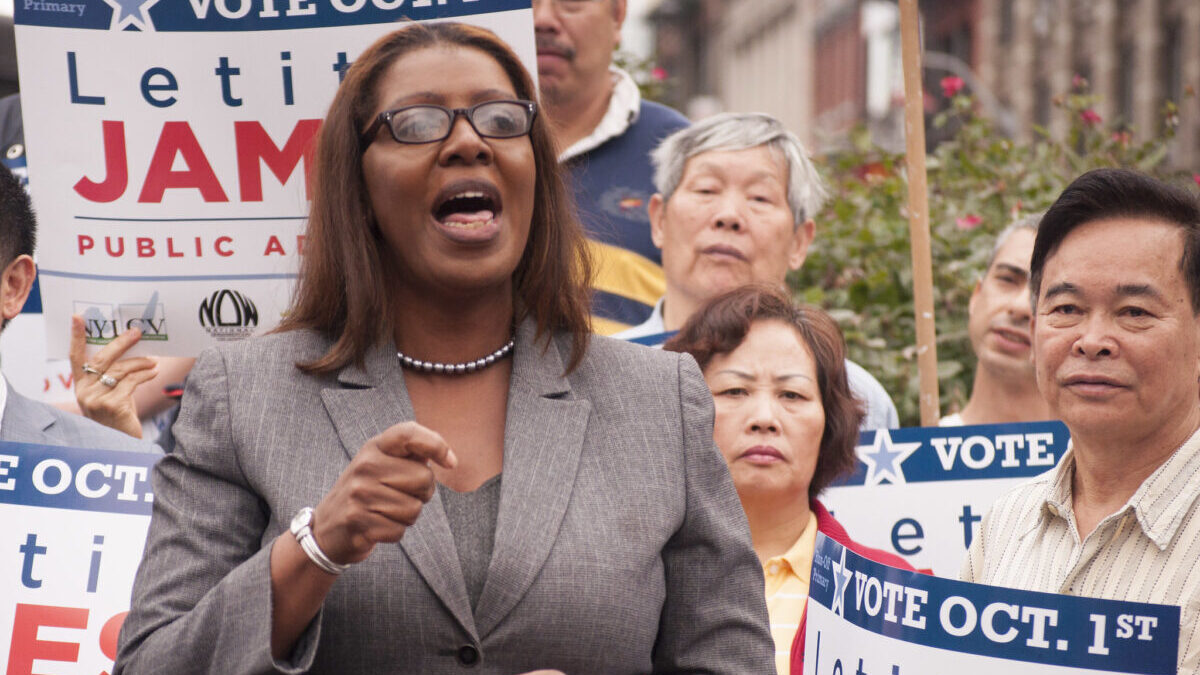


 By
By 




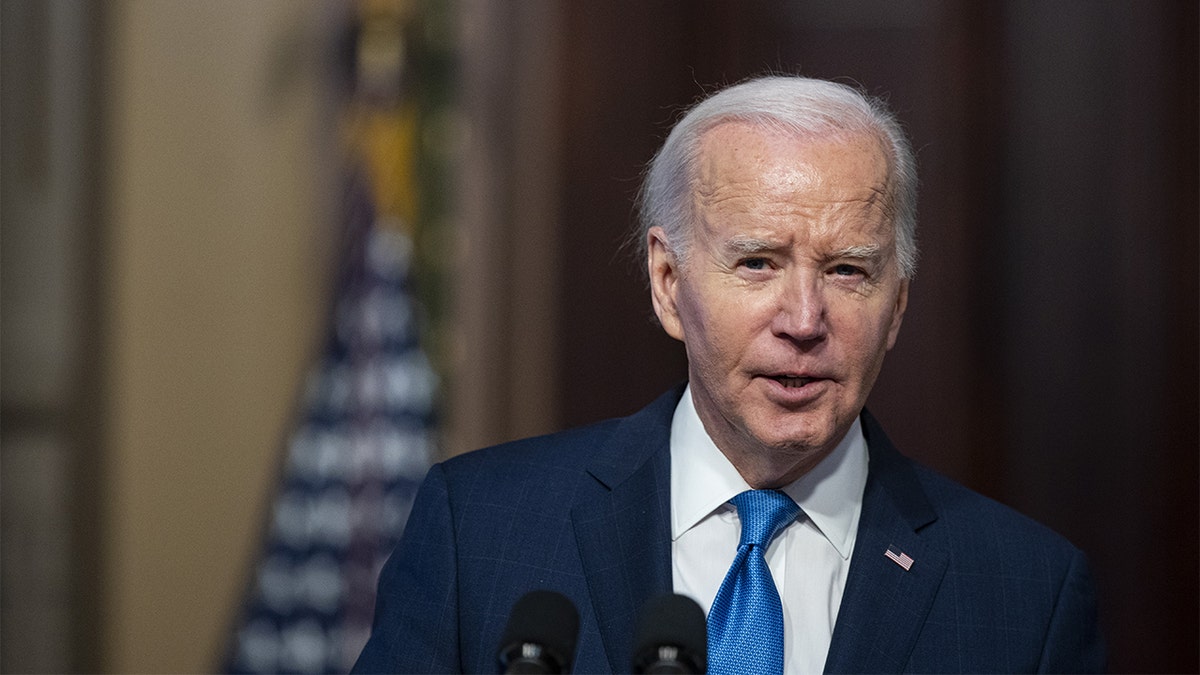
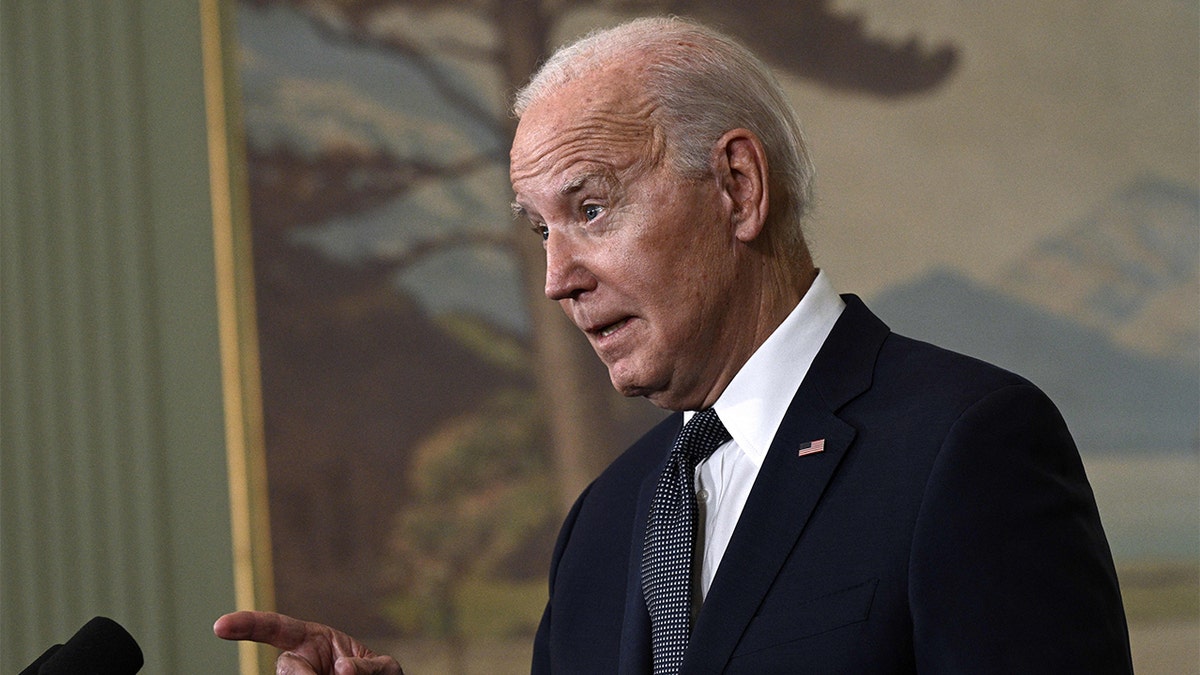
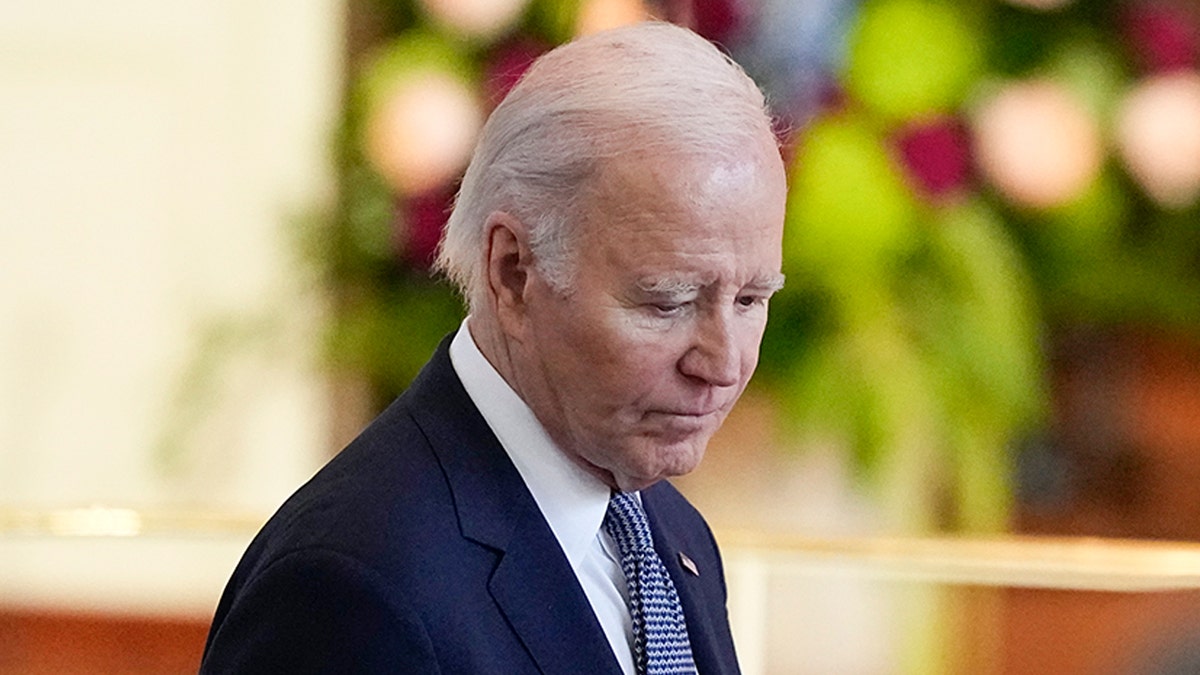


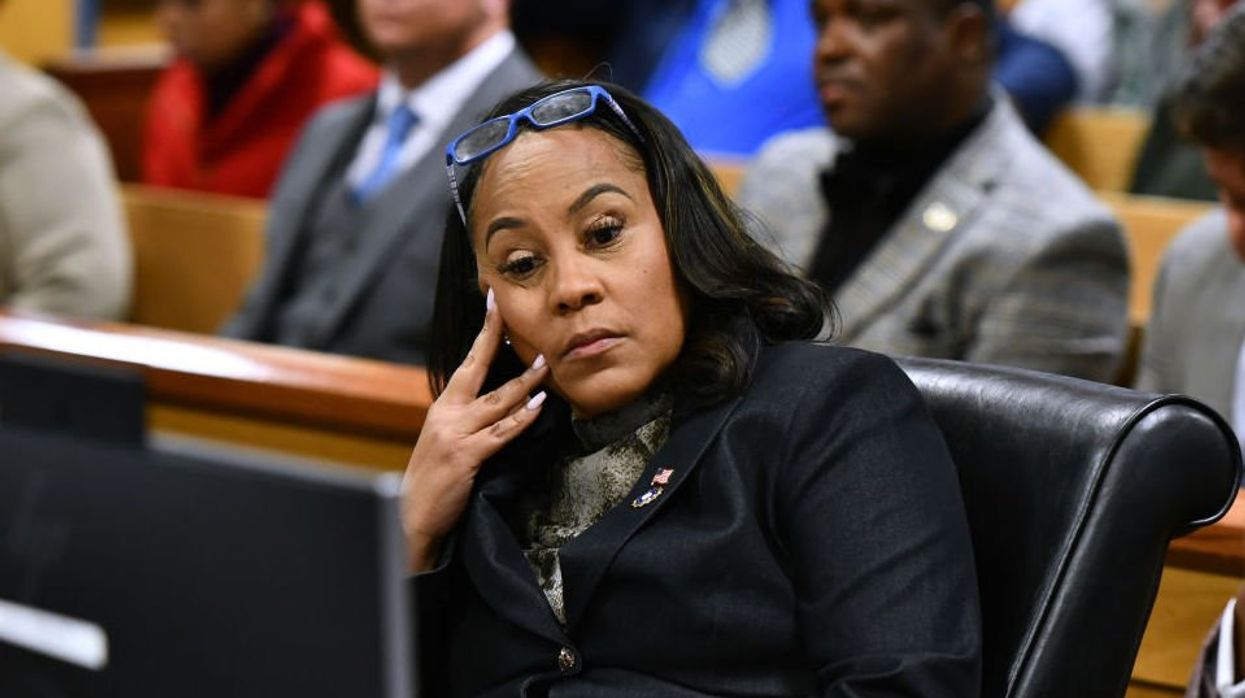
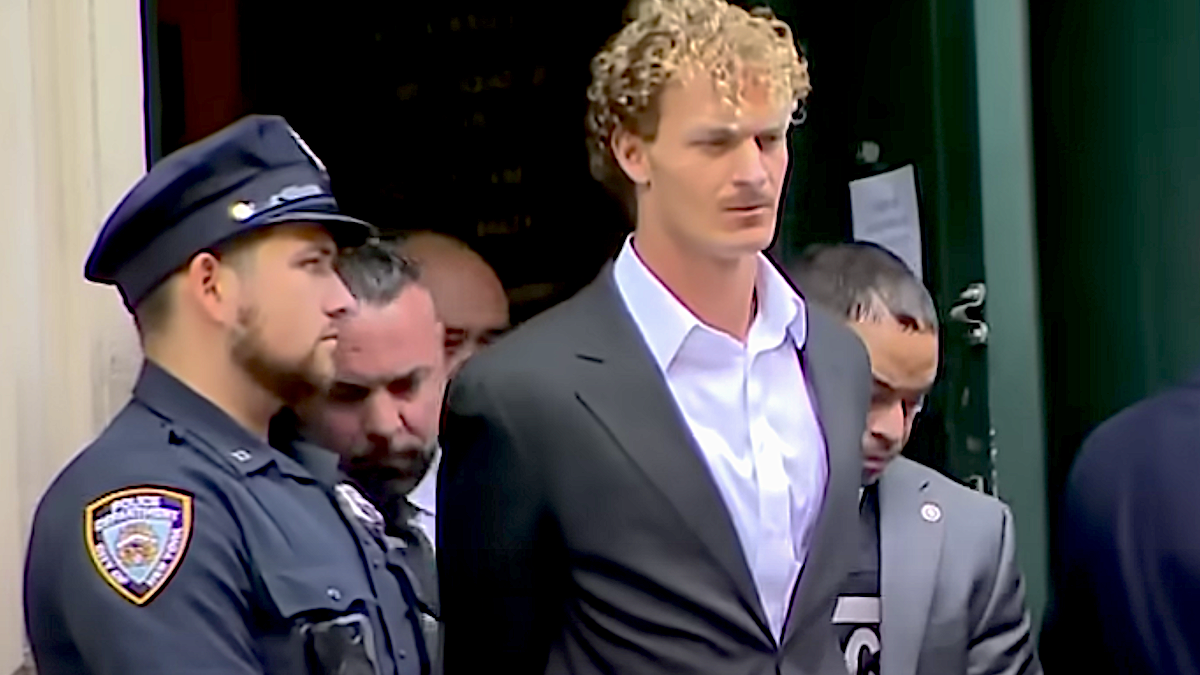


 By
By 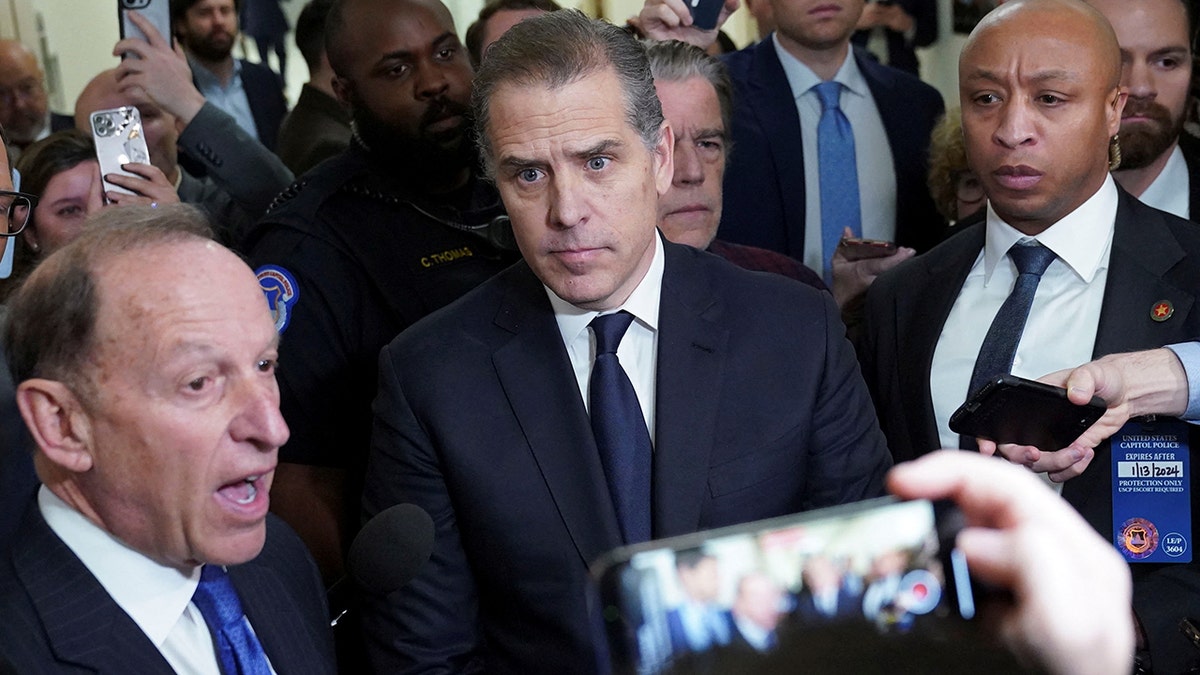

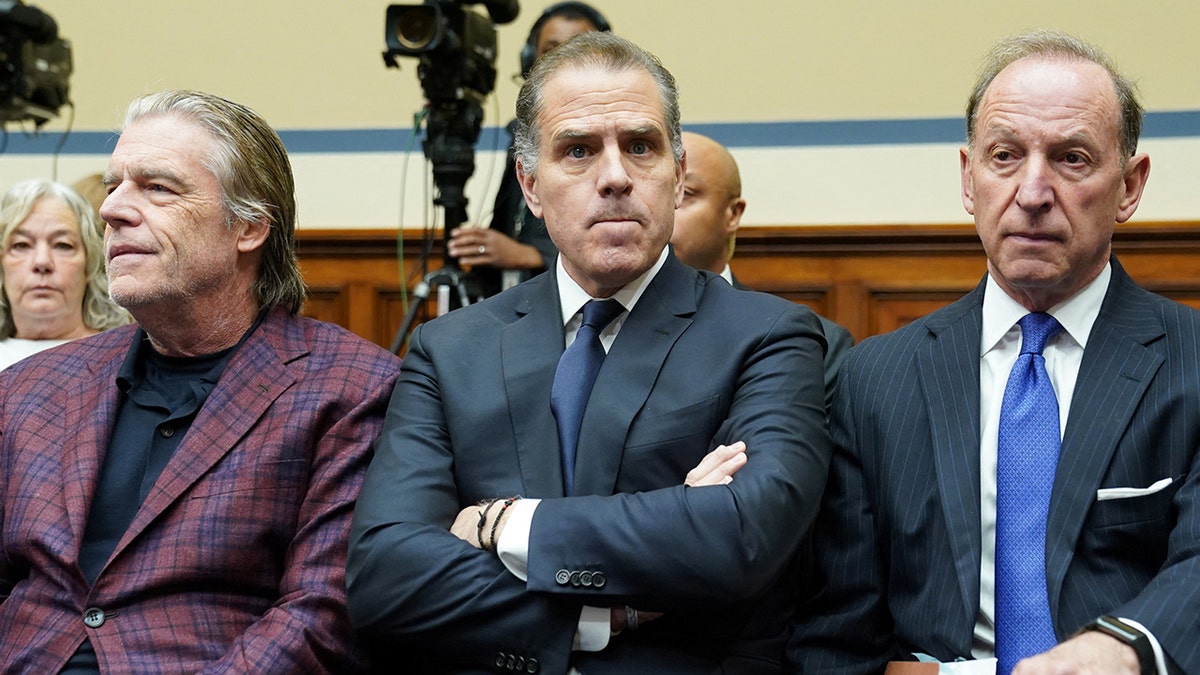
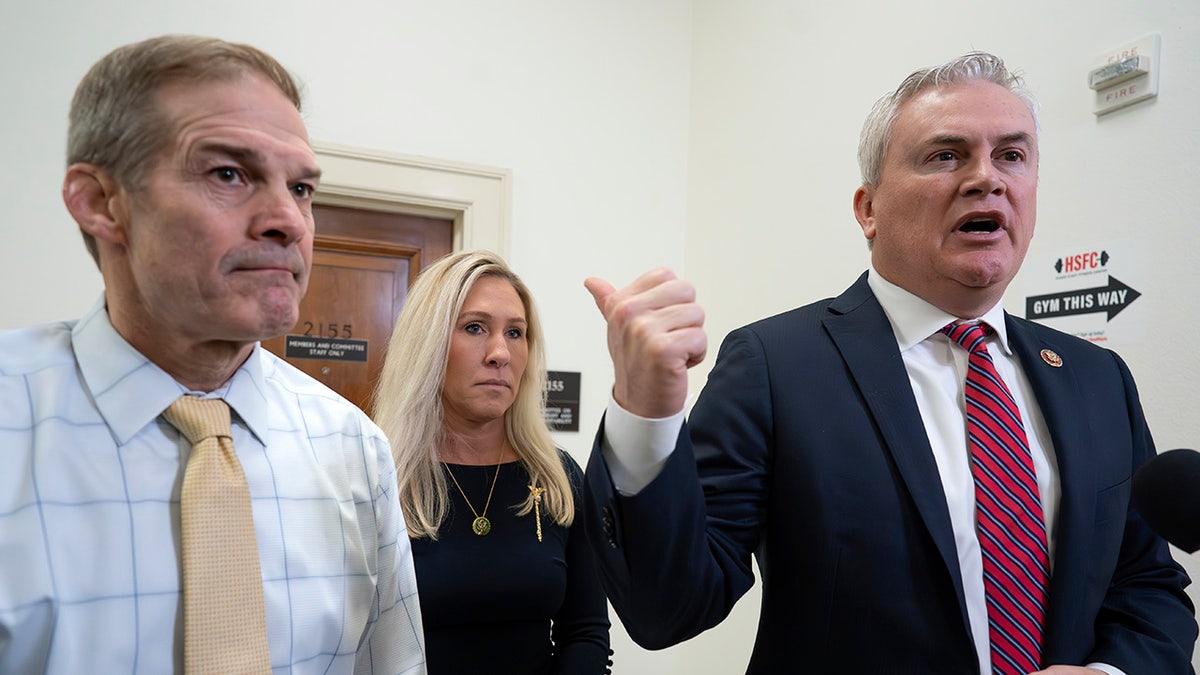
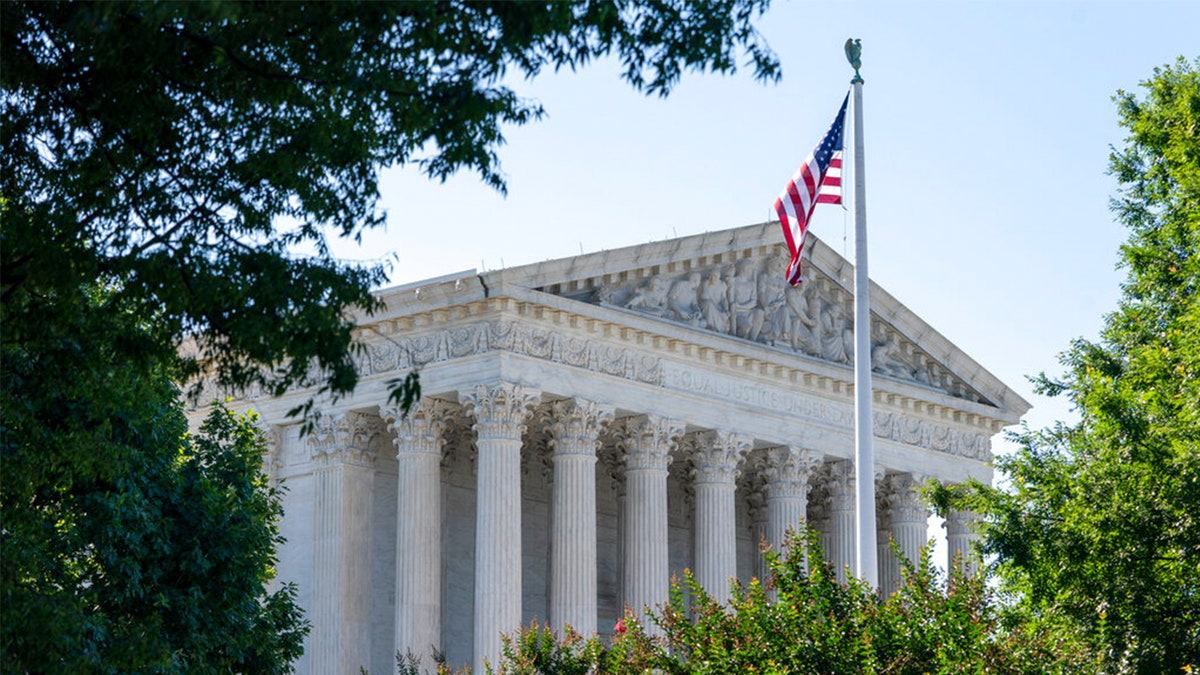


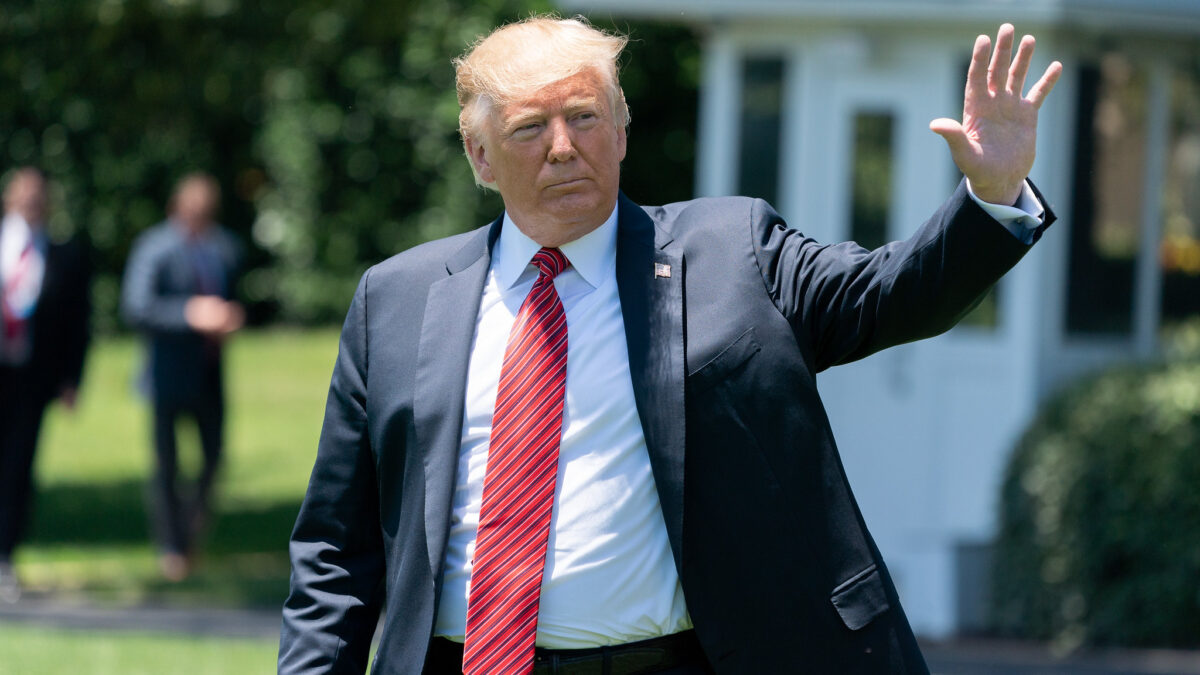

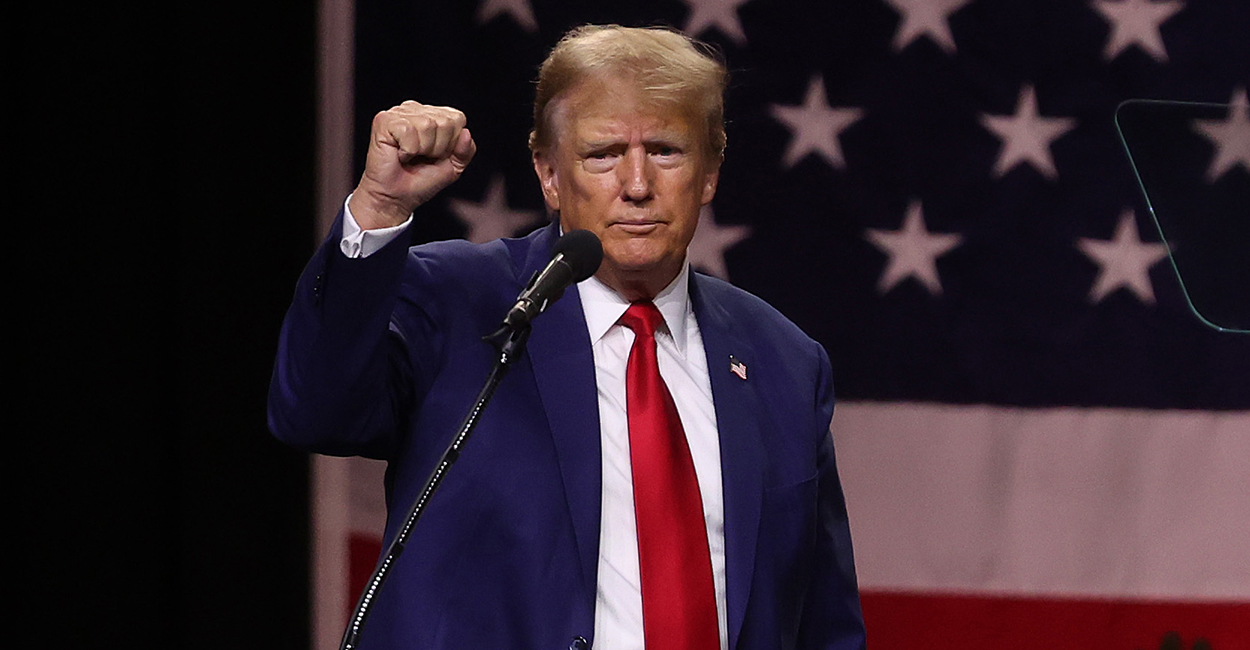

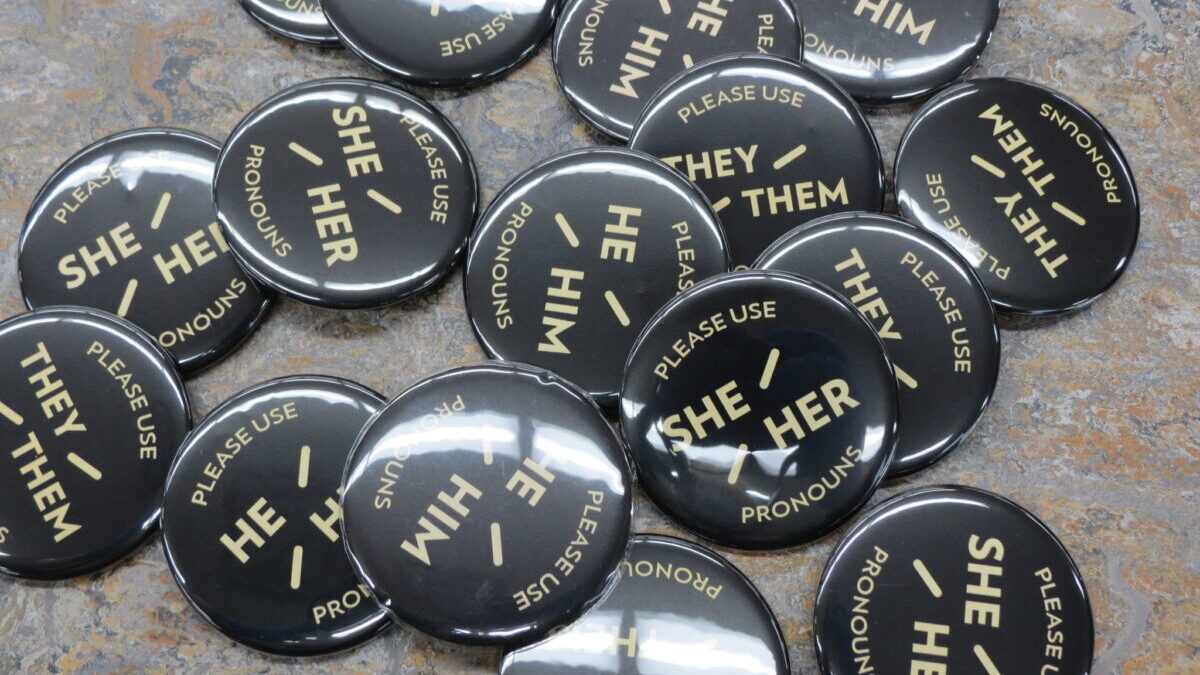


 By
By 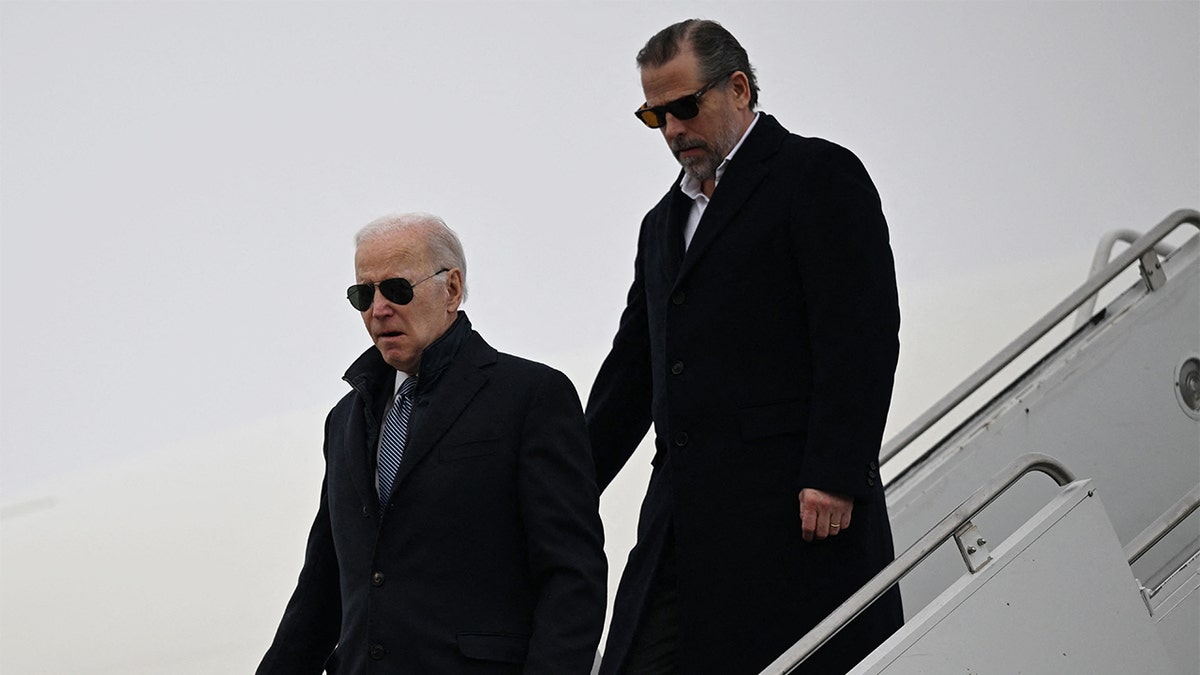

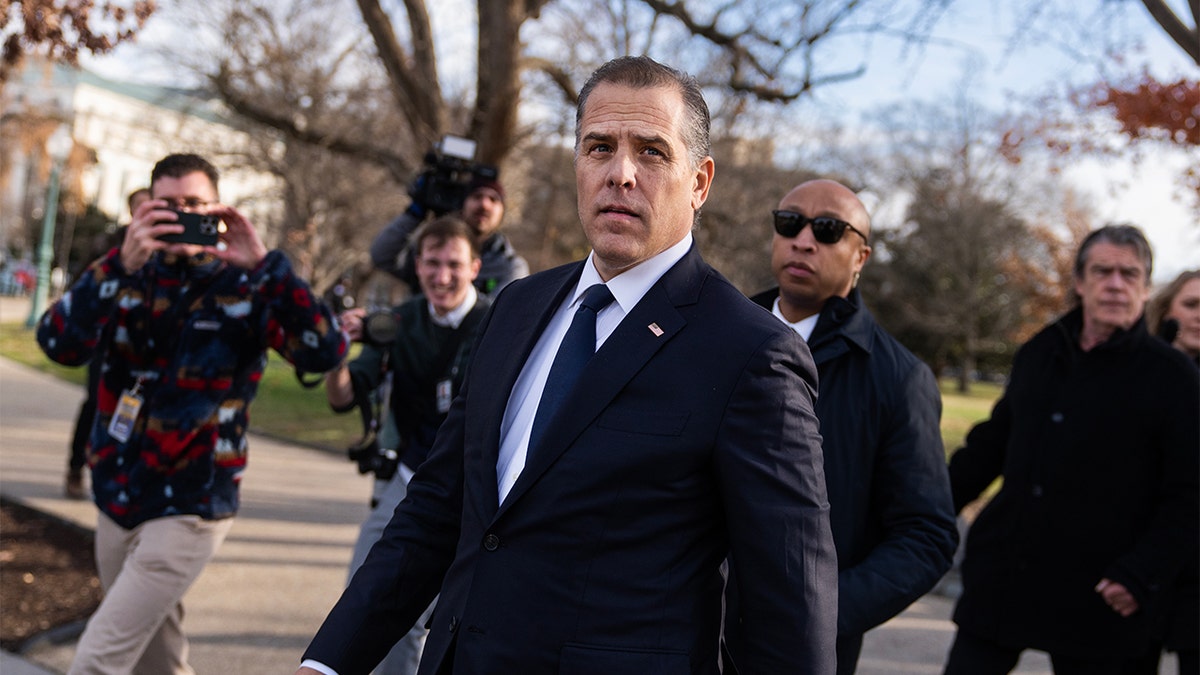

 What Did You Say?
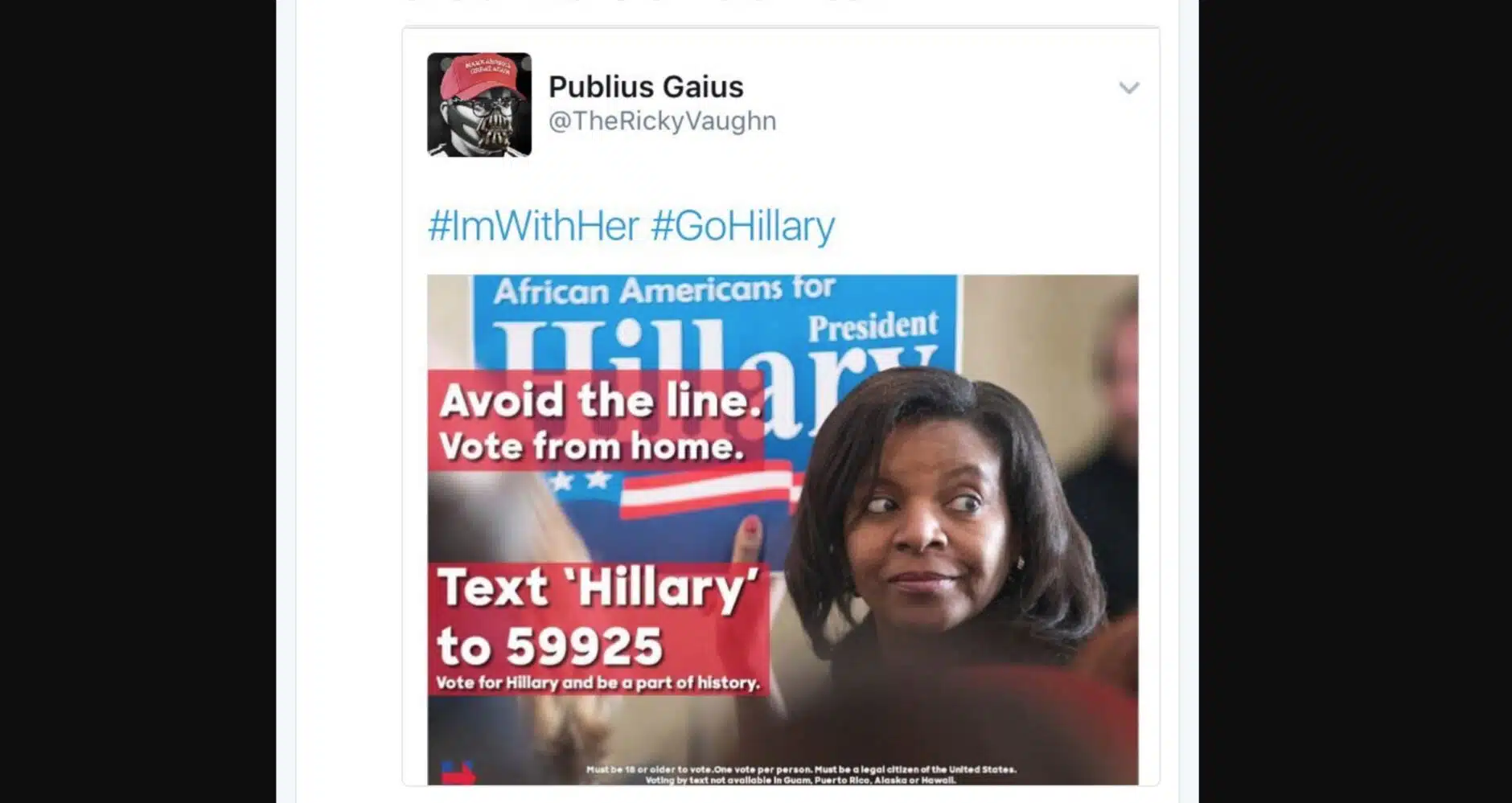

You must be logged in to post a comment.