Perspectives; Thoughts; Comments; Opinions; Discussions

Posts tagged ‘voter ID Law’

Newsom Signs Law Barring Huntington Beach Voters from Deciding Their Own Voter ID Laws


By: Brianna Lyman | October 01, 2024

Read more at https://thefederalist.com/2024/10/01/newsom-signs-law-barring-huntington-beach-voters-from-deciding-their-own-voter-id-laws/

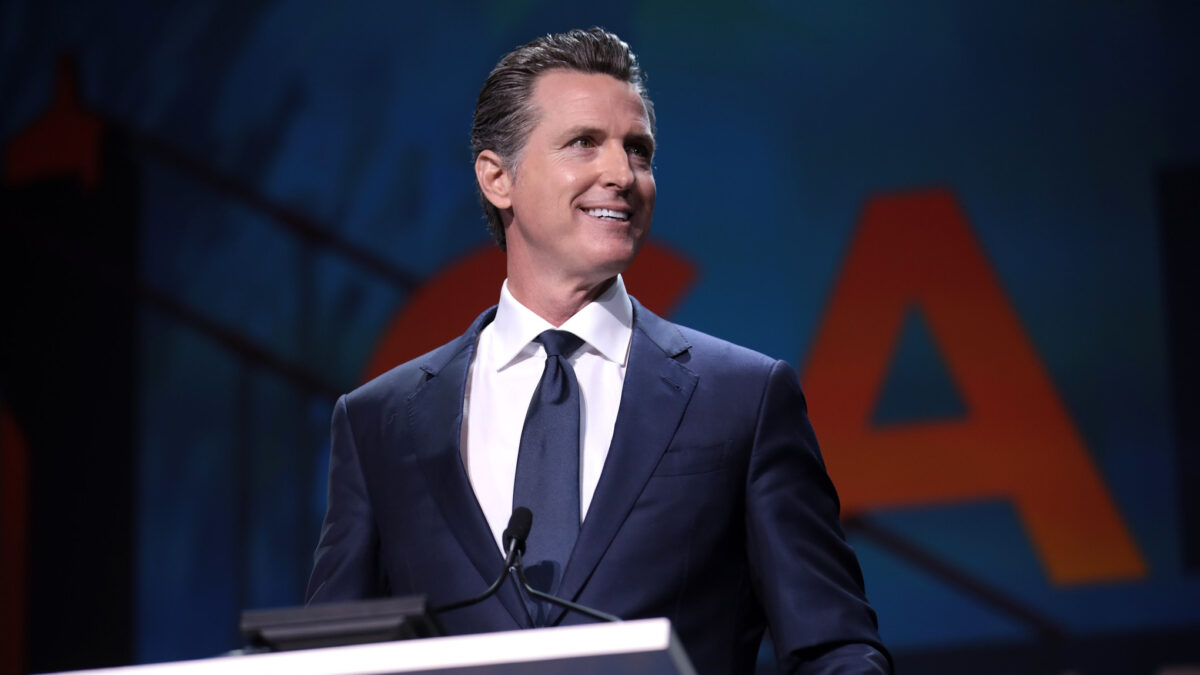
California Gov. Gavin Newsom
California’s Warden/Governor Gavin “I do what the hell I want” Newsome

Gov. Gavin Newsom, D-Calif., signed a law Sunday undermining the will of Huntington Beach voters who approved a measure requiring voter ID. The new state law bars cities from adopting such measures. In March, 53.4% of Huntington Beach residents approved a ballot measure that would require voters present identification in order to vote in municipal elections. The measure was slated to take effect in 2026 and also permitted the city to “provide more in-person voting locations” and “monitor ballot drop-boxes.” But Newsom signed into law Sunday legislation that was originally introduced in response to the Huntington Beach city council approving the measure prior to placing it on the ballot. The new law prohibits “a local government from enacting or enforcing any charter provision, ordinance, or regulation requiring a person to present identification for the purpose of voting or submitting a ballot at any polling place, vote center, or other location where ballots are cast or submitted, as specified.”

The state previously sued Huntington Beach in April to prevent the will of the voters (in the name of “democracy”). California Attorney General Rob Bonta sued the city claiming, “the right to freely cast your vote is the foundation of our democracy and Huntington Beach’s voter ID policy flies in the face of this principle.”

It is unclear whether the lawsuit will still be pursued. The Federalist has inquired with Bonta’s office for a status update.

Bonta had previously sent a letter to city officials in September 2023 claiming the measure “conflicts with state law” and falsely alleged voter ID measures “serve to suppress voter participation.” Bonta told city officials to withdraw the measure or else Bonta would take “action.”

Bonta’s suit alleged Huntington Beach’s voter ID provisions were “preempted and invalid” in matters in which “local law conflicts with state law reasonably tailored to the resolution of a statewide concern.”

The suit also argued the measure undermined the authority of the state legislature, “placing the onus on registered voters to establish their eligibility to vote, and groundlessly challenging the right to vote.”

Huntington Beach City Attorney Michael Gates said in response to the suit that the city would fight to “uphold and defend the will of the people,” according to Courthouse News.

Gates argued that state law (at the time the measure was adopted by the city), did not prohibit the city from adopting the ballot measure. Gates pointed to the introduction of the legislation after the proposal was approved by the city council arguing, as reported by Courthouse News, that “this proves that Bonta [is] wrong — if passing voter ID laws was illegal, why was a new bill necessary?”

For more election news and updates, visit electionbriefing.com.


Brianna Lyman is an elections correspondent at The Federalist. Brianna graduated from Fordham University with a degree in International Political Economy. Her work has been featured on Newsmax, Fox News, Fox Business and RealClearPolitics. Follow Brianna on X: @briannalyman2

Author Brianna Lyman profile

Brianna Lyman

Visit on Twitter@briannalyman2

More Articles

Not A Single Democrat Witness In Congress Agreed Only Citizens Should Vote In Federal Elections


BY: BRIANNA LYMAN | MARCH 12, 2024

Read more at https://thefederalist.com/2024/03/12/not-a-single-democrat-witness-in-congress-agreed-only-citizens-should-vote-in-federal-elections/

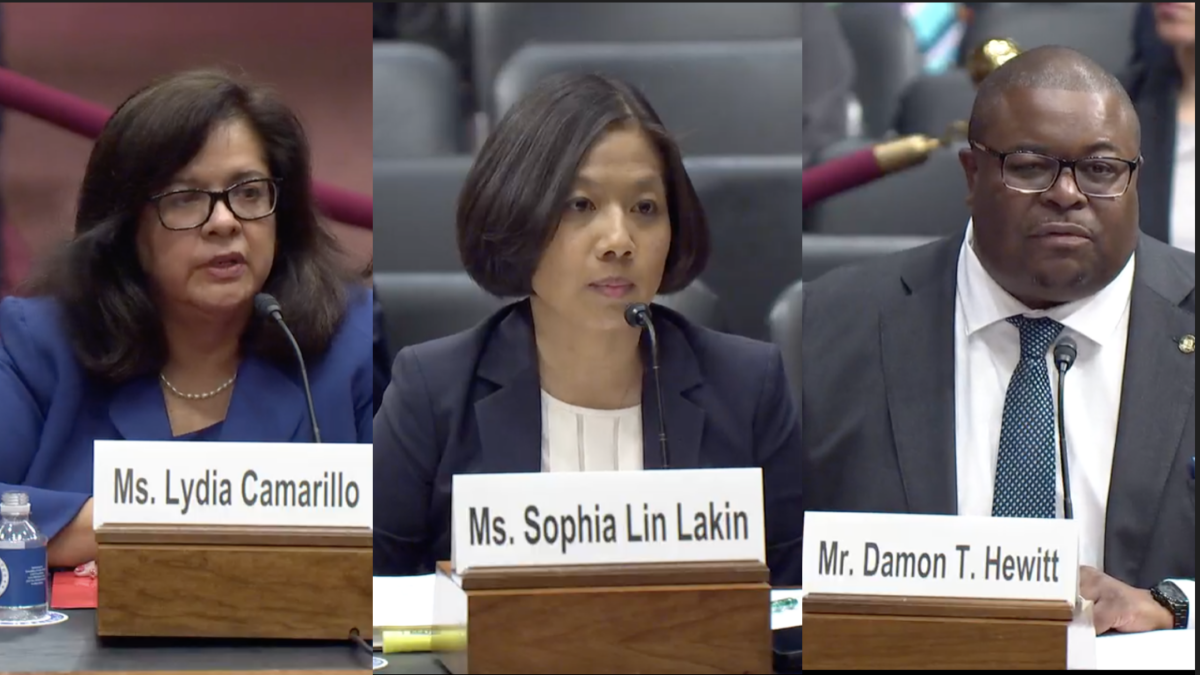
Witnesses testify at Senate Judiciary Hearing

None of Democrats’ witnesses in a congressional hearing Tuesday could say resolutely that they believe only citizens should be able to vote in a federal election.

During a Senate Judiciary Hearing on the John Lewis Voting Rights Act, Republican Utah Sen. Mike Lee asked the witnesses to provide a basic “yes” or “no” answer to a series of questions about non-citizens voting.

“Do you believe that only citizens of the United States should be able to vote in federal elections?” Lee asked each of the witnesses.

“We don’t have a position about non-citizens voting in federal elections, we believe that’s what the current laws are, and so we’re certainly fighting for everyone who is eligible under current law to vote,” Executive Director of The Lawyers’ Committee for Civil Rights Under Law Damon T. Hewitt said.

“That’s a decision of the state law but I want to emphasize –” President of Southwest Voter Registration Education Project Lydia Camarillo said.

“It’s a decision of state law as to who should vote in federal elections?” Lee interjected.

“States decide who gets to vote in various elections, and in federal elections I believe that we should be encouraging people to naturalize and then vote,” Camarillo said.

“Okay but you’re saying that the federal government should have no say in who votes in a federal election?” Lee pressed.

“I don’t have a position on that,” Camarillo responded.

Director of the ACLU’s Voting Rights Project Sophia Lin Lakin told Lee, “Federal law prohibits non-citizens from voting in federal elections and our focus is on enabling all eligible voters to be able to vote and cast their ballot.”

Only two witnesses, counsel at Public Interest Legal Foundation Maureen Riordan and Manager of the Election Law Reform Initiative at the Heritage Foundation Hans von Spakovsky said they do not believe non-citizens should be able to vote. Both were Republican witnesses.

Lee then asked all the witnesses whether “people registering to vote should provide documentary proof of their citizenship in order to register to vote.” Hewitt replied the real question is how asking people to provide proof of citizenship affects them.

“I think your first question kind of answers the second. Based upon the applicable rules, federal or state elections, what have you, we know we have to follow those rules. The question is what is the impact of those rules?” He said in response.

Camarillo called the question “redundant” and said, “It’s already being asked.”

Current federal law stipulates voters must simply check on a form that they are a U.S. citizen, but they do not have to provide any proof.

Lakin flat-out argued asking people to prove they are U.S. citizens to vote amounts to discrimination: “Documentary proof of citizenship or requirements are often discriminatory,” she said.

Riordan and Spakovsky agreed voters should be required to prove they are citizens. Lee said he was troubled that not every witness could simply answer “yes” to both of his questions.

The John Lewis Voting Rights Act seeks to federalize all elections by stripping states and local jurisdictions from making changes to their elections without approval from federal bureaucrats. If the legislation is passed, the U.S. Justice Department could essentially take over an election if its left-wing allies claim minority voters are being harmed by something as simple as requiring an ID or proving citizenship to vote.

A federal judge recently ruled Arizona’s law requiring individuals to prove U.S. citizenship in order to vote in a statewide election is not discriminatory and could proceed after leftists lodged a series of suits.

“Arizona’s interests in preventing non-citizens from voting and promoting public confidence in Arizona’s elections outweighs the limited burden voters might encounter when required to provide” proof of citizenship, U.S. District Judge Susan Bolton ruled.


Brianna Lyman is an elections correspondent at The Federalist.

Author Brianna Lyman profile

BRIANNA LYMAN

VISIT ON TWITTER@BRIANNALYMAN2

MORE ARTICLES

Here’s The Single Most Important Question 2024 GOP Presidential Candidates Must Answer


BY: BEN WEINGARTEN | JUNE 06, 2023

Read more at https://thefederalist.com/2023/06/06/heres-the-single-most-important-question-2024-gop-presidential-candidates-must-answer/

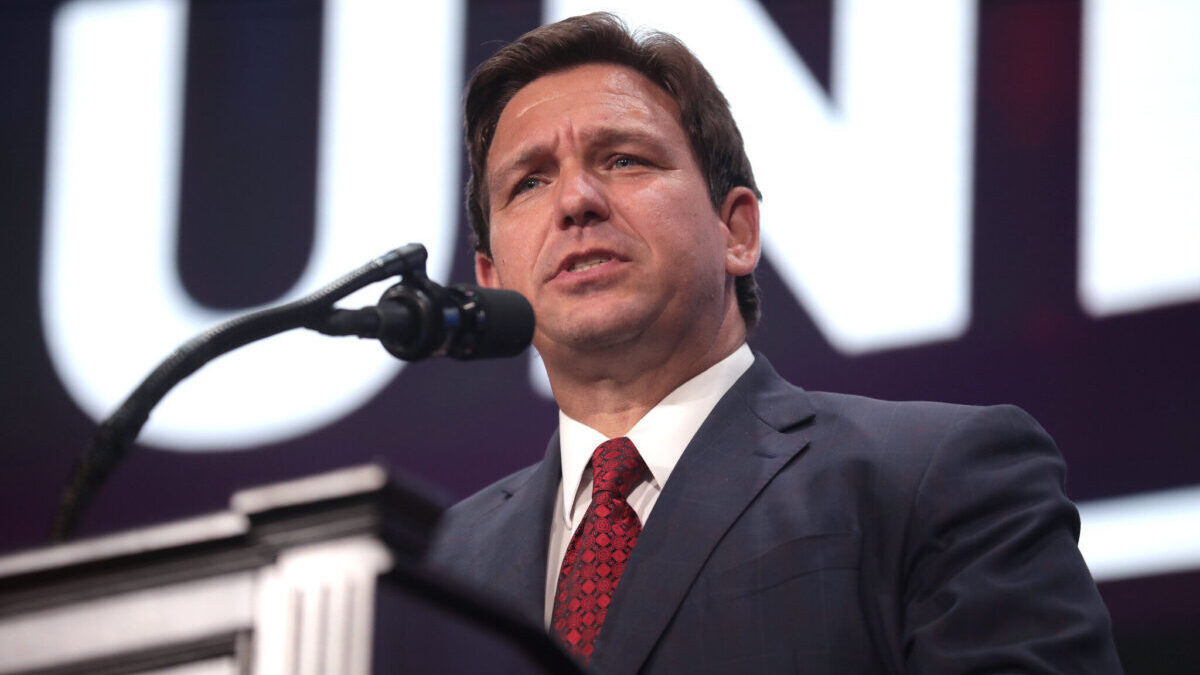
Gov. Ron DeSantis

Author Ben Weingarten profile

BEN WEINGARTEN

VISIT ON TWITTER@BHWEINGARTEN

MORE ARTICLES

There is one fundamental question that any candidate vying for the Republican nomination for president of the United States in 2024 must answer — but that as of yet has gone largely unaddressed, at least publicly, as the field spars over significant but ultimately subordinate issues. The question is this: How will you win the general election under the present voting system?

An inability to answer this question clearly, compellingly, and convincingly imperils Republican odds of retaking the White House, no matter how favorable their prospects might look come next November. It is incumbent on anyone who wants to earn the Republican presidential nomination to answer this question at the outset, and to operate accordingly.

Over the last two election cycles, Republicans lost in historically aberrant if not unprecedented ways. That, or they underachieved relative to what conditions on the ground would have suggested. Political analysts have pointed to numerous factors to explain why the results broke the way they did, but perhaps the one constant in the presidential and midterm elections was that they were both held under a radically transformed voting system.

Democrats are so well-positioned to thrive under this system that even under the most favorable political circumstances, and with a “perfect” Republican presidential candidate, it is not at all clear that such a candidate would prevail. At least that is the prudent assumption under which Republicans serious about winning the presidency should be operating.

As Americans well know, we are lightyears removed from the election days of old — singular days when people voted in person, on paper ballots, after presenting identification. Now, we have mass mail-in elections, conducted over weeks, where those voting in person often do so on electronic machines, and with lax identification standards.

New Norms

Democrats largely developed and long fought for this system, willing it into existence under the cover of Covid-19. Naturally, they have successfully manipulated and exploited the voting regime they made.

Ballot harvesting is becoming an accepted norm. Candidates not only have to earn votes but figure out how to collect as many votes as they possibly can. Are Republicans overnight going to out-harvest their opponents, or figure out some new means to identify and turn out voters otherwise sitting on the sidelines in sufficient numbers to overcome Democrats’ ballot-harvesting superiority?

“Zuckerbucks” continue to loom over our contests as well, despite bans in many states. The left is doing everything it can to steer private money toward public election administration — administration done in conjunction with left-wing nongovernmental organizations (NGOs) seemingly targeting the Democrat ballots needed to win.

Prepare for Lawfare

Lawfare is also now an integral part of our election system. Republicans have started to devote significantly greater attention and resources to the litigation game, but to catch up to Democrats will require a long-term, sustained effort, backed with real money. And filing suit over election policies and practices after votes have already been cast of course has proven a losing proposition, as demonstrated by courts’ unwillingness to grapple with fundamental issues around the 2020 election largely on technical grounds.

Meanwhile, Democrats have engaged in efforts to ruin the lives of Republican election lawyers — in their own words to “make them toxic in their communities and in their firms” — seeking to kneecap their competition before it ever reaches the courtroom.

Are Republican candidates devising comprehensive election lawfare strategies right now to both aggressively target existing election chicanery and stave off that which is to come — with the courage and intellectual heft behind it needed to win in the face of an unrelenting and calculating opposition?

Daunting Challenges

These in-built challenges exist before even discussing election fraud, and the imperative for a Republican candidate to exhaust every available means to prevent it, and in the absolute worst case to detect and mitigate it — this at a time when voting happens at further remove from the election booth than ever before, making finding and proving fraud all the more difficult.

Layer on top of these issues the broader forces any such candidate will be up against, and the prospect of winning becomes even more daunting.

Among them is a concerted ruling-class effort to stymie any Republican nominee who might challenge its power and privilege, as President Donald Trump found himself up against in 2020. As Time’s Molly Ball described it in her infamous “Secret History of the Shadow Campaign That Saved the 2020 Election” exposé, Trump faced: a well-funded cabal of powerful people, ranging across industries and ideologies, working together behind the scenes to influence perceptions, change rules and laws, steer media coverage and control the flow of information.

They were not rigging the election,” Ball wrote, “they were fortifying it.”

This “cabal” will re-engage in 2024 and redouble its election “fortification” efforts, perhaps especially in “controlling the flow of information” — this is the working assumption Republicans must operate under. Candidates should also assume the deep state will engage in all manner of dirty tricks. The election interference has already begun in earnest. Frankly, it has been ongoing since 2016.

Given the Democrats’ advantages, it would be foolish for any Republican candidate, no matter how formidable, and against an opponent no matter how weak, to presume victory is preordained or even likely in 2024.

The two leading candidates have, to their credit, acknowledged the challenges presented by the voting system and Republicans’ failings in competing under it.

Former President Donald Trump has vowed that “we will become masters at ballot harvesting.” “We have no choice,” he has said, but to “beat Democrats at their own game.” Florida Gov. Ron DeSantis also recently said, “We’re going to do ballot harvesting,” and that he won’t “fight with one hand tied behind [his] back.”

In that spirit, Republican candidates should devise and articulate a comprehensive plan to win, aimed at an electorate largely dubious of a system they see as rigged. Many are demoralized by this system, which could dampen turnout in key areas.

A Plan

In an ideal world, such a plan would begin with an effort to lobby state legislatures to pass a battery of election integrity-strengthening laws seeking to restore voting, to the greatest extent possible, to the standard of single-day, in-person, and with identification; purge voter rolls of ineligible names; provide maximum transparency and visibility into the voting process for observers, challengers, and the candidates; facilitate real-time arbitration over contested ballots and irregularities, and clear remedies for broader alleged malfeasance; empower state authorities to pursue vote fraud; and impose utterly crippling criminal penalties on anyone who engages in it.

Beyond a legislative effort to ensure end-to-end election integrity from delivery of ballot to vote-counting, candidates must lay out a realistic roadmap for success by internalizing lessons of recent election cycles and forthrightly recognizing Republicans’ strengths and weaknesses. They must determine how to optimally deploy finite resources to triumph in a bloody political war, and play on whatever advantages Republicans may have.

To prepare such a plan, candidates should seek to identify: Democrats’ most effective and decisive strategies and tactics in recent election cycles; what Democrats will do to improve upon these efforts; Republicans’ greatest strategic and tactical failures and successes in recent election cycles; Republican advantages yet to be exploited; and the most significant election integrity-eroding laws, policies, and practices on a state-by-state basis in recent election cycles.

Such an analysis would help the candidates determine which strategies and tactics to replicate, improve upon, experiment with, and totally discard. It would also help them anticipate the strategies and tactics they should combat using whatever means available, and, relatedly, discern what rules and features of the game they must relentlessly litigate over — as Democrats will no doubt be doing.

Then, candidates could develop a precinct-level plan to find and maximize turnout among voters in the most pivotal locales while building as strong and aggressive an on-the-ground poll challenging/fraud detection operation as possible to deter illegal or unethical Democrat behavior; develop a related lawfare plan; and determine how much money they must raise to implement the plans, when and where to allocate the funds, and to whom.

At minimum, this thought exercise would yield critical insights, and instill in voters and donors alike confidence there is a robust and coherent operation in place to maximize the odds for success.

The planning must begin now.

Only by competing and winning under a rotten system rewarding the kind of organizing and action historically anathema to conservatives will there ever be an opportunity to dismantle that system.


Ben Weingarten is Editor at Large for RealClearInvestigations. He is a senior contributor to The Federalist, columnist at Newsweek, and a contributor to the New York Post and Epoch Times, among other publications. Subscribe to his newsletter at weingarten.substack.com, and follow him on Twitter: @bhweingarten.
Wyoming Governor Signs Bill that Requires Voter ID at Polling Station


Reported By Jim Hoft | Published April 8, 2021

Read more at https://www.thegatewaypundit.com/2021/04/wyoming-governor-signs-bill-requires-voter-polling-station/

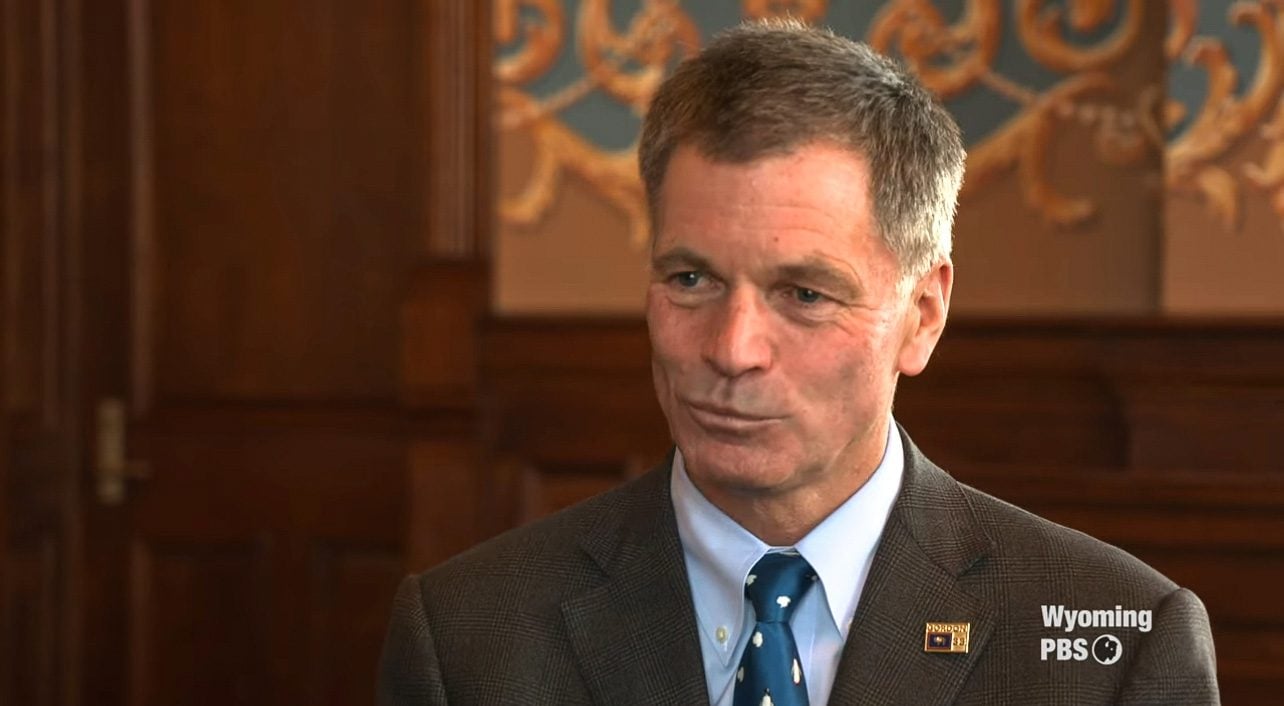
Republican Wyoming Governor Mark Gordon signed House Bill 75 into law Tuesday that requires Wyoming voters to present a valid ID before casting a vote. This voter ID bill, primarily sponsored by Rep. Chuck Gray, will be effective on July 1. The new bill requires Wyoming voters to show one of the following forms of valid ID in order to vote at the polls:

  • A Wyoming driver’s license as defined by W.S. 31‑7‑102(a)(xxv)
  • A tribal identification card issued by the governing body of the Eastern Shoshone tribe of Wyoming, the Northern Arapaho tribe of Wyoming or other federally recognized Indian tribe
  • A Wyoming identification card issued under W.S. 31‑8‑101
  • A valid United States passport
  • A United States military card
  • A valid Medicare or Medicaid insurance card (wouldn’t be valid after Dec. 31, 2029)
  • A driver’s license or identification card issued by any state or outlying possession of the United States
  • Photo identification issued by the University of Wyoming, a Wyoming community college or a Wyoming public school

Rep. Dan Zwonitzer, a Republican, believed the bill will not suppress anyone’s vote because of amendments added to it that allow voters to use alternate forms of ID, such as a Wyoming student ID, Medicare ID or a tribal ID card, according to the Oil City News in Casper, Wyo.

Earlier this month, the Georgia state Senate passed S.B. 202 that included commonsense measures like tightening procedures for polling locations and requiring voters to present identification to request and cast absentee ballots.

Democratic allies like AppleDeltaMLB, and other companies have charged that the bill is voter suppression fueled by white supremacy, using the default accusation that has become their Pavlovian response to all Republican-initiated legislation.

Jim Hoft

Jim Hoft is the founder and editor of The Gateway Pundit, one of the top conservative news outlets in America. Jim was awarded the Reed Irvine Accuracy in Media Award in 2013 and is the proud recipient of the Breitbart Award for Excellence in Online Journalism from the Americans for Prosperity Foundation in May 2016.

Tag Cloud