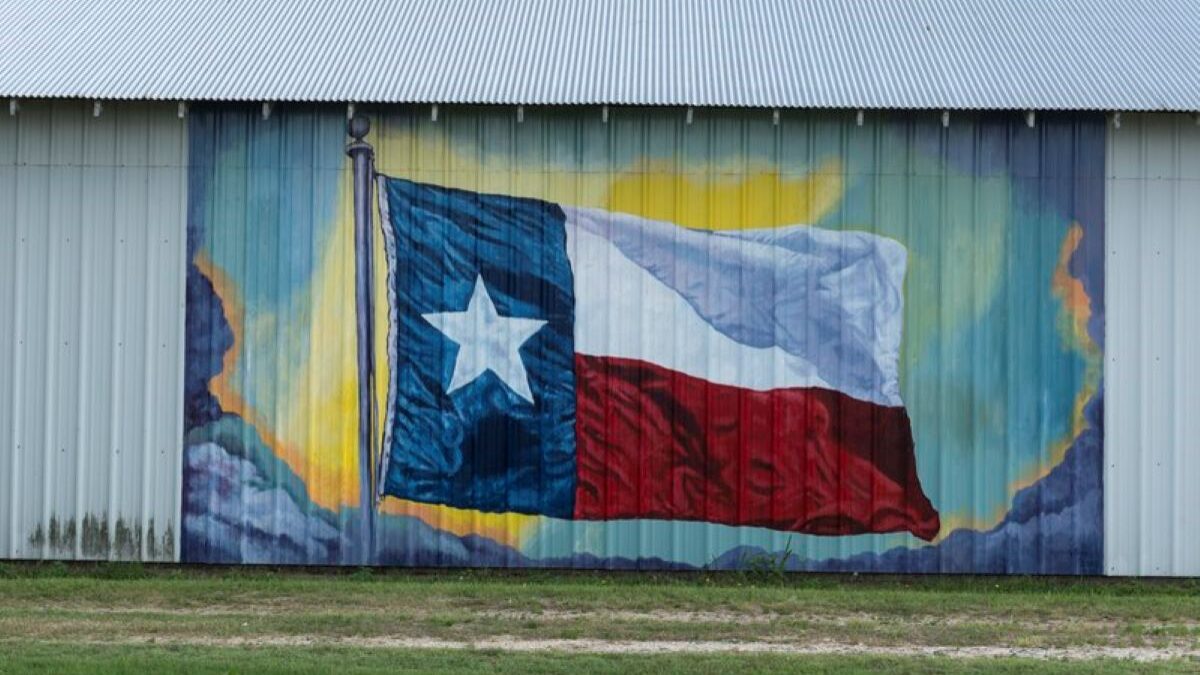
If Americans want to understand how genuine “voter suppression” works, they should take a look at the widespread disenfranchisement of voters in Harris County, Texas, during the 2022 midterms.
On Election Day, county election officials’ misadministration of the contest led to ballot paper shortages, delayed openings and temporary closures of voting centers, and an untold number of disenfranchised voters.
“I have never seen anything so egregiously, grossly mismanaged as the elections in Harris County this past year,” said Harris County GOP Chair Cindy Siegel during a recent Texas Senate committee hearing.
For context, Harris County is the third-most populous county in America. While historically favorable to Republicans, county residents have increasingly voted for Democrats in recent election cycles. During the 2020 election, for instance, Joe Biden won the county by 13 points, with Democrats also expanding their majority on the county’s governing commissioners court last fall.
Not long after the polls opened on Election Day, local media outlets began reporting that several Harris County voting centers were experiencing ballot paper shortages, delayed openings, and problems with voting machines.
What Happened in Harris County?
Nearly two months after the election, Harris County released an “inconclusive” assessment detailing the reported problems election workers and voters encountered on Election Day. In addition to ballot paper shortages, the report confirmed that some voting centers “did not open on time,” with reasons ranging from staffing problems to election officials not receiving the keys to their center’s voting equipment prior to polls opening.
The report further revealed that during the early part of Election Day, the county’s ePollbook server “lost replication,” which “prevented the wait time tool from updating the website, prevented the supply team from seeing real-time check in and disabled the sample ballot look up feature.” Such circumstances “had a direct impact on the ability [of county election officials] to see how many voters were being checked-in and what the wait times were” at any voting center.
While the assessment says that 68 precinct election judges “reported running out of their initial allotment” of paper ballots, an investigation conducted by local news outlet KHOU 11 indicates the problem was more widespread. According to the investigation, 121 of the county’s 782 voting centers “did not initially receive enough ballot paper to cover voter turnout.”
“The county allotted each of the locations six ballot paper packets, or enough for 600 ballots. But the total votes cast exceeded that amount, sometimes by hundreds of ballots,” the KHOU 11 report reads.
At the committee hearing, Siegel testified that one of the Harris County GOP’s precinct chairs developed a “heat map” purportedly showing that “the majority” of the 121 polls were in “Republican voting areas.”
The KHOU 11 investigation also found that on Election Day, 52 voting centers “received less paper in 2022 than ballots cast in 2018.” Harris County has not disclosed why voting centers ran out of ballot paper. It also remains unknown how many voters were disenfranchised as a result of such issues.
Investigations and Continued Cover-Up
Following the Nov. 8 contest, leading Texas Republicans began demanding answers from Harris County officials over the locality’s Election Day problems. On Nov. 14, GOP Texas Gov. Greg Abbott issued a statement calling on the secretary of state, attorney general’s office, and Texas Rangers to “initiate investigations into allegations of improprieties in the way that the 2022 elections were conducted in Harris County,” adding that voters “deserve to know what happened.”
Not long after, Harris County District Attorney Kim Ogg announced her office had launched an investigation into the county’s Election Day problems following a request from the Texas secretary of state’s office to help with an inquiry into “possible criminal activity relating to shortages of paper ballots.” After receiving backlash from Texas Democrats, a bureau chief in Ogg’s office defended the investigation, saying Ogg was following state law.
Despite the seriousness of the matter, leading Harris County officials have attempted to stonewall efforts to uncover what led to the administrative failures on Election Day. When pressed by Harris County’s commissioners in January about the ballot paper shortages, Clifford Tatum, Harris County’s election administrator, refused to provide any details, using a lawsuit filed against his office by the Harris County GOP as justification for remaining mum.
County officials have displayed similar evasiveness with local media. Last year, KHOU 11 and a local ABC affiliate filed open records requests with Harris County over records related to the Nov. 8 election. After the Texas attorney general denied a request from Harris County to dismiss the requests last month, the locality filed a lawsuit against the AG’s office last week to keep the records hidden.
Texas Republicans Offer Solutions
In response to Harris County’s extensivetrack record of failed election administration, Texas Republicans have introduced numerous bills this year seeking to enhance the integrity of the state’s elections. If passed and signed into law, SB 1911 would allow any county official responsible for acquiring election supplies who “intentionally fails to provide an election precinct with the required number of ballots” to be charged with a Class A misdemeanor. Said officials could also be charged under the same statute for failing to “promptly supplement the distributed ballots upon request by a polling place.”
Individuals convicted of a Class A misdemeanor are subject to a fine of up to $4,000, a maximum of one year in jail, or both.
Also introduced is SB 1039, which mandates local election officials address inquiries related to election irregularities and provide “explanation[s] and “supporting documentation” when such information is requested by local and state party chairs, candidates, or election judges.
“This is about a catastrophic lack of performance in Harris County,” said bill sponsor and Republican Sen. Paul Bettencourt during last month’s State Affairs Committee hearing. “It’s too big to ignore. The state can’t afford this type of problem in Harris County and neither can the residents.”
Additional election integrity bills introduced by Texas Republicans would make illegal voting a felony, withdraw Texas from the leftist-controlled voter-roll management system known as ERIC, and grant the secretary of state the power to suspend and replace an election administrator, among other reforms.
The kinds of Election Day failures displayed in Harris County are notably problematic because of the partisan difference in how Americans vote. While Democrats have made unsupervised, mail-in voting a key facet of their electoral strategy, Republicans prefer in-person voting on Election Day.
If this trend grows, it means that any election misadministration on Election Day will continue to disproportionately harm GOP voters over Democrats. Such circumstances would only further contribute to Americans’ waning confidence in U.S. elections, making accountability for what happened in Harris County all the more necessary.
Shawn Fleetwood is a Staff Writer for The Federalist and a graduate of the University of Mary Washington. He also serves as a state content writer for Convention of States Action and his work has been featured in numerous outlets, including RealClearPolitics, RealClearHealth, and Conservative Review. Follow him on Twitter @ShawnFleetwood
House Republicans held a hearing on Tuesday, highlighting the failures of Luzerne County, Pennsylvania, election officials in managing the locality’s 2022 election.
Republicans on the Committee on House Administration held a hearing Tuesday highlighting the failures by Luzerne County, Pennsylvania, election officials in managing the locality’s 2022 election.
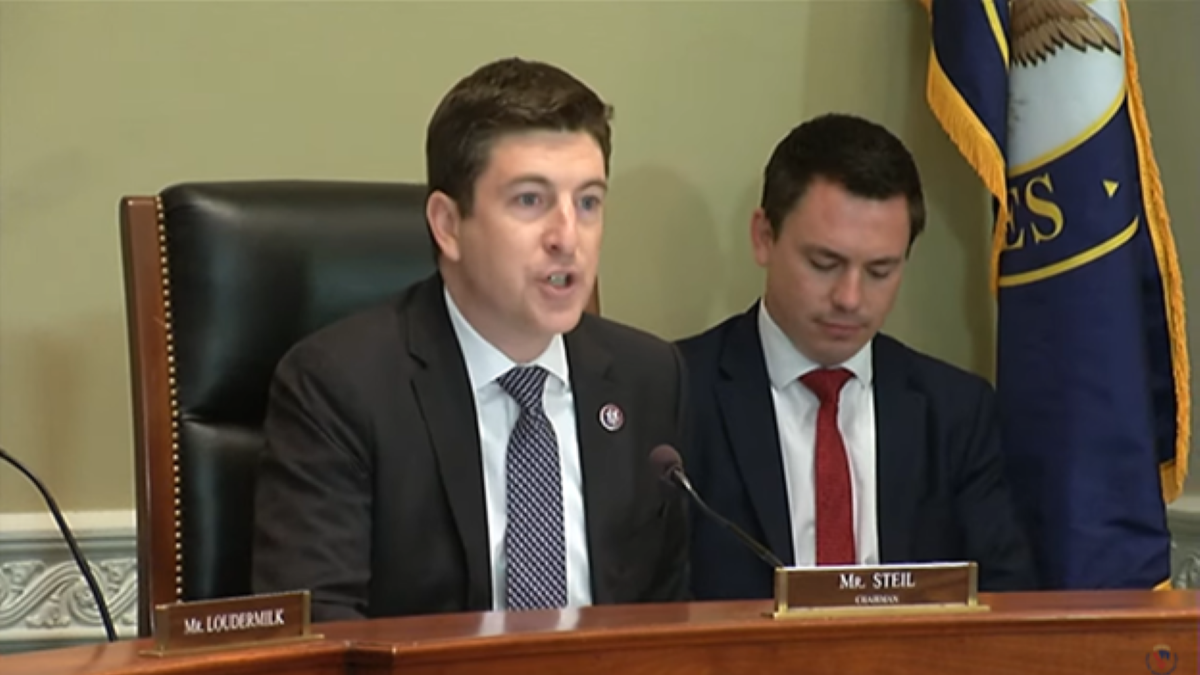
“For years, several of our colleagues on the other side of the aisle have claimed that states like Florida and Georgia — that have implemented voter integrity laws — are suppressing voters. … However, they have never produced a single voter who wanted to vote and was unable to,” said Chair and GOP Rep. Bryan Steil. “Contrast that with today, as we hold a hearing with evidence that voters who wanted to legally vote were turned away from the polls.”
On the morning of Election Day, numerous precincts throughout Luzerne County reported ballot paper shortages, leading to long wait lines and voters being turned away by election workers. In response, a local judge issued an order allowing polling places to stay open an additional two hours, or until 10 p.m. While Luzerne’s elections board originally declined to certify the election results (2-2-1), the board ultimately moved forward with certification following legal threats from left-wing law firms. Democrats, who often decry GOP-backed election integrity initiatives such as voter ID as “voter suppression,” have largely remained silent on the disenfranchisement of Luzerne voters.
During Tuesday’s hearing, Jim Bognet, the 2022 Republican candidate for Pennsylvania’s 8th congressional district — of which Luzerne is a part — referred to the Nov. 8 election in Luzerne as a “disaster” and criticized county election officials for their mismanagement of the contest and its aftermath.
“Luzerne County had to walk into court and admit that many polling places were effectively closed and had no paper to record votes on. In Luzerne County, the polls were closed on election day, disenfranchising voters,” Bognet said. “Voters across Luzerne County have called me and expressed their outrage that there has been no accountability or responsibility taken 4.5 months after the election, and officials still will not answer questions.”
Shortly after the election, Luzerne’s board of elections and registration asked the county district attorney to investigate the matter. Three Luzerne election officials declined the House committee’s invitation to testify on Tuesday after the county law office recommended they not attend due to the ongoing investigation.
In his remarks, Bognet accused Luzerne officials of using the investigation as a “shield” to avoid answering questions from constituents.
“My understanding is that the district attorney is doing a criminal investigation. Who knows if criminal activity occurred, he’ll investigate that. But what about gross incompetence? What about forgetting to order ballot paper?” he said.
During his remarks, Luzerne citizen Benjamin Herring echoed similar criticisms of county officials, noting “a complete lack of respect and understanding to what being a public servant is.”
“When does accountability and transparency become more than just a punch line or calculated posturing?” Herring asked. “I hold hope that the Luzerne County District Attorney will get to the bottom of this and present all of what is discovered to the citizens of Luzerne County. Anything less will be shameful, unacceptable, and would require more action on our part to hold the line on accountability.”
Predictably, Democrats on the committee used the hearing to play political games and advance trite talking points. During her allotted time, Alabama Democrat Rep. Terri Sewell argued that the federal government should provide more funding to states for elections. In her comments, she called on her colleagues to “look at the president’s budget,” specifically pointing to $5 billion allocated for the Election Assistance Commission “to provide grants” for state election administration.”
During the 2020 election, left-wing groups like the Center for Tech and Civic Life received hundreds of millions of dollars from Meta CEO Mark Zuckerberg. These “Zuckbucks” were poured into local election offices in battleground states around the country to change how elections were administered, such as by expanding unsecured election protocols like mail-in voting and the use of ballot drop boxes. To make matters worse, the grants were heavily skewed towards Democrat-majority counties, essentially making it a massive Democrat get-out-the-vote operation.
While acknowledging the disaster in Luzerne, ranking member and New York Democrat Rep. Joe Morelle also decided to inject partisan politics into the hearing. After repeatedly questioning the need for the hearing, Morelle attempted to rehash the 2020 election by asking Bognet whether he believes Joe Biden won the contest.
Shawn Fleetwood is a Staff Writer for The Federalist and a graduate of the University of Mary Washington. He also serves as a state content writer for Convention of States Action and his work has been featured in numerous outlets, including RealClearPolitics, RealClearHealth, and Conservative Review. Follow him on Twitter @ShawnFleetwood
American Family Association
American Family Association (AFA), a non-profit 501(c)(3) organization, was founded in 1977 by Donald E. Wildmon, who was the pastor of First United Methodist Church in Southaven, Mississippi, at the time. Since 1977, AFA has been on the frontlines of Ame
NEWSMAX
News, Opinion, Interviews, Research and discussion
Opinion
American Family Association
American Family Association (AFA), a non-profit 501(c)(3) organization, was founded in 1977 by Donald E. Wildmon, who was the pastor of First United Methodist Church in Southaven, Mississippi, at the time. Since 1977, AFA has been on the frontlines of Ame
American Family Association
American Family Association (AFA), a non-profit 501(c)(3) organization, was founded in 1977 by Donald E. Wildmon, who was the pastor of First United Methodist Church in Southaven, Mississippi, at the time. Since 1977, AFA has been on the frontlines of Ame
You Version
Bible Translations, Devotional Tools and Plans, BLOG, free mobile application; notes and more
Political
American Family Association
American Family Association (AFA), a non-profit 501(c)(3) organization, was founded in 1977 by Donald E. Wildmon, who was the pastor of First United Methodist Church in Southaven, Mississippi, at the time. Since 1977, AFA has been on the frontlines of Ame
NEWSMAX
News, Opinion, Interviews, Research and discussion
Spiritual
American Family Association
American Family Association (AFA), a non-profit 501(c)(3) organization, was founded in 1977 by Donald E. Wildmon, who was the pastor of First United Methodist Church in Southaven, Mississippi, at the time. Since 1977, AFA has been on the frontlines of Ame
Bible Gateway
The Bible Gateway is a tool for reading and researching scripture online — all in the language or translation of your choice! It provides advanced searching capabilities, which allow readers to find and compare particular passages in scripture based on





 What Did You Say?
You must be logged in to post a comment.