Perspectives; Thoughts; Comments; Opinions; Discussions

Posts tagged ‘U.S. ATTORNEYS’

7 Ways DOJ Obstructed The U.S. Attorney Investigating Biden Family Corruption


BY: MARGOT CLEVELAND | OCTOBER 27, 2023

Read more at https://thefederalist.com/2023/10/27/7-ways-doj-obstructed-the-u-s-attorney-investigating-biden-family-corruption/


DOJ flag

Author Margot Cleveland profile

MARGOT CLEVELAND

VISIT ON TWITTER@PROFMJCLEVELAND

MORE ARTICLES

The Pittsburgh-based U.S. attorney charged with screening evidence of Ukrainian corruption before the 2020 election testified before the House Judiciary Committee on Monday about the bureaucratic obstruction his team faced. The roadblocks detailed by former U.S. Attorney Scott Brady over the course of the six-hour hearing were so outrageous that at one point a lawyer for the minority party asked whether he was speaking in hyperbole. He wasn’t.

The situation Brady faced was also much worse than the media have reported to date, as the full transcript of the interview, reviewed by The Federalist, establishes. Here are the seven most shocking details revealed during Monday’s hearing.

1. FBI Drags Its Feet While Tying Brady’s Hands

Monday’s closed-door hearing of the House Judiciary Committee, which is investigating the DOJ and FBI’s handling of the probe into Biden family corruption, opened with Brady explaining that in early January 2020, then-Attorney General William Barr tapped him to vet evidence related to Ukrainian corruption. While he immediately moved to open a matter in the U.S. attorney’s office for the Western District of Pennsylvania, Brady testified that he didn’t believe the FBI opened its assessment until late March. Part of the problem, Brady explained, was that the FBI maintained it had to operate under the framework of the Domestic Investigations and Operations Guide (DIOG) and that there was no procedure for handling a vetting assignment such as Barr assigned to the Pittsburgh office.

So, as Brady explained, he had a discussion with the Pittsburgh FBI agents about “how, in their administrative process, it should be characterized.”

“I said, ‘Well let’s all sit together around a table and talk this out; could you please share with me your DIOG,’” Brady testified, explaining the DIOG “is the FBI’s bible for their processes and procedures.” 

The local FBI agents told Brady that someone from FBI headquarters directed the local agents not to share the DIOG with the U.S. attorney’s office. Brady’s response, as he relayed to the committee, perfectly crystalized the madness: “I’m a presidentially appointed United States attorney. We’re on the same team, part of the Department of Justice. What do you mean you can’t share your DIOG with me?”

“That’s what we were told, so we can’t, sir,” the local Pittsburgh FBI team replied, in his telling.

And they never did share the DIOG with him, the former federal prosecutor testified, explaining he instead resorted to finding an older redacted version online, and then referenced those standards when discussing with the FBI team how to open the investigation. 

2. 17 Approvals Needed — and That’s Not Hyperbole

The FBI eventually opted to open an “assessment” for the material on Ukraine provided by the Pittsburgh-based U.S. attorney’s office. Under the DIOG, an “assessment” could only last for 30 days, after which it would need to be reauthorized. That meant every 30 days, the Pittsburgh FBI office needed to re-up the assessment, which normally wouldn’t be an issue, Brady testified, because a special agent’s immediate supervisor, a supervisory special agent (SSA) at the local field office could reauthorize an assessment.

But not in the case of the Ukrainian corruption vetting.

“In this case,” Brady testified, “it required 17 different people, including mostly at the headquarters level to sign off on it before the assessment could be extended.” Consequently, Brady explained, at times the FBI agents “had to go pens down sometimes for 2 or 3 weeks at a time … because they were still waiting on, again, on someone within the 17-chain signoff to approve.” 

The ridiculousness of a 17-person approval was clear to even the Democrat attorney questioning Brady. After noting he had made reference to “17 layers of approval,” she asked: “Was that an actual number, or was that just hyperbole? Were there 17 boxes to check?”

“So it was our understanding, related by someone on the FBI team in Pittsburgh, that that was an actual number, that there were 17 approvals that were required to extend the assessment an additional 30 days.”

3. FBI Headquarters Had To Sign-Off on Everything.

Not only did more than a dozen individuals need to approve the renewal of the assessment, including many out of FBI headquarters, but Brady testified that FBI headquarters was required to “signoff for any investigative steps that FBI Pittsburgh was asked to take by” the Pittsburgh U.S. attorney’s office. 

Brady reiterated this point, testifying: “It was my understanding that they could not take any steps absent the approval, the review and approval of FBI headquarters, not just the leadership of FBI Pittsburgh.” And later, when asked to elaborate on challenges with the FBI, Brady noted: “It was my understanding that FBI headquarters had to sign off on every assignment, no matter how small or routine, before they could take action.”

This level of signoff by headquarters was not normal, Brady confirmed, noting that in his experience, even in a sensitive investigation, the investigation is usually contained within the field office, with an SSA approving requests, or maybe an assistant special agent in charge or on occasion even the special agent in charge. But never in his career had Brady seen anything like this. 

4. FBI Reluctance in Investigating

The former U.S. attorney’s testimony also made clear the FBI was reluctant to assist their investigation. 

“It was a challenging working relationship,” Brady noted, saying he believed “there was reluctance on the part of the FBI to really do any tasking related to our assignment … and looking into allegations of Ukrainian corruption broadly and then specifically anything that intersected with Hunter Biden and his role in Burisma.” 

When pushed on where the problems originated, Brady said, “It was somewhere at FBI headquarters,” but he “had no visibility into where that choke point was.” But it was somewhere below the deputy director and principal assistant deputy attorney general because whenever the FBI refused to cooperate, forcing Brady to elevate the issue to FBI headquarters or the DOJ, the issues were resolved by the various high-level officials. 

Unbeknownst to Brady, that also proved to be the case when it came to his office briefing the Delaware U.S. attorney’s office on the results of his assessment. Brady testified that he had been trying for some time to arrange a briefing with the Delaware U.S. attorney’s office, only to learn later that Assistant U.S. Attorney Lesley Wolf had not wanted to take the briefing. IRS whistleblower Gary Shapley recently revealed that the meeting only came about after Main Justice ordered Delaware to meet with Brady’s team to be briefed on the results of their vetting. 

5. FBI Headquarters Tells Pittsburgh Agents to Play Coy

    “Reluctance” appears to be an understatement, though, as Brady further testified that a member of the Pittsburgh FBI team relayed that FBI headquarters had directed them “not to affirmatively share information” but rather “only to share information with [Pittsburgh] if we asked them a direct question relating to that information…” 

    That “is not typically how the investigative process goes,” Brady added.

    That the FBI agents had directions only to share information with the U.S. attorney’s office if asked a direct question seems to explain Brady’s later testimony. The former U.S. attorney later testified that when the Washington field office discovered an older FD-1023 report that included a discreet statement mentioning Hunter Biden’s service on the Burisma Board, the Pittsburgh office requested to see the FD-1023. Apparently, relying on the FBI to convey relevant information to the prosecutors was not an option. In this case, that FD-1023 led to the confidential human source providing extensive additional information about the Bidens’ involvement and alleged bribe-taking from Burisma, so it is a good thing Pittsburgh asked to see the actual document.

    When it came to the Hunter Biden laptop, however, Brady and his team of prosecutors didn’t know what they didn’t know, so they never asked whether the FBI had seized any of Hunter Biden’s electronic devices. With “don’t ask, don’t tell” being Delaware’s protect-Biden policy, the Delaware office opted against informing the Pittsburgh U.S. attorney’s office of the existence of the laptop. Rather, Brady testified that he first learned of the laptop’s existence when the New York Post broke the story in mid-October. 

    6. Delaware Refuses to Play Nice 

    Not only did Brady testify about the challenges of working with the FBI, but he also faced issues with the Delaware U.S. attorney’s office. 

    “[I]t was regularly a challenge to interact with the investigative team from Delaware,” Brady testified. “There was no information sharing” or “very limited” information sharing, from Delaware. In fact, “at one point, the communication between our offices was so constricted that we had to provide written questions to the investigative team in Delaware, almost in the form of interrogatories, and receive written answers back,” Brady testified. 

    “This was very unusual,” Brady continued, noting that “typical U.S. attorney to U.S. attorney office communications, even on sensitive matters, is fairly clear and transparent.” “We’re all professionals,” Brady explained.

    Yet, with Delaware, the Pittsburgh U.S. attorney’s office had to resort to submitting a list of written questions to U.S. Attorney David Weiss’s team, which the Delaware prosecutors then responded to in writing, much as interrogatories are served on opposing parties in litigation.

    Jim Jordan, the chair of the Judiciary Committee, asked Brady if he had ever seen anything like this during his time as an assistant U.S. attorney or U.S. attorney. 

    “Not where an office had to submit written interrogatories to another office for permission,” Brady said.

    7. Lying About Brady

    Another challenge he faced, Brady explained, was false representations being made to senior FBI leadership about what the U.S. attorney’s team was or wasn’t doing. “There was information that was being shared up that chain at the FBI that was incorrect,” Brady explained, and it rose all the way up to AG Barr. 

    Brady noted that while they resolved the issue, it presented an unnecessary challenge to handling the vetting process. 

    Of course, some of the same people likely used that same tactic by lying about the Pittsburgh vetting process to the press. And more recently, Democrats such as Jamie Raskin resorted to peddling falsehoods, such as that Barr’s handpicked prosecutor, Brady, had closed the assessment into the FD-1023. 

    During his Monday testimony, Brady also confirmed that Barr had accurately described the true scenario — that the FD-1023 had been passed on to the Delaware U.S. attorney’s office for further investigation — and that Raskin was lying, at I reported here in The Federalist. 

    But what else could a Biden apologist do but lie — after whistleblowers exposed the DOJ and FBI’s obstruction and the evidence of the president’s corruption? 

    Margot Cleveland is an investigative journalist and legal analyst and serves as The Federalist’s senior legal correspondent. Margot’s work has been published at The Wall Street Journal, The American Spectator, the New Criterion (forthcoming), National Review Online, Townhall.com, the Daily Signal, USA Today, and the Detroit Free Press. She is also a regular guest on nationally syndicated radio programs and on Fox News, Fox Business, and Newsmax. Cleveland is a lawyer and a graduate of the Notre Dame Law School, where she earned the Hoynes Prive—the law school’s highest honor. She later served for nearly 25 years as a permanent law clerk for a federal appellate judge on the Seventh Circuit Court of Appeals. Cleveland is a former full-time university faculty member and now teaches as an adjunct from time to time. Cleveland is also of counsel for the New Civil Liberties Alliance. Cleveland is on Twitter at @ProfMJCleveland where you can read more about her greatest accomplishments—her dear husband and dear son. The views expressed here are those of Cleveland in her private capacity.

    EXCLUSIVE: Email Shows Weiss Violated DOJ Policy By Sending Letters To Cover For Garland


    BY: MARGOT CLEVELAND | OCTOBER 03, 2023

    Read more at https://thefederalist.com/2023/10/03/exclusive-email-shows-weiss-violated-doj-policy-by-sending-letters-to-cover-for-garland/

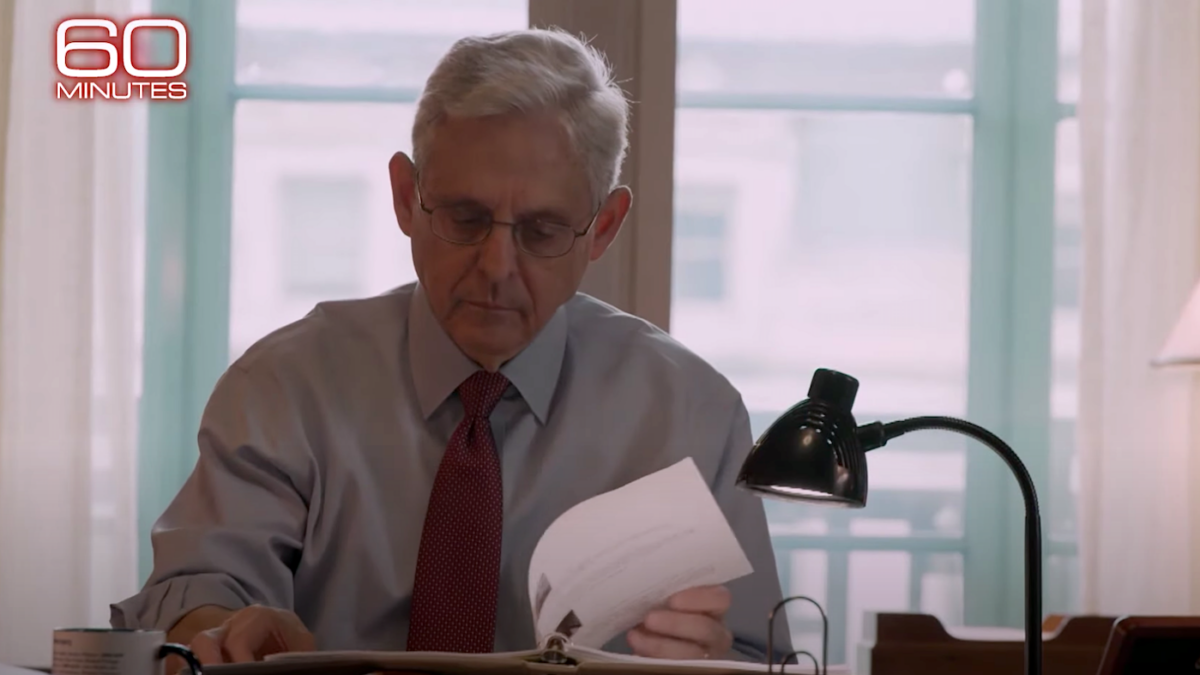
    Merrick Garland sitting at a desk with a binder

    Author Margot Cleveland profile

    MARGOT CLEVELAND

    VISIT ON TWITTER@PROFMJCLEVELAND

    MORE ARTICLES

    The Department of Justice directed Delaware U.S. Attorney David Weiss not to respond to congressional inquiries, according to an email provided exclusively to The Federalist. That same email stressed that under DOJ policy, only its Office of Legislative Affairs, or OLA, can respond to requests from the legislative branch. 

    Yet Weiss would later sign and dispatch a letter to the House Judiciary Committee in response to an inquiry sent directly to Attorney General Merrick Garland. And in that letter, Weiss misleadingly claimed he had “been granted ultimate authority over” the Hunter Biden investigation. The DOJ’s disregard of its own policy provides further proof that both Garland and Weiss intended to obfuscate the reality that Weiss never held the reins of the Hunter Biden investigation.

    On May 9, 2022, Republican Sens. Chuck Grassley of Iowa and Ron Johnson of Wisconsin wrote to Delaware U.S. Attorney Weiss inquiring about several aspects of the Hunter Biden investigation. After the senators sent a follow-up email to the Delaware U.S. attorney’s office requesting a response by week’s end, Delaware’s First Assistant U.S. Attorney Shannon Hanson asked the DOJ about protocol and then updated Weiss, stating in an email:

    Consistent with my conversation with [redacted] last night, we are supposed to forward this and any other correspondence to OLA. Per DOJ policy, only OLA can respond on behalf of the Department to a request from the legislative branch.

    On June 9, 2022, the OLA, as provided for in the DOJ’s policy, responded to Grassley and Johnson’s letter. The following month, Grassley and Johnson dispatched a second letter to Weiss, as well as Attorney General Merrick Garland and FBI Director Christopher Wray. In an email reviewed by The Federalist, the Office of Legislative Affairs told Weiss’s office it would “take the lead on drafting a response” to Grassley and Johnson’s letter.

    The Heritage Foundation’s Oversight Project obtained these emails and the most recent one revealing the DOJ’s policy that only the “OLA can respond on behalf of the Department to a request from the legislative branch,” after its Director Mike Howell filed a Freedom of Information Act (FOIA) lawsuit against the DOJ. The email to Weiss summarizing the DOJ policy contained in this latest batch of court-ordered disclosures proves huge given the sequence of events that occurred earlier this year. 

    On May 25, 2023, House Judiciary Chair Jim Jordan sent a letter to Attorney General Merrick Garland questioning him about the removal of the IRS whistleblowers from the Hunter Biden investigation. Although Jordan directed his inquiry to Garland, on June 7, 2023, Weiss dispatched a letter to the House Judiciary chair, noting in his opening: “Your May 25th letter to Attorney General Garland was forwarded to me, with a request that I respond on behalf of the Department.”

    Weiss then stated, as Garland had previously indicated, that he (Weiss) had “been granted ultimate authority over this matter, including responsibility for deciding where, when, and whether to file charges and for making decisions necessary to preserve the integrity of the prosecution…”

    That Weiss would respond on behalf of Garland raised eyebrows at the time. Jordan noted “the unusual nature of your response on behalf of Attorney General Garland,” and asked for information concerning the names of individuals who drafted or assisted in drafting the June 7 letter, as well as details concerning the drafting and dispatching of the letter.

    But now we know it wasn’t merely “unusual” for Weiss to respond on behalf of the attorney general — it was in apparent violation of the DOJ policy that only the OLA would respond to legislative inquiries. And it was that same policy that prevented Weiss from responding to the earlier questions posed by Johnson and Grassley directly to the Delaware U.S. attorney.

    The content of Weiss’s June 7 letter provides a pretty clear answer for why the DOJ ignored its own policy and enlisted the Delaware U.S. attorney to respond to Jordan: Garland needed Weiss to verify what the attorney general had previously told Grassley during a March 1, 2023, hearing. During that hearing, Garland expressly stated that “the U.S. attorney in Delaware has been advised that he has full authority … to bring cases in other jurisdictions if he feels it’s necessary.” Weiss’s assertion in the June 7 letter that he had “been granted ultimate authority over this matter, including responsibility for deciding where, when, and whether to file charges and for making decisions necessary to preserve the integrity of the prosecution…” seemingly confirmed Garland’s testimony.

    Of course, as informed Americans now know, the release of the IRS whistleblower’s testimony — that Weiss claimed he was not the ultimate decisionmaker — forced the Delaware U.S. attorney to pen a follow-up letter to Jordan. In that June 30, 2023 sequel, Weiss, while purporting to stand by what he had previously written, contradicted his earlier representation that he had “been granted ultimate authority.” Instead, Weiss explained he had “been assured” that “if necessary,” he would be granted authority to charge Hunter Biden in any other district.

    Having ultimate authority and being assured that you would be given ultimate authority if necessary are clearly two different things, yet Weiss gave cover for Garland in his June letters. Now we have further proof that the DOJ was behind those letters — otherwise, Weiss would be in violation of the department’s policy.

    The DOJ did not respond to The Federalist’s request for comment on Weiss’s apparent violation of the department’s policy.


    Margot Cleveland is an investigative journalist and legal analyst and serves as The Federalist’s senior legal correspondent. Margot’s work has been published at The Wall Street Journal, The American Spectator, the New Criterion (forthcoming), National Review Online, Townhall.com, the Daily Signal, USA Today, and the Detroit Free Press. She is also a regular guest on nationally syndicated radio programs and on Fox News, Fox Business, and Newsmax. Cleveland is a lawyer and a graduate of the Notre Dame Law School, where she earned the Hoynes Prive—the law school’s highest honor. She later served for nearly 25 years as a permanent law clerk for a federal appellate judge on the Seventh Circuit Court of Appeals. Cleveland is a former full-time university faculty member and now teaches as an adjunct from time to time. Cleveland is also of counsel for the New Civil Liberties Alliance. Cleveland is on Twitter at @ProfMJCleveland where you can read more about her greatest accomplishments—her dear husband and dear son. The views expressed here are those of Cleveland in her private capacity.

    EXCLUSIVE: FBI Lies About ‘Highly Credible’ Source Claims Were Leaked to NYT And Spoon-fed to Weiss


    BY: MARGOT CLEVELAND | SEPTEMBER 05, 2023

    Read more at https://thefederalist.com/2023/09/05/exclusive-fbi-lies-about-highly-credible-source-claims-were-leaked-to-nyt-and-spoonfed-to-weiss/

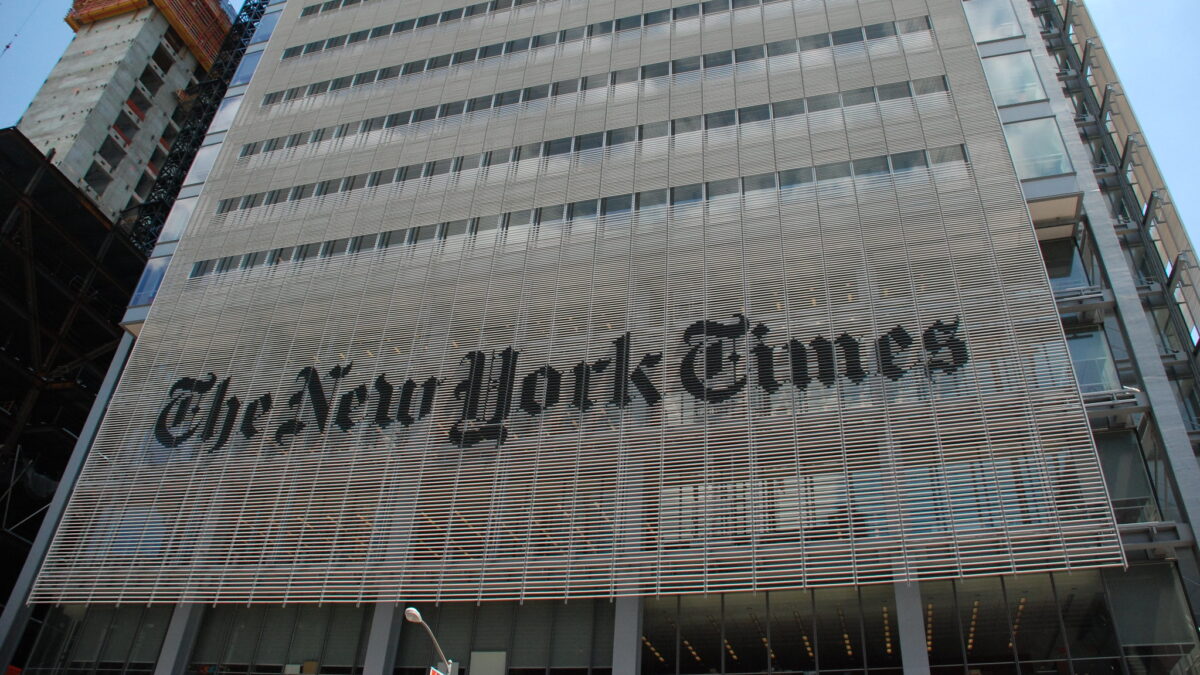
    New York Times

    Author Margot Cleveland profile

    MARGOT CLEVELAND

    VISIT ON TWITTER@PROFMJCLEVELAND

    MORE ARTICLES

    Emails obtained by the Heritage Foundation following a Freedom of Information Act (FOIA) lawsuit, and shared exclusively with The Federalist, reveal that lies leaked to The New York Times about the origins of damning evidence implicating Hunter and Joe Biden in a bribery scandal were fed to Delaware U.S. Attorney David Weiss. 

    As I previously detailed, The New York Times reported those lies in its Dec. 11, 2020, article, “Material from Giuliani Spurred a Separate Justice Depart. Pursuit of Hunter Biden” — just a week after Americans first learned of the investigation of the now-president’s son. The Times’ reporting was “replete with falsehoods and deceptive narratives,” but “Americans just didn’t know it at the time.” 

    However, earlier this year, thanks to “whistleblower revelations and statements by former Attorney General William Barr,” the country learned that the Times’ claims — that evidence implicating the Bidens was derived from Giuliani — were false. Rather, a separate investigation had uncovered reporting from a “highly credible” FBI confidential human source (CHS) implicating Hunter and Joe Biden in a bribery scandal.

    Now the FOIA-produced emails reveal even more: The FBI lies, laundered through The New York Times, were fed directly to Delaware U.S. Attorney David Weiss.

    The Emails

    The never-before-seen emails provided late last week by the Department of Justice to the Heritage Foundation and its Oversight Project director, Mike Howell, in response to a court order, included an email thread revealing how the Times story landed in Weiss’s lap.

    “Ladies, here you have attached the NYT’s story ‘Material from Giuliani Spurred a Separate Justice Depart. Pursuit of Hunter Biden’ which posted a bit ago. Link here,” a Dec. 11, 2020, 6:44 p.m. email from the FBI Office of Public Affairs’ National Press Office read. 

    The names of the two email recipients were redacted. But the “(PG) (FBI)” and “(BA) (FBI)” coding suggests the National Press Office had forwarded the Times’ article, which spun evidence obtained by the Pittsburgh office as originating from Giuliani disinformation, to the Pittsburgh FBI office and the Baltimore FBI office — which provided support for the Delaware U.S. attorney’s office.

    Within two hours of the FBI’s National Press Office sharing the false narrative about evidence of Biden family corruption, the link had been forwarded to a variety of Baltimore FBI agents, from there to Weiss’s top deputies Lesley Wolf and Shawn Weede, and further on by Weede to fellow Assistant U.S. Attorney Shannon Hanson and Weiss. Weiss himself then forwarded the Times article to another member of the Delaware U.S. attorney’s office, whose name was redacted in the FOIA-provided documents. 

    Given the sweetheart deal Weiss’s top Assistant U.S. Attorney Lesley Wolf later tried to gift to Hunter Biden, this latest revelation raises the question of whether (and, if so, when) Weiss’s staff informed him of the CHS’s reporting that Burisma paid $5 million each in bribes to both Hunter Biden and Joe Biden.

    These questions are now more important than ever because the just-released emails show Weiss’s staff sharing with him The New York Times’ false reporting that portrayed evidence coming from the Pittsburgh FBI office as sourced solely to Rudy Giuliani. But that’s not true — not by a long shot. At a minimum, Wolf and others in the Delaware office knew that — but Weiss might not have.

    The Background

    As The Federalist previously reported, contrary to the Times’ reporting, in the run-up to the 2020 election, then-Attorney General William Barr directed the Western District of Pennsylvania to serve as an intake office for any evidence related to Ukraine. U.S. Attorney Scott Brady was then charged with screening the evidence to ensure disinformation did not reach the other offices handling investigations related to Hunter Biden or Ukraine. 

    While some of the evidence Brady’s team screened came from Giuliani, agents also independently discovered a separate line of intel originating from a “highly credible” CHS who had worked under the Obama administration. Agents interviewed that CHS in late June 2020 and memorialized the CHS’s reporting in an FD-1023 form. 

    Americans would later learn the contents of that FD-1023 when a whistleblower informed Sen. Chuck Grassley’s office of its existence. Then, after FBI Director Christopher Wray dragged his feet in responding to congressional inquiries, Grassley released a minimally redacted copy of the unclassified document to the public.

    The unredacted portions of the FD-1023 confirmed Giuliani had nothing to do with the sourcing of the intel. On the contrary, according to the form, the longtime CHS had personally conversed with Mykola Zlochevsky, the owner of the Ukrainian energy company Burisma, and the company’s CFO Vadim Pojarskii.

    The FD-1023 memorialized explosive reporting from the CHS, including the following:

    • Pojarskii claimed Hunter Biden was paid to serve on Burisma’s board of directors to “protect us, through his dad, from all kinds of problems.”
    • Ukrainian prosecutor Viktor Shokin was investigating Burisma, but Zlochevsky told the CHS that “Hunter will take care of all of those issues through his dad.”
    • Zlochevsky told the CHS he had been coerced to pay bribes of $5 million each to Hunter Biden and Joe Biden.
    • After Trump’s election in 2016, Zlochevsky expressed dissatisfaction with Trump’s victory, but then told the CHS that “Shokin had already been fired, and no investigation was currently going on.”
    • Zlochevsky told the CHS he had 17 recordings of the Bidens but had never paid Joe Biden directly.
    • The “Big Guy” moniker was used to refer to Joe Biden — a significant detail because the CHS interview predated the public release of material contained on Hunter Biden’s laptop, including information that established the “Big Guy” was one of Joe Biden’s nicknames.
    • Burisma discussed purchasing a U.S.-based oil and gas company for approximately $20-$30 million.

    When news first broke of the FD-1023 and its damning indictment of the Bidens, Democrats and their paramours in the press tried to bury the story with a one-two punch. First, they framed the evidence as originating from Giuliani and part of a foreign disinformation operation. Grassley’s release of the actual FD-1023 destroyed that narrative. 

    Second, they falsely represented to the American public that Brady had already investigated the FD-1023 and closed the investigation as meritless. But as The Federalist first reported, that claim was blatantly false. 

    “It’s not true. It wasn’t closed down,” Barr told The Federalist after Democrat Rep. Jamie Raskin falsely claimed that “the former attorney general and his ‘handpicked prosecutor’ had ended an investigation into a confidential human source’s allegation that Joe Biden had agreed to a $5 million bribe.”

    “On the contrary,” Barr told The Federalist, “it was sent to Delaware for further investigation.”

    More Questions

    Now we reach the crux of the matter: Who in Delaware knew of the FD-1023’s existence, its sourcing to a “highly credible confidential human source,” and that, as The Federalist previously reported, several details contained in the FD-1023 had already been corroborated prior to the handoff to Delaware? The Pittsburgh office had briefed the Delaware office on the document and its conclusion that it “bore indicia of credibility.” 

    A source familiar with the Pittsburgh brief of the Delaware office confirmed to The Federalist that in addition to agents from the Pittsburgh and Baltimore FBI field offices, Lesley Wolf attended the briefing on the FD-1023 and was informed of those details. Weiss, however, was not present for the briefing. Nor, as we previously learned, were the IRS agents-turned-whistleblowers included in the briefing. 

    The Federalist has also learned from a source with knowledge of the matter that the Delaware U.S. attorney’s office kept the Hunter Biden laptop secret from the Pennsylvania-based U.S. attorney’s office, which surely limited the investigators’ ability to assess the credibility of the evidence it was screening for disinformation.

    Nonetheless, through its independent investigation of the CHS’s reporting, Pittsburgh corroborated several details of the FD-1023 and briefed Wolf on those details, telling her they believed the CHS’s information warranted further investigation.

    But did Wolf tell that to Weiss? Did anyone tell that to Weiss? Or did Weiss’s team, after sharing The New York Times’ false narrative that Brady was on a political witch hunt of the Bidens and demanding an investigation into Giuliani disinformation, remain mum? Or did Weiss know about the FD-1023 and do nothing?

    The emails don’t answer those questions, but they do confirm that Weiss and his top deputies were fed the Times story. Which leads to a final question: Which FBI agent(s) fed the Times the lies? 


    Margot Cleveland is an investigative journalist and legal analyst and serves as The Federalist’s senior legal correspondent. Margot’s work has been published at The Wall Street Journal, The American Spectator, the New Criterion (forthcoming), National Review Online, Townhall.com, the Daily Signal, USA Today, and the Detroit Free Press. She is also a regular guest on nationally syndicated radio programs and on Fox News, Fox Business, and Newsmax. Cleveland is a lawyer and a graduate of the Notre Dame Law School, where she earned the Hoynes Prive—the law school’s highest honor. She later served for nearly 25 years as a permanent law clerk for a federal appellate judge on the Seventh Circuit Court of Appeals. Cleveland is a former full-time university faculty member and now teaches as an adjunct from time to time. Cleveland is also of counsel for the New Civil Liberties Alliance. Cleveland is on Twitter at @ProfMJCleveland where you can read more about her greatest accomplishments—her dear husband and dear son. The views expressed here are those of Cleveland in her private capacity.

    6 Ridiculous Narratives Democrats Tried In Response To IRS Whistleblowers’ Damning Biden Testimony


    BY: MARGOT CLEVELAND | JULY 20, 2023

    Read more at https://thefederalist.com/2023/07/20/6-ridiculous-narratives-democrats-tried-in-response-to-irs-whistleblowers-damning-biden-testimony/

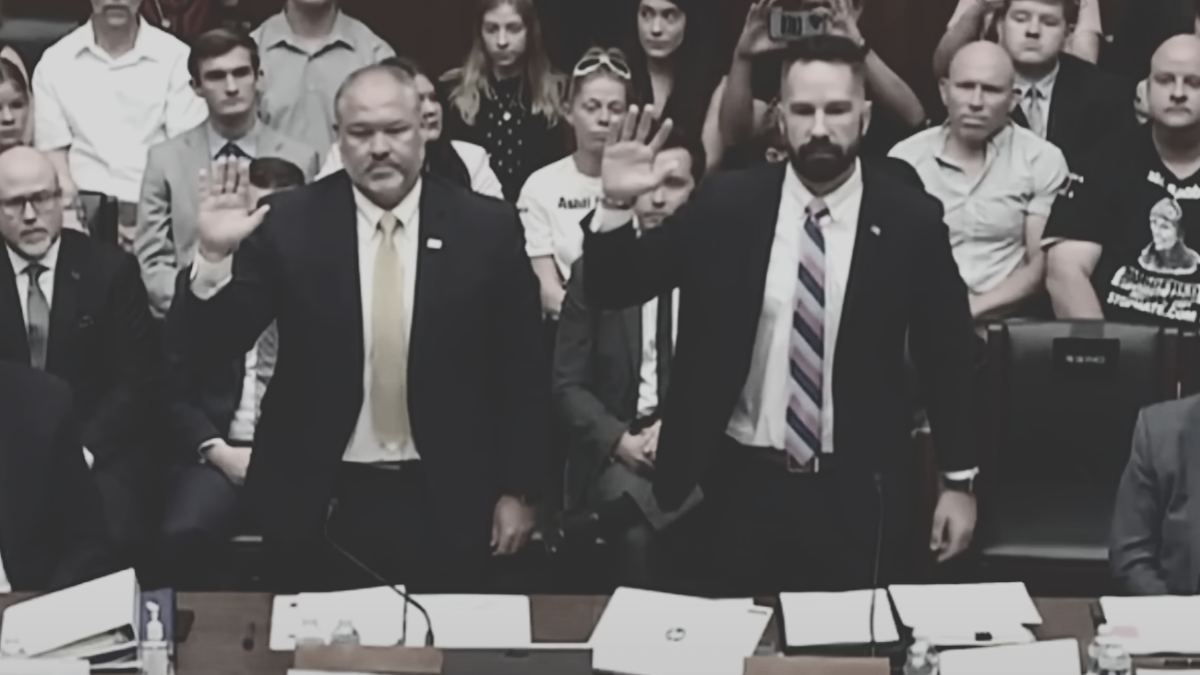
    IRS whistleblowers

    Author Margot Cleveland profile

    MARGOT CLEVELAND

    VISIT ON TWITTER@PROFMJCLEVELAND

    MORE ARTICLES

    IRS whistleblowers Gary Shapley and Joseph Ziegler’s testimony Wednesday before the House Oversight Committee about the political interference in the Biden investigation proved so unimpeachable that Democrats resorted to a shotgun attack on everything except the facts. Here are the top six themes the left hammered during the hearing. 

    1. Orange Man — and His Family And Associates — Bad

    Wednesday’s hearing began promptly at 1:00 with opening statements by Republican Chair James Comer and Democrat Ranking Member Jamie Raskin. From the get-go Raskin set one theme Democrats would continue to peddle over the course of the next six hours: Donald Trump is a terrible, horrible, no good, very bad man. 

    Trump was impeached and is under indictment. His daughter was under investigation, and her husband sold out to the Saudis. Trump’s cronies — Manafort, Stone, Flynn, and Cohen — committed crimes, and Trump pardoned them. On and on they went, pointing to Trump to turn the focus from the whistleblowers’ testimony: that the evidence indicates Hunter Biden committed felonies and now-President Joe Biden may have been complicit in the illegality. Democrats likewise used this misdirection to avoid confronting the overwhelming evidence that the DOJ and FBI interfered in the investigation and protected the Biden family.

    2. How Dare Republicans Say ‘Two-Tier Justice System’

    A second prevalent tactic on display during Wednesday’s hearing was Democrats feigning outrage over Republicans’ complaints of a “two-tier justice system.” 

    According to Democrats on the committee, that phrase belongs to the civil rights movement and may only be invoked to condemn systemic racism. Some representatives ran so hard with this theme that they spent their allocated time highlighting decades-old hate crimes rather than asking the IRS whistleblowers questions concerning their testimony. 

    One representative even quizzed Shapley on his knowledge of the racial disparity seen in the prosecution of tax cases. Shapley said he was unaware of the statistic. The Democrat lawmaker then cited the relative percentages for the IRS agent, while remaining oblivious to the fact that Shapley was complaining of favoritism bestowed on the white, privileged Hunter Biden. 

    3. Never Mind the Whistleblowers, Let’s Talk About Rudy and the Arms Dealer

    Democrats also sought to distract from the whistleblowers’ testimony by framing the evidence detailed by the two experienced and well-credentialed IRS agents as flowing from Rudy Giuliani. But as Ziegler testified, he launched the investigation into Hunter Biden after evidence implicating him was discovered pursuant to a separate criminal investigation. None of the evidence Ziegler and Shapley developed came from Giuliani. 

    Nor did the allegations that Joe and Hunter Biden each received $5 million in bribes from Burisma, as reported by an FBI confidential human source and summarized in the FD-1023, come from Giuliani. The IRS agents never saw the FD-1023 in any event. 

    House Democrats likewise attempted to minimize the whistleblowers’ testimony by pretending that, beside Giuliani, the only evidence of misconduct came from a witness charged with being an arms dealer, namely Gal Luft. Whether Luft has credible evidence of Biden-family corruption, however, has nothing to do with Ziegler and Shapley’s claims.

    4. Merely a Misunderstanding

    In their less hysterical moments, the Democrats offered a gentler spin, framing the House’s hearing as much ado about a misunderstanding. It also came down to the whistleblowers not grasping the difference between a special counsel and a special attorney, several Biden apologists suggested. 

    But as Shapley made clear, he had documented U.S. Attorney David Weiss’s statement — that the DOJ had denied Weiss special counsel authority — soon after Weiss made that representation, and thus while Shapley’s memory was clear. In any event, according to Shapley, Weiss had also said during that meeting on Oct. 7, 2022, that he was not the final decision maker on whether to bring charges against Hunter Biden. That fact makes the distinction between a special counsel and a special attorney irrelevant.

    Raskin also suggested Shapley was confused about Weiss’s authority, claiming the Delaware U.S. Attorney made clear in his letters to Congress he had ultimate authority to charge Hunter Biden. 

    Both whistleblowers decimated that line of argument by highlighting what Weiss actually said, which was that he lacked charging authority outside of Delaware. In fact, if anything, Raskin hurt his cause by highlighting the contradictions between Weiss and Attorney General Merrick Garland’s statements, establishing the necessity for both DOJ bigwigs to testify before Congress to resolve the inconsistencies.

    5. Just a Difference of Opinion 

    A related theme Democrats peddled during Wednesday’s hearing centered on prosecutorial discretion. The left side of the aisle painted the whistleblowers’ testimony as merely a professional disagreement between the IRS agents and Weiss. 

    But there was no disagreement in opinion, Shapley and Ziegler stressed: Both the IRS and Weiss agreed that Hunter Biden should be charged with multiple felony counts. Weiss, however, lacked the ability to bring charges in D.C., and it was the Biden-appointed U.S. attorney there, as well as in California, that kept the Delaware U.S. attorney from filing criminal felony charges against the president’s son.

    Further, that the D.C. and California U.S. attorneys thwarted efforts to bring felony charges against Hunter Biden proved especially rich given the Democrats continued references throughout the hearing to Weiss being Trump’s “hand-picked U.S. attorney.” Beyond the obvious point that being a Trump appointee establishes nothing, under the Democrats’ standard, the involvement of the Biden-appointed U.S. attorneys removes this case from the “difference of opinion” scenario. 

    6. There’s No Evidence, I Tell You, No Evidence

    A sixth narrative Democrats pushed during the Oversight hearing was that there’s no evidence of misconduct or favoritism. But to paraphrase Shapley’s line, just repeating the same lie multiple times doesn’t make it true. And to say there’s no evidence of misconduct or favoritism is a whopper of a lie. 

    The evidence of misconduct by the Bidens exists in the form of texts, emails, chat messages, bank records, suspicious activity reports, the FD-1023 report, and statements made by former business partners such as Tony Bobulinski. The public record is also replete with evidence of DOJ and FBI favoritism, including the extensive testimony of these two whistleblowers, parts of which a third whistleblower has already corroborated.

    The Democrats may not like the evidence or want to talk about it, but to say none exists is about as believable as the Secret Service’s claim that they cannot determine whose cocaine was recovered in the White House. 


    Margot Cleveland is The Federalist’s senior legal correspondent. She is also a contributor to National Review Online, the Washington Examiner, Aleteia, and Townhall.com, and has been published in the Wall Street Journal and USA Today. Cleveland is a lawyer and a graduate of the Notre Dame Law School, where she earned the Hoynes Prize—the law school’s highest honor. She later served for nearly 25 years as a permanent law clerk for a federal appellate judge on the Seventh Circuit Court of Appeals. Cleveland is a former full-time university faculty member and now teaches as an adjunct from time to time. As a stay-at-home homeschooling mom of a young son with cystic fibrosis, Cleveland frequently writes on cultural issues related to parenting and special-needs children. Cleveland is on Twitter at @ProfMJCleveland. The views expressed here are those of Cleveland in her private capacity.

    7 Things the House Oversight Committee Should Ask IRS Whistleblowers


    BY: MARGOT CLEVELAND | JULY 18, 2023

    Read more at https://thefederalist.com/2023/07/18/7-things-the-house-oversight-committee-should-ask-irs-whistleblowers/

    one of the IRS whistleblowers, Gary Shapley

    Author Margot Cleveland profile

    MARGOT CLEVELAND

    VISIT ON TWITTER@PROFMJCLEVELAND

    MORE ARTICLES

    The IRS whistleblowers who exposed the Department of Justice and FBI’s interference in the investigation into Biden family corruption will publicly testify on Wednesday before the House Oversight and Accountability Committee.

    The duo, Gary Shapley and a man known now only as Whistleblower X, had previously sat for transcribed interviews with the House Ways and Means Committee. And while some details from that closed-door testimony should be reiterated during the on-camera congressional hearing, Oversight Committee Chair James Comer should corral Republicans before Wednesday to coordinate the questioning of the whistleblowers so the country learns the depth of the scandal.

    Here’s what they should ask Shapley and the soon-to-be-named second whistleblower and how they should do it.

    1. Let the Whistleblowers Do the Talking

    Because the legacy press will be poised to present Wednesday’s hearing as a Republican witch hunt and their supposed continued hounding of Hunter Biden, the representatives on the right side of the aisle should save the grandstanding for another time and let the agents speak for themselves.

    As experienced agents, both Shapley and Whistleblower X know how to testify in a clear and understandable way. They also know how to respond to a hostile cross-examination, which unfortunately will be what they face from Democrats. Republicans should ask the agents open-ended questions that call for narrative responses and allow the whistleblowers’ words to convey to America the protect-Biden scandal they witnessed.

    2. Start with Preliminaries, Not the Most Salacious Details

    While it is understandable that the House Oversight Committee will want to strike hard and fast with the most devastating testimony, Republicans must remember the media blackout over this scandal means most Americans remain ignorant of many of the basics of the Hunter Biden investigation and how it connects to now-President Biden. Many Americans likely also know little about the two witnesses and may even believe the Democrats’ defamatory branding of the whistleblowers as “bought and paid for” by extreme MAGA Republicans.

    For these reasons, before delving into the details, Republicans should ensure the country learns of the whistleblowers’ extensive and impressive professional background. Comer should also ensure the whistleblowers come clean about any political leanings they have, which appears to be none or, if any, leaning more to the left than the right. The whistleblowers’ opening statements will likely cover these preliminaries to some extent, but providing another minute for each witness to briefly remind Americans of your experience with the criminal investigation division of the IRS and explain to the country where you stand politically would be wise.

    3. Begin Big-Picture Before Hitting the Details

    The committee should then move to the origins of the investigation and the big picture of the scandal. More detailed questions will follow, but could you first broadly explain why and when the investigation began? Can you summarize the staffing of the investigative team and how the FBI field offices, FBI headquarters, the IRS criminal division, and the U.S. attorneys’ offices interacted at the beginning of the investigation, and then later throughout the investigation? 

    Again, let the whistleblowers tell their story, using follow-up questions to draw out more details, if necessary, but from a big-picture perspective. And once the whistleblowers explain how the investigation proceeded, broadly speaking, ask: Was that staffing and interaction, especially with the DOJ and FBI, the norm?

    4. Evidence and Interference

    With the above backdrop established, the committee should focus next on two main lines of questioning: the evidence uncovered of potential criminal conduct and the interference the agents faced when investigating the case. 

    The most effective and efficient way to present this testimony will be by requesting the whistleblowers walk the committee through the chronology of the investigation, identifying at each stage what evidence was uncovered and how, and whether there was any interference in the investigation. 

    Follow-up questions for each leg in the investigative journey should inquire of any witnesses or evidence they know of to corroborate their testimony and what steps they normally would have taken absent the interference. 

    Because the committee has the transcript of the whistleblowers’ previous closed-door testimony to the House Ways and Means Committee, the staffers should be able to easily sequence the questioning to ensure it is accessible to ordinary Americans.

    5. Weiss’s Weasel Words and Garland’s False Ones

    While the whistleblowers’ prior testimony revealed scores of ways in which the DOJ and FBI interfered in the investigation, equally concerning is U.S. Attorney David Weiss and Attorney General Merrick Garland’s attempts to cover up that interference. 

    For instance, Shapley testified about the D.C. and California U.S. attorneys’ refusal to file charges against Hunter Biden, and Weiss’s inability to indict the president’s son in those venues without permission from the Department of Justice — permission Weiss allegedly claims had been denied him. According to Shapley, Weiss made that statement during an Oct. 7, 2022, meeting and said he was “not the deciding person on whether charges are filed.”

    Neither Weiss nor Garland has expressly denied Shapley’s claims, but both made statements that cannot be reconciled with Shapley’s testimony. Garland, for his part, testified to the Senate Judiciary Committee that Weiss “has full authority” to bring cases in another jurisdiction if he deemed it necessary. Weiss similarly claimed in a letter to Congress that “he had been granted the ultimate authority” over the Biden investigation, but the Delaware U.S. attorney quickly clarified in a second letter that he didn’t have that authority yet but had been assured he would be granted it if necessary. 

    On Wednesday, the House Oversight Committee should ask Shapley to retell the events of the Oct. 7 meeting because the IRS agents’ testimony implicates Weiss and Garland in a cover-up. Republicans should also ask Shapley whether it is possible Weiss said during that meeting that he had been denied a request to be appointed a special attorney as opposed to a special counsel, as some Democrats are suggesting Shapley misunderstood Weiss. A quick follow-up here, however, will also make clear that no matter which “special” appointment Weiss said he was denied, the U.S. attorney clearly said he wasn’t the decisionmaker.

    6. Evidence Seen or Not Seen

    The DOJ and FBI also interfered in the investigation by withholding evidence from Shapley and his investigative team. For instance, both Shapley and Whistleblower X stated they were not aware of the FD-1023 form that summarized a confidential human source’s claims that Joe and Hunter Biden each received $5 million in bribes from Burisma. Shapley also testified that he was prevented from seeing all the evidence on the Hunter Biden laptop, even after the FBI had removed documents potentially protected by attorney-client privilege. The committee should elicit testimony from Shapley and Whistleblower X concerning this withheld evidence.

    Republicans should then attempt to learn what other evidence may have been secreted from the investigative team. The committee should read off a litany of the evidence it has and ask the whistleblowers if they were familiar with that evidence. Similarly, the committee should provide a list of witnesses with likely knowledge of the pay-to-play scandal and ask whether the whistleblowers knew of those individuals’ potential involvement and whether they were questioned. 

    This line of questioning may reveal new areas of inquiry — something the whistleblowers may not have known of previously. But in that case, the whistleblowers may not be able to respond to the questions because only the House Ways and Means Committee has the authority to receive protected tax information. The right questions, though, will give the whistleblowers the opportunity to convey that they have not seen the particular evidence referenced and therefore cannot respond to the query in this setting, but would be happy to provide the Ways and Means Committee a supplemental affidavit. 

    7. Anything More That Could Be Done

    The whistleblowers have already made clear the statute of limitations ran out on potential felony tax charges against Hunter Biden because the Delaware U.S. attorney lacked the authority to indict the president’s son in another state. But what about the allegations contained in the FD-1023 or the other banking records recovered by the various House committees? Does that evidence indicate additional crimes have been committed for which the statute of limitations has not yet expired? 

    The whistleblowers should be asked: What potential crimes? What investigative techniques would you recommend? Given the international scope of these potential crimes, does the Baltimore FBI field office have the expertise to investigate adequately? Do you and your team have the ability to investigate this evidence and determine if there is a there, there?

    Ending the hearing thusly will send a message that Weiss may have called off the investigation, but that doesn’t mean the case of corruption against the Biden family is dead.


    Margot Cleveland is The Federalist’s senior legal correspondent. She is also a contributor to National Review Online, the Washington Examiner, Aleteia, and Townhall.com, and has been published in the Wall Street Journal and USA Today. Cleveland is a lawyer and a graduate of the Notre Dame Law School, where she earned the Hoynes Prize—the law school’s highest honor. She later served for nearly 25 years as a permanent law clerk for a federal appellate judge on the Seventh Circuit Court of Appeals. Cleveland is a former full-time university faculty member and now teaches as an adjunct from time to time. As a stay-at-home homeschooling mom of a young son with cystic fibrosis, Cleveland frequently writes on cultural issues related to parenting and special-needs children. Cleveland is on Twitter at @ProfMJCleveland. The views expressed here are those of Cleveland in her private capacity.

    EXPLOSIVE: Whistleblower Points to Biden Admin Obstructing Hunter Biden Tax Probe


    BY: MARGOT CLEVELAND | APRIL 21, 2023

    Read more at https://thefederalist.com/2023/04/21/explosive-whistleblower-points-to-biden-admin-obstructing-hunter-biden-tax-probe/

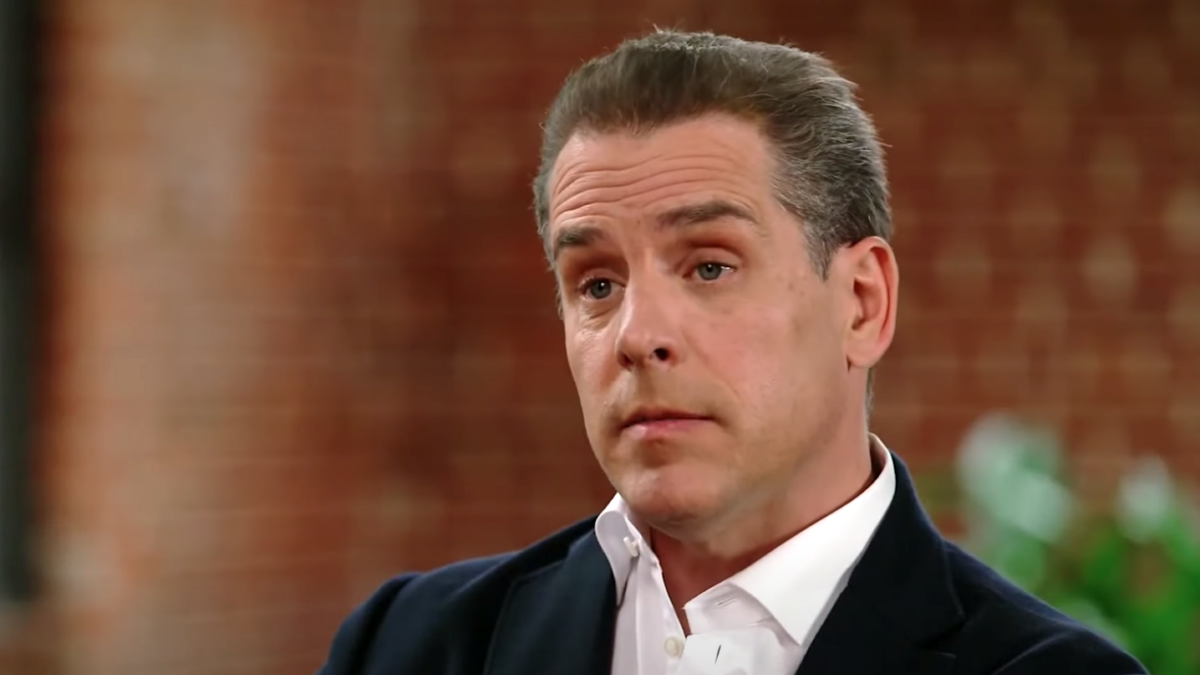
    Hunter Biden
    Accusations levied by an IRS whistleblower suggest federal prosecutors blocked the filing of criminal tax charges against Hunter Biden.

    Author Margot Cleveland profile

    MARGOT CLEVELAND

    VISIT ON TWITTER@PROFMJCLEVELAND

    MORE ARTICLES

    Did Biden-appointed U.S. attorneys in California and Washington, D.C., block the filing of criminal tax charges against Hunter Biden? 

    Accusations levied by an IRS whistleblower on Wednesday suggest the federal prosecutors did just that, contradicting Attorney General Merrick Garland’s recent congressional testimony and raising an avalanche of questions concerning the independence of the Delaware U.S. attorney’s office overseeing the Hunter Biden investigation. Given the severity of the claims, the U.S. attorney should speak up immediately.

    A cryptic letter sent to a slew of congressional committee chairs on Wednesday revealed an Internal Revenue Service (IRS) whistleblower’s claims of political interference in the criminal investigation of a high-profile, politically connected individual. While the letter omitted the specific details the whistleblower sought to present to the oversight committees, unnamed sources reportedly confirmed the criminal case concerned Hunter Biden; they also revealed several more scandalous claims.

    In attorney Mark Lytle’s letter to the congressional chairs and ranking members, the Nixon Peabody partner explained that his client, “a career IRS Criminal Supervisory Special Agent,” sought to “make protected whistleblower disclosures to Congress.” After noting that his unnamed client “had been overseeing the ongoing and sensitive investigation of a high-profile, controversial subject since early 2020,” Lytle broadly identified three disclosures the whistleblower was prepared to make.

    First, the whistleblower’s testimony would “contradict sworn testimony to Congress by a senior political appointee,” the letter said. Second, according to Lytle, the career IRS agent would reveal the “failure to mitigate clear conflicts of interest in the ultimate disposition of the case.” And finally, the letter claimed the whistleblower had detailed evidence of “preferential treatment and politics” that improperly infected “decisions and protocols.” 

    Individuals claiming to be “directly familiar with the case” put flesh on the barebones allegations summarized by Lytle. Those sources claim Hunter Biden is the “high-profile” individual under investigation and “that at least two Biden DOJ political appointees in U.S. attorneys’ offices have declined to seek a tax indictment against Hunter Biden despite career investigators’ recommendations to do so.” The sources further claimed career prosecutors in the Department of Justice tax division had cleared the prosecution of Hunter Biden — something generally required in criminal tax cases. 

    The whistleblower, who had previously filed complaints with the U.S. Treasury Inspector General for Tax Administration and the DOJ’s Office of Inspector General, decided to inform congressional oversight committees of the claimed political improprieties after hearing Garland’s March 1, 2023, testimony before the Senate Judiciary Committee, sources claim

    During the Judiciary Committee’s oversight hearing, Sen. Chuck Grassley, R-Iowa, questioned Garland on the ability of the federal prosecutor investigating Hunter Biden, Delaware U.S. Attorney David Weiss, to pursue criminal charges in a different judicial district, without special counsel authority. 

    Garland responded that the Delaware U.S. attorney had been advised he has authority “to bring cases in other jurisdictions if he feels it is necessary.” “If he needs to bring [a case] in another jurisdiction, he will have full authority to do that,” Garland assured.

    It was that testimony by Garland, who was reportedly the unnamed “senior political appointee” referenced in Lytle’s letter, that the whistleblower’s disclosures would reportedly contradict. Specifically, sources claim the whistleblower intends to reveal that the Delaware U.S. attorney sought permission to bring tax charges in other districts, but two U.S. attorneys appointed by Biden denied the requests. The whistleblower allegedly also claims that Weiss had asked “to be named a special counsel to have more independent authority in the probe but was turned down.” 

    Weiss’s supposed need to enlist the Biden-appointed U.S. attorneys to move forward with criminal charges seemingly stems from a DOJ policy that criminal tax prosecutions proceed in the judicial district where the defendant lived at the time the pertinent tax returns were filed. And here, Grassley gave a clue of the U.S. attorney offices that allegedly refused to pursue criminal charges when he asked Garland whether the D.C. or California U.S. attorney’s offices had denied a request by Weiss to bring charges against Hunter Biden.

    Garland responded that he did not know the answer to that question and did not want to “get into the internal decision-making” of the U.S. attorneys, but that Weiss had been advised he will not be denied anything he needs.

    Grassley’s reference to the California and D.C. U.S. attorney’s offices meshes with details of Hunter Biden’s various residences. Before moving to California, the Biden son listed his residence in 2018 as his father’s house in Wilmington, Delaware, but he claimed a D.C. address prior to that. Hunter also rented office space in D.C. for Rosemont Seneca Advisors, one of his many LLCs — another basis for bringing a federal criminal tax case in D.C.

    Biden has since moved to California, reportedly living in Hollywood Hills and Venice, establishing connections to the second judicial district Grassley referenced. Both Hollywood Hills and Venice fall in the Central District of California, so The Federalist asked the office of the Biden-appointed U.S. Attorney E. Martin Estrada whether he had rejected recommendations of career prosecutors to charge Hunter Biden. A press representative said they had no comment.

    The Federalist also contacted the D.C. U.S. attorney’s press office for comment, and a representative of U.S. Attorney Matthew Graves said they neither confirm nor deny the existence of any investigation.

    Whether these two U.S. attorneys prevented the filing of criminal tax charges against Hunter Biden is unknown — at least to the public. Weiss, however, knows what happened, and rather than force the whistleblower to suffer through what will surely be months of attempted character assassination, Weiss should clear the record.


    Margot Cleveland is The Federalist’s senior legal correspondent. She is also a contributor to National Review Online, the Washington Examiner, Aleteia, and Townhall.com, and has been published in the Wall Street Journal and USA Today. Cleveland is a lawyer and a graduate of the Notre Dame Law School, where she earned the Hoynes Prize—the law school’s highest honor. She later served for nearly 25 years as a permanent law clerk for a federal appellate judge on the Seventh Circuit Court of Appeals. Cleveland is a former full-time university faculty member and now teaches as an adjunct from time to time. As a stay-at-home homeschooling mom of a young son with cystic fibrosis, Cleveland frequently writes on cultural issues related to parenting and special-needs children. Cleveland is on Twitter at @ProfMJCleveland. The views expressed here are those of Cleveland in her private capacity.

    Biden Nominates Federal Prosecutor with Massive Conflict of Interest Over Biden Family Corruption


    BY: MARGOT CLEVELAND | MARCH 22, 2023

    Read more at https://thefederalist.com/2023/03/22/biden-nominated-a-lawyer-for-pennsylvania-u-s-attorney-who-has-a-big-conflict-of-interest/

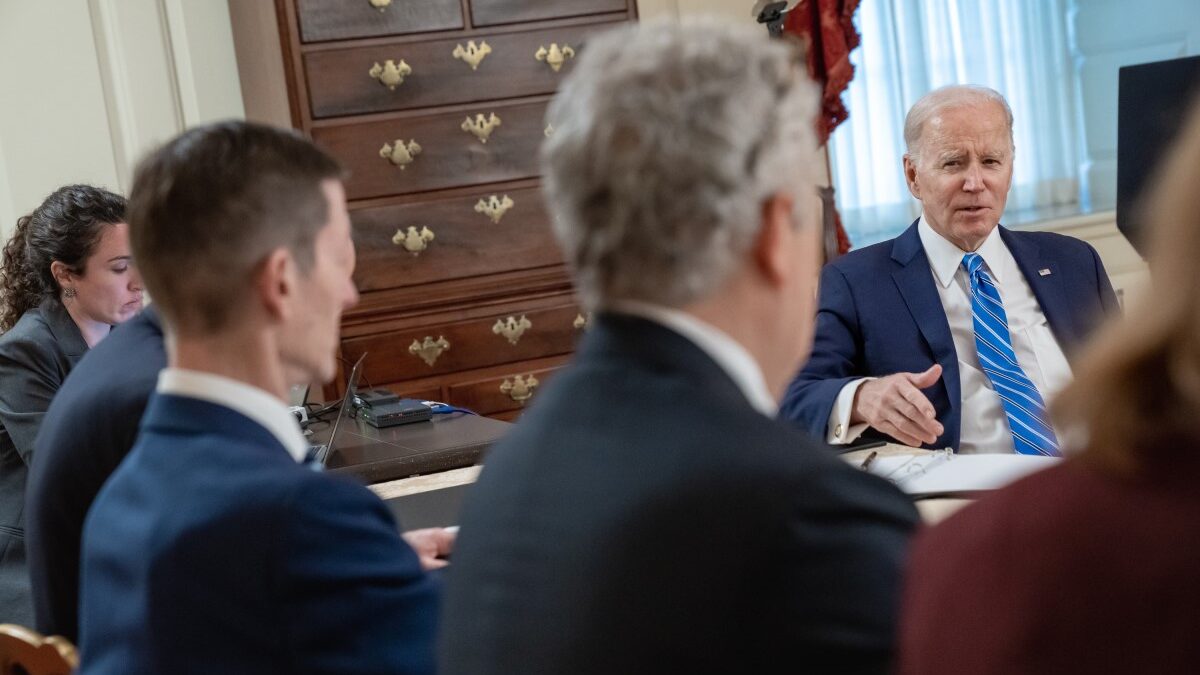
    White House
    There’s a serious potential conflict of interest given the nominee’s involvement in investigating a business run by the president’s brother.

    Author Margot Cleveland profile

    MARGOT CLEVELAND

    VISIT ON TWITTER@PROFMJCLEVELAND

    MORE ARTICLES

    A health-care executive who claims Jim Biden defrauded him was interviewed multiple times by the lawyer Joe Biden just nominated to serve as U.S. attorney for the Western District of Pennsylvania. According to two sources, while the Delaware U.S. attorney’s office is aware of the allegations, that office is not investigating the potential fraud, leaving the matter solely in the hands of the conflicted-future U.S. attorney.

    On Monday, President Biden named Eric Olshan, currently an assistant U.S. attorney in the Pittsburgh office, to fill the vacancy left open when former U.S. Attorney Cindy Chung was confirmed to the Third Circuit Court of Appeals.

    As I previously reported, Chung, whom President Biden had nominated to the federal appellate court, had been overseeing the criminal investigation into the bankrupt health-care business Americore—a business Jim Biden allegedly siphoned hundreds of thousands of dollars from to finance repairs for his beach house. Jim Biden is the current U.S. president’s brother.

    Now, President Biden seeks to replace Chung with Olshan, raising serious concerns about a potential conflict of interest given Olshan’s involvement in the investigation of the Jim Biden-connected business, Americore.

    Olshan had previously served as the lead investigator in the criminal case against Daniel Hurt. Hurt pleaded guilty to soliciting and obtaining kickbacks from the rural Pennsylvania hospital Ellwood City Medical Center, or “ECMC,” which Americore owned. ECMC had allegedly received some $25 million in fraudulent Medicare reimbursements.

    According to an affidavit signed under oath by ECMC’s former CEO, Grant White, the president’s brother directed White to loan him (Jim Biden) approximately $400,000 to repay a past-due personal loan secured by Jim Biden’s Florida beach house. Jim Biden allegedly later pulled additional funds from ECMC, totaling about $250,000, but he would only repay about $25,000 to the medical center. ECMC would later go bankrupt and close, prompting a federal investigation.

    To date, no charges have been filed related to Jim Biden’s alleged misappropriation of funds from Americore. Nor has anything come from the additional accusations made by Michael Frey, the president and CEO of the Tennessee-based Diverse Medical Management, against Jim Biden and his business partners.

    Frey claims Jim Biden represented himself as a “principal” for Americore—even providing him a business card—and then entered into a scheme to defraud him. According to Frey, Jim Biden and his business partners promised to provide capital to implement Frey’s business model for rejuvenating failing rural hospitals.

    But after Frey worked with various medical groups to put the plan in action, Jim Biden and his partners reneged on their agreement, he says. That left Frey holding the bag, forcing him to cover costs of about $1 million until he could unwind the various deals that had been put into motion.

    The Tennessee business executive sued Jim Biden and the others allegedly involved in the scheme, before entering into a confidential settlement agreement with the defendants. The defendants breached the deal, however, according to Frey.

    Frey plans to enforce the settlement agreement but told The Federalist he first intends to retrieve copies of the thousands of text and email messages exchanged by the parties, hoping those documents will assist in his efforts. Frey says the text and email messages will confirm his allegations against Jim Biden and the others involved in the deal.

    Frey’s accusations against Jim Biden are particularly concerning because Frey discussed his allegations and evidence with an FBI agent from the Pittsburgh field office, as well as with Olshan.

    “I spoke with Olshan both before and after Joe Biden became president,” Frey told The Federalist. They last spoke about six to eight months ago, Frey noted, adding that Olshan stated his office would reach back out to Frey. To date, however, he has heard nothing more.

    Frey also told The Federalist he has never spoken with anyone from the Delaware or Baltimore offices. This proves significant because the U.S. attorney for Delaware, David C. Weiss, is handling the criminal investigation into Hunter Biden’s business dealings, and the documents recovered from Hunter Biden’s laptop implicate Jim Biden in some of those deals.

    Further, Weiss’s status as a holdover from the Trump administration has given Attorney General Merrick Garland the only cover he has from claims that a conflict of interest necessitates the appointment of a special counsel. But according to Frey, he has never spoken with anyone from the Delaware office. Nor has anyone from the Baltimore FBI field office—the FBI office covering Delaware-related investigations—contacted Frey, he says.

    A person familiar with the Delaware investigation confirmed for The Federalist that while the U.S. attorney’s office there is familiar with Jim Biden and his wife Sara’s connections to the Americore case, the Delaware office is not investigating the matter. Rather, the investigation into Frey’s accusations was being handled out of the Western District of Pennsylvania.

    Frey also told The Federalist that members of the House Oversight Committee have asked him to testify before Congress and he is open to doing so. “Somebody has to stop them from ruining people’s lives,” Frey said, referring to Jim Biden and his partners. “What they did to the $12-an-hour employees at these hospitals is a travesty.” 

    Whether Jim Biden and his partners hold any criminal responsibility related to Americore’s raiding of rural hospitals is unclear. What is clear, however, is that with Joe Biden appointing Olshan to serve as the U.S. attorney for the Western District of Pennsylvania, the entire Americore investigative record should be turned over to the Delaware U.S. attorney, stat.

    The Federalist asked Olshan whether he would recuse from the investigation and refer the matter to the Delaware office now that Joe Biden has nominated him to serve as the next U.S. attorney for Western Pennsylvania. Olshan did not respond to the inquiry.


    Margot Cleveland is The Federalist’s senior legal correspondent. She is also a contributor to National Review Online, the Washington Examiner, Aleteia, and Townhall.com, and has been published in the Wall Street Journal and USA Today. Cleveland is a lawyer and a graduate of the Notre Dame Law School, where she earned the Hoynes Prize—the law school’s highest honor. She later served for nearly 25 years as a permanent law clerk for a federal appellate judge on the Seventh Circuit Court of Appeals. Cleveland is a former full-time university faculty member and now teaches as an adjunct from time to time. As a stay-at-home homeschooling mom of a young son with cystic fibrosis, Cleveland frequently writes on cultural issues related to parenting and special-needs children. Cleveland is on Twitter at @ProfMJCleveland. The views expressed here are those of Cleveland in her private capacity.

    Tag Cloud