Perspectives; Thoughts; Comments; Opinions; Discussions

Posts tagged ‘tax policy’

A Tax Policy Trojan Horse for Welfare Expansion and Inflationary Deficits


By: Richard Stern @RichAStern / Preston Brashers @PrestonBrashers / January 25, 2024

Read more at https://www.dailysignal.com/2024/01/25/called-middle-class-tax-relief-bill-hides-welfare-expansion-more-inflation/
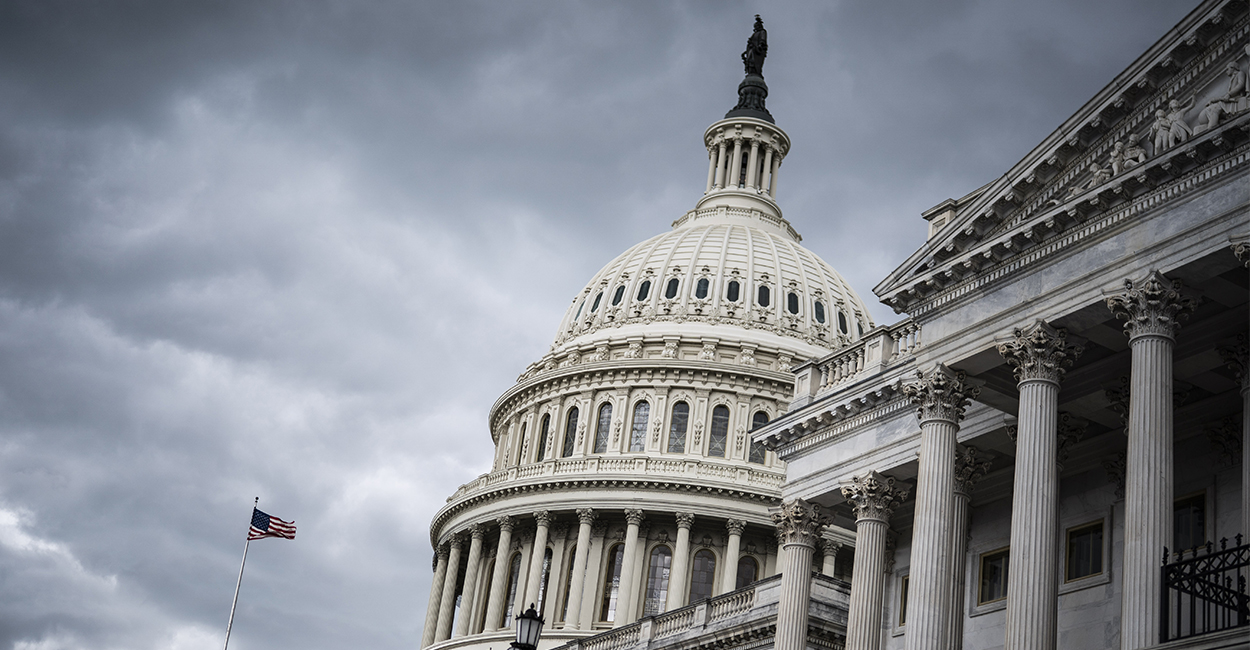
A view of the U.S. Capitol building against a cloudy sky
A House tax bill is under scrutiny for disguising welfare expansion, corporate windfalls, and inflationary deficits, all at the expense of the middle class. It includes weak work requirements, improper payments, and benefits for illegal aliens. Pictured: The Capitol building on Capitol Hill on May 3, 2023, in Washington, D.C. (Photo: Jabin Botsford, The Washington Post/Getty Images)

If you think congressional deadlocks are concerning, just wait until you see what Congress does when it’s in a blinding rush. The House Ways and Means Committee is ready to go from introducing its latest tax bill to House passage in under a week and a half.

Though branded as full of middle-class tax cuts and pro-growth reforms, checking inside this Trojan horse known as The Tax Relief for American Families and Workers Act instead reveals a mixed bag that includes welfare expansions, corporate windfalls, and inflationary deficits.

The only individual tax cut in the bill is a slight cost-of-living adjustment to the child tax credit—likely from $2,000 to $2,100—that would apply to taxpayers’ 2025 and 2026 tax filings before expiring.

The bulk—91.5% to be exact—of what is being described as “middle-class tax relief” is, in fact, an expansion of welfare benefits. The legislation does not fix existing work requirements for individuals to receive the “additional child tax credit,” which, unlike the ordinary child tax credit, exclusively goes to individuals and couples who pay no income tax. Sadly, this feature was begun in the Tax Cut and Jobs Act in 2017.

This provision would amount to a whopping 32% expansion of this welfare credit by 2026—at which point, in typical Washington fashion, these handouts would expire and create a political crisis where tens of millions of people would lose their brand-new welfare benefits—creating a perfect storm for yet more expansion and permanence.

Currently, households with more than $2,500 of annual earned income can qualify for the additional child tax credit. The credit phases in at a rate of $15 for every $100 of earned income after $2,500.

The new tax and welfare bill would accelerate the phase-in so that, for example, a taxpayer with $10,000 of annual income claiming three children could receive a $3,375 benefit instead of $1,125, despite paying $0 in income tax. This additional benefit would be on top of $4,500 in earned income tax credit benefits and any other welfare benefits he may receive.

This would also likely exacerbate existing fraud issues with both programs. The improper payment rate for the earned income tax credit was at 31.6% for fiscal year 2022 while the improper payment rate stood at 15.8% for the additional child tax credit.

To make matters worse, a tax filer would be able to claim this new enlarged additional child tax credit with an individual taxpayer identification number instead of a Social Security number, meaning that many of these new payments would go to illegal immigrants. This was another shortcoming of the 2017 Tax Cut and Jobs Act that is not fixed in this bill.

The bill would also add a lookback provision for the work requirement, so that if a household doesn’t work enough in 2024 to qualify for the credit, but they did in 2023, they would be allowed to receive the benefits based on the prior year of work. In other words, to qualify for the benefits, it would be enough to work part-time, part of the year, even if you only work every other year.  

Conservatives have long fought for stronger work requirements for welfare recipients. This legislation fails to enact any and actually takes a step backward in that respect.

The business tax provisions in the bill are better than the welfare provisions, but they’re also deeply flawed.

For example, the bill would temporarily extend for 2024 and 2025 some expiring provisions of the 2017 Tax Cuts and Jobs Act that allow companies to deduct research and development expenses and short-lived capital investments in the same year that they bear those costs instead of having to depreciate or amortize those costs over multiple years. That’s good tax policy and also leads to more growth by encouraging investment.

However, the pro-growth benefits of those changes are done alongside retroactive relief for the 2022 and 2023 tax years. Such a windfall does nothing to improve companies’ incentives to invest, since they can’t go back in time to change past investment decisions.

The bill does include a modest win by slightly increasing the expenditure threshold where small businesses may qualify for full expensing, and this change is permanent.

The combination of these handouts and the temporary nature of most of the expensing provisions culminates in a staggering long-run growth estimate of precisely zero new jobs created. Yes, you read that right: A Tax Foundation modeling analysis showed that the contrived and odd construction of these provisions would have no impact on long-run economic growth. Maybe it creates momentum for pro-growth policy in 2025, but the bill itself doesn’t move the dial much.

The Joint Committee on Taxation—the official congressional scorekeepers—agree that the business provisions would have no significant impact on economic growth. Tens of billions of dollars of corporate windfall handouts buy a grand total of no long-run economic growth.

To compound these issues, even ignoring the gimmicky way the bill intends to “pay for” these handouts, the formal cost estimate shows $155 billion in new deficits through this year and next from this bill. This would only add to inflationary pressures and spike interest rates—including on mortgages and on loans to small businesses looking to expand.

As with much “bipartisan” legislation, this one falls short on conservative principles. The bill has some small wins but unfortunately will redistribute wealth from hardworking middle-class families to large established corporations and to individuals who are barely engaged in work at all.

House passes sweeping tax bill in huge victory for GOP


Reported

The House on Thursday passed legislation to overhaul the tax code, moving Republicans one step closer to achieving the top item on their legislative agenda.  The measure was approved by a vote of 227-205. No Democrats voted for the bill, while 13 Republicans broke ranks to oppose it.

Passing this bill is the single biggest thing we can do to grow the economy, to restore opportunity and help these middle-income families who are struggling, Speaker Paul Ryan (R-Wis.) said ahead of the vote.

Once the bill reached the magic number for passage, Republicans in the chamber erupted into applause. Democrats mockingly joined in, with some singing “na na na na, hey hey, goodbye,” like they did when the chamber passed an ObamaCare repeal bill earlier this year.

Besides Rep. Walter Jones (R-N.C.), who had concerns about the bill’s impact on the debt, all of the GOP no votes came from the states of New York, New Jersey and California.

Opposing the bill were New York Reps. Dan Donovan, John Faso, Pete Kingc, Elise Stefanik and Lee Zeldin; New Jersey Reps. Rodney Frelinghuysen , Leonard Lance , Frank LoBiondo  and Chris Smith, and California Reps. Darrell Issa , Tom McClintock 

Passage of the tax bill, which was unveiled just two weeks ago, was relatively drama-free compared to the GOP’s failed effort to repeal ObamaCare earlier this year.

The stakes are high for Republicans, who are feeling pressure to show that they can govern ahead of next year’s midterm elections. The Democratic wave in last week’s gubernatorial and state house elections in Virginia and New Jersey has only added to their anxiety.

GOP leaders are hoping to get legislation to President Trump’s desk by Christmas, an ambitious timeline given the obstacles that are mounting in the Senate.

Ahead of the House vote, Trump visited the Capitol to rally the House GOP conference in support of the bill. The president and his economic advisers have touted tax reform as the key to unlocking economic growth.

The measure approved Thursday would reduce the number of individual tax brackets, slash the corporate tax rate from 35 percent to 20 percent and eliminate a number of tax breaks and deductions.

The Joint Committee on Taxation (JCT) estimated that the bill would lower federal revenues by about $1.4 trillion over 10 years — a key finding, as the Republican budget only allows lawmakers to add $1.5 trillion to the debt during that time.

JCT said that all income groups would see a tax cut on average under the bill in 2019, but that some income groups, particularly those making $20,000 to $50,000, in some future years would see tax increases on average.

House Republicans who have labored for months on the tax bill celebrated the vote on Thursday, saying the GOP is on track to put more money in people’s pockets and spur investment in new jobs.

“For too long, this broken tax code has eroded America’s economic leadership around the world,” said House Ways and Means Committee Chairman Kevin Brady  (R-Texas), the chief architect of the legislation.

Democrats denounced the bill, saying it mostly benefit wealthy individuals and corporations while increasing taxes on some in the middle class.

Rep. John Yarmuth  (D-Ky.), the top Democrat on the House Budget Committee, brought a giant check to the House floor debate giving $500 billion to “The Wealthiest 1%” from “The American Taxpayers.” The fake check was signed, “Congressional Republicans.” 

“Hard-working families get pocket change,” Yarmuth said, holding up a handful of coins for emphasis. “But millions don’t even get that.”

The House bill would eliminate the deduction for state and local income and sales taxes and cap the property-tax deduction at $10,000, which could hurt people in high-tax states like New York, New Jersey and California.

“I just have too many constituents who are going to see their taxes go up or not see the benefit of the tax relief,” Zeldin said.

Senate Republicans have their own tax bill, which is currently being considered by the chamber’s tax-writing committee. The Senate legislation differs from the House’s in a number of ways. Unlike the House bill, the Senate bill fully repeals the state and local tax deduction, delays the corporate tax cut until 2019 and repeals ObamaCare’s individual mandate. The Senate’s bill also sunsets tax cuts for individuals after 2025, in order to comply with the “Byrd rule” that the measure can’t increase the deficit after 10 years if it is to pass with a simple majority.

No more than two Senate Republicans can vote against their bill if Democrats are united in opposition to it. Already, Sen. Ron Johnson  (R-Wis.) has said he doesn’t support either the House or the Senate bills because they provide more of a benefit to corporations than to other types of businesses. Sen. Susan Collins(R-Maine) has expressed concerns about including repeal of the individual mandate, but has not taken a hard stance yet on the measure.

Senate Republicans are aiming to vote on their tax plan during the week after the Thanksgiving holiday.

If the Senate passes its bill, it will set up a difficult conference negotiation between the two chambers over the final legislation.

– This story was updated at 2:15 p.m.

Five takeaways from Trump’s economic address


waving flagBy Peter Schroeder08/08/16

Donald Trump outlined his vision for the nation’s economy Monday in a speech to the Detroit Economic Club that also seemed designed to reassure Republicans after a difficult stretch for the GOP presidential nominee.

Polls have consistently suggested that the economy could be a strong issue against Hillary Clinton, with surveys showing voters prefer how he might handle the economy to the Democratic nominee. The most recent polls, however, show Trump’s advantage on that issue is narrowing. A strong jobs report released on Friday could also hamper the Republican’s argument.

Here are five takeaways from Trump’s economic address.

He’s moving toward GOP orthodoxy

Trump has been an unconventional GOP presidential nominee, to say the least.

Yet in Monday’s speech, there were times when his policy provisions sounded more like a standard GOP candidate.

Trump’s speech centered on ideas held near and dear to Republicans for decades, including trimming regulations, killing the estate tax and drastically simplifying the tax code.

On all three issues, Trump took positions similar to those advocated by Speaker Paul Ryan (R-Wis.), who has been the GOP’s intellectual leader for years on the economy.

On taxes, Trump is effectively in lockstep with House Republicans in the big picture.

He said his preferred top tax rate would be 33 percent, up from the 25 percent he previously pitched and a number in line with a House GOP blueprint.

He also called for reducing the corporate tax rate, rolling back a host of Obama administration regulations and boosting the coal industry by reining in the Environmental Protection Agency.

Trump is not overhauling his image

While Trump is embracing some cornerstones of GOP thinking when it comes to economic policy, he’s certainly not abandoning ideas central to his brand.

Trump devoted a significant portion of his remarks Monday to bashing trade deals — including the pending Trans-Pacific Partnership that is backed by Ryan.

Trade agreements such as the TPP are broadly accepted among elected Republicans and business groups like the U.S. Chamber of Commerce that are frequently sympathetic to GOP causes.

Trump also went after the North American Free Trade Agreement with Canada and Mexico.

And the GOP nominee took time to decry the carried interest tax break, a provision favored by some Wall Street firms that has been frequently labeled a loophole by Democrats. Trump vowed to eliminate that deduction, painting it as a special perk for the elite.

“We will eliminate the carried interest deduction and other special interest loopholes that have been so good for Wall Street investors, and people like me, but unfair to American workers,” he said.

Trump isn’t the only Republican to oppose trade deals or the carried interest tax break, but it still represents a notable shift from where previous Republican presidential nominees stood.

Ivanka is influencing his campaign

Monday’s speech made clear that Donald Trump’s daughter, Ivanka, has a significant microphone within the campaign.

One of the biggest new ideas in Trump’s speech Monday — an expansion of federal support for child care costs — also happened to be a major plank in Ivanka’s speech at the Republican National Convention.

Trump’s plan, which would expand tax benefits available to Americans paying for child care, falls outside of traditional Republican Party thinking.

But Ivanka made it a centerpiece of her July speech as she pitched her father as the right man to help working families get by.

Trump’s new proposal, which the campaign says would “exclude childcare expenses from taxation,” clearly came from her. Trump said as much in Detroit.

“I’ve been working on [this] with my daughter, Ivanka,” he said. “She feels so strongly about this.”

Polls show Trump lagging behind Clinton among women voters. Ivanka’s influence and the specific child care proposal are both meant to address that gap.

Prior to Monday’s address, Trump fleshed out his policy team by naming a new group of economic advisers, including many giants from the worlds of finance and real estate.

But Monday’s speech made clear that when it comes to crafting policy, Ivanka has a prime seat at the table.

Trump wants to look presidential

Immediately after the nation’s political conventions, Trump appeared to confirm the worst concerns of many in the Republican Party.

He entered into feuds and fights with the Muslim parents of a slain American soldier and top leaders in his own party, for little apparent purpose other than personal slights.

And as his poll numbers slipped, more and more Republicans hinted or outright declared he was unfit for office.

Trump’s speech Monday was aimed in large part at calming those critics.

Beyond the content of the speech, which included nods toward many flagpoles of GOP economic thinking, Trump also reined in his freewheeling style. He largely stuck to his prepared remarks and for the most part ignored protestors who sought to throw him of his game by interrupting his remarks more than a dozen times.

Trump closed his remarks with an ambitious vision for what the nation could be under his leadership, painting a picture of a nation rebuilding itself from its own inner strength.

“American steel will send new skyscrapers soaring. We will put new American metal into the spine of this nation,” he said. “It will be American hands that rebuild this country. … We need to stop believing in politicians, and start believing in America.”

Some specifics will have to wait

Monday’s speech was billed as a major economic address for Trump as he laid out his ambitious agenda for the country. But while Trump promised ground-shaking action to make America dominate on the global stage, he was less precise when it came to explaining exactly how he would accomplish it.

Multiple times throughout his remarks, Trump said that the details of his policy plans were still not public and would be fleshed out in the coming days. That includes his plan for tax reform, how he would repeal and replace ObamaCare and how he will help Americans address growing child care costs.

Meanwhile, Trump pulled his own tax plan from his website before his remarks and has yet to put up an alternative.

Trump did not bring up other policy pitches that he has made in the past — including raising the federal minimum wage to $10 per hour or his vision for a $500 billion investment in the nation’s infrastructure.

He also failed to detail how his policy ideas would be paid for, lest they add to a national debt that he lamented had doubled under President Obama.

Tag Cloud