
Perspectives; Thoughts; Comments; Opinions; Discussions

Posts tagged ‘Supremem Court’

Supreme Court reinstates major gas pipeline in blow to environmental groups


‘This decision to let construction of the Mountain Valley Pipeline move forward again is the correct one,’ Democratic Sen. Joe Manchin said

Thomas Catenacci

By Thomas Catenacci | Fox News | Published July 27, 2023 11:36am EDT

Read more at https://www.foxnews.com/politics/supreme-court-reinstates-major-gas-pipeline-blow-environmental-groups

The Supreme Court struck down a lower court ruling from earlier this month that blocked construction of the 303-mile Mountain Valley Pipeline (MVP) from proceeding. In a short, unsigned order issued Thursday morning, the Supreme Court vacated the July 10 stay orders from the U.S. 4th Circuit Court of Appeals, in which the lower court sided with plaintiffs — environmental groups Wilderness Society and Appalachian Voices, which had sued to stop the pipeline construction. The 4th Circuit ruling was opposed by the Biden administration, bipartisan lawmakers and the fossil fuel industry.

“Whatever benefit respondents or the court of appeals might believe would be gained by having the agencies again reconsider the challenged actions, Congress has determined that further reconsideration is unwarranted and has prioritized MVP’s ‘timely’ completion over interests addressed by any other federal statutes,” the Department of Justice wrote in an amicus brief to the Supreme Court last week. 

“That judgment is for Congress alone,” the brief continued.

SUPREME COURT FACES INCREASED PRESSURE FROM CONGRESS TO REINSTATE MASSIVE PIPELINE

BENT MOUNTAIN, VIRGINIA - AUGUST 31: Sections of 42 diameter sections of steel pipe of the Mountain Valley Pipeline, MVP, lie on wooden blocks, August 31, 2022 in Bent Mountain, Virginia. The MVP will transport natural gas through 303 miles of West Virginia and Virginia. Public opposition has centered on challenging MVPs permitting through wetlands and national forests. The original budget of $3.5 billion is now estimated to be $6.2 billion. The Federal Energy Regulatory Control agency, FERC, has recently granted MVP another 4-years to complete. (Photo by Robert Nickelsberg/Getty Images)

In June, President Biden signed the Fiscal Responsibility Act, which fast-tracked federal permits for the Mountain Valley Pipeline and shifted judicial review jurisdiction away from the 4th Circuit. Eco groups have loudly opposed the project. (Robert Nickelsberg/Getty Images)

The Department of Justice brief was one of numerous briefs filed in the case. Opponents of the 4th Circuit ruling pointed to the Fiscal Responsibility Act, the recent bipartisan debt limit bill President Biden signed in early June, which green-lighted all permits for the MVP project. The debt limit bill also shifted judicial review jurisdiction from the 4th Circuit, which has a lengthy track record of siding with environmental groups, to the U.S. District of Columbia Circuit Court of Appeals. 

Days after the lower court ruling, on July 14, the pipeline’s developer asked the Supreme Court to vacate the stay. The high court gave plaintiffs until Tuesday to file a response.

JOE MANCHIN CALLS ‘BULLS—‘ ON GOP TAKING CREDIT FOR GAS PIPELINE IN DEBT CEILING DEAL

“The Fourth Circuit judges are not supreme rulers and lawful orders issued by the legislative and executive branches must be followed,” GOP Chief Deputy Whip Guy Reschenthaler, R-Pa., told Fox News Digital on July 19. “Congress was well within its power to restart the Mountain Valley Pipeline construction and usher in a new era of energy independence for the region.”

“Instead of halting the pipeline, I urge the Supreme Court to plug up the ludicrous activism seeping out of the lower court so American families can enjoy lower energy costs, substantial land royalties, and most importantly — law and order in America,” he added.
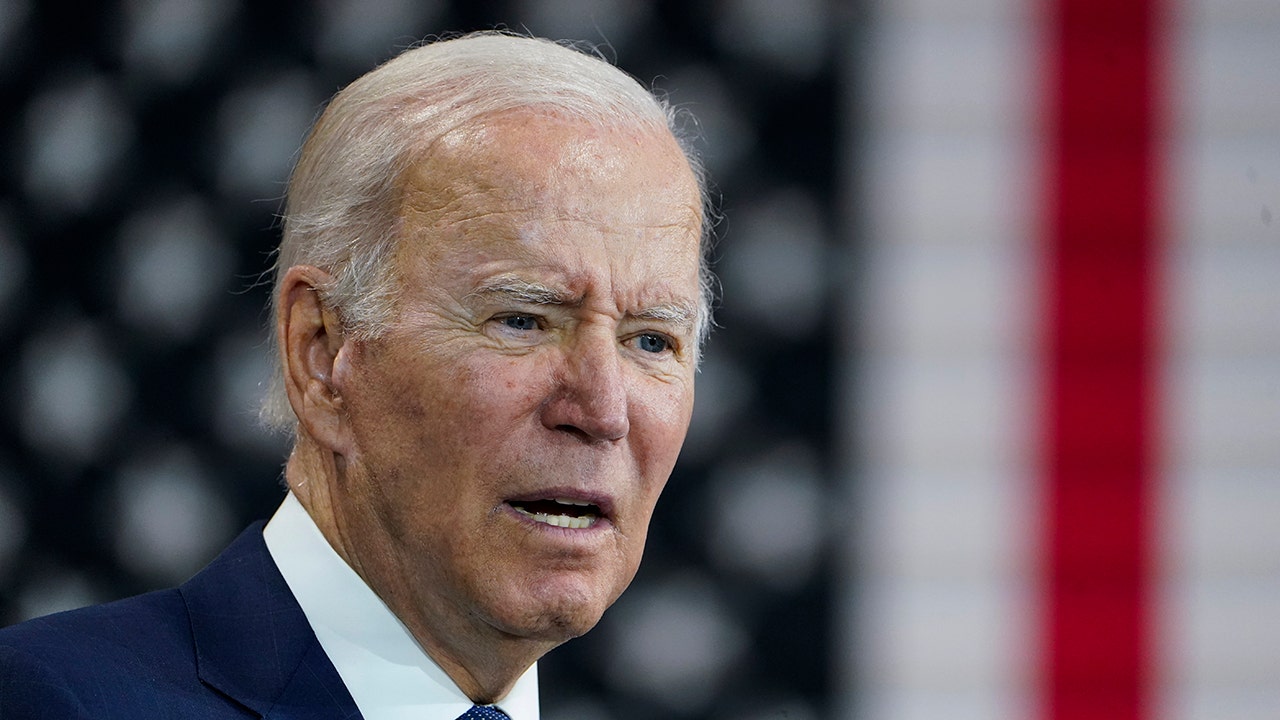
Joe Biden looks to his right with an American flag behind him

The Biden administration filed a brief with the Supreme Court in support of the pipeline’s developer last week. (AP Photo/Manuel Balce Ceneta)

Reschenthaler led a group of seven fellow representatives and Sen. Shelley Moore Capito, R-W.Va, in filing a brief in support of the MVP project’s permits. Sen. Joe Manchin, D-W.Va., who played a role in securing the pipeline in the Fiscal Responsibility Act, filed his own amicus brief in the case on July 18.

“The Supreme Court has spoken and this decision to let construction of the Mountain Valley Pipeline move forward again is the correct one. I am relieved that the highest court in the land has upheld the law Congress passed and the President signed,” Manchin said in a statement Thursday.

The Laborers’ International Union of North America, a large labor union; GOP West Virginia Gov. Jim Justice; American Gas Association; American Petroleum Institute; Chamber of Commerce; and counsel for the U.S. House of Representatives all filed briefs in support of the pipeline.

According to Equitrans Midstream, the pipeline’s developer, MVP will transport about 2 billion cubic feet per day of natural gas from West Virginia to consumers in the Mid-Atlantic and South Atlantic. The pipeline is projected to generate $40 million in new tax revenue for West Virginia, $10 million in new tax revenue for Virginia and up to $250 million in royalties for West Virginia landowners.

Thomas Catenacci is a politics writer for Fox News Digital.

‘NEVER WHAT FOUNDERS INTENDED’: Supreme Court Should Strike Down Chevron Deference, Conservatives Say


By: Tyler O’Neil @Tyler2ONeil / July 24, 2023

Read more at https://www.dailysignal.com/2023/07/24/exclusive-conservatives-urge-supreme-court-tie-hands-unelected-bureaucrats-fleecing-fishermen/

A bearded man holds a lobster on a fishing vessel
Eleven conservative groups filed an amicus brief supporting fishermen who are challenging Chevron deference in a Supreme Court case. Pictured: Joe Dean, an Iraq war combat veteran, works on his family’s lobster boat on Aug. 7, 2021, outside the fishing village of Stonington, Conn. (Photo: Andrew Lichtenstein/Corbis/Getty Images)

FIRST ON THE DAILY SIGNAL—A conservative nonprofit launched by former Vice President Mike Pence is representing 11 conservative groups in supporting fishermen challenging the extensive power of the federal bureaucracy.

Advancing American Freedom, which plays no role in Pence’s 2024 presidential campaign, filed an amicus brief in the Supreme Court case Loper Bright Enterprises v. Raimondo, in which the court will revisit the longstanding precedent of Chevron deference. The group exclusively gave The Daily Signal a copy of the brief.

In Chevron v. National Resources Defense Council (1984), the Supreme Court held that whenever a law is ambiguous, a federal agency has the authority to interpret the scope and content of that ambiguity to achieve its ends, so long as the interpretation is “reasonable.” This precedent granted executive agencies tremendous power to effectively rewrite the law, critics like Advancing American Freedom claim.

“The Left has used Chevron Deference to grow the administrative state and circumvent the approval of Congress to push their own agenda,” J. Marc Wheat, Advancing American Freedom’s general counsel, told The Daily Signal. “This is never what the Founders intended; unelected bureaucrats at various agencies do not have the power to legislate and we hope that the Supreme Court checks the Chevron Deference once and for all.”

In Loper Bright, fishermen are challenging the National Marine Fisheries Service—represented by Commerce Secretary Gina Raimondo. Federal law forces fishermen to carry inspectors aboard their vessels. A new Fisheries Service rule forces the fishermen to pay the salaries of these federal inspectors. The federal law requiring the inspections does not stipulate that fishermen must pay inspectors’ salaries, but the Fisheries Service insists that it has the power to demand payment under Chevron.

A divided panel of the U.S. Court of Appeals for the District of Columbia Circuit sided with the Fisheries Service in August 2022, noting that the statute leaves “room for agency discretion.” Yet Judge Justin Walker dissented.

“Did Congress authorize the National Marine Fisheries Service to make herring fishermen in the Atlantic pay the wages of federal monitors who inspect them at sea?” he asks in his dissent. “Congress unambiguously did not.”

“Fishing is a hard way to earn a living,” he notes. While “Congress can make profitable fishing even harder by forcing fishermen to spend a fifth of their revenue on the wages of federal monitors embedded by regulation onto their ships,” it has not done so. “Until Congress does that, the Fisheries Service cannot.”

Advancing American Freedom filed the amicus brief on Monday, representing itself and ten other conservative organizations. Eagle Forum, the National Center for Public Policy Research, Project 21 Black Leadership Network, Students for Life of America, and Young America’s Foundation joined the brief. The brief begins by quoting the Declaration of Independence, noting that the Founders faulted King George III for erecting “New Offices… to harass” them “and eat out their substance.”

“Here, a New England fishing business is threatened with insolvency because a Federal agency seeks to swarm the industry with bureaucrats to consume the proceeds of some 20% of the daily catch,” the petitioners write. “Bureaucracies that have grown smug and fat through Chevron deference should reacquaint themselves with their country’s history.”

“This case presents the question of Chevron deference dead on without any need to tack, offering an excellent opportunity to abandon this sinking ship and to offer lower courts a more seaworthy vessel for judicial review,” the petitioners write.

Conservative Supreme Court justices have criticized Chevron deference in recent years. Justice Clarence Thomas wrote in his concurrence in Michigan v. EPA (2015) that Chevron “wrests from Courts the ultimate interpretative authority ‘to say what the law is,’ and hands it over to” the executive branch. Justice Neil Gorsuch wrote last fall that the court should acknowledge “that Chevron did not undo, and could not have undone, the judicial duty to provide an independent judgment of the law’s meaning.”

Federal agencies have used Chevron deference to justify many controversial policies.

When the Supreme Court overturned Roe v. Wade last year, President Joe Biden directed his administration to “protect and expand access to abortion care.” Following the prompting of Health and Human Services Secretary Xavier Becerra, the Centers for Medicare and Medicaid Services issued guidance claiming to find an abortion mandate in a law that had never been interpreted as mandating abortion.

The federal agency interpreted the Emergency Medical Treatment and Labor Act, which requires health care providers to provide “stabilizing treatment” in certain circumstances, as mandating abortion. If a health care provider determines that abortion is necessary to protect the mother’s life, he or she must either perform the abortion or refer the woman to a medical facility that would perform it, regardless of the relevant state law.

Advancing American Freedom, representing 25 other conservative and pro-life groups, filed an amicus brief challenging this interpretation of the law. The brief argues that this interpretation “would expand the meaning of the 1986 statute to include abortions as a form of treatment and would illegally overwrite legitimate state laws designed to protect women and the unborn.”

As in Loper Bright, Advancing American Freedom urges the Supreme Court to overturn Chevron.

Loper-Bright-AAFDownload

Tyler O’Neil @Tyler2ONeil

Tyler O’Neil is managing editor of The Daily Signal and the author of “Making Hate Pay: The Corruption of the Southern Poverty Law Center.”

Ethan Blevins Op-ed: Supreme Court puts universities on notice, but missed an opportunity


Ethan Blevins

 By Ethan Blevins | Fox News | Published June 29, 2023 11:37am EDT

Read more at https://www.foxnews.com/opinion/supreme-court-puts-universities-notice-missed-opportunity

Universities take note — the Supreme Court will not tolerate the fanatical and wanton reliance on race that has become the norm in admissions. 

In Students for Fair Admissions v. University of North Carolina, the Supreme Court held that Harvard and North Carolina had gone too far with racial preferences in weighing student applicants. Too many universities, said Chief Justice John Roberts in his majority opinion, “have concluded, wrongly, that the touchstone of an individual’s identity is not challenges bested, skills built, or lessons learned but the color of their skin. Our constitutional history does not tolerate that choice.”

While this is a key win for individual rights, the court did not go far enough. The court should have held that race can play no role in university admissions whatsoever. Instead, the court has opted to prop up a feeble precedent that leaves the door ajar for ongoing discrimination. 

While the Supreme Court added a few supporting beams to its rickety case law on racial preferences in admissions, it should have torn down the whole structure.

In 2003, the Supreme Court decided Grutter v. Bollinger, holding that universities can consider race in admission decisions (which is another way of saying they can discriminate based on race) to build student body diversity. The court said universities have a compelling interest in the “educational benefits that flow from” racial diversity, which — according to the court — promotes “cross-racial understanding” and combats racial stereotypes “because nonminority students learn there is no ‘minority viewpoint.’” How ensuring admission to racial minorities promotes viewpoint diversity when there is “no minority viewpoint” is a mystery.

But the court set limits. Universities cannot set quotas, they cannot racially balance the student population, and they can only resort to racial preferences if race-neutral methods of achieving a diverse student body won’t do the job. And there’s a time limit. Once racial preferences are no longer needed to achieve diversity, they must be retired. 

These safeguards may sound strict, but Grutter also told courts to “presume” universities are acting in “good faith.” In other words, if the universities say they’re playing nice and plaintiffs can’t prove otherwise, the courts shrug and move on.

Grutter also declined to resolve how much diversity is enough diversity. Universities can discriminate until they reach a mystical “critical mass” of racial minorities. Once again, courts defer to universities on the question of how much is too much.

Grutter’s presumption of “good faith” is an unsettling echo of Plessy v. Ferguson, the case in which the Supreme Court upheld racial segregation on trains by accepting the government’s claim to be acting “in good faith for the promotion of the public good, and not for the annoyance or oppression of a particular class.”

Despite Grutter’s blustering about its “strict” scrutiny of university admissions, the decision was little more than an indulgent wag of the finger that has left universities free to discriminate. The Supreme Court’s failure to fire this sleepy sentinel of equal rights will allow universities to continue to put skin color above achievement.

Yet Harvard and North Carolina’s wanton discrimination was blatant enough to raise the alarm even under Gruttter. Both universities rely on race in student admissions to a startling degree. For example, an Asian American student in the highest tier of academic performance has less chance at Harvard admission than an African American in the fourth-lowest tier. An African American student in the top tier has well over a 50% chance of admission, while an Asian American in the same tier has about a 10% chance. North Carolina is similar.  These universities are not alone; many schools view Harvard’s approach as the gold standard for admissions.

Trial evidence indicated that neither Harvard nor North Carolina had considered race-neutral alternatives as Grutter requires (subject to that pesky presumption of good faith, of course). Plaintiffs, for instance, demonstrated that Harvard could increase racial diversity if it jettisoned preferences for legacy candidates (children of alumni, donors and faculty), who are overwhelmingly White and wealthy. Likewise, an increased focus on socioeconomically disadvantaged students would lead naturally to greater racial diversity. Neither university has bothered to try these alternatives.

According to Chief Justice Roberts, Harvard and UNC have engaged in unlawful stereotyping by assuming skin color says something about the content of someone’s character. As the chief justice put it, “The entire point of the Equal Protection Clause is that treating someone differently because of their skin color is not like treating someone differently because they are from a city or from a suburb, or because they play the violin poorly or well.”

All said, Students for Fair Admissions is a step forward toward racial equality, if not the leap that many court watchers hoped for. It puts universities on notice that courts will not just take universities at their word that they are behaving themselves. It also patches up a few of Grutter’s more glaring flaws. For example, it rejects the idea that universities are owed unlimited deference in their racial gerrymandering as Grutter had implied.

If courts do begin to take Grutter more seriously, as Thursday’s decision does, we could see universities slink toward more covert methods, such as proxy discrimination — where schools adopt “neutral” methods such as zip code quotas with the intent to discriminate. This is already happening in admission-only K-12 schools.  For example, at Thomas Jefferson High School, school administrators adjusted their admissions process in an underhanded effort to reduce Asian American admission. A lawsuit against the high school brought by my employer, Pacific Legal Foundation, will soon ask the Supreme Court how to address this discrimination by proxy.

Students for Fair Admissions offers hope that the Supreme Court will continue to side with genuine equality.

Ethan Blevins is an attorney at Pacific Legal Foundation, which litigates nationwide to achieve court victories enforcing the Constitution’s guarantee of individual liberty.

Supreme Court Agrees to Rule On Limiting First Amendment


http://www.infowars.com/supreme-court-agrees-to-rule-on-limiting-first-amendment/

Case will directly impact political hyperbole on the internet

Supreme Court Agrees to Rule On Limiting First Amendment

by Kurt Nimmo | Infowars.com | June 18, 2014

Click on image to see movie trailer and more

Click on image to see movie trailer and more

FreeSpeech1-300x204The Supreme Court will soon decide if threatening speech posted on the internet is protected by the First Amendment.

The Court said it will hear an appeal from a Pennsylvania man convicted of making threatening comments on Facebook against his estranged wife, elementary schools, judges and the FBI.Anthony Elonis was convicted of transmitting threatening communications in interstate commerce and sentenced to 44 months in prison.

The case is Elonis v. United States.

Mr. Elonis’ lawyers argued an individual should not be convicted of making a threat unless there is evidence he actually intended violence. Elonis said much speech posted on the internet is “inherently susceptible to misinterpretation.” He insisted his posted remarks did not demonstrate a “subjective intent to threaten” based on previous Supreme Court precedent and are protected speech under the First Amendment.

The Justice Department countered by saying Elonis’ argument undermines “one of the central purposes of prohibiting threats,” which is to protect individuals “from the fear of violence and from the disruption that fear engenders.”

According to the government the defendant’s behavior was not merely “careless talk, exaggeration, something said in a joking manner or an outburst of transitory anger. The statements that qualify as true threats (from the defendant) thus have a significant, serious character.”

In the past the Court has ruled laws covering threats must not infringe on the First Amendment. This includes “political hyperbole” one may construe as subjectively threatening and “unpleasantly sharp attacks” that are not in fact true threats.

Eating-Away-the-First-AmendmentIn The Ethics of Liberty Murray Rothbard argues that threats must be “palpable, immediate, and direct” and “embodied in the initiation of an overt act” in order to be considered actual threats. Language, no matter how abusive or subjectively threatening, cannot be regarded as violence.

If the Court rules in favor of the government, the landscape of the internet will change dramatically. Political hyperbole, often uncivil and “unpleasantly sharp,” will become illegal and subject to prosecution.

Last month Democrat Senate Majority Leader Harry Reid moved to amend the Constitution in order to limit political speech.

“If ultimately adopted, it would mark the first time in American history that a constitutional amendment rescinded a freedom listed as among the fundamental rights of the American people,” warns Ken Klukowski.

Political speech falling outside the parameters set by the ruling political class constitutes a threat to the establishment. This speech flourishes on the internet, specifically on alternative news media websites.

Many lawmakers may indeed be outraged by the ability of individuals like Anthony Elonis to issue verbal threats over the internet. However, for the elite, the overriding agenda is to limit and outlaw speech that may endanger their hold on political power.

VOTE 02


Tag Cloud