
Alfredo Ortiz , Elaine Parker Op-ed: What happens now that Supreme Court struck down Biden’s student loan handout scheme
By Alfredo Ortiz , Elaine Parker | Fox News | Published June 30, 2023 10:42am EDT
Read more at https://www.foxnews.com/opinion/what-happens-supreme-court-struck-down-biden-student-loan-handout-scheme
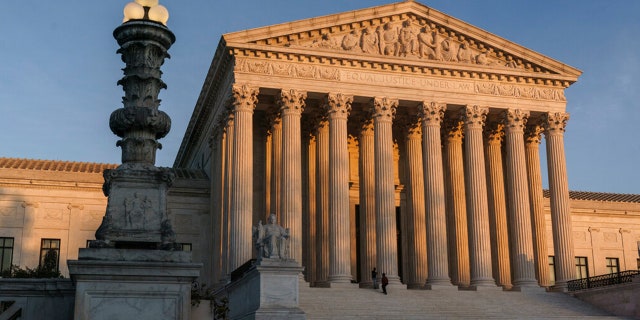
The U.S. Supreme Court has struck down the Biden administration’s $400 billion student loan bailout in response to a legal challenge by Job Creators Network Foundation. This ruling sets the stage for long-overdue bipartisan action to address the underlying reason for this debt crisis: unaccountable colleges that have raised tuition by more than double the inflation rate over the last generation.
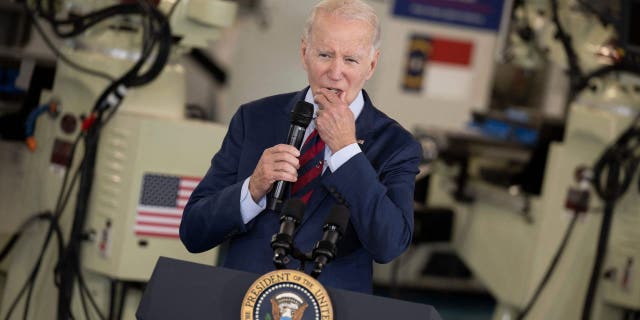
The court ruled that the cancelation program was a clear act of executive overreach, a position that both President Biden and Nancy Pelosi have taken in the past. Congress neither authorized broad student loan forgiveness nor indicated intent to do so. In fact, Congress has repeatedly rejected student loan cancelation bills in recent years. The president is not a king and cannot usurp lawmakers’ authority.
With this ruling, the Supreme Court has protected hardworking Americans who have paid back their student loans or never went to college from having to unfairly cover the college debt of others.
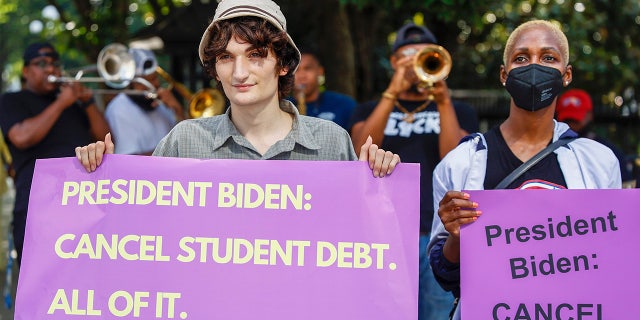
A student debt jubilee would have let colleges off the hook for their role in this crisis and given them a blank check to keep on raising costs, secure in the knowledge that the federal government will step in when debts get out of hand. Lawmakers can now begin to address the problem’s root.
The average annual tuition at private, nonprofit universities has grown to $50,000. As a result, American colleges are sitting on $700 billion in endowments. They are taking advantage of their “nonprofit” status and favorable opinion from Democrats and the media to price gouge ordinary Americans.
A lot of fat can be cut from colleges and returned to students through lower tuition. For instance, colleges have hired an army of high-paid administrators that provide little to no educational value. Some colleges now have around the same number of administrators as students, and most have more administrators than faculty.
College sports coaches can make more than $10 million per year, and college presidents can make over $1 million.
This begs the question: Have colleges become glorified jobs programs funded by students and taxpayers?
Colleges have launched dozens of expensive humanities degree programs that don’t provide students with marketable skills. These sociology-adjacent majors generally teach postmodernism, identity politics and a victim mentality that leave students unprepared to succeed in today’s competitive economy. British Prime Minister Rishi Sunak has vowed to end such low-value degrees in his country.
Colleges have also engaged in a decades-long building boom that has added expensive resort-style amenities to campuses. Features like state-of-the-art dorm rooms, lecture halls and sports facilities don’t improve learning but cost a lot of money for students and taxpayers. These aren’t the college campuses you remember attending.
Under the status quo, where the federal government backs all student loans, there’s little check on such college profligacy. Yet smart reforms can reverse runaway college tuition and spending.
Recent legislation introduced by Senate Republicans helps get to the root of the problem by imposing student loan transparency and eliminating inflationary Graduate PLUS loans, but more needs to be done.
Broader reforms such as requiring colleges to take over some responsibility for making student loans will incentivize them to ensure students don’t take on too much debt and graduate with skills to succeed. Talk about a win-win.
Democrats have long stood against price gouging, institutional greed and preying on vulnerable folks. They can do so again by joining with Republicans to take on the college cartel. Many top Democrats, such as Sen. Elizabeth Warren, have railed against corporate excess, and they should stay consistent by also calling out colleges.
Thanks to the court’s decision, lawmakers can now come together to finally reduce escalating college costs burdening so many. Everyone agrees student loans are a crisis. It’s time we all identify colleges as the true culprit and pursue bipartisan reform to hold them accountable.
Elaine Parker is president of the Job Creators Network Foundation.
 Drawn by


 What Did You Say?
Rowan County, Ky., is a lesson for America in how not to resolve social conflict. The local head clerk is sitting in jail, and a judge has ordered her deputy clerks to issue marriage licenses to same-sex couples in her absence. When the Supreme Court redefined marriage for the nation in an activist decision this June, it took the issue out of the democratic process and made it much harder for citizens to navigate our differences on this fundamental institution. Both sides of the debate knew the decision would have significant social effects. For civil servants like clerks who issue marriage licenses, the implications were also immediately personal.
Rowan County clerk Kim Davis could not, as a matter of religious conviction, issue same-sex marriage licenses. Davis’ further dilemma is the fact that her name is attached to every county marriage license, and she believes issuing them to same-sex couples would constitute precisely the kind of endorsement of same-sex unions her faith forbids. Because of that, her office stopped issuing all marriage licenses after the Supreme Court decision.
A lawsuit followed and a federal court on August 12 ordered her to issue licenses despite her faith-based objections. She did not comply with the order, and at a hearing Thursday the judge sent Davis to jail for contempt of court, even though the plaintiffs had specifically asked she be given fines instead of jail time. The judge ordered the deputy clerks to issue marriage licenses or also face contempt of court and five out of six said they would comply. Meanwhile, the judge has told Davis she will stay in jail because she will not comply with his orders.
This situation could have been avoided. This problem would not have even existed in Kentucky and many other parts of the country had the Supreme Court allowed states to deal with the marriage question democratically—with the give-and-take that naturally leads to compromises, the balancing of competing interests, and a diversity of solutions over time. Instead the Supreme Court redefined the institution for the entire country in one fell swoop but did not say how our constitutional guarantee of religious liberty would be reconciled with the new order of things.
Conflicts have been warned about for years, and all four dissenters to the Supreme Court’s marriage decision predicted dire consequences for religious freedom.
Given the inevitable challenges to this fundamental freedom, it is imperative that we seek solutions to navigate the complex road ahead. In this particular case, there are a number of potential ways forward so that same-sex couples can get licenses as required by the courts and Kim Davis can be released from jail without having to agree to resign or violate her conscience.
One help in finding the way forward is Kentucky’s Religious Freedom Restoration Act, which requires the government to avoid substantially burdening religious expression absent a compelling government interest. There is no compelling government interest in keeping Kim Davis’s name on the licenses instead of the name of the deputy clerks who are willing to issue them. If it’s “just a little form”—as Davis’ critics would like to suggest—then change the form, not the beliefs.
There are a number of other possible accommodations that could be adopted by the legislature, courts, or executive agencies in the state. Davis is not interested in stopping all same-sex marriages in her county. She is only asking that she not be forced to participate in them in a way that violates her beliefs.
Opt-out systems like this work in many walks of life. In fact, we already have examples of such options being adopted in the marriage licensing context. For example, North Carolina allows objecting clerks to choose to not get involved with marriage licensing at all, and the state will guarantee that someone will take their place if needed. Hawaii has an online registration system for marriage licensing that gets rid of many of these concerns.
Whatever the method, people of good will want a solution that leads to better outcomes than the impasse in Rowan County this week. Reaching such a solution in Kentucky is still feasible—and desirable, to respect the legally protected interests of the plaintiffs and the religious conscience of Kim Davis.