Perspectives; Thoughts; Comments; Opinions; Discussions

Posts tagged ‘Stories’

Watching Phones Instead of Reading Good Books Is Starving Kids’ Souls


BY: KATIE SCHUERMANN | OCTOBER 11, 2022

Read more at https://thefederalist.com/2022/10/11/watching-phones-instead-of-reading-good-books-is-starving-kids-souls/

young man on his phone

Author Katie Schuermann profile

KATIE SCHUERMANN

MORE ARTICLES

Consortium for Classical Lutheran Education 2022 conference. It is excerpted here with CCLE permission.

My husband pastors a campus church at a Big Ten university, and we live amongst college students. It is a blessed life, one in which our evenings are longer and our mornings shorter, all because we have the privilege of fostering 50-plus Gen Z-ers in the faith.

What passion and curiosity reside in the hearts and heads of our young people! But do you know what else resides there? Fear and distrust of most everything coming out of the mouth of anyone older than them.

For so many of these students grew up reading, hearing, watching, and absorbing stories that assert that they are omniscient, that no outside source is as trustworthy as their own feelings. They are certain they know what is best for themselves, and anyone who asserts otherwise is an indoctrinated false prophet of the dead past who simply refuses to sing along with Elsa, “Let it go.”

How did these young people come to trust their own corrupted gut more than the wisdom of their parents? I suspect it has something to do with Cinderella, Ariel, Elsa, and Anna; as well as Monica, Ross, Rachel, Phoebe, Joey, and Chandler; and “Modern Family,” “Sex and the City,” “Parks and Recreation,” Marvel movies, and even “Veggie Tales,” for many of our present college students were raised in homes dominated by screens.

Much of their free time was spent absorbing serial television, and while not every televised program, movie, and YouTube channel necessarily tells false stories, much of modern programming follows a storytelling formula that ensures the pet social agendas of screenwriters are always being covered in the plot and in ways that narrate lies surrounding sexual identity, the sanctity of life, the good order of creation and marriage, the strength of men, and the reality of absolutes.

Stories have always been a part of how we pass down what is good and beautiful and true to our children, but depending on the storyteller, this practice can corrupt as easily as benefit. As more and more families turn over the care of their children to institutions, programs, clubs, teams, and devices, parents are no longer controlling the narrative of the stories being passed down to their children.

The loudest, most powerful propagandist holds the bullhorn, and he makes sure the story’s plot fits his personal agenda, no matter if it is evil and ugly and false. This proves especially dangerous in the classroom, where most children spend the greater part of everyday away from their parents.

We now have generations of children raised by bullhorns, and it is commonplace for a child to be occupied by some sort of program every moment of every day, whether it is a daycare program, school program, televised program, sports program, or an arts program — you name it. Many of today’s college students have had few opportunities in life to grow bored, to daydream, and to experience what happens to their bodies and minds and emotions when not occupied. They seem to have missed out on what used to be standard human experiences such as unregulated play, relating to peers of all shapes, sizes, and maturity levels, and making messy, wonderful, formative relationships with imperfect people.

I have observed that when young people are denied the opportunity to share experiences with other real people, they bond with the fake experiences and fake people they see on a screen instead. It is not uncommon for conversations amongst college students to be centered around Disney or “Game of Thrones” or the show “Friends” or countless other streamed programs. Sadly, those Hollywood-scripted shows are the memories peers share, and those designed-to-disorder plots are the common experiences with which they relate to each other.

So, what do we do about it? How do we reclaim the hearts and minds — the attention — of our children? We have to turn off the television, certainly, and power down our devices and pick out the books to be read before bedtime as well as model chastity and charity and temperance and kindness and patience in our own lives.

As Rod Dreher suggests in “The Benedict Option,” “Christians are going to have to become better tellers of our own story,” for the screenwriters are already pitching a relentless campaign for that position, programming our children into an understanding of humanity and of God that is false, an understanding that fools’ men, born free, into living as slaves to bullhorns.

Bo Giertz, the most celebrated storyteller in my own tradition of Lutheranism, writes: “People often think they are free when they put themselves above God’s commands and don’t do what He wants. Actually, they only stop serving one power and begin serving another. Jesus tells us there is only one way to find true freedom: to remain in His Word, listening, receiving, and understanding. Then we perceive truth, and the truth sets us free, truly free.” (“Wednesday after the Third Sunday in Lent,” To Live with Christ, Bo Giertz, 224.)

We need more of this truth that “sets us free” in the stories our children are consuming. We need to read and discuss books with them that teach toward virtue and away from vice, so our youth can recognize tyranny and slavery to sin when they see it.

And they need to know they are not alone. When the time of persecution inevitably comes — when their character and endurance are put to the ultimate test — it is helpful for them to know that they are in good company. They stand with Jesus and the Apostle Paul and Samwise Gamgee and Josip Lasta and Charles Wallace and Katniss and the Rev. John Ames and Robbie Jones and saints and angels and hundreds of years of fictional heroes who have been tested and tried and even triumphed.

Think of it this way. A child is born having no formative memories of virtues and vices. At least, we hope he doesn’t, for firsthand knowledge of tyranny and sloth and intemperance would suggest that the child has been abandoned or deceived by a parent or abused by an adult or has endured some unthinkable suffering.

But a child can still know that patience is a virtue, that joy accompanies charity, that self-sacrifice has its rewards, and that chastity is a beautiful, worthy aspiration, because he has heard the story of Joseph in Egypt and Isaac on the altar and Stephen in Jerusalem and Frodo in Mordor and Bigwig in “Watership Down” and Anne in Avonlea. These characters and stories — fiction or nonfiction — give children memories of virtues before they experience them themselves. These stories teach children into a thought pattern and into a mindset and behavior that is virtuous, that is free.

As Wendell Berry writes in his essay “A Native Hill”: “It is not from ourselves that we learn to be better than we are.” Our children need us to keep telling them good, true stories — especially the true story of their forefathers, both in the family and in the faith — so they can learn to be better than they are. For we have already seen that, if left to the world and its false stories, our children will learn to be worse than they are.
Katie Schuermann is a full-time homemaker, a part-time musician, and a seasonal writer. Find her books and more at katieschuermann.com.

No, The Georgia Vote-Counting Video Was Not ‘Debunked.’ Not Even Close


No, The Georgia Vote-Counting Video Was Not ‘Debunked.’ Not Even Close

A Big Tech-backed “fact” “checking” outfit claimed to debunk explosive evidence in support of Republicans’ claims of significant election problems at a Thursday Georgia Senate hearing. It didn’t. Not even close.

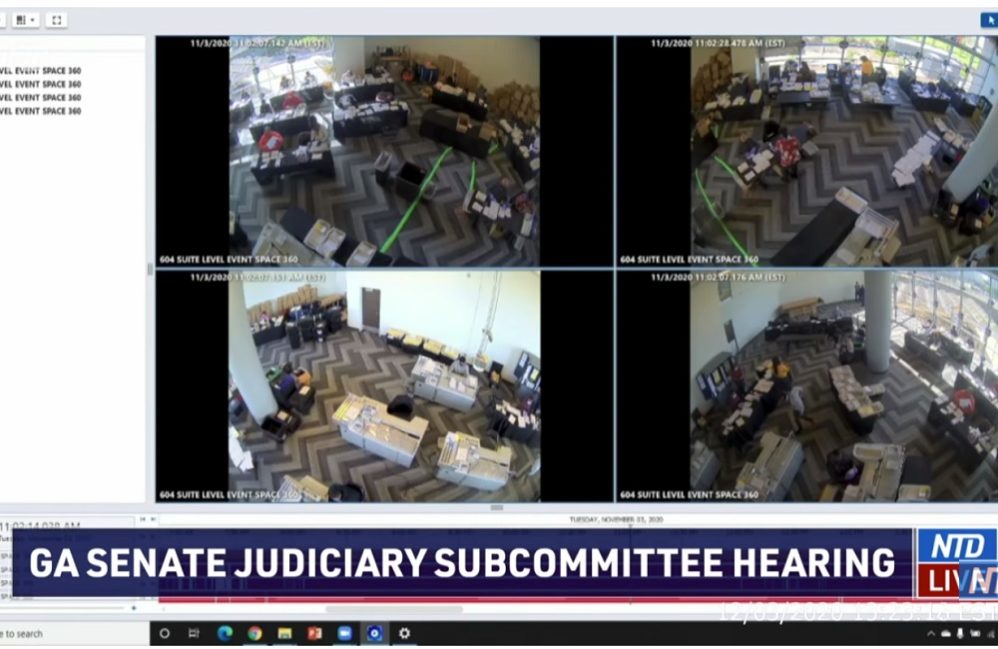
Newly discovered security footage from Georgia’s State Farm Arena showed dozens of ballot counters, media, and Republican observers leaving en masse at the same time from the ballot-counting area for Fulton County. After they left, a small remnant of about four workers began pulling trunks containing thousands of ballots from underneath a table with a long tablecloth and running them through machines.

The footage supported claims from Republicans that they were told counting had stopped for the night, only to find out hours later that it had kept going on. You can and should watch the 12-minute portion of the testimony from Jacki Pick here.

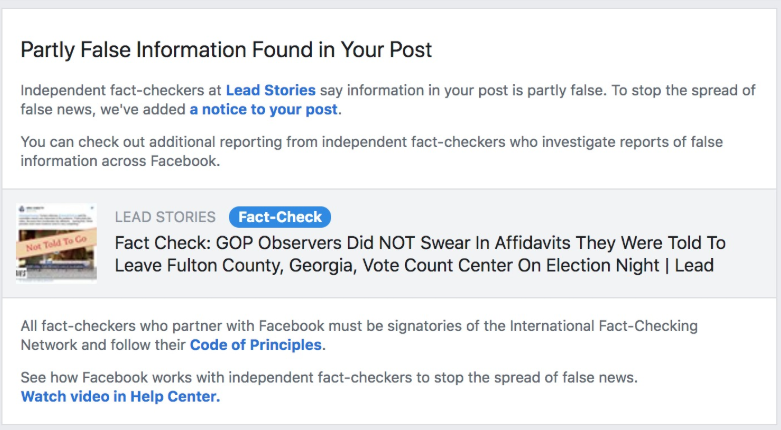
On Friday morning, a group called Lead Stories published a “hoax alert” falsely claiming to have debunked the security video. The Washington Post, Newsweek, and other outlets followed along, criticizing non-leftist journalists for giving the video traction. In fact, none of the claims made by the Republicans were debunked.

Lead Stories’ “fact” “check” says government officials told them everything was fine with the counting, that the ballots were in “containers — not suitcases,” and that “party observers were never told to leave because counting was over for the night.”

Leaving aside whether relying solely and uncritically on government officials’ claims constitutes anything close to a “fact” “check,” let’s look at the claim that party observers were never told that counting was over for the night. In Lead Stories’ regurgitation of the government officials’ claims, only the people who cut open the absentee ballot envelopes were sent home, while ballot counters and scanners were retained and kept working — and no one told the press or other observers they were done counting.

Were Republican Poll Watchers and the Media Told Counting Had Stopped For The Night?

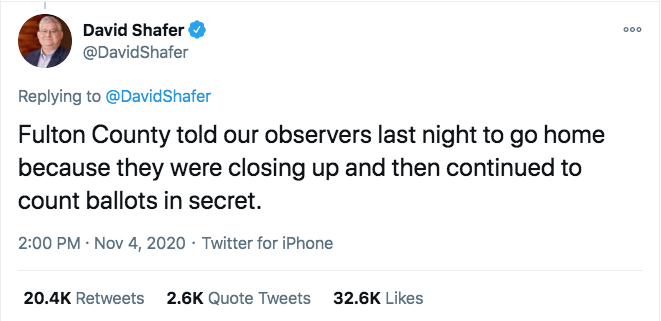
Georgia Republican Party Chairman David Shafer has consistently said that’s what happened at State Farm Arena, beginning hours after the election:

That claim, which he has repeated consistently, is backed by sworn affidavits from two Republican observers, who further allege they were kept an unreasonable distance from the ballots even while they were at State Farm Arena, making it completely impossible to meaningfully do their jobs. (The video, which shows the room from four different angles, fully supports the claim that poll watchers were kept away from meaningful observation of ballot handling.)

The observers say that they arrived for their observation jobs around 8 p.m. They say in the first half of the 10 o’clock hour, a woman with blonde braids who appeared to be a supervisor “yelled out” to those present in the room that they would stop working for the night and would resume in the morning. The Republican poll watchers said they asked Fulton County Elections Spokesperson Regina Waller questions about the status of the ballot count multiples times but that she refused to answer.

Lead Stories, however, says, “There was never an announcement made to the media and other observers about the counting being over for the night and them needing to leave, according to [Frances Watson, chief investigator for the Georgia Secretary of State], who was provided information by the media liaison, who was present.” While Lead Stories doesn’t name the media liaison, the media liaison who was present that night, according to the affidavits, was Regina Waller, the Fulton County public affairs manager for elections.

OK, so on the one hand you have sworn affidavits from observers saying that supervisors told ballot counters to go home for the evening shortly after 10 p.m. and a video showing everyone leaving en masse at that time. And on the other hand, you have two government officials promising that no one was told that counting was over. Is there any other evidence to consider?

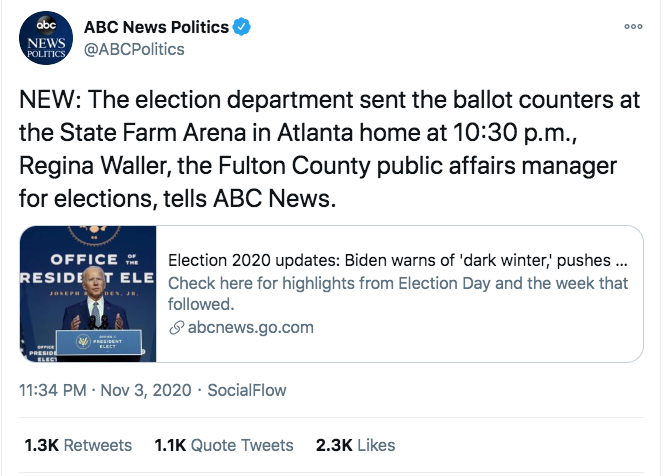
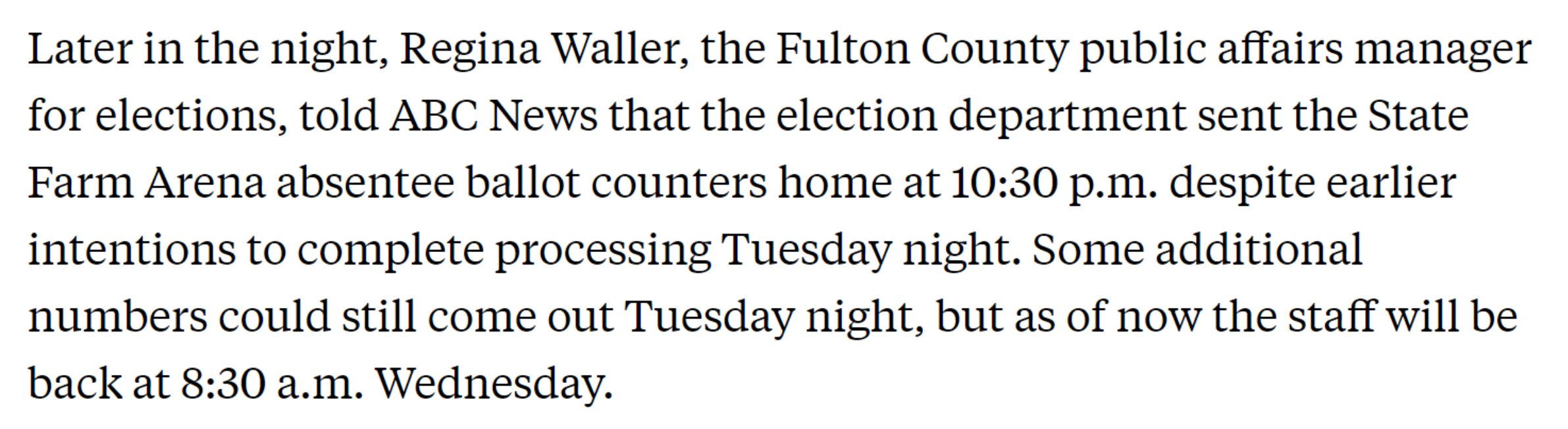
Well, on election night, ABC News reported that ballot counters were sent home at the time that the Republican observers said everyone was told counting had stopped. Their source? Regina Waller:


The Republican poll watchers’ story matches this election night reporting perfectly. And it wasn’t just ABC that reported counting was being delayed. Many media outlets reported on counting delays. See, for example, “Fulton County stopped counting absentee ballots for the night.”

Local NBC journalists on site that night independently confirmed “they were told counting was done for the night” and given no indication it would continue before the next morning. The Atlanta Journal-Constitution even reported of a “plan” to stop scanning ballots at the same time the poll watchers said things were shut down:

They planned to stop scanning absentee ballots at 10:30 p.m. and pick it up back in the morning. No official could explain before press time why Fulton was stopping its count of absentee ballots at that time, only saying that was the procedure.

‘As planned, Fulton County will continue to tabulate the remainder of absentee ballots over the next two days. Absentee ballot processing requires that each ballot is opened, signatures verified, and ballots scanned. This is a labor-intensive process that takes longer to tabulate than other forms of voting. Fulton County did not anticipate having all absentee ballots processed on Election Day,’ the county spokeswoman wrote in a statement.

Some debunking there, guys. The video supports the claim from the affiants.

Incidentally, most of the linked stories include mention of a major election day story of a burst pipe delaying vote counting. Some even said it was reportedly a water main.

In a new affidavit, the aforementioned Watson swore, “Our investigation revealed that the incident initially reported as a water leak late in the evening on November 3rd was actually a urinal that had overflowed early in the morning of November 3rd.”

She also said that her investigation shows that the press and observers “simply left on their own,” although she later said workers put ballots underneath the table because they thought that counting was stopping for the evening. “This was done because employees thought that they were done for the night and were closing up and ready to leave,” she claimed.

Was a State Election Board Monitor Present While Partisan Observers Were Gone?

A Newsweek story quoted someone saying that Secretary of State Brad Raffensperger’s office claimed that a designated election observer was “at that spot all night, the entire time.” Lead Stories emphasizes that while partisan observers may not have been present, an “unnamed state election board monitor” was present:

A state election board monitor, who asked for his name not to be used due to safety concerns, told Lead Stories on the phone on December 3, 2020, that he was present at the vote counting location beginning at 11:52 p.m., after leaving briefly at earlier in the evening. He then stayed until about 12:45 a.m., when the work that night was completed.

The deputy chief investigator for the secretary of state’s office was present beginning at 12:15 a.m. November 4, he said.

The monitor only claims to have been present in the processing room from 11:52 p.m. on election night to 12:45 a.m., the following morning, or less than an hour. That means there were neither partisan monitors nor the state election board monitor for more than an hour after ballots began being scanned at 10:35 p.m.

What the “fact” “check” shows, then, is the monitor admitting he wasn’t present for much of the time in question, contrary to claims made by the Secretary of State’s office. For whatever it’s worth, the same monitor is the subject of an affidavit from another witness, devoted exclusively to concerns about the monitor’s conduct prior to the late hours on election day, according to a member of the Trump team. The claims include that he was sleeping on the job and staring at his phone.

Incidentally, Fulton County had such massive problems managing elections earlier this year that they were fined and forced into a settlement agreement that included a requirement that they be independently monitored, according to the Atlanta Journal-Constitution:

To avoid the fine, Fulton must maintain verifiable levels of operational competence by properly processing absentee ballots; keeping a force of 2,200 properly trained poll workers; providing at least 24 early voting sites; striving to process 100 voters per hour at any site; having a technical support staff member at every site; and creating a post-election audit.

The consent order also requires Fulton to regularly update the Board on its pool of poll workers.

The issue in the consent order requiring the most negotiation was over an independent elections monitor.

They agreed on Carter Jones, who spent time in Africa helping countries improve their elections…

The U.S. Department of Justice also sent an election monitor to Fulton County.

Contrary to the media impression that a state monitor is sufficient oversight, the press and partisan observers are just as if not more important. The false public claims about a pause in counting led to the departure of the press and Republican observers.

As for the deputy chief investigator who arrived at 12:15 on Nov. 4, when the ballot-scanning activities were nearly completed, the video shows the person entering the large room, glancing around, and talking on his phone. At no point have the “fact” “checkers” or other media figures asked what prompted an investigator to be dispatched to the State Farm Arena at that time.

The Trump legal team, for its part, said the Fulton County situation violated Georgia laws that require election tabulation to be open to public view. The witness affidavits say the denial of meaningful access to the counting process kept Republican observers from being able to actually observe what happened. The Republican observers, the press, and the public were kept to a roped-off area too far from the ballot activity to matter, which doesn’t comply with Georgia law, they say.

There Are Much Bigger Georgia Claims

While conspiracy theories about election fraud abound — ranging from The New York Times’ claim that there was no election fraud anywhere in the entire country to dramatic claims of a global conspiracy involving voting machines, the Trump campaign’s official claims are sober and serious. State Republican Chairman David Shafer and President Donald Trump filed a criminal complaint in state court on Friday regarding tens of thousands of votes that they say were fraudulent.

Trump and Shafer allege, for example, that votes came from:

  • 2,560 felons,
  • 66,247 underage registrants,
  • 2,423 people who were not on the state’s voter rolls,
  • 4,926 voters who had registered in another state after they registered in Georgia, making them ineligible,
  • 395 people who cast votes in another state for the same election,
  • 15,700 voters who had filed national change of address forms without re-registering,
  • 40,279 people who had moved counties without re-registering,
  • 1,043 people who claimed the physical impossibility of a P.O. Box as their address,
  • 98 people who registered after the deadline, and, among others,
  • 10,315 people who were deceased on election day (8,718 of whom had been registered as dead before their votes were accepted).

The lawsuit further alleges that mail-in ballots received nearly no scrutiny as standards for contesting questionable ballots were made unreasonably difficult.

A Note On Lead Stories

The “fact” “check” was originally written by Alan Duke and Hallie Golden, although Golden’s name was removed from later versions of the story. Golden is a freelance writer whose work regularly appears in The Guardian, a left-wing publication. Duke, a CNN entertainment reporter, retired from the left-wing outlet after 26 years.

Earlier versions of the story included a mathematical error about whether the votes that were counted after observers left State Farm Arena could have affected the outcome of the election. The authors falsely wrote that they couldn’t have, when they could have.

A later purported “fact” “check” said it wasn’t true that Republican poll watchers swore affidavits that they were told to leave the center, Lead Stories falsely stated that these claims were the “cornerstone” of Trump’s challenge of Georgia. In fact, the legal claim filed by the Trump team only mentions Fulton County telling the press and other election observers that they were going to stop counting ballots and resume counting in the morning once, on one page of the 64-page complaint. Again, those claims have been corroborated, not debunked, by multiple press accounts from election night. As for the affidavits, they make the same claim — that Fulton County election officials falsely said they were stopping the count when in reality they were continuing to count through the night after observers left. The affidavits further state that they were unable to get answers to basic questions from officials.

Lead Stories claims it is funded by Facebook, Google, and ByteDance. The latter is the Beijing-based and China Communist Party-linked company known for TikTok. Facebook and Google have suppressed journalism deemed harmful to Trump’s 2020 election opponent Joe Biden. The Trump administration has said TikTok’s ties to the Chinese Communist government makes it a national security threat.

NOTE: In a Kafka-esque twist, Facebook is now using Lead Stories to censor this story critical of Lead Stories.

ABOUT THE AUTHOR:
Mollie Ziegler Hemingway is a senior editor at The Federalist. She is Senior Journalism Fellow at Hillsdale College and a Fox News contributor. She is the co-author of Justice on Trial: The Kavanaugh Confirmation and the Future of the Supreme Court. Follow her on Twitter at @mzhemingway

Tag Cloud