Perspectives; Thoughts; Comments; Opinions; Discussions

Posts tagged ‘Stanford University’

Survey: A Majority of Stanford Students Support Cancelling Conservative Speakers a Year After Duncan Controversy


JonathanTurley.org | April 19, 2024

Read more at https://jonathanturley.org/2024/04/19/survey-a-majority-stanford-students-support-cancelling-conservative-speakers-a-year-after-duncan-controversy/

A year ago, Stanford University was embroiled in controversy after federal appellate Judge Kyle Duncan was shouted down by law students. Now a survey by FIRE has found that a majority of students believe that Duncan should have been cancelled.  Seventy-five percent believe that it is appropriate to shout down speakers.  A year ago, I wrote a critical column on the ridiculous response of Stanford President Marc Tessier-Lavigne and Law School Dean Jenny Martinez who declined to punish any students. Instead all students were required to watch a widely mocked video on free speech.

The Stanford Federalist Society invited Judge Duncan of the United States Court of Appeals for the Fifth Circuit to speak on campus. However, liberal students, including members from the National Lawyers Guild, decided that allowing a conservative judge to speak on campus is intolerable and set about to “deplatform” him by shouting him down. In this event, Duncan was planning to speak on the topic: “The Fifth Circuit in Conversation with the Supreme Court: Covid, Guns, and Twitter.”

A video showed that the students prevented Duncan from speaking from the very beginning. Many called him a racist while others hurled insults like one yelling “We hope your daughters get raped.” Duncan was unable to continue and asked for an administrator to assist him. Dean Steinbach then took the stage and criticized the judge for seeking to be heard despite such objections. Steinbach, who was put on leave, later doubled down in defending her widely criticized actions.

Given the tepid response of the university, it is hardly surprising that students believe that stopping others from speaking is a form of free speech.

Academics later supported the students in shutting down the judge.

  • Another 36% stated that using physical violence to shut down a campus speaker is “always,” “sometimes,” or “rarely” acceptable.
  • 75% said the same about shouting down a speaker to prevent them from speaking.
  • Not surprising, only six percent of conservative students now feel comfortable disagreeing with professors.

The survey is consistent with other surveys and polling in higher education.

These students have been taught for years that “speech is violence” and harmful. They have also been told by figures such as Pines that silencing others is an act of free speech. Academics and deans have said that there is no free speech protection for offensive or “disingenuous” speech. In one instance, former CUNY Law Dean Mary Lu Bilek insisted that disrupting a speech on free speech is itself free speech.

Even schools that purportedly forbid such interruptions rarely punish students who engage in them. For example, students disrupted a Northwestern class due to a guest speaker from Immigration and Customs Enforcement (after the class had heard from an undocumented

immigrant). The university let the protesters into the room after they promised not to disrupt the class. They proceeded to stop the class and then gave interviews to the media proudly disclosing their names and celebrating the cancellation. Northwestern did nothing beyond express “disappointment.”

At Stanford, law students received a mixed message in the law school denouncing the silencing of opposing views but refusing to hold any students or groups accountable. These schools are enablers of the anti-free speech movement and the rising of a generation of speech phobics. As I discuss in my forthcoming book, The Indispensable Right: Free Speech in an Age of Rage, academics and administrators continue to foster an environment of orthodoxy and viewpoint intolerance in higher education. This survey vividly demonstrates how schools like Stanford mouth commitments to free speech while sending a completely different message in the actual actions that it takes in the face of anti-free speech campaigns.

Judge Duncan’s Struggle Session Shows Why We Need Fiercer Protection of Free Speech


BY: SAMUEL MANGOLD-LENETT | MARCH 27, 2023

Read more at https://thefederalist.com/2023/03/27/judge-duncans-struggle-session-shows-why-we-need-fiercer-protection-of-free-speech/

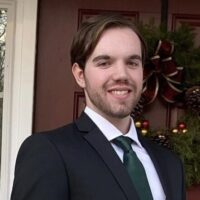
Judge Kyle Duncan
The Stanford disruptors’ objective was to destroy American civil society and replace it with leftist authoritarianism, preventing dissent.

Author Samuel Mangold-Lenett profile

SAMUEL MANGOLD-LENETT

VISIT ON TWITTER@MANGOLD_LENETT

MORE ARTICLES

The culture of free speech that for so long characterized American academia is dead. Increasingly, struggle sessions and violent eruptions are how the nation’s best and brightest choose to handle the ideas, individuals, and situations that make them uncomfortable.

Earlier this month, Fifth Circuit Court of Appeals Judge Kyle Duncan was invited by the Stanford Federalist Society to their law school to give a talk titled “Covid, Guns, and Twitter.” What ensued is what has become the norm. A coalition of the dysgenic and well-dressed filled a lecture hall to shout down and demean a federal judge while a school diversity administrator chastised him with prepared remarks.

Disagreement is OK and clearly would have been welcomed by Duncan, but when students feel emboldened to tell a federal judge, “We hope your daughters get raped,” as one individual allegedly did, a course correction is desperately needed.

On Friday, Duncan addressed this very topic in a talk titled “Free Speech and Legal Education In Our Liberal Democracy” at the University of Notre Dame’s Center for Citizenship and Constitutional Government. 

“This is a talk about another talk,” Duncan quipped to inform those in the audience who were unaware that he would be, in part, discussing the incident at Stanford.

In a general defense of student protests, Duncan stated, “It’s a great country where you can harshly criticize federal judges and nothing bad will happen to you. … The students at Stanford and other elite law schools swim in an ocean of free speech. … Has any group of people ever been so privileged?” 

Continuing, the judge referenced a memo published on March 22 by the dean of Stanford Law, Jenny Martinez, in which she condemned the disruptions and “threatening messages directed at members of [the Stanford Law] community” and pledged to adopt stricter policies regarding event disruption.

Martinez’s memo specifically contrasts student protests with malicious disruptions, noting that universities, as institutions, have unique obligations to curtail the latter in the pursuit of academic freedom through the enforcement of conduct codes and administrative policies. And as Duncan noted, a rigid commitment to the cause of academic freedom is absolutely vital to both the preservation of the university system and American society. 

The universities that, at one point in time, were renowned for their unyielding commitment to free speech and the relentless pursuit of excellence in all things, to this day — despite the diminishing quality of graduates — still churn out leaders in every single sector.

Noting the undeniable trend of woke radicalization among young people in elite universities and the threat it poses to the maintenance of civil order and liberal democracy, Duncan asked, “What would happen if the cast of mind in that Stanford classroom becomes the norm in legislatures, in courts, in universities, in boardrooms, in business, in churches?”

“We must resist this at all costs,” Duncan continued. “Otherwise, we will cease to have [the] rule of law.”

Toward the end of her memo, Martinez also ruled out disciplining the individuals who disrupted Duncan’s lecture at Stanford Law, as it would be onerous to discern which students “crossed the line into disruptive heckling while others engaged in constitutionally protected non-disruptive protest” and that university administrators sent “conflicting signals about whether what was happening was acceptable or not.”

Instead, the offending students — along with the rest of the law school’s student body — will be required to attend a “mandatory half-day session in spring quarter for all students on the topic of freedom of speech and the norms of the legal profession.” 

In the final moments of his speech at Notre Dame, Duncan mentioned he was “cautiously encouraged” by this measure as it indicated Stanford Law’s leadership was in some form committed to fighting for the foundational principles of American academia. He also noted that the point of the struggle session wasn’t purely to intimidate or dissuade him. After all, he’s a federal judge — he has life tenure; his future is secure. 

The point of heckling Duncan, denying him a chance to make his case, and even wishing rape upon his children was to make an example out of him and to intimidate the students who invited him to speak. The disruptors want to destroy what is left of American civil society and replace it with an even more omnipresent woke authoritarianism, further preventing the dissemination of dissent. In order to accomplish this, they need future generations of leaders — their classmates — to be afraid, so they jeer and they threaten. 

This ethos, one that is undeniably a well-established, if not the dominant, worldview on American campuses, cannot be remedied through scolding. Half-day sessions “on the topic of freedom of speech and the norms of the legal profession” might knock some sense into a couple of dozen Stanford Law students, but what about every other campus in the U.S.? 

Days after the incident at Stanford Law, militant Antifa groups descended upon the University of California, Davis, in an attempt to prevent Charlie Kirk, founder of the conservative student organization Turning Point USA, from speaking on campus. Prior to the event, Gary May, the chancellor of UC Davis, circulated a video claiming Kirk “advocated for violence against transgender individuals.” Ultimately, the militants were unsuccessful in their attempts, but unlike at Stanford, the disruptors attempted violence and destroyed public property in the pursuit of denying an individual’s right to free speech.

How much longer can we continue to delude ourselves about free speech? There are, to be sure, legal protections for speech, but the leftists who control the institutions where these protections are most needed (academia, Big Tech, et al.)  actively eschew and chip away at them in collaboration with the federal government.

A more muscular approach to protect the speech of Americans is needed. 

In 2019, President Donald Trump issued an executive order requiring American universities “to foster environments that promote open, intellectually engaging, and diverse debate [ ] through compliance with the First Amendment” in order to access specific federal funds

But even this, as we can see, didn’t — rather, it couldn’t — address the underlying ideological issues at play. 

Sure, threatening to cut off federal grants might encourage university administrators to be more vigilant in their defense of (or less hostile in their attacks on) free speech. But, at the end of the day, the left controls these institutions and interprets “free speech” in a way that is fundamentally at odds with the American founding and the First Amendment; speech must be contained within their preferred paradigm, or else it and anything descending from it is an affront to their very existence and must be eradicated.

Back at Stanford Law, Tirien Steinbach, the diversity administrator who chastised Duncan, has been put on leave, and per Martinez’s memo, an explicit role of other Stanford Law administrators moving forward “will be to ensure that university rules on disruption of events will be followed, and all staff will receive additional training in that regard.”

So perhaps Duncan is right to be somewhat optimistic.


Samuel Mangold-Lenett is a staff editor at The Federalist. His writing has been featured in the Daily Wire, Townhall, The American Spectator, and other outlets. He is a 2022 Claremont Institute Publius Fellow. Follow him on Twitter @Mangold_Lenett.

One drug to rule them all: Researchers find treatment that kills every kind of cancer tumor


http://nypost.com/2013/03/27/one-drug-to-rule-them-all-researchers-find-treatment-that-kills-every-kind-of-cancer-tumor/

Researchers might have found the Holy Grail in the war against cancer, a miracle drug that has killed every kind of cancer tumor it has come in contact with.

The drug works by blocking a protein called CD47 that is essentially a “do not eat” signal to the body’s immune system, according to Science Magazine.

This protein is produced in healthy blood cells but researchers at Stanford University found that cancer cells produced an inordinate amount of the protein thus tricking the immune system into not destroying the harmful cells.

With this observation in mind, the researchers built an antibody that blocked cancer’s CD47 so that the body’s immune system attacked the dangerous cells.

So far, researchers have used the antibody in mice with human breast, ovary, colon, bladder, brain, liver and prostate tumors transplanted into them. In each of the cases the antibody forced the mice’s immune system to kill the cancer cells.

“We showed that even after the tumor has taken hold, the antibody can either cure the tumor or slow its growth and prevent metastasis,” said biologist Irving Weissman of the Stanford University School of Medicine in Palo Alto, California.

One side effect of the treatment was that healthy cells were subjected to short-term attacks by the mice’s immune system, but the effect was nothing in comparison to the damage done to the cancer cells.

Weissman’s group recently received a $20 million dollar grant to move their research from mouse to human safety testing.

Tag Cloud