To Understand the Latest Crazy Trump Indictment, Check Out The 6 Types of Charges
BY: MARGOT CLEVELAND | AUGUST 16, 2023
 MARGOT CLEVELAND
VISIT ON TWITTER@PROFMJCLEVELAND
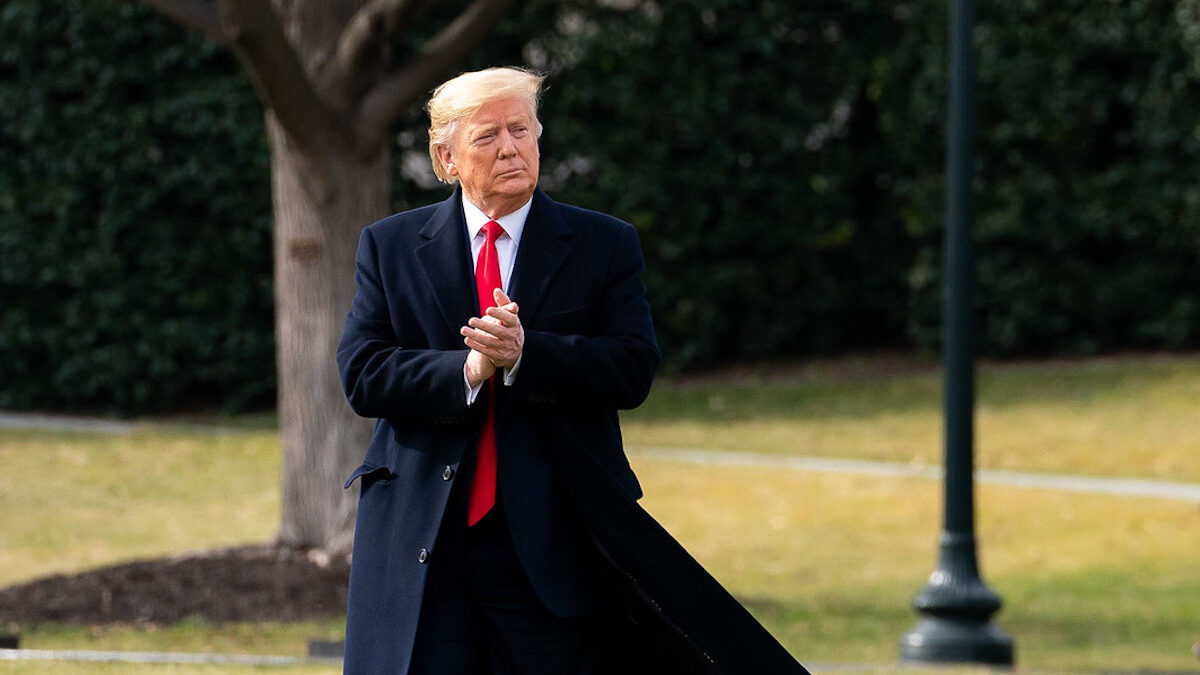
Late Monday, Fulton County District Attorney Fani Willis charged former President Donald Trump and 18 other defendants in a 98-page indictment that included a total of 41 different counts.
The defendants are already fighting back, with Trump’s former chief of staff, Mark Meadows, seeking to remove the case to federal court based on a statute that protects federal officials from state court prosecution for official conduct. More counteroffensives will likely follow, with other former federal officials, including Trump, presumably also seeking removal to federal court, while the remaining defendants will probably expeditiously move to dismiss the indictment on a variety of grounds.
To get a handle on the indictment and to stay current with the various developments, it is helpful to put the charges into one of six buckets, starting with the biggest one: the alleged RICO conspiracy.
Bucket 1: RICO
The Racketeer Influenced and Corrupt Organizations Act (RICO) count runs some 70 pages and says all 19 defendants, “while associated with an enterprise, unlawfully conspired and endeavored to conduct and participate in, directly and indirectly, such enterprise through a pattern of racketeering activity.” The indictment next defines the “enterprise” as “a group of individuals associated in fact,” who “had connections and relationships with one another” and “functioned as a continuing unit for a common purpose of achieving the objectives of the enterprise,” which Willis maintains was “to unlawfully change the outcome of the election in favor of Trump.”
There are several problems with the RICO count, most fundamentally, as Andrew McCarthy explained in an enlightening article, RICO requires an “enterprise,” which, while not necessarily a formal entity, needs to be an identifiable group. The RICO crime, then, is “being a member of the enterprise that commits crimes, not the commission of any particular crime.”
But there must be some sort of “enterprise,” and here Willis conflates the objective — keeping Trump in power — with “the enterprise.” “It was that objective, and not the sustaining of any group, that brought them together; and once that objective was attained or conclusively defeated, the group — to the dubious extent it really was an identifiable group — would (and did) melt away,” McCarthy wrote. It’s a “good sign that you’re not dealing with a RICO enterprise,” the former federal prosecutor explained.
Without an “enterprise,” there can be no RICO crime, and the facts alleged in the indictment are such that the defendants will likely soon seek dismissal of that count. Now, Georgia law differs from federal law on RICO, and there is no saying how the state court will interpret its own RICO statute, but from a legal perspective, the claim is exceedingly weak.
The second fundamental problem with the RICO count is factual: Willis portrays the defendants as trying to unlawfully change the election in Trump’s favor, but the many actions Trump and others took involved legal proceedings and efforts to convince the legislative bodies to use their authority to address what the defendants saw as a fatally flawed election. A court is unlikely to toss the complaint on this ground, however, with factual disputes ones only a jury can resolve.
However, if the court holds, as it appears it should, that the RICO count fails as a matter of law because there was no “enterprise,” then that factual dispute is irrelevant. Likewise, the 160-some “acts” Willis included in the indictment — everything from Trump declaring victory on Nov. 4 to tweeting that followers should watch a television newscast — allegedly in furtherance of the “RICO” conspiracy become irrelevant.
Bucket 2: Alternate Electors
The second-biggest bucket concerns the counts related to the naming of alternative Trump electors. The crimes alleged here range from soliciting individuals to violate their oaths of office, to conspiring to file false statements or documents, to forgery. Counts 2, 6, 8-19, 23, and 37 alleged these and other crimes against various defendants all arising out of Republicans appointing an alternative slate of Trump electors who would vote for Trump in the event he prevailed in his then-pending Georgia lawsuit.
While the legacy media continue to frame these individuals as “fake electors,” as I’ve previously detailed, that is fake news. Rather, legal precedent indicates that alternative electors should be named to protect a candidate challenging the outcome of an election, as Trump was in Georgia and elsewhere. That is precisely what Democrats did in Hawaii in 1960 when Richard Nixon had been declared the victor in the state, but John F. Kennedy’s court contest remained viable.
As a matter of law, these counts should all be dismissed because Republicans naming alternate electors was not a crime — no matter how much the press wants you to believe otherwise.
Bucket 3: Petitioning the Government for Redress
The crimes charged in Counts 5, 28, 38, and 39 fit into a third bucket that consists of efforts by Trump and others to petition the government for redress. Here, the crimes charged include solicitation of violations of oath by public officers and the making of false statements during those efforts, but the common theme is that the defendants sought to have Secretary of State Brad Raffensperger or the Georgia legislature address Trump’s allegations of voting irregularities or fraud.
There is nothing criminal, however, in asking the secretary of state to use his authority to investigate and respond to voting irregularities or to ask the legislature to call a special session to name Trump electors. On the contrary, those activities would seemingly be protected by the constitutional guarantee of the right to petition the government for redress.
Bucket 4: False Statements
The fourth bucket holds numerous counts against a variety of defendants with the common theme being false statements charges. Count 27 alleged false statements were included in one of Trump’s election lawsuits, but lawyers are entitled to rely on information provided for others, making this count weak. Counts 7, 24, 25, and 26 all charged individual defendants with making false statements to Georgia House or Senate committees. The main issue here will be whether the defendants made the statements knowing they were false.
Count 22 charges an attempt to make a false statement and concerns a letter DOJ lawyer Jeff Clark drafted and recommended be sent to the Georgia legislature. As I previously detailed, however, there was no impropriety in Clark’s drafting of that letter. Clark will also likely succeed in having the case against him removed to federal court and then dismissed.
Counts 40 and 41 both involve charges of lying as well, with Count 40 alleging one defendant lied to Fulton County investigators and Count 41 alleging perjury before a grand jury. Given the target on these defendants’ backs, it’s difficult to believe they knowingly lied, but that question may end up being left to a jury to decide.
Bucket 5: Communications Related to Ruby Freeman
Counts 20, 21, 30, and 31 all involve charges concerning efforts to supposedly influence the testimony of Ruby Freeman, who was an election worker at the State Farm Arena. Here, the theory seems to be that some of the defendants attempted to pressure Freeman to lie about what happened during the vote counting. Again, it may be left to a jury to decide this issue.
Bucket 6: Accessing Voting Machines and Election Data
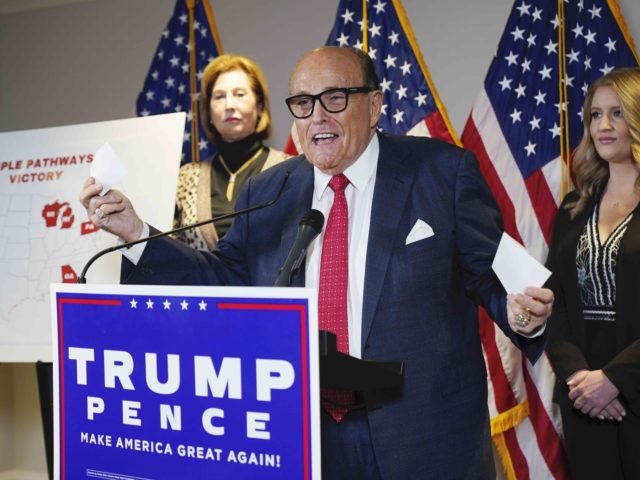
The final category of charges involves efforts by Sidney Powell and others to allegedly illegally access voting machines and election results. Counts 32-36 allege various crimes related to those efforts, including conspiracy to commit election fraud by tampering with machines. Once the defendants charged in those counts respond, it will be easier to assess the criminal theories proffered and any weakness in the claims.
For now, though, watch for the federal court’s holding on whether Meadows, Clark, Trump, and potentially others have the right to remove the case to federal court. Simultaneously, expect the other defendants to seek dismissal of all or part of the indictment, likely narrowing this criminal case down substantially.

 What Did You Say?