America’s Education System Is So Bad, Even Leftists Are Homeschooling Their Kids
BY: AUGUSTE MEYRAT | DECEMBER 08, 2022
Read more at https://thefederalist.com/2022/12/08/americas-education-system-is-so-bad-even-leftists-are-homeschooling-their-kids/

AUGUSTE MEYRAT
VISIT ON TWITTER@MEYRATAUGUSTE
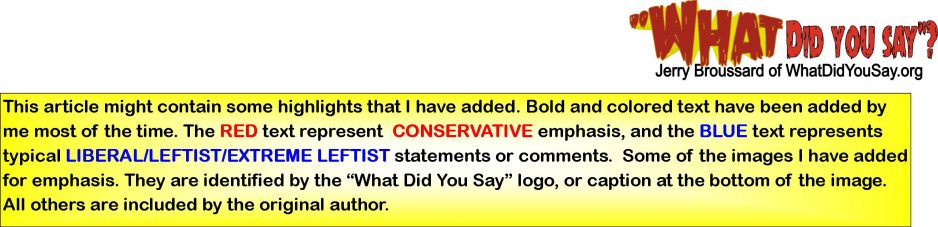
Anew survey shows that after schools arbitrarily shut down for several consecutive months, parents of all political backgrounds continue to take on the rigors and responsibilities of homeschooling long after schools have reopened.
Educators in both public and private schools should be asking why this is. Why would parents decline the services of certified professionals running various curricular and extracurricular programs at an operational, fully equipped campus just down the road? Hundreds of millions of taxpayer dollars go into these schools, which not only educate children but serve as the cultural center of most localities. By homeschooling, parents are saying no to all that — along with the lifestyle they could have without kids at home — and instead shouldering the burdens of pedagogy, instructional materials, scheduling, behavioral management, and socializing their kids throughout their academic careers.
Not only this, but why would parents on the left who agreed with lockdowns and are largely sympathetic to public schools opt to homeschool? According to the survey, “47% of new homeschoolers skewed left of center self-reporting as either progressive or liberal (vs. 32% pre-Covid homeschoolers).”
Educators need to investigate this, but rather than confront the glaring problems of schooling — low standards, chaotic classes, corrupt bureaucracies, rampant tech addiction, and leftist propaganda — or do the slightest bit of soul-searching, nearly all administrators and educators have dismissed these concerns and now pretend that the last two years never happened, except when they need to make excuses to the communities they serve. The monopoly on public education has afforded them the luxury to forget everything and learn absolutely nothing.
Nowhere is this complacency better illustrated than in the recent book “Stolen Year: How COVID Changed Children’s Lives, and Where We Go Now” by Anya Kamenetz. Despite devoting more than 300 pages to the mistakes made by public school leaders and education unions during Covid, Kamenetz never thought to question the general mediocrity of these institutions. Instead, she wholeheartedly supports them and advocates for more funding. How exactly will more money make up for the learning loss and the psychological damage done by derelict school systems? Kamenetz never says, but she does find time to attack President Trump.
This leaves parents of all political persuasions to determine what they can do to save their kids. Sure, some may fight the good fight and send their kids to public schools, be more vocal at school board meetings, and keep a close ear to what’s happening in their children’s classes. Others may be blessed with a classical school that recreates the old-fashioned learning experience that prevailed in the West before things got so bad. And some may simply hold their noses and think happy thoughts as they drink the Kool-Aid, convincing themselves that everything will be fine and that their clinically depressed and gender-confused child who spends xir days binging on violent anime and #neurodivergent TikTok videos is simply going through a phase and will learn to read and do math eventually.
Or they can try homeschooling. It may be a huge commitment of time and energy, but it’s also the only real way to protect kids from bad kids, bad teachers, and bad ideas.
Although Covid has exacerbated the situation, the rationale for homeschooling isn’t all that new. What’s notable is how homeschooling today appeals to conservatives and leftists alike. While conservatives have always liked the option of homeschooling as a means of safeguarding their values and avoiding the harms of government incompetence and modern decadence, leftists generally paid lip service to public schools (while sending their kids to private schools) and looked down on the homeschooling crowd as fundamentalist crackpots doomed to being unsuccessful losers.
This has changed in recent years. Now it’s leftists who want to safeguard their values and circumvent the problems of formal schooling. Ironically, their reasons for doing this are the exact opposite of why conservative parents homeschool. These parents actually believe that schools are way too traditional in their values and instruction, don’t offer enough accommodations to suit their children’s learning style, and still do too little about Covid. They fear their child will be bullied, receive bad grades, and be red-pilled by that one Christian conservative teacher they have for English.
Despite certain school boards and superintendents doing their utmost to adhere to liberal orthodoxy, this does little to change the conservative nature of their actual schools. As Robert Pondiscio argues in Newsweek, the very concept of formal schooling is inherently conservative: “Kids sit at desks, teachers stand in front of the room and the academic diet leans heavily on the best that has been discovered, thought and created: our language, literature, history, scientific discoveries and artistic achievements. This default mode is by definition culturally ‘conservative.’” This is often a big turnoff for leftist parents, many of whom insist on a “progressive learning” experience. Many want something student-centered, self-paced, relevant to current times, less judgmental (i.e., no grades or assessments), and altogether open and undefined — something only achievable through homeschooling.
The mutual disdain for formal schools from both the left and the right perfectly illustrates the “horseshoe theory,” in which opposing sides of an ideological spectrum come closer together as they become more extreme. So while the reason for homeschooling may be different to the point of incompatibility, the outcome is the same: Parents aren’t happy with their public schools, so they seek out alternatives.
Whether this leads to a renaissance or decline in education is anyone’s guess, though I’m pessimistic about rebirth if homeschooling becomes a leftist trend. Without a neighborhood school to provide some kind of personal stability and connection to the greater world for these families, it’s difficult to see how this benefits anyone. Conservatives usually have a church and extended family and abide by a clear set of principles; most leftists lack these foundations, so it’s difficult to see how they could make homeschooling work. More likely, they will become the “unschooled” crackpots on the margins, unable to function in society whom they have derided for so long.
The atomization of America and the epidemic of loneliness will likely get worse if too many families opt out of formal schooling. Covid demonstrated that most families need their schools, and even if schools refuse to see it, it’s also true that they need families.


 What Did You Say?