Perspectives; Thoughts; Comments; Opinions; Discussions

Posts tagged ‘RUSSIA-UKRAINE CONFLICT’

Is It Too Much To Ask That Congress Clothe Our Marines Instead Of Financing Ukraine’s Forever War?


BY: SHAWN FLEETWOOD | OCTOBER 03, 2023

Read more at https://thefederalist.com/2023/10/03/is-it-too-much-to-ask-that-congress-clothe-our-marines-instead-of-financing-ukraines-forever-war/

Marines in Hawaii

Now that Congress has funded the federal government for the next month and a half, the White House and lawmakers on Capitol Hill are hard at work looking for ways to pour more U.S. taxpayer money into Ukraine’s forever war with Russia.

During a White House press briefing on Monday, Press Secretary Karine Jean-Pierre fretted that the administration is running out of the money needed to bankroll its continuing proxy war with Moscow. Government officials estimate there is approximately $6 billion remaining in military funds for Ukraine.

“It is enough to — for us to meet the — meet Ukraine’s urgent battlefield needs for a bit — for a bit longer,” Jean-Pierre told reporters.

Even though a majority of Americans oppose continued U.S. funding for Ukraine, congressional Democrats spent a significant portion of this past weekend’s spending fight arguing that more aid be shipped to the Eastern European nation. It was thanks to House Republicans and a handful of GOP senators that Congress ultimately approved a 45-day continuing resolution devoid of such funding.

Of course, this hasn’t stopped President Joe Biden or congressional leadership from professing their support for shipping more U.S. tax dollars to Ukraine. While discussing the spending fight, Biden suggested he’d reached an agreement with House Speaker Kevin McCarthy to continue funding the conflict. Despite pushing back on the president’s insinuation that a deal had been made, McCarthy did proclaim to reporters on Monday that he’s “always supported arming Ukraine” and “believe[s] Ukraine is very important.”

Congress and the Biden administration committed more than $113 billion in U.S. taxpayer dollars to Ukraine in 2022, according to the Committee for a Responsible Federal Budget.

But while Washington overzealously focuses on Ukraine’s military, concerns affecting America’s own armed forces have gone by the wayside. On Thursday, the U.S. Marine Corps announced it is lowering its uniform standards to compensate for a shortage of camouflage attire typically worn by service members. According to Commandant Gen. Eric Smith, local battalions are “authorized” to wear alternate attire contrary to Marine regulations to “mitigate” an ongoing manufacturing shortfall that’s left service members struggling to acquire woodland-patterned “cammies.”

“What we cannot have is a situation where a Marine is wearing unserviceable cammies, because that looks bad for the Corps, and we can’t have a situation where that Marine is being given a hard time about those unserviceable cammies. We’re going to get this fixed, Marines, but it’s going to take a little patience,” Smith said, adding that the problem won’t be fixed until the fall of 2024.

According to the Marine Corps Times, service members normally receive “three sets of woodland cammies and two sets of desert cammies.” Due to the ongoing shortage, however, the service has been providing Marines “two woodland sets and one desert set.” Meanwhile, new enlistees have reportedly been forced to undergo “entry-level training in flame-resistant organizational gear,” which are “typically reserved for deployments,” to compensate for the shortages.


Shawn Fleetwood is a staff writer for The Federalist and a graduate of the University of Mary Washington. He previously served as a state content writer for Convention of States Action and his work has been featured in numerous outlets, including RealClearPolitics, RealClearHealth, and Conservative Review. Follow him on Twitter @ShawnFleetwood

Author Shawn Fleetwood profile

SHAWN FLEETWOOD

VISIT ON TWITTER@SHAWNFLEETWOOD

MORE ARTICLES

For $80 Billion (and counting) U.S. Taxpayers Have Bought a Bloody Stalemate in Ukraine


BY: JOHN DANIEL DAVIDSON | APRIL 13, 2023

Read more at https://thefederalist.com/2023/04/13/for-80-billion-and-counting-u-s-taxpayers-have-bought-a-bloody-stalemate-in-ukraine/

Zelensky holds West Virginia hat
At some point the bipartisan Washington consensus in favor of funding the Ukraine war has to tell the American people what we’re buying.

Author John Daniel Davidson profile

JOHN DANIEL DAVIDSON

VISIT ON TWITTER@JOHNDDAVIDSON

MORE ARTICLES

The trove of recently leaked intelligence documents related to the Ukraine war should prompt Americans to start asking tough questions about our involvement in that conflict, which one of the documents, a Feb. 23 overview of fighting in Ukraine’s Donbas region, describes as a “grinding campaign of attrition” that has reached a “stalemate.”

U.S. taxpayers have poured nearly $80 billion into this war over the past 14 months. At what point are we allowed to ask whether a “stalemate” in a “grinding campaign of attrition” is a good deal for Americans?

Above all, Americans should demand the bipartisan Washington consensus that supports indefinitely funding the war explain what our strategy is, define what the American interest is in it, and detail how they plan to achieve something beyond an interminable war of attrition that risks pulling us into direct conflict with nuclear-armed Russia. At the very least, the American people deserve more than inane platitudes from Antony Blinken about “Ukrainian victory” and “standing united with Ukraine for as long as it takes,” as if total Russian defeat and withdrawal is a realistic outcome.

The classified documents lend some urgency to these questions because they reveal, among other things, a severe shortage of air defense weapons in Ukraine — so severe it could mean the difference between an ongoing stalemate or a Russian victory in the coming weeks or months. Without adequate air defenses, Russian warplanes will be able to bomb Ukrainian positions at will, which in turn might make Ukraine’s planned spring offensive impossible. No wonder, then, that earlier this month the Biden administration pledged $2.6 billion to rush air defense systems to Ukraine. 

What the documents also suggest, as if it hasn’t become obvious by now, is that the war has not been an unbroken chain of brilliant underdog battlefield victories for Ukraine and crushing defeats for Russia, as the corporate media and the Washington political establishment have led us to believe. It rather seems like chaotic and indecisive butchery on both sides, with weapons and cash pouring in not just from the U.S. but from all over the world sustaining a large-scale war of attrition with no end in sight. Behind the scenes, according to the leaked documents, U.S. officials are predicting only “modest territorial gains” from Ukraine’s big spring counteroffensive, the recent surge of U.S. weapons and air defense systems notwithstanding.

One of the results of this slow, grinding warfare has been the rapid expenditure of munitions, at least on the Ukrainian side. U.S. weapons stockpiles are now badly depleted, and our defense industrial base is taxed to the point that we have been unable to deliver some $20 billion in promised military supplies to Taiwan. This of course raises the question of China, which the Biden administration, along with Republican leaders in Congress, refuse to talk about candidly in the context of the Ukraine war.

What is the plan if (and really, when) Beijing decides to invade Taiwan? No one seems to have an answer — or even seems willing to acknowledge there’s a problem. Nor do our political leaders have an answer to the increasingly obvious reality that U.S. sponsorship of Ukraine is pushing Moscow into Beijing’s arms and helping to accelerate a China-led coalition to challenge the U.S. dollar reserve currency status and usher in a truly multi-polar world. 

Meanwhile, economic uncertainty prevails here at home, with inflation continuing to hit American families hard, U.S. banks failing, and talk of an impending recession setting markets on edge. As mentioned above, since Russia invaded Ukraine last February, American taxpayers have given Ukraine about $80 billion — and counting. That includes nearly $50 billion in direct military assistance, many orders of magnitude more than we give even our closest allies like Israel, which got just $3.3 billion in military aid in 2020.

Setting aside the larger question of how this war will end (spoiler alert: it’s almost certainly going to end with a negotiated political settlement), there’s the narrower question of what, exactly, the American taxpayer has been purchasing with all this largesse. The Ukrainian state is famously corrupt, which hasn’t changed under President Zelensky and indeed might be far worse now given the sheer volume of U.S. dollars washing through the country. Is Ukraine going to emerge from this as a functioning democracy allied with the West, a reliable partner and not a dangerous welfare case? Is there any reason so far to think that will be the case?

And why isn’t there any transparency about the aid and cash we’ve sent? We’re told by White House National Security Council spokesman John Kirby that, yes, there are indeed a small number of U.S. special forces operating inside Ukraine, but they’re only there “to help us work on accountability of the material that is going in and out of Ukraine,” and are not “fighting on the battlefield.” Presumably, that should mean we have more clarity about where weapons and cash are going inside Ukraine. But if that’s the case, no one in Washington will talk about it.

From where the situation stands now, it seems like the U.S. taxpayer has unwittingly bought nothing more than a bloody stalemate in Ukraine, one that increasingly runs a very real risk of ending in a nuclear showdown. Absent a hard push from Washington for peace negotiations — the one thing our leaders seem unwilling even to consider — we’re left with bad options all around: escalation and inevitable U.S. involvement on the one hand, or total abandonment of Ukraine on the other.

The only real question, at this point, is how many more tens of billions will American taxpayers have to spend to find out how this ends?


John Daniel Davidson is a senior editor at The Federalist. His writing has appeared in the Wall Street Journal, the Claremont Review of Books, The New York Post, and elsewhere. Follow him on Twitter, @johnddavidson.

Biden’s Empty Suit Presidency Is Resetting the World Order, And Not in a Good Way


BY: SHAWN FLEETWOOD | MARCH 27, 2023

Read more at https://thefederalist.com/2023/03/27/bidens-empty-suit-presidency-is-resetting-the-world-order-and-not-in-a-good-way/

Xi Jinping and Vladimir Putin holding a press conference
With Biden in office, Xi Jinping smells an opportunity to further Red China’s global ambitions.

Author Shawn Fleetwood profile

SHAWN FLEETWOOD

VISIT ON TWITTER@SHAWNFLEETWOOD

MORE ARTICLES

If Americans are concerned about our enemies getting bolder in their bid to disrupt the U.S.-led world order, they should thank President Joe Biden. Last week, Chinese dictator Xi Jinping traveled to Moscow to meet with Russian President Vladimir Putin. During the meeting, the leaders outlined plans to enhance bilateral ties on issues such as trade, energy, and military cooperation. Xi and Putin furthermore agreed to support one another’s “fundamental interests,” specifically on matters concerning “sovereignty, territorial integrity, security and development.”

Most notable in the joint statement released by Beijing and Moscow, however, is the expressed goal of creating a “multipolar world order.” “The Parties confirm a willingness to … oppose all forms [of] hegemony, unilateralism and power politics, against cold war thinking, bloc confrontation and the creation of narrow formats against certain countries,”joint statement released after the meeting reads.

The move signifies a stark challenge to the U.S., which, since the end of the Cold War, has been the world’s sole superpower. Under this unipolar system, the U.S. has utilized its economic, military, and cultural power to fashion a global community centered around Western values.

The three-day meeting between Xi and Putin comes amid the ongoing Russian invasion of Ukraine. Last month, Beijing made headlines after calling for a cease-fire between the two nations. As part of its 12-point peace plan, China has called for all parties involved to abandon “the Cold War mentality” and “stopping unilateral sanctions.” As noted by The Wall Street Journal, Chinese Communist Party (CCP) officials “routinely” use such language “to criticize the U.S. and other Western powers for their response to Russia’s invasion — including the supply of arms to Ukraine and the use of wide-ranging economic tools to pressure Moscow.”

But it’s not just eastern Europe where the Chinese government is looking to play dealmaker. Two weeks ago, Beijing brokered a peace agreement between Iran and Saudi Arabia, two Middle Eastern nations with a historically antagonistic relationship. According to a separate Journal report, Tehran and Riyadh have agreed to “re-establish diplomatic relations” after seven years of estrangement, which includes commitments to “reopen their embassies and missions on each other’s soil within two months.” The deal comes amid a breakdown in U.S.-Saudi relations — for which Biden bears the blame.

Beijing’s growing global influence is also apparent in Latin America. On Sunday, Honduras — a long-time ally of Taiwan — switched its diplomatic recognition from Taipei to Beijing. As a prerequisite for establishing ties with its government, China has mandated nations to sever formal ties with Taiwan. Such a requirement is part of the CCP’s strategy to politically isolate Taiwan on the world stage.

Biden Cripples America

Red China’s bid to establish itself as a global power isn’t surprising. Since Xi’s ascension to party leader in 2012, he has sought to further China’s economic and military prowess as a means of expanding its influence throughout the world.

Biden’s presidency has ushered in an era of American weakness Beijing seeks to exploit. His administration threw the U.S.’ longstanding record as a buffer against the CCP’s global ambitions into the garbage. Rather than pursue policies strengthening America’s economic security and military readiness, Biden and his administration have implemented measures achieving the exact opposite.

On the economic front, Biden’s monetary policy — which includes spending trillions of taxpayer dollars on useless Democrat pet projects — resulted in decades-high inflation, causing everyday Americans to struggle to afford basic necessities such as gas and groceries. Rather than curb federal spending or increase domestic energy production, the Biden administration spends its time championing expensive electric vehicles made with Chinese batteries.

The situation isn’t any better on the national security front, either. Up until January, the administration depleted U.S. military ranks by removing servicemembers who didn’t receive the experimental Covid jab. Despite the shot’s inability to stop viral transmission and its significant risks, the Defense Department denied the vast majority of religious and medical exemptions filed by un-jabbed soldiers. Combined with forcing servicemembers to undergo racist DEI training, it’s no surprise the military is facing major recruiting problems.

Biden’s open border policies are also exacerbating national security concerns at the U.S.-Mexico border, where Border Patrol officials are facing unprecedented levels of illegal immigration. From Jan. 2021 to Oct. 2022, an estimated 5.5 million illegal aliens were apprehended by Customs and Border Protection. These figures don’t even include the millions of “gotaways” who evaded capture.

Don’t worry, though. When it comes to foreign policy, Biden’s team of “experts” surely has “confront the growing threat of the CCP” at the top of their to-do list. Right?

China Smells Blood

If the U.S. had a mentally-sound president who prioritized the success of his country, it’s not crazy to imagine that the CCP would be more hesitant in pursuing its global ambitions. Under Biden’s empty-suit presidency, however, Xi smells opportunity.

With Biden crippling the U.S.’ economic and military readiness from within, China is able to methodically expand its influence throughout the world nearly unchallenged. Whether it’s securing peace agreements between rivaling powers or fostering ties with strategically important countries, the CCP isn’t slowing down in its aim to usher in a world order devoid of American hegemony.

If Biden and co. had any interest in stymying Red China’s growing influence and maintaining U.S. global dominance, they’d reverse course and implement policies that further American success. Doing so would greatly benefit the American people.


Shawn Fleetwood is a Staff Writer for The Federalist and a graduate of the University of Mary Washington. He also serves as a state content writer for Convention of States Action and his work has been featured in numerous outlets, including RealClearPolitics, RealClearHealth, and Conservative Review. Follow him on Twitter @ShawnFleetwood

Citizens Worldwide Have Had Enough Of Globalist Idiocy


BY: SHAWN FLEETWOOD | SEPTEMBER 08, 2022

Read more at https://thefederalist.com/2022/09/08/citizens-worldwide-have-had-enough-of-globalist-idiocy/

Protests in the Czech Republic

Author Shawn Fleetwood profile

SHAWN FLEETWOOD

VISIT ON TWITTER@SHAWNFLEETWOOD

MORE ARTICLES

While you wouldn’t know it by following America’s legacy media, citizens across the globe are expressing widespread dissatisfaction with their respective government’s failed leadership. Whether it’s at the ballot box or in the streets, tens of thousands of people are openly rejecting the globalist ethos permeating governments worldwide that has resulted in higher costs of living, skyrocketing energy prices, and increasing difficulty among citizens addressing their families’ basic needs.

Spanning from Europe to South America, the backlash has been broad in both message and scope.

Indonesia

Thousands of Indonesians turned out en masse in some of the country’s biggest cities on Tuesday to demand that their “government reverse its first subsidised fuel price increase in eight years amid soaring inflation.”

According to Reuters, “[u]nder pressure to control a ballooning energy subsidy budget, President Joko Widodo on Saturday said he had little choice but to cut the subsidy and let fuel prices rise by about 30 percent,” with oil costs “32% higher than a year ago.”

“Protests took place in and around the capital, Jakarta, and in the cities of Surabaya, Makassar, Kendari, Aceh, and Yogyakarta, among a series of demonstrations led by students and labour groups that police say could draw big crowds this week,” the Reuters report reads. “Thousands of police were deployed across Jakarta, many guarding petrol stations, fearing they could become targets of mounting anger over a price increase that unions say will hurt workers and the urban poor the most.”

As noted by Bloomberg News, Indonesia “has one of the highest poverty rates in the world at 9.5%,” with the cost of necessary items like food set to become more expensive amid the country’s inflation increase.

“Workers are really, really suffering right now,” said Abdul Aris, a union official.

Italy

In Naples, Italians gathered in the streets outside the city’s town hall this past weekend to voice their displeasure with the nation’s rising energy costs. Protestors at the demonstration were filmed burning their energy bills in metallic bins while purportedly chanting phrases such as “We don’t pay the bills!” and “Now it will be chaos!”

“We don’t want [soaring bills] anymore!” protestors also shouted.

According to The London Economic, “Residents in the country will be asked to turn down the heating starting from October to help curb energy use, with limits on the use of central heating in public buildings also being brought in.”

Given that Italy is “heavily reliant on Russia for gas imports,” the European sanctions put on Moscow and Rome’s acceleration towards “green energy” are expected to leave Italians facing a rough winter ahead.

Chile

Voters in Chile over the past weekend overwhelmingly rejected a newly proposed, left-wing constitution that would have provided the government with vastly more power and control over the country’s citizenry.

According to The Blaze, the “170-page document containing 388 articles” would have “enshrine[d] 100 rights including the right to: a ‘nutritionally complete’ diet; ‘leisure’; ‘neurodiversity’; equality for ‘sexual and gender diversities and dissidences, both in the public and private spheres’; housing; sex parity in all public institutions; and to free education.”

With nearly two-thirds (61.9 percent) of Chileans opposing the measure, the vote represents a humiliating defeat for the country’s socialist president, Gabriel Boric, who supported the proposed constitution.

“I commit to put my all into building a new constitutional itinerary alongside congress and civil society,” Boric said.

Opponents of adopting the radical document celebrated voters’ decision, with Carlos Salinas, a spokesman for the Citizens’ House for Rejection, saying that “[t]oday we’re consolidating a great majority of Chileans who saw rejection as a path of hope.”

“We want to tell the government of President Gabriel Boric… that ‘today you must be the president of all Chileans and together we must move forward,” he said

Czech Republic

In the Czech Republic, approximately 70,000 citizens showed up in the nation’s capital of Prague on Saturday to protest their government’s handling of the ongoing energy crisis and to express opposition to the European Union and NATO. Organized by a wide swath of ideologically diverse political groups, “including the Communist Party of the Czech Republic and the Eurosceptic Tricolor Citizens’ Movement,” demonstrators “held Czech flags, as well as placards against the EU and NATO, Prime Minister Petr Fiala, rising energy prices, and calls for neutrality and dialogue with Russia.”

Protestors also demanded “the resignation of the current coalition government of conservative Prime Minister Petr Fiala, whom they criticize for following pro-Western policies and allegedly paying more attention to war-torn Ukraine than to his citizens.”

“The purpose of our demonstration is to demand change, mainly in solving the issue of energy prices, especially electricity and gas, which will destroy our economy this fall,” event co-organizer Jiří Havel said.

The head of the Tricolor Party, Zuzana Majerová Zahradníková, echoed similar sentiments, saying that the “Czech Republic needs a Czech government” and that “[Prime Minister Petr] Fiala’s government may be Ukrainian, maybe Brussels, but not Czech.”

Event organizers are currently scheduling another protest for Sept. 28, according to The New Voice of Ukraine.

Other countries that have experienced protests against their governments in recent weeks include New Zealand and Germany, among others.


Shawn Fleetwood is a Staff Writer for The Federalist and a graduate of the University of Mary Washington. He also serves as a state content writer for Convention of States Action and his work has been featured in numerous outlets, including RealClearPolitics, RealClearHealth, and Conservative Review. Follow him on Twitter @ShawnFleetwood

Focusing On Russia Instead of China Would Be the United States’s Biggest Foreign Policy Mistake Ever


REPORTED BY: SUMANTRA MAITRA | APRIL 04, 2022

Read more at https://thefederalist.com/2022/04/04/focusing-on-russia-instead-of-china-would-be-the-united-statess-biggest-foreign-policy-mistake-ever/

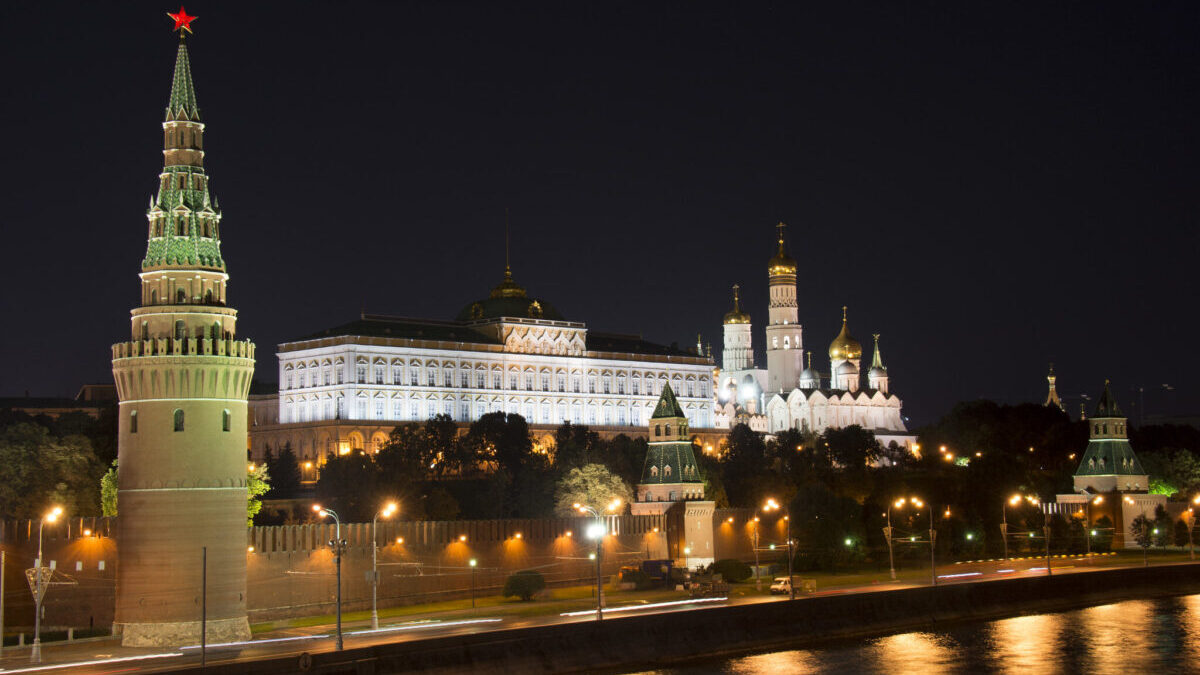
moscow

As we reach a month of the Ukrainian war amid talks of possible peace, a strategic appraisal is in order. It appears the Russians thought the war would be easy and fast, the Ukrainians would simply roll over and surrender, and the common people would rise up to greet Russians as liberators. Russian strategic decision-making, worsened by ideological bubbles, turned out to be as haunting as British and American misadventures in Iraq and Libya.

The Russian officer attrition in this war is on a level rarely observed in any recent conflict, partially because this level of high-intensity, state versus state, multi-domain total war hasn’t occurred in the last few decades. Russia did not foresee that its old-fashioned special operations tactics are obsolete satellites and drones track their movements. The fact that Moscow did not calculate this in their battle plans is a sign of decline, a far cry from its prestigious officer corps training during the Soviet era. The bulk of the Russian navy and air force are still bafflingly underused and functionally unavailable given the intensity of the conflict, giving rise to the suspicion that the Russians are preserving their top-tier weaponry and platforms in case the war spirals to a continental conflict.

But, somehow, they are still grinding on. If their objective was to stop Ukraine, Georgia, and Belarus from joining the North Atlantic Treaty Organization (NATO), they have achieved it already. They have also managed to cut off the entire east and south of Ukraine. Russia might still win the war and achieve Ukrainian zonal neutrality, given Russia’s sheer weight.

The Russian rhetorical “denazification” was also recently dropped quietly from the rhetoric. But the demand for Ukrainian neutrality remains and will remain. It was the single major Russian demand. All the other demands were maximalist and malleable, aimed towards negotiation. Ukraine should have taken the opportunity to do a Cold War-era, Austrian-style “neutralitätserklärung,” which would have resulted in the country constitutionally turning neutral, in order to get funding from the European Union and NATO and flourish. Ukrainians have also swallowed their non-achievable EU and NATO membership dream and are currently just as ideologically inflexible and rigid about compromise as Russia. 

Long-Term Ramifications

Unfortunately, the long-term ramifications of this war, for the west, are also bleak. Every single conservative restraint and realist gain from the last few years risks being reversed if realists continue to play defense on the rhetorical field of “values” instead of focusing on a narrow, populist interest. 

The absolutely mindless idea of a no-fly zone in an active warzone with a nuclear great power was narrowly avoided by 78 experts writing an open letter against it. Incidentally, support for a no-fly zone declines among Americans the moment it is explained.

But the war hysteria in the first few weeks of the campaign, aided by the usual suspects, demonstrated just how close to power and catastrophe these ideologues were. When a former deputy assistant secretary of defense and a former supreme allied commander of NATO argue for a no-fly zone, one needs to remember they are one step away from real advisory power and might be so again in the future. 

A conservative realist grand strategy that focuses on America’s southern borders and argues for Europeans to pay for European defense first needs a realist rhetoric and public relations strategy. It must discuss the public interest, in a language common people will understand and appreciate. Pursuing such a strategy would require a total clean-up of the administrative state and Obama-era holdovers next time Republicans are in power. The hold-outs of liberal internationalism are deeply embedded within the ever-expansive national security bureaucracy.

War Is Burying Liberal Internationalism

Rampant war hysteria has resulted in limited diplomatic maneuverability, a realization that is slowly emerging. As the Financial Times noted, “since Feb 24, the west has been galvanized into more unity than it has shown in years. Yet most of the world is on the side lines waiting to see which way it goes. Not for the first time, the west risks mistaking itself for global consensus.”

No matter how many times fanatical liberal internationalists cry about this war suddenly rejuvenating liberalism, the reality cannot be further from truth. The war proves great powers can deter other great powers and are the only actors that matter, that nationalism is the strongest social force, that interests trump values, norms, and laws. Thus, the war is quite clearly not saving “liberal internationalism” but burying it.

Two of the largest non-western powers are either neutral or tacitly supporting Russia, simply because of the idea that great powers should have their own spheres of influence. The balancing powers in Europe also argued against NATO being a co-belligerent.

Realism Isn’t Isolationism At All

Anglo-American foreign policy realists are not pacifists or isolationists. They simply prioritize a greater strategic threat in China. Wars have their own momentum. The chance of a great power being dragged into war due to foolish or overzealous mistakes of smaller peripheral allies is a far bigger threat, as the current world is functionally similar to a multipolar system prior to the First World War than a relatively binary and Manichean conflict of the Second.

Russia, bogged down in Ukraine already, is not a hegemonic threat comparable to Nazi Germany. The EU’s total population is around 450 million, more than the United States (339 million) and much more than Russia (144 million). The EU’s gross domestic product also dwarfs Russia’s, and just the top four European defense budgets combined are larger than Russia’s. Yet, instead of an actual material pivot to Asia, the United States currently has more than 100,000 troops deployed in Europe.

Globally, the biggest future rival is China. China is almost incomparable in size and power next to previous rivals such as Nazi Germany, Imperial Japan, and even the USSR. There is nothing they would prefer more than the United States being dragged back to Europe. Ultimately, the U.S. objective should be not to prolong the war, but to focus on China as a rising threat. Ukrainian neutrality would have sorted the issue for good. But Russia has already been pushed into the arms of the Chinese due to the war.

By not allowing an amoral balance of power, wherein we let Russia have a small sphere of influence as a grand bargain instead of being over-committed to Europe, Washington risks undercutting its long-term strategic interests by unknowingly accelerating China’s. In a twist of fate, President Joe Biden is now mirroring former President Donald Trump.

Biden’s old Cold War equilibrium instinct is under siege by his own activist administration, determined to defeat Russian “reactionary imperial patriarchy” and defend foreign borders, statues, and churches — instincts they would never allow at home. The almost theological focus on being a part of a conflict in the far corners of Eastern Europe to ensure the continuation of a liberal democratic revolution is fundamentally undercutting American grand strategy, which historically tried to split Russia and China. Ultimately, pushing Russia to be a Chinese satellite might turn out to be our greatest historic blunder.


Dr. Sumantra Maitra is a national-security fellow at The Center for the National Interest; a non-resident fellow at the James G Martin Center; and an elected early career historian member at the Royal Historical Society. He is a senior contributor to The Federalist, and can be reached on Twitter @MrMaitra.

Author Sumantra Maitra profile

SUMANTRA MAITRA

VISIT ON TWITTER@MRMAITRA

MORE ARTICLES

Tag Cloud