Perspectives; Thoughts; Comments; Opinions; Discussions

Posts tagged ‘political power’

Wallace B. Henley Op-ed: Who is the real ‘enemy of the people’?


Commentary By Wallace B. Henley, Exclusive Columnist| Wednesday, October 27, 2021

Read more at https://www.christianpost.com/news/who-is-the-real-enemy-of-the-people.html/
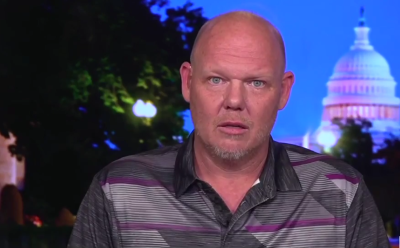
Scott Smith
Scott Smith, whose daughter was raped by a male wearing a skirt in a girls’ bathroom at her high school in Loudoun County, Virginia, appears on Fox News’ “The Ingraham Angle,” Oct. 12, 2021. | Screenshot: Fox News

When the Quisha Kings and Scott Smiths in a nation are considered by the regime in power to be the enemy, it says more about the danger of the regime than those the rulers consider as threats.

Quisha King is a Florida mother and a leader of Moms for Liberty, a group seeking to inform and inspire mothers and fathers to assert their parental rights in the face of a ravenous government and its allies, lackeys, parasites, and sycophants.  

The regime now consists of the elite establishments of Big Entertainment, Big Information, Big Academia, Big Government, Big Corporations. The leviathan is bloated with the muscle of all those entities and seems to grow steadily in its capacities of repression. Together, they become the consensus establishment, the regime that determines what is permissible and what is not so a compliant culture can cash in its liberty and acquiesce to the demands of the regime.

Within that cluster is the National School Boards Association (NSBA).

Moms for Liberty, among other things, resists the mandated teaching of critical race theory (CRT), forced mask-wearing and other incursions against parental rights in the public schools their children attend. NSBA sent a letter to President Biden suggesting that, in accord with the Patriot Act, such people and their ilk should be handled like domestic terrorists because they demand their school boards be accountable to parents.

Scott Smith’s daughter was assaulted in a school bathroom by a transgender boy, and was also labeled a “domestic terrorist” because he rushed into a school board meeting and demanded that the board take responsibility for what had happened to his daughter.

As Smith was being pulled down to the floor and arrested his wife cried out, “My child was raped at school, and this is what happens!”

Apparently, all citizens so concerned about the direction of public education in America that they challenge the authority of their school boards, suddenly become, in the eyes of the leviathan government and elitist establishments, enemies of the state—itself increasingly the enemy of the freedoms established in the constitutional system.

The Biden White House sent the NSBA letter to the Department of Justice. Attorney General Merrick Garland instructed the FBI to get involved, exacerbating, and strengthening the resolve of the parents whose response shook the political barometers at the White House.

The outcome was an apology from NSBA, regretting their letter, and acknowledging that “there was no justification for some of the language included in the letter.”[1]

Quisha King believed that if NSBA’s apology was genuine, instead of “calling us domestic terrorists, they would have investigated and questioned these school boards to see if there was any validity to any of what the parents are actually saying.”

There is something chilling here: NSBA’s suggestion that people like King are domestic terrorists who need to be reeled in under the Patriots Act calls to mind other regimes that have regarded the people of their nation as the enemy of the state.

For example, the Soviet Union under Stalin.

In 1956, Nikita Khrushchev (who would later prove himself as a totalitarian), then new leader of the Communist regime in the Soviet Union, shocked his fellow Marxists with a speech that revealed the monstrous nature of Stalinism. In doing so he exposed characteristics of any regime that sees its own people as the enemy.

“Stalin originated the concept ‘enemy of the people,’” said Khrushchev. Actually, the wording could have been, “the people are the enemy.” That term, Khrushchev continued in the Communist Party Congress speech, “made possible the usage of the most cruel repression, violating all norms of revolutionary legality, against anyone who in any way disagreed with Stalin, against those who were only suspected of hostile intent, against those who had bad reputations…”

Khrushchev went on to say that “this concept, enemy of the people, actually eliminated the possibility of any kind of ideological fight.” Thus, the bottom line is that anyone labeled an enemy of the people or of the state were judged as guilty and pushed out of the public square where they might have defended their views.

Today’s regime in the United States has also pushed those considered as public enemies out of the public square, and, as much as possible, cut off their voice. Consider, for example censorship by Big Tech sites of groups deemed not worthy of public exposure because of their religious, political, or social views.

Silencing the enemies of the regimes is also the aim of the Cancel culture and Wokeism. Men and women who violate the value system and worldview specified by the high priests of Wokeism are ridiculed and banished. The regime cluster even turns on its own, like JK Rowling, who once helped build the Woke culture. She was cancelled for giving public support to Maya Forstater who said, “men cannot change into women.”

In an eyeblink, Rowling became the enemy in the eyes of the cultural regime.

However, when the regime considers the people as the enemy, then it is the regime that is itself the enemy of the people. That means action must be taken.

Throughout the history of civilization, the “public square” has been the locus of revolutionary resistance. So, the public square has to be the place of resistance in this current battle. Presently, however, that “square” has come under the censorship of authoritarian regimes. Under this repression the church and the home must be the primary places of resistance… forming worldview that will awaken a slumbering mass who at times seem not to want to be disturbed.

Churches must wake up to what is happening and recover the prophetic voice. Discipleship ministries must teach the biblical revelation concerning nations and cultures, and dare address the spiritual foundations of the nation. Parents must make their homes centers of worldview teaching and formation for their children.

Without this, we face a Stalinized future with the elite consensus establishment imposing its will upon us and our posterity.


[1] Florida mother says she does not accept NSBA’s apology for letter that likened parents to domestic terrorists | Fox News
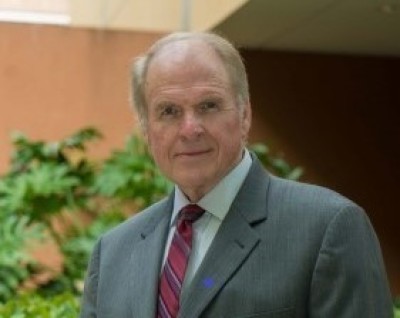
Wallace B. Henley, a former White House and Congressional aide, is the author or co-author of more than 20 books. His latest is Who Will Rule the Coming ‘Gods’: The Looming Spiritual Crisis of Artificial Intelligencejust released by Vide Press.

For media inquiries, contact:  ChristianPost@pinkston.co

Wallace B. Henley Op-ed: The dangerous lure of power in times like these


Commentary By Wallace B. Henley, Exclusive Columnist| Wednesday, August 04, 2021

Read more at https://www.christianpost.com/voices/the-dangerous-lure-of-power-in-times-like-these.html/

Wallace Henley
Wallace Henley, former Senior Associate Pastor of 2nd Baptist Church in Houston, Texas. | Photo by Scott Belin

The present crisis in the United States is worse than most realize.

There is a troubling dynamic that works subtly in nations passing through critical eras: The more intense the crisis the greater the lure of power.

The dangers of our time loom on every horizon — spiritual, political, economic, social, cultural. We face in these times corruption in churches, pandemic, disintegration of society, ever-widening division in the nation, shattering of moral boundaries, dissolution of family, uncertain leadership, intensifying lawlessness, perversion of education … the list could go on. Add global threats squeezing in from every direction and an immigration crisis of unprecedented proportions.

“We have to do something about all this!” goes the urgent cry in governing institutions from the White House to the congressional house to the state house to the county seat to the city hall to the town hall.

And that’s when the lure of power and the loss of freedom begins creeping through the land.

Extreme measures are needed for extreme times goes the rationale. Of such panic dictatorships emerge, tyrannies arouse, and freedoms are lost.

Obviously, we need strong leadership in times like these. However, the stronger the leader the more important he or she understand the differences between power and authority.

George Washington got it.

John Adams wanted America’s chief executive to be called one of the following: His Highness, the President of the United States of America and Protector of the Rights of the Same, or His Elective Majesty, or even His Mightiness.

George Washington was concerned that Americans know they were not getting a monarch, but a leader who could be turned out at the will of the people, and who understood that he had not been elevated to office because he had a right to it, but because he was a servant of the people.

Washington was a no-frills person, and let it be known that “President of the United States” would be the title he and his successors would carry.

In our time, especially with the rise of the megachurch, there are in some places imperial pastors who are untouchable and deck themselves with lavish titles. They, as well as power-grabbing leaders in all spheres, understand the wiles of power but little about the biblical revelation concerning true authority:

  • Authority is granted from the higher to the lower; power is seized by the strongest
  • Authority is accountable to its transcendent source; power is accountable only to itself
  • Authority is sustained through loving relationship and service; power is sustained by raw strength
  • Authority leads through example and the free choice of those who are led; power controls through manipulation, intimidation, condemnation, domination.[1]

King Saul violated all these principles. During a strategic battle between Israel and the Philistines, Saul was at Gilgal, eagerly awaiting news of the outcome. Finally, his impatience took over. Saul arrogantly assumed that his position meant he could step into the office of Priest, which was occupied by Samuel. But Samuel was not present, and so Saul ordered the sacrifices. This hubristic presumptive action ultimately cost Saul his kingdom. (See 1 Samuel 13).

Our times certainly call for strong, decisive leadership. But the men and women in those roles must understand the ominous lure of power in dangerous periods.

Like Calvin Coolidge.

Just six years before Coolidge came to the presidency communists seized power in Russia. Western leftists watched eagerly for the implementation of socialism in the hopes that Europe and the United States would embrace or be forced into acceptance of the philosophy. (That effort goes on now).

Coolidge saw through it all. As a U.S. senator prior to becoming vice president and then president, Coolidge was called upon to help settle a bitter strike. Even after the issues were settled, he was concerned by the “violence and cynicism” he had noted on the part of the strikers.

In fact, “silent Cal” was “exasperated.” He wrote his stepmother a letter expressing concerns sharply relevant for today: “The leaders [of the strike] are socialists and anarchists, and they do not want anybody to work for wages. The trouble is not with the amount of wages; it is a small attempt to destroy all authority, whether of any church or government.”[2]

Coolidge was one of those enigmatic presidents who appear at the right time at the right place for right reasons. It was possible for people like Coolidge to rise to the presidency because of the nation’s core worldview.

G.K. Chesterton, the 20th century British journalist and author, was asked, “What is America?”

He replied that America is a nation with the soul of a church … the only nation in the world that is founded on a creed … set forth with dogmatic and even theological lucidity in the Declaration of Independence. …  It certainly does condemn anarchism, and it does also by inference condemn atheism, since it clearly names the Creator as the ultimate authority from whom these equal rights are derived.[3]

Therefore, “powers” can only be exercised under proper authority, flowing from God to the people, and through them to the government they choose, all “under God.” This is a major shift in governing style that had dominated six thousand years of recorded history.

It is vital in times of intense crisis that we and our leaders not forget the kind of nation we are and have been at our best in the worst of times.

That will save us from the lure of power and its distortions.

[1] I am indebted to Dudley Hall, an insightful Bible teacher and dear friend, for the four categories of control employed by raw power listed here.

[2] Shlaes, 115-116.

[3] Raymond T. Bond (ed.), The Man Who Was Chesterton (Garden City, NY: Image Books, 1960), 125.

Wallace B. Henley’s fifty-year career has spanned newspaper journalism, government in both White House and Congress, the church, and academia. He is author or co-author of more than 20 books. He is a teaching pastor at Grace Church, the Woodlands, Texas.

For media inquiries, contact:  ChristianPost@pinkston.co

Tag Cloud