Perspectives; Thoughts; Comments; Opinions; Discussions

Posts tagged ‘natural gas’

Biden’s natural gas decision is nuts. Climate extremists don’t know the facts


By Neil ChatterjeeFOXBusiness

Read more at https://www.foxbusiness.com/energy/bidens-natural-gas-decision-nuts-climate-extremists-know-facts

Some confused climate activists are asking President Biden to hurt the climate. Protesters are planning a sit-in at the Department of Energy next month, calling for the White House to not permit any new liquefied natural gas (L.N.G.) export terminals. But examining the facts shows that surrendering to this pressure would actually raise global greenhouse gas emissions — as well as hinder our allies’ energy security and our economy. 

Those on the left who oppose L.N.G. exports cite concerns about emissions. They also argue that natural gas exports are sabotaging the deployment of renewable energy. These objections are off the mark for two main reasons. First, American L.N.G. exports have a carbon advantage over more carbon-intensive sources of power generation overseas that they displace. Focusing on natural gas, Russian exports to Europe produce over 40 percent more greenhouse gas emissions than U.S. exports to Europe. 

WHITE HOUSE HALTS ENORMOUS NATURAL GAS PROJECTS IN VICTORY FOR ENVIRONMENTALISTS

Second, the Energy Information Administration (EIA) projects that global demand for natural gas will increase by 2050. Advanced energy technologies that affordably harness solar, wind, hydroelectric, and geothermal power are promising and the United States should lead the world in building them. But even with rapidly improving economics from innovation, and even if permitting reform slashes red tape and facilitates accelerated deployment, it still takes a long time to replace natural gas

video

‘BLOWING UP’: Alex Epstein warns against latest clean energy push

‘Fossil Future’ author Alex Epstein reacts to green economic ‘revolution’ push in the latest climate crusade on ‘The Bottom Line.’ 

Natural gas will be needed for the foreseeable future, since there’s no such thing as an overnight transition to all renewables. Denying this reality will not decrease emissions. It will just allow higher-polluting exports from other countries, like Russia, to fill the void and raise global emissions.

US LED THE WORLD IN LIQUEFIED NATURAL GAS (LNG) EXPORTS IN 2023

The energy transition will take time — but less time if the government chooses innovation, competition, and regulatory reform over bans, mandates, and subsidies. Because of Texas’ competitive electricity market, for example, the Lone Star State is easily the country’s biggest wind energy producer. And Texas recently eclipsed California (with its command-and-control policies) for the lead in grid-scale solar deployment. 

Natural gas will be needed for the foreseeable future, since there’s no such thing as an overnight transition to all renewables. Denying this reality will not decrease emissions. It will just allow higher-polluting exports from other countries, like Russia, to fill the void and raise global emissions.

Natural gas can be the backbone that allows renewables to flourish. Gas provides firm power, complementing the variable nature of solar and wind as new battery storage technology scales. 

video

We are working our programs to reduce emissions: Diversified Energy CEO Rusty Hutson Jr.

Diversified Energy Company co-founder and CEO Rusty Hutson Jr. breaks down the impact of methane emission rules on ‘The Claman Countdown.’

The U.S. has already significantly lowered emissions in the power sector without compromising reliability and affordability. That happened because of innovative natural gas extraction, relicensing nuclear power plants, and increasingly cheap renewables. 

The future is even brighter: U.S. trailblazers developing and deploying inexpensive energy technologies — everything from solar-plus-storage and carbon capture for natural gas to nuclear fusion — and exporting them. 

In the meantime, American L.N.G. exports have a crucial role in not just reducing global emissions, but also in strengthening our allies’ energy security and our economy.

In early 2019, during my time as chairman of the Federal Energy Regulatory Commission (FERC), I visited Poland and witnessed the importance of American gas exports to our friends’ energy security. My Polish counterparts were deeply concerned about regional dependence on Russian gas. Even then, long before the war in Ukraine, they were asking the U.S. to undercut Russia’s weaponization of energy.

video

Biden is trying to imitate Putin: Newt Gingrich

‘Maria Bartiromo’s Wall Street’ catches up with Newt Gingrich and Kellyanne Conway, who discuss the 2024 presidential race

Putin’s invasion of Ukraine in 2022 turned those fears into reality. Russia’s economic power comes from oil exports, but its political power over Europe at that time came from natural gas exports. And Russia bet that starving European countries of natural gas would weaken their support for Ukraine. 

But American L.N.G. helped our allies wean off of Russian gas. Stopping or limiting the supply of this crucial resource to the global market would be as disruptive as economic sanctions. Our friends and allies, in Asia as well as Europe, are relying on us to continue exporting this fuel. 

L.N.G. exports also benefit our economy. These exports have the capacity to create tens of thousands of jobs along the entire economic supply chain — including jobs in Wisconsin and Ohio, not just in Texas or Louisiana. 

As FERC chairman, I pushed for bipartisan action to streamline L.N.G. export terminal approvals without sacrificing safety or environmental quality. It’s now time for President Biden to do likewise. He should ignore the activists staging a sit-in. They’re wrong on the facts and should sit this one out. 

Neil Chatterjee served as chairman and a member of the Federal Energy Regulatory Commission. He has decades of experience working on the most important energy policy initiatives for Republican leadership in Congress.

Texas voters overwhelmingly approve measure greenlighting more fossil fuel development


Thomas Catenacci By Thomas Catenacci Fox News | Published November 8, 2023 11:47am EST

Read more at https://www.foxnews.com/politics/texas-voters-overwhelmingly-approve-measure-green-lighting-fossil-fuel-development

Texas voters overwhelmingly approved a ballot proposition Tuesday establishing a billion-dollar state-managed energy fund to bolster natural gas power plant infrastructure.

Proposition 7 to create the so-called Texas Energy Fund passed in a 65% to 35% vote with more than 2.5 million ballots cast, according to the latest data compiled by the Texas Secretary of State’s office. The ballot measure — which was supported by the energy industry, but opposed by environmentalists — sets aside $5 billion to guarantee low interest loans for new dispatchable power generation in the state.

“TXOGA is pleased to see infrastructure propositions to expand water, electricity and broadband pass with overwhelming support from voters,” Todd Staples, the president of the Texas Oil & Gas Association, said in a statement Tuesday evening. “By voting to approve these propositions, Texans are ensuring that the Lone Star State continues to be the best place to live, work, play and raise a family.”

He added that Proposition 7 will help “strengthen the reliability of our electric grid by ensuring it performs no matter the weather as well as increase the supply of electricity by encouraging additional generation.”

TEXAS GOVT PUSHING ACTION THAT COULD ‘KNEECAP’ NEW FOSSIL FUEL GENERATION, DESTABILIZE GRID, EXPERTS WARN

Republican Texas Gov. Greg Abbott
Texas Gov. Greg Abbott signed legislation teeing up the vote Tuesday. After the measure passed, he applauded the action, saying it will “strengthen our state power grid.” (Brandon Bell/Getty Images)

The measure is the final step to enact Senate Bill 2627, which Republican Gov. Greg Abbott signed into law in July. 

Under the bill, loans financed by the Texas Energy Fund must have a 20-year term and interest rate of 3%, and can be used either to upgrade existing dispatchable power generation increasing capacity by at least 100 megawatts (MW) or to construct new power generation with a capacity of at least 100 MW. A natural gas power plant with a capacity of 100 MW can power tens of thousands of homes.

MICHIGAN DEMS, GRETCHEN WHITMER ARE PURSUING A GREEN NEW DEAL, THREATENING FUTURE GRID STABILITY

The effort to create incentives for power companies to expand natural gas power generation was designed to address growing concerns that the state’s power sector doesn’t have an adequate energy generation that can be quickly dispatched to provide electricity during emergency peak periods. 

According to former Public Utility Commission Chair Peter Lake, the state’s dispatchable power supply grew only 1.5% between 2008 and 2020, while, in that same timeframe, the Texas population grew 24%, meaning demand is outpacing supply. The concern is particularly elevated because of Texas’ growing reliance on green energy sources like wind and solar, which aren’t dispatachable, and are intermittent, meaning they are reliant on weather conditions.

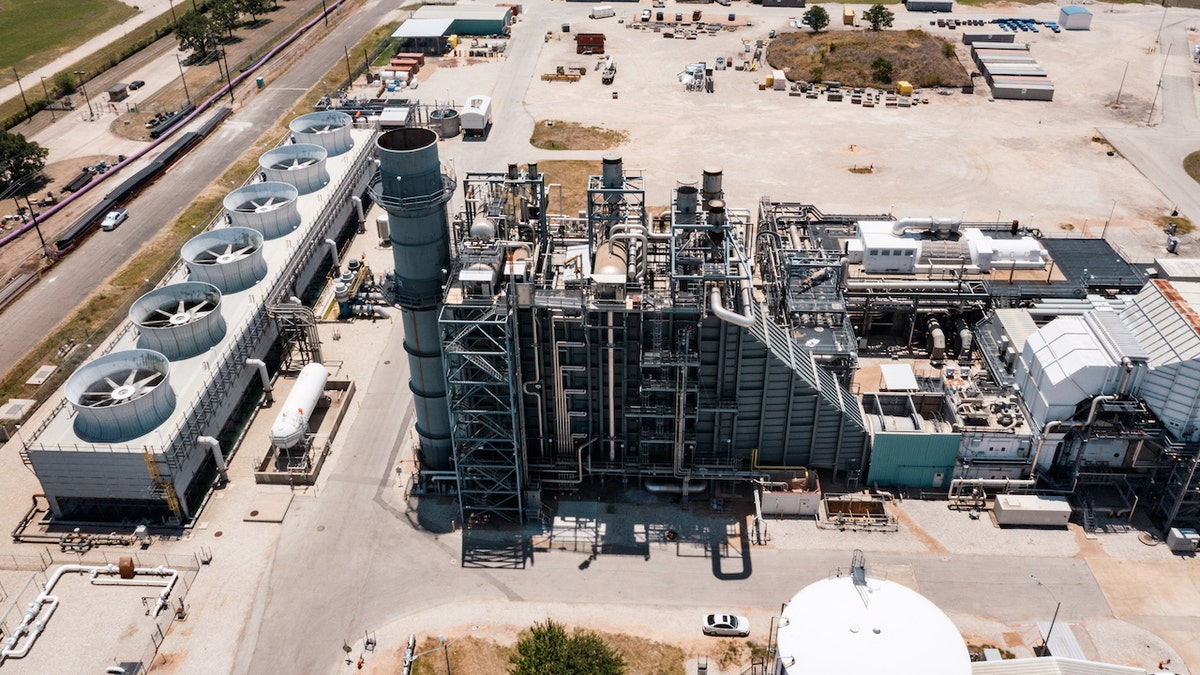
A power generating station during a heatwave outside of Austin, Texas, US, on Monday, July 11, 2022. Texas residents and businesses, including the biggest names in oil, autos and technology, are being asked to conserve electricity Monday afternoon during a heat wave that's expected to push the state's grid near its breaking point. Photographer: Jordan Vonderhaar/Bloomberg
A power generating station near Austin, Texas, on July 11, 2022. (Jordan Vonderhaar/Bloomberg via Getty Images)

“The urgency to move forward with meaningful electric market reforms that will incentivize the development of dispatchable generation remains extremely high,” Pablo Vegas, the current president and CEO of the Electric Reliability Council of Texas, said earlier this year.

In 2022, Texas generated 26% of all U.S. wind-generated electricity and has led the nation in that category for 17 consecutive years, federal data showed. Natural gas, though, still produces by far the largest share of electricity generation in the state.

In addition to the Texas Oil and Gas Association, ConocoPhillips, Texas Association of Manufacturers, Texas Pipeline Association and Valero Energy Corporation supported Proposition 7. The Sierra Club, Environment Texas, Texas Advanced Energy Business Alliance and Texas Consumer Association opposed it.

“We need, and Texans want, more clean energy, not less. There is strong support for more wind and solar energy, more battery storage, more energy efficiency, and more interconnection with the national grid,” said Luke Metzger, the executive director of Environment Texas. “Unfortunately, the Legislature ignored these solutions to strengthen our electric grid while protecting consumers and the environment.” 

Thomas Catenacci is a politics writer for Fox News Digital.

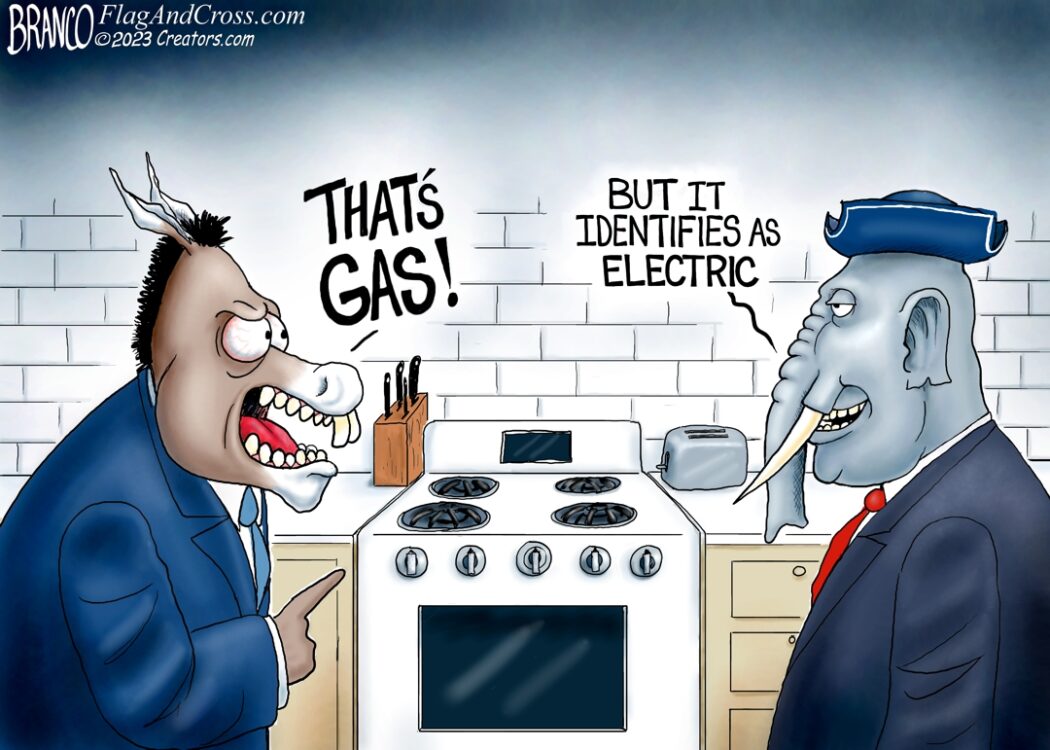
Today’s Politically INCORRECT Cartoon by A.F. Branco


A.F. Branco Cartoon – Gaslighting

A.F. BRANCO | on January 18, 2023 | https://comicallyincorrect.com/a-f-branco-cartoon-gaslighting/

The Democrats, Biden, and the Globalists are gaslighting us over the use of natural gas. Political cartoon by A.F. Branco ©2023.

Banning Gas Stoves

DONATE to A.F.Branco Cartoons – Tips accepted and appreciated – $1.00 – $5.00 – $25.00 – $50.00 – $100 – it all helps to fund this website and keep the cartoons coming. Also Venmo @AFBranco – THANK YOU!

A.F. Branco has taken his two greatest passions, (art and politics) and translated them into cartoons that have been popular all over the country, in various news outlets including NewsMax, Fox News, MSNBC, CBS, ABC, and “The Washington Post.” He has been recognized by such personalities as Rep. Devin Nunes, Dinesh D’Souza, James Woods, Chris Salcedo, Sarah Palin, Larry Elder, Lars Larson, Rush Limbaugh, and President Donald Trump.

Germany’s Green Energy Follies Are A Warning To The United States


BY: HELEN RALEIGH | SEPTEMBER 14, 2022

Read more at https://thefederalist.com/2022/09/14/germanys-green-energy-follies-are-a-warning-to-the-united-states/

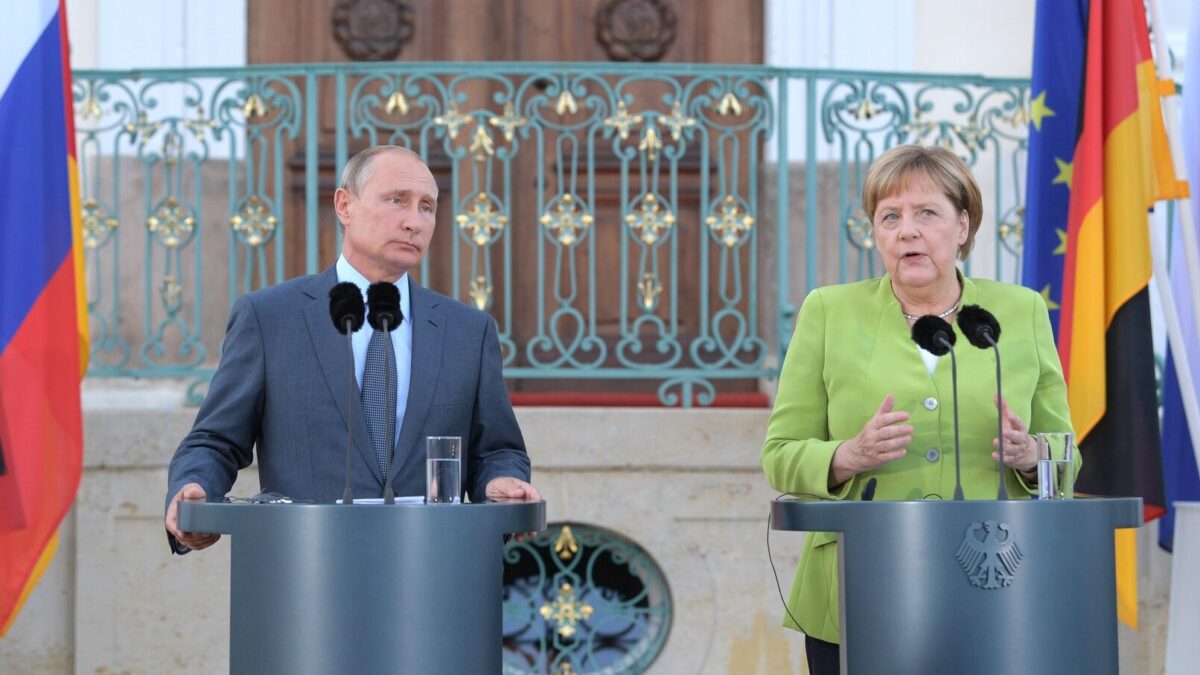
Angela Merkel and Vladimir Putin

Author Helen Raleigh profile

HELEN RALEIGH

VISIT ON TWITTER@HRALEIGHSPEAKS

MORE ARTICLES

Germany is reportedly working on reducing the nation’s economic dependency on Communist China due to concerns about “human rights abuses and the risks of being beholden to an increasingly assertive authoritarian state,” Reuters reports. Berlin finally learned one lesson from Russia’s invasion of Ukraine: it’s dangerous to economically rely on authoritarian regimes. 

Former German Chancellor Angela Merkel’s policies — building an economy based on Russia’s energy supply and China’s market demand — were primarily responsible for German’s economic predicament today. Zealous in fighting climate change, Merkel shut down coal mines and retired the majority of nuclear power plants in Germany while relying on Russia for energy and raw materials, despite repeated warnings from the Trump administration. By 2020, Russia supplied more than half of Germany’s natural gas and about a third of all the oil that Germans burned to heat homes, power factories, and fuel vehicles.

While paying Russia billions of euros for energy supply (the money no doubt helped finance Putin’s war chest), Merkel neglected to invest in German’s armed forces, even after Putin annexed the Crimean Peninsula from Ukraine. She outsourced Germans’ and, to a larger extent, Europe’s security to the United States and simply hoped for the best. When Merkel retired in 2021, after being in office for 16 years, German’s military was left “in a weak position and require years of renewal to become a credible deterrent to Russian aggression,” according to The American Institute for Contemporary German Studies.  

Strengthened China Ties

Besides empowering and enriching Russia, Merkel was keen on strengthening Germany’s economic ties with China while in office. No other leaders from Western democracies had visited China more often than Merkel (she had 11 state visits to China).

To promote Germany’s export-oriented economy, Merkel was indifferent to China’s aggression in the South China Sea, its geopolitical expansion through the “Belt and Road” infrastructure project, and its increasingly assertive foreign policies. In addition, she avoided criticizing China’s mishandling of Covid-19 in the early days of 2020 and turned a blind eye to many human rights abuses in China, especially the genocide of Uyghur Muslims and suppression of the pro-democracy movement in Hong Kong. 

Under Merkel, China became Germany’s largest trading partner in 2016. German’s auto industry especially relies on China — about 50 percent of German car maker Volkswagen’s profit comes from China. Merkel’s China policy has made Germany’s economy vulnerable and helped speed up the Chinese military’s modernization.

Beijing reportedly focused on investments in Germany to obtain critical technologies, especially those with dual-use, meaning both civilian and military applications. For example, engines made by German companies have powered several types of Chinese navy warships, Deutsche Welle found.  

Although Merkel retired in 2021, the effects of her economic policies continued. According to a German Economic Institute (IW) study, Germany’s economic dependency on China has continued to grow in 2022. “China’s share of German imports rose to 12.4 percent in the first half of 2022, compared with only 3.4 percent in 2000. German imports of Chinese goods… have surged by 45.7 percent year-on-year in the comparable period of the first six months. Germany’s trade deficit with the country had leapt to almost EUR 41 bn by mid-2022.”

A Wake-Up Call

After Russia invaded Ukraine, Germany joined other EU nations in imposing punitive economic sanctions on Russia. Putin retaliated by weaponizing his energy supply to Europe, sending energy prices soaring and dealing a blow to the German economy. 

Inflation in Germany has reached a 40-year high. Suppose Putin shut off the natural gas supply to Europe, as he threatened. In that case, many predict an energy-induced recession in Europe is inevitable, and Germany could lose close to $240 billion in economic output over the next two years.

The grim economic outlook, and the fact that Beijing refused to condemn Russia’s invasion of Ukraine and helped Russia evade the West’s economic sanctions by purchasing Russian energy and agriculture products, have become a wake-up call for Germany. Additionally, Beijing’s “zero-Covid” policy that has kept dozens of cities and millions of Chinese people in lockdown means German businesses have had limited access to the Chinese market, and the trend will continue in the foreseeable future. 

The German Economic Institute called for the government to change its economic policy, “specifically a reduction in incentives for doing business with China and a shift towards more trade with other emerging markets.” It also warned German businesses to “curb their dependency on China.” Otherwise, companies may expose themselves to bankruptcy due to Western sanctions imposed on China in the event of the People’s Liberation Army’s invading Taiwan. 

Deutsche Bank CEO Christian Sewing also warned, “When it comes to dependencies, we also have to face the awkward question of how to deal with China.” He appealed to the German government to decouple economically from China and acknowledged such a move would “require a change no less fundamental than decoupling from Russian energy.” 

Germany Stepping Back

These calls for action have reached their desired audience. Foreign Minister Annalena Baerbock acknowledged Germany couldn’t afford to “just behave following the motto ‘business first,’ without taking into account the long-term risks and dependencies.”

Reuters reports that Germany’s economic ministry is considering several actions to cut Germany’s reliance on China, including reducing or scrapping investment and export guarantees for China and no longer promoting trade fairs and manager training there. It is also contemplating screening not just Chinese investments in Germany but also German investments in China. It also might submit a complaint to the World Trade Organization about unfair Chinese trade practices, together with the Group of Seven, an intergovernmental political forum consisting of Canada, France, Germany, Italy, Japan, the United Kingdom, and the United States.

While Germany is waking up to the risks of economic dependency on authoritarian regimes, the Biden administration has deepened our nation’s economic reliance on China with a green revolution that centers around replacing fossil fuels with solar and wind, and gas-powered cars with electric vehicles (EVs). China dominates the global supply chain of raw materials and parts for EV batteries, solar panels, and wind turbines. The nation has been able to keep the manufacturing cost low by burning coal and employing forced labor from Uyghur and other ethnic minorities.

Even Politico has had to admit the dirty truth: “The U.S path to clean energy goes straight through China.” Germany’s economic woes should serve as a timely warning to the Biden administration that relying on an authoritarian regime is both dangerous and foolish.


Helen Raleigh, CFA, is an American entrepreneur, writer, and speaker. She’s a senior contributor at The Federalist. Her writings appear in other national media, including The Wall Street Journal and Fox News. Helen is the author of several books, including “Confucius Never Said” and “Backlash: How Communist China’s Aggression Has Backfired.” Follow her on Parler and Twitter: @HRaleighspeaks.

    Studies Show the Electric Vehicles Democrats Insist You Buy Are Worse for the Environment and Lower Quality


    REPORTED BY: HELEN RALEIGH | JULY 11, 2022

    Read more at https://thefederalist.com/2022/07/11/studies-show-the-electric-vehicles-democrats-insist-you-buy-are-worse-for-the-environment-and-lower-quality/

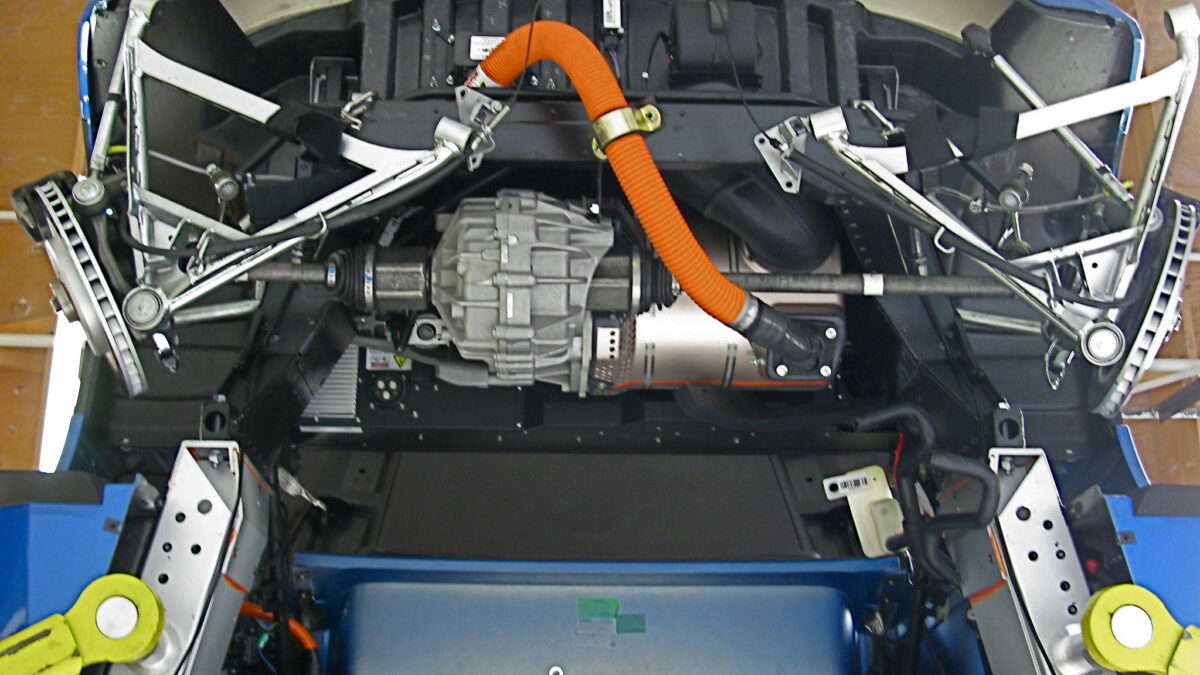
    Tesla

    Two recent studies have shown that electric vehicles have more quality issues than gas-powered ones and are not better for the environment. 

    Author Helen Raleigh profile

    HELEN RALEIGH

    VISIT ON TWITTER@HRALEIGHSPEAKS

    MORE ARTICLES

    Many people believe electric vehicles are higher quality than gas-powered vehicles and are emissions-free, which makes them much better for the environment. But two recent studies have shown that electric cars have more quality issues than gas-powered ones and are not better for the environment. 

    J.D. Power has produced the annual U.S. Initial Quality Study for 36 years, which measures the quality of new vehicles based on feedback from owners. The most recent study, which included Tesla in its industry calculation for the first time, found that battery-electric vehicles (EVs) and plug-in hybrid vehicles have more quality issues than gas-powered ones. According to J.D. Power, owners of electric or hybrid vehicles cite more problems than do owners of gas-powered vehicles. The latter vehicles average 175 problems per 100 vehicles (PP100), hybrids average 239 PP100, and battery-powered cars — excluding Tesla models — average 240 PP100. Tesla models average 226 PP100. Given the average cost of an electric car is roughly $60,000, about $20,000 more than the cost of a gas-powered car, it seems owners of EVs didn’t get the value they deserve.

    Some blamed the supply-chain disruptions caused by pandemic-related lockdowns as the main reason for EVs’ quality issues. EV makers have sought alternative (sometimes less optimal) solutions to manufacture new vehicles. But the same supply-chain disruption affected makers of gas-powered vehicles. Yet the three highest-ranking brands, measured by overall initial quality, are all makers of gas-powered vehicles: Buick (139 PP100), Dodge (143 PP100), and Chevrolet (147 PP100).

    Some pointed to the design as a main contributing factor to EVs’ quality issues. According to David Amodeo, global director of automotive at J.D. Power, automakers view EVs as “the vehicle that will transform us into the era of the smart cars,” so they have loaded up EVs with technologies such as touch screens, Bluetooth, and voice recognition. EV makers also prefer to use manufacturer-designed apps to “control certain functions of the car, from locking and unlocking the doors remotely to monitoring battery charge.” Increasing technical complexity also increases the likelihood of problems. Not surprisingly, EV owners reported more infotainment and connectivity issues in their vehicles than owners of gas-powered vehicles. Amodeo acknowledged that “there’s a lot of room for improvement” for EVs. 

    Electric Vehicles Are Worse for the Environment

    Besides quality issues, a new study published by the National Bureau of Economic Research found that electric vehicles are worse for the environment than gas-powered ones. By quantifying the externalities (both greenhouse gases and local air pollution) generated by driving these vehicles, the government subsidies on the purchase of EVs, and taxes on electric and/or gasoline miles, researchers found that “electric vehicles generate a negative environmental benefit of about -0.5 cents per mile relative to comparable gasoline vehicles (-1.5 cents per mile for vehicles driven outside metropolitan areas).”

    Researchers specifically pointed out that despite being treated by regulators as “zero emission vehicles,” electric cars are not emissions-free. Charging an EV increases electricity demand. Renewal resources supply only 20 percent of the country’s electricity needs. The remaining 80 percent were generated by fossil fuels such as coal and natural gas, despite billions of dollars in green subsidies.

    “The comparison between a gasoline vehicle and an electric one is really a comparison between burning gasoline or a mix of coal and natural gas to move the vehicle,” according to The American Economic Review.

    Batteries Create Pollution

    NBER’s study doesn’t cover all the reasons that EVs are worse for the environment than gas-powered cars. For instance, most of today’s EVs are powered by lithium-ion batteries. Due to heavy government subsidies, China dominates the global production of lithium-ion batteries and their precursor materials, especially graphite. China’s graphite production has notoriously contributed to significant pollution in the country. 

    Pollution can come “from graphite dust in the air, which is damaging whether inhaled or brought down to the earth in the rain,” a Bloomberg report found. More pollution results from the hydrochloric acid used to process mined graphite into a usable form. Hydrochloric acid is highly corrosive and can cause great environmental damage if leaked into groundwater or streams. China’s Shandong province, which is responsible for 10 percent of global graphite supply, had to suspend some of its production capacity due to environmental damages. But the growing demand in the west for EVs means such suspensions will only be temporary.

    A typical electric car needs 110 pounds of graphite, and a hybrid vehicle needs around 22 pounds. Ironically, the U.S. government’s EV subsidies end up subsidizing China’s highly polluted production. So, if you think you are doing your part of saving the planet by driving an EV, think twice. We also know from past experiences that pollution in China ends up harming the rest of the world. 

    Compelling Americans to switch from gas-powered cars and trucks to electric ones has been crucial to President Joe Biden’s plan to fight climate change. He signed an executive order last year to have electric vehicles make up half of new cars and trucks sold in the U.S. by 2030. These recent studies show that Biden’s plan will result in Americans spending more money on vehicles of inferior quality while having little effect on climate change. More importantly, his plan will enrich the Chinese Community Party at the expense of the environment and U.S. taxpayers.  


    Helen Raleigh, CFA, is an American entrepreneur, writer, and speaker. She’s a senior contributor at The Federalist. Her writings appear in other national media, including The Wall Street Journal and Fox News. Helen is the author of several books, including “Confucius Never Said” and “Backlash: How Communist China’s Aggression Has Backfired.” Follow her on Parler and Twitter: @HRaleighspeaks.

    Dems Don’t Want You To Know How Much Fossil Fuel Electric Cars Use | Batteries Are Fancy/Expensive/Toxic Fossil Fuel Tanks


    Posted on March 19, 2022 by TonyR

    Read more at https://dailybrowse.wordpress.com/2022/03/19/dems-dont-want-you-to-know-how-much-fossil-fuel-electric-cars-use-batteries-are-fancy-expensive-toxic-fossil-fuel-tanks/

    In reality, one of Tesla’s Supercharger stations was reported to get 13 percent of their energy from natural gas and 27 percent from coal. Power plants burn coal to generate electricity to power electric cars and emit a higher fossil fuel footprint than the left would care to admit. 

    While these vehicles may be falsely advertised, many who invest in these overpriced cars are able to avoid paying the currently outrageous gas prices. Still, Americans’ growing reliance on electric cars and the batteries they require will increase our dependence on countries such as China for materials. 

    I love the idea of electric cars until I think of all the pollution they cause. Rare earth mineral mining is a pollution nightmare. Filling the batteries with power from fossil fuel is asinine, a shell game. Disposal of toxic batteries is a disaster in the making.

    And don’t get me started on the disaster of wind power. Concrete and metal skyscraper factories that litter or rural areas. Just wait till they rot, leave massive concrete foundations and pollute a once beautiful landscape.

    Tag Cloud