
Perspectives; Thoughts; Comments; Opinions; Discussions

Posts tagged ‘MOVIES’

Sex Trafficking Drama ‘Sound of Freedom’ is a Heartbreaking and Hopeful Call to Action


BY: AARON GLEASON | JULY 07, 2023
Read more at https://thefederalist.com/2023/07/07/sex-trafficking-drama-sound-of-freedom-is-a-heartbreaking-and-hopeful-call-to-action/

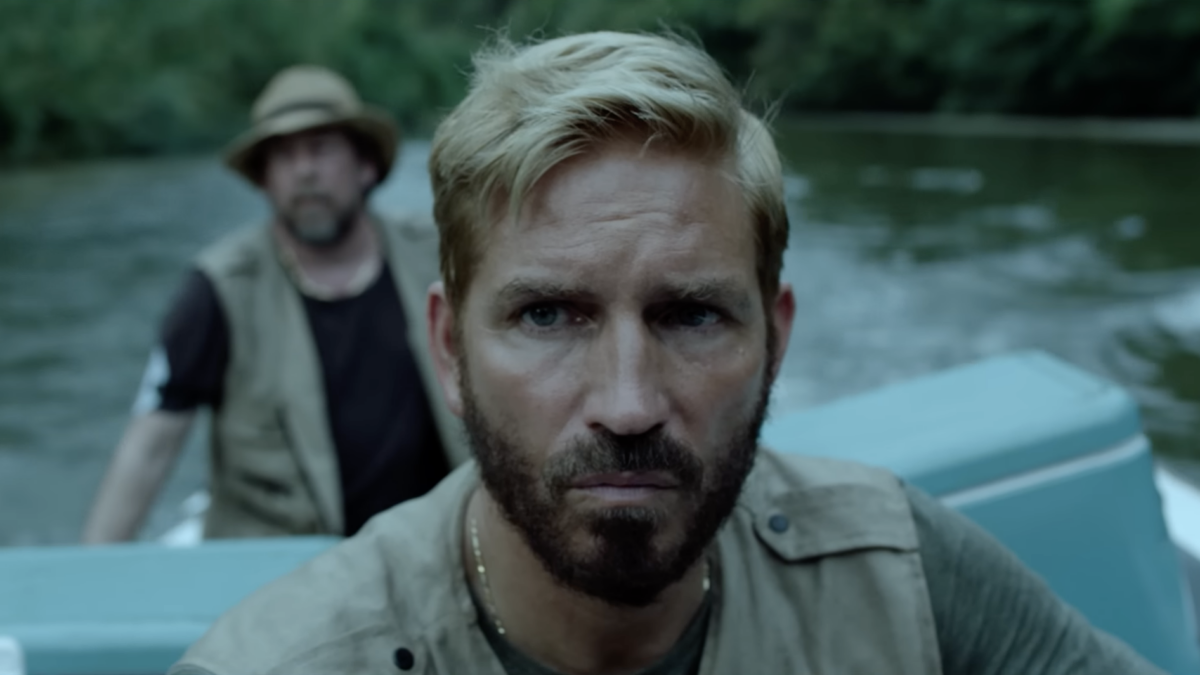
Jim Caviezel as Tim Ballard in "Sound of Freedom"

Author Aaron Gleason profile

AARON GLEASON

MORE ARTICLES

“Sound of Freedom” follows the true story of Special Agent Tim Ballard who specialized in catching

sex criminals, particularly in regard to the exploitation of children on the internet. But Tim is challenged early in the film by the seeming futility of catching criminals when real children’s lives are at stake. Years of looking at the darkest side of humanity has broken his heart to pieces, and the only way he can see to rebuild his humanity is by liberating the lost and forgotten victims of the sex trafficking network. He goes on a quest to South America to do just that.

Jim Caviezel plays Ballard. His classic no-frills acting approach is perfect for this role. Caviezel is best known for playing Jesus in Mel Gibson’s controversial “The Passion of the Christ.” He brings the same level of intensity and compassion from this role to Ballard’s story. In fact, Ballard’s mission to seek and save lost children is a distinctly Christian value based on the theological principle that each child is uniquely beloved by God. 

When Jesus said, “Let the little children come to me,” he was making a revolutionary claim. Children, the most vulnerable and dependent members of society, had a special place in his kingdom. They mattered to him in a way that no other religious founder has ever envisioned. The faith of a child was the type of faith Jesus wanted from his followers — one free from the pollution and cynicism of adulthood, one of total dependence on their Heavenly Father. 

These values aren’t universally understood and accepted. Ballard’s story is proof of that. According to the movie, the child sex industry brings in $150 billion dollars every year. This industry is powerful and is not nearly as niche as we would like to think it is. While its visible activists are milquetoast perverts we can easily jail, the invisible perpetrators are the ones who do the real damage — the cartels, drug lords, and even our own politicians enable the child sexual slavery that is more prominent now than ever before.

At the end of the film, Caviezel addresses the viewers and makes the point that this story isn’t about a movie production or even about Ballard. It’s about the children — lost, invisible children who suffer in the depths of hell every single day. While the rich and powerful try to indoctrinate us with critical race theory and other ideological moralisms, true victims suffer in literal cages and chains. 

The children are by far the best and worst part of this film. The two lead child actors are heart-wrenchingly perfect — a brother and sister who have been ripped apart by this evil industry. I’ve never seen such realistic and effective acting from children. Thankfully, the film only ever implies the atrocious things that are done to them, but in some ways that makes it even more disturbing. Our imaginations torture us, and they should torture us on this issue — more than visual depictions could.

And that is what makes the child acting simultaneously the worst thing about this film. All the children seem like genuine children. None of them look like actors — they are presented to us with complete realism. If you have anything even resembling a conscience, watching these children is an utter tragedy. It is painful to see their pain on full display. 

This film might not depict anything visually distasteful, but it is not for the weak-hearted and is difficult to watch. It is honest about what this world is and does. I heard crying throughout the entire theater audience — it is beyond moving. At the end of the film, I wanted to clap, but it felt inappropriate. It was similar to watching “Schindler’s List.” What exactly are we celebrating by clapping for films like this? The heroism I suppose, but it doesn’t feel right. Silent repose seemed to be the most appropriate response.

The film itself is magnificently produced. The direction by Mexican filmmaker Alejandro Monteverde is fantastic and is tonally similar to the brilliant “Sicario.” However, the best part of the production is the score. It is full of the voices of children, which gives voice both to the lament of evil and the hope in the midst of it. And despite the pain, there is much hope in this film.

Children have been freed from chains due to the efforts of people like Ballard. That hope should inspire us all to action. We cannot act out of guilt or shame that we have not done more already. Instead, we must move forward in the hope that justice will be brought to this evil. It is possible to seek and save those who are lost. 

During his message in the credits, Caviezel explains that “Sound of Freedom” is supposed to call a sleeping nation to seek justice for the oppressed. The United States is actually one of the largest consumers of child sex trafficking — a large part of the responsibility is in our own backyard.

So what can we do about it? First and foremost make sure people see this film. Angel Productions has even provided free tickets online. This story can change people’s hearts and inspire them to do something about child slavery. It is a call to action.

Early on in the film, Caviezel looks at a pedophile he’s using to try to find some of the lost children, and he quotes Jesus: “If anyone causes these little ones to stumble, it would be better for them if a millstone were hung around their neck.”

The current culture war is all about children. Children are the most important thing in the world. We cannot allow our world to be dominated by child sexual abuse. We must help. To quote the film, “God’s children are not for sale.”

A.C. Gleason is a proud alumnus of Biola University and Talbot Seminary. He teaches philosophy full-time. His writing has appeared in numerous outlets including Hollywood in Toto, The Daily Wire, and The Imaginative Conservative.

Movie Review: New Movie ‘Nefarious’ Tackles The Horrors Of Modern Secularism


BY: SAMUEL MANGOLD-LENETT | APRIL 14, 2023

Read more at https://thefederalist.com/2023/04/14/new-movie-nefarious-tackles-the-horrors-of-modern-secularism/

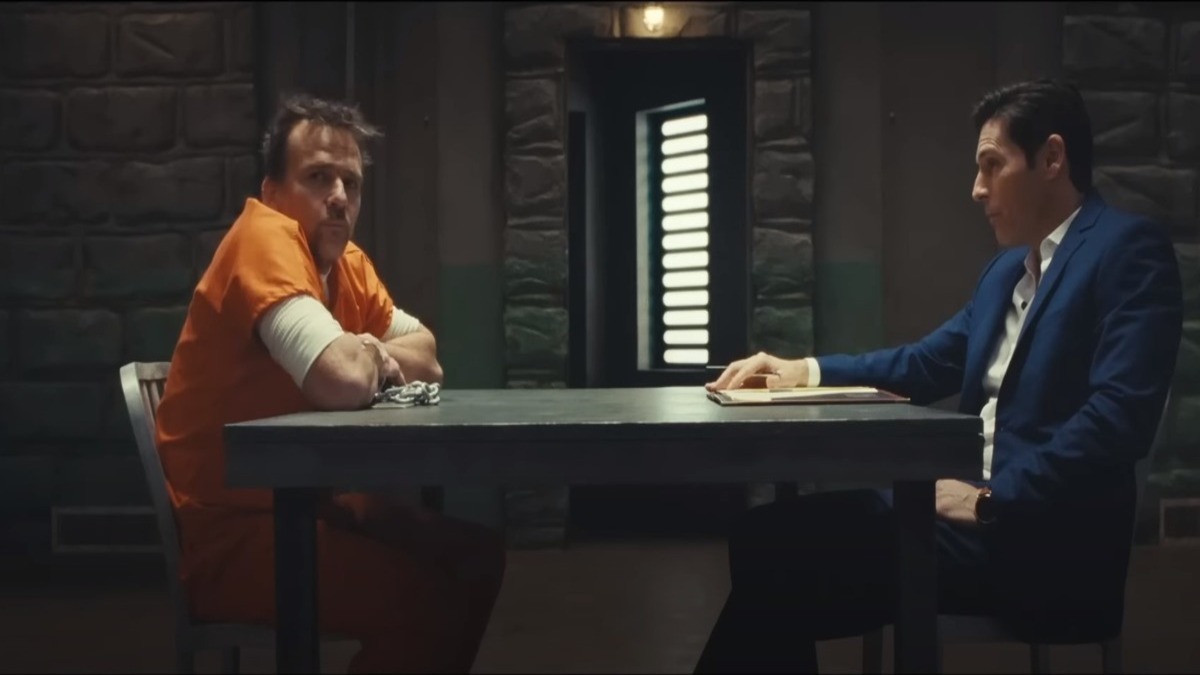
Nefarious, 2023
‘Nefarious’ is a rare horror film worthy of being called art because of its ability to adeptly address truly existential cultural woes.

Author Samuel Mangold-Lenett profile

SAMUEL MANGOLD-LENETT

VISIT ON TWITTER@SMLENETT

MORE ARTICLES

Spoilers. 

Nowadays, it seems like in order to create a successful horror movie that isn’t a sequel in a legacy franchise, filmmakers have to incorporate at least two of the following: gore, vulgarity, and demonic possession. The horror genre drastically over-utilizes guts, gorgons, and naked gals, typically leaving something to be desired from the writing. The genre seems to rely more on eliciting physical responses than contributing to broader cultural discourse. And in this way, horror films are more akin to amusement park rides than they are art.

This is partly why “Nefarious,” a new movie executive produced by conservative commentator Steve Deace and directed by Christian filmmakers Chuck Konzelman and Cary Solomon, is a breath of fresh air — the film actually has substance.

Based on Deace’s best-selling novel “A Nefarious Plot,” the film is set on the scheduled day of execution for convicted serial killer Edward Wayne Brady, who is required by the state of Oklahoma to receive a final psychiatric evaluation before taking a seat on the electric chair. Brady, having “incontrovertible evidence, a confession, a jury of peers, and 11 years of legal wrangling” paving the road for him on death row, may be suffering from a severe mental ailment and, therefore, ineligible for execution. 

Dr. James Martin, the highly accredited psychiatrist tasked with providing Brady with an “impartial review,” approaches the evaluation with the requisite hubris of a highly credentialed millennial. But his preconceived understanding of the situation and his secular worldview prevent him from engaging with the true nature of the reality presented before him. And seeing as how Brady is very explicitly possessed by a demon named “Nefarious,” this makes a dominant theme of the film readily apparent: Evil is all around us, in both the often unnoticed ignorance of modern banality and in glaringly obvious manifestations. 

In explaining the process of demonic possession, Nefarious makes clear it relies on a series of “yeses” in which an individual gradually acclimates himself to the normalization of evil. He says, “We offer up a series of temptations, gradually increasing in terms of duration and intensity, degree of moral inequity.”

The implication is that seemingly small moral infractions like petty theft and religious ambivalence pave the way for greater misdeeds by numbing our hearts and senses to the damaging effects of evil. This concept is further explored in the “three murders” Nefarious tells Martin he will have committed by the time Brady is scheduled for execution.

The twist is that these murders are products of the casual cruelty contemporary society extols as virtues. Thus, Martin wasn’t aware he had already committed two of the three; he was under the impression he was simply living life in the 21st century. Nevertheless, Martin signing off on the euthanasia of his sickly mother — granting her “death with dignity” — and pressuring his girlfriend to abort their child because he isn’t “ready to be a father” are both tacit acts of killing.

When forced to confront his immorality and the evil nature of his actions, Martin recites what may as well be the Nicene Creed of liberalism, protesting, “This is my life. I can live it the way I want.”

Throughout the psychiatric evaluation, Nefarious reveals to Martin that his goal is to spite God by using man’s free will to usher in an era of darkness so his master can become the metaphysical hegemon. Subsequently, “Nefarious” serves as a sort of inversion of the Passion story in which the eponymous demon acts as the “dark messiah.” Nefarious, a dark spiritual being, forcibly inhabits a body that is not his own and uses it to wreak havoc and cause misery. Nefarious also makes clear to Martin that he needs him to commit Brady to death so the demon’s spiritual form may be unleashed to usher in an era of demonic rule; an innocent man must die for the damnation of us all, so the story goes.

It just so happens that after being thoroughly creeped out and violently strangled by Nefarious, Martin is convinced Brady is the one behind everything, is a dangerous madman, and the world would be safer without him in it. Signing off on Brady’s psychiatric evaluation, subsequently indicating he is mentally fit to stand execution, Martin commits his third murder and may or may not have ushered in the end times; we are left to wonder.

What makes “Nefarious” such a fascinating movie is that it uses outlandish means to make heartfelt and relatable pleas about our culture’s spiritual woes. It is undeniable our civilization is currently enduring a crisis of faith, causing people to become rudderless and dependent upon self-actualization and charlatans for deeper meaning.

Too often, we lack the vocabulary to engage in meaningful conversations about this very topic. So, despite it being crucially important, we simply don’t discuss it. But just as often, where words fail, art succeeds, and “Nefarious” is the rare horror film worthy of being called art partly because of its ability to adeptly address truly existential cultural woes.

Nefarious” hits theaters across the country on April 14.


Samuel Mangold-Lenett is a staff editor at The Federalist. His writing has been featured in the Daily Wire, Townhall, The American Spectator, and other outlets. He is a 2022 Claremont Institute Publius Fellow. Follow him on Twitter @Mangold_Lenett.

Tag Cloud