Perspectives; Thoughts; Comments; Opinions; Discussions

Posts tagged ‘Masculinity’

Alexandra York Op-ed: Why Masculine Men Matter


Read more at https://www.newsmax.com/alexandrayork/men-masculinity-feminists/2023/08/01/id/1129229/

a cartoon heart with a handlebar mustache
(Dreamstime)

Alexandra YorkBy Alexandra York | Tuesday, 01 August 2023 11:32 AM EDT

Current | Bio | Archive

In today’s increasingly muddled and manipulated world of sexuality, it may be worthwhile to stand back and ask anew “What is a masculine man?”

Next, we can ask if women need masculine men as protectors, if children need masculine men as a parent, and if men need masculine men as comrades? Finally, we can ask “If so, then why?”

This subject has been approached and analyzed by psychologists, anthropologists, biologists, theologians, and philosophers for centuries, but along with other gender preoccupations like Feminists’ demonization of “toxic” (masculine) men it happens to be a hot emotional subject right now. All the more reason a fresh rational look at the subject in the American-led Western civilizations’ current sex-obsessed context is important. If for no other reason, it is important because innocent girls and boys — the future of the human species — are being thrust into a confusing environment of sexuality before they are mentally or physically developed enough to understand the meaning and consequences of premature awareness and possible actions that can permanently alter their lives in a damaging fashion.
At the outset, we must stipulate that a “masculine” man is not an “Alpha” male who (like primates) establishes physical dominance and territorial dominion over all others under his control. We are addressing humans not animals, and although this analogy between humans and primates has been both promoted and denigrated for decades it can be laid aside as irrelevant. Evolution is significant but does not pertain to the contemporary state of humanity. For present purposes, we also confine ourselves to human males who have passed through childhood and achieved adult physical maturity as men.

Masculinity (as with femininity), however, is not a physical state alone. These terms are used to describe the physical, mental, and behavioral state of human adults, and the descriptions have changed throughout the ages as knowledge and understanding of human nature progresses. Even so, basic physical biological facts are demonstrably and scientifically established beyond all other attributes of males and females.

Finally, we must in no way dismiss validity for any and all individual behavioral preferences or practices by adults. “To each his own” is applicable here as it is with all personal choices in life.

What we can ask at this moment in time is an as-accurate-as-possible-description of a masculine man now. And, once described, does he matter and to whom and why?

We start with aforementioned biology. All males are structured to have more and stronger muscle mass than females; they also have a penetrating sexual organ. This means they can overpower women, children, and vulnerable men, putting themselves in a position of superior physical power over others when and if desired or needed. A masculine man does not use this power unless it is desired for rational reasons (defense) or needed (to assist another valued being). We notice men who seem naturally protective of physically smaller and weaker creatures from women and children to puppies and kittens.

Which brings us immediately to psychology and the values a man may hold that guide him toward defense or assistance, both of which primarily affect masculinity because they require mental judgment. Psychologically, a masculine man will be self-confident in the abilities and fitness of his biological body and mental acuity. He will enjoy the efficaciousness of his achievements as a problem solver and capabilities as a “builder” or “fixer” of things.

Even male toddlers exhibit these traits, demonstrating that they are embedded in the male DNA. Later in development if rational values (principles to guide action consonant with reality) are chosen, he will enjoy taking responsibilities, being dependable and courageous in action, unwavering in integrity, and consistent in reliability. He will stand strongly for personal values but be sensitive to opinions of others. He will enjoy camaraderie with other efficacious (masculine) men as witnessed in sports and on the battlefield because fully developed men need to respect, support, and rely on each other as equals in expertise and mutual loyalty to succeed in their endeavors when there are goals to be reached only by cooperative group action.

He also will be emotionally sensitive and sharing with intimates. Above all, he will be a “protector” of his loved ones, his chosen woman, and his children (if he has them).

Children — both boys and girls — are clearly susceptible both physically and mentally to domination by any male or female adult, and on some visceral level — admitted or not — every female knows she is defenseless against physical assault by men. All need protection. Equally important, he will be a good role model for boys, whether his own sons or those he nurtures as a Scout leader or teacher, trains as a sports coach, or the like. It is a statistical fact that young boys without fathers turn to older boys for guidance, often “bad” older boys who may lead them into drugs or crime.

American Feminists have long attempted to emasculate men in order to dominate them — “toxic” is only the latest derogatory term — just as elites now try to do by promoting notions that some boys may be happier if they mutilate their bodies to become pseudo “women” — easier to dominate.

Adult men, secure in their biologically given and individually achieved masculinity, are needed today more than ever before to stand firm against authoritarian-lustful governmental-social elites who would control not only global resources but also the world’s populace. Women can fight courageously and successfully against oppression, but genuinely masculine men exude a distinctive aura of unrelenting power sensed by all, an inner stability that causes pause on the part of predators. Thus, it is likely that masculine men are needed to lead the fight against wannabe dictators like schoolboard members, doctors, federal-state-local legislators, bureaucrats, and elites who would rob us of liberty and individual agency.

In America’s present cultural malaise, it would seem we need more masculine men in a world where it seems there are fewer.

Alexandra York is an author and founding president of the American Renaissance for the Twenty-first Century (ART) a New-York-City-based nonprofit educational arts and culture foundation. She has written for many publications, including “Reader’s Digest” and The New York Times. She is the author of “Crosspoints A Novel of Choice.” Her most recent book is “Soul Celebrations and Spiritual Snacks.” For more on Alexandra York — Go Here Now.

Posts by Alexandra York

Newsmax Blogs:

© 2023 Newsmax. All rights reserved.
How Rejecting Biblical Masculinity Turns Men From Protectors To Predators


BY: NANCY PEARCEY | APRIL 12, 2023

Read more at https://thefederalist.com/2023/04/12/how-rejecting-biblical-masculinity-turns-men-from-protectors-to-predators/

woman holding toxic masculinity sign at gun protest
Men everywhere seem to experience tension between what they themselves define as good men and the way the surrounding culture pressures them to be real men.

Author Nancy Pearcey profile

NANCY PEARCEY

MORE ARTICLES

The following is an excerpt from Nancy Pearcey’s upcoming book, “The Toxic War on Masculinity: How Christianity Reconciles the Sexes.” 

The report of a mass shooting in a bar in Thousand Oaks, California, in 2018 was more than a news account of a crime. It was also a story about two young men. 

The killer was 28-year-old Ian David Long, a college dropout, divorced former Marine who was unemployed and living with his mother. 

He knew the Borderline Bar and Grill held a weekly college night when it would be crowded with young people. He entered the bar dressed in black, a hood pulled over his head. Tossing smoke grenades into the crowd to create confusion, he drew out a pistol with a laser sight and started shooting. A sergeant from the sheriff’s office rushed over to help, but the shooter was waiting for him. After killing the sergeant and 12 other people, Long shot himself. 

In the crowd that night was another young man, 20-year-old Matt Wennerstrom, who emerged as the hero of the hour. Sporting a backward baseball cap and a scruffy beard, Matt looked like a typical college student. But what he did was not at all typical. 

As soon as shots began booming through the bar, he and about seven other young men grabbed as many people as they could and pushed them under a pool table for cover. Then they piled their own bodies over them to protect them from the hail of gunfire. 

One woman, who was celebrating her 21st birthday at the bar that night, told reporters afterward, “There were multiple men who got on their knees and pretty much blocked all of us with their back toward the shooter, ready to take a bullet for any single one of us.” 

When the shooter paused to reload, Matt and his friends threw bar stools through a back window and began shepherding people outside. Repeatedly, the young men rushed back into the bar to steer more people to safety. 

How did Matt have the presence of mind to respond so quickly to danger?  

When a reporter at the scene of the crime asked that question, the young man replied, “My life is taken care of. I know where I’m going if I die, so I was not worried to sacrifice.” 

Two young men. One used his masculine strength to take lives. The other used his masculine strength to save lives. 

‘Toxic Masculinity’

When the American Psychological Association (APA) issued its first-ever guidelines for counseling men and boys in 2018, it denounced “traditional masculinity ideology” as “psychologically harmful.” Groups like the APA have injected the phrase “toxic masculinity” into the bloodstream of America’s public discourse. The phrase has become a catchall explanation for male sexism, dominance, aggression, and violence. 

Few people are claiming all masculinity is toxic. Yet the message men often hear is that there is something inherently defective in the male character. Many men today feel discouraged, devalued, and demoralized.  

When I told my class at Houston Baptist University that I was writing a book on masculinity, a male student shot back, “What masculinity? It’s been beaten out of us.” When masculinity itself is portrayed as a problem, the implication is that the solution is emasculation. 

“Are men being held hostage by culture war labels and stereotypes that blame them rather than help them?” asks the Christian Science Monitor. In a culture that increasingly blames men, it’s time to find ways to help them instead. 

Because of testosterone, men are typically larger, stronger, and faster than women. In general, they are also more physical, more competitive, and more risk-taking. We need to affirm these God-given traits as good when used to honor and serve others. 

The APA guidelines make a point of noting that most mass shooters are male, but they overlook the controlled power and aggression used by the heroic men who have stopped mass shooters.  

Masculine traits are not intrinsically toxic; they are good when directed to virtuous ends. In a fallen world, the lawful application of coercive force is sometimes necessary to defend the innocent. 

Yet we all know that the male strength that makes a man a protector can be distorted and turn him into a predator. The drive to achieve can become egoism and self-seeking. The leadership impulse can be twisted into an impulse for domination and control. 

In “Play the Man,” Washington, D.C., pastor Mark Batterson says, “The image of God is our original software, sin is the virus.” The challenge is to sort out which definitions of manhood are part of the original software and which are the virus. Which belong to God’s original design and which are products of sin? 

Masculinity: God’s Software or a Sinful Virus? 

We might say there are two competing scripts for what it means to be a man. Sociologist Michael Kimmel highlighted the contrast with an ingenious experiment. He started by asking cadets at West Point what it means to be a good man. If someone delivers a eulogy and says, “He was a good man,” what does that mean?  

The cadets had no trouble answering: “Honor, duty, integrity, sacrifice, do the right thing, stand up for the little guy, be a provider, be a protector.” Be responsible, be generous, and give to others. 

“Where did you learn that?” Kimmel asked. The cadets answered, “It’s everywhere. It’s our culture … it’s the Judeo-Christian heritage. It’s the air we breathe.” Men seem to be innately aware of the software God has coded into the male character. 

Kimmel then asked a follow-up question: “What does it mean if I tell you, ‘Man the f-ck up! Be a real man.’” 

The cadets shouted, “Oh no, that’s completely different.” To be a real man means to be “tough, strong, never show weakness, win at all costs, suck it up, play through pain, be competitive, get rich, get laid.” 

Kimmel has posed the same two questions to thousands of boys and young men in countries across the globe — from single-sex schools in Australia to a police academy in Sweden to former soccer stars at FIFA — and he virtually always gets the same answer.  

Men everywhere seem to experience tension between what they themselves define as the good man and the way the surrounding culture pressures them to be real men. They sense the contradiction between the software and the virus. 

The Good Man vs. the ‘Real’ Man

Borrowing from Kimmel’s experiment, let’s give them labels: the Good Man versus the “Real” Man. 

It’s not that every trait listed as the “Real” Man is necessarily bad. In a crisis, for example, we need men (and women) who can stand tough and not collapse in tears. But that is meant to be a short-term strategy, not a way of life.  

The problem with the stereotype of the “Real” Man is that it is one-sided. When separated from a moral vision of the Good Man, it can easily degenerate into sexism, dominance, entitlement, and contempt for those perceived as weak — traits we can all agree are toxic. 

Of course, men do not respond well to being accused of being toxic — who would? A better course is to ask, “How can we support men in aspiring to live out the ideal of the Good Man?” 

Because men are made in God’s image, even those who are not Christian seem to understand that their unique masculine strengths are not intended to enable them to get whatever they want but to protect those they love — to provide, sacrifice, and, if necessary, fight for them. 

As a result, when Christians promote a biblical moral vision — the Good Man — they are not imposing an alien standard on men. They are encouraging them to follow their own conscience, to be uncompromising in doing what they instinctively know is right.  

As Paul writes in his letter to the Romans, people everywhere “show that the requirements of the law are written on their hearts, their consciences also bearing witness, and their thoughts sometimes accusing them and at other times even defending them” (Romans 2:15). 

Our goal should be to support men in living out their innate sense of the biblical software — God’s original design for manhood.  

In “The War Against Boys,” feminist philosopher Christina Hoff Sommers writes, “History teaches us that masculinity without morality is lethal. But masculinity constrained by morality is powerful and constructive, and a gift to women.” 

But how did there come to be two competing scripts in the first place? Over the course of Western history, society has grown more secular, and so has its concept of masculinity. As a result, men increasingly feel pressure to live by the secular script of the “Real” Man. The most important conversation is not the one between men and women but the one carried out within men’s own heads between these two competing versions of manhood. Ideally, the Good Man should also be the “Real” Man. But in today’s secular culture, the two have become decoupled.  

My goal is to ask how the two scripts were split apart. We will be effective in countering the secular script for men only if we understand where it came from and how it developed. By recognizing that there are two competing scripts, we can cut through many of today’s contentious debates over masculinity. The word “masculinity” has become a trigger word that sets people off in all directions, making it difficult even to discuss the topic objectively.  

But a Christian worldview gives us the means to think critically about cultural trends. It provides a perspective that is “in the world but not of it” (John 17:14–19). 

A transcendent perspective empowers us to rise above the polarization — to push back against both extremes and consider a dispassionate account of the issues facing men today. 


Nancy Pearcey is a professor and scholar in residence at Houston Christian University. She has written several bestselling books, which have been translated into 19 languages. The story of Brandon is adapted from her book “Love Thy Body: Answering Hard Questions about Live and Sexuality.”

Masculinity Isn’t Toxic, Our Erasure of It Is


BY: TRISTAN JUSTICE | JANUARY 17, 2023

Read more at https://thefederalist.com/2023/01/17/masculinity-isnt-toxic-our-erasure-of-it-is/

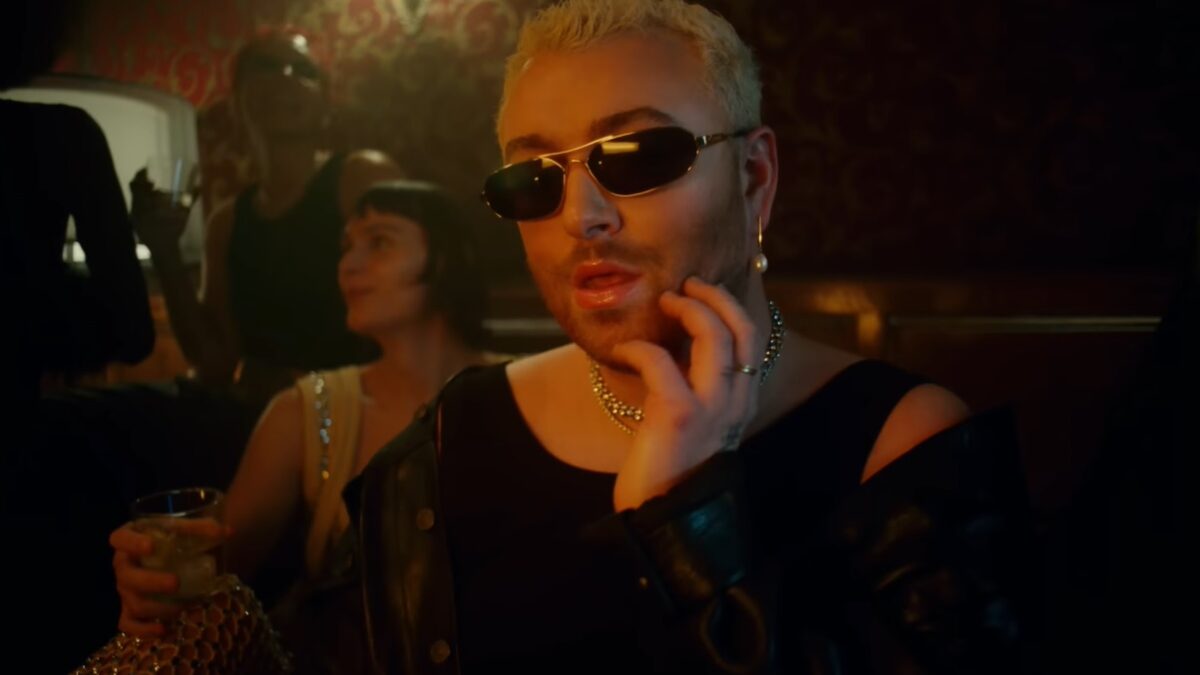
Sam Smith
Those who wrote off masculinity as ‘toxic’ never truly understood the concept.

Author Tristan Justice profile

TRISTAN JUSTICE

VISIT ON TWITTER@JUSTICETRISTAN

MORE ARTICLES

Sam Smith does not look healthy.

Last week, conservative journalist Andy Ngo published screenshots of the singer’s Instagram page. On the left, Smith is seen handsomely seated with his prestigious Oscar. The ensuing photos highlight his attempt to transition into someone who is “non-binary,” or a person who believes he was born a third sex or above the sexes altogether. The logic defies everything we know about human biology down to the binary nature of our chromosomes.

No one seems to know what a woman is these days, but does anyone even remember what a man is? Smith’s progression in Ngo’s photos underscores the erasure of cultural masculinity declared “toxic” by millennials. When you lose sight of what it means to be a man — what it means to look like a man, act like a man, and live like a man — you de facto lose the values that form the foundation of healthy masculinity. But our culture doesn’t even know what a man is.

Around this time last year, my Federalist colleague John Daniel Davidson provided a definition.

“If we’re going to defend manliness as good and virtuous and necessary for a healthy republic, then we need to be clear about what it is and what it is not,” he wrote, continuing:

Yes, men should be physically strong. They should also exemplify traditional masculine virtues like courage, independence, and assertiveness. But why? Not so they can sh-tpost about how ripped or good-looking they are compared to libs, but so they can protect and defend those who are weak.

That is the organizing principle behind the entire concept of manliness: it is not a style or a pose or an adornment. It is a way of being, of living according to the principle that you are responsible for the welfare of others, and should sacrifice yourself for their sake.

What does that mean in practice? It means stepping in to help those in need, whether it’s a woman being harassed or a stranger whose car has broken down. It means risking your own safety to protect someone being attacked, instead of just filming the attack on your phone and posting it online like a beta.

It also means marrying and remaining faithful to the same woman your entire life, and raising a family with her. It means working whatever hours and at whatever job in order to provide for that family. It means going to church every Sunday, whether you feel like it or not, to pass your faith on to your kids. It means getting up in the middle of the night to feed a colicky baby. It means taking your two-year-old daughter to swim class and singing all the songs — your own sense of dignity be damned.

I’m not sure I could write a better definition, amplifying the stoic virtues of physical strength, mental fortitude, and sacrificial living driven by a desire to strengthen the weak and protect the vulnerable.

Where we break is sexuality, and writing as a gay man, I know we don’t see eye to eye on certain fundamental differences. I may never live up to the picture of masculinity Davidson’s worldview prescribes, and I may never have children, but we can agree to disagree like adults. And that’s where the left has gone mad.

Gay men are often allergic to any kind of conversation surrounding masculinity because they’ve been mocked by a class of macho men as “queer,” a slur-turned-term-of-endearment that now qualifies one for the left’s privilege points. True masculinity, however, extends safety for the victims. Those who vilified it never truly understood the concept.

Before Davidson’s column, I’m not sure I remember even thinking critically about manhood — perhaps during a conversation with my father in high school. But beyond that, these discussions seem to have been choked out by a culture eager to dismiss masculinity as universally toxic.

If you question Smith’s regression — the legitimacy of it, the integrity of it, and even the consequences of it — you’re a heretic to the woketopian ruling class that’s hellbent on dictating acceptable speech.

But it isn’t just Smith. There’s a deeper mentally disturbed current pulsing beneath the decline of healthy masculinity and femininity. Consider that nearly 60 percent of people who call themselves “non-binary” report having a mental health issue. And that’s despite both difficulties in diagnosing mental illnesses and the fact that gender dysphoria itself is a mental sickness included in the latest psychiatric manual of mental disorders, meaning the real percentage is far higher.

See for yourself. How is this not a mental illness? Why are we not allowed to call it that? And why on Earth is it unacceptable to ask questions about the twisted state of the sexes?

These people are obviously struggling with a pain that’s very real. Their so-called gender identities might be made up, but their pain undeniably exists. Contrary to parental blackmail by family therapists, data shows gender-confused people are even more likely to commit suicide if they move forward with some kind of transgender transition.

The intolerance of questions surrounding gender dysphoria is baked into the elimination of masculine virtues, which promises peace and coexistence — or the allure of a projected $5 billion surgical industry by the end of the decade. But we need to understand what in the world is going on with men, and we need to be able to ask these questions.

Men today are not working. Their suicide rates are rising as high as their testosterone levels are falling low: While men make up nearly half the population, they represent 80 percent of suicides, and testosterone levels have dropped by double digits since the 1980s.

Men’s low testosterone levels reflect a population that’s not eating right, not exercising right, and not acting on their underlying ambitions. They’re becoming apathetic pot smokers stuck in the pursuit of cheap dopamine hits through Netflix and porn. And these low “T” levels are threatening fertility, which is already on the decline, in the long term, while guaranteeing a generation of fat, lazy men with no hormonal motivation in the short term.

The death of masculinity — its public execution brought about by its supposed toxicity — is the existential crisis nobody’s talking about.

Note: this is the first post in the author’s new conservative newsletter on culture, health, and wellness. If you liked this post and the topics addressed, consider subscribing here.


Tristan Justice is the western correspondent for The Federalist. He has also written for The Washington Examiner and The Daily Signal. His work has also been featured in Real Clear Politics and Fox News. Tristan graduated from George Washington University where he majored in political science and minored in journalism. Follow him on Twitter at @JusticeTristan or contact him at Tristan@thefederalist.com.

Jason Whitlock Op-ed: Dave Portnoy and Andrew Tate are the natural outgrowth of a culture hostile to masculinity


JASON WHITLOCK | August 23, 2022

Read more at https://www.theblaze.com/fearless/oped/whitlock-portnoy-tate-masculinity/

Dave Portnoy and Andrew Tate are the Al Capone and Lucky Lucciano of masculinity prohibition. Portnoy and Tate bootleg moonshine masculinity across the internet. Their wealth and fame are byproducts of America’s misguided masculinity temperance movement.

We’re living in the third wave of masculinity prohibition. Each wave popularizes and enriches a new breed of masculinity bootleggers.

Portnoy, the founder of Barstool Sports, and Tate, a kickboxing champion turned TikTok influencer, are the latest undeserving benefactors of an unholy mission Democrats and feminists devised 60 years ago to demonize manhood. Portnoy built a sports media empire pretending to be a fearless ESPN disruptor standing against the wokefication of sports and American culture. It’s now clear he’s a total fraud and sellout. His lone interests are money and access to barely legal women. He sold Barstool to a gambling company for hundreds of millions of dollars, and now Barstool is every bit as woke as ESPN.

Monday night, Portnoy engaged in a Twitter beef with comedian Alex Stein, a truly fearless internet disruptor. Stein, a contributor to BlazeTV, mocks local and national politicians – of all political parties – with viral videos. Barstool’s Twitter feed posted a hilarious video of Stein trolling members of the Las Vegas City Council. Within hours, Barstool deleted the post. Stein called out Barstool’s cowardice, tweeting:

“It’s so cute that @barstoolsports is owned by Stool Presidente who is accused of the most heinous things, but they are too afraid to keep my content up.”

Portnoy struck his tough-guy pose, responding:

“Buddy shut the fuck up. We are owned by a gambling company. We’ve had roughly 9,000 training sessions not to post shit like this cause regulators don’t like it… Go back to whatever hold you crawled out of.”

Via DM, Portnoy offered to have Stein on a podcast, but quickly changed course.

Portnoy is a fraud. He has no core values. No defined set of beliefs. He has no redeeming qualities other than his wealth. Remove his money, and he wouldn’t have a friend in this world. If we weren’t living in an era completely hostile to masculinity, Portnoy would be broke in Boston delivering pizza. The prohibition of masculinity is what made heroes and millionaires of men like Portnoy and Tate.

Tate is a former contestant on the TV show “Big Brother.” He started something called Hustler’s University on TikTok, posting relationship and life advice to young men. He’s the pornographic version of Kevin Samuels, the now-deceased popular relationship YouTuber.

Masculinity is like air and water. We need it for survival. The world was built by male energy. Thank God, Jesus was masculine. Thank God, men were willing to die in the Revolutionary War, the Civil War, and the World Wars for our freedom.

The demonization of masculinity has caused a shortage and inflated the value of it. The shortage has created a market for impostors and moonshiners.

If ESPN wasn’t hostile to masculinity, there would never have been a market for Portnoy’s brand of masculine sports talk. The out-of-control, believe-all-women #MeToo movement created the market for Andrew Tate.

Alcohol prohibition was bad. Alcohol isn’t a necessity. Masculinity is. The ramifications of the prohibition of masculinity are far worse than the repealed 18th Amendment.

We’ve lowered the standard and behavior for manhood so low that idiots believe puberty blockers and surgery can make men. We’re so desperate we’ll now accept any form of masculinity. It can be profane, stupid, obscene, criminal, and godless.

Let me walk you through a brief history of how we arrived at this level of insanity.

The masculinity temperance movement started in earnest in the 1960s, shortly after it became obvious that Rev. Martin Luther King Jr.’s civil rights movement would deliver full American citizenship to black people. In reaction, feminists partnered with President Lyndon Johnson’s Great Society initiative to emasculate men. White men failed to strongly object to this diabolical partnership because they mistakenly believed feminists and Democrats planned to only castrate black men.

The first wave of this prohibition primarily damaged black men, particularly black men of faith. The first wave spawned celebrity poverty pimps such as Jesse Jackson and Al Sharpton, the Milli Vanilli of civil rights. They pretended to be fearless freedom fighters while doing the bidding of feminists, Democrats, and the LGBT crowd.

The second wave of this prohibition popularized gangsta rappers. Tupac Shakur, Snoop Dogg, Jay Z, and N.W.A. pretended to speak truth to power while promoting degerancy, criminality, drug use, materialism, and hedonism.

The third wave has brought us Portnoy and Tate. Internet bullies posing as masculine men. Their success has spawned imitators. The next iteration will be worse.

DUMBEST VIDEO EVER: “Be A Man” Is The Worst Thing You Could Say to a Boy


http://clashdaily.com/2014/01/dumbest-video-ever-man-worse-thing-say-boy/#iWUY4LExUmjwg0kx.99

By / 7 January 2014

 Be a Man

According to this video, the worst thing you can say to a boy is to “be a man”.

Tag Cloud