Read more at https://thefederalist.com/2022/09/02/5-times-the-anti-trump-fbis-trust-us-promise-fell-apart/

MARGOT CLEVELAND
VISIT ON TWITTER@PROFMJCLEVELAND
MORE ARTICLES
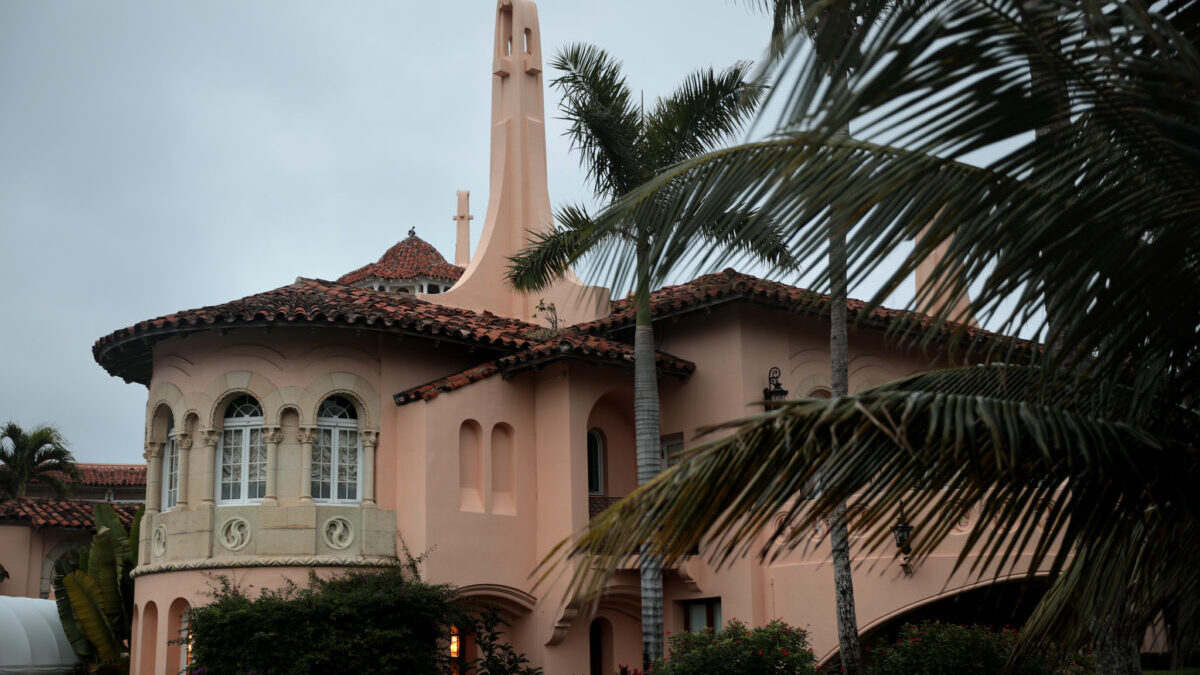
The Biden administration and the corporate media continue to assure Americans that the FBI’s raid on former president Donald Trump’s Mar-a-Lago home was both legally justified and of the utmost necessity. But the deep-state cabal and the leftist media cartel provided similar assurances about Crossfire Hurricane and Special Counsel Robert Mueller’s targeting of Trump, with the assurances later proving worthless.
Here are five times SpyGate taught Americans to distrust and disprove accusations leveled at Donald Trump.
1. Devin Nunes’ Memo Exposing FISA Abuse
On February 2, 2018, the House Intelligence Committee, then-chaired by Republican Rep. Devin Nunes, released a four-page memo detailing abuses of the Foreign Intelligence Surveillance Act by the FBI.
Before the memo’s release, the FBI publicly opposed the move, claiming in a public statement that the bureau had “grave concerns about material omissions of fact that fundamentally impact the memo’s accuracy.” Justice Department officials likewise opposed releasing the memo, warning that “doing so would be ‘extraordinarily reckless.’”
The then-ranking Democrat on the House Intelligence Committee, Adam Schiff, also sought to scuttle the release of the memo — or at least preempt the detailed revelations of FISA abuse — by calling the memo a “conspiracy theory” in an op-ed for The Washington Post. In it, Schiff condemned the release, saying the memo was “designed to suggest that ‘a cabal of senior officials within the FBI and the Justice Department were so tainted by bias against President Trump that they irredeemably poisoned the investigation.’”
Nancy Pelosi, who is now speaker of the House, likewise attacked Nunes, demanding in a letter to then-House Speaker Paul Ryan that Nunes be removed as Intelligence Committee chairman. Nunes “disgraced” the committee with his “dishonest” handling of the committee’s review of the Russia collusion problem, Pelosi wrote. Nunes’ committee, Pelosi claimed, had become a “charade” and a “coverup campaign … to hide the truth about the Trump-Russia scandal.”
In response to the Nunes memo, former FBI Director James Comey told the country the memo was “dishonest and misleading.” Comey further claimed it “wrecked the House intel committee, destroyed trust with Intelligence Community, damaged relationship with FISA court, and inexcusably exposed classified investigation of an American citizen.”
Former CIA Director John Brennan also attacked Nunes, calling his exposure of the FISA abuse “appalling” and an abuse of his chairmanship of the House Intelligence Committee.
Of course, years later, Nunes was proven correct, as the inspector general’s report confirmed, establishing that the Republican House Intelligence chair had, if anything, understated the FISA abuse.
For all the assurances the DOJ, FBI, their former leaders, and top politicians provided the American public, they were either lying or wrong — or both because there was “a cabal of senior officials within the FBI and the Justice Department … so tainted by bias against President Trump that they irredeemably poisoned the investigation.”
2. Surveillance Warrants Are Hard to Get
In addition to wrongly condemning Nunes’ memo, government officials attempted to calm concerns over the FISA surveillance by assuring the public that the process of obtaining a surveillance warrant was “rigorous” and that to obtain surveillance of American citizens, a court must find “probable cause” that warrants the wiretap.
Adm. Michael Rogers, then a commander of United States Cyber Command, testified about the FISA process during a March 2017 congressional hearing. In response to a question posed to eliminate “confusion in the public” about the collection of personal data, Rogers confirmed that the National Security Agency “would need a court order based on probable cause to conduct electronic surveillance on a U.S. person inside the United States.”
During the same hearing, the then-recently fired former FBI Director Comey expanded on the surveillance process. “There is a statutory framework in the United States under which courts grant permission for electronic surveillance either in a criminal case or the national security case based on the showing of probable cause,” Comey testified before Congress. “It is a rigorous, rigorous process, involving all three branches of government,” the former FBI director stressed, noting it must go through an application process and then to a judge who must approve the order.
The IG report on FISA abuse proved the promised rigor didn’t exist. And the later conviction of Kevin Clinesmith for “falsifying a document that was the basis for a surveillance warrant against former Trump campaign official Carter Page,” punctuated that reality. The facts revealed in the IG report further established that Americans’ faith in the FISA Court to serve as a check on the government was misplaced, with the judges serving as but a rubberstamp of the DOJ’s surveillance applications. So much for those assurances.
3. Don’t Worry, ’Merica, No Spying on Trump Took Place
A third assurance Americans received from the powers-that-be was that no spying on the Trump campaign occurred. The inspector general’s report on FISA abuse disproved those reassurances as well, revealing that the “Obama Administration Spied on the Trump Campaign Big Time.”
This reality pushed Russia-collusion hoaxers into esoteric discussions on the true meaning of “spying.” Even the United States Senate played the “it depends what the meaning of spying is” game, with New Hampshire Democrat Sen. Jeanne Shaheen quizzing FBI Director Christopher Wray on whether he would agree with then-Attorney General William Barr’s use of the word “spying.”
“I was very concerned by his use of the word spying, which I think is a loaded word,” Shaheen bemoaned. “When FBI agents conduct investigations against alleged mobsters, suspected terrorists, other criminals, do you believe they’re engaging in spying when they’re following FBI investigative policies and procedures?” the senator asked Wray.
“That’s not the term I would use,” Wray replied, before noting that different people use different colloquialisms.
The discussion did not end there, however, with Shaheen pushing Wray on whether he had seen “any evidence that any illegal surveillance into the campaigns or the individuals associated with the campaigns by the FBI occurred.”
“I don’t think I personally have any evidence of that sort,” Wray replied.
But even sidestepping the silly debate over what “spying” means, the guarantee Shaheen provided the American public — that no illegal surveillance into the Trump campaign or individuals associated with the Trump campaign had occurred — proved worthless.
The Department of Justice has since admitted that it illegally surveilled former Trump campaign adviser Carter Page and that such surveillance reached Trump campaign documents. So, yes, our federal government illegally surveilled the campaign of a presidential candidate.
4. Redactions Are Necessary to Protect Sources and Methods
A fourth key commitment conveyed to Americans throughout the multi-year unraveling of the Russia collusion hoax concerned the need to redact details in the publicly released documents. Such redactions were necessary to protect sources and methods, our overlords assured us.
For instance, in a December 9, 2019 press release Wray issued in conjunction with the DOJ’s inspector general’s report on FISA abuse, Wray “emphasized that the FBI’s participation in this process was undertaken with my express direction to be as transparent as possible, while honoring our duty to protect sources and methods that, if disclosed, might make Americans less safe.” Wray further promised that the FISA abuse report presented all material facts, “with redactions carefully limited and narrowly tailored to specific national security and operational concerns.”
Republican Sens. Ron Johnson and Chuck Grassley challenged that portrayal of the redactions, suggesting in a letter to then-Attorney General William Barr that several footnotes “were classified in the IG report only because they contradict certain claims made in the public version of the inspector general’s report on FISA warrants documenting misconduct in the FBI’s spying operation of the Trump campaign.”
“We are concerned that certain sections of the public version of the report are misleading because they are contradicted by relevant and probative classified information redacted in four footnotes,” Grassley and Johnson wrote. “This classified information is significant not only because it contradicts key statements in a section of the report, but also because it provides insight essential for an accurate evaluation of the entire investigation.”
The Republican senators then asked for the four footnotes to be declassified, stressing that “the American people have a right to know what is contained within these four footnotes and, without that knowledge, they will not have a full picture as to what happened during the Crossfire Hurricane investigation.”
In April of 2020, Acting Director of National Intelligence Richard Grenell declassified the footnotes. And, as Grassley and Johnson had represented, the redactions weren’t necessary to protect “sources and methods.” Rather, the blacked-out lines were essential to distorting portions of the FISA report and to keeping the public in the dark about the full scope of the Spygate scandal.
Another document declassified by Grenell exposed that Mueller’s team falsely represented to a federal judge (and the American public) the substance of Michael Flynn’s December 2016 telephone conversation with then-Russian Ambassador Sergey Kislyak.
As I reported following Grenell’s declassification of the transcript of the call between Flynn, Trump’s then-incoming national security adviser, and Kislyak, Mueller’s office deceived the country and a federal court when prosecutors claimed Flynn had discussed U.S. sanctions with his Russian counterpart. The transcripts established that, contrary to court filings, Flynn never raised the issue of sanctions with the Russian ambassador.
The release of the Flynn transcript did reveal, however, the FBI’s secret “sources and methods” — but the sources and methods were those of deep-state actors seeking to rid themselves of the president’s chosen national security adviser by launching a perjury trap and then lying about what Flynn said.
5. Crossfire Hurricane Was Properly Predicated
To this day, both DOJ’s Inspector General Michael Horowitz and Wray maintain that the FBI’s launch of the Crossfire Hurricane investigation was properly predicated. Publicly released FBI documents say otherwise.
Former FBI agent Peter Strzok explained the supposed predicate for launching Crossfire Hurricane on July 31, 2016, in the opening “Electronic Communication” that he both prepared and approved. According to Strzok, the FBI opened the umbrella investigation into the Trump campaign after the government had “received information” “related to the hacking of the Democratic National Committee’s website/server.”
But Strzok’s summary of the information received made no mention of any intel obtained by the FBI related to the DNC hacking. Rather, the supposed intel “consisted of information received from an unnamed representative, now publicly known to be Alexander Downer, a then-Australian diplomat” stationed in London. The opening memorandum explained that Downer had relayed “statements Mr. [George] Papadopoulos made about suggestions from the Russians that they (the Russians) could assist the Trump campaign with the anonymous release of information during the campaign that would be damaging to Hillary Clinton.”
The opening document then asserted that Papadopoulos “also suggested the Trump team had received some kind of suggestion from Russia that it could assist this process with the anonymous release of information during the campaign that would be damaging to Mrs. Clinton (and President Obama.).” The electronic communication added a caveat, though, noting that it was unclear whether Papadopoulos “or the Russians were referring to material acquired publicly of [sic] through other means. It was also unclear how Mr. Trump’s team reacted to the offer.”
Thus, while Strzok framed the information received by the FBI as evidence “related to the hacking of the Democratic National Committee’s website/server,” the remainder of the Electronic Communication contradicted that claim and in fact acknowledged that the material might refer to “publicly acquired” information.
What the FBI did — or rather didn’t do — after the launch of Crossfire Hurricane further confirms the sham predicate set forth by Strzok in the Electronic Communication.
While Papadopoulos’s statements to Downer supposedly prompted the FBI to open the Crossfire Hurricane investigation, agents failed to question Papadopoulos for six months. The FBI also put little (or no) effort into determining who purportedly told Papadopoulos that the Russians had dirt on Hillary. The supposed source of that statement, Joseph Mifsud, could have been easily located soon after the launch of Crossfire Hurricane if the FBI genuinely believed Russia had conspired with the Trump campaign to hack and release the DNC emails.
Agents pursuing a legitimate investigation “would have immediately scoured Papadopoulos’s London-based connections and discovered he was associated with the London Centre of International Law Practice around the time he met with Downer. From there, the FBI could have easily fingered Mifsud as a possible source for the information, since he was listed as a board advisor and public source searches would show Mifsud had connections to Russia. (The intelligence community would have also hit on Mifsud’s many connections to Western intelligence agencies.)”
But the FBI did none of this, waiting instead until late January 2017 to quiz Papadopoulos on the source of the supposed inside information coming from Russia. Yet, Wray and the DOJ’s inspector general want Americans to trust them when they say that agents launched Crossfire Hurricane based on Papadopoulos’s London chat with Downer over drinks.
Special Counsel John Durham, however, says otherwise, having released a statement following the DOJ’s report on FISA abuse that informed the public that, “based on the evidence collected to date,” his team had “advised the Inspector General that we do not agree with some of the report’s conclusions as to predication and how the FBI case was opened.”
The special counsel’s public statements prove significant for two reasons. First, Durham’s comments refute the inspector general’s conclusions regarding the predication of Crossfire Hurricane. But beyond that, the fact that Durham needed to correct the record shows the lack of trust due the DOJ and even the inspector general’s office — something further confirmed during the special counsel’s prosecution of former Clinton campaign attorney Michael Sussmann.
Each of these five falsehoods peddled by the government to the public during the Russia collusion hoax has a clear corollary in the current scandal involving the FBI’s raid on Trump’s Mar-a-Lago home. And after the lies, pretext, and political warfare exposed during the unraveling of SpyGate, the DOJ and FBI’s current entreat to an angry public to “trust them” will be ignored — as it should.
Margot Cleveland is The Federalist’s senior legal correspondent. She is also a contributor to National Review Online, the Washington Examiner, Aleteia, and Townhall.com, and has been published in the Wall Street Journal and USA Today. Cleveland is a lawyer and a graduate of the Notre Dame Law School, where she earned the Hoynes Prize—the law school’s highest honor. She later served for nearly 25 years as a permanent law clerk for a federal appellate judge on the Seventh Circuit Court of Appeals. Cleveland is a former full-time university faculty member and now teaches as an adjunct from time to time. As a stay-at-home homeschooling mom of a young son with cystic fibrosis, Cleveland frequently writes on cultural issues related to parenting and special-needs children. Cleveland is on Twitter at @ProfMJCleveland. The views expressed here are those of Cleveland in her private capacity.













 What Did You Say?
You must be logged in to post a comment.