Perspectives; Thoughts; Comments; Opinions; Discussions

Posts tagged ‘Justice Ketanji Brown Jackson’

Judge Jackson’s ‘chilling’ First Amendment comments leave Jonathan Turley ‘very concerned’


By Fox News Staff Fox News | Published March 20, 2024 2:00pm EDT

Read more at https://www.foxnews.com/media/judge-jackson-chilling-first-amendment-comments-leave-jonathan-turley-concerned

Fox News contributor Jonathan Turley discusses the latest in Fulton County D.A. Fani Willis’ misconduct investigation and unpacks key Supreme Court cases.

In a big week for the Supreme Court, justices heard several cases relating to the First Amendment. Arguments from one case relating to government censorship sparked viral backlash after Justice Ketanji Brown Jackson appeared to suggest government collusion with social media companies could be justified. On “America’s Newsroom” on Wednesday, Fox News contributor and constitutional scholar Jonathan Turley outlined his concern over the “chilling” remarks from Justice Jackson. 

JUSTICE JACKSON LAMBASTED FOR ‘CONCERN’ 1ST AMENDMENT COULD ‘HAMSTRING GOVERNMENT’ IN COVID CENSORSHIP HEARING

JONATHAN TURLEY: There are indeed important First Amendment cases here. As someone associated with the free speech community, we’re all on edge. It was chilling in the social media case to hear justices like Jackson repeatedly say, what’s the problem with the government coercing speech? Why shouldn’t they, when there are really troubling periods … like in the pandemic. And many of us were really sort of agape at that, because much of what the government did on censorship was wrong. Many things that they were censoring, by scientists who were fired and disciplined and barred from social media, in some cases. They were vindicated, ultimately, on things like the origin of the virus [in a Chinese lab], showing that it’s not just a possibility, many consider it the leading possibility. Closing of schools. They were vindicated on many of those things. And yet you had Jackson saying, I don’t see why the government can’t coerce social media. So, we’re all very concerned where the government will land there.
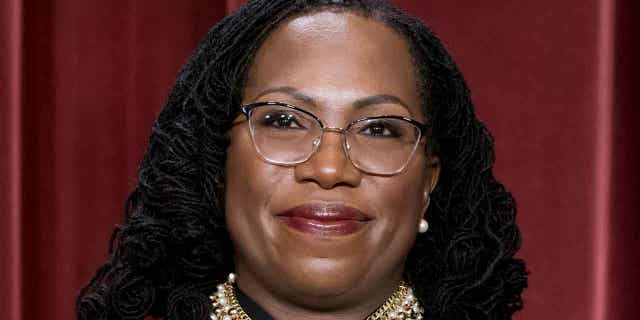
Supreme Court Justice Ketanji Brown Jackson
Supreme Court Justice Ketanji Brown Jackson, who was unable to define the word “woman” when asked at her confirmation hearing last year, is now under scrutiny for her dissent in a landmark decision rejecting affirmative action. (Tom Williams/CQ-Roll Call, Inc via Getty Images)

The Supreme Court heard Murthy v. Missouri on Monday, a case challenging the Biden administration’s alleged coordination with Big Tech to censor certain messages. The case stemmed from a lawsuit brought by Republican-led states Missouri and Louisiana that accused high-ranking government officials of working with social media companies “under the guise of combating misinformation” that ultimately led to censoring speech on topics that included Hunter Biden’s laptop, COVID-19 origins and the efficacy of face masks — which the states argued was a First Amendment violation.

As the justices questioned whether the Biden administration crossed the constitutional line, Justice Brown Jackson appeared to suggest that such actions can be justified.

“My biggest concern is that your view has the First Amendment hamstringing the federal government in significant ways in the most important time periods,” she told the lawyer representing Louisiana, Missouri and private plaintiffs. 

JUSTICE JACKSON RIPPED FOR WORRYING ABOUT THE FIRST AMENDMENT ‘HAMSTRINGING’ GOVERNMENT: ‘LITERALLY THE POINT’

“And so I guess some might say that the government actually has a duty to take steps to protect the citizens of this country, and you seem to be suggesting that that duty cannot manifest itself in the government encouraging or even pressuring platforms to take down harmful information,” she continued.

“So, can you help me? Because I’m really — I’m really worried about that because you’ve got the First Amendment operating in an environment of threatening circumstances from the government’s perspective, and you’re saying that the government can’t interact with the source of those problems,” Jackson added.

Her comments quickly went viral with dozens of people insisting that “hamstringing the federal government” is “literally the point” of the First Amendment.

Fox News’ Lindsey Kornick and Alexa Moutevelis contributed to this report.

Video

This article was written by Fox News staff.

Op-ed: Some Supreme Court Justices Have a Slippery Handle on Facts


COMMENTARY BY Jonathan Butcher@JM_Butcher / July 17, 2023

Read more at https://www.dailysignal.com/2023/07/17/some-supreme-court-justices-have-slippery-handle-facts/

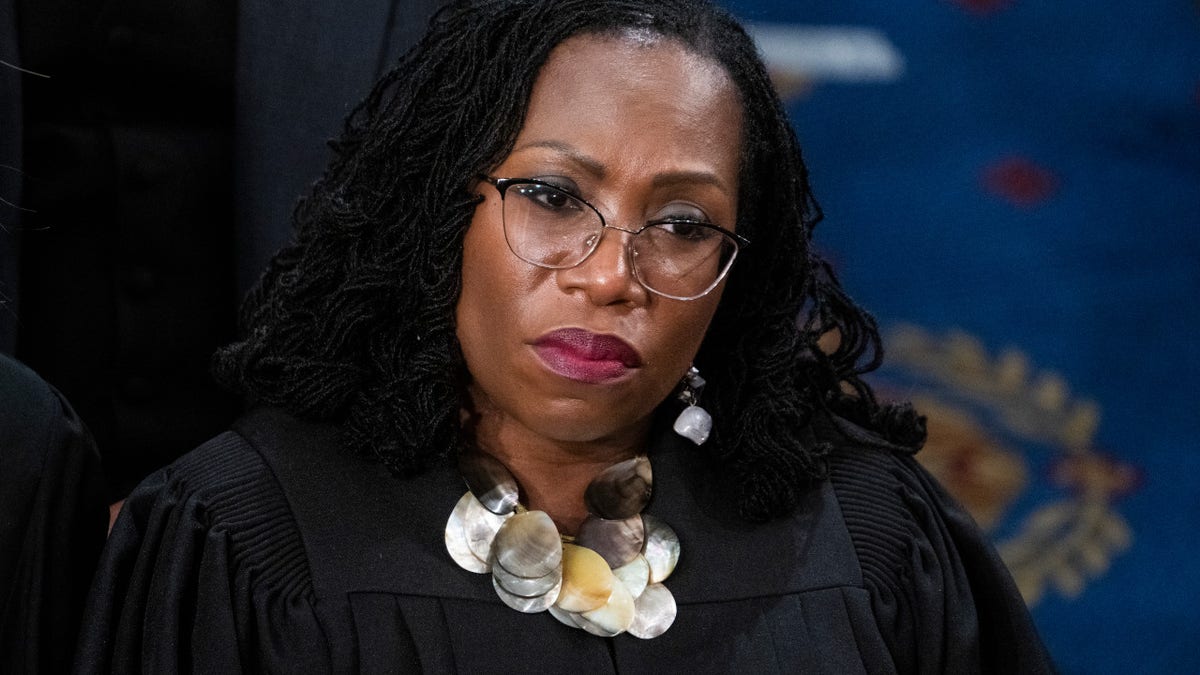
Justice Ketanji Brown Jackson
When Supreme Court justices get basic facts wrong in their opinions, are they bending the facts to fit their arguments? Look at the case of two liberal justices’ dissents when the court struck down racial preferences in college admissions. Pictured: Supreme Court Justice Ketanji Brown Jackson attends the State of the Union address in the House Chamber of the U.S. Capitol on February 7, 2023. (Photo: Tom Williams, CQ-Roll Call, Inc/Getty Images)

The U.S. Supreme Court is finished for the term, but questions about accuracy should follow some justices into the next session in October. For example: Was Justice Sonia Sotomayor correct in her description of a key historical event in a recent dissenting opinion—or did she obscure details to suit her purposes? And with the revelation that her colleague, Justice Ketanji Brown Jackson, incorrectly cited research findings in a dissent, Americans are right to ask whether the justices bend facts to fit their arguments.

In Students for Fair Admissions v. Harvard and Students for Fair Admissions v. University of North Carolina, Sotomayor disagreed with the majority and argued in favor of college administrators’ use of racial preferences in college admissions. As part of her dissent, she wrote that 18th-century lawmakers “accorded Southern States additional electoral power by counting three-fifths of their enslaved population in apportioning congressional seats.”

This “three-fifths compromise” and the Founding Fathers’ intentions in adopting it have been the subject of much misinterpretation over the years. Sotomayor’s interpretation is that the representatives at the Constitutional Convention in Philadelphia designated slaves as three-fifths of a person because they saw them as less than people, which would undermine the abolitionist leanings among the Founders.

Yet history does not support this position, and while there were consequences to the three-fifths clause that both abolitionists and supporters of slavery did not intend, the evidence is clear: The three-fifths language acknowledged that slaves were people, not property, in the Constitution, and the clause reduced the count of each slave-supporting state’s population and limited their representation in Congress.

The clause (repealed by the 14th Amendment to the Constitution in 1868) read:

Representatives and direct Taxes shall be apportioned among the several States which may be included within this Union, according to their respective Numbers, which shall be determined by adding to the whole Number of free Persons, including those bound to Service for a Term of Years, and excluding Indians not taxed, three fifths of all other Persons.

Historian Sean Wilentz explains the significance of the language in “No Property in Man,” writing that “the compromise did not secure to the slaveholding states anything close to impregnable control over slavery.” Wilentz says that the Founders’ inclusion of the term “persons” helped block efforts by slaveowners to enshrine the concept of “property in man” in our Constitution. He says a competing proposal to make the clause the whole number of “all other persons” would have given Southern states significantly more representation in the House of Representatives. Wilentz says,

In South Carolina, for example, enslaved persons, according to the 1790 census, accounted for 43% of the total population. By that figure, under the three-fifths formula, the state’s representation was entitled to be 43.4% greater than it would have been had slaves not been counted at all. Under Butler and Pinckney’s formula [granting “whole representation”], it would have been 72.4% greater—enough for the state to expect at least another seat or two in the House.

Other historians agree. Erik M. Jensen from Case Western Reserve Law School says, “Among other things, counting slaves provided an incentive to import still more slaves.” The compromise deemed that slaves were people and limited slaveowners’ use of slaves for political power—both crucial steps in advancing abolition.

Northwestern University law professor John O. McGinnis argues that the compromise was not purely an abolitionist effort, but evidence still supports the position that the three-fifths compromise “was likely one of the compromises needed to create the union, which likely ended slavery faster than the plausible alternatives.”

Additionally, Justice Jackson faced criticism recently for improperly citing a statistic in her dissent in the University of North Carolina opinion (though the two cases were combined, Jackson recused herself from the Harvard opinion). Jackson referenced a supposed finding regarding black infant mortality rates that is “mathematically impossible,” wrote Ted Frank of the Hamilton Lincoln Law Institute in a Wall Street Journal editorial. Frank said the statistic did not even appear in the original study.

The court’s majority opinion in this case is a vital piece of jurisprudence of historical significance that reinforces civil rights law. Meanwhile, the dissenting justice’s opinions contain arguments that will only wither with time and scrutiny.

ABOUT THE COMMENTATOR:
Jonathan Butcher is the Will Skillman fellow in education at The Heritage Foundation and the author of “Splintered: Critical Race Theory and the Progressive War on Truth” (Post Hill Press/Bombardier Books, 2022).

Ketanji Brown Jackson made ‘mathematically absurd claim’ on Black newborns: WSJ op-ed


Supreme Court Justice argued affirmative action ‘saves lives’

Hanna Panreck

By Hanna Panreck | Fox News | Published July 6, 2023 1:46pm EDT

Read more at https://www.foxnews.com/media/kentanji-brown-jackson-made-mathematically-absurd-claim-black-newborns-wsj-op-ed

Supreme Court Justice Ketanji Brown Jackson made a “mathematically absurd claim” about Black newborns in her dissenting opinion in the affirmative action decision, attorney Ted Frank wrote in a Wednesday Wall Street Journal op-ed. 

Jackson argued in her dissent that diversity “saves lives” and that it was essential for “marginalized communities.”

“It saves lives. For marginalized communities in North Carolina, it is critically important that UNC and other area institutions produce highly educated professionals of color. Research shows that Black physicians are more likely to accurately assess Black patients’ pain tolerance and treat them accordingly (including, for example, prescribing them appropriate amounts of pain medication). For high-risk Black newborns, having a Black physician more than doubles the likelihood that the baby will live, and not die,” she wrote.

Frank responded to the argument in his Journal opinion piece: “A moment’s thought should be enough to realize that this claim is wildly implausible. Imagine if 40% of black newborns died—thousands of dead infants every week. But even so, that’s a 60% survival rate, which is mathematically impossible to double. And the actual survival rate is over 99%.” 

Ketanji Brown Jackson
Justice Ketanji Brown Jackson argued in her dissenting opinion to the Supreme Court’s affirmative action ruling that promoting diversity “saves lives.” (AP Photo/J. Scott Applewhite, File )

Frank, a senior attorney at Hamilton Lincoln Law Institute, filed an amicus brief in support of the petitioners in SFFA v. Harvard, according to the WSJ.

“How could Justice Jackson make such an innumerate mistake?” he wrote. 

Frank wrote that Jackson’s claim came from a 2020 study, according to a footnote in the dissent, but added that the study didn’t match Jackson’s claim. 

“The study makes no such claims. It examines mortality rates in Florida newborns between 1992 and 2015 and shows a 0.13% to 0.2% improvement in survival rates for black newborns with black pediatricians (though no statistically significant improvement for black obstetricians),” he said. 

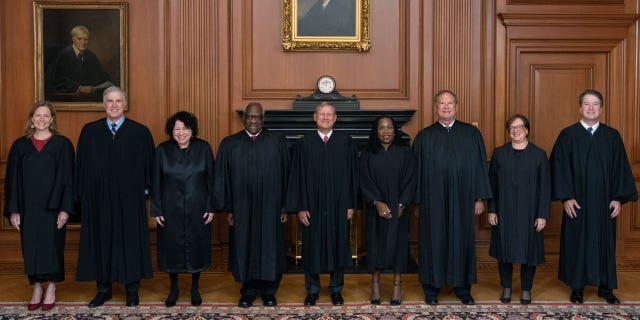
Supreme Court members
The Supreme Court struck down affirmative action in a landmark 6-3 ruling on June 29. (Collection of the Supreme Court of the United States via Getty Images)

The Supreme Court rejected the use of race as a factor in college admissions at the end of June, citing a violation of the 14th amendment. In a 6-3 decision, Chief Justice John Roberts wrote in the majority opinion that, “A benefit to a student who overcame racial discrim­ination, for example, must be tied to that student’s courage and determination.”

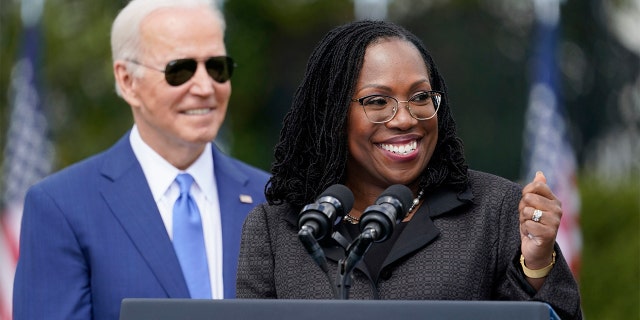
President Joe Biden Judge Ketanji Brown Jackson
President Biden nominated Jackson to the high court in 2022 and the first Black female Supreme Court Justice began her first term last October.  (AP Photo/Andrew Harnik)

Frank said the study cited in Jackson’s dissent was “flawed.”

“So, we have a Supreme Court justice parroting a mathematically absurd claim coming from an interested party’s mischaracterization of a flawed study. Her opinion then urges ‘all of us’ to ‘do what evidence and experts tell us is required to level the playing field and march forward together.’ Instead we should watch where we’re going,” Frank continued. 

Hanna Panreck is an associate editor at Fox News.

Tag Cloud