
Perspectives; Thoughts; Comments; Opinions; Discussions

Posts tagged ‘John Thune’

The SAVE Act Could Hit Filibuster Wall In New Republican-Led Senate


By: M.D. Kittle | November 19, 2024

Read more at https://thefederalist.com/2024/11/19/the-save-act-could-hit-filibuster-wall-in-new-republican-led-senate/
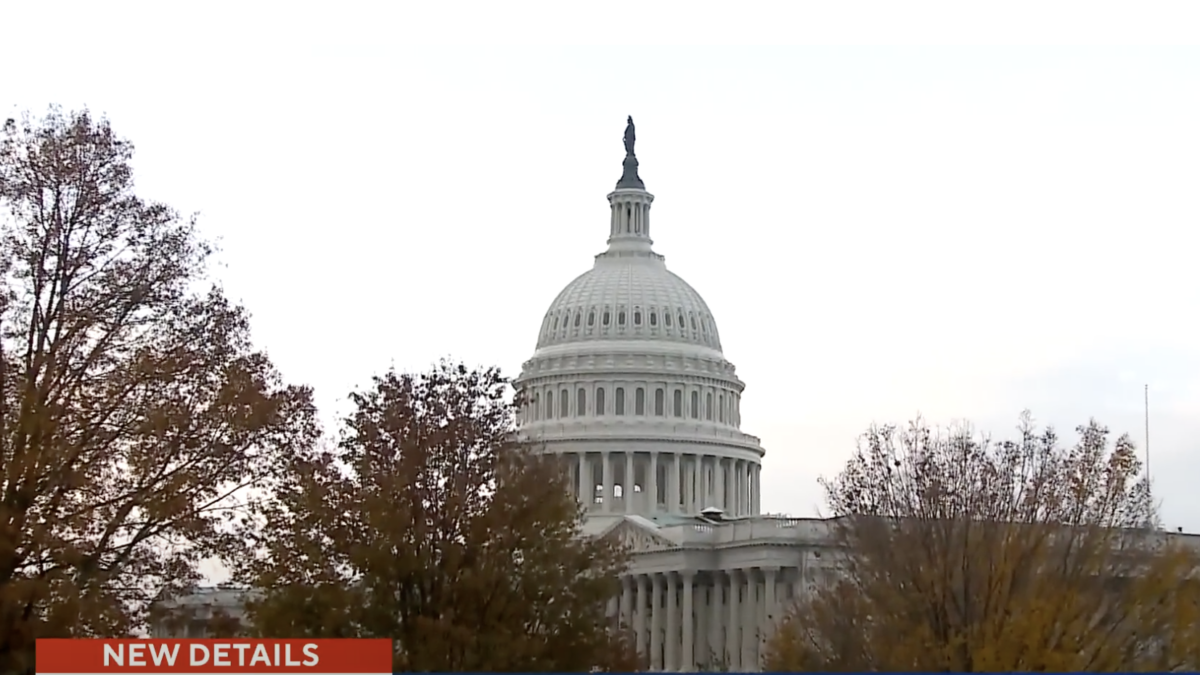

View of the U.S. Capitol Building in November.
‘The Democrats are not into compromising on issues that will cost them power,’ Rep. Glenn Grothman said of the election integrity bill.

Author M.D. Kittle profile

M.D. Kittle

More Articles

Having clinched the federal government trifecta, Republicans have the opportunity in the next Congress to move through legislation they could only have dreamed of over the past six years. Will they squander this golden opportunity to pass conservative reforms?

In particular, can the SAVE Act, a key election integrity measure, be saved from the Senate filibuster? Perhaps, but there’s disagreement even among members of Wisconsin’s GOP congressional delegation on the fate of the Safeguard American Voter Eligibility (SAVE) Act in the upcoming session. The bill requires individuals to show documentary proof of U.S. citizenship in federal elections, as it directs states to remove noncitizens from their voter rolls. The measure passed the Republican-controlled House in July along party lines, with a scant five Democrats voting for it. Dems insisted that the protections are unnecessary because it’s already illegal for foreign nationals to vote in elections. But current law is nothing more than an honor system without the ability to require proof of citizenship at the point of registration. 

As The Federalist has reported, thousands of illegal immigrants and other foreign nationals have shown up on voter lists across the country. 

The SAVE Act has languished in a Senate that had no interest in ensuring only U.S. citizens vote in elections.  Attached to a stopgap government spending proposal in September, the bill died a miserable death in the House. 

But Nov. 5, 2024, delivered a red wave, a sea change election that will put former President Donald Trump back in the White House, place Republicans back in control of the Senate, and allow the Grand Old Party to keep its majority in the House. Expectations are high — as they were in 2017 and 2018 when Republicans also held the trifecta with Trump in charge of the executive branch — that conservatives will be able to push through an array of government reforms. 

Not so fast, some say. 

‘Tool to Defend’

“Any election law is going to be tough in the Senate,” Rep. Glenn Grothman, told me Monday on the “Vicki McKenna Show” in Milwaukee. Grothman, who represents Wisconsin’s 6th Congressional District, said the filibuster, requiring 60 votes in the Senate to pass most legislation, will make it nearly impossible to get the SAVE Act, border security, and other bills through the august upper house. 

It would seem there isn’t much appetite for ditching the filibuster, especially in a Senate run by newly elected Majority Leader John Thune, R-S.D., a longtime protege of Senate Republican Leader and 60-vote threshold defender Mitch McConnell. Fellow McConnell stooge Texas Sen. John Cornyn recently told NBC News that there’s “unanimity” among Senate Republicans on preserving the filibuster — even if President-elect Trump again calls for senators to dump it. 

“Senators have a tendency to defend their power, just like everybody else does. I don’t know a lot of wimps in the United States Senate,” Sen. Kevin Cramer, R-N.D., told the news outlet. “I think we’ve all lived through the possibility of losing the filibuster as a tool to defend. And I would be surprised if there were enough Republicans who thought that we should change it now.”

‘On the Other Foot’

When Democrats controlled Congress and the White House, they pushed to bypass the filibuster to pass an election integrity nightmare “voting rights act,” but couldn’t quite get the 60 votes needed to suspend the rule. That was in January 2022, just days before Dems turned over control of the House to Republicans and saw their majority in the Senate diminished to a slim 51 seats. McConnell congratulated renegade Democrats, Sens. Joe Manchin of West Virginia and Kyrsten Sinema of Arizona, for their “courage” to resist the pressure to loosen the rule. McConnell warned Democrats “that in the very near future the shoe might be on the other foot.”  Nearly three years later, Manchin and Sinema are on their way out of the Senate and the “shoe” is definitely about to be on the other foot. 

‘We Can Get There’

Grothman agrees the filibuster has “prevented a lot of horrible things from passing” under Democrat control, from packing the Supreme Court to statehood for the District of Columbia and Puerto Rico. “So, I can’t say it’s horrible when the Republican senators say we’re going to require 60 votes for all policy changes, but it sure is going to be frustrating because I don’t think we can save the country unless we make changes in immigration law, and I don’t think we can save the country unless we make changes to election law.” 

The Wisconsin congressman said there is no compromising with Democrats on either issue. 

“I don’t think they’ll ever give us the SAVE act,” Grothman said. “The Democrats are not into compromising on issues that will cost them power. They just aren’t.”

Grothman’s colleague, Rep. Scott Fitzgerald, said the SAVE Act is a priority and can pass both houses, but it will take negotiations to get there. Fitzgerald, who represents Wisconsin’s 5th Congressional District, said he’d like to see the legislation move from the Senate to the House this time around. 

“Even though [Republicans] are going to have the majority over there, there are going to be some specific senators that probably are going to need to get some of the things that were in the SAVE Act to agree to it,” the lawmaker told me last week on the “Vicki McKenna Show.“That could become the negotiations between the houses to sign off from.” 

Rep. Bryan Steil, Wisconsin’s 1st Congressional District congressman, said Republicans have an opportunity to take election security and integrity bills previously passed in the House and get them to Trump’s desk. Steil, chairman of the House Administration Committee, acknowledges the filibuster may well be a challenge, but he sees the potential for some Senate Democrats to cross the aisle on bills that have the backing of the majority of voters. 

“Obviously, President Biden had no interest in putting forward common-sense election integrity provisions,” Steil told me. “With a Republican Senate and a Republican House and President Trump in the White House, I’m of a view we can get there.” 


Matt Kittle is a senior elections correspondent for The Federalist. An award-winning investigative reporter and 30-year veteran of print, broadcast, and online journalism, Kittle previously served as the executive director of Empower Wisconsin.

Democrats Have Arrested, Prosecuted, And Raided Their Enemies. There’s Only One Way to Make Them Stop


BY: CHRISTOPHER BEDFORD | AUGUST 10, 2022

Read more at https://thefederalist.com/2022/08/10/democrats-have-arrested-prosecuted-and-raided-their-enemies-theres-only-one-way-to-make-them-stop/

President Joe Biden, first lady Jill Biden, Vice President Kamala Harris and second gentleman Douglas Emhoff in June 2022. White House/Adam Schultz.

Author Christopher Bedford profile

CHRISTOPHER BEDFORD

VISIT ON TWITTER@CBEDFORDDC

MORE ARTICLES

Arrests and convictions over contempt of Congress. Police enforcement of bureaucratic and relatively obscure archivist laws. FBI raids on former presidents (and future political opponents?). In their rage, the Democratic Congress and administration have written a vicious battle plan — one that conservatives will do well to follow when they return to power if they’re at all serious about restoring any semblance of respect for law in our country. In weeks past, there’s little reason to believe conservatives are; but Monday night’s raid might finally have changed that.

Just over one year after President Joe Biden’s election to the White House, his Department of Justice arrested Steve Bannon, President Donald Trump’s former political director. Bannon was arrested for contempt of Congress, or, refusing to answer a congressional subpoena. After he was convicted last month, Bannon became the first American to face a prison sentence for contempt since the House Un-American Activities Committee sent 10 uncooperative, suspected Hollywood communists to prison in 1948. In the more than 70 years between the Hollywood Ten’s sentencings and Bannon’s conviction, contempt of Congress had devolved into more of a political tool used to investigate the other party, but rarely brought to its legal conclusion.

While Democrats tried to prosecute contempt of Congress twice during the Reagan years, the administration only let one prosecution come to pass (in which the defendant was ultimately found innocent of contempt). Decades later, when Republicans tried to bring a similar case against President Barack Obama’s obstinate attorney general, Eric Holder declined to prosecute himself, citing executive privilege. Two years later, when Republicans sought answers from the IRS’s Lois Lerner over her targeting of political opponents, Holder also declined to prosecute. Later, when Democrats tried to bring criminal contempt charges against Trump’s secretary of commerce and attorney general, Bill Barr similarly declined to prosecute himself.

Criminal enforcement is extremely rare because the reality is Congress can refer who they like, but the administration prosecutes whomever the administration chooses to prosecute.

The Biden administration has made clear they’ll prosecute their political opponents every chance they get. That means that despite Republican House Minority Leader Kevin McCarthy’s threat to hold Attorney General Merrick Garland accountable in the next Congress, he will only be empowered to hold Garland accountable under a Republican administration (unless he complies with Republican congressional oversight, which he won’t).

True: Arresting an administration official after he’s left office is a dangerous precedent, but it’s one Democrats gleefully set this past year. And contempt of Congress is far from the only weapon the administration has wielded against their out-of-power opponents: Tuesday’s raid of former President Donald Trump’s home, for example, reportedly centered on his handling of classified information (and the Watergate-era Presidential Records Act).

While politicians such as Hillary Clinton have been accused of similar crimes, prosecution is extremely rare — and focuses on the most egregious cases. For example, Bill Clinton’s national security adviser, Sandy Berger, was prosecuted in 2004 for stealing and destroying classified documents on the Clinton administration’s handling of terrorism prior to his testimony before the 9/11 Commission. Gen. David Petraeus was similarly charged for sharing classified documents with his mistress. Neither Berger nor Petraeus was charged with so much as a felony, instead pleading guilty to misdemeanors. Neither Berger nor Petraeus’s homes were ever raided, either, and, neither man ever served a day in prison. Most importantly, neither was a former president of the opposing party — nor a potential political opponent in the next general election.

That’s what makes the FBI’s raid of Trump’s Mar-a-Lago home so shocking — so disconcerting that voices from former Democratic New York Gov. Andrew Cuomo to the liberal Bloomberg editorial board to D.C.-groupthink mouthpiece Playbook have all voiced their unease.

These liberals’ unease stands in contrast with Republican Senate Leader Mitch McConnell, who ignored a reporter’s Tuesday afternoon question on the subject and didn’t issue so much as a peep of concern for the first 23 hours after the raid was publicized. He was joined in his silence by Senate Republican Whip John Thune (who issued a statement at the same time, Tuesday night), Senate Republican Policy Committee Chairman Roy Blunt (who remained silent as of 9 p.m. on Tuesday), and the Senate’s premier “thoughtful conservative” cosplayer, Ben Sasse. Why the silence? While after five years of increasingly unrealistic (and unproven) conspiracies and accusations against the former president, some Republicans still somehow trust the FBI. The reality is that others, such as McConnell, are pleased by the raid. But regardless of their private thoughts and motivations, their impotent silence in the face of the Biden administration’s charges, arrests, and raids on its political opponents exposes their inability to handle the crisis the American state finds itself in.

While over the coming years, still other Republicans will cite this dead norm or that gutted precedent as they hesitate to use the Democrats’ own battle plans back on them, one-sided disarmament is no strategy at all. The only way to fight back is to make the kinds of people who’ve weaponized and undermined the American state suffer for their actions. They’ve arrested their enemies, revived obscure rules as pretexts for partisan attacks, and raided their opponents’ homes, and they won’t be sorry until they’ve felt the same pain.

They aren’t sorry at all — yet.


Christopher Bedford is a senior editor at The Federalist, a founding partner of RightForge, vice chairman of Young Americans for Freedom, a board member at The Daily Caller News Foundation and National Journalism Center, and the author of “The Art of the Donald.” His work has been featured in The American Mind, National Review, the New York Post and the Daily Caller, where he led the Daily Caller News Foundation and spent eight years. A frequent guest on Fox News and Fox Business, he was raised in Massachusetts and lives across the river from D.C. Follow him on Twitter.

High anxiety hits Senate over raising debt ceiling


Reported

Senators are growing anxious that they might have to vote to raise the nation’s debt ceiling in a matter of weeks given new estimates that the government could hit its borrowing limit earlier than expected. The debt limit was exceeded earlier this year, and the Treasury Department is now taking steps known as “extraordinary measures” to prevent the government from going over its borrowing limit.

Lawmakers had hoped they would be able to avoid the politically painful vote to raise the debt ceiling until the fall — and that it could be packaged with other legislation to fund the government and set budget caps on spending. But that could be much more difficult if Treasury’s ability to prevent the government from going over its borrowing limit ends in mid-September — just days after lawmakers would be set to return from their summer recess.

“I think we need to hustle to a caps deal as soon as we possibly can and include the debt limit in it, no doubt,” said Sen. Shelley Moore Capito (R-W.Va.), a member of the Senate Appropriations Committee.

The debt limit has been far from the front page and has been essentially put on the back burner as lawmakers debate the treatment of migrants at the border and battle over nominations and spending bills. Members of the Appropriations Committee on Tuesday were openly skeptical about whether their colleagues would jump on the issue.

“The question is, will anybody act until the urgency is on top of us?” said Senate Appropriations Committee Chairman Richard Shelby (R-Ala.). “We need to avoid the brink.”

Failing to raise the debt ceiling would be a catastrophic move that could roil worldwide financial markets. Shelby said the mere possibility that the debt ceiling could be breached in September should give “more sense of urgency” to Congress taking quick action, while Capito said it was not in “anybody’s best interest to have that fight in September up against the debt limit.”

A study released this week by the Bipartisan Policy Center said there was a “significant risk” that the government could reach its debt limit in early September unless Congress raises the cap. The estimate was a shift from its previous forecast, which estimated the debt limit could be reached in October or November, which would give Congress more breathing room.

The earlier timeline comes after Treasury Secretary Steven Mnuchin told Congress in May that the debt ceiling increase could happen in “late summer.”

Sen. John Thune (S.D.), the No. 2 Senate Republican, said it would be “preferable” for Congress to deal with the debt ceiling before leaving for the August recess, adding that a mid-September deadline “puts a lot of pressure” on lawmakers to act.

“We could write a caps deal and attach the debt limit to it, to kind of get those issues resolved before August, which I think would be in everybody’s best interest,” Thune said.

Getting a deal done this month leaves little room for error, and few are optimistic such a timeline will be met. The House is scheduled to leave town on July 26, while the Senate is set for vacation on Aug. 2. Lawmakers would return after Labor Day, on Sept. 9, which could give them less than a week to cobble together a deal.

Speaker Nancy Pelosi (D-Calif.) on Tuesday didn’t rule out action on the debt ceiling this month.

“We’ll see how those conversations go. We certainly do not want any default on the part of the full faith and credit of the United States of America,” she said. “That’s never been what we’ve been about, but there are those on the Republican side who have embraced that again and again. So, we’ll see.”

Senate Majority Leader Mitch McConnell (R-Ky.) appeared confident during a weekly leadership press conference that lawmakers wouldn’t let the United States default on its debt, but he didn’t offer a clear pathway to approving a debt ceiling increase.

“Time is running out, and if we’re going to avoid having either short- or long-term CR or either a short- or long-term debt ceiling increase, it’s time that we got serious on a bipartisan basis to try to work this out and not have the kind of chaos that goes along with our inability to come together on these important issues,” McConnell said. A CR, or continuing resolution, would fund the government at current spending levels.

Asked if Congress had to raise the debt ceiling before the August recess, McConnell sidestepped the question, saying lawmakers are in close contact with Mnuchin about the timeline but that he doesn’t “think there’s any chance that we’ll allow the country to default.”

Broader budget talks on the debt ceiling and government funding unraveled last month, with the White House floating a one-year CR and debt ceiling hike. Senate Republicans are hoping to jumpstart the negotiations with new meetings as soon as this week, though nothing was on the books as of Tuesday afternoon.

The spending deal is also crucial, as spending cuts triggered by an earlier budgetary law would snap into effect in January if Congress does not approve new spending levels. The debt ceiling fight has always had an earlier deadline, but the new estimates are moving it up further.

Shelby argued that it makes sense to link the two issues but didn’t rule out that the debt ceiling could get a stand-alone vote, or be attached to another must-pass bill, in a time crunch.

“The path is a good question,” Shelby said. “You could raise the debt ceiling without getting a caps deal, but it makes more sense to me that if you can run them parallel, they are two big issues staring us in the face.”


FCC head unveils plan to roll back net neutrality


Reported

FCC head unveils plan to roll back net neutrality / © Getty

Federal Communications Commission (FCC) Chairman Ajit Pai on Wednesday revealed his plans for rolling back net neutrality, one of the most controversial items up for consideration at the agency.

During a speech at the Newseum in Washington, D.C., Pai said he plans to hand regulatory jurisdiction of broadband providers back to the Federal Trade Commission (FTC), an agency that critics say is less prepared to handle it.

Originally passed under Democrat Tom Wheeler’s chairmanship, the net neutrality rules — more formally referred to as the Open Internet Order of 2015 — set restrictions on internet service providers (ISPs) prioritizing certain kinds of web traffic and throttling others. The rules were broadly aimed at establishing a level playing field for companies on the internet.

Broadband companies quickly praised Pai’s proposal.

“We applaud FCC Chairman Pai’s initiative to remove this stifling regulatory cloud over the internet,” AT&T said in a blog post. “Businesses large and small will have a clearer path to invest more in our nation’s broadband infrastructure under Chairman Pai’s leadership.”

The company said that despite the proposed changes, AT&T “continues to support the fundamental tenets of net neutrality.”

Broadband provider Charter Communications also expressed support for net neutrality principles.

“Charter’s support for an open internet is an integral part of our commitment to deliver a superior broadband experience to our customers,” Charter CEO Thomas Rutledge said. “That will never change.”

Notably, Pai did not once utter the phrase “net neutrality” during his remarks, opting to refer to the principles as the “open Internet” instead.

Telecommunications companies and Republicans at the FCC have argued that net neutrality is an example of the government overstepping its boundaries with onerous regulations that would stifle broadband innovation and investment.

Republicans in Congress also expressed their support for Pai’s plan.

“We have long said that imposing a Depression-era, utility-style regulatory structure onto the internet was the wrong approach, and we applaud Chairman Pai’s efforts to roll back these misguided regulations,” Senate Commerce, Science, and Transportation Committee Chairman John Thune (R-S.D.); House Energy and Commerce Committee Chairman Greg Walden (R-Ore.); Senate Communications, Technology and the Internet Subcommittee Chairman Roger Wicker (R-Miss.); and House Communications and Technology Subcommittee Chairman Marsha Blackburn (R-Tenn.) said in a joint statement.

“Consumers want an open internet that doesn’t discriminate on content and protects free speech and consumer privacy,” they added.

“It’s now time for Republicans and Democrats, internet service providers, edge providers, and the internet community as a whole to come together and work toward a legislative solution that benefits consumers and the future of the internet.”

Pai’s proposed reforms tackle one of the most controversial portions of net neutrality: the reclassification of broadband providers as “common carriers,” which gives the FCC the authority to regulate them. Broadband service providers such as AT&T, Comcast and Verizon have hammered these rules, arguing they are unnecessary and that the FCC should not regulate them.

The Republican chairman appears to be taking that argument to heart. Pai said his proposed changes would reinvigorate broadband investment, which he said had declined since the Open Internet Order had passed in 2015.

“So what happened after the Commission adopted Title II?” he asked.

“Sure enough, infrastructure investment declined,” Pai said. “Reduced investment means fewer Americans will have high-speed Internet access.  It means fewer American will have jobs. And it means less competition for consumers.”

“It’s basic economics: The more heavily you regulate something, the less of it you’re likely to get.”

The FCC will release a text full “Notice Of Proposed Rulemaking” on net neutrality Thursday, which be voted on at the May 18 FCC open meeting. Should it pass, the public will then be able to file comments on the proposal.

A 2014 poll by the University of Delaware’s Center for Political Communication found that 81 percent of consumers supported net neutrality provisions. Pai said Wednesday he is in favor of net neutrality principles, but is expected to call on broadband companies to draw up their own protections in their terms of service, which would then be enforced by the FTC. That drew criticism from some Democrats.

“That’s like saying you value math, but you don’t value numbers. We can’t keep the promise of net neutrality without the rules,” Sen. Ed Markey (D-Mass.) said a Wednesday conference call ahead of Pai’s remarks.

The Senate Commerce Committee’s top Democrat, Sen. Bill Nelson of Florida, also blasted Pai’s plan.

“Gutting these rules robs Americans of protections that preserve their access to the open and free internet,” Nelson said in a statement.

“Depriving the FCC of its ongoing, forward-looking oversight of the broadband industry amounts to a dereliction of duty at a time when guaranteeing an open internet is more critical than ever.”

Consumer groups that backed the net neutrality rules are outraged, and many have been mobilizing since Pai’s expected changes were reported earlier in April. On the same conference call with Markey, leaders from the advocacy groups Free Press and Fight for the Future hammered Pai’s anticipated policy shift on the matter.

“By attacking net neutrality Ajit Pai is potentially opening the floodgates for widespread internet censorship by ISPs,” Evan Greer, campaign director at Fight for the Future, said.

Craig Aaron, CEO of Free Press, mocked the idea that broadband companies would “pinky swear” to voluntarily follow net neutrality principles under Pai’s guidelines.

“Hell hath no fury like the internet scorned,” Greer continued, noting that past attempts to regulate the internet in favor of industry interests had led to widespread public backlash. He warned that Pai’s changes would likely be subject to the same treatment.

Democrats such as Sens. Brian Schatz (Hawaii), Richard Blumenthal (Conn.) and Markey, who are opposed to Pai’s proposed net neutrality reforms, have said they intend to leverage this backlash in their efforts to keep the FCC and Republicans in Congress from gutting net neutrality rules.

“Chairman Pai should expect a tsunami of resistance from Americans defending net neutrality,” Markey said.

Updated 3:41 p.m.

Tag Cloud