Special Counsel John Durham, testifying before members of the House Judiciary Committee, described his findings in a report concerning the origins of the FBI’s investigation into claims of Russian collusion in former President Donald Trump’s 2016 campaign, called his findings “sobering.”
“Many of the most significant issues documented in the report that we have written, including those relating to a lack of investigative discipline, failure to take logistical, logical investigative steps, and bias are relevant to important national security interests that this committee and the American people are concerned about,” said Durham in his opening remarks.
Such issues, left unaddressed, “could result in significant national security risks and further erode the public’s faith and confidence in our justice system,” said Durham. “As we said in the report, our findings were sobering, and I tell you, having spent 40 years-plus as a federal prosecutor, they were particularly sobering to me and a number of my colleagues who present decades in the FBI themselves.”
However, he said that the problems identified in the report are not easily fixed “overnight” and “cannot be addressed solely by enhancing training or additional policy requirements,” but “what is required is accountability, both in terms of the standards to which our law enforcement personnel hold themselves and in the consequences they face for violation of laws and policies of relevance.”
He also insisted that he and his colleagues carried out their work in good faith “with integrity and in the spirit of following the facts, wherever they led, without fear or favor.”
Durham also denied that he and his investigators acted in a partisan way, and to suggest otherwise is “simply untrue and offensive.”
Further, he said the findings in the report are “serious and deserve attention” from the American public and its representatives.
“We found troubling violations of law and policy in the conduct of highly consequential investigations directed at members of the presidential campaign, and ultimately a presidential administration,” said Durham. “It matters, not whether it was a Republican campaign or Democrat campaign; it was the presidential campaign.”
And the facts “should be of concern to any American who cares about our civil liberties,” he said. “Our report details the FBI was too willing to accept and use politically funded and uncorroborated opposition research such as the Steele dossier. The FBI relied on the dossier in FISA applications, knowing there was likely material originating from a political campaign, a political opponent.”
Durham also stressed that even though the investigation exposed deep concerns about the conduct of the investigators, it should not be read to suggest that Russian election interference wasn’t a significant threat or that the investigative authorities no longer serve an important law enforcement function or to benefit national security interests.
Special counsel John Durham will speak with members of the House Judiciary Committee in coming weeks, and members will hear “exactly how the FBI lied to the American people” with its investigative actions during former President Donald Trump’s 2016 campaign, speaking at a time when Americans need to know “just how deep the rot in our intelligence agencies has gone,” Rep. Ben Cline, R-Va., said Thursday.
“He’s going to be able to tell us exactly how the FBI lied to the American people, how they used the Steele dossier when they knew it was false and based on false premises, and how it was pushed to use the FISA [Foreign Intelligence Surveillance Act] warrants to spy on the Trump campaign in 2016,” Cline said on Newsmax’s“Wake Up America.”
The deceptions continued, Cline said, with special counsel Robert Mueller’s report in 2018, the Hunter Biden laptop scandal in 2020, and the raid on Trump’s Mar-a-Lago estate in 2022.
“We would just like to have an election season without interference from our intelligence agencies,” said Cline. “Is that so much to ask?”
Meanwhile, there are several ways the House can prevent the Department of Justice, under Attorney General Merrick Garland and FBI Director Christopher Wray from continuing such behavior, said Cline.
“We have several options ot our disposal in Congress,” he said. “We have the power of the purse, and right now the appropriations bills for the FBI. They want a new office building, a giant new office building [to be] built. These kinds of things are being looked at very skeptically by appropriators.”
Cline said there also is legislation that can be brought into play, including reauthorizing the FISA process, which expires at the end of this year.
“If they want that tool, we might have to take that tool away,” he said.
Another legislative tool was put in place when House Speaker Kevin McCarthy took office and agreed to restore line-item revisions of individual bureaucrats’ salaries in appropriations bills “so we can go in and line item, whether it’s Anthony Fauci or Christopher Wray, those will be subject to debate and vote in the House of Representatives.”
Cline also on Thursday discussed the impasse between House Republicans and President Joe Biden’s administration on debt ceiling talks, saying it was Biden “from the very beginning” who has been the problem.
“It was the president from the very beginning, stomping [his] feet and crossing [his] arms and saying, My way or the highway, pass a clean debt ceiling with no reforms,” said Cline. “That’s not acceptable, and that’s what he was doing for several months while the speaker was saying, ‘Come to the table, let’s start negotiating. Let’s talk.'”
The House passed its debt ceiling bill with a GOP majority vote, Cline added.
“We’re the only body to have passed legislation that actually raised the debt ceiling with a number of conditions that are popular among 80% of the people, with work requirements for welfare, energy independence,” Cline said. “The president should be at the table negotiating and should agree to cut spending.”
About NEWSMAX TV:
NEWSMAX is the fastest-growing cable news channel in America!
Find NEWSMAX in over 100 million U.S. homes via cable/streaming – More Info Here
Special Counsel John Durham breached neither ethics nor etiquette when he highlighted the difficulty of obtaining a conviction in a politically charged case when the jury holds opposing partisan views. He merely stated the reality on the ground in D.C.-area federal courts. And by his own actions prosecuting the J6 defendants solely in the nation’s capital, Attorney General Merrick Garland has confirmed that assessment by proving the corollary: Criminal cases against individuals viewed by the local populace as political pariahs make for easy convictions.
“Did the Durham Report’s Criticism of Juries Go Too Far?” The Washington Post’s headline from last week asked rhetorically. It was quite an ironic concern coming from the legacy outlet serially guilty of publishing fake news to propagate the Russia-collusion hoax. A better question for the “democracy dies in darkness” rag would be: Did Clinton and Democrats’ Dirty Politics Go Too Far?
But no, instead of focusing on the substantive content contained in the 300-plus pages of Durham’s report detailing malfeasance by the Department of Justice and FBI and the Clinton campaign’s responsibility for the scandal, The Washington Post focused on Durham’s introductory remarks explaining the “special care” the special counsel’s office used in making criminal charging decisions — decisions Durham stressed were “based solely on the facts and evidence developed in the investigation and without fear of, or favor to, any person.”
After noting the high burden the Constitution places on the government in criminal cases, Durham explained why, in numerous instances, he did not seek criminal charges even though the conduct deserved “censure or disciplinary action.”
“In examining politically-charged and high-profile issues such as these, the Office must exercise — and has exercised — special care,” Durham explained. “First, juries can bring strongly held views to the courtroom in criminal trials involving political subject matters,” Durham continued, “and those views can, in turn, affect the likelihood of obtaining a conviction, separate and apart from the strength of the actual evidence and despite a court’s best efforts to empanel a fair and impartial jury.”
Those taking umbrage at Durham’s remarks, claiming they erode faith in our justice system, seem to have missed that the Justice Department’s manual, “The Principles of Federal Prosecution,” quoted in the special counsel report, makes the same point. Sometimes while “the law and the facts create a sound, prosecutable case,” the manual explained, there is still “the likelihood of an acquittal due to unpopularity of some aspect of the prosecution or because of the overwhelming popularity of the defendant or his/her cause…” It continues:
For example, in a civil rights case or a case involving an extremely popular political figure, it might be clear that the evidence of guilt viewed objectively by an unbiased factfinder would be sufficient to obtain and sustain a conviction, yet the prosecutor might reasonably doubt, based on the circumstances, that the jury would convict.
Prosecutors in such cases, the manual explained, might assess a guilty verdict unlikely “based on factors extraneous to an objective view of the law and the facts.”
In other words, biased juries and politics, rather than an “objective view of the law and the facts,” may dictate whether a defendant is convicted or acquitted. These are not merely the sentiments of Durham or Republicans, but the Department of Justice. So it isn’t Durham’s words that erode trust in the legal system, but rather insular juries.
It also isn’t merely the unsuccessful cases Durham brought against Michael Sussmann in the D.C. federal court and Igor Danchenko in the nearby federal court in Virginia that foster Americans’ distrust of the justice system. It is also the DOJ’s insistence that the scores of J6 prosecutions remain in the nation’s capital.
D.C. Jury Pool Is Biased
Following the Jan. 6, 2021, breach of the U.S. Capitol, the Department of Justice has charged hundreds with federal crimes. Because the alleged offenses occurred in D.C., federal law provides that “venue,” meaning the physical location for the criminal proceedings, is proper in the federal D.C. district court.
Congress, however, has provided two bases to change venue. First, a federal court must transfer the criminal proceedings if the defendant requests a change of venue and “so great a prejudice against the defendant exists … that the defendant cannot obtain a fair and impartial trial there.”
While many J6 defendants have moved for a change of venue based on such prejudice, the DOJ has uniformly opposed the transfers. And because the “so great prejudice” standard is nearly insurmountable, the federal D.C. district court has denied the change of venue requests, even against evidence that 90 percent of D.C. voters cast their ballots against Trump in both 2016 and 2020. Furthermore, while almost everyone in D.C. knows about the indictments, polls show more than 70 percent of them — which is 15 percent higher than the national average — have formed an opinion about guilt or innocence.
Nor have the D.C. federal courts granted a change of venue “for convenience” — a second statutory basis Congress provided — which would allow the J6 defendants to be tried in their home states for their convenience, the convenience of witnesses, and “in the interest of justice.” Given that the DOJ farmed out the J6 cases to field offices throughout the United States, tasking local agents with surveilling and arresting the defendants, and that there are U.S. attorney offices in every state, trying the defendants across the country is also no inconvenience to the federal government.
So even if the prejudice is not “so great” that it is mandatory to change the venue of the case, why does the DOJ oppose the discretionary transfer for convenience?
Because Garland — like Durham — knows D.C. juries “bring strongly held views to the courtroom in criminal trials involving political subject matters and those views can, in turn, affect the likelihood of obtaining a conviction.” In fact, so great is the concern of a pro-DOJ bias that several defendants have made the nearly unheard-of decision in a criminal case to waive their right to a jury trial and have the judge decide their fate.
Americans likewise recognize the effect biased juries have on case outcomes. The attorney general ignoring the public perception of Lady Justice peaking from behind her blindfold will further erode respect for the judicial system and likely prompt future jurors to convert the trial process to a payback system — convicting the innocent or acquitting the guilty in a misguided attempt to right the scales of justice.
What Courts and Congress Should Do
The courts and Congress can and should respond. When faced with discretionary venue changes for “convenience,” courts should weigh more the “convenience” of the defendants and “the interest of justice.” When a question of mandatory transfers based on “great prejudice” arises, the courts should stop pretending our partisan divide is passable based on jurors’ promises.
Congress has several options too. While it has authorized the Supreme Court to promulgate rules governing federal criminal procedures, it retains the power to enact its own rules. At a minimum, in high-profile criminal cases, Congress should grant both the prosecution and the defense more “peremptory challenges” — challenges to members of the jury pool that can be used for any reason (except invidious discrimination). This will eliminate some of the most concerning situations.
For instance, in Durham’s trial against Hillary Clinton’s former lawyer, Sussmann, the federal judge rejected several of Durham’s “for-cause” challenges against jurors who had contributed to the Clinton campaign. When for-cause challenges fail, attorneys must rely on a limited number of peremptory challenges, six for the special counsel’s legal team and 10 for Sussmann. Expanding the number of peremptory challenges would allow for the removal of more potentially prejudiced jurors, and without a venue change, this represents the best mechanism for ensuring an unbiased jury.
More significantly, though, Congress should amend the venue rules to give defendants a better opportunity to relocate highly politicized cases to less partisan locales. While the courts already have that power, they have proved themselves too parsimonious to date.
But what about when partisanship prejudices the prosecution? Here, the Sixth Amendment places limits on venue, providing that in “all criminal prosecutions, the accused shall enjoy the right to a speedy and public trial, by an impartial jury of the State and district wherein the crime shall have been committed, which district shall have been previously ascertained by law…”
In other words, while a defendant may consent to a change of venue, he can also demand a trial in “the State and district wherein the crime” was committed.
However, the Constitution also gives Congress the authority to “ascertain” the districts. To counter the overwhelmingly parochial D.C. populace, redrawing the borders of the district to limit venue there to the physical Capitol buildings, and then have the rest of D.C. subsumed by the surrounding districts in Virginia and Maryland, would ensure a broader jury pool.
Only so much can be done, however, to ensure juries don’t supplant the rule of law with their political passions, acquitting the guilty because they prefer the defendant’s politics to the prosecutor’s. But that’s the reality that comes from a constitutional system that protects individual rights against government abuse and believes “that it is better that ten guilty persons escape than that one innocent suffer.”
That’s a good thing, especially as the current DOJ frames pro-lifers and parents as domestic terrorists. But that doesn’t mean it’s a bad thing to remind Americans that juries may not convict because of strongly held political passions rather than actual innocence. Nor is it a bad thing to push Congress to ensure the venue statutes counter bias to the largest extent possible.
Margot Cleveland is The Federalist’s senior legal correspondent. She is also a contributor to National Review Online, the Washington Examiner, Aleteia, and Townhall.com, and has been published in the Wall Street Journal and USA Today. Cleveland is a lawyer and a graduate of the Notre Dame Law School, where she earned the Hoynes Prize—the law school’s highest honor. She later served for nearly 25 years as a permanent law clerk for a federal appellate judge on the Seventh Circuit Court of Appeals. Cleveland is a former full-time university faculty member and now teaches as an adjunct from time to time. As a stay-at-home homeschooling mom of a young son with cystic fibrosis, Cleveland frequently writes on cultural issues related to parenting and special-needs children. Cleveland is on Twitter at @ProfMJCleveland. The views expressed here are those of Cleveland in her private capacity.
The same FBI field office covering the Hunter Biden investigation lost Russian Igor Danchenko “in plain sight,” John Durham’s special counsel report revealed. Yet when Danchenko’s FBI handler pulled details of that prior espionage investigation mere days after Danchenko was opened as a confidential human source (CHS), the agent failed to document Danchenko’s suspicious history or alert the Crossfire Hurricane team to the fact that Danchenko could be a Russian spy. These facts and more add to the already outrageous details disclosed during Durham’s failed prosecution of Danchenko — such as that the FBI paid Danchenko hundreds of thousands of dollars for the fraud he helped perpetrate on the country.
While Durham failed to convict Danchenko of lying to the FBI, the October 2022 trial of the man who served as Christopher Steele’s primary sub-source exposed extensive malfeasance by both the Crossfire Hurricane team and later Special Counsel Robert Mueller’s staff. Among other things, the evidence and court filings revealed that agents opened Danchenko as a CHS even though the FBI had previously launched an espionage investigation into the Russian. However, the special counsel’s report added more details, greatly expanding the scandal.
For instance, after noting the previously reported fact that Danchenko had been the subject of an FBI counterespionage investigation from 2009 to 2011, Durham detailed the basis for the launch of that probe. As Durham explained, a researcher from the Brookings Institution — the D.C. think tank at which Danchenko worked at the time — informed a government contact that Danchenko had commented he “had access to people who would be willing to pay money for classified information.”
The FBI later interviewed the Brookings Institution researcher who repeated Danchenko’s apparent espionage outreach. Durham also revealed that a second Brookings employee stated he had harbored suspicions that Danchenko was connected to Russian intelligence because, notwithstanding the fact that Danchenko held multiple advanced degrees, he stayed at Brookings in a low-level research assistance position.
“The implicit assumption,” Durham concluded, was “that Brookings unwittingly provided Danchenko access to information of high value to the Russians.”
The information provided by the Brookings employees led the FBI’s Baltimore field office to launch a preliminary espionage investigation into Danchenko, with agents later converting the probe into a full investigation. While Durham did not stress the point here, the FBI’s decision to originally launch only a preliminary investigation against Danchenko furthers the special counsel’s conclusion that the immediate opening of a full investigation into the Trump campaign was unjustified and contrary to how the FBI handled other investigations.
The special counsel did, however, highlight several more aspects of the initial investigation into Danchenko, such as that agents interviewed several people at Georgetown University who knew Danchenko. One individual questioned by the FBI explained she had recently interned at an intelligence agency and that afterward, Danchenko quizzed her on her “knowledge of a specific Russian military matter.” The former intelligence agency intern also revealed that Danchenko claimed his Russian passport listed him as GRU, which is the Russian military intelligence service.
These additional details make the decision by the Crossfire Hurricane team to hire Danchenko as a CHS even more troubling.
Durham’s report also found disquieting what Danchenko’s handler, FBI Special Agent Kevin Helson, told investigators. According to Durham, the special counsel’s office determined that Helson became aware of the investigation into Danchenko shortly after he opened Danchenko as a source. Yet Helson failed to update the CHS paperwork. Here, Durham noted that data showed Helson had conducted a “Sentinel” search, querying the counterespionage case file on Danchenko. But when confronted with that fact in an interview by the special counsel’s team, Helson claimed he had no recollection as to why he had searched Danchenko’s case file.
Durham dinged Helson on several other facts related to Danchenko, suggesting the special counsel didn’t believe Helson’s version of events. But either way, Durham explained, “Helson and the Counterintelligence Division missed another opportunity to make any needed course corrections to Crossfire Hurricane and the use of Danchenko as a CHS.”
Besides his scathing summary of the FBI’s use of Danchenko as a CHS, Durham also revealed several new aspects of the initial botched investigation of Danchenko that was headed out of the FBI’s Baltimore field office. While Durham had revealed during Danchenko’s trial that the FBI had mistakenly closed out its investigation against Danchenko, wrongly believing he had left the country, Monday’s report showed how bush league that mistake was: All it took was for the special counsel’s office to review the U.S. Customs and Border Protection Person Encounter List for Igor Danchenko to determine he had not departed the U.S. on a one-way ticket to London, as the Baltimore field office believed.
But that was not the only mistake. According to Durham, in 2012, after the FBI had closed out the investigation into Danchenko, another FBI agent informed the Baltimore field office that Danchenko may not have left the United States as had been believed. Yet the investigation into Danchenko was never reopened. And when interviewed by Durham, the Baltimore field office agent admitted that “certainly a lot more investigation” of Danchenko should have occurred.
Given that the FBI’s Baltimore field office covers the Delaware U.S. attorney’s office — the office conducting the investigation into Hunter Biden — one can’t help but wonder what investigative steps were botched by agents in that case.
Margot Cleveland is The Federalist’s senior legal correspondent. She is also a contributor to National Review Online, the Washington Examiner, Aleteia, and Townhall.com, and has been published in the Wall Street Journal and USA Today. Cleveland is a lawyer and a graduate of the Notre Dame Law School, where she earned the Hoynes Prize—the law school’s highest honor. She later served for nearly 25 years as a permanent law clerk for a federal appellate judge on the Seventh Circuit Court of Appeals. Cleveland is a former full-time university faculty member and now teaches as an adjunct from time to time. As a stay-at-home homeschooling mom of a young son with cystic fibrosis, Cleveland frequently writes on cultural issues related to parenting and special-needs children. Cleveland is on Twitter at @ProfMJCleveland. The views expressed here are those of Cleveland in her private capacity.
Former FBI General Counsel Andrew Weissmann and others lied to the nation about the special counsel report released Monday that deeply documents years of systemic FBI corruption in favor of the Democratic Party. That report reveals and adds detail to multiple instances in which FBI employees used high-level intelligence and law-enforcement positions to promote misinformation that affected at least two presidential elections, always on behalf of Democrats.
Special Counsel John Durham’s report lists and compares multiple such instances to illustrate “Systemic Problems” that are “difficult to explain.” Many more have been uncovered in the past few years. This information key to Americans’ oversight of their government through free and fair elections has been blacked out on corporate media airwaves and censored online by private grantees and social media companies obeying funding conditions and threats from federal officials.
1. Weaponizing Democrat Party Misinformation Developed With Probable Foreign Spies
It just so happens that the false information the FBI used to immediately open a spy operation on Democrats’ opposition was developed by the Democrat presidential campaign, in conjunction with at least two potential or allegedly former foreign spies.
Danchenko is the guy who may be a Russian spy. Your tax dollars at work funding disinformation that helps the Democrat Party. https://t.co/dFMyHnnC2m
According to the Durham report, top FBI, DOJ, and CIA officials, as well as President Obama and Vice President Joe Biden, were told “within days of its receipt” that the Hillary Clinton campaign had developed a “plan to vilify Trump by tying him to Vladimir Putin so as to divert attention from her own concerns relating to her use of a private email server.”
CIA Director John Brennan briefed President Obama, Biden, FBI Director James Comey, and Attorney General Eric Holder on this intelligence on Aug. 3, 2016, a few days after Clinton’s campaign developed the plan. The CIA reportedly got this info about Clinton’s smear plan from its surveillance of Russian intelligence.
This means that, in the summer of 2016, the FBI and DOJ, and the head of the Democrat Party, knew that the Steele dossier, Alfa Bank allegations, and other claims of Donald Trump being a traitorous Russian stooge “were part of a political effort to smear a political opponent and to use the resources of the federal government’s law enforcement and intelligence agencies in support of a political objective.”
This should have gotten the FBI to question its Crossfire Hurricane operation, Durham’s report says. Instead, however, the FBI raced ahead, with FBI headquarters demanding faster pursuit of Trump under what they knew were false pretenses.
The FBI’s actions indicated a clear double standard for Republicans and Democrats, the report shows. “Unlike the FBI’s opening of a full investigation of unknown members of the Trump campaign based on raw, uncorroborated information, in this separate matter involving a purported Clinton campaign plan, the FBI never opened any type of inquiry, issued any taskings, employed any analytical personnel, or produced any analytical products in connection with the information,” notes the Durham report.
The report says if the Clinton campaign knowingly supplied this false information to the government, that’s a criminal offense. Durham claims his team was unable to establish this criminal intent, but it’s obvious it existed even if it can’t be established with emails and voice recordings.
The Durham report is damning. It shows the FBI operating as a disinformation shop for the Clinton campaign, ignoring its own rules, and blatantly & maliciously interfering in a presidential election. The Steele dossier was fake, and FBI knew it all along. pic.twitter.com/vGkPYloz5B
— John Daniel Davidson (@johnddavidson) May 15, 2023
So, again, months before the press started stampeding false claims of Russian collusion into three impeachment attempts that strangled Trump’s ability to wield the power voters had given him, the heads of U.S. intelligence agencies, the sitting president and head of the Democratic Party, and Democrats’ next president were aware it was a political disinformation operation with no basis in fact. The head of that same FBI that ran a multi-year spy operation against Trump based on this claim knew it was politically motivated disinformation before the lie even got its boots on.
This goes far beyond agency “bias.” It is the complete corruption of half of the nation’s political party system and its federal law enforcement. It is the systematic disenfranchisement of Americans who don’t agree with the national security blob — or wouldn’t, if that blob allowed them to learn true facts about its evil machinations.
It is the systematic weaponization of the U.S. national security apparatus against constitutional self-government. It is the end of government of the people, by the people, and for the people in the United States of America. That’s what Durham’s report shows. Anyone who doesn’t treat this as a five-alarm fire set by saboteurs is helping fan the flames.
2. Protecting Democrats’ POTUS Pick While Slandering Republicans’ POTUS Pick
Several times, the Durham report notes that FBI and Department of Justice officials treated the Clinton and Trump campaigns completely differently. Another notable way was in regard to potential contacts with agents from foreign governments.
When the feds learned of a foreign influence operation seeking to target Hillary Clinton, they gave her campaign what is called a “defensive briefing.” That means they warned the campaign about the potential for undue foreign influence.
When the feds learned that a foreign influence operation might be seeking to target Trump, they warned almost everyone except the Trump campaign. The FBI, DOJ, and CIA not only gave Trump’s campaign no defensive briefings on such potential threats, the report says, these agencies used the threats as an excuse to surveil Trump’s campaign and boost Clinton’s disinformation operation linking Trump to Russia in the press.
“The speed with which surveillance of a U.S. person associated with Trump’s campaign was authorized … are difficult to explain compared to the FBI’s and the [Justice] Department’s actions nearly two years earlier when confronted with corroborated allegations of attempted foreign influence involving Clinton, who at the time was still an undeclared candidate for the presidency,” says the report on pages 73 and 74.
3. Dismissing Foreign Funds Transfers for Clinton, Not for Trump
In contrast to the bureau’s full-scale rush to use its powers to smear Republicans with known falsehoods, the report shows that when the FBI knew the Democrat presidential campaign might be violating federal law, the FBI stood down. When an informant told the FBI the Clinton campaign was likely accepting illegal foreign campaign contributions, the FBI told the informant to drop it and did nothing further.
According to an FBI CHS in early 2016, the Clinton Campaign was "fully aware" of and "ok with" a foreign contribution in violation of federal law.
The FBI agent didn't get receipts – and asked the source to stay away from the Clinton campaign.
“Once again, the investigative actions taken by FBI Headquarters in the [Clinton] Foundation matters contrast with those taken in Crossfire Hurricane,” says Durham’s report. “As an initial matter, the NYFO [FBI New York Field Office] and WFO [Washington Field Office] investigations appear to have been opened as preliminary investigations due to the political sensitivity and their reliance on unvetted hearsay information (the Clinton Cash book) and CHS reporting. By contrast, the Crossfire Hurricane investigation was immediately opened as a full investigation despite the fact that it was similarly predicated on unvetted hearsay information.”
Another double standard was revealed in this contrasting FBI treatment of different political parties: “Furthermore, while the Department appears to have had legitimate concerns about the Foundation investigation occurring so close to a presidential election, it does not appear that similar concerns were expressed by the [Justice] Department or FBI regarding the Crossfire Hurricane investigation.”
4. Putting Powerful Democrats Above the Law
We already knew from the years The Federalist has spent unraveling Spygate that former FBI Counterintelligence Division Deputy Assistant Director Peter Strzok and his mistress, former FBI Deputy Director Andrew McCabe’s staff lawyer Lisa Page, weaponized their government positions to interfere in the U.S. presidential election. These are the two who infamously texted that they’d “stop” Trump from becoming president.
Durham’s report shows multiple instances of McCabe, Strzok, Page, and their superiors wielding federal law enforcement positions as weapons against Republicans. The Durham report contains more evidence that high-level federal intelligence officials see it as routine to put powerful Democrats above the law.
Besides the disparate treatment outlined above and many other such instances, Durham’s report includes a telling text exchange between Strzok and Page. It shows them deciding not to apply the law to Hillary Clinton because of her powerful position. It seems that the powerful are indeed above the law in the United States — provided they’re affiliated with the Democratic Party.
Report makes it clear that DOJ and FBI officials are afraid of Democrat retribution, but not of Republicans. See exchange between FBI's McCabe and Page: https://t.co/CUxd78rFRKpic.twitter.com/7kkSf4U5ai
Key FBI figures refused interviews with Durham’s team, including Comey, Strzok, the Clinton campaign’s Marc Elias, McCabe, Page, and Glenn Simpson of the opposition research firm that cooked up the Steele dossier for Clinton’s campaign.
Add that to the many instances of “former” FBI and CIA figures being employed in social media companies to assist with government censorship demands, and going on TV to fuel the Russiagate hoax and other lies to Americans about crucial public issues. It adds up to yet another indication of an intelligence state using its vast — and unconstitutional — powers on behalf of the Democrat Party.
Oh, look, another FBI Counterintelligence Division guy smearing the Durham report that outed his former department — acting like he's still working for the FBI https://t.co/AoaiCFdbg4
6. Refusing to Obey Congressional Subpoenas About Records on Biden Corruption
Durham’s report indicates that the FBI repeatedly sat on evidence the Clinton campaign was accepting bribes — payments in exchange for policy preferences. The FBI is still doing that with Joe Biden. According to several high-level members of Congress, the FBI has been refusing to release to them subpoenaed, non-classified information about how it handled documentation alleging that Biden also traded political favors for campaign donations.
“We know the FBI relied on unverified claims to relentlessly target a Republican president. What did the FBI do to investigate claims involving a Democrat President?” asked Sen. Chuck Grassley, R-Iowa.
Numerous private and congressional watchdogs have documented that the Biden family has received millions of dollars from foreign individuals and companies connected to hostile governments including communist China.
“We believe the FBI possesses an unclassified internal document that includes very serious and detailed allegations implicating the current President of the United States,” Grassley said in a press release earlier this month. “What we don’t know is what, if anything, the FBI has done to verify these claims or investigate further.”
Congressional subpoenas have the force of law. Federal agencies operate at the discretion and funding of Congress, according to the Constitution. The FBI’s leadership doesn’t seem to believe, however, that constitutional checks and balances apply to them. So long as Congress doesn’t enforce its own prerogatives, the FBI’s corrupt leaders are right.
Durham report concludes that FBI had evidence the Steele Dossier could have been sourced to Russian disinformation and didn't disclose this fact to keep getting warrants to spy on Trump. pic.twitter.com/61pbBO0kNb
I was so disgusted by the Jan. 6 riot that I deleted my Twitter account. I wrote introspective pieces on wanting to be part of the solution. (And I never liked Trump, and I thought Biden beat him.)
The Durham Report is 100x worse than Jan. 6. It didn’t reveal a handful of nuts… pic.twitter.com/xYS4Kar9T6
It’s been publicly known for decades that the FBI uses its surveillance, investigatory, and other law enforcement powers to manipulate American politics. Recall its surveillance of Martin Luther King Jr. and infamous FBI head J. Edgar Hoover’s spying on the Supreme Court, Congress, and presidents.
The Durham report is, in that respect, nothing new. What would be new would be punishing the FBI’s use of blackmail, smear operations, threats, censorship, illegal spying, and election rigging. If that doesn’t happen, the United States is quite simply not a free country anymore.
Former President Donald Trump on Tuesday told Newsmax the release of the Durham Report offers some substantial “vindication” for him at long last – and some evidence of “treason” by perpetrators of the Russia collusion hoax.
“This is the biggest story of – maybe in the history of – our country: The crime of the century,” Trump told Tuesday night’s “Rob Schmitt Tonight.”
“That’s been very obvious to me for a long time,” he added to host Rob Schmitt. “I would tell you, it’s a great vindication. It feels good. The report has been, you know, wildly praised.
“I wish it would have come faster, but the detail he went into — 308 pages — the detail is extraordinary. I guess you could call it treason, you could call it a lot of different things, but this should never be allowed to happen in our country again.”
Trump denounced deep state forces he said had worked to cast a “cloud” over his 2016 campaign and subsequent administration, saying the blaming of Russia for election interference was a myth peddled by Democrats.
“There is a deep state,” Trump said. “There are a lot of problems, and I did a lot of firing, but it goes down very low, when you look at it.”
Hillary Clinton, Trump’s 2016 foe, created the Russia hoax to excuse her loss, Trump added.
“Let’s blame it on Russia,” Trump said in reference to the internal discussions by Clinton’s campaign. “Somehow, somebody came up with the idea: Let’s blame her loss on Russia.”
Trump said this myth had real power, as “the fake news started picking it up” and ultimately refused to let it go: “It ended up going 2½ years, and they made the most of it.
“It’s a disgrace, but this was really an excuse for why she lost the election and she blamed it on Russia.
“It’s very sad, very bad for our country.”
About NEWSMAX TV:
NEWSMAX is the fastest-growing cable news channel in America!
Find NEWSMAX in over 100 million U.S. homes via cable/streaming – More Info Here
The FBI should pony up for all the legal fees of people investigated during an inquiry into potential contacts between former President Donald Trump’s 2016 campaign and Russia, Pam Bondi, former Florida attorney general, said Tuesday on Newsmax.
In an interview on “John Bachman Now,” Bondi, who also was on the legal team defending the former president during his first impeachment, said the report completed Monday by special counsel John Durham “gives new meaning to weaponization of the federal government.”
“First of all, civilly, they all need to be held accountable for all of the legal fees that these people had to pay as a result of this fake witch hunt,” she asserted.
“Anyone at the FBI who was involved in this, they are in trouble now,” she said.
“If any of these people, any of these agents in the top down … if they made any criminal cases during that time, any legitimate cases whether or not the people have been convicted or not, [U.S. Attorney General] Merrick Garland has an obligation to let the defense attorneys know in those cases.
“These are damaged agents, according to John Durham … they have an obligation and they should be right now scouring through any cases that those agents have ever touched.”
Bondi also praised the GOP-majority House for taking on the matter, asserting Rep. Jim Jordan, R-Ohio, who heads the Judiciary Committee, “is going after this.”
“They’re not going to let it go. They are fighting it,” she said. “What would have happened if we didn’t have Congress at least right now to hold these people accountable? There have got to be criminal investigations.”
She also railed at “the weaponization of district attorneys” investigating Trump, including New York and Georgia.
“Look what they’re doing,” she said. “It’s no coincidence that all this is being piled on at one time. All these cases around the country against him. … it should scare every single American now what’s happening with the FBI.”
About NEWSMAX TV:
NEWSMAX is the fastest-growing cable news channel in America!
Find NEWSMAX in over 100 million U.S. homes via cable/streaming – More Info Here
The Department of Justice unsealed twin indictments on Monday against Charles McGonigal, a former FBI section chief involved in the decision to launch the Crossfire Hurricane investigation against then-Republican presidential candidate Donald Trump.
Here are six takeaways from yesterday’s news.
1. McGonigal Charged with Conspiring with Russian Interpreter to Launder Money — and More.
Monday morning brought breaking news that the U.S. attorney’s office for the Southern District of New York had unsealed a five-count indictment that charged McGonigal and Sergey Shestakov with violating the International Emergency Economic Powers Act, or IEEPA, and with conspiring to launder money. Prosecutors also charged Shestakov with lying to the FBI.
McGonigal, as the indictment explained, was previously a “senior official” in the FBI, having been employed by the bureau from 1996 to 2018, and working in Russian counterintelligence, organized crime matters, and counter-espionage. From 2016 until his retirement in 2018, McGonigal was the special agent in charge of the Counterintelligence Division of the FBI’s New York Field Office, a role in which he supervised and investigated Russian oligarchs, according to the indictment.
Shestakov, for his part, is described as a “former Soviet and Russian diplomat,” who was in that role from 1979 until his retirement in 1993. The press release announcing the charges notes that Shestakov is now a U.S. citizen, and he has “more recently served as an interpreter for United States federal courts and prosecutors.”
The indictment charged that McGonigal and Shestakov violated the sanctions imposed by the United States on Oleg Deripaska, a Russian oligarch, in violation of the IEEPA. Specifically, the indictment alleged the duo, in or about 2021, “agreed to and did investigate a rival oligarch of Deripaska in return for concealed payment from Deripaska.”
According to Monday’s press release, McGonigal and Shestakov negotiated with a representative of Deripaska, identified as Agent-1 in the indictment, “to conceal Deripaska’s involvement” in the relationship “by, among other means, not directly naming Deripaska in electronic communications,” using instead various nicknames, such as “the big guy.” McGonigal, Shestakov, and Deripaska also allegedly used “shell companies,” to hide the payments coming from Deripaska.
McGonigal allegedly first met Deripaska’s representative, Agent-1, while still employed by the FBI, but then in the spring of 2021, after McGonigal had retired from the bureau, he was allegedly solicited to work directly for Deripaska. Specifically, the indictment charged that Deripaska hired McGonigal to investigate a second Russian oligarch with whom Deripaska had an ongoing dispute over control of a Russian corporation. In exchange, Deripaska allegedly agreed to pay the partners $51,280, followed by monthly payments of $41,790, although the payments were made to a New Jersey corporation, which then transferred the funds to McGonigal and Shestakov.
The activities among McGonigal, Shestakov, and Deripaska’s intermediaries “largely” ceased, according to the indictment, upon the FBI executing search warrants and seizing McGonigal and Shestakov’s electronic devices on Nov. 21, 2021. Shortly before the FBI executed the search warrant, Shestakov allegedly lied to the FBI about his relationship with McGonigal, which formed the basis of the false statement charge against Shestakov.
2. McGonigal Is in More McTrouble
If the indictment in the Southern District of New York were not enough to shake McGonigal’s world, an hour later the Department of Justice released a second press release announcing the unsealing of a second indictment in the District of Columbia. This indictment charged McGonigal with making multiple false statements, concealing material facts, and falsifying records or documents — nine counts in total.
Underlying the nine criminal counts were allegations that McGonigal failed to accurately complete financial disclosure reports, which McGonigal was required to do on an annual basis, and failed to accurately report unofficial foreign travel and ongoing professional or official contracts with foreign nationals.
The accusations are related to McGonigal’s alleged failure to accurately report his financial situation, connections with foreign nationals, and his relationship with several unnamed individuals. Those individuals are identified as Persons A, B, C, and D, with McGonigal receiving large cash payments in exchange for what appear to be questionable “favors.”
For instance, the indictment described Person A as a naturalized U.S. citizen who was born in Albania and who had previously worked for the Albanian intelligence agency. It then alleged McGonigal “hid aspects of his relationship with Person A,” including “that he had accepted more than $225,000 from Person A, had traveled to Europe with Person A, and met numerous foreign nationals through Person A.”
It was McGonigal, according to the indictment, who approached Person A with the money-making scheme, when “no later than August, 2017,” he “inquired as to whether Person A could provide money to him.” Then on Sept. 7, 2017, Person A allegedly indicated he “was working on the money.” Thereafter, McGonigal traveled with Person A to Albania where he allegedly lobbied the Albanian prime minister on behalf of Person A.
Over the next several months, McGonigal allegedly received three cash payments from Person A, ranging from approximately $65,000 to $80,000 each time. The indictment further charged that “McGonigal caused the FBI-NY to open a criminal investigation of a U.S. citizen in which Person A would serve as a confidential human source.”
Specifically, on Nov. 25, 2017, McGonigal allegedly informed a federal prosecutor of “a potential new criminal investigation involving a U.S. citizen who had registered to perform lobbying work in the United States on behalf of an Albanian political party different from the one in which the Prime Minister was a member.” Then on Feb. 26, 2018, the FBI office “formally opened a criminal investigation focused on the ‘U.S. citizen lobbyist’ at defendant McGonigal’s request and upon his guidance.”
The indictment suggests McGonigal opened the investigation into “the U.S. citizen lobbyist” to further his monetary relationship with Person A and others, with the allegations stressing that McGonigal remained in communication with the prime minister after Person A arranged for them to meet in September of 2017. Person A and Person B, the latter identified in the indictment as a former senior Albanian government official and informal adviser to the Albanian prime minister, both then assisted the FBI in the investigation of “the U.S. citizen lobbyist.”
Elsewhere, the indictment charged that McGonigal attempted to arrange a meeting with Persons C and D and U.S. government authorities to benefit from the unnamed Person A. Among other things, the indictment claimed that McGonigal proposed Person D pay Person A’s company $500,000 in exchange for the scheduling of a meeting with a representative from the U.S. delegation to the United Nations. McGonigal then worked to coordinate the meeting, according to the charges.
3. The Shockwaves of This Latest FBI Scandal Hit Spygate
The two indictments alone represent another huge scandal to the FBI: McGonigal was no low-level agent but rather a special agent in charge of the Counterintelligence Division for the New York Field Office. And although McGonigal retired in 2018, some of his allegedly criminal conduct took place while still in that position and allegedly involved the launching of an investigation of a U.S. citizen who was lobbying for a political opponent of one of McGonigal’s foreign contacts.
In isolation, yesterday’s news is a body blow to the bureau, which already has two black eyes from the last seven years of scandals. But the New York indictment of McGonigal reverberates more directly to the SpyGate scandal and specifically the failure of the DOJ to pursue Christopher Steele for his own work for Deripaska.
The inspector general’s report on FISA abuse concluded that “Steele performed work for Russian Oligarch 1’s attorney on Russian Oligarch 1’s litigation matters,” with Deripaska the generically named “Oligarch 1.” Steele, the OIG report continued, “passed information to Department attorney Bruce Ohr advocating on behalf of one of Russian Oligarch 1’s companies regarding U.S. sanctions.” The report further found that Ohr and Steele’s communications concerning Deripaska occurred “in 2016 during the time period before and after Steele was terminated as a [confidential human source].”
Additionally, the OIG report connected that “Ohr said that he understood Steele was ‘angling’ for Ohr to assist him with his clients’ issues,” and that “Ohr stated that Steele was hoping that Ohr would intercede on his behalf with the Department attorney handling a matter involving a European company.”
Steele had reportedly also previously worked for Deripaska’s London-based attorney Paul Hauser, and Steele “appeared to lobby on behalf of Deripaska through a D.C.-based attorney, Adam Waldman.” Steele, however, never registered as a lobbyist under the Foreign Agent Registration Act, or “FARA.”
Yet Steele has never been charged with violating FARA. Why?
While this question has been asked again and again, the federal charges against McGonigal for his work on Deripaska’s behalf bring this question to the forefront again.
4. Speaking of Deripaska, There’s Another SpyGate Scandal Unresolved
The raising of Deripaska’s name in yesterday’s indictment also offers the chance to revisit another SpyGate scandal yet unresolved — a lesser noticed one buried in the hundreds of pages of the inspector general’s report on FISA abuse.
As I previously detailed, the IG report noted that on Dec. 7, 2016, Bruce Ohr called an interagency meeting to discuss Deripaska. During that meeting, Ohr apparently suggested trying to work with Deripaska, and later told a subordinate that the basis for the suggestion was that “Steele provided information that the Trump campaign had been corrupted by the Russians,” and that the corruption went all the way to President-elect Trump. So Ohr apparently suggested cutting a deal with a Russian oligarch based on the fake Steele dossier.
It also appears that agents considered cutting a deal with Deripaska to possibly ensnare Paul Manafort, with the end goal being to take down Trump — another startling possibility that would reveal our FBI viewing Trump as worse than the Russian oligarch.
To date, little has been explored of possible efforts by the DOJ or FBI to go easy on Deripaska for the great goal of getting Trump. But maybe the renewed focus on Deripaska will resurrect these overlooked details.
5. McGonigal’s Role in Crossfire Hurricane Raises Huge Red Flags
The charges against McGonigal also raise concerns about his role in the decision to launch Crossfire Hurricane.
In his congressional testimony, FBI Agent Jonathan Moffa testified that from July 28 to July 31 of 2016, officials in FBI headquarters discussed whether to open a counterintelligence investigation on Trump, purportedly based on information provided by a “friendly foreign government.” That information consisted of an Australian diplomat telling his American counterpart that Trump’s volunteer campaign adviser George Papadopoulos had suggested the Russians had dirt on Hillary Clinton. In explaining how he had learned of the discussions over whether to open the investigation that became known as Crossfire Hurricane, Moffa testified he had received an email from McGonigal, the then-section chief in FBI headquarters, that contained the reporting from the friendly foreign government.
After McGonigal helped decide to launch the Crossfire Hurricane investigation into the Trump campaign, FBI Director James Comey named him “the special agent in charge of the Counterintelligence Division for the New York Field Office” in October of 2016. In that position, McGonigal stayed engaged in aspects of the investigation, with his “team” questioning Carter Page in March of 2017. McGonigal would later also express concerns about the Page FISA leaking after a briefing to the House Intel Committee, and sure enough, a few weeks later the story leaked.
Given that if the allegations in the indictments are true, McGonigal has proven himself willing to be bought, his involvement in Crossfire Hurricane is extremely troubling.
6. A New Life for Durham
While McGonigal’s involvement in the Crossfire Hurricane investigation raises serious concerns, it also provides one final chance to learn the depth of the SpyGate scandal. With McGonigal facing serious federal criminal charges in two different districts, the incentive for him to seek a deal with the government is high. Given his involvement in the decision to launch Crossfire Hurricane and his later involvement in at least portions of the investigation, he may just have something to offer Special Counsel John Durham.
And McGonigal may have just the attorney to cut that deal: Seth DuCharme. DuCharme is listed as McGonigal’s attorney of record in court filings, and emailsreleased pursuant to FOIA requests show DuCharme previously worked for Durham.
Whether McGonigal has anything of value to Durham, however, remains to be seen.
Margot Cleveland is The Federalist’s senior legal correspondent. She is also a contributor to National Review Online, the Washington Examiner, Aleteia, and Townhall.com, and has been published in the Wall Street Journal and USA Today. Cleveland is a lawyer and a graduate of the Notre Dame Law School, where she earned the Hoynes Prize—the law school’s highest honor. She later served for nearly 25 years as a permanent law clerk for a federal appellate judge on the Seventh Circuit Court of Appeals. Cleveland is a former full-time university faculty member and now teaches as an adjunct from time to time. As a stay-at-home homeschooling mom of a young son with cystic fibrosis, Cleveland frequently writes on cultural issues related to parenting and special-needs children. Cleveland is on Twitter at @ProfMJCleveland. The views expressed here are those of Cleveland in her private capacity.
Crossfire Hurricane agents never intended to drop their investigation of Donald Trump, and therefore any lies he told the FBI did not affect their decision-making, Igor Danchenko argued in a motion filed on Friday seeking dismissal of the criminal charges pending against him in a Virginia federal court. With the trial set to start next month, Special Counsel John Durham must now decide whether to acknowledge the deep state’s complicity or risk a second acquittal.
Durham charged Danchenko last year with five counts of making false statements to the FBI related to Danchenko’s role as Christopher Steele’s primary sub-source in the fake dossier the Hillary Clinton team peddled to the FBI and the media. According to the indictment, Danchenko lied extensively when he provided Steele with supposed intel, and then later made false representations to the FBI during a series of interviews.
One count of the indictment concerned Danchenko’s denial during an FBI interview on June 15, 2017, of having spoken with “PR Executive-1” about any material contained in the Steele dossier. According to Durham’s team, “PR Executive-1,” who has since been identified as the Clinton and DNC-connected Charles Dolan, Jr., told Danchenko that a “GOP friend” had told him Paul Manafort had been forced to resign from the Trump campaign because of allegations connecting Manafort to Ukraine.
“While Dolan later admitted to the FBI that he had no such ‘GOP friend’ and that he had instead gleaned this information from press reports, Dolan’s fabrication appeared in the Steele dossier.” But according to the indictment, when the FBI asked Danchenko whether he had talked with Dolan about that and other details included in Steele’s reports, Danchenko lied and said he hadn’t.
The four remaining counts of the indictment concerned Danchenko’s alleged lies during questioning by the FBI on March 16, May 18, October 24, and November 16, 2017, concerning conversations he supposedly had with Sergei Millian, who was the then-president of the Russian-American Chamber of Commerce. According to the indictment, Danchenko told FBI agents during those interviews that he believed Millian had provided him information during an anonymous phone call, including “intel” later included in the Steele dossier that there was “a well-developed ‘conspiracy of cooperation’ between the Trump Campaign and Russian officials.” However, no such call ever occurred, Durham’s team charged.
In seeking dismissal of these five counts, Danchenko’s attorneys argued in the motion to dismiss they filed on Friday that the government’s false statement charges failed as a matter of law because ambiguity in the FBI’s questions and in his own answers make it impossible to show he knowingly lied to the government. What proved more intriguing, however, was Danchenko’s second argument based on “materiality.” Here, in essence, Danchenko argued that his statements, even if knowingly false, could not create criminal liability because they were immaterial to the FBI’s investigation.
To support this argument, Danchenko notes that the FBI was already investigating Millian’s “potential involvement with Russian interference efforts long before it had ever interviewed or even identified Mr. Danchenko,” apparently based on Steele’s claim that Millian served “as the source of relevant information.” Accordingly, Danchenko maintains his supposed lies were not the reason the FBI targeted Millian.
Danchenko further emphasizes in his brief that Steele had falsely told the FBI that “Danchenko had reported meeting with [Millian] in person on multiple occasions.” Danchenko exposed Steele’s own lies by telling the FBI he had never met with Millian “and could not be sure he ever spoke to him,” Danchenko’s attorneys stress in their motion to dismiss, thus calling Steele’s “statements, and portions of the Company Reports, into question.” Yet, even after learning of Steele’s apparent lies, the FBI did not alter the course of the investigation and, in fact, continued to rely on Steele’s reporting to seek renewals of the FISA surveillance orders, Danchenko’s brief underscores to argue that nothing Danchenko said during his interviews really mattered to the FBI.
Because Danchenko’s statements failed to change the trajectory of the government’s investigation into Millian and more broadly Trump and his associates, Danchenko posits that “it is difficult to fathom how the government would have made any decision other than to continue investigating [Millian] … regardless of what Mr. Danchenko told them.” In other words, Danchenko’s alleged lies were immaterial.
As a matter of law, Millian’s materiality argument is weak, but as a matter of defense-attorney rhetoric, it holds the potential to score Danchenko an acquittal.
Potential for Acquittal
The legal standard for materiality requires a false statement to have “a natural tendency to influence, or [be] capable of influencing, either a discrete decision or any other function of the agency to which it is addressed.” Further, “the falsehood need not actually influence the agency’s decision-making process, but merely needs to be ‘capable’ of doing so.” Thus, legally speaking, that the Crossfire Hurricane team, and later Special Counsel Robert Mueller’s office, seemed unconcerned with what Danchenko said, as shown by their continued reliance on Steele and his dossier, is irrelevant. The question is whether the lie was capable of influencing how a hypothetically “objective” government official would have acted had they known the truth.
While Durham’s team will argue to the jury — assuming the district court denies Danchenko’s motion to dismiss the indictment — that the alleged lies were capable of influencing several decisions of the FBI agents, the reality is that the jurors will have a hard time buying that proposition unless Durham exposes the malfeasance of the Crossfire Hurricane agents and the members of Mueller’s team. In short, Durham needs to tell the jury that Danchenko’s alleged lies did not actually influence the government’s investigation because the agents were out to get Trump.
If the Special Counsel’s office does not take this tack, what the jury will hear is the story Danchenko previewed in his motion to dismiss:
“During the course of its investigation into the [Steele dossier], the FBI determined that the defendant, Igor Danchenko, was a potential source of information contained in the [dossier]. In order to assist the FBI in its investigation of the accuracy and sources of the information in the [dossier], Mr. Danchenko agreed to numerous voluntary interviews with the FBI from in or about January 2017 through November 2017. He answered every question he was asked to the best of his ability and recollection. As part of the 2017 interviews, FBI agents asked Mr. Danchenko to review portions of the [dossier] and describe where he believed the relevant information had derived from and to explain how any information he had provided to [Steele] may have been overstated or misrepresented in the [dossier].”
Danchenko did as the FBI asked, his defense will argue to the jury, before stressing that even after Danchenko highlighted Steele’s lies to the bureau, agents continued to investigate Millian. This fact will serve as a lynchpin for Danchenko to argue that his statements, even if false, were immaterial.
A Likely Argument
In his motion to dismiss, Danchenko previewed another argument likely to be repeated at trial, namely that no one thought Danchenko lied until the appointment of a second special counsel. “The Special Counsel’s office closed its entire investigation into possible Trump/Russia collusion in March 2019,” Danchenko noted in his motion, stressing that while “approximately thirty-four individuals were charged by Mueller’s office, including several for providing false statements to investigators. Mr. Danchenko was not among them. To the contrary, not only did investigators and government officials repeatedly represent that Mr. Danchenko had been honest and forthcoming in his interviews, but also resolved discrepancies between his recollection of events and that of others in Mr. Danchenko’s favor.”
While these arguments are currently aimed at the court, a repeat will surely follow during next month’s trial, and unless Durham provides the jury with an explanation for the FBI and Mueller’s lack of concern over Danchenko’s statements to investigators, an acquittal seems likely.
Durham’s Strategy
We won’t have to wait until the start of the trial to learn Durham’s likely strategy, however, as the government’s response to Danchenko’s motion to dismiss will likely provide some strong hints, especially given some of the assertions included in Danchenko’s brief. For instance, in his summary of the facts, Danchenko claimed, based on the DOJ’s inspector general report, that there was an “articulable factual basis” to launch Crossfire Hurricane based on “information received from a Friendly Foreign Government.” The “information received from a Friendly Foreign Government” refers to then-Australian diplomat Alexander Downer’s claim that Trump campaign adviser George Papadopoulos made suggestions that the Russians could assist the Trump campaign with the release of damaging information about Clinton.
Those well-versed in the Russia-collusion hoax will remember that Durham has already publicly pushed back against the Inspector General’s claim that Downer’s tip prompted the launching of Crossfire Hurricane. Durham released a statement following the publication of the IG report contradicting the IG’s assertion and revealing that “based on the evidence collected to date,” his team had “advised the Inspector General that we do not agree with some of the report’s conclusions as to predication and how the FBI case was opened.”
Another passage in Danchenko’s brief could similarly prompt pushback by Durham. Relying again on the inspector general’s report on FISA abuse, Danchenko asserts that there is “no evidence the [Steele] election reporting was known to or used by FBI officials involved in the decision to open the Crossfire Hurricane investigation.”
Two years have passed since the IG issued its report, however, and during that time Durham has been continuing to investigate the claimed predication of Crossfire Hurricane. If his team found evidence that Steele’s reporting prompted the launch of Crossfire Hurricane, Danchenko’s motion provides a perfect opportunity for Durham to publicly reveal that evidence.
Whether Durham will reveal these details and others remains to be seen. And while the special counsel’s office used pretrial court filings in the criminal case against former Clinton campaign attorney Michael Sussmann to pepper the public with new revelations about the Russia-collusion hoax, the lead prosecutor in that case, Andrew DeFilippis, is no longer prosecuting the case against Danchenko. We should know soon whether Durham, who is now personally involved in the Danchenko prosecution, will use the case to expose more details about SpyGate.
Durham has already filed his first motion in limine, or a pretrial request for the court to rule on the admissibility of evidence, in the Danchenko case. That motion, however, concerns classified information and was thus sealed. The special counsel will likely be filing several more motions in limine in the weeks to come, with the court last week entering an order encouraging the parties to file those motions “as early as possible,” but no later than October 3, 2022, absent good cause.
Those motions, as well as Durham’s response to Danchenko’s motion to dismiss, will provide some insight into the special counsel’s planned strategy in the Danchenko case and specifically whether the special counsel will highlight the complicity of the deep state in the Russia-collusion hoax. If Durham doesn’t, it might cost his team a second loss.
Margot Cleveland is The Federalist’s senior legal correspondent. She is also a contributor to National Review Online, the Washington Examiner, Aleteia, and Townhall.com, and has been published in the Wall Street Journal and USA Today. Cleveland is a lawyer and a graduate of the Notre Dame Law School, where she earned the Hoynes Prize—the law school’s highest honor. She later served for nearly 25 years as a permanent law clerk for a federal appellate judge on the Seventh Circuit Court of Appeals. Cleveland is a former full-time university faculty member and now teaches as an adjunct from time to time. As a stay-at-home homeschooling mom of a young son with cystic fibrosis, Cleveland frequently writes on cultural issues related to parenting and special-needs children. Cleveland is on Twitter at @ProfMJCleveland. The views expressed here are those of Cleveland in her private capacity.
Hillary Clinton’s former campaign manager testified Friday that the then-Democratic presidential nominee personally approved spreading material that claimed the Trump organization had a secret communications channel with a Russian bank to the media.
Robby Mook, Clinton’s former campaign manager, testified Friday in special counsel John Durham’s case against former Clinton campaign lawyer Michael Sussmann. At one point, Mook was pressed about the level of understanding within the campaign regarding allegations that the Trump organization had a secret connection with Alfa Bank. Mook was also pressed on whether the campaign was going to distribute such allegations to members of the press, according to Fox News. Mook admitted that former campaign general counsel Marc Elias first informed him of the Alfa Bank situation, and also said the Clinton campaign was unsure whether the data was legitimate.
NEW: @RobbyMook testifies @HillaryClinton herself approved the dissemination of info alleging a covert communications channel between the #Trump Organization & #Russia's #AlfaBank to the media, despite camp. officials not being "totally confident"in its legitimacy #SussmannTrial
“I discussed it with Hillary as well,” Mook said, according to Fox News. “I don’t remember the substance of the conversation, but notionally, the discussion was, ‘hey, we have this, and we want to share it with a reporter.’”
Mook also admitted that “she [Hillary Clinton] agreed” to have the information spread out to the media. While he expressed uncertainty in when, exactly, Clinton was briefed on the idea, he noted that he remembered “that she agreed with the decision,” Fox News reported.
Sussmann, a Democratic lawyer with ties to Hillary Clinton’s presidential campaign, was charged last year by Durham with lying to the FBI during a 2016 meeting. Friday’s testimony came one day after U.S. District Judge Christopher Cooper denied the defense’s motion for a mistrial.
Donations/Tips accepted and appreciated – $1.00 – $5.00 – $25.00 – $50.00 – $100 – it all helps to fund this website and keep the cartoons coming. Also Venmo @AFBranco – THANK YOU!
A.F. Branco has taken his two greatest passions, (art and politics) and translated them into the cartoons that have been popular all over the country, in various news outlets including “Fox News”, MSNBC, CBS, ABC, and “The Washington Post.” He has been recognized by such personalities as Dinesh D’Souza, James Woods, Sarah Palin, Larry Elder, Lars Larson, Rush Limbaugh, and shared by President Donald Trump.
Federal agents arrested Igor Danchenko, the primary researcher of a dossier compiled by ex-British spy Christopher Steele, as part of Special Counsel John Durham’s probe into the origins of the FBI’s Crossfire Hurricane investigation into former President Donald Trump’s 2016 presidential campaign.
Danchenko was taken into custody on Thursday, the New York Times (NYT) first reported. He was employed by Steele’s firm, Orbis Business International, but was previously investigated during the Obama administration as part of a probe into suspected Russian intelligence officers operating in Washington, DC. Before his time at Orbis, Danchenko worked as a Russia analyst at the liberal Brookings Institute, where he became known for accusing Russian President Vladimir Putin of plagiarizing his economics dissertation.
Danchenko is charged with five counts of making false statements to investigators.
As part of his work on the Steele dossier, Danchenko claimed to have interviewed six individuals with knowledge of alleged collusion between the Trump campaign and Russia. However, during a 2017 FBI interview, Danchenko contradicted many of the dossier’s key assertions. As a result, the FBI concluded that “the reliability of the dossier was completely destroyed,”according to Republican South Carolina Sen. Lindsey Graham.
Danchenko has defended his work on the Steele dossier, describing it as “raw intelligence from credible sources” in a 2020 interview with NYT. The dossier served as primary evidence for the FBI’s Foreign Intelligence Surveillance Court (FISC) warrant request for Trump campaign aide Carter Page, a Department of Justice (DOJ) Inspector General report found.
As part of his investigation into the origins of the DOJ probe into alleged collusion between the Trump campaign and Russian government, Durham has targeted the production and dissemination of the Steele dossier. He indicted former Perkins Coie and Democratic National Committee attorney Michael Sussmann in September for lying to the FBI’s top attorney during a meeting in which Sussmann passed along allegations against the Trump campaign.
U.S. Attorney John Durham (Youtube screen capture/Fox News)
Former FBI lawyer Kevin Clinesmith was sentenced to probation on Friday for altering an email about former Trump aide Carter Page’s relationship with the CIA. District Court Judge James Boasberg ordered Clinesmith to receive 12 months of probation and perform 400 hours of community service, a sentence far more lenient than the three to six months in prison sought by John Durham, the U.S. Attorney for Connecticut.
Clinesmith, who was an assistant general counsel in the FBI’s cyber law branch, pleaded guilty on Aug. 19, 2020 to altering a June 2017 email he received from a CIA employee regarding Page. The CIA employee wrote that Page had been “a source”for the spy agency through 2013. Clinesmith forwarded the email to FBI colleagues but altered the document to say that Page was “not a source.”(RELATED: Carter Page Wants A Say At Kevin Clinesmith’s Hearing)
Clinesmith helped the FBI’s Crossfire Hurricane team, which investigated possible links between the Russian government and Trump campaign, draft applications for Foreign Intelligence Surveillance Act (FISA) warrants on Page. He later joined the special counsel’s team, but was removed after the Justice Department inspector general found that he sent text messages criticizing President Trump following the 2016 election.
WASHINGTON, DC – NOVEMBER 02: Carter Page, former foreign policy adviser for the Trump campaign, speaks to the media after testifying before the House Intelligence Committee on November 2, 2017 in Washington, DC. The committee is conducting an investigation into Russia’s tampering in the 2016 election. (Photo by Mark Wilson/Getty Images)
Boasberg said that Clinesmith’s actions “undermined the integrity of the FISA process,” but that he believed that Clinesmith was remorseful and did not alter the email to harm Page. Boasberg said that the Foreign Intelligence Surveillance Act court’s “reputation has suffered from this incident.”
The IG blasted the FBI for providing misleading information to the FISA Court in order to obtain warrants on Page, a former Navy officer who joined the Trump campaign in March 2016. The Crossfire Hurricane team relied heavily on unverified and since-debunked allegations from Christopher Steele, a former British spy who investigated the Trump campaign on behalf of the Clinton campaign and DNC. Prosecutors asserted that Clinesmith had not taken full responsibility for his actions. They noted that he has claimed that he believed the alteration to be accurate at the time.
Anthony Scarpelli, an assistant U.S. attorney, said during the hearing that Clinesmith’s lies about Carter Page were “more egregious” than those told by George Papadopoulos, a former Trump campaign aide who pleaded guilty in October 2017 to making false statements to the FBI. Speaking at Clinesmith’s hearing, Page said that the “manufactured scandal and associated lies caused me to adopt the lifestyle of an international fugitive for years.”
“I often have felt as if I had been left with no life at all. Each member of my family was severely impacted.”
Page has sued the Justice Department, FBI, Clinesmith and other current and former FBI employees over the inaccurate FISA applications.
Donations/Tips accepted and appreciated– $1.00 – $5.00 – $25.00 – $50.00 – $100 – it all helps to fund this website and keep the cartoons coming. Also Venmo @AFBranco – THANK YOU!
A.F. Branco has taken his two greatest passions, (art and politics) and translated them into the cartoons that have been popular all over the country, in various news outlets including “Fox News”, MSNBC, CBS, ABC, and “The Washington Post.” He has been recognized by such personalities as Dinesh D’Souza, James Woods, Sarah Palin, Larry Elder, Lars Larson, Rush Limbaugh, and shared by President Donald Trump.
US Attorney John Durham that is investigating much of the same things Horowitz has been for a much shorter period, says that he greatly disagrees with the IG’s findings. Basically, Horowitz said that the FBI did all of these bad things like spying, withholding exculpatory evidence, using evidence that was not really evidence at all, but boys will be boys, so let’s just drop it.
John Durham, on the other hand who has been investigating for only months while Horowitz has been investigating years says he does not agree with the findings at all and that he told the IG so a month or two ago. John Durham is the man that AG Bill Barr tapped as the investigator into the origins of the investigation into Trump.
Durham said:
“I have the utmost respect for the mission of the Office of Inspector General and the comprehensive work that went into the report prepared by Mr. Horowitz and his staff. However, our investigation is not limited to developing information from within component parts of the Justice Department. Our investigation has included developing information from other persons and entities, both in the U.S. and outside of the U.S. Based on the evidence collected to date, and while our investigation is ongoing, last month we advised the Inspector General that we do not agree with some of the report’s conclusions as to predication and how the FBI case was opened.”
Mr. Durham has already traveled to Italy and other countries as part of his sprawling investigation into how Obama’s corrupt FBI and intel agencies launched and carried out the largest spy operation of a presidential candidate in US history.
Unlike Horowitz, Durham has real power to bring the coup plotters to justice, such as the power to indict and impanel a grand jury.
US Attorney General Bill Barr also blasted the FBI on Monday in a statement
“The Inspector General’s report now makes clear that the FBI launched an intrusive investigation of a U.S. presidential campaign on the thinnest of suspicions that, in my view, were insufficient to justify the steps taken,” Barr said, adding, “It is also clear that, from its inception, the evidence produced by the investigation was consistently exculpatory.”
American Family Association
American Family Association (AFA), a non-profit 501(c)(3) organization, was founded in 1977 by Donald E. Wildmon, who was the pastor of First United Methodist Church in Southaven, Mississippi, at the time. Since 1977, AFA has been on the frontlines of Ame
NEWSMAX
News, Opinion, Interviews, Research and discussion
Opinion
American Family Association
American Family Association (AFA), a non-profit 501(c)(3) organization, was founded in 1977 by Donald E. Wildmon, who was the pastor of First United Methodist Church in Southaven, Mississippi, at the time. Since 1977, AFA has been on the frontlines of Ame
American Family Association
American Family Association (AFA), a non-profit 501(c)(3) organization, was founded in 1977 by Donald E. Wildmon, who was the pastor of First United Methodist Church in Southaven, Mississippi, at the time. Since 1977, AFA has been on the frontlines of Ame
You Version
Bible Translations, Devotional Tools and Plans, BLOG, free mobile application; notes and more
Political
American Family Association
American Family Association (AFA), a non-profit 501(c)(3) organization, was founded in 1977 by Donald E. Wildmon, who was the pastor of First United Methodist Church in Southaven, Mississippi, at the time. Since 1977, AFA has been on the frontlines of Ame
NEWSMAX
News, Opinion, Interviews, Research and discussion
Spiritual
American Family Association
American Family Association (AFA), a non-profit 501(c)(3) organization, was founded in 1977 by Donald E. Wildmon, who was the pastor of First United Methodist Church in Southaven, Mississippi, at the time. Since 1977, AFA has been on the frontlines of Ame
Bible Gateway
The Bible Gateway is a tool for reading and researching scripture online — all in the language or translation of your choice! It provides advanced searching capabilities, which allow readers to find and compare particular passages in scripture based on
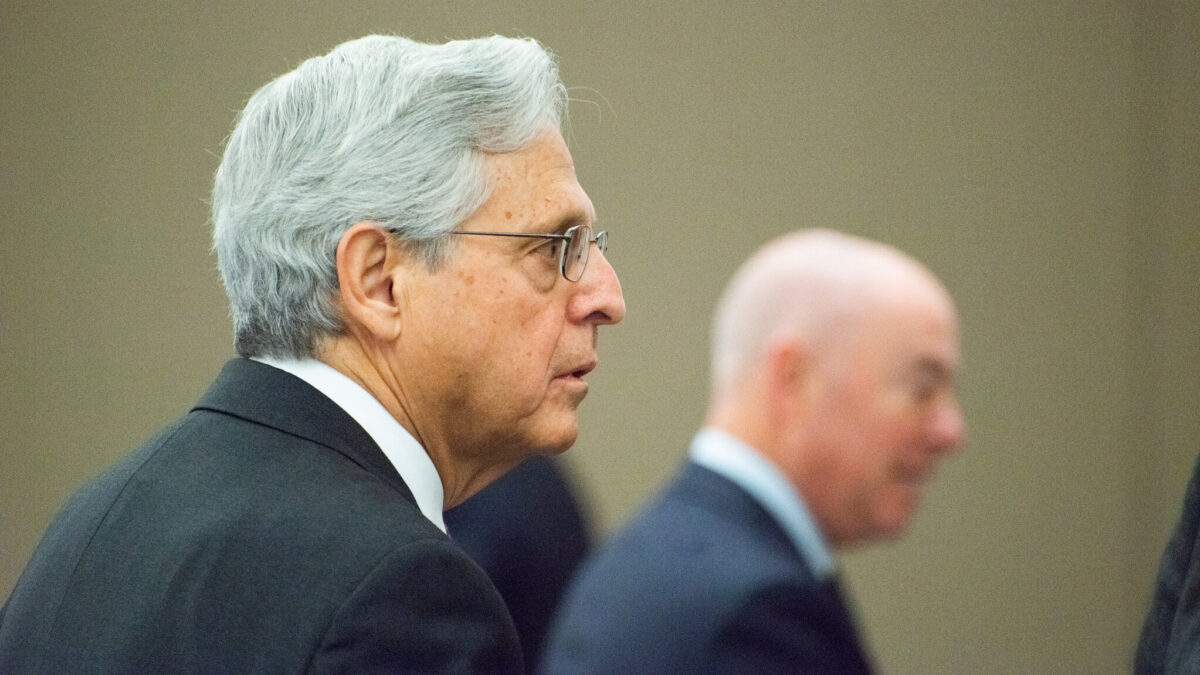

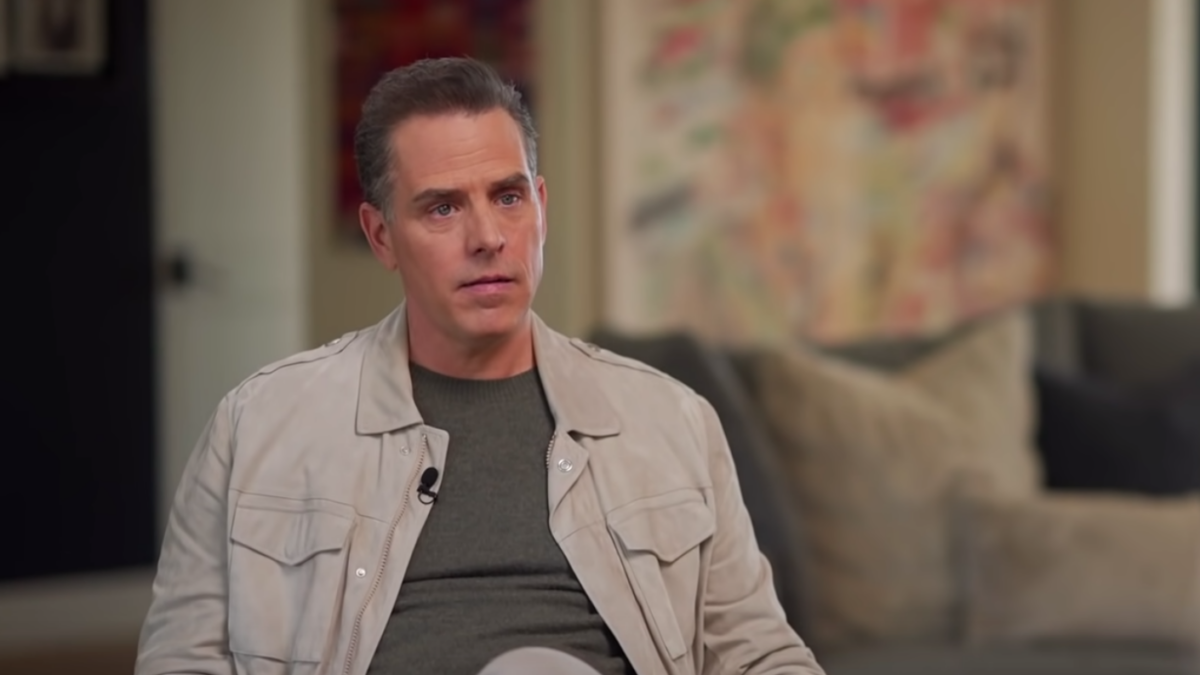
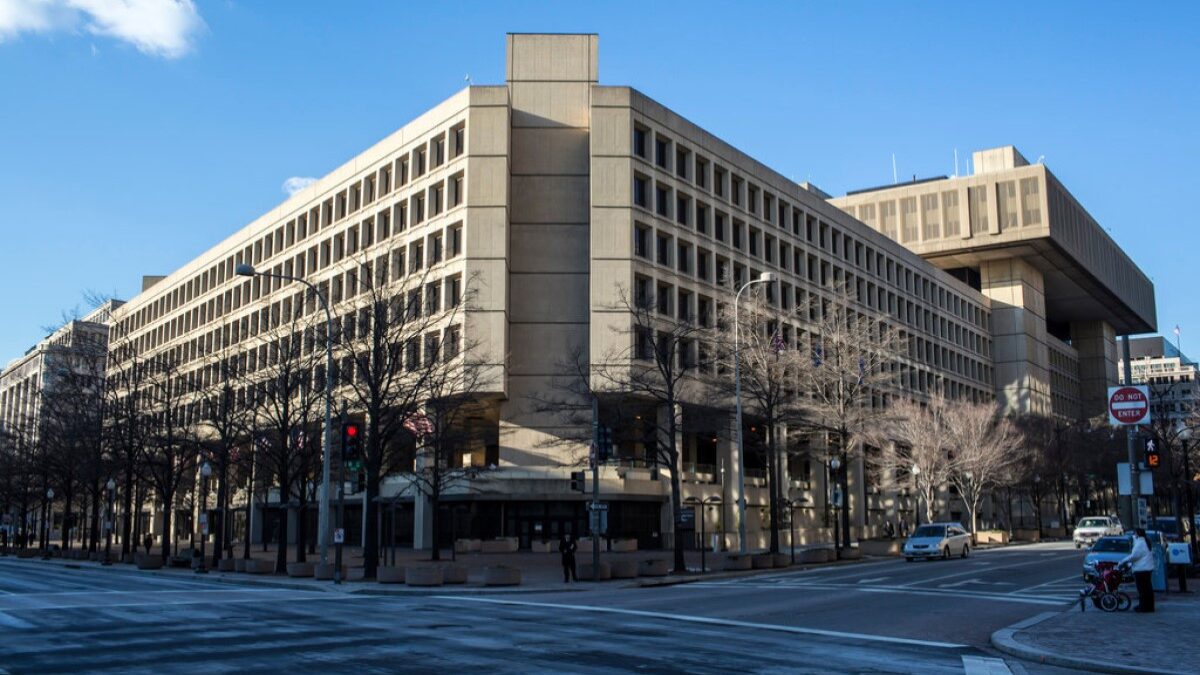


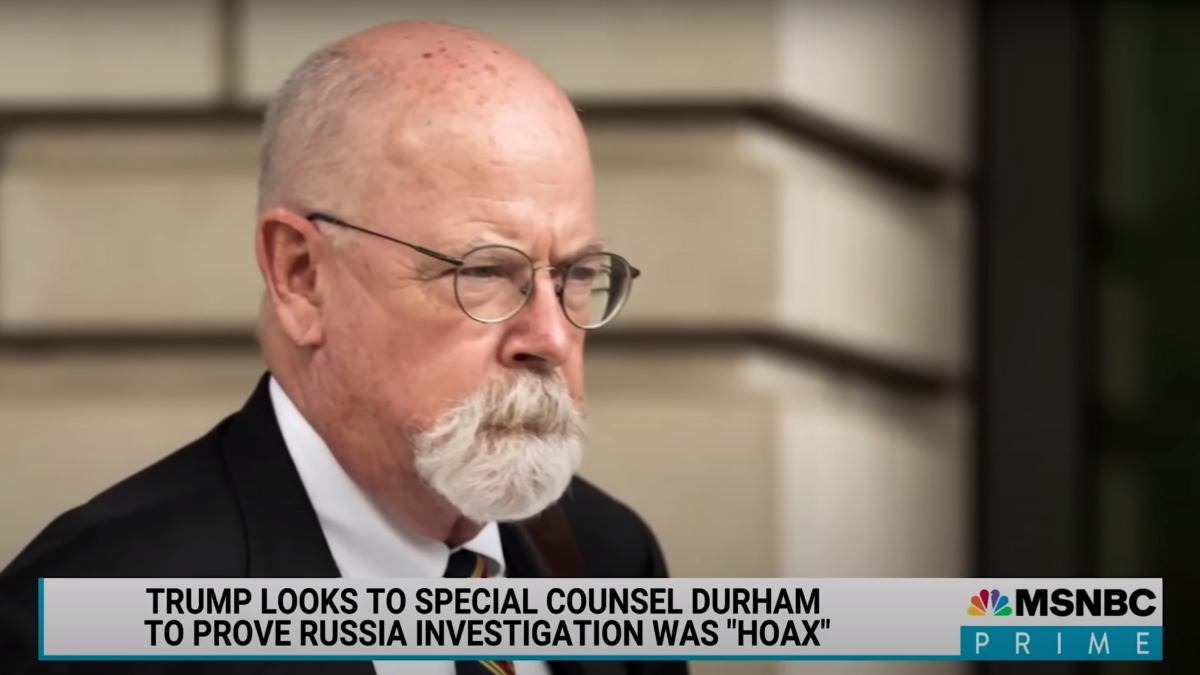
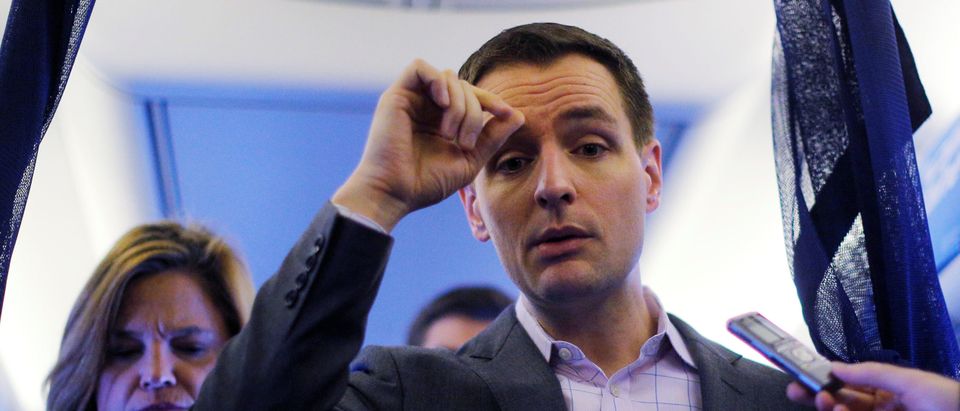
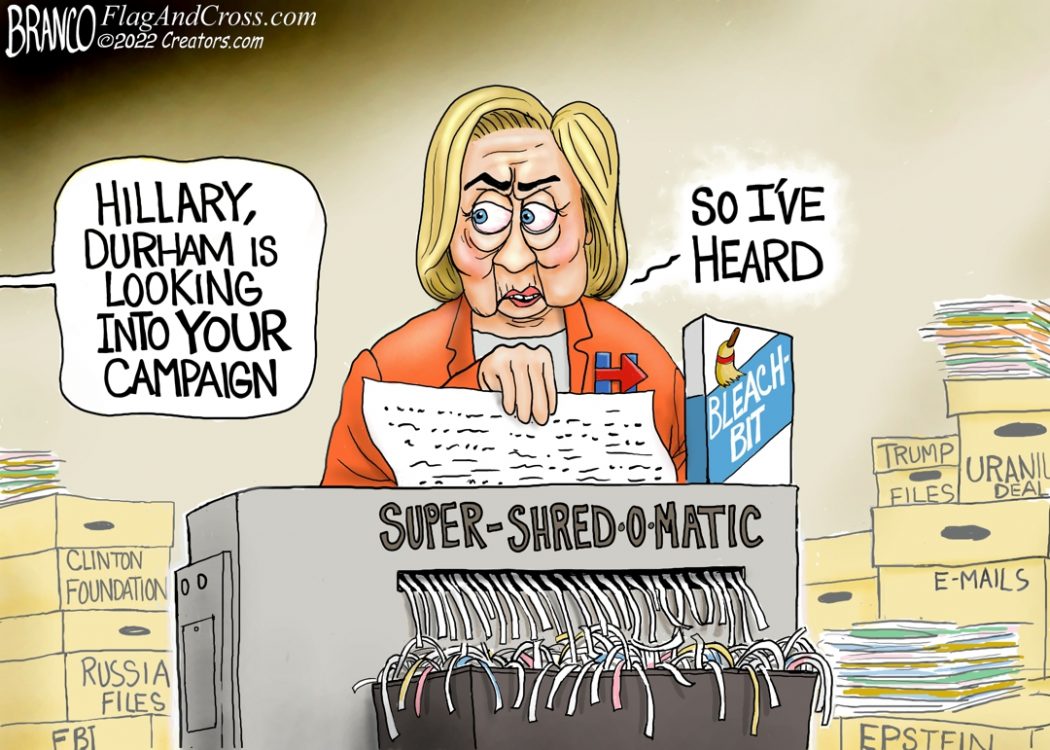
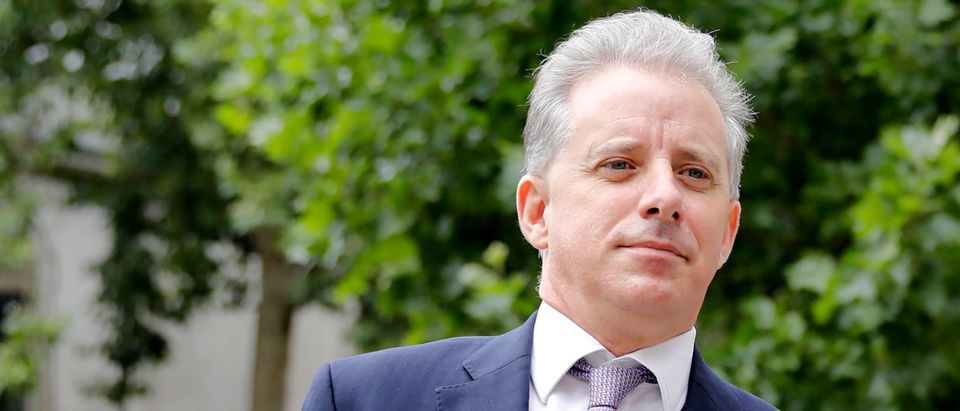
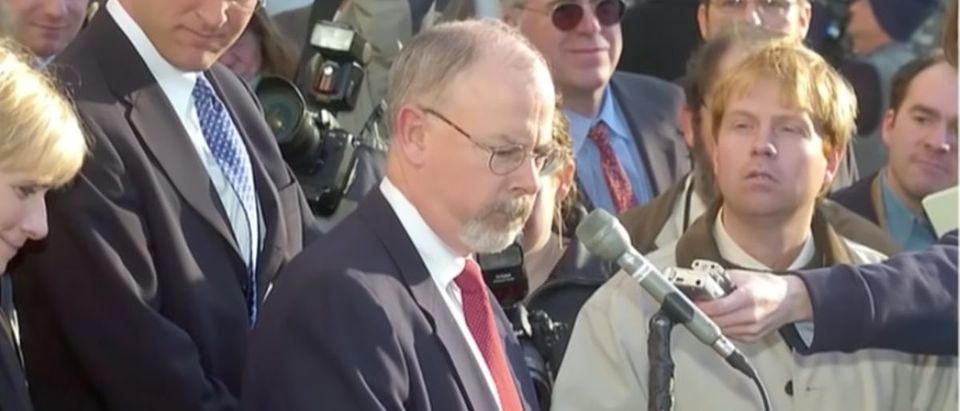
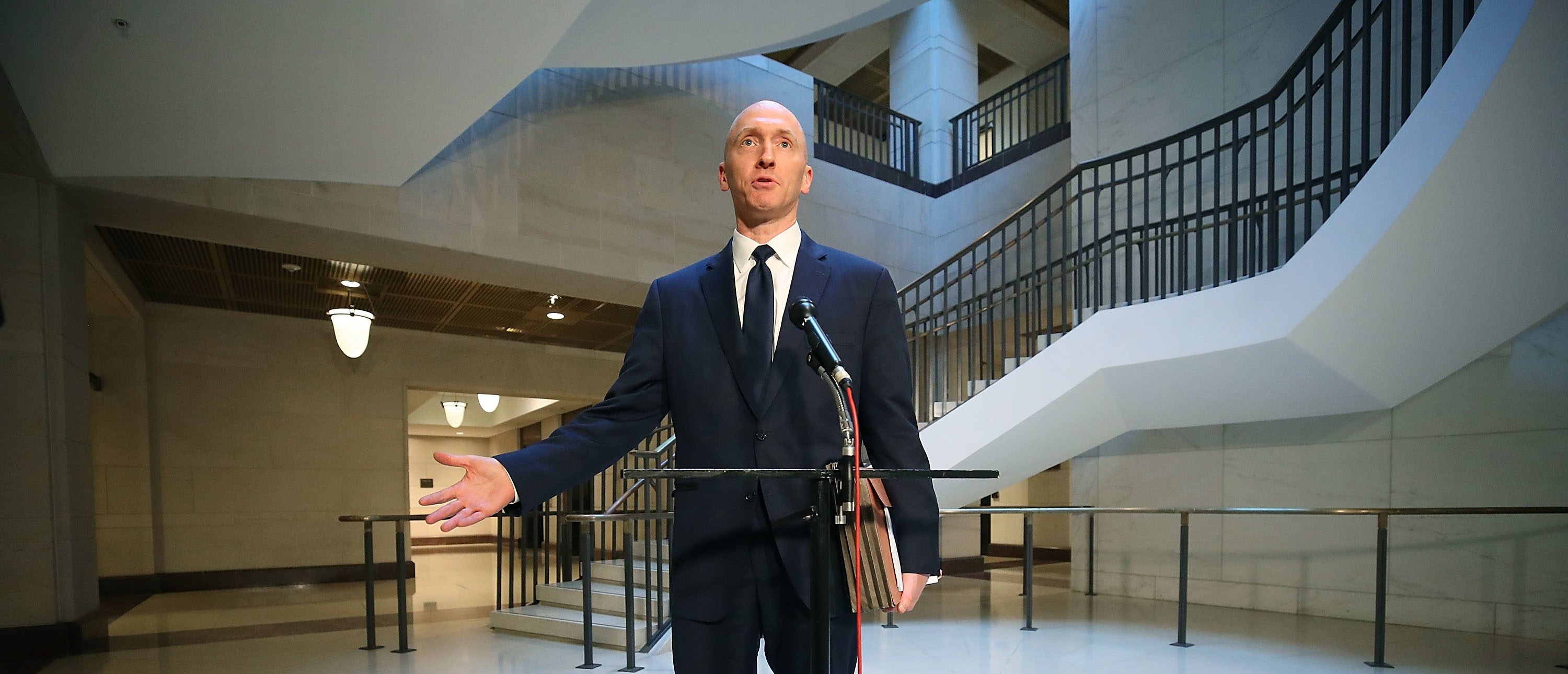
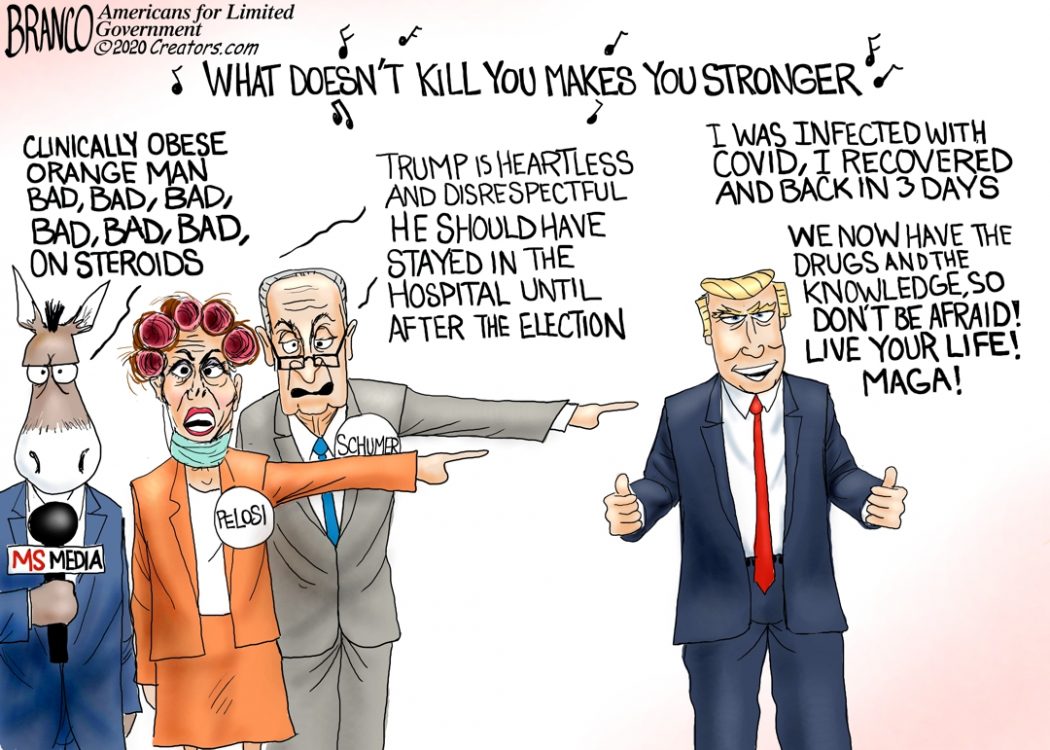 Political cartoon by A.F. Branco ©2020.
 Political cartoon by A.F. Branco ©2020.
 Political cartoon by A.F. Branco ©2020.

 What Did You Say?
You must be logged in to post a comment.