
Perspectives; Thoughts; Comments; Opinions; Discussions

Posts tagged ‘JANET PROTASIEWICZ’

Republicans Need To Stop Being Cowards On Abortion


BY: DAVID HARSANYI | APRIL 18, 2023

Read more at https://thefederalist.com/2023/04/18/republican-need-to-stop-being-cowards-on-abortion/


Ron DeSantis
Making the moral case for protecting viable life isn’t particularly difficult — certainly not when contrasted with the left’s extremism.

Author David Harsanyi profile

DAVID HARSANYI

VISIT ON TWITTER@DAVIDHARSANYI

MORE ARTICLES

How many voters understand that the Democratic Party supports legalized abortion through all nine months of pregnancy on demand for virtually any reason? How many voters know this position aligns with only six other countries in the world — three of them, not incidentally, being North Korea, Vietnam, and China?

Indeed, Democrats want to pass a federal law overturning the democratic will of states that ban sex-selective abortions or the dismembering of the post-viable unborn or require parental or guardian notification for minors before getting abortions. Democrats want to allow non-doctors to perform abortions (probably because it’s not medical care) while at the same time stripping real medical workers of their conscience rights by compelling them to participate in the procedure or lose their jobs. Democrats want to eliminate the popular Hyde Amendment that stops the federal government from funding abortions with taxpayer dollars. They believe abortion is vital in ensuring that poorer Americans have fewer children.

Now, maybe a majority of voters aren’t aware of Democrats’ maximalist positions because the media endlessly lies and obfuscates them. And maybe pollsters rarely ask useful questions on the topic — offering absurdly vague queries like “do you support abortion access” or should “abortion be legal” rather than should it be legal until the “due date” or “for any reason” or “after the baby is viable” or “for sex selection” — because the answers are a lot more complicated than they’d like.

And, maybe, after the shock of Roe being overturned — treated by Democrats as if it had been chiseled into magical stone tablets over the past 50 years — the energy and passion of the debate will temporarily reside on the pro-abortion side. And, maybe, if every voter knew all the facts, it still wouldn’t matter. Abortion is a complex and emotional issue.

None of that excuses the inability, or aversion, of national conservatives to make a coherent and compelling pro-life case. Sometimes it feels like Republicans are more terrified by the Dobbs decision than pro-abortionists. Even if pollsters were right about the unpopularity of abortion restrictions, there is this crazy thing that politicians occasionally engage in called “persuasion.” Rather than just chasing around voters for approval, this entails convincing them with arguments.

The problem, it seems, is that too many in the GOP accept the media’s concern trolling or listen to risk-averse advice of the consulting class. Take Wisconsin. On the same day Republicans took a supermajority in the legislature, Janet Protasiewicz beat conservative Dan Kelly by 10 percentage points to flip the state’s Supreme Court. Virtually every outlet treated the race, in which 36 percent of Wisconsin voters showed up, as a national referendum on abortion. Anonymous consultants were recruited to offer off-the-record comments voicing their deep concern about the deleterious effects of the abortion issue. “The drubbing Republicans took in Wisconsin this week revealed how harmful the issue of abortion still is to the party — and will likely remain through 2024,” Politico explained. “Wisconsin Supreme Court election sends message on abortion rights,” says the Washington Post. And so on.

Weird how this dynamic only works in one direction. In 2020, Brain Kemp, who signed a heartbeat bill limiting abortion to the first six weeks a year earlier, easily defeated media darling Stacey Abrams to win the Georgia governorship (in a state that Donald Trump also lost.) Abrams made abortion, along with guns, the central issue of her campaign, carpet-bombing the state with ads. In 2018, Terry McAuliffe also attempted to make abortion the dominant issue of his campaign against Glenn Youngkin. At the time, two of the Washington Post’s most dedicated partisan flaks promised that the race was “our first big test of the new politics of abortion.” Well, Youngkin, who supports 15-week abortion limits, won. Alas, there were no four-bylined handwringing deep dives from the Post about abortion undermining Democrats.

Georgia and Virginia are swing states. Ohio, where Mike DeWine signed a six-week ban in 2019 and won the state by 10 points in 2022, was one not long ago, as well. This is the same state in which pro-life JD Vance easily beat “moderate” Tim Ryan. But Ohio and Virginia teach nothing about abortion. Only the Wisconsin Supreme Court race matters.

This week, the governor of Florida and prospective presidential candidate, Ron DeSantis, signed a six-week ban on abortion. One imagines DeSantis will be just as popular among Republicans in his state since the bill passed overwhelmingly in the Florida Assembly. Of course, conventional wisdom says this hurts his presidential chances.

Every GOP president since Ronald Reagan has taken a pro-life position. Even in a post-Dobbs world, the idea that abortion is going to be the determinative factor in the presidential race is likely wishful thinking. Now that Roe has been overturned, the president has even less say over the future of abortion. Abortion has become a state issue. That’s what irks Dems.

Whatever the case, the Republican nominee doesn’t need to impress California voters. They need to convince social conservatives in Virginia, Ohio, and Florida to go out and vote. Does anyone really think DeSantis would be better off politically if he vetoed a pro-life bill? Running from the abortion conversation, as so many Republicans seem to do, creates the impression they don’t really believe in their own stated position. Quite often, that’s probably the case. If you’re going to run as a pro-lifer, allowing the opposition to define your beliefs makes little sense. Especially when making a rational and moral case for protecting viable life, at the very least, isn’t particularly difficult — certainly not when contrasted with the left’s extremism.   

Then again, if every Republican lost every race in the country over abortion, it still wouldn’t make killing human beings for convenience any less of a moral abomination or the fight to stop it any less important. A majority position isn’t, by default, moral or decent — quite the contrary. And meaningful political fights aren’t predicated on short-term gains. Overturning Roe took 50 years. The political fight over abortion might take even longer.

David Harsanyi is a senior editor at The Federalist, a nationally syndicated columnist, a Happy Warrior columnist at National Review, and author of five books—the most recent, Eurotrash: Why America Must Reject the Failed Ideas of a Dying Continent. He has appeared on Fox News, C-SPAN, CNN, MSNBC, NPR, ABC World News Tonight, NBC Nightly News and radio talk shows across the country. Follow him on Twitter, @davidharsanyi.

Wisconsin’s Supreme Court Race Is the Left’s Opening to Reverse Years of Conservative Victories


BY: DAVE CRAIG AND JAKE CURTIS | APRIL 03, 2023

Read more at https://thefederalist.com/2023/04/03/wisconsins-supreme-court-race-is-the-lefts-chance-to-reverse-years-of-conservative-victories/

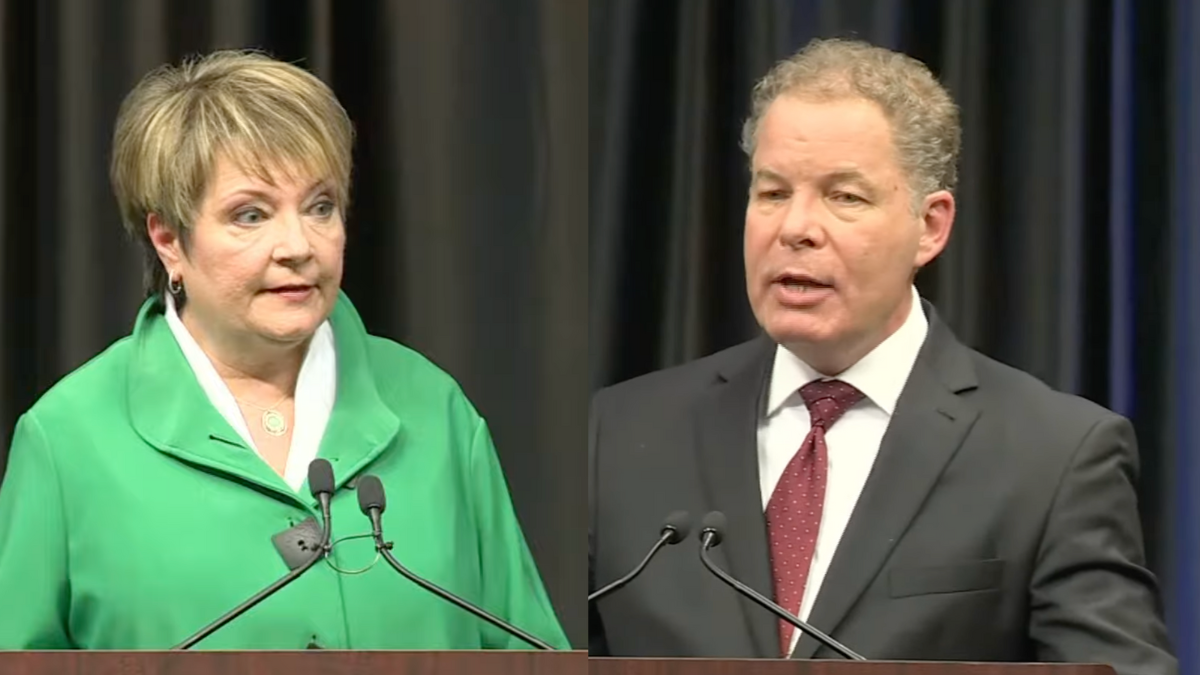
split screen of two candidates
Wisconsin’s growing leftist base sees an opportunity to overturn all of the hard-fought reforms by flipping the state’s high court.

Author Dave Craig and Jake Curtis profile

DAVE CRAIG AND JAKE CURTIS

MORE ARTICLES

On Tuesday, Wisconsinites will once again head to the polls in a race that has garnered national attention and set national spending records for a judicial race. According to the most recent Wispolitics.com tally, the two Wisconsin Supreme Court candidates and outside groups have combined for over $45 million in spending. What’s at stake? All of the reforms of the Gov. Scott Walker era, and more.

Home to Walker, former Speaker Paul Ryan, former RNC Chairman and White House Chief of Staff Reince Priebus, and conservative star Sen. Ron Johnson, Wisconsin has enjoyed an outsized role in national politics since 2010. Instead of cautiously governing like so many administrations in purple states, Walker and his allies advanced some of the boldest reforms in the nation. Starting with the historic Act 10 that resulted in a siege of the Capitol (and over $15 billion in taxpayer savings), conservatives advanced bold reforms like Right to Work, voter ID, concealed carry, castle doctrine, and a dramatic expansion of school choice.

Now, Wisconsin’s growing leftist base sees an opportunity to overturn all of the hard-fought reforms by flipping the state’s high court. Politico recently proclaimed the race “could be the beginning of the end for GOP dominance.” This would obviously be bad news for conservatives nationally since Wisconsin will undoubtedly play a huge role in who is president in 2025.

The two candidates running to replace the former conservative Chief Justice on the current 4-3 conservative court could not be any more different, and whoever wins will determine the ideological control of the court for years. Running as the progressive is Milwaukee County Circuit Court Judge Janet Protasiewicz. Instead of articulating a coherent judicial philosophy, she has consistently emphasized her “values” and how they will influence her decisions. She has also troublingly declared that Wisconsin’s legislative maps are rigged –  announcing her thoughts on an issue that is likely to come before the court if liberals gain the majority. She has stated that she disagrees with the U.S. Supreme Court’s Dobbs decision that returned abortion law to the states. She is also the candidate that the left apparently sees as showing they “are done pretending that judges are merely legal umpires.”

Contrast Protasiewicz’s activism with the originalist approach of former Justice Dan Kelly, appointed to the court by Gov. Scott Walker, who authored historic decisions during his four years on the court and consistently quotes from the Federalist Papers on the campaign trail. His lead opinion in Tetra Tech upended decades of deference to administrative agencies.

While Kelly has been supported by the Republicans and Protasiewicz by the Democrats, it is clear that Protasiewicz views the job of a judge as a super partisan legislator, supplanting the legislature’s authority with that of her own. Forecasting what a liberal majority would do Wisconsin’s duly-enacted reform regime, liberal Justice Jill Karofsky herself has declared specifically that “everything that Wisconsinites care about is on the line in this election, from abortion rights to fair maps to the 2024 election to democracy itself, all of those things are going to be on the ballot on April 4th…” These are all issues that have been settled by the democratically elected legislature but are apparently all on the table for a liberal majority of the court.

While abortion, crime, and redistricting have been the main focus of the media and outside groups during the campaign, several other cases could be brought which would fundamentally transform the landscape in Wisconsin. Even cases that have already been addressed by the U.S. Supreme Court are at risk of novel interpretations under the Wisconsin constitution by a new progressive majority.

An issue impacting tens of thousands of Wisconsin families that could be dramatically affected by the balance of the state Supreme Court is school choice. In 1998, the Wisconsin Supreme Court upheld the choice program for religious schools in Jackson v. Benson. There, the court reversed the lower court, holding that the Milwaukee Parental Choice Program was valid under both the Establishment Clause and Article I, Section 18 of the Wisconsin Constitution, which prohibits the use of money from the public treasury to be used for the benefit of religious societies, religious schools, or seminaries. The holding was based in large part on the fact that students in the program were not compelled to attend sectarian schools nor forced to participate in religious activities. The Court further held that public funds may be given to third parties as long as the program on its face is neutral between sectarian and nonsectarian alternatives and that the transmission of funds is guided by the decisions of independent third parties.

While the decision in Jackson has been in place for a generation, a court viewing itself as a super-legislature could undo the decision in part, or in whole, based on a narrowed view of the constitutional provisions reviewed in that case, particularly relative to monies “drawn from the treasury” that are used in the choice program. A court decision holding a strict view of the provision could decimate a program that provides alternatives to families desperately looking for an alternative to failing public schools.

Another issue likely to surface in the event the ideological makeup of the court shifts, as it has recently in other states, is the constitutionality of Wisconsin’s voter ID law. In League of Women Voters v. Walker and Milwaukee Branch of NAACP v. Walker, leftist groups challenged Wisconsin’s 2011 voter ID law, claiming the legislature lacked authority to enact a voting qualification under the Wisconsin constitution and that the law was an undue burden on the right to vote. Upholding the law, the Court noted that requiring an ID was within the legislature’s authority to provide for laws relating to elector registration under Article III, Section 2, that the law was a reasonable regulation that “could improve and modernize election procedures, safeguard voter confidence in the outcome of elections and deter voter fraud,” and that the burdens of gathering the required documents, traveling, and obtaining a photograph ID were not a substantial burden.

In a challenge to the voter ID law under the state constitution’s right to vote, an activist court could hold that a record demonstrating that numerous individuals claiming to have been deterred from voting because of the burden of obtaining an ID is evidence of a “substantial burden” that outweighs the threat of voter fraud and could strike down the law. The left will undoubtedly come after this important law ahead of the 2024 election as it has recently in other states. In a state with razor-thin margins of victory for conservative super-stars like Sen. Ron Johnson, opening the gate to fraudulent votes in the absence of a voter ID law could have major consequences in 2024 and beyond.

Finally, and least covered by the media, are the ramifications the court race might have on the shift of power back to the deep state. In the 2018 case Tetra Tech EC, Inc. v. Wis. Dep’t of Revenue, the court departed from its practice of “deferring to administrative agencies’ conclusions of law.” In a case where a citizen may be challenging an agency’s interpretation of law or administrative rule, the court would no longer review the agency’s action with a “bias” toward the agency’s own interpretation. Agency interpretation is an issue that arises in courts every day across the country, measuring the amount of authority an agency wields on virtually any issue, ranging from taxation to education to election administration – many times involving an agency seizing authority the legislature never gave it. A restoration of agency deference by an activist court could result in an immediate shift of authority from the legislative branch to the unelected officials in the executive branch.

During the final days of the race, former Justice Dan Kelly is sprinting across to the state with a final closing message: saving the court. But the race is about more than just the court. It could impact policies duly enacted by the legislature that conservatives have worked for a generation to obtain. It will make a difference in securing elections and electing strong conservatives like Ron Johnson, who has demanded Covid transparency and has taken on the deep state, or electing central planners like Tammy Baldwin who want to strip us of our freedoms. The election on Tuesday presents a fundamental choice to voters.

Do they want Wisconsin to lurch backward with a progressive court that will undo so many of the reforms the legislature and Gov. Walker worked to implement over the last decade, or are they going to vote to save the court by elevating a former justice that will ensure a conservative majority that respects the law as written by the legislature? The choice is obvious. Save the court and save the state.


Dave Craig is a Waukesha attorney and served in the Wisconsin Legislature from 2011 to 2021. Prior to his election, he worked as an aide to Congressman Paul Ryan. Jake Curtis is an Ozaukee attorney who previously served as an agency Chief Legal Counsel in the Walker Administration.

Tag Cloud