
Perspectives; Thoughts; Comments; Opinions; Discussions

Posts tagged ‘Hydroxychloroquine’

Exclusive — South Dakota Gov. Kristi Noem on Beating Coronavirus Without Lockdown: ‘We’re Much Better on Offense’


Reported by MATTHEW BOYLE | Washington, D.C.
URL of the originating web site: https://www.breitbart.com/politics/2020/04/22/exclusive-south-dakota-gov-kristi-noem-on-beating-coronavirus-without-lockdown-were-much-better-on-offense/

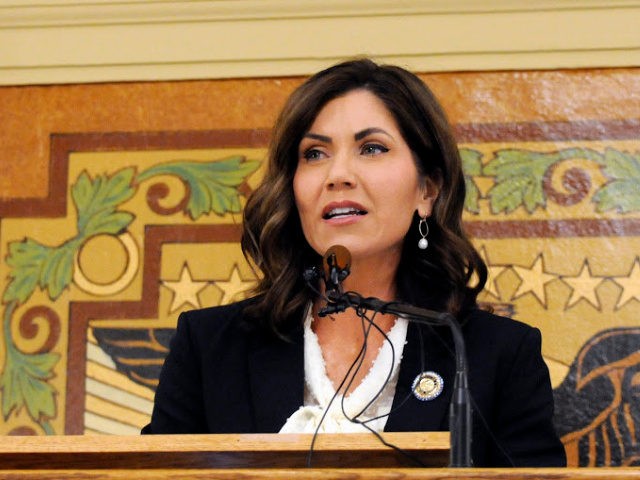
South Dakota Gov. Kristi Noem gives her first State of the State address in Pierre, S.D., Tuesday, Jan. 8, 2019. / James Nord/AP Photo

Noem said that despite earlier projections of a surge on the hospitals in South Dakota and nationwide, “no, we haven’t” seen such a surge. In fact, South Dakota has—again, without a lockdown—cut that number down by 75 percent of the projections, with much less than a hundred people in the hospital.

According to the state’s Department of Health website, there have been 1,858 cases of coronavirus in South Dakota—937 people have recovered. There have been only 9 deaths, and there are 62 people currently hospitalized. In total, only 111 people were ever hospitalized for coronavirus in South Dakota—far less than ever was expected.

“I think we’ve got maybe 60 people in the hospital right now,” Noem said in an exclusive interview on Wednesday. “We have 2,500 beds set aside for COVID-19 patients, but we only have 63 in. We probably, from all of our projections and studying the science behind the virus, we won’t peak until the middle of June. But we already have done much better than what we had thought would have been hitting our state already.”

“We already have cut our peak projections by 75 percent just putting in place the recommendations I asked people to do, staying at home and they’ve practiced social distancing,” she explained. “They’ve washed their hands and they stayed home if they weren’t feeling well and called their doctors. Just by doing that, we’ve cut the hospitalization rates by 75 percent. So, I’ve just been super proud of what the people in South Dakota have done—they recognized that I wasn’t going to dictate to them, that I valued their freedoms and liberties and that I was going to let them take action on behalf of their families and communities.”

When asked how she made her decision to not issue a closure of businesses in South Dakota and to not issue a statewide stay-at-home order like many other governors did when the crisis was beginning, Noem told Breitbart News that she was focused on providing the best and most scientific response to the coronavirus crisis.

“I looked at our state and our people here and knew they would take on the personal responsibility that would be necessary to protect their families and their communities,” Noem said. “I had a real honest conversation with them and told them what we were facing and that I needed them to make some decisions to follow CDC guidelines and that by doing that we could look at how this virus would impact our state and peak hospitalization rates going forward and do it together.”

“I’m not one who believes in a one-size-fits-all approach, and even in South Dakota I’ve got pretty diverse communities,” she noted. “I’ve got some that are pretty sparse with not many people and then I’ve got some that are big cities as well. So I wanted to leave some flexibility there for local folks to make decisions but also recognizing that when it comes down to it that these guys had to take on the personal responsibility that is necessary to really go after this virus.”

Noem added that when it came to her decision against issuing a lockdown, she factored in her oath to defend the state’s Constitution that she took when she was sworn in as governor and her oath to defend the U.S. Constitution that she took when she was previously sworn in when she was in the U.S. Congress. She was concerned for the civil liberties and freedoms of the people of her state and did not think the facts on the ground warranted a lockdown—something that, again, the statistics have proven to be true.

“It was a decision that I made. The facts on the ground here did not support shelter-in-place,” she said. “We just didn’t have the spread. For me personally, I took an oath to uphold our state Constitution. I took an oath when I was in Congress to uphold the United States Constitution. So I believe in people’s freedoms and liberties and I always balance that with every decision that I make as governor. I get overly concerned with leaders who take too much power in a time of crisis because I think that’s how we directly lose our country someday by leaders overstepping their proper role.”

“So I was balancing all of that perspective and my value system and principles with what I was seeing here in South Dakota and never believed it was appropriate for us to take that kind of action,” Noem explained. “I trust my people. I know that if business owners here are given an opportunity to be innovative, they will protect their customers. They will take actions and change business models to make sure their employees are safe and that they can practice social distancing while still serving their customers. I knew I had to give them an opportunity to survive.”

“What I was going to ask them to do was not going to be something they would have to do just for a week or two,” she explained. “I knew they would have to do it for months, and I didn’t know how they would survive if I shut them down, and for me, it’s always been about whatever I ask you to do today you have to sustain, and I knew that doing that kind of an action was not sustainable. People would not be able to shelter in their homes for six weeks on end, and businesses would not be able to survive and have an economy to be able to put food on the table for folks.”

“All of that was part of my decision-making process, and I decided as well—I knew it was unconventional and it was something that would not be widely embraced across the country–but I knew I had to communicate it and I knew I had to make myself available to South Dakota and tell them why I was making these decisions and make sure we were having real palms-up honest conversations, and I think by and large they’re seeing the wisdom in the action and decisions we’ve made, and they’re grateful for it, but we have a long ways to go though,” Noem said. “We’ve got, that’s the thing, a lot of people want to be done with this now, and I have to keep reminding people we still have not even hit our peak—our numbers are going to continue to get worse, and that reality is something that we’re going to have to deal with for quite some time here.”

Just because there is no stay-at-home order or statewide mandated closure of businesses does not mean South Dakota is just waiting and doing nothing to fight the coronavirus. Noem has undertaken a number of initiatives in South Dakota, including alongside the state’s northern neighbor, North Dakota, the introduction of a cell phone application that helps state health officials with contact tracing of those who test positive for the virus—something she said has been very effective in helping control the spread of the disease.

“The app is called CARE19 and it’s downloadable on both android and iPhones, but what it does is so much of the time of individuals—when somebody tests positive for COVID-19 our Department of Health immediately calls them, asks them to isolate, and then follows up with them and then also does extensive interviews with them to find out about where they had been the previous three or four or five days, where they had been, where they had stopped, so we can identify other individuals that may have been exposed to the virus to let them know and ask them to isolate and slow down the spread,” Noem said. “This app will do all of that in seconds. So, it’s completely voluntary. People can download it on their phone, then turn on location services and then forget about it. Then if they do test positive a week or two weeks down the road they can decide if they want to share that information with us or not and then that will tell us everything about where they were and people that may have been exposed to the virus so they don’t have to try to remember.”

“It literally takes hours of interviews we would have with an individual down to getting all of that same information and having it be much more accurate in seconds,” she explained. “It helps us be much more aggressive in slowing and isolating the spread. The average person we have to contact—if somebody tests positive, we have to call eight or nine people on average that they may have come in contact with and let them know. So even if we only have a hundred cases a day, that’s 800 to 900 phone calls we have to be making to them. Then everybody who tests positive and everybody who has been exposed we call them back the next day and then the next day and so on to make sure they’re still doing okay and that they’re still isolating and all that. By being able to cut down that amount of time it takes to know who may have been exposed, boy it just saves us hundreds of hours and is really helpful. We’re the only—I think North Dakota started it first, I think we started it the next morning, and I think we’re the only two states that are using that kind of technology.”

South Dakota has also, at Noem’s direction, formally launched a statewide, fully-funded, and all-encompassing trial to study the effectiveness of hydroxychloroquine as a potential treatment for coronavirus. There have been some studies that suggest the drug is promising as a potential treatment, and President Donald Trump has touted it as a hopeful possibility, while the Food and Drug Administration (FDA) has authorized its usage on a compassionate care basis if a doctor decides a patient should use it. But no formal studies yet exist to demonstrate the effectiveness of the antimalarial hydroxychloroquine against COVID-19, so Noem stepped up and rallied all of the state’s major healthcare systems to lead a statewide test of the drug.

“What’s happening here in South Dakota is really unprecedented,” Noem said. “There has never been anything like this that has happened before. There is the state government partnering with all of our major health systems to run a statewide, state-backed-and-funded clinical trial. We have Sanford Health in our state that does a lot of research, and they’re running many other clinical trials, and they came to the table and said they would lead it, and I said the state would support it and help secure the drugs with the White House’s help, the hydroxychloroquine and whatever else we would need, and then the other two health systems, Avera and Monument, were excited to partner as well. So we will literally have a clinical trial now where every person in the state will be allowed to participate in.”

“So it’s the first statewide one. I think we’re the only state where it would have been possible to get all of the healthcare systems to agree to participate in,” she continued. “It really is unprecedented as well to get them all to step up and agree to participate, and then we can include up to 100,000 people so it is much larger than a typical clinical trial would be.”

“Sometimes the accuracy of a clinical trial is in question when it’s a super small sample and you don’t get enough people to participate,” Noem explained. “By this, including this many people getting access to the drug and seeing what the results would be, not only allows us to meet the current need but also allows us to get the background data and research that we can use to be on offense against this virus into the future.”

“So, I think this is kind of what South Dakota does best—we’re much better on offense than we are just sitting back and playing defense, and this is one way where I said let’s not just sit back and access the drug and let people use it that are in ICUs and in healthcare systems that need it to save their lives,” she said. “But let’s use it as an opportunity to build out our capacity for doing research so that in the long run we’re contributing to addressing COVID-19 for years into the future.”

South Dakota is still, Noem added, planning to have fireworks over Mount Rushmore this year—a promise President Trump made when signing a phase one trade deal with China earlier this year.

“They are—we’ll decide what it looks like but there will be fireworks over Mount Rushmore this year. We’re still moving ahead,” Noem said.

Michigan Democrat With Coronavirus Credits Trump With Saving Her Life: ‘I Do Thank Him For That’


Reported By Ryan Saavedra of DailyWire.com | April 6, 2020

URL of the originating site: https://www.dailywire.com/news/michigan-democrat-with-coronavirus-credits-trump-with-saving-her-life-i-do-thank-him-for-that
WASHINGTON, DC - APRIL 06: U.S. President Donald Trump listens to a question from a reporter following a meeting of his coronavirus task force in the Brady Press Briefing Room at the White House on April 6, 2020 in Washington, DC. Infected with COVID-19, British Prime Minister Boris Johnson was admitted intensive care at a hospital in London Monday as the U.S. death toll surpassed 10,000.
Chip Somodevilla/Getty Images

Rep. Karen Whitsett (Detroit) “said she started taking hydroxychloroquine on March 31, prescribed by her doctor, after both she and her husband sought treatment for a range of symptoms on March 18,” The Detroit Free Press reported. “‘It was less than two hours’ before she started to feel relief, said Whitsett, who had experienced shortness of breath, swollen lymph nodes, and what felt like a sinus infection.”

Whitsett said that she had taken the drug before for a separate medical issue but would not have thought to ask her doctor about it unless Trump had been repeatedly talking about it.

“It has a lot to do with the president … bringing it up,” Whitsett said. “He is the only person who has the power to make it a priority.”

When The Detroit Free Press asked her if she thought that Trump may have saved her life, she responded, “Yes, I do. I do thank him for that.”

Trump sent out a link to the report, writing, “Congratulations to State Representative Karen Whitsett of Michigan. So glad you are getting better!”

Last week, The Food and Drug Administration (FDA) issued an “Emergency Use Authorization (EUA) to permit the emergency use of hydroxychloroquine sulfate supplied from the Strategic National Stockpile to treat adults and adolescents who weigh 50 kg or more and are hospitalized with COVID-19 for whom a clinical trial is not available, or participation is not feasible.”

While experts are still waiting on clinical trials and additional testing to officially determine the efficacy of using the drug to treat coronavirus, many doctors have said that it works very well.

Los Angeles based Dr. Anthony Cardillo, CEO of Mend Urgent Care, praised the drug over the weekend during an interview with ABC 7 news anchor Jory Rand.

“What we’re finding clinically with our patients is that it really only works in conjunction with zinc. So the hydroxychloroquine opens the zinc channel, zinc goes into the cell, it then blocks the replication of the cellular machinery,” Cardillo said. “So, it has to be used in conjunction with zinc. We are seeing some clinical responses in that regard. There are people that take it regularly for other disease processes, we have to be cautious and mindful that we don’t prescribe for patients who have COVID that are well. It really should be reserved for people that are really sick, in the hospital, or at home very sick that need that medication, otherwise we’re going to blow through our supply for the patients that take it regularly for other disease processes.”
“Every patient I’ve prescribed it to has been very, very ill and within 8-12 hours they were basically symptom free and so, clinically I am seeing a resolution that mirrors what we saw in the French study and some of the other studies worldwide,” Cardillo continued. “But what I am seeing is that people that are taking it alone, by itself, it’s not having efficacy.”

During an interview on Fox News last week, Dr. Stephen Smith, an infectious disease doctor, said, “It’s a game changer. It’s an absolute game changer. I think this data will go to really support the French data. … I think this is the beginning of the end of the pandemic. I’m very serious.”

Coronavirus Victim, 52, Said He Expected To Die; Instead, He Says Hydroxychloroquine Saved His Life


Reported  |

Picture2

Rio Giardinieri, 52, contracted the coronavirus COVID-19, he thinks when he was at a conference in New York. He is vice president of a company that makes cooking equipment for high-end restaurants around the world, but suddenly he was too tired to do much of anything.

He had a fever “for five days, horrendous back pain, headache, cough, and tiredness and was was sleeping about 15 hours a day — when he’s used to getting five hours a night,” FOX-10 reported. It got so bad that after a week in the hospital, Giardinieri said goodbye to his wife and children.

He says his doctors did not want to see him so he drove to Joe DiMaggio hospital in South Florida, near his home, and nearly passed out waiting to get tested. Doctors diagnosed him with pneumonia and coronavirus. They put him on oxygen in the ICU but he says he was still unable to breathe. After more than a week, he says doctors told him there was really nothing more they could do. Friday evening, he said goodbye to his wife and three children.

“I was at the point where I was barely able to speak and breathing was very challenging. I really thought my end was there. I had been through nine days of solid pain and for me, the end was there. So I made some calls to say in my own way goodbye to my friends and family.” A dear friend immediately sent him a recent article about hydroxychloroquine, an old anti-malaria medicine proven successful to treat COVID-19 patients overseas, and insisted he take the drug.

But Giardinieri wasn’t done fighting, so he got in touch with an infectious disease doctor. “He gave me all the reasons why I would probably not want to try it because there are no trials, there’s no testing, it was not something that was approved. And I said look I don’t know if I’m going to make it until the morning because at that point I really thought I was coming to the end because I couldn’t breathe anymore. He agreed and authorized the use of it and 30 minutes later the nurse gave it to me,” he told FOX-10.

”An hour after an IV with the medicine, he says his heart felt like it was beating out of his chest. “They had to come in and get me calmed down and take care of me. I had another episode about two hours later where I just got to the point where I couldn’t breathe and my heart was pounding again so they gave me some Benadryl through the system and something else. I’m not sure what it was. It allowed me to go to sleep and when I woke up at exactly 4:45 in the morning, I woke up like nothing ever happened.”Miraculously, he’s since had no fever or pain, feels fine and he’s able to breathe again.

“To me, there was no doubt in mind that I wouldn’t make it until morning,” Giardinieri said. “So to me the drug saved my life. … I just want everyone to know there’s an option. You don’t have to just sit there and hydrate. There’s a medicine that’s working.”

President Trump on Saturday expressed optimism about two drugs that he said could be “one of the biggest game changers” in medicine – hydroxychloroquine and azithromycin. Hydroxychloroquine is a drug used in the treatment and prevention of malaria. Azithromycin is an antibiotic that is used to treat many different types of infections in the respiratory system, eyes, ears, and skin, as well as sexually transmitted diseases.

On Monday, Dr. Anthony Fauci, director of the National Institute of Allergy and Infectious Diseases, announced that the first trial vaccine for the coronavirus is now being tested. The trial taking place in Seattle, which has been a hotbed for COVID-19. The test includes 45 people age 18-55 and they are receiving two injections, one at zero days, one at 28 days. The individuals will then be followed for one year. The trial results is still months away.

But the doctor also said on Friday that hydroxychloroquine is not the answer right now. “Many things you hear out there are what I call anecdotal reports. They may be true, but they’re anecdotal… If you really want to definitively know if something works, you have to do the kind of trial that you get the good information with.”

please likeand share and leave a comment

NY DRUG TRIALS: President Trump Sending Hydroxychloroquine and Zithromycin to NYC – the Epicenter of Coronavirus


Posted By Pamela Geller – on 

URL of the original posting site: https://gellerreport.com/2020/03/nyc-hydroxychloroquine-and-zithromycin.html/


HYDROXYCHLOROQUINE and AZITHROMYCIN

A specific combination of existing drugs has shown it is capable of wiping out the #coronavirus in a study conducted in France. NY will start clinical drug trials on Tuesday for two newly approved drugs by the FDA including Chloroquine, which is used to treat malaria.

New York State will start trial testing antiviral medicines on Tuesday in an ongoing effort to stem the coronavirus pandemic statewide, Gov. Andrew M. Cuomo announced on Sunday.

  • 70,000 Hydroxychloroquine –
  • 10,000 Zithromax
  • 750,000 Chloroquine From the Federal Government.

Trials will start Tuesday.

President Trump is sending thousands of samples of the drugs hydrooxychloroquine, zithromax and chloroquine to New York for testing.

President Donald Trump drew attention Thursday to drugs often used to treat illnesses like malaria that could also help treat COVID-19 patients.

In January, researchers at the University of Utah identified hydroxychloroquine and chloroquine as effective methods of COVID-19 treatment after conducting a series of test tube studies, according to Dr. Kurt Hegmann, center director of Rocky Mountain Center for Occupational and Environmental Health at the University of Utah.

Multiple studies and reports testing the efficacy of the drugs around the world have also shown positive results, Hegmann said during a Friday press conference with politicians, health professionals and business owners.

Two days ago, a study conducted and published in France showed a stark drop in virus replication among patients who were prescribed the drugs, in contrast with those who weren’t, Hegmann explained. While the study was not randomized, it’s exceptionally difficult to see results that stark caused by another factor, he added.

“We’re going to get this supply and the trial will start this Tuesday,” Cuomo said at his daily briefing on the pandemic in Albany. “[President Donald Trump] is optimistic about these drugs and we are all optimistic that it could work. I’ve spoken with a number of health officials and there is a good basis to believe that they could work.”

These drugs are especially exciting because they’ve already been around for 80 years now, said Senate President J. Stewart Adams. And side effects generally only display themselves if a patient has been taking the medication for years, Richards added. (KSL)

https://youtu.be/hTKALy5UruA

CORONAVIRUS: NY GOV. CUOMO SAYS STATE TO START CLINICAL DRUG TRIAL, AUTHORIZES TEMPORARY HOSPITALS, ASKS US TO NATIONALIZE MEDICAL SUPPLY BUYING

NEW YORK STATE IS  RUNNING A CLINICAL TRIAL BEGINNING TUESDAY OF A TREATMENT REGIMEN OF HYDROXYCHLOROQUINE AND AZITHROMYCIN, TWO DRUGS THAT DOCTORS IN AFRICA AND ELSEWHERE SAY THEY’VE SEEN GOOD RESULTS IN FIGHTING THE VIRUS.

The new state measures Cuomo announced include:
  • Army Corp of Engineers to construct four temporary hospitals in Stony Brook, Westchester, Westbury and the Javits Convention Center in Midtown Manhattan. The locations were chosen for various reasons including dormitory space for medical personnel
  • FEMA to construct four federal hospitals of 250 beds each
  • New York City to present a plan to reduce social interaction and density in parks and public spaces within 24 hours for the state to review
  • Hospitals must create plans to increase capacity by at least 50 percent, with a goal of 100 percent increase
  • All elective non-critical surgery will be canceled as of Wednesday
  • New York State will begin implementing trials of two drugs to treat COVID-19, the anti-malaria drug chloroquine and the antibiotic azithromycin on Tuesday.

Cuomo said that New York State currently has 53,000 hospital beds available. Projections estimate that as many as 110,000 beds could be needed as coronavirus cases peak.

Besides the multifold state response, Cuomo called on the federal government to nationalize the production of medical supplies needed for the pandemic.

“The states just can’t deal with finding the medical supplies they need.” Hospitals need these materials now, Cuomo urged.

Cuomo also asked the FDA to approve serological testing for antibodies to assess what percent of the population may have already been exposed to COVID-19.

As of Sunday morning, the total number of cases in New York reached 15,000. Here is how the current state statistics break down:

  • 53 percent of cases are 18 to 49 years old
  • 50,000 new tests were administered
  • 4,800 new cases were confirmed
  • 374 deaths to date have been recorded in New York State
  • 70 percent of deaths so far were 70 years or older and the majority had underlying health conditions
  • 80 percent of deaths under 70 years old had an underlying condition
  • 1,900 patients have been hospitalized. The 13 percent hospitalization rate is lower than the previous rate of 15 percent.

These new mandates come after previous measures such as all non-essential employees being asked to stay at home and new rules concerning social distancing and “Matilda’s Law” for senior citizens and other vulnerable people.

Cuomo repeated pleas for residents to socially distance.

“You would think nothing was going on. There is a density level that is not appropriate and it has to stop now.”

Cuomo reassured residents that food and medication supply chains are not at risk of collapse.

“All essential services will be maintained”

please likeand share and leave a comment

Tag Cloud