Perspectives; Thoughts; Comments; Opinions; Discussions

Posts tagged ‘homelessness’

Supreme Court Decides Legislatures, Not Judges, Should Address Homelessness


By: John G. Malcolm | June 28, 2024

Read more at https://www.dailysignal.com/2024/06/28/supreme-court-decides-legislatures-not-judges-should-address-homelessness/
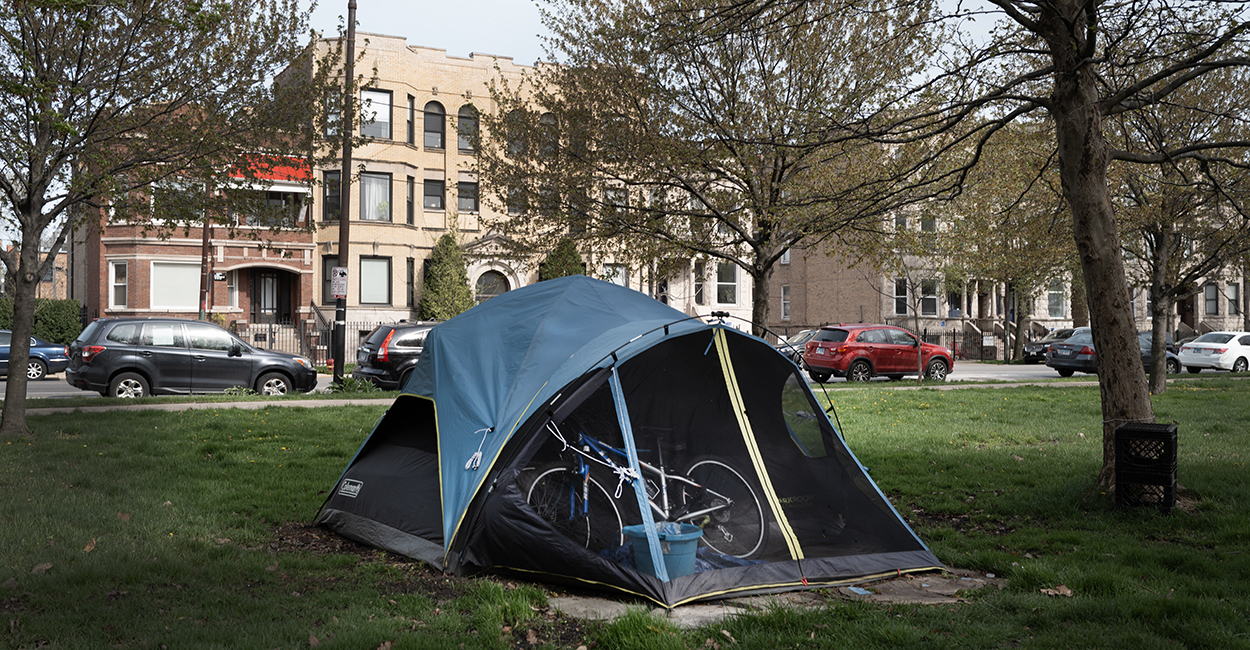
An isolated tent is pitched April 22 near a homeless camp in Chicago’s Humboldt Park. (Photo: Scott Olson/Getty Images)

The Supreme Court issued a 6-3 decision Friday holding that the government may punish the homeless by fines or imprisonment for trespassing or camping on public property.  

In 2013, the city of Grants Pass, Oregon, had a population of roughly 38,000 and as many as 600 homeless individuals on any given day. Many of these homeless individuals clustered in encampments that all too frequently serve as a hotbed of disease, addiction, and rampant crime committed by and against the encampment dwellers.   

In the case now known as City of Grants Pass v. Johnson, the city responded by enforcing its “camping ban” ordinance, which barred the use of blankets, pillows, and cardboard boxes while sleeping within the city. Violators were subject to a $295 civil fine for initial violations, which could escalate to $1,250 and 30 days in jail for repeat offenders convicted on charges of criminal trespass.

Similar ordinances, of course, have been adopted by many cities and localities throughout the country.    

A lawsuit was promptly filed on behalf of a group of homeless individuals challenging the ordinance. The 9th U.S. Circuit Court of Appeals enjoined enforcement of the law, holding that it would violate the cruel and unusual punishments clause of the Eighth Amendment to the Constitution—“Excessive bail shall not be required, nor excessive fines imposed, nor cruel and unusual punishments inflicted”—to fine someone for sleeping on public property if no bed is available at a secular shelter.

In so ruling, the 9th Circuit relied on two earlier Supreme Court decisions—Robinson v. California (1962), which held that a state can’t criminalize the status of being a narcotics addict, and Powell v. Texas (1968), which held that a state may outlaw public drunkenness. These rulings, in the 9th Circuit’s view, barred the government from punishing someone for involuntary conduct, which sleeping ultimately is. 

Writing for the majority in the Supreme Court decision issued Friday, Justice Neil Gorsuch resoundingly and rightfully rejected the lower court’s results-oriented interpretation of the high court’s precedents.

Gorsuch held that the enforcement of generally applicable laws regulating camping on public lands doesn’t qualify as “cruel and unusual punishment” and that public camping ordinances “are nothing like the law at issue in Robinson.”

Gorsuch noted that status is not the issue since it “makes no difference whether the charged defendant is currently a person experiencing homelessness, a backpacker on vacation, or a student who abandons his dorm room to camp out in protest on the lawn of a municipal building.” 

Further, Gorsuch opined, the ordinance punished conduct, not status, and therefore was fully consistent with the high court’s opinion in the Powell case.

Moreover, he stated, the Constitution’s cruel and unusual punishments clause focuses on the question of “what ‘method or kind of punishment’ a government may impose after a criminal conviction, not on the question whether a government may criminalize particular behavior in the first place or how it may go about securing a conviction for that offense.” 

While stating that there was no need to reconsider the Supreme Court’s decision in the Robinson case, Gorsuch noted that the court at the time “expressly recognized the ‘broad power’ States enjoy over the substance of their criminal laws.”

Additionally, Gorsuch noted, the penalties that Grants Pass adopted to prevent homeless encampments weren’t “cruel” because they weren’t remotely similar to the hideously painful punishments—such as drawing and quartering—that the Framers of the Constitution knew. Nor were those penalties “unusual,” he wrote, but rather laws of this ilk are “commonplace.”

Justice Clarence Thomas would have gone further, writing in a concurring opinion that, in his view, the Robinson case was wrongly decided and should be overturned.

In Thomas’s view, the high court’s holding in Robinson that the Constitution prohibits enforcement of laws that criminalize somebody’s status “conflicts with the plain text and history of the Cruel and Unusual Punishments Clause.”

Quoting from an earlier opinion by Justice Antonin Scalia, Thomas opined that for too long and on too many occasions, the Supreme Court has “proclaimed itself sole arbiter of our Nation’s moral standards.”

Justice Sonia Sotomayor, joined by Justices Elena Kagan and Ketanji Brown Jackson, dissented. Sotomayor decried what in her view was the court’s abdication of “its role in safeguarding constitutional liberties for the most vulnerable among us.”

Sotomayor stated: “It is possible to acknowledge and balance the issues facing local governments, the humanity and dignity of homeless people, and our constitutional principles. Instead, the majority focuses almost exclusively on the needs of local governments and leaves the most vulnerable in our society with an impossible choice: Either stay awake or be arrested.”

But in writing this, Sotomayor failed to offer any textual or historical analysis for this seemingly new constitutional right to camp on public lands, at least in the absence of adequate available public housing.

Dealing with homelessness is a difficult and longstanding problem with real consequences for public safety, government budgets, and humanitarian considerations. As Gorsuch recognized in Friday’s opinion, the issue of how to address homelessness “is complex” and the causes of homelessness “are many.” 

Although we all may be sympathetic to the plight of the homeless, the Eighth Amendment doesn’t give federal judges primary responsibility “for assessing those causes and devising those responses,” Gorsuch wrote.

The Supreme Court’s decision in the Grants Pass case returns this problem to the political process, which is precisely where it belongs.


As rents soar, homelessness hit record high: HUD


By Leonardo Blair, Senior Features Reporter Tuesday, December 19, 2023

Read more at https://www.christianpost.com/news/as-rents-soar-homelessness-hit-record-high-hud.html/

A homeless man pushes his belongings past tents on August 16, 2023, on a Skid Row sidewalk in Los Angeles, California, where homelessness has seen a 10 percent surge compared to last year. A recent report from the Los Angeles Homeless Services Authority reveals an estimate of 42,260 people living on the streets of Los Angeles without shelter, as the homeless population has more than doubled over the past decade. | FREDERIC J. BROWN/AFP via Getty Images

As rents soared and programs focused on preventing evictions and housing loss ended, homelessness hit a record high in 2023, with roughly 20 out of every 10,000 people in the United States found to be experiencing homelessness on a single night, a new report from the U.S. Department of Housing and Urban Development shows.

Among the key findings of HUD’s 2023 Annual Homeless Assessment Report: Part 1: Point-in-Time Estimates, officials found that homelessness increased across all household types. Roughly 653,100 people nationwide were experiencing homelessness during a Point-In-Time count conducted in January 2023. Between 2022 and 2023, the number of people experiencing homelessness increased by 12%, or an increase of roughly 70,650 people. The 2023 Point-in-Time count is the highest number of people reported as experiencing homelessness on a single night since reporting began in 2007, officials say. 

Homelessness among people in families with children rose 16%, while individuals registered an 11% increase in the homeless population.

Most of the homelessness crisis remains centered in the nation’s 50 largest cities. According to the data, nearly 60% of the people experiencing homelessness did so in urban areas, while the remainder of the homeless population was noted in suburban areas (23%) and rural communities (18%).

Reacting to the findings Friday, HUD Secretary Marcia L. Fudge said homelessness “should not exist in the United States” because it is “solvable.”

“From day one, this Administration has put forth a comprehensive plan to tackle homelessness and we’ve acted aggressively and in conjunction with our federal, state, and local partners to address this challenge,” Fudge said in a statement.

“We’ve made positive strides, but there is still more work to be done. This data underscores the urgent need for support for proven solutions and strategies that help people quickly exit homelessness and that prevent homelessness in the first place.”

The data also shows a sharp increase in people who became homeless for the first time. Between the federal fiscal years of 2021 and 2022, there was a 25% increase in people who became newly homeless, even as the number of people who exited homelessness to permanent housing increased by 8%, the agency said.

HUD attributes the rise in homelessness to several factors, including “recent changes in the rental housing market and the winding down of pandemic protections and programs focused on preventing evictions and housing loss.” Additionally, rental housing conditions were “extraordinarily challenging” in the year leading up to the January Point-in-Time count. 

“[T]he supply shortage of 2022 likely contributed to this increase in rents and homelessness in 2022,” the HUD release states. 

A 2019 report released by the White House Office of Economic Advisers during the Trump administration titled “The State of Homelessness in America” called homelessness a “serious problem” in America “due to decades of misguided and faulty policies.” It also pointed out that homelessness is concentrated in major cities on the West Coast and the Northeast, like Boston, New York City and Washington, D.C., with nearly half (47%) of unsheltered homeless people found in California alone.

Contact: leonardo.blair@christianpost.com Follow Leonardo Blair on Twitter: @leoblair Follow Leonardo Blair on Facebook: LeoBlairChristianPost

Clean For Xi but Not for Thee: Democrats Hastily Clean Up San Francisco Ahead of Chinese Visit


BY: TRISTAN JUSTICE | NOVEMBER 13, 2023

Read more at https://thefederalist.com/2023/11/13/clean-for-xi-but-not-for-thee-democrats-hastily-clean-up-san-francisco-ahead-of-chinese-visit/

San Francisco

California Democrats hastily cleaned up San Francisco last week ahead of the upcoming state visit between President Joe Biden and Chinese President Xi Jinping. On Friday, The New York Times described the scene in the city as one of “teenagers frantically cleaning up after a house party with their parents on the way home.”

“On Market Street, the city’s main thoroughfare, maintenance workers resurfaced uneven sidewalks and installed plywood over empty tree wells,” the Times reported. “Nearby, a crew gave a long-derelict plaza a makeover by turning it into a skateboard park and outdoor cafe with pingpong tables, chess boards and scores of potted plants. Elsewhere, workers painted decorative crosswalks and new murals, wiped away graffiti, picked up piles of trash and removed scaffolding to show off a refurbished clock tower at the Ferry Building.”

Why the sudden clean up after years of decay? Xi will be arriving Wednesday. The Asia-Pacific Economic Cooperation conference, which began Saturday, will draw 21 world leaders from Pacific nations along with 30,000 people to the Golden City. Democrat California Gov. Gavin Newsom admitted last week the quick cleanup effort was provoked by “fancy leaders” who are “coming to town.”

“That’s true,” Newsom said.

As government officials work to power wash transit stations and clear homeless encampments in major areas, residents openly wondered what took leaders so long to clean up one of California’s largest cities.

“What about the people who are here year-round?” Marc Savino asked a local Fox affiliate.

San Francisco Mayor London Breed pledged cleanup efforts will continue even after the conference closes.

“We will continue to do everything we can to maintain cleanliness in our streets,” Breed said at a press conference.

For years, deteriorating health and safety conditions in California’s fourth-largest city have made San Francisco an emblem of American decline. Rampant crime and homelessness have left residents exposed to safety hazards while the jewel city of the West Coast remains prohibitively expensive to live in. Instead of implementing aggressive efforts to clean up, as residents saw last week ahead of visits from foreign leaders, San Francisco’s Board of Supervisors prioritized leftist activism. In March, San Francisco leadership moved forward with a plan to hand out slavery reparations for $5 million per person to people who never were slaves, paid for by residents who never owned slaves.

In August, The Wall Street Journal published a feature on San Francisco’s downward spiral, openly wondering in the headline, “Can San Francisco Save Itself From the Doom Loop?”

“Downtown San Francisco now trails nearly every other major urban center in economic health,” the paper reported. “Retailers like Nordstrom and Banana Republic have announced in the past few months that they are closing their downtown San Francisco stores. The owner of the city’s biggest mall, located downtown, is handing it back to the lender rather than continue to make debt payments.”


Tristan Justice is the western correspondent for The Federalist and the author of Social Justice Redux, a conservative newsletter on culture, health, and wellness. He has also written for The Washington Examiner and The Daily Signal. His work has also been featured in Real Clear Politics and Fox News. Tristan graduated from George Washington University where he majored in political science and minored in journalism. Follow him on Twitter at @JusticeTristan or contact him at Tristan@thefederalist.com. Sign up for Tristan’s email newsletter here.

Author Tristan Justice profile

TRISTAN JUSTICE

VISIT ON TWITTER@JUSTICETRISTAN

MORE ARTICLES

Oregon county lost $1 billion in 2020 as residents fled crime, homelessness: ‘It’s like Portland died’


By Andrew Mark Miller | Fox News | Published August 3, 2023 3:17pm EDT

Read more at https://www.foxnews.com/us/oregon-county-lost-1-billion-2020-residents-fled-crime-homelessness-its-like-portland-died

A Portland, Oregon, doctor knocked unconscious while walking in the city says her attack highlights ongoing problems with homelessness, mental illness and police shortages.

Multnomah County, where Portland, Oregon, is located, reportedly lost more than $1 billion in income between 2020 and 2021 as a result of residents fleeing the state amid surging crime, homelessness and safety concerns. Data analysis conducted by Oregon Live showed that 14,257 tax filers and their dependents left Multnomah County during the first year of the pandemic in 2020 and took a record $1 billion of income with them. The data showed that higher earners were more likely to leave since their jobs could be done remotely during coronavirus shutdowns, and the average income of people leaving was 14% higher than people who left the year before. 

Before 2020, Portland had experienced 15 consecutive years of growth, Fox 12 Oregon reported.

CRIME TURNED PORTLAND INTO ‘HOLLOWED OUT SHELL.’ ITS NEIGHBORS ARE TRYING TO KEEP IT FROM HAPPENING TO THEM

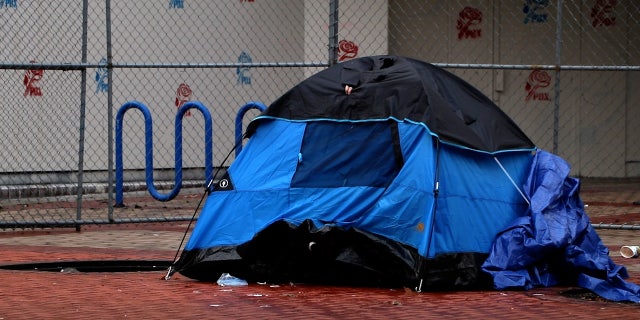
tent on street with chain link fence in background
The homeless crisis in Portland, Oregon, has continued to spiral out of control and several Portland business owners have sounded the alarm about the issue and the crime associated with it. (Hannah Ray Lambert/Fox News Digital)

The 2020 exodus came at the same time that crime in Portland began spiking and the city broke its homicide record in 2021 and then again in 2022. In addition, the homeless crisis in Portland has continued to spiral out of control and several Portland business owners have sounded the alarm about the issue and the crime associated with it.

“Our city is in peril,” Portland business owner Katherine Sealy told Fox News Digital in December. “Small businesses [and large] cannot sustain doing business in our city’s current state. We have no protection or recourse against the criminal behavior that goes unpunished.”

PORTLAND RESIDENT SOUNDS ALARM OVER CITY’S ‘SAFE REST VILLAGE’ PROGRAM: AREA OF ‘ORGANIZED CRIME AND DRUGS’

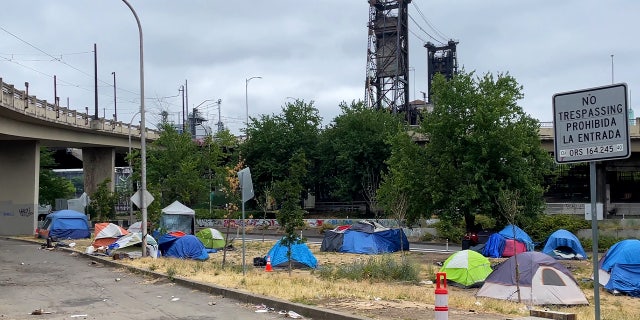
homeless tents in front of bridge
Tents cover an open space near the Steel Bridge in Portland, Oregon, on July 7, 2023. (Hannah Ray Lambert/Fox News Digital)

Mayor Ted Wheeler’s office reported a 50% increase in homelessness from 2019 to 2022.

The flood of residents leaving Portland appears to have continued since the pandemic as Portland lost 8,308 people from July 2021 to July 2022. Census data shows that Portland lost the sixth-most residents in the country over the past year, Fox 12 Oregon reported.

“It’s like Portland died,” longtime Portland resident Larry May told Fox 12 Oregon in May.

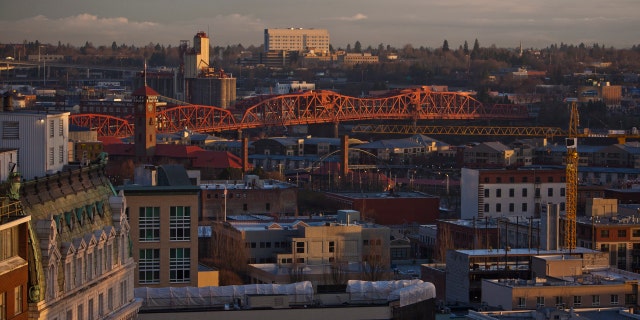
Portland, Oregon skyline
The 2020 exodus came at the same time that crime in Portland began spiking and the city broke its homicide record in 2021 and then again in 2022.  (George Rose/Getty Images)

Wheeler’s office did not immediately respond to a request for comment from Fox News Digital.

Andrew Mark Miller is a reporter at Fox News. Find him on Twitter @andymarkmiller and email tips to AndrewMark.Miller@Fox.com.

Ann Coulter Op-ed: California’s Homelessness Magnates


Commentary by Ann Coulter | Posted: Jun 08, 2022

Read more at https://townhall.com/columnists/anncoulter/2022/06/08/californias-homelessness-magnates—p–n2608452/

The opinions expressed by columnists are their own and do not necessarily represent the views of Townhall.com, and WhatDidYouSay.org.

California's Homelessness Magnates

Well, that didn’t last long. Chesa Boudin, the “progressive” district attorney of San Francisco, was recalled in a landslide election on Tuesday. Evidently, even that city’s progressive voters finally got tired of replacing their car windshields. (On the upside, once out of office, Boudin can keep prosecuting as many criminals as he did while in office.)

Quiz for Republicans:

In a shocking upset, the most liberal city in the nation just voted to recall a pro-criminal D.A.

Q: Should you be dedicating your time to:

— Ukraine

— Tax cuts

— Abortion

— Crime

[Sen. Lindsey Graham frantically waving his hand: UKRAINE!]

Crime is primarily a state and local issue, but there are some things the federal government can do. How about auditing the “homelessness” industry for fraud, graft and corruption? (And the drug rehab industry, while you’re at it.) In the last decade, homeless “advocacy” seems to have displaced Hollywood as the most well-compensated and glamorous industry in California.

Michael Shellenberger’s 2021 book, “San Fransicko: Why Progressives Ruin Cities,” details how progressives are foisting drug-addicted mental patients on an unsuspecting public. The problem is less the homeless — the drug-addicted mental patients you will always have with you — and more the well-healed liberals getting rich off the homelessness racket.

He begins by quoting all manner of homeless “advocates” — i.e., people who make money off of homelessness — such as Dr. Margot Kushel of the University of California-San Francisco (UCSF), who insists that homelessness has NOTHING to do with drugs or mental illness. “We’ve always known,” Kushel said, “that most homelessness is a result, pure and simple, of poverty.”

A lot of valuable information comes from sentences that begin with “we’ve always known.”

Convinced of the truth of this preposterous maxim, San Francisco has been doling out billions of dollars to solve homelessness, by providing the homeless — or as we are now commanded to call them, “our unhoused neighbors” — with shelter, food and massive cash payments.

Also free needles! Because homelessness is just a matter of being poor, as “we’ve always known.”

On the other hand …

In 2004, nearly 5,000 homeless people were offered housing by then-Mayor Gavin Newsom. Only 131 accepted.

And because, as Einstein said, doing the same thing over and over and expecting different results is the definition of excellence — isn’t that the quote? — San Francisco just keeps trying the same thing. Under a different mayor, about 15 years later, 150 vagrants were removed from a homeless encampment and offered free housing. Eight accepted.

But that makes no sense! Homeless advocates assured us our unhoused neighbors are just like you and me, except they can’t afford the rent.

Another possible cause of homelessness is hinted at in a recent Harvard University study of chronically homeless people in Boston who were given permanent housing. After following the group for 14 years, last year the researchers released their results: 86% of their subjects were beset by the “tri-morbidity” of mental illness, substance abuse and medical illness. After 10 years, only 12% were still housed. Forty-five percent died before the completion of the study.

Similarly, in 2019, San Francisco’s health department found that fully half of the city’s homeless population — currently housed or not — are both mentally ill and drug addicts. About 1,600 of the city’s estimated 8,035 homeless “frequently used emergency psychiatric services.”

The pernicious — but profitable! — idea that homelessness is caused by poverty has led the city to lavish unimaginable aid on the “poor.” In straight cash welfare, SF offers $588 a month to the poor — and that doesn’t include $192 in food stamps. Compare that to Los Angeles, where the maximum cash payment to the poor is $221, or New York City, where it’s $183.

That $780 a month in cash and food stamps doesn’t include all the free stuff given to the homeless through cutout agencies, like churches and nonprofits, funded by taxpayer dollars and tax-deductible “charitable” donations.

Tom Wolf, a formerly homeless drug addict, said that, thanks to all of San Francisco’s giveaways, he was able to spend his entire general assistance payment on heroin. Which San Francisco also helps out with, giving away 6 million free needles to drug addicts every year. That’s more than New York City dispenses — with a population 10 times larger.

As a result, drug overdose is the leading cause of death among the homeless in San Francisco.

The mother of a drug-addicted, homeless young man told Shellenberger that he describes San Francisco as “Pleasure Island” in the movie “Pinocchio”:

“On one side of the street are people giving you food and clean needles. On the other side of the street are all the drug dealers. It’s like getting all the candy and treats that you think you want. You think you’re having fun. But little by little it’s taking away your humanity and turning you into something you were never meant to be, like how the kids start turning into donkeys in ‘Pinocchio,’ and then end up trapped and in cages.”

What kind of sick society would do this to people?

One possible answer: a society that rewards money-grubbing narcissists with no concern for their fellow man, masquerading as giants of compassion. There’s a ton of money to be made in the helping-the-homeless business. As the formerly homeless Wolf told Shellenberger, “[The homeless nonprofits’] whole intention is to keep more people in this cycle because they’re getting money for it.”

Say, whatever happened with UCSF’s Kushel — of the “we’ve always known” metric? In 2019, she was the lucky recipient of a $30 million grant from San Francisco billionaire Marc Benioff (Salesforce founder) to study homelessness.

Gosh, they’re virtuous.

Ann Coulter Op-ed: California’s Homelessness Magnates


Commentary by Ann Coulter | Posted: Jun 08, 2022

Read more at https://townhall.com/columnists/anncoulter/2022/06/08/californias-homelessness-magnates—p–n2608452/

The opinions expressed by columnists are their own and do not necessarily represent the views of Townhall.com, and WhatDidYousay.org.

California's Homelessness Magnates

Well, that didn’t last long. Chesa Boudin, the “progressive” district attorney of San Francisco, was recalled in a landslide election on Tuesday. Evidently, even that city’s progressive voters finally got tired of replacing their car windshields. (On the upside, once out of office, Boudin can keep prosecuting as many criminals as he did while in office.)

Quiz for Republicans:

In a shocking upset, the most liberal city in the nation just voted to recall a pro-criminal D.A.

Q: Should you be dedicating your time to:

— Ukraine

— Tax cuts

— Abortion

— Crime

[Sen. Lindsey Graham frantically waving his hand: UKRAINE!]

Crime is primarily a state and local issue, but there are some things the federal government can do. How about auditing the “homelessness” industry for fraud, graft and corruption? (And the drug rehab industry, while you’re at it.) In the last decade, homeless “advocacy” seems to have displaced Hollywood as the most well-compensated and glamorous industry in California.

Michael Shellenberger’s 2021 book, “San Fransicko: Why Progressives Ruin Cities,” details how progressives are foisting drug-addicted mental patients on an unsuspecting public. The problem is less the homeless — the drug-addicted mental patients you will always have with you — and more the well-healed liberals getting rich off the homelessness racket.

He begins by quoting all manner of homeless “advocates” — i.e., people who make money off of homelessness — such as Dr. Margot Kushel of the University of California-San Francisco (UCSF), who insists that homelessness has NOTHING to do with drugs or mental illness. “We’ve always known,” Kushel said, “that most homelessness is a result, pure and simple, of poverty.”

A lot of valuable information comes from sentences that begin with “we’ve always known.”

Convinced of the truth of this preposterous maxim, San Francisco has been doling out billions of dollars to solve homelessness, by providing the homeless — or as we are now commanded to call them, “our unhoused neighbors” — with shelter, food and massive cash payments.

Also free needles! Because homelessness is just a matter of being poor, as “we’ve always known.”

On the other hand …

In 2004, nearly 5,000 homeless people were offered housing by then-Mayor Gavin Newsom. Only 131 accepted.

And because, as Einstein said, doing the same thing over and over and expecting different results is the definition of excellence — isn’t that the quote? — San Francisco just keeps trying the same thing. Under a different mayor, about 15 years later, 150 vagrants were removed from a homeless encampment and offered free housing. Eight accepted.

But that makes no sense! Homeless advocates assured us our unhoused neighbors are just like you and me, except they can’t afford the rent.

Another possible cause of homelessness is hinted at in a recent Harvard University study of chronically homeless people in Boston who were given permanent housing. After following the group for 14 years, last year the researchers released their results: 86% of their subjects were beset by the “trimorbidity” of mental illness, substance abuse and medical illness. After 10 years, only 12% were still housed. Forty-five percent died before the completion of the study.

Similarly, in 2019, San Francisco’s health department found that fully half of the city’s homeless population — currently housed or not — are both mentally ill and drug addicts. About 1,600 of the city’s estimated 8,035 homeless “frequently used emergency psychiatric services.”

The pernicious — but profitable! — idea that homelessness is caused by poverty has led the city to lavish unimaginable aid on the “poor.” In straight cash welfare, SF offers $588 a month to the poor — and that doesn’t include $192 in food stamps. Compare that to Los Angeles, where the maximum cash payment to the poor is $221, or New York City, where it’s $183.

That $780 a month in cash and food stamps doesn’t include all the free stuff given to the homeless through cutout agencies, like churches and nonprofits, funded by taxpayer dollars and tax-deductible “charitable” donations.

Tom Wolf, a formerly homeless drug addict, said that, thanks to all of San Francisco’s giveaways, he was able to spend his entire general assistance payment on heroin. Which San Francisco also helps out with, giving away 6 million free needles to drug addicts every year. That’s more than New York City dispenses — with a population 10 times larger.

The mother of a drug-addicted, homeless young man told Shellenberger that he describes San Francisco as “Pleasure Island” in the movie “Pinocchio”:

“On one side of the street are people giving you food and clean needles. On the other side of the street are all the drug dealers. It’s like getting all the candy and treats that you think you want. You think you’re having fun. But little by little it’s taking away your humanity and turning you into something you were never meant to be, like how the kids start turning into donkeys in ‘Pinocchio,’ and then end up trapped and in cages.”

What kind of sick society would do this to people?

One possible answer: a society that rewards money-grubbing narcissists with no concern for their fellow man, masquerading as giants of compassion. There’s a ton of money to be made in the helping-the-homeless business. As the formerly homeless Wolf told Shellenberger, “[The homeless nonprofits’] whole intention is to keep more people in this cycle because they’re getting money for it.”

Say, whatever happened with UCSF’s Kushel — of the “we’ve always known” metric? In 2019, she was the lucky recipient of a $30 million grant from San Francisco billionaire Marc Benioff (Salesforce founder) to study homelessness.

Gosh, they’re virtuous.

Faced With the Horrific Results of Their Ideas, Leftists Are Backpedaling with All Their Might


REPORTED BY: CASEY CHALK | MARCH 04, 2022

Read more at https://thefederalist.com/2022/03/04/faced-with-the-horrific-results-of-their-ideas-leftists-are-backpedaling-with-all-their-might/

homeless

It would appear that leftists don’t actually like a lot of the radical policies they have been advocating for since the beginning of the lockdowns and the death of George Floyd in spring 2020. From homelessness to crime to Covid policies, the left is backtracking on much of its platform in the face of disastrous results and frustration from rank-and-file liberals. Recent developments in our nation’s capital provide some of the most dramatic examples. 

Cities across the country are taking a more aggressive stance on homeless encampments in response to residents’ complaints, including Washington, D.C. An early February poll conducted by The Washington Post found that three-fourths of Washingtonians support the district’s plan to clear the camps of homeless persons that now proliferate across the city.

That the American Civil Liberties Union and even some D.C. council members oppose Mayor Muriel E. Bowser’s cleanups have not stopped their enforcement. Bowser has quite a mandate for this: the number of city residents who want these camps cleared does not substantially change based on respondents’ race, and is above 70 percent for white, black, Hispanic, and Asian residents.

That the district is pursuing this policy with substantial local support is a bit ironic, given that so many prominent leftist organizationslocal leftist leaders, and Democratic politicians have been trying for more than a year to protect these encampments. This included Ann Marie Staudenmaier, wife of Maryland gubernatorial candidate Tom Perez, who last year advocated for homeless camps in the district to be permitted and protected. “Don’t evict them from the only place that they have to call home,” she urged.

Perhaps it has something to do with how large numbers of homeless persons affect the cleanliness, security, and attraction of neighborhoods. A separate recent WaPo article cited residents who noted homeless persons in the camp have harassed them. One D.C. resident said downtown is “not pleasant” and that the ubiquity of the encampments threatens the security of local residents.

Although many on the left would likely grimace to say it, national trends on curbing these camps indicate a significant percentage of the rest of America feels the same way.

Refunding the Police

Mayors of America’s largest cities, once responsive to calls to defund the police, have done a dramatic reversal in response to local frustration with higher crime rates. Now “refund the police” has become the cry of many liberal residents.

In D.C., residents’ opinions on crime and police have experienced this shift, given increased crime and murder rates in the city since 2020. According to a recent WaPo poll, a sizable majority (59 percent) now agree that increasing the number of police officers patrolling communities would reduce the amount of violent crime in D.C.

“The share of Washingtonians who say they are not safe from crime has risen to 30 percent this year from 22 percent in November 2019 and is the highest in more than two decades of Post polls,” reports the WaPo.

This is quite a change from the “defund the police” initiatives city residents — and various activist groups — so loudly endorsed after the death of George Floyd. The D.C. government in 2020 supported measures in June 2022 to cut $15 million from the police department budget. At the time, the police chief warned this could lead to the loss of hundreds of officers and that underfunding training and equipment might result in officers using more excessive force.

Thankfully, D.C. is not alone in wanting to refund the police. As NBC reported in February, Democratic politicians are calling the “defund the police” movement “dead” and mayors in San Francisco, New York, and Chicago are “moving to increase police budgets and end ‘the reign of criminals.’”

Surrendering to Pandemic Fatigue

Democratic states are also ending many Covid restrictions in the face of rising complaints from their constituents. Consider D.C. Mayor Bowser’s mid-February announcement that she would lift the city’s vaccine requirement for businesses and “dial back” the city’s indoor mask rules. This announcement followed a number of states — including many governed by Democrats — that have also eased their restrictions as polls come back showing their rising unpopularity. Now D.C.’s party scene is “returning to normal,” reports the WaPo, even though coronavirus case counts in and around Washington remain “high.”

This is a remarkable and speedy shift, especially considering D.C. had some of the most strict Covid restrictions in the country. Perhaps the District’s dramatic about-face has something to do with widespread annoyance with pandemic restrictions, even among liberal voters. Perhaps it results from the rising tide of Democratic politicians listening to their constituencies despite “public health guidance” claiming the country is moving too fast in loosening the rules. 

Perhaps all of these changes also relate to the fact that the District of Columbia is no longer experiencing the population boom and gentrification that have defined the last couple of decades. The capital’s population declined by 2.9 percent from 2020 to 2021, according to the Census Bureau. Living in an increasingly dangerous, filthy nanny-city is apparently not that appealing, even to the District’s majority leftist population. This has been part of a broader national trend as people across the nation in 2021 left Democratic-run states.

Mugged by Reality

To borrow a phrase from the late Irving Kristol, D.C. residents (and liberals across the country) have been mugged by reality — and in some cases actually mugged. Perhaps living in a lefty utopia where the homeless camp wherever they like, undisturbed by a defunded police force, with fickle and irrational health-related restrictions isn’t all that it’s cracked up to be.

Democrat D.C. residents, like the rest of Americans, don’t actually like their public spaces overrun by homeless persons, their neighborhoods suffering increased violent crime rates, or their cities stuck in a cycle of never-ending draconian public safety regulations.

What this all means is that, thankfully, certain activist narratives that threatened all Americans have lost considerable steam. It also means these policies are likely political liabilities in upcoming elections. Perhaps it also shows there are certain things that all Americans can still agree on.


Casey Chalk is a senior contributor at The Federalist and an editor and columnist at The New Oxford Review. He has a bachelor’s in history and master’s in teaching from the University of Virginia and a master’s in theology from Christendom College. He is the author of The Persecuted: True Stories of Courageous Christians Living Their Faith in Muslim Lands.

VIDEO: California’s Coronavirus Problem No One Is Talking About


Reported By  Phelim McAleer | DailyWire.com

URL of the originating web site: https://www.dailywire.com/news/video-californias-coronavirus-problem-no-one-is-talking-about

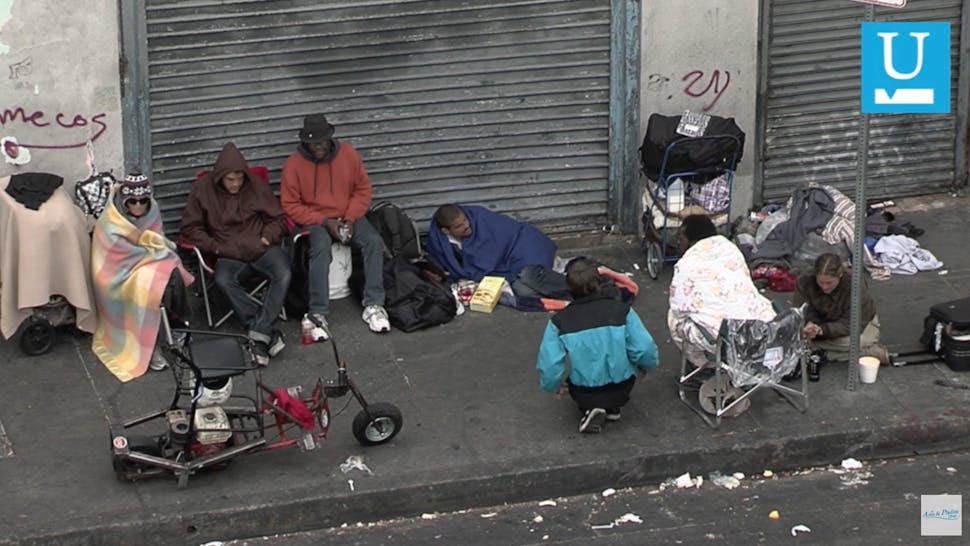
Homeless people in Los Angles’ “Skid Row.” / Courtesy The Ann and Phelim Scoop

By Phelim McAleer and Ann McElhinney

Los Angeles Mayor Eric Garcetti has been on the “cutting edge” of local leaders who have implemented strict shutdowns in the name of fighting the coronavirus and protecting the public. Politicians like Garcetti claim that they must coerce residents to remain in their homes for weeks, or months, on end in order to ease the burden on hospitals and healthcare workers.

But is it worth it when Garcetti is refusing to “lockdown” one of the most at risk populations in Los Angeles? While millions of Los Angeles residents shelter in place, the city’s nearly 36,000 homeless residents continue to wander the streets and go about their business.

Just a few days ago I took a drive down to Skid Row in Los Angeles, where nearly 50% of the area’s inhabitants are homeless — living in tents or on the street. Whereas the rest of Los Angeles is a ghost town, Skid Row looks like it’s any other normal day.

I was shocked to see that the city had not enforced any of their social distancing laws in the neighborhood. Tents were packed tightly together. Thousands of homeless individuals were drinking, socializing, and doing drugs on the sidewalk and in crowded parks. It looked as if the city was on lockdown … except for Skid Row.

Just last week, police officers in Malibu arrested a paddle boarder for violating the county’s ordinances that closed the beaches. It appears that in Los Angeles only taxpayers are on lockdown.

As irritating as it is to a taxpayer, the failure to enforce the law against the homeless is also a massive public health crisis. If there are so few ventilators as our politicians claim, the spread of COVID-19 in the homeless community would be a public health disaster for the city and the state. In fact, the state of California has over 150,000 people who are “experiencing homelessness,” according to the federal government.

You might be thinking, “I’m not homeless. I don’t interact with homeless people. This doesn’t matter to me.” But it does. In fact, a spread of COVID-19 within California’s homeless community could occupy thousands of ventilators. Homeless individuals in California are one of the most at-risk communities to contract serious complications with COVID-19.

According to the National Healthcare for the Homeless Council, homeless individuals have rates of underlying conditionsat nearly twice the rate of housed individuals in the United States. Diabetes, heart attacks, HIV, and pulmonary complications are all afflictions that greatly impact the homeless community and are disastrous when combined with COVID-19.

According to California Governor Gavin Newsom, over 60,000 homeless individuals in California could contractCOVID-19. Newsom also said California has access to only 4,252 ventilators. If the virus is truly as dangerous as our politicians have led us to believe, the math doesn’t add up and California could be in a very precarious position soon.

So when will Los Angeles act? Is it worth shutting down the city’s economy without making a concerted effort to move all homeless individuals off the streets?

Perhaps the city should focus their efforts on stopping a real major public health disaster from crippling our city instead of arresting paddle boarders and beachgoers.

Today’s TWO Politically INCORRECT Cartoons from A.F. Branco


A.F. Branco Cartoon – It’s Never Iran

Iran is at the root of almost all trouble in the Middle East. Saudi Arabia refinery explosions, and Issues in Syria, Afghanistan, Yamen, Iraq, etc.
Iran, the Evil in the Middle EastPolitical cartoon by A.F. Branco ©2019.

Tag Cloud