Perspectives; Thoughts; Comments; Opinions; Discussions

Posts tagged ‘GARY SHAPLEY’

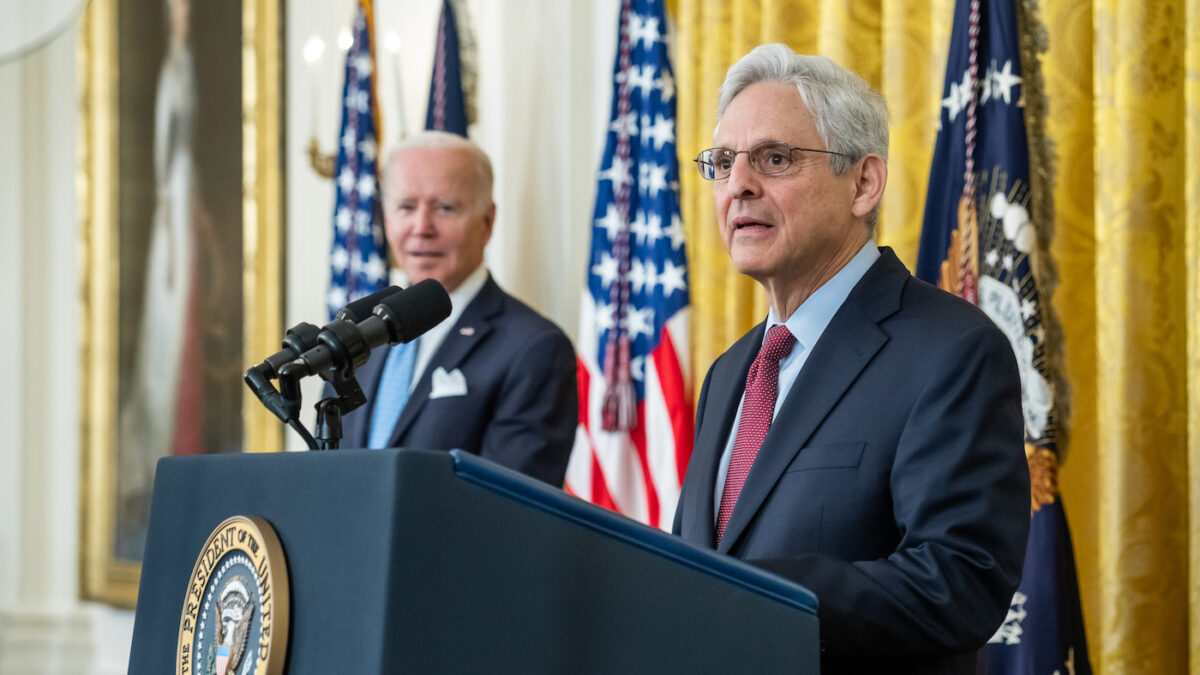
Merrick Garland Shouldn’t Be Praised. He Should Be Impeached


BY: DAVID HARSANYI | JUNE 04, 2024

Read more at https://thefederalist.com/2024/06/04/merrick-garland-shouldnt-be-praised-he-should-be-impeached/

Merrick Garland

Author David Harsanyi profile

DAVID HARSANYI

VISIT ON TWITTER@DAVIDHARSANYI

MORE ARTICLES

It’s no accident that The Wall Street Journal ran an “exclusive” hagiographic piece on Merrick Garland’s “by-the-book, play-no-favorites approach” the day the attorney general is set to be grilled by Congress. The administration wants to paint the AG as a fair-minded dispenser of justice.

In truth, while Garland might occasionally — only when faced with no real options — put the Biden administration in an uncomfortable political position, he has regularly weaponized the agency to target the president’s political enemies, from pro-life protesters to concerned parents to presidential candidates.

Even as I write this, Garland is refusing to hand over audio recordings of Joe Biden’s interviews with former Special Counsel Robert Hur, despite a congressional subpoena. Even as the DOJ stonewalls Congress, it is prosecuting the Republican Party’s presidential candidate for crimes for which the Hur tape supposedly “exonerates” Biden.

Garland’s claims of executive privilege are risible. If Biden’s audio can be withheld from the public simply because someone somewhere might manipulate the tape using AI, then any audio of any president can be denied the public.

Also, why is this DOJ’s concern? Considering the Hur transcript has already been released — and we know that Biden lied about it — there is even less justification for withholding the audio. And considering the DOJ has apparently cleaned up all the “uhs” and “ohs” and garbled words in the transcript, the tape would likely further cement the president as an “elderly man with a poor memory.”

So, the real problem here isn’t the deep fake; it’s the unedited tape. Withholding the audio is obviously politically motivated. Which is unsurprising, since Garland has been one of the most partisan AGs in memory.

While Garland was raiding the home of the former president over a classified document dispute, he was letting the statute of limitations on the foreign influence-peddling by the president’s family run out.

While left-wing pro-Hamas protesters were rioting and targeting Jews, Garland was still fearmongering over the coming MAGA extremist revolution, inflating the threat with bogus statistics.

While Garland did nothing about those (likely) illegally picketing the homes of federal judges and attempting to intimidate them and influence cases — even after an assassin tried to kill Brett Kavanaugh — the DOJ was deploying armed teams to raid the homes of pro-life families and prosecuting elderly anti-abortion protesters for praying in front of “clinics.”

Even as Democrats are yammering about saving democracy, the DOJ has been working to undermine the electoral choices of voters in red states like Texas. Abortion is not a (pretend) constitutional right anymore. The DOJ does not care.

The DOJ is restarting censorship efforts under the guise of stopping foreign interference, and also targeting X owner Elon Musk, who has opened his platform to more neutral speech. It’s quite the happenstance, right?

Not only did Garland form a “task force” to investigate local parents who were protesting authoritarian Covid restrictions and racist curriculums, but he refused to dissolve the effort even after the National School Boards Association apologized for the letter that sparked it.

Of course, it was the Biden administration that prompted the organization to use the term “domestic terrorism” to give the DOJ justification to get involved in the first place. Even The New York Times acknowledged that “Garland did not detail any specific threats of violence or offer reasons for the increase in harassment and threats.” The only reason to get involved was to chill speech and intimidate parents.

No matter.

Even the case against Hunter Biden, used most often by the left to brandish Garland’s alleged Solomonic credentials, is a farce.

Let’s not forget if the Justice Department had its way, the case would have disappeared. To begin with, Garland ignored the law and appointed a counsel from within the government. David Weiss, whose office was filled with Biden allies, was prepared to give Hunter an astonishing immunity deal, not only on felony gun and tax charges, but for a slew of unrelated serious potential offenses, including failure to register as a foreign agent, bribery, and corruption.

It was only because of the whistleblower testimony of Gary Shapley and Joseph Ziegler that Weiss was forced to ask Hunter to plead guilty to two piddling misdemeanor counts. And the immunity deal was only quashed because Judge Maryellen Noreika, who pointed out there was not a single precedent in which immunity was offered for “crimes in a different case,” rejected it.

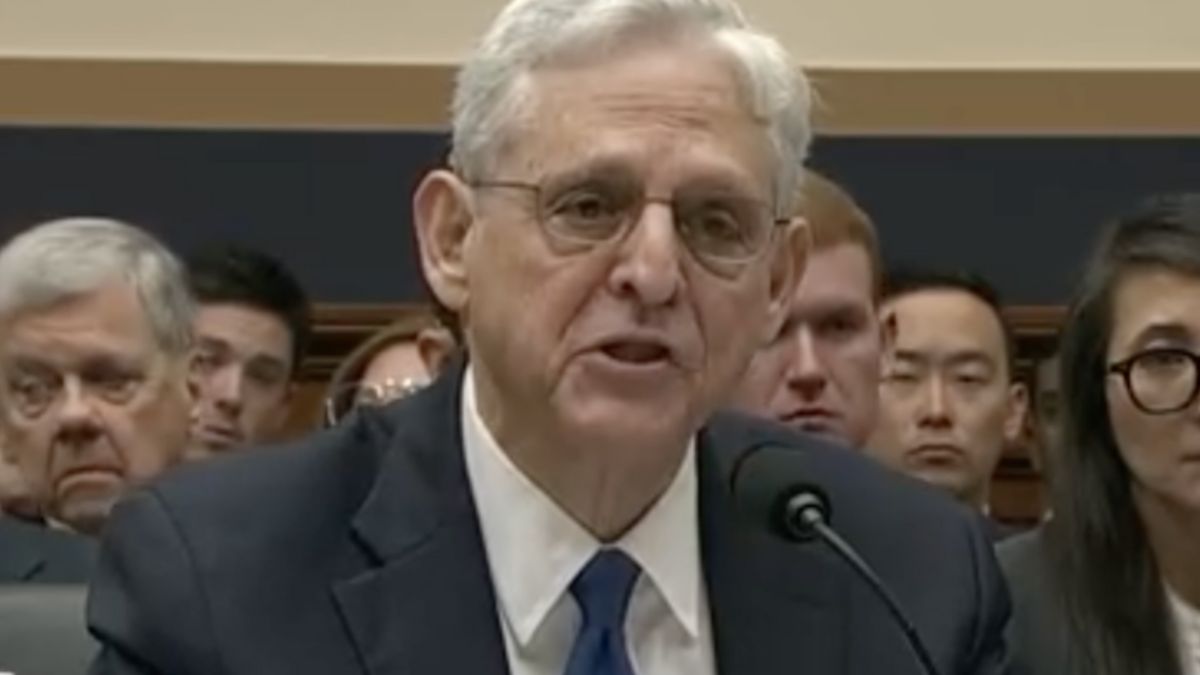
In his remarks to Congress today, Garland promised that he “will not back down from defending our democracy,” despite the “repeated attacks” and “conspiracy theor[ies]” regarding the DOJ. Some conspiracy theories exist, no doubt, but most criticisms of Garland’s work are legitimate. Treating criticism of his corrupt tenure as an attack on the “judicial process itself” has it backward.  Demanding no one question the actions of state institutions is authoritarian. If the system were working properly, Garland would be impeached.

But in their efforts to save “democracy” — a concept that’s been stripped of any meaning — Democrats have justified deploying the state to punish and destroy political enemies. For many progressives, the legal system isn’t merely a tool for criminal justice but a way to exact political justice.

Garland is one of the leaders in this fight. Whether it’s because he is a weak man willing to do what’s expected of him or because he is corrupt makes little difference. 


David Harsanyi is a senior editor at The Federalist, a nationally syndicated columnist, a Happy Warrior columnist at National Review, and author of five books—the most recent, Eurotrash: Why America Must Reject the Failed Ideas of a Dying Continent. Follow him on Twitter, @davidharsanyi.


The Spy Who Loved Me? Morris Reportedly Protected by CIA in Hunter Biden Investigation

Recently, it became public that Kevin Morris, the entertainment lawyer who has subsidized the expenses and bought the art of Hunter Biden, had stopped his funding of Biden. Morris has paid off Hunter’s IRS debts and reportedly lent him a total of $4.9 million for housing, car payments, legal fees, and other possible costs.

The so-called “sugar bro” is “tapped out” according to media reports.  (For full disclosure, Morris previously threatened me with a defamation lawsuit over my writing about his representation of Hunter). Now the House has confirmed prior stories that whistleblower records indicate that the CIA prevented the Justice Department from questioning Kevin Morris as a witness in its probe of Hunter Biden.

Morris has maintained that he lent Hunter millions for “no ulterior motive” and continued to support him out of friendship. Yet, when investigators started to look into the payments and the relationship, they were told that Morris had some relationship with the CIA in August 2021. According to previously unreleased information, IRS special agent and current whistleblower Gary Shapley documented the bizarre intervention of the spy agency.

In a sworn affidavit in May, Shapley declared:

During a recurring prosecution team conference call, in or around late August 2021, Assistant United States Attorney (AUSA) Lesley Wolf told the team that she and DOJ Tax Attorney Jack Morgan had recently returned from the Central Intelligence Agency headquarters in Langley, Virginia, where they had been summoned to discuss Kevin Morris.

AUSA Wolf stated that they were provided a classified briefing in relation to Mr. Morris and as a result we could no longer pursue him as a witness. Investigators probed AUSA Wolf, but since her briefing was classified and she was apparently sanitizing it to an unclassified form to share over an open phone line, she did not elaborate with more information. She reiterated more than once that they were summoned to the CIA in Langley concerning Mr. Morris, and that because of the information provided there, he could not be a witness for the investigation. AUSA Wolf proudly referenced a CIA mug and stated that she purchased some CIA “swag” at the gift shop while she was there.

It is unclear how the CIA became aware that Mr. Morris was a potential witness in the Hunter Biden investigation and why agents were not told about the meeting in advance or invited to participate. It is a deviation of normal investigative processes for prosecutors to exclude investigators from substantive meetings such as this.

It is a testament to the level of bias in the mainstream media that this story is not the sole focus of every media outlet in America. Imagine if the CIA intervened to stop an investigation into a donor maintaining one of the Trump children and supporting his effort to blunt any investigation into corruption. MSNBC would make it ongoing special programming with its own time slot.

This is an agency that is supposed to avoid domestic interventions into politics as well as other areas. It is accused of pulling in a prosecutor to tell her to close part of a criminal investigation involving the financial supporter of the president’s son. Even if Morris was an asset, the question is why shut down the inquiry into his payments to Hunter Biden. The work of Morris with the CIA could be protected or redacted. Instead, the line of inquiry was shut off and Wolf reportedly left Langley with CIA swag and an empty bag of evidence.

Willfully Blind David Weiss Pinky Promises Political Favoritism Didn’t Affect Hunter Biden Probe


BY: MARGOT CLEVELAND | NOVEMBER 13, 2023

Read more at https://thefederalist.com/2023/11/13/willfully-blind-david-weiss-pinky-promises-political-favoritism-didnt-affect-hunter-biden-probe/

Hunter Biden

Author Margot Cleveland profile

MARGOT CLEVELAND

VISIT ON TWITTER@PROFMJCLEVELAND

MORE ARTICLES

Politics absolutely, positively had no bearing on the Hunter Biden investigation, Delaware U.S. Attorney-turned-Special Counsel David Weiss assured the House Judiciary Committee last week. Yet Weiss also acknowledged it would be a “problem” if someone had warned Joe Biden’s transition team of FBI agents’ impending plan to interview the president-elect’s son, as whistleblowers say occurred. Weiss just didn’t bother to ask anyone about the leak or any other concerns of political favoritism, showing the federal prosecutor has opted for willful blindness over oversight of the Hunter Biden criminal probe — even after his appointment as special counsel.

On Tuesday, Weiss sat for an interview before the House Judiciary Committee. A transcript of Weiss’s testimony, which The Federalist has reviewed, shows the special counsel faced several questions about claims that political favoritism infected the Hunter Biden investigation.

But even before the questioning began, in a brief opening statement, Weiss declared that “political considerations played no part in our decision making.” Rather, the Delaware U.S. attorney, doing double duty as special counsel, assured the committee that “throughout this investigation, career prosecutors on my team and I have made decisions based on the facts and the law.”

Weiss repeated that mantra several times during questioning about specific steps his team took — or didn’t take — in the Hunter Biden investigation. “Again, I’m not going to comment on any aspect of the investigation or a prosecution, and from my perspective, the prosecutors who participated in this case followed the law and the facts. That was the motivation.”

Of course, that was Weiss’s “perspective” because, even after the IRS whistleblowers provided concrete examples of the politicization of the Hunter Biden investigation, the U.S. attorney buried his head in the sand rather than inquire about the veracity of the claims. The totality of Weiss’s testimony confirms this reality, but it is best exemplified in an exchange about the warning given to President-elect Joe Biden’s transition team that agents intended to interview Hunter Biden.

IRS whistleblower Gary Shapley had previously testified that the day before their Dec. 8, 2020 “day of action,” when agents planned to interview a host of relevant witnesses, he learned someone had tipped off Joe Biden’s transition team of the plans to interview Hunter Biden and another 10-plus witnesses. “This essentially tipped off a group of people very close to President Biden and Hunter Biden and gave this group an opportunity to obstruct the approach on the witnesses,” Shapley told the House Ways and Means Committee.

The House Judiciary Committee asked Weiss if he knew “who made the decision to tip off the presidential transition team about the day of action, and that the investigators wanted to try to speak with Hunter Biden.” Weiss initially responded that it wouldn’t be appropriate for him to comment on the matter but that he would address the question in his special counsel report.

A Concerning Connection

However, additional questioning soon reviewed a concerning connection between the Delaware U.S. attorney’s office and the Biden transition team, in the person of Alexander Mackler, whom Weiss acknowledged had been one of his assistant U.S. attorneys from 2016 through about mid-2019. According to the committee’s questioning, Mackler had at one point served as Joe Biden’s press secretary, had been Beau Biden’s campaign manager during his reelection campaign, and from 2014-2016 served as deputy counsel to then-Vice President Biden. While Weiss testified, he knew Mackler had worked for Biden, he said he didn’t know many of those specifics. However, Weiss acknowledged learning that Mackler had been named to Biden’s transition team, although he said he couldn’t remember when or how he had learned of that fact.

The House Judiciary Committee then pushed Weiss on whether he or anyone else from his office had any communications with Mackler while he was working with the transition team. While Weiss stated he was “very confident” he “had no conversations” with Mackler about the latter’s work on the transition team or about the Hunter Biden case, Weiss said he had “no idea whether anyone else has spoken to Alex Mackler period or about the case.”

Weiss further testified that he was actually unaware of whether the transition team had been tipped off, as IRS whistleblowers claimed. But if so, Weiss confirmed it would be “a concern” and “a problem” and that “it shouldn’t happen.” Yet when pushed on what he would do to address the problem if he “found out that something like that did occur,” Weiss refused to answer the question, saying it was “a hypothetical” that he would not “speculate on” other than saying that “as a general matter, it’s problematic.”

Willful Blindness

On first blush, Weiss’s non-answers about the tip-off to the transition team seem like inconsequential, unhelpful responses that merely lead to a dead end. But Weiss’s acknowledged ignorance is explosive news: The man that Attorney General Merrick Garland named as special counsel to supposedly ensure independence in the investigation and prosecution of the president’s son failed to inquire of his team about whether someone had leaked to the transition team details about the impending questioning of Hunter Biden. In fact, according to Weiss, he didn’t even bother to confirm the tip-off had occurred — much less seek to determine who bore responsibility for the leak — even though he knew that a former Delaware assistant U.S. attorney served on the Biden transition team.

Weiss’s failure in this regard was not an aberration. Rather, throughout his House Judiciary Committee testimony last week, Weiss confirmed he has ignored the whistleblowers’ claims of politicization. For instance, when asked whether “any of the attorneys on your team, whether it’s a Special Counsel team or before the Special Counsel team was stood up, have any ties which you would consider close to the Biden family,” Weiss said he doesn’t “delve into those kinds of things,” but that he is “unaware of any such thing.”

Weiss’s failure to inquire about his staff’s relationship with the Biden family may have made sense initially but given the two whistleblowers’ detailed allegations of political favoritism, not asking some basic questions to ensure an unbiased staff is inexcusable.

Weiss’s failures extend much further, however, with his Tuesday testimony confirming he has not reviewed his staff’s handling of the investigation in light of the whistleblowers’ testimony that there were “politically-motivated decisions made in the Hunter Biden case.” Specifically, while Weiss acknowledged the whistleblowers’ claims, his responses to questions show he disregarded the claims without any inquiry. For instance, when asked, “If an investigator or prosecutor makes what is believed to be a politically-motivated statement or decision, how is that reviewed in your office?” Weiss responded that he was “not aware of such a situation.”

The House committee pushed the special counsel more on this point, asking: “For example, on the Hunter Biden case, if one of your assistant United States attorneys was exhibiting favoritism towards the Biden family or towards Hunter Biden, and that was brought to your attention, what would be the process to sort that out?”

“My office has no process or protocol for dealing with something like that. It’s not something we have engaged in, participated in, or that I have experienced,” Weiss countered. Weiss held firm under additional questioning, stating he was “not aware of any such reviews.”

“I’ve told you. I have no such process. We haven’t experienced it in our office,” Weiss insisted.

Head in the Sand

This testimony establishes that Weiss has done nothing to review his team’s handling of the Hunter Biden investigation for possible political bias, notwithstanding the whistleblowers’ detailed claims of such favoritism. No wonder then that Weiss can say he has confidence in his prosecutors and believes they acted “in a professional and unbiased manner without partisan or political considerations.”

Ironically, if this were a criminal case in which federal prosecutors needed to establish the defendant’s knowledge of some sort of “shady dealings,” the U.S. attorney’s office would seek what is collegially called the “ostrich instruction.” The “ostrich instruction” informs the jury that a deliberate effort “to avoid guilty knowledge is all the guilty knowledge the law requires,” and that a defendant who knows or strongly suspects “he is involved in shady dealings” cannot avoid criminal liability by making sure “he does not acquire full or exact knowledge of the nature and extent of those dealings.”

While there is no suggestion that Weiss is a co-conspirator in some criminal enterprise, he is similarly burying his head in the sand when it comes to the politicization of the Biden investigation exposed by the IRS whistleblowers and congressional oversight committees. Thus, his assurances that “political considerations played no part in our decision making” are meaningless.


Margot Cleveland is an investigative journalist and legal analyst and serves as The Federalist’s senior legal correspondent. Margot’s work has been published at The Wall Street Journal, The American Spectator, the New Criterion (forthcoming), National Review Online, Townhall.com, the Daily Signal, USA Today, and the Detroit Free Press. She is also a regular guest on nationally syndicated radio programs and on Fox News, Fox Business, and Newsmax. Cleveland is a lawyer and a graduate of the Notre Dame Law School, where she earned the Hoynes Prive—the law school’s highest honor. She later served for nearly 25 years as a permanent law clerk for a federal appellate judge on the Seventh Circuit Court of Appeals. Cleveland is a former full-time university faculty member and now teaches as an adjunct from time to time. Cleveland is also of counsel for the New Civil Liberties Alliance. Cleveland is on Twitter at @ProfMJCleveland where you can read more about her greatest accomplishments—her dear husband and dear son. The views expressed here are those of Cleveland in her private capacity.

Baltimore FBI Agent Agrees Weiss Didn’t Have Ultimate Authority to Charge Hunter Biden


BY: MARGOT CLEVELAND | SEPTEMBER 14, 2023

Read more at https://thefederalist.com/2023/09/14/baltimore-fbi-agent-agrees-weiss-didnt-have-ultimate-authority-to-charge-hunter-biden/

Baltimore FBI field office

Author Margot Cleveland profile

MARGOT CLEVELAND

VISIT ON TWITTER@PROFMJCLEVELAND

MORE ARTICLES

The assistant special agent in charge (ASAC) of the Baltimore FBI office sat for a transcribed interview on Monday with the House Judiciary Committee. The transcript from the closed-door session, which The Federalist has reviewed in full, reveals a rare find: an FBI agent still involved in the Hunter Biden investigation who will admit the obvious — that Delaware U.S. Attorney David Weiss did not have ultimate authority to charge the president’s son.

Monday’s interview of the Baltimore ASAC, whose name is being withheld by the House Judiciary Committee, followed the questioning last week of her boss, Thomas Sobocinski, the special agent in charge. Both Sobocinski and the ASAC attended the Oct. 7, 2022, meeting in which, according to IRS whistleblower Gary Shapley, Weiss said he was not the final decisionmaker on whether to bring charges against Hunter Biden.

In questioning the ASAC, the Judiciary Committee asked about her understanding of Weiss’s authority. She initially testified that she understood Weiss had the authority “to move forward and bring charges if that was what the determination was and he would go forth in doing that.” But after several back-and-forths, which included the ASAC reviewing the statutory language that would allow Weiss to bring charges in another district, she acknowledged that Weiss did not have the ultimate authority to charge Hunter Biden. 

“But based on what we just discussed, it’s true that Mr. Weiss alone was not the deciding person on whether charges are filed?” the House attorney queried.

“I would say, based on the statute, seeing that, as it reads here … yes, I would say that there is someone else, the Attorney General, as it’s noted here in the statute, that is involved in this process,” the ASAC replied. 

The House attorney continued: “[I]s it your understanding today that there is another person involved in whether Mr. Weiss could bring charges in another jurisdiction?”

“Yes,” the ASAC concurred.

The ASAC’s answer has been obvious to everyone for months, yet Democrats, the legacy media, and Weiss and Merrick Garland apologists have refused to acknowledge the reality. Even the ASAC’s boss, throughout his interview with the House Judiciary Committee, maintained, “Weiss had the authority in the U.S. to bring the charges where venue presented itself,” wherever he wanted, whether it be in California or D.C. And even when pushed on the limitations of a U.S. attorney’s authority, Sobocinski said Weiss had the authority and it was merely a matter of administrative hoop-jumping for the Delaware U.S. attorney to charge Biden in another district. 

In fact, that Sobocinski couldn’t admit the truth rendered his entire testimony not credible. That is precisely why no one should believe anything Weiss and AG Garland say about the Hunter Biden investigation either — because they first deceived Congress and the American public about Weiss’s authority and have since doubled down on their misrepresentations. 

Garland, for his part, told Sen. Chuck Grassley under oath that “the U.S. attorney in Delaware has been advised that he has full authority … to bring cases in other jurisdictions if he feels it’s necessary.” Weiss then covered for Garland, telling the House Judiciary Committee in a letter on June 7, 2023, that “as the Attorney General has stated, I have been granted ultimate authority over this matter, including responsibility for deciding where, when, and whether to file charges and for making decisions necessary to preserve the integrity of the prosecution…” 

Then after the transcript of Shapley’s congressional closed-door interview was released, revealing the whistleblower’s testimony that during the meeting on Oct. 7, 2022, Weiss had said he was not the ultimate decisionmaker on whether to charge Hunter Biden, Weiss clarified his statement. While saying he stood by what he had written in his June 7, 2023, letter to the House Judiciary Committee, Weiss wrote in an early July follow-up letter that he wished to expand on what he meant. He acknowledged that as the U.S. attorney for the District of Delaware, he lacked the authority to charge Hunter Biden in other districts. Yet, not to worry, Weiss assured the House oversight committee: Garland had promised him that, if necessary, the AG would grant Weiss special attorney status to allow him to prosecute Hunter Biden in D.C., California, or any other jurisdiction.

The most revealing fact from Monday’s interview is that it took this long and this ASAC to say openly what the attorney general, the U.S. attorney, and the special agent in charge of the Baltimore FBI field office continue to obfuscate about: Weiss’s pre-special counsel authority. The only real reason to hide the reality that Weiss lacked the authority to charge Hunter Biden in D.C. and California is that it means the failure to charge him for felony tax offenses falls on the U.S. attorneys and attorney general his father appointed. 

Thus the ASAC’s testimony also confirmed that the Biden-appointed U.S. attorneys in D.C. and California had refused to bring charges against Hunter Biden in their districts where they had proper venue for the alleged tax felonies.

On the question of what, precisely, Weiss had said during the Oct. 7, 2022, meeting, the ASAC was less helpful, however, not remembering many of the details. But not only didn’t she remember what Shapley claimed was said during the meeting. She also didn’t remember what her boss, Sobocinski, admitted to saying during the meeting. Her lack of recall thus doesn’t carry much of a punch, especially when she hadn’t taken notes during the meeting, as Shapley had.

Of course, during the interview, the DOJ and FBI’s attorneys tried to spin Shapley’s email notes as merely a summary of the meeting written later, but the IRS whistleblower has already destroyed that narrative. On Wednesday, his attorneys provided the House Judiciary Committee a copy of the handwritten notes he had taken during the meeting. 

While those notes corroborate Shapley’s testimony, we are much beyond the question of what Weiss said during the meeting. We are now at the point that the House needs to launch additional impeachment inquiries of Garland, Weiss, and FBI Director Christopher Wray to uncover what the DOJ and FBI did (or didn’t do) to cover up for Hunter and Joe Biden and then cover up their cover-up.


Margot Cleveland is an investigative journalist and legal analyst and serves as The Federalist’s senior legal correspondent. Margot’s work has been published at The Wall Street Journal, The American Spectator, the New Criterion (forthcoming), National Review Online, Townhall.com, the Daily Signal, USA Today, and the Detroit Free Press. She is also a regular guest on nationally syndicated radio programs and on Fox News, Fox Business, and Newsmax. Cleveland is a lawyer and a graduate of the Notre Dame Law School, where she earned the Hoynes Prive—the law school’s highest honor. She later served for nearly 25 years as a permanent law clerk for a federal appellate judge on the Seventh Circuit Court of Appeals. Cleveland is a former full-time university faculty member and now teaches as an adjunct from time to time. Cleveland is also of counsel for the New Civil Liberties Alliance. Cleveland is on Twitter at @ProfMJCleveland where you can read more about her greatest accomplishments—her dear husband and dear son. The views expressed here are those of Cleveland in her private capacity.

IRS Whistleblower Gives Congress More Documents, Boosting His Credibility and Busting the DOJ’s


BY: MARGOT CLEVELAND | SEPTEMBER 13, 2023

Read more at https://thefederalist.com/2023/09/13/irs-whistleblower-gives-congress-more-documents-boosting-his-credibility-and-busting-the-dojs/

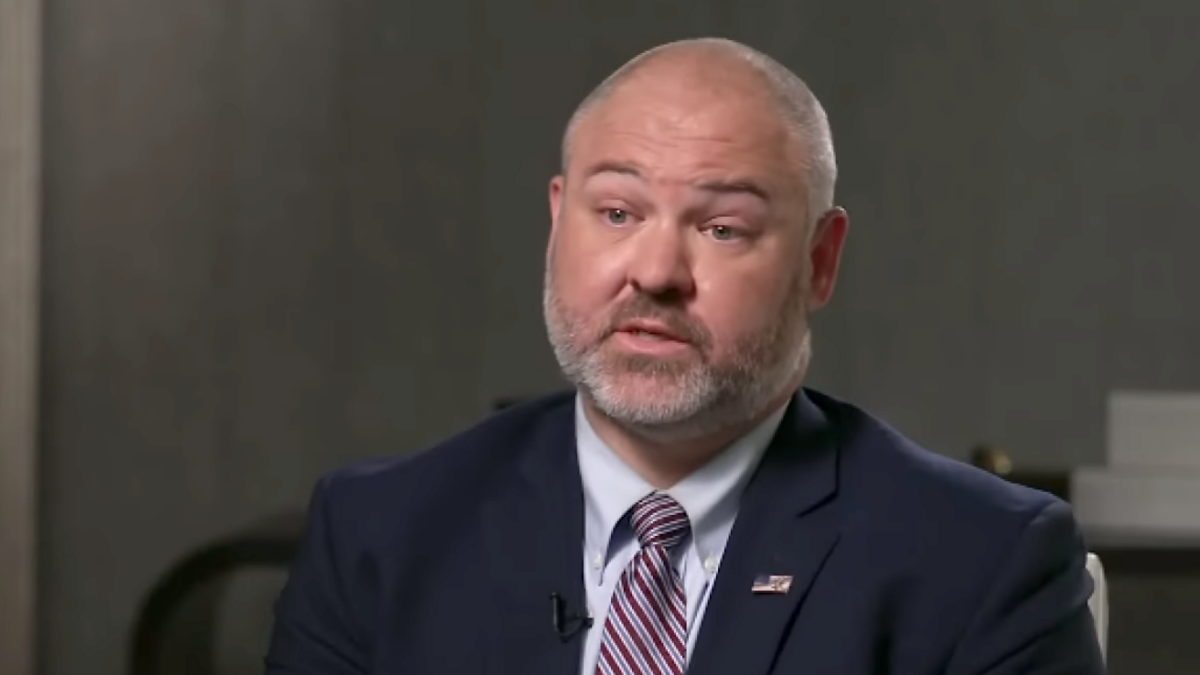
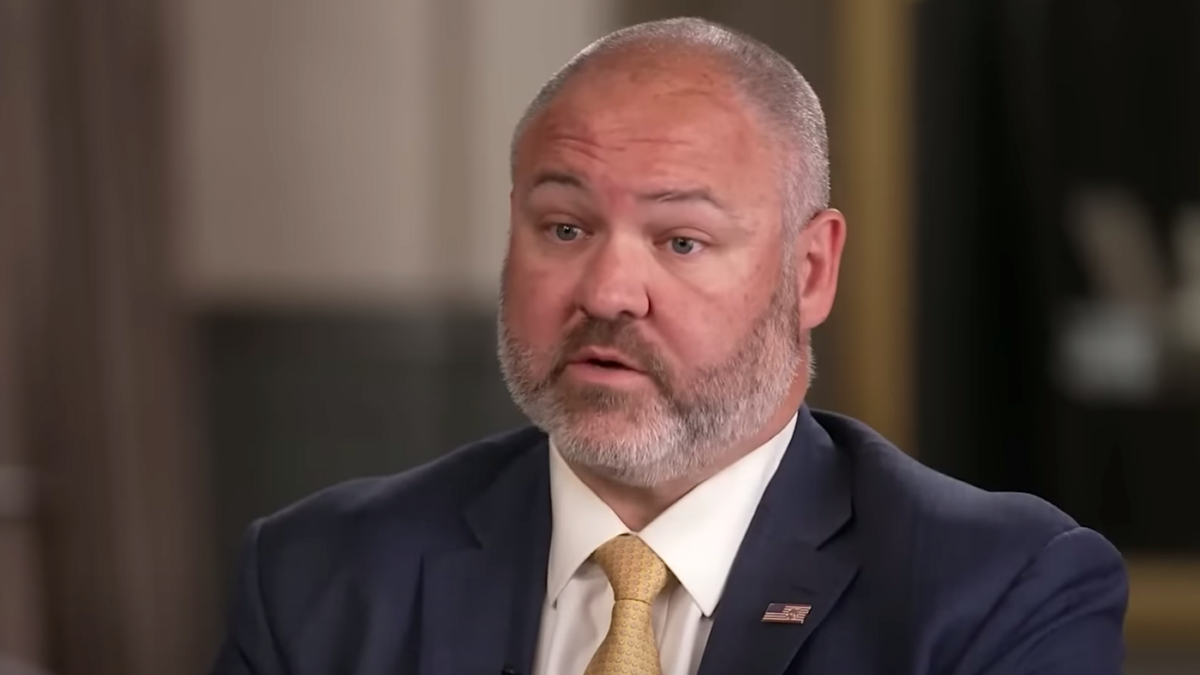
IRS whistleblower Gary Shapley

Author Margot Cleveland profile

MARGOT CLEVELAND

VISIT ON TWITTER@PROFMJCLEVELAND

MORE ARTICLES

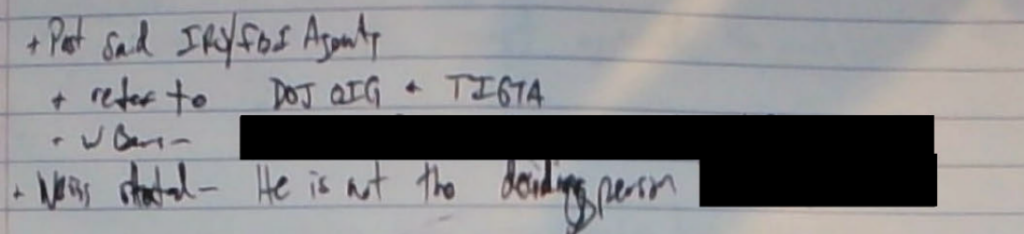
On Monday, IRS whistleblower Gary Shapley provided congressional oversight committees nine new documents related to the botched Hunter Biden investigation, according to a letter sent Wednesday morning to the House Judiciary Committee. The letter also contained a redacted 10th new document: the handwritten notes Shapley took during the Oct. 7, 2022, meeting in which Delaware U.S. Attorney David Weiss allegedly announced to his team that he was “not the deciding official on whether charges are filed” against Hunter Biden.

Those handwritten notes further bolster Shapley’s earlier testimony about the meeting and debunk counterclaims by the special agent in charge of the FBI’s Baltimore field office that Weiss had not said he lacked authority to charge Hunter Biden. What the other nine documents reveal, however, remains to be seen.

“Yesterday the Washington Post published a story reportedly based on a transcript it obtained of the Committee’s interview of Federal Bureau of Investigation (FBI) Special Agent in Charge Thomas J. Sobocinski,” the letter from Shapley’s Empower Oversight attorneys to the House Judiciary Committee opened. Sobocinski was one of seven attendees at the Oct. 7, 2022, meeting, in which — according to Shapley’s previous testimony, corroborated by an email he sent following the meeting — Weiss said he was “not the deciding official” on whether to charge Hunter Biden and that he had been denied special counsel authority to charge the president’s son in D.C. or California. 

As The Federalist reported earlier Wednesday based on its review of the transcript of Sobocinski’s interview, “Sobocinski claimed he did not remember Weiss saying he had sought (and been denied) special counsel status or that Weiss had represented that he was ‘not the deciding official.’” Further, “according to Sobocinski, had Weiss said either of those things, he would have remembered it,” with the FBI agent implying Shapley’s claims were false. 

According to the transcript, Sobocinski tried to discredit Shapley’s testimony and the email he had sent following the October meeting by stressing that Shapley had not drafted the email during the meeting and thus the notes were not really “contemporaneous” with Weiss’s supposed statements. 

In its Wednesday letter to the Judiciary Committee, Shapley’s legal team responded to Sobocinski’s objections by providing the committee a redacted copy of Shapley’s “contemporaneous handwritten notes,” in order to let the committee “access the truthfulness and reliability of Mr. Sobocinski’s testimony.” Empower Oversight, which represents Shapley, further stressed in its letter that, unlike Shapley, Sobocinski took no notes during the meeting on Oct. 7, 2022.

Shapley’s handwritten notes taken during the meeting do indeed track the email summary he sent later that evening. In his notes, he wrote: “Weiss stated— He is not the deciding person.” This provides strong corroboration for Shapley’s email and his testimony.

Conversely, Sobocinski has nothing to corroborate his (lack of) recollection of the meeting. Sobocinski has also proven himself not credible by testifying that Weiss had ultimate authority to charge Hunter Biden anywhere, anytime — well, kinda, sort of, not really. 

While Shapley’s credibility remains bars above Sobocinski’s, the bottom line is it doesn’t really matter what Weiss said during the October meeting. What matters is what happened and whether Biden’s Department of Justice refused to pursue tax felony charges in other venues and kept Weiss from doing so himself. What matters is whether the DOJ and FBI interfered in the Hunter Biden investigation. 

On the first question, Americans may never get a clear answer, as Weiss continues to obfuscate and cover for Attorney General Merrick Garland. But on the DOJ and FBI’s interference in the Hunter Biden investigation, there is already overwhelming evidence establishing this scandal — and it isn’t merely coming from Shapley or his fellow IRS whistleblower. Rather, another whistleblower exposed the burying of the FD-1023 form, which implicated both Hunter and Joe Biden in a Burisma bribery scandal. That whistleblower also revealed to Sen. Chuck Grassley that FBI Supervisory Intelligence Analyst Brian Auten opened an “assessment” in August 2020 to improperly discredit “verified and verifiable” derogatory intel about Hunter Biden.

The nine new documents Shapley provided to the House Ways and Means Committee and the Senate Finance Committee may add even more evidence of the DOJ and FBI’s interference in the investigation of the president’s son. But unless and until the committees vote to release that information publicly, they will remain secreted from the American public. Likewise, the redacted portions of Shapley’s handwritten notes will remain confidential as potentially protected taxpayer information until the relevant congressional committees authorize their release. 

That may happen sooner than originally planned, however, now that the White House is attempting to spin the impeachment inquiry into Joe Biden as misinformation, with an assist from the DOJ and FBI lawyers representing Sobocinski.

2023-09-13 Letter to House Judiciary – 10-7-22 Notes by The Federalist on Scribdhttps://www.scribd.com/embeds/671047106/content?start_page=1&view_mode=scroll&access_key=key-eqkS2VXSh3XTA40s9ZCt


Margot Cleveland is an investigative journalist and legal analyst and serves as The Federalist’s senior legal correspondent. Margot’s work has been published at The Wall Street Journal, The American Spectator, the New Criterion (forthcoming), National Review Online, Townhall.com, the Daily Signal, USA Today, and the Detroit Free Press. She is also a regular guest on nationally syndicated radio programs and on Fox News, Fox Business, and Newsmax. Cleveland is a lawyer and a graduate of the Notre Dame Law School, where she earned the Hoynes Prive—the law school’s highest honor. She later served for nearly 25 years as a permanent law clerk for a federal appellate judge on the Seventh Circuit Court of Appeals. Cleveland is a former full-time university faculty member and now teaches as an adjunct from time to time. Cleveland is also of counsel for the New Civil Liberties Alliance. Cleveland is on Twitter at @ProfMJCleveland where you can read more about her greatest accomplishments—her dear husband and dear son. The views expressed here are those of Cleveland in her private capacity.

No, Appointing A ‘Special Counsel’ Is Not a License for DOJ To Obstruct Congress


BY: TRISTAN LEAVITT AND JASON FOSTER | AUGUST 21, 2023

Read more at https://thefederalist.com/2023/08/21/no-appointing-a-special-counsel-is-not-a-license-for-doj-to-obstruct-congress/

Merrick Garland and Joe Biden

Author Tristan Leavitt and Jason Foster profile

TRISTAN LEAVITT AND JASON FOSTER

MORE ARTICLES

The need for more public scrutiny of the Justice Department’s improper handling of the Hunter Biden case was already high following whistleblower revelations, the collapse of the sweetheart plea deal, and Attorney General Merrick Garland’s appointment of Delaware U.S. Attorney David Weiss as “special counsel.” Now, the Biden legal team has apparently released a trove of its emails with prosecutors to friendly press. These new revelations about Justice Department collusion with Biden family lawyers make it clear the two sides acted essentially as allies to kill the case, and it almost worked.

It is now more important than ever that Congress get serious about obtaining answers from the DOJ. Our client, IRS supervisor Gary Shapley, and IRS case agent Joe Ziegler both blew the whistle to Congress regarding five years’ worth of political favoritism, pulling punches, and conflicts of interest in the Biden case on Weiss’s watch. Since then, they’ve been threatened, retaliated against, and removed from the case.

On March 1, 2023, Garland swore to Congress that the buck stopped with Weiss alone in the Hunter Biden case. But the Justice Department’s actions directly undercut his claims. Just weeks later, DOJ headquarters officials granted an audience for Biden lawyers to appeal above Weiss’s head, and soon an unprecedented generous plea deal with the president’s son was offered as the whistleblowers were removed from the case. Only after that plea agreement fell apart in open court on July 26 did Garland finally give Weiss the “special” authority they both claimed this year he did not need.

U.S. Attorney Weiss was obviously the wrong choice for special counsel because IRS whistleblowers had already credibly alleged that his own office and he himself had given Biden preferential treatment and provided misleading information to Congress. With his appointment as special counsel, many across the political spectrum (including perhaps Garland) seemed to think that move somehow insulated the Justice Department from congressional questioning about the growing controversy. But it shouldn’t. 

Nothing in the Constitution grants prosecutors or “special” or “independent” counsels immunity from congressional oversight — especially in this unprecedented situation where the special counsel himself is alleged to have committed wrongdoing. No matter how many insiders in the modern D.C. establishment assume otherwise, that does not make it true. Prosecutors wield immense power, and there must be a check against the abuse and selective use of that power.

Just because Congress chooses to defer to the Justice Department’s “ongoing criminal inquiry” excuse on some oversight inquiries does not mean it always must, or that the objection is based on any constitutional limit to the congressional power to investigate. Congress has frequently made the opposite judgment and successfully obtained information about ongoing criminal cases when needed for its oversight function.

In our previous combined 30-year careers on Capitol Hill, we personally led congressional probes related to ongoing law enforcement matters, including the Anthrax attacks, Operation Fast and Furious, Secret Service scandals, the Clinton email server, the Parkland school shooting, the Trump-Russia allegations, and many more. We have conducted transcribed interviews of officials from line attorneys and line agents up to the deputy attorney general. We obtained sensitive law enforcement information about ongoing matters in official briefings from senior officials, including the then-FBI director, as well as lawfully from executive branch whistleblowers without the knowledge or consent of their agency management.

And that’s just our personal experience. There’s also a long, well-documented history of extensive federal law enforcement oversight by Congress, even in ongoing cases. So it is simply uninformed and untrue to claim that constitutional oversight interest must yield to ongoing criminal matters. The truth is quite the opposite — especially when government misconduct is involved.

The Justice Department doesn’t even believe its own rhetoric on the sanctity of information about ongoing criminal cases. Its senior officials routinely leak information about ongoing cases to friendly media outlets with no consequence whenever it suits them — as they no doubt have done in this case. The same officials simultaneously and hypocritically claim they must stiff-arm legitimate congressional oversight to preserve the “integrity” of pending criminal matters. In reality, more forceful congressional oversight is exactly what’s needed to restore public faith in the integrity of how the DOJ handles high-profile criminal cases. 

The appointment of Weiss and the controversies that led to it raise serious questions about Justice Department misconduct, and those questions need not be sidelined indefinitely in deference to the very process in need of scrutiny right now. 

An Inadequate Regulatory Solution

The current “special counsel” designation is rooted in Justice Department regulations adopted under Attorney General Janet Reno in 1999 after Congress allowed the old “independent counsel” statute to lapse. That law had fueled sprawling inquiries from Iran-Contra to Whitewater by prosecutors overseen by a court rather than by the attorney general. Although that law ensured more independence than the current regulations, it led to excesses that eventually generated bipartisan opposition to renewing the statute.

The DOJ recognized conflicts of interest would still arise and threaten public confidence in its integrity. The special counsel regulations were meant to address that problem. However, attorneys general have only selectively followed portions of the regulations, choosing to ignore certain provisions when it suits them because there is no enforcement mechanism. For example, by appointing the current U.S. attorney from Delaware who has already been handling this case for five years, Garland chose to ignore the portion of the regulations that would require a special counsel be someone from outside the government. In light of the whistleblower testimony and the failed plea deal, that decision undermines public confidence in the inquiry rather than enhancing it.

Without any binding force of law, this type of special counsel status isn’t actually all that special. The named prosecutor actually just exercises the attorney general’s own statutory authority as delegated and described in the appointment order. Since Congress defines the scope of the attorney general’s statutory authority, it has every right to investigate how that authority is being used and whether the DOJ’s procedures are effective in preventing conflicts of interest.

Spoiler alert: They aren’t.

Studying whether to resurrect some form of the independent counsel statute or impose some portions of the special counsel regulations as a statutory requirement would be more than enough of a legislative purpose to justify enforcing subpoenas to the Delaware prosecutors. Add to that evidence of misleading testimony and letters to Congress about the scope of Weiss’s authority, and the case for compelled testimony and document production is already very strong — even without any formal impeachment inquiry into the officials involved.

Statutes Recognize Congressional Access

To hear some people talk, you’d think Congress must inevitably yield to the interests of any criminal inquiry and defer to any prosecutor’s discretionary whim with no public accountability. This is the unstated assumption of those who eagerly embrace lawfare against domestic political opponents through the criminal process. It is uncritically adopted too often by people who should know better.

The law recognizes, however, that insulating ongoing criminal cases from public scrutiny by elected officials is not the prime goal of government. The presidential pardon power is the ultimate example of this principle, but it can also be seen in several statutory provisions that recognize: The congressional need for information to fulfill its constitutional duties can trump the interests of preserving a criminal case.

As Iran-Contra Independent Counsel Lawrence Walsh noted:

The legislative branch has the power to decide whether it is more important perhaps to destroy a prosecution than to hold back testimony they need. They make that decision. It is not a judicial decision, or a legal decision, but a political decision of the highest importance.

He should know. Oliver North’s famously immunized testimony before Congress eventually led to Walsh’s conviction of North being overturned on appeal.

The statutory procedure for Congress to obtain an order granting immunity for witness testimony is set out at 18 U.S.C. § 6005 and implicitly anticipates sharing information about ongoing criminal matters with Congress. The law requires that the attorney general receive 10 days prior notice of the request and allows a delay of up to 20 days, but it does not allow the attorney general to block the order. The notice and delay period merely enable consultation, during which the attorney general would presumably need to share information about any ongoing criminal inquiry if there were any hope of persuading Congress to abandon its plan to immunize the witness.

Similarly, statutes like 26 U.S.C. § 6103(f)(5) (“Disclosure by whistleblower”) explicitly authorize protected disclosures of otherwise confidential tax return information to certain committees of Congress without regard to whether it’s related to an ongoing criminal inquiry. If not for this provision, Congress may never have learned about improprieties in the Hunter Biden case reported by the IRS whistleblowers. Whistleblower statutes such as 5 U.S.C. § 2302 and § 2303 also protect disclosures to Congress by law enforcement personnel at other agencies, including the FBI.

A Long History of Precedents

Congress has many times obtained testimony and documents from prosecutors involved in active probes, including deliberative prosecutorial memoranda. Below are just a handful of the dozens from the past century.

Palmer Raids: In 1920 and 1921, Congress investigated Attorney General Mitchell Palmer’s raids on suspected communists, and Palmer testified in public House and Senate hearings regarding deportation cases open on appeal.

Teapot Dome: The next year, Congress opened investigations into the Teapot Dome scandal. After Congress investigated for approximately a year and a half suspicious financial transactions surrounding the Interior Department’s disposition of oil and gas leases, it eventually became clear that an equally big problem was the Justice Department’s failure to prosecute wrongdoers.

When Congress began discussing the need for a special counsel to take prosecutions out of the hands of the Justice Department, President Calvin Coolidge attempted to get ahead of the issue by indicating on Jan. 27, 1924, his intent to nominate two such special counsels (a Republican and a Democrat). Congress adopted a joint resolution requiring that the president appoint the special counsels — subject to confirmation by the Senate. After rejecting the first two nominees, the Senate confirmed two others in mid-February 1924.

Congress did not wait for the newly confirmed counsels to finish their work. On March 1, 1924, the Senate established its own select committee to investigate the same prosecutorial decisions for which the special counsel now had jurisdiction. Its goal was to probe the Justice Department’s prosecutorial decisions and find cases that could still be prosecuted. It interviewed dozens of Justice Department attorneys — including about open cases — and obtained investigative records and prosecutorial memoranda. 

When Attorney General Harry Daugherty’s brother refused to testify on the grounds that he was a private citizen, the case rose to the Supreme Court. The 1927 decision in McGrain v. Daugherty “sustain[ed] the power of either house to conduct investigations and exact testimony from witnesses for legislative purposes.” In this case, it noted, “[T]he subject to be investigated was the administration of the Department of Justice — whether its functions were being properly discharged or were being neglected or misdirected, and particularly whether the Attorney General and his assistants were performing or neglecting their duties in respect of the institution and prosecution of proceedings to punish crimes and enforce appropriate remedies against the wrongdoers, specific instances of alleged neglect being recited.”

But what legislative purpose could come from investigating open cases? The court answered:

The functions of the Department of Justice, the powers and duties of the Attorney General, and the duties of his assistants are all subject to regulation by congressional legislation, and … the department is maintained and its activities are carried on under such appropriations as, in the judgment of Congress, are needed from year to year.

The Supreme Court also reaffirmed in this case Congress’s inherent power to punish witnesses who refused to provide testimony. The court noted in Daugherty:

The power of inquiry — with process to enforce it — is an essential and appropriate auxiliary to the legislative function. … Mere requests for … information often are unavailing, and also that information which is volunteered is not always accurate or complete, so some means of compulsion are essential to obtain what is needed.

Two years later, another subject of the investigation, Harry Sinclair, argued before the Supreme Court that because the joint resolution signed into law on Feb. 8, 1924, gave a special counsel jurisdiction to investigate his affairs, Congress has ceded its own such jurisdiction to the courts. The court held in Sinclair v. United States: “Neither [the] Joint Resolution … nor the action taken under it operated to divest the Senate or the committee of power further to investigate. … The authority of that body, directly or through its committees, to require pertinent disclosures in aid of its own constitutional power is not abridged because the information sought to be elicited may also be of use in [the prosecution of pending] suits.” The court upheld Sinclair’s punishment for contempt of Congress.

Special Subcommittee to Investigate the Department of Justice: In early 1952, the House established a select committee of the Judiciary Committee to investigate (among other things) the Justice Department’s failure to enforce federal tax fraud and bribery laws. Around the same time, the attorney general appointed a “Special Assistant to the Attorney General,” Newbold Morris, to investigate the same matters.

Morris was fired by the attorney general just 63 days later and thus did not testify before the subcommittee until a week after his removal. However, in its overall review of the Justice Department’s failure to prosecute cases, the subcommittee went on to interview a sitting assistant U.S. attorney and the appellate chief of the Justice Department’s Tax Division, as well as several members of a St. Louis grand jury. 

Church Committee: In January 1975, revelations emerging from Watergate — that the executive branch has used intelligence agencies to conduct domestic operations — led to the Senate establishing a select committee that came to be known for its chairman, Sen. Frank Church. The 800-plus witnesses interviewed over the next year included a host of Justice Department officials, from the attorney general down to an assistant section chief at the FBI. Meanwhile, the House Judiciary Subcommittee on Civil and Constitutional Rights also held hearings with sitting DOJ officials.

Billy Carter: In July 1980, the Senate established a select committee of its Judiciary Committee to investigate the relationship between President Jimmy Carter’s brother, Billy Carter, and the government of Libya, as well as whether the Justice Department had properly handled an investigation into that relationship and a decision to proceed civilly rather than with criminal prosecution.

The attorney general, the assistant attorney general over the Justice Department’s Criminal Division, and three deputy assistant attorneys general all provided testimony to the subcommittee. The department also provided prosecutorial memoranda, correspondence with the defendant, and other investigative reports and interview summaries.

ABSCAM: In late-March 1982, the Senate established a select committee to study Justice Department domestic undercover operations. The committee conducted interviews of a host of department witnesses, including line-level attorneys on Brooklyn’s Organized Crime Strike Force.

Recognizing that their preferences had to bow to constitutional oversight realities, Justice officials wrote to the select committee on July 15, 1982: “[T]he Department does not normally permit Strike Force attorneys to testify before congressional committees. … [W]e have traditionally resisted questioning of this kind because it tends to inhibit prosecutors from proceeding through their normal tasks free from the fear that they may be second-guessed, with the benefit of hindsight, long after they take actions and make difficult judgments in the course of their duties.”

In a statement that applies to all investigative interviews, the DOJ added that it would produce line-level attorneys “because of their value to you as fact witnesses and because you have assured us that they will be asked to testify solely as to matters of fact within their personal knowledge and not conclusions or matters of policy.” The department also produced more than 20,000 pages of documents, including prosecutorial memoranda. The House Judiciary Subcommittee on Civil and Constitutional Rights conducted a similar investigation, also receiving access to confidential DOJ documents.

E.F. Hutton: In 1985 and 1986, the House Judiciary Subcommittee on Crime investigated the Justice Department’s conclusion of a plea agreement with stock brokerage firm E.F. Hutton. Hutton pleaded guilty to 2,000 counts of felony mail and wire fraud in May 1985, yet the department immunized a number of witnesses and ultimately charged none, instead simply requiring the payment of a $2 million fine and other conditions. The Justice Department produced a prosecutorial memorandum to the subcommittee.

Iran-Contra: On Jan. 6 and 7, 1987, the Senate and House, respectively, established select committees to investigate arms sales to Iran and the diversion of funds to Contras in Nicaragua. The two chambers then merged their investigations and hearings. The investigators had approximately 500 depositions and other interviews, from the attorney general down to the lowest-level Justice Department officials with knowledge of the case. Despite initial protests by the department that producing documents might prejudice pending or anticipated litigation by the independent counsel, the 1 million-plus pages of documents obtained by the committees included the documents they sought from the DOJ.

Ruby Ridge: In 1995, the Senate Judiciary Subcommittee on Terrorism, Technology and Government Information investigated the Justice Department’s conduct preceding and during the siege of Randall Weaver’s home at Ruby Ridge, Idaho. The subcommittee interviewed line witnesses and agents, the U.S. attorney for the District of Idaho, and other department officials.

Operation Fast and Furious: Beginning in 2011, we led Sen. Chuck Grassley’s investigation for the Senate Judiciary Committee into the Bureau of Alcohol, Tobacco, Firearms and Explosives’ Operation Fast and Furious, where the gunwalking of more than 2,000 firearms contributed to the murder of U.S. Border Patrol Agent Brian Terry. We interviewed line officials, the U.S. attorney for the District of Arizona, and the chain of command in ATF and into the Justice Department, all while the prosecutions and appeals of various individuals charged in the operation were ongoing.

Congress Must Act

Given all this history and our personal experience in congressional oversight of federal law enforcement, it is frustrating to see even some members of Congress uncritically assume that their authority ends where a criminal inquiry begins.

It does not.

While it is clearly not a prerequisite to obtaining Justice Department testimony or documents in pending matters, several of the investigations above began with the body voting to establish a select committee. The current House has the added advantage of having already empaneled the Select Subcommittee on the Weaponization of the Federal Government and tasked it with looking into the expansive authority vested in the executive branch to investigate citizens of the United States, “including ongoing criminal investigations.” Surely an example like this where that expansive authority was not used against the president’s son in the same aggressive ways it has been used in others is worthy of investigation.

By providing hundreds of emails between the Biden camp and the Justice Department to friendly press outlets, either Hunter Biden’s legal team or the Justice Department has waived any claim of confidentiality. Congress should subpoena those communications immediately and let the public read them in full rather than relying on selected snippets chosen for curated narratives.

We aren’t suggesting that enforcing Congress’s constitutional right to information on pending criminal inquiries will be easy. It will take work and a shift in mindset away from relying on the executive branch or the courts to vindicate legislative branch oversight prerogatives. Congress must rely on its own constitutional powers — inherent contempt, the power of the purse, and impeachment — to be an effective check and balance on executive power once again. 


Tristan Leavitt is the president of Empower Oversight. Jason Foster is the founder and chair of Empower Oversight.
6 Ridiculous Narratives Democrats Tried In Response To IRS Whistleblowers’ Damning Biden Testimony


BY: MARGOT CLEVELAND | JULY 20, 2023

Read more at https://thefederalist.com/2023/07/20/6-ridiculous-narratives-democrats-tried-in-response-to-irs-whistleblowers-damning-biden-testimony/

IRS whistleblowers

Author Margot Cleveland profile

MARGOT CLEVELAND

VISIT ON TWITTER@PROFMJCLEVELAND

MORE ARTICLES

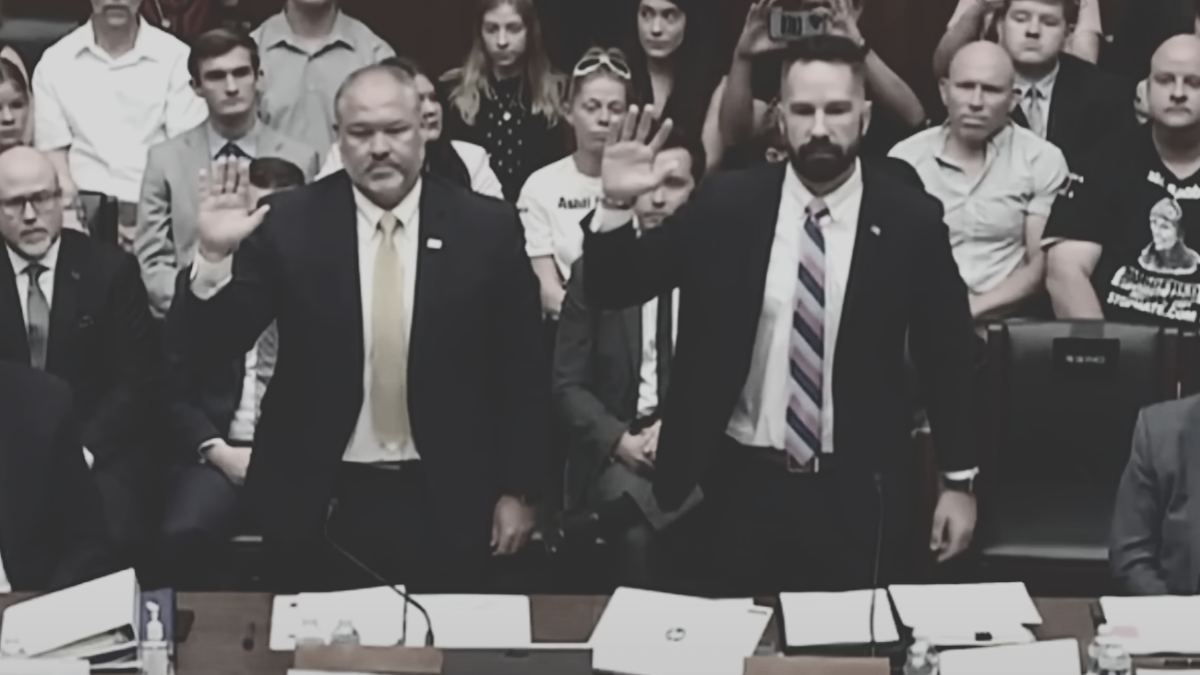
IRS whistleblowers Gary Shapley and Joseph Ziegler’s testimony Wednesday before the House Oversight Committee about the political interference in the Biden investigation proved so unimpeachable that Democrats resorted to a shotgun attack on everything except the facts. Here are the top six themes the left hammered during the hearing. 

1. Orange Man — and His Family And Associates — Bad

Wednesday’s hearing began promptly at 1:00 with opening statements by Republican Chair James Comer and Democrat Ranking Member Jamie Raskin. From the get-go Raskin set one theme Democrats would continue to peddle over the course of the next six hours: Donald Trump is a terrible, horrible, no good, very bad man. 

Trump was impeached and is under indictment. His daughter was under investigation, and her husband sold out to the Saudis. Trump’s cronies — Manafort, Stone, Flynn, and Cohen — committed crimes, and Trump pardoned them. On and on they went, pointing to Trump to turn the focus from the whistleblowers’ testimony: that the evidence indicates Hunter Biden committed felonies and now-President Joe Biden may have been complicit in the illegality. Democrats likewise used this misdirection to avoid confronting the overwhelming evidence that the DOJ and FBI interfered in the investigation and protected the Biden family.

2. How Dare Republicans Say ‘Two-Tier Justice System’

A second prevalent tactic on display during Wednesday’s hearing was Democrats feigning outrage over Republicans’ complaints of a “two-tier justice system.” 

According to Democrats on the committee, that phrase belongs to the civil rights movement and may only be invoked to condemn systemic racism. Some representatives ran so hard with this theme that they spent their allocated time highlighting decades-old hate crimes rather than asking the IRS whistleblowers questions concerning their testimony. 

One representative even quizzed Shapley on his knowledge of the racial disparity seen in the prosecution of tax cases. Shapley said he was unaware of the statistic. The Democrat lawmaker then cited the relative percentages for the IRS agent, while remaining oblivious to the fact that Shapley was complaining of favoritism bestowed on the white, privileged Hunter Biden. 

3. Never Mind the Whistleblowers, Let’s Talk About Rudy and the Arms Dealer

Democrats also sought to distract from the whistleblowers’ testimony by framing the evidence detailed by the two experienced and well-credentialed IRS agents as flowing from Rudy Giuliani. But as Ziegler testified, he launched the investigation into Hunter Biden after evidence implicating him was discovered pursuant to a separate criminal investigation. None of the evidence Ziegler and Shapley developed came from Giuliani. 

Nor did the allegations that Joe and Hunter Biden each received $5 million in bribes from Burisma, as reported by an FBI confidential human source and summarized in the FD-1023, come from Giuliani. The IRS agents never saw the FD-1023 in any event. 

House Democrats likewise attempted to minimize the whistleblowers’ testimony by pretending that, beside Giuliani, the only evidence of misconduct came from a witness charged with being an arms dealer, namely Gal Luft. Whether Luft has credible evidence of Biden-family corruption, however, has nothing to do with Ziegler and Shapley’s claims.

4. Merely a Misunderstanding

In their less hysterical moments, the Democrats offered a gentler spin, framing the House’s hearing as much ado about a misunderstanding. It also came down to the whistleblowers not grasping the difference between a special counsel and a special attorney, several Biden apologists suggested. 

But as Shapley made clear, he had documented U.S. Attorney David Weiss’s statement — that the DOJ had denied Weiss special counsel authority — soon after Weiss made that representation, and thus while Shapley’s memory was clear. In any event, according to Shapley, Weiss had also said during that meeting on Oct. 7, 2022, that he was not the final decision maker on whether to bring charges against Hunter Biden. That fact makes the distinction between a special counsel and a special attorney irrelevant.

Raskin also suggested Shapley was confused about Weiss’s authority, claiming the Delaware U.S. Attorney made clear in his letters to Congress he had ultimate authority to charge Hunter Biden. 

Both whistleblowers decimated that line of argument by highlighting what Weiss actually said, which was that he lacked charging authority outside of Delaware. In fact, if anything, Raskin hurt his cause by highlighting the contradictions between Weiss and Attorney General Merrick Garland’s statements, establishing the necessity for both DOJ bigwigs to testify before Congress to resolve the inconsistencies.

5. Just a Difference of Opinion 

A related theme Democrats peddled during Wednesday’s hearing centered on prosecutorial discretion. The left side of the aisle painted the whistleblowers’ testimony as merely a professional disagreement between the IRS agents and Weiss. 

But there was no disagreement in opinion, Shapley and Ziegler stressed: Both the IRS and Weiss agreed that Hunter Biden should be charged with multiple felony counts. Weiss, however, lacked the ability to bring charges in D.C., and it was the Biden-appointed U.S. attorney there, as well as in California, that kept the Delaware U.S. attorney from filing criminal felony charges against the president’s son.

Further, that the D.C. and California U.S. attorneys thwarted efforts to bring felony charges against Hunter Biden proved especially rich given the Democrats continued references throughout the hearing to Weiss being Trump’s “hand-picked U.S. attorney.” Beyond the obvious point that being a Trump appointee establishes nothing, under the Democrats’ standard, the involvement of the Biden-appointed U.S. attorneys removes this case from the “difference of opinion” scenario. 

6. There’s No Evidence, I Tell You, No Evidence

A sixth narrative Democrats pushed during the Oversight hearing was that there’s no evidence of misconduct or favoritism. But to paraphrase Shapley’s line, just repeating the same lie multiple times doesn’t make it true. And to say there’s no evidence of misconduct or favoritism is a whopper of a lie. 

The evidence of misconduct by the Bidens exists in the form of texts, emails, chat messages, bank records, suspicious activity reports, the FD-1023 report, and statements made by former business partners such as Tony Bobulinski. The public record is also replete with evidence of DOJ and FBI favoritism, including the extensive testimony of these two whistleblowers, parts of which a third whistleblower has already corroborated.

The Democrats may not like the evidence or want to talk about it, but to say none exists is about as believable as the Secret Service’s claim that they cannot determine whose cocaine was recovered in the White House. 


Margot Cleveland is The Federalist’s senior legal correspondent. She is also a contributor to National Review Online, the Washington Examiner, Aleteia, and Townhall.com, and has been published in the Wall Street Journal and USA Today. Cleveland is a lawyer and a graduate of the Notre Dame Law School, where she earned the Hoynes Prize—the law school’s highest honor. She later served for nearly 25 years as a permanent law clerk for a federal appellate judge on the Seventh Circuit Court of Appeals. Cleveland is a former full-time university faculty member and now teaches as an adjunct from time to time. As a stay-at-home homeschooling mom of a young son with cystic fibrosis, Cleveland frequently writes on cultural issues related to parenting and special-needs children. Cleveland is on Twitter at @ProfMJCleveland. The views expressed here are those of Cleveland in her private capacity.

Ex-Agent Corroborates Whistleblower Claim That FBI Interfered with IRS Investigation of Hunter Biden, Comer Reveals


BY: TRISTAN JUSTICE | JULY 18, 2023

Read more at https://thefederalist.com/2023/07/18/ex-agent-corroborates-whistleblower-claim-that-fbi-interfered-with-irs-investigation-of-hunter-biden-comer-reveals/

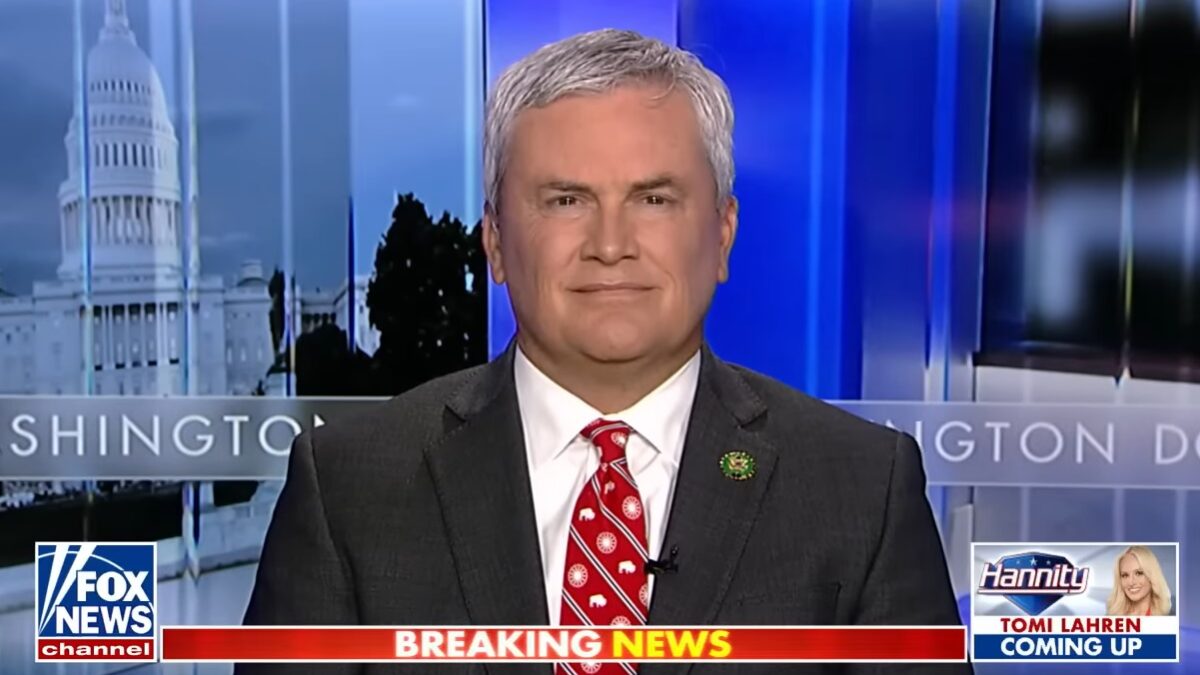
James Comer

Republican House Oversight Chairman James Comer of Kentucky revealed that a former FBI agent who was on the Hunter Biden case corroborated key details from accusations made by whistleblowers from the Internal Revenue Service (IRS).

In a Monday press release, Comer said the committee interviewed a former FBI supervisory special agent from the FBI’s Wilmington, Deleware office who confirmed federal investigators tipped off the Biden team about an interview the IRS and FBI were planning to conduct with Hunter Biden.

“The night before the interview of Hunter Biden, both Secret Service headquarters and the Biden transition team were tipped off about the planned interview,” Comer said. “On the day of the Hunter Biden interview, federal agents were told to stand by and could not approach Hunter Biden — they had to wait for his call.”

“As a result of the change in plans,” Comer added, “IRS and FBI criminal investigators never got to interview Hunter Biden as part of the investigation.”

In June, House Republicans released transcripts of interviews with two IRS whistleblowers who alleged that Department of Justice (DOJ) officials repeatedly interfered with their criminal tax investigation of the younger Biden. The explosive allegations came just days after it was revealed federal prosecutors had brokered a sweetheart plea deal that watered down the charges against Hunter Biden to two misdemeanor tax crimes and one count of felony firearm possession, with an agreement that he will not be prosecuted for the gun crime if he never owns a gun again and maintains sobriety for 24 months. (Notably, such amnesty would have been threatened if officials linked the mysterious bag of cocaine found at the White House to the president’s son, who wrote a book about being a drug addict.)

Gary Shapley, one of the two IRS whistleblowers to come forward, told Fox News “the most substantive felony charges were left off the table.” Shapley told House Republicans the DOJ even denied tax authorities a search warrant while compromising the investigation by tipping off the Biden team about the probe’s proceedings.

[READ: Whistleblower: FBI Tipped Off ‘People Very Close’ To Joe And Hunter Before IRS Investigative Team’s ‘Day Of Action’]

IRS whistleblowers also revealed that federal tax investigators were left completely in the dark about the unclassified FD-1023 form housed by the FBI suggesting a multimillion-dollar bribery scheme between the president and a Ukrainian energy executive.

“The Justice Department’s efforts to cover up for the Bidens reveals a two-tiered system of justice that sickens the American people,” Comer said Monday. A poll out from the Trafalgar Group with Convention of States Action last year found nearly 4 in 5 Americans believe they live under a two-tiered justice system.

“The Oversight Committee, along with the Judiciary Committee and Ways and Means Committee, will continue to seek the answers, transparency, and accountability that the American people demand and deserve,” Comer added.

FBI Director Christopher Wray defended his agency’s misconduct before the House Judiciary Committee last week.

“Are you protecting the Bidens?” asked GOP Florida Rep. Matt Gaetz.

Absolutely not,” Wray claimed.

[RELATED: Highlights From The House Judiciary Hearing With Christopher Wray]


Tristan Justice is the western correspondent for The Federalist and the author of Social Justice Redux, a conservative newsletter on culture, health, and wellness. He has also written for The Washington Examiner and The Daily Signal. His work has also been featured in Real Clear Politics and Fox News. Tristan graduated from George Washington University where he majored in political science and minored in journalism. Follow him on Twitter at @JusticeTristan or contact him at Tristan@thefederalist.com. Sign up for Tristan’s email newsletter here.

Author Tristan Justice profile

TRISTAN JUSTICE

VISIT ON TWITTER@JUSTICETRISTAN

MORE ARTICLES

7 Things the House Oversight Committee Should Ask IRS Whistleblowers


BY: MARGOT CLEVELAND | JULY 18, 2023

Read more at https://thefederalist.com/2023/07/18/7-things-the-house-oversight-committee-should-ask-irs-whistleblowers/

one of the IRS whistleblowers, Gary Shapley

Author Margot Cleveland profile

MARGOT CLEVELAND

VISIT ON TWITTER@PROFMJCLEVELAND

MORE ARTICLES

The IRS whistleblowers who exposed the Department of Justice and FBI’s interference in the investigation into Biden family corruption will publicly testify on Wednesday before the House Oversight and Accountability Committee.

The duo, Gary Shapley and a man known now only as Whistleblower X, had previously sat for transcribed interviews with the House Ways and Means Committee. And while some details from that closed-door testimony should be reiterated during the on-camera congressional hearing, Oversight Committee Chair James Comer should corral Republicans before Wednesday to coordinate the questioning of the whistleblowers so the country learns the depth of the scandal.

Here’s what they should ask Shapley and the soon-to-be-named second whistleblower and how they should do it.

1. Let the Whistleblowers Do the Talking

Because the legacy press will be poised to present Wednesday’s hearing as a Republican witch hunt and their supposed continued hounding of Hunter Biden, the representatives on the right side of the aisle should save the grandstanding for another time and let the agents speak for themselves.

As experienced agents, both Shapley and Whistleblower X know how to testify in a clear and understandable way. They also know how to respond to a hostile cross-examination, which unfortunately will be what they face from Democrats. Republicans should ask the agents open-ended questions that call for narrative responses and allow the whistleblowers’ words to convey to America the protect-Biden scandal they witnessed.

2. Start with Preliminaries, Not the Most Salacious Details

While it is understandable that the House Oversight Committee will want to strike hard and fast with the most devastating testimony, Republicans must remember the media blackout over this scandal means most Americans remain ignorant of many of the basics of the Hunter Biden investigation and how it connects to now-President Biden. Many Americans likely also know little about the two witnesses and may even believe the Democrats’ defamatory branding of the whistleblowers as “bought and paid for” by extreme MAGA Republicans.

For these reasons, before delving into the details, Republicans should ensure the country learns of the whistleblowers’ extensive and impressive professional background. Comer should also ensure the whistleblowers come clean about any political leanings they have, which appears to be none or, if any, leaning more to the left than the right. The whistleblowers’ opening statements will likely cover these preliminaries to some extent, but providing another minute for each witness to briefly remind Americans of your experience with the criminal investigation division of the IRS and explain to the country where you stand politically would be wise.

3. Begin Big-Picture Before Hitting the Details

The committee should then move to the origins of the investigation and the big picture of the scandal. More detailed questions will follow, but could you first broadly explain why and when the investigation began? Can you summarize the staffing of the investigative team and how the FBI field offices, FBI headquarters, the IRS criminal division, and the U.S. attorneys’ offices interacted at the beginning of the investigation, and then later throughout the investigation? 

Again, let the whistleblowers tell their story, using follow-up questions to draw out more details, if necessary, but from a big-picture perspective. And once the whistleblowers explain how the investigation proceeded, broadly speaking, ask: Was that staffing and interaction, especially with the DOJ and FBI, the norm?

4. Evidence and Interference

With the above backdrop established, the committee should focus next on two main lines of questioning: the evidence uncovered of potential criminal conduct and the interference the agents faced when investigating the case. 

The most effective and efficient way to present this testimony will be by requesting the whistleblowers walk the committee through the chronology of the investigation, identifying at each stage what evidence was uncovered and how, and whether there was any interference in the investigation. 

Follow-up questions for each leg in the investigative journey should inquire of any witnesses or evidence they know of to corroborate their testimony and what steps they normally would have taken absent the interference. 

Because the committee has the transcript of the whistleblowers’ previous closed-door testimony to the House Ways and Means Committee, the staffers should be able to easily sequence the questioning to ensure it is accessible to ordinary Americans.

5. Weiss’s Weasel Words and Garland’s False Ones

While the whistleblowers’ prior testimony revealed scores of ways in which the DOJ and FBI interfered in the investigation, equally concerning is U.S. Attorney David Weiss and Attorney General Merrick Garland’s attempts to cover up that interference. 

For instance, Shapley testified about the D.C. and California U.S. attorneys’ refusal to file charges against Hunter Biden, and Weiss’s inability to indict the president’s son in those venues without permission from the Department of Justice — permission Weiss allegedly claims had been denied him. According to Shapley, Weiss made that statement during an Oct. 7, 2022, meeting and said he was “not the deciding person on whether charges are filed.”

Neither Weiss nor Garland has expressly denied Shapley’s claims, but both made statements that cannot be reconciled with Shapley’s testimony. Garland, for his part, testified to the Senate Judiciary Committee that Weiss “has full authority” to bring cases in another jurisdiction if he deemed it necessary. Weiss similarly claimed in a letter to Congress that “he had been granted the ultimate authority” over the Biden investigation, but the Delaware U.S. attorney quickly clarified in a second letter that he didn’t have that authority yet but had been assured he would be granted it if necessary. 

On Wednesday, the House Oversight Committee should ask Shapley to retell the events of the Oct. 7 meeting because the IRS agents’ testimony implicates Weiss and Garland in a cover-up. Republicans should also ask Shapley whether it is possible Weiss said during that meeting that he had been denied a request to be appointed a special attorney as opposed to a special counsel, as some Democrats are suggesting Shapley misunderstood Weiss. A quick follow-up here, however, will also make clear that no matter which “special” appointment Weiss said he was denied, the U.S. attorney clearly said he wasn’t the decisionmaker.

6. Evidence Seen or Not Seen

The DOJ and FBI also interfered in the investigation by withholding evidence from Shapley and his investigative team. For instance, both Shapley and Whistleblower X stated they were not aware of the FD-1023 form that summarized a confidential human source’s claims that Joe and Hunter Biden each received $5 million in bribes from Burisma. Shapley also testified that he was prevented from seeing all the evidence on the Hunter Biden laptop, even after the FBI had removed documents potentially protected by attorney-client privilege. The committee should elicit testimony from Shapley and Whistleblower X concerning this withheld evidence.

Republicans should then attempt to learn what other evidence may have been secreted from the investigative team. The committee should read off a litany of the evidence it has and ask the whistleblowers if they were familiar with that evidence. Similarly, the committee should provide a list of witnesses with likely knowledge of the pay-to-play scandal and ask whether the whistleblowers knew of those individuals’ potential involvement and whether they were questioned. 

This line of questioning may reveal new areas of inquiry — something the whistleblowers may not have known of previously. But in that case, the whistleblowers may not be able to respond to the questions because only the House Ways and Means Committee has the authority to receive protected tax information. The right questions, though, will give the whistleblowers the opportunity to convey that they have not seen the particular evidence referenced and therefore cannot respond to the query in this setting, but would be happy to provide the Ways and Means Committee a supplemental affidavit. 

7. Anything More That Could Be Done

The whistleblowers have already made clear the statute of limitations ran out on potential felony tax charges against Hunter Biden because the Delaware U.S. attorney lacked the authority to indict the president’s son in another state. But what about the allegations contained in the FD-1023 or the other banking records recovered by the various House committees? Does that evidence indicate additional crimes have been committed for which the statute of limitations has not yet expired? 

The whistleblowers should be asked: What potential crimes? What investigative techniques would you recommend? Given the international scope of these potential crimes, does the Baltimore FBI field office have the expertise to investigate adequately? Do you and your team have the ability to investigate this evidence and determine if there is a there, there?

Ending the hearing thusly will send a message that Weiss may have called off the investigation, but that doesn’t mean the case of corruption against the Biden family is dead.


Margot Cleveland is The Federalist’s senior legal correspondent. She is also a contributor to National Review Online, the Washington Examiner, Aleteia, and Townhall.com, and has been published in the Wall Street Journal and USA Today. Cleveland is a lawyer and a graduate of the Notre Dame Law School, where she earned the Hoynes Prize—the law school’s highest honor. She later served for nearly 25 years as a permanent law clerk for a federal appellate judge on the Seventh Circuit Court of Appeals. Cleveland is a former full-time university faculty member and now teaches as an adjunct from time to time. As a stay-at-home homeschooling mom of a young son with cystic fibrosis, Cleveland frequently writes on cultural issues related to parenting and special-needs children. Cleveland is on Twitter at @ProfMJCleveland. The views expressed here are those of Cleveland in her private capacity.

IRS Whistleblower Knocks Out Hunter Biden’s Lawyers and the Washington Post with One Blow


BY: MARGOT CLEVELAND | JULY 05, 2023

Read more at https://thefederalist.com/2023/07/05/irs-whistleblower-knocks-out-hunter-bidens-lawyers-and-the-washington-post-with-one-blow/

IRS whistleblower Gary Shapley
Hunter Biden’s lawyers tried to turn him into a victim by smearing Gary Shapley — but Shapley fired back.

Author Margot Cleveland profile

MARGOT CLEVELAND

VISIT ON TWITTER@PROFMJCLEVELAND

MORE ARTICLES

Hunter Biden’s high-priced attorneys again tried to turn the president’s son into a victim by portraying IRS whistleblower Gary Shapley as a partisan leaker and a criminal — but on Monday, Shapley responded. Shapley’s counter was a devasting blow to Hunter Biden’s legal strategy and also represented a shot across the bow of the Biden-friendly Washington Post. 

On Friday, Winston and Strawn attorney Abbe David Lowell dispatched a 10-page missive to Rep. Jason Smith, R-Mo., the chair of the House Ways and Means Committee, regarding what Lowell called the Republican House’s “obsession with attacking the Biden family.” While the letter complained of the House’s supposed abandonment of congressional protocol and rules of conduct, Hunter Biden’s attorneys’ real focus was Shapley, whom they painted as a partisan hack, not a whistleblower — and a criminal to boot. 

The June 30 letter from Hunter’s attorneys strongly implied Shapley was responsible for leaking information to The Washington Post that served as the basis for an Oct. 6, 2022 article authored by Devlin Barrett and Perry Stein. The article claimed that “federal agents investigating President Biden’s son Hunter have gathered what they believe is sufficient evidence to charge him with tax crimes and a false statement related to a gun purchase…” Biden’s lawyers then challenged the House to ask the whistleblowers if they had leaked information to the Post.

Shapley didn’t wait for the House to ask, instead submitting an affidavit to the House Ways and Means Committee on Monday in which he unequivocally swore he “was not the source for the October 6, 2022, Washington Post article.” Shapley further attested that he had never “had any contact with Barrett or Stein,” the authors of the article. He also stated under oath that he “never leaked confidential taxpayer information.”

The whistleblower then expressly authorized “the Washington Post and/or journalists Devlin Barrett, Perry Stein, or any other Washington Post reporter to release any communications directly or indirectly to or from me,” agreeing “to waive any purported journalistic privilege and/or confidentiality that would have arisen had I been a source for the Washington Post.”

At the same time, Shapley’s lawyers wrote to Washington Post authors Barrett and Stein, noting that “Biden family attorneys have falsely accused SSA Shapley of illegally leaking to you for your story, ‘Federal agents see chargeable tax, gun-purchase case against Hunter Biden.’”

“As you know, SSA Shapley was not a source for you on that story, or any other story for that matter,” the letter continued. “SSA Shapley has never communicated with either of you, either on or off the record.” 

Then, after stressing that Shapley had waived any confidentiality that would have arisen, the whistleblower’s lawyers asked them “to correct Mr. Biden’s attorneys and clear SSA Shapley’s good name of these false and retaliatory charges.” 

The Federalist asked both Barrett and Stein whether Shapley was a source for their article, but the reporters did not respond to the inquiries. Whether they will respond to Shapley’s entreat remains to be seen.

What is clear, however, is that Hunter Biden’s attorneys don’t care whether Shapley was the source. They are being paid to defend Hunter Biden, and beyond cutting a sweetheart deal with Joe Biden’s DOJ, that means attacking everyone else. With Shapley and his testimony representing the most serious threat to the Biden family, the attacks on the IRS whistleblower are likely to continue.

While there is little that can be done to stop Hunter Biden’s lawyers from smearing Shapley, congressional oversight committees should ensure the Biden administration’s DOJ isn’t providing an assist. A recent New York Times article suggests Hunter Biden’s attorneys are attempting to inveigle the DOJ in the attack on Shapley.

“Hunter Biden’s lawyers have told the Justice Department that Mr. Shapley has broken federal laws that keep grand jury material secret,” The New York Times reported last week. In his Monday affidavit, Shapley also refuted this point, saying he never knowingly released grand jury material. But that might not matter to a Justice Department that answers to Hunter’s father.

Thankfully, Shapley and the other whistleblowers have a strong advocate in Sen. Chuck Grassley, R-Iowa, who seems two steps ahead of everything the DOJ and other Biden apologists pull. It is unfortunate, though, that the left-wing press that once championed whistleblowers seems intent now to serve as scribes for Hunter Biden’s attorneys. If the Post reporters remain silent, we’ll know they intend to keep things that way.

This article has been updated since publication.


Margot Cleveland is The Federalist’s senior legal correspondent. She is also a contributor to National Review Online, the Washington Examiner, Aleteia, and Townhall.com, and has been published in the Wall Street Journal and USA Today. Cleveland is a lawyer and a graduate of the Notre Dame Law School, where she earned the Hoynes Prize—the law school’s highest honor. She later served for nearly 25 years as a permanent law clerk for a federal appellate judge on the Seventh Circuit Court of Appeals. Cleveland is a former full-time university faculty member and now teaches as an adjunct from time to time. As a stay-at-home homeschooling mom of a young son with cystic fibrosis, Cleveland frequently writes on cultural issues related to parenting and special-needs children. Cleveland is on Twitter at @ProfMJCleveland. The views expressed here are those of Cleveland in her private capacity.

IRS Whistleblower Emails Suggest David Weiss Misled Congress In Letter Claiming Charging Authority


BY: MARGOT CLEVELAND | JUNE 26, 2023

Read more at https://thefederalist.com/2023/06/26/irs-whistleblower-emails-suggest-david-weiss-misled-congress-in-letter-claiming-charging-authority/

merrick garland and joe biden

Author Margot Cleveland profile

MARGOT CLEVELAND

VISIT ON TWITTER@PROFMJCLEVELAND

MORE ARTICLES

Delaware U.S. Attorney David Weiss told the House Judiciary Committee he had “been granted ultimate authority” over prosecutorial decisions related to the criminal investigation into Hunter Biden in a June 7, 2023, letter obtained by The Federalist. However, Weiss’s letter to Congress — and Attorney General Merrick Garland’s earlier testimony to the Senate Judiciary Committee that Weiss had “full authority” to charge Hunter Biden — directly conflicts with statements Weiss made to senior members of the team investigating the Biden son. 

So, either Weiss lied to his top investigators, or Weiss and Garland deceived Congress. There’s no other way around it.

Something Doesn’t Add Up

The House Ways and Means Committee’s release of IRS Criminal Supervisory Special Agent Gary Shapley’s testimony and related exhibits last week created a serious conflict.

Shapley, the IRS whistleblower who came forward earlier this year with claims of political bias and breaches of protocols in a high-profile investigation, testified before the House Ways and Means Committee during a closed-door session on May 26, 2023. The House’s release of the transcript of Shapley’s testimony provided the first official confirmation that Hunter Biden was the subject of the investigation.

During his hours-long testimony, Shapley told congressional investigators that a meeting on Oct. 7, 2022, with Weiss and senior-level managers from the IRS, FBI, and U.S. attorney’s office, was his “red-line” meeting. According to the whistleblower, Weiss was present for the meeting and surprised the team by stating, “I am not the deciding person on whether charges are filed.” 

Shapley said Weiss further explained that the Biden-appointed U.S. attorney for the District of Columbia, Matthew Graves, would not allow Weiss to charge Hunter Biden in the D.C. district, where certain of the alleged crimes needed to be filed based on Hunter Biden’s residency during the relevant time. Shapley noted, “Weiss stated that he subsequently asked for special counsel authority from Main DOJ at that time and was denied that authority.” “Instead,” Shapley recounted, Weiss “was told to follow the process, which was known to send U.S. Attorney Weiss through another President Biden-appointed U.S. Attorney,” that one in California, the second locale relevant to the proposed criminal charges. 

Without the cooperation of Biden-appointed U.S. attorneys, Shapley explained, Weiss made clear he could not bring charges outside the Delaware district. Consequently, the statute of limitations on felony tax charges against the president’s son for the 2014 and 2015 tax years expired. 

The IRS whistleblower then shared with the House committee an email thread Shapley initiated following the meeting with Weiss. In his email on Oct. 7, 2022, Shapley summarized the substance of the meeting: “Weiss stated that he is not the deciding person on whether charges are filed” (bold in original). Shapley then commented that he “believe[s] this to be a huge problem—inconsistent with DOJ public position and Merrick Garland testimony.” 

The email then recounted that Weiss said he had gone to the U.S. attorney in D.C. “in early summer to request charge there,” but the Biden-appointed U.S. attorney “said they could not charge in his district.” Weiss then said he “requested Special counsel authority when it was sent to D.C.,” but “Main DOJ” denied the request. 

The special agent in charge of the FBI D.C. field office, Darrell J. Waldon, who had been present during the Oct. 7 meeting, responded to the email summary, stating: “Thanks Gary. You covered it all.”

Merrick Garland’s Denial

During a Friday press conference, Garland contradicted Shapley’s testimony, stating: “As I said at the outset, Mr. Weiss was appointed by President Trump as the U.S. Attorney in Delaware and assigned this matter during the previous administration and would be permitted to continue his investigation and to make a decision to prosecute any way in which he wanted to and in any district in which he wanted to.”

This statement tracks with Garland’s earlier unequivocal testimony before the Senate Judiciary Committee on March 1, 2023, when Iowa Sen. Chuck Grassley asked for clarification on whether Weiss had authority to bring charges outside the Delaware district.

“The U.S. Attorney in Delaware has been advised that he has full authority … to bring cases in other jurisdictions if he feels it’s necessary,” the attorney general replied, stressing that he would ensure Weiss would be able to do that. 

Garland reiterated that point when Grassley inquired whether Weiss had “independent charging authority over certain criminal allegations against the President’s son outside the district of Delaware.” 

“He would have to bring the case in another district,” Garland replied, but added, “But as I said, I promised to ensure that he is able to carry out his investigation and that he be able to run it and if he needs to bring it in another jurisdiction, he will have full authority to do that.”

Garland’s March 1 testimony directly conflicted with what Weiss had told investigators during the meeting on Oct. 7, 2022. And as the email Shapley sent after that meeting indicates, Shapley believed Weiss’s statement that he lacked the authority to file charges against Hunter Biden in another district also conflicted with what Garland had previously told Congress.

Before Grassley quizzed the attorney general on Weiss’s authority, Tennessee Sen. Bill Hagerty had asked Garland during an April 26, 2022, Senate Appropriations Subcommittee on Commerce, Justice, and Science hearing whether Garland had been briefed on the Hunter Biden investigation. In response, the attorney general stated, “Hunter Biden’s investigation … is being run by and supervised by the United States attorney for the District of Delaware.” 

“He is supervising the investigation,” and “he is in charge of that investigation,” Garland continued, stressing “there will not be interference of any political or improper kind.”

Shapley’s testimony before the House Ways and Means Committee counters Garland’s claims that there would be no political or improper interference. But more significantly, the whistleblower’s testimony and the email he provided the House cannot be reconciled with Garland’s clarifying testimony to Grassley on March 1, 2023. During that hearing, Garland expressly stated that “the U.S. attorney in Delaware has been advised that he has full authority … to bring cases in other jurisdictions if he feels it’s necessary.”

The Weiss Letter

However, it is not merely the veracity of Garland’s Senate testimony that is in question now. On June 7, 2023, Weiss wrote to the House Judiciary Committee to corroborate Garland’s testimony. In that letter, obtained by The Federalist, Weiss stated:

I want to make clear that, as the Attorney General has stated, I have been granted ultimate authority over this matter, including responsibility for deciding where, when, and whether to file charges and for making decisions necessary to preserve the integrity of the prosecution, consistent with federal law, the Principles of Federal Prosecution, and Departmental regulations.

In signing that letter and dispatching it to the House Judiciary Committee, Weiss has entangled himself in what appears to be Garland’s lie to Congress — that is, unless Weiss had instead deceived the senior-level officials responsible for the Hunter Biden investigation when he told them last Oct. 7 that he was not the “deciding person” on whether charges are filed.

But why would Weiss mislead the senior leadership responsible for the Hunter Biden investigation? 

On this point, Shapley has “no insight,” his lawyers noted on Friday, adding: “That Mr. Weiss made these statements is easily corroborated.” Then the whistleblower’s attorneys listed the names of three individuals who, in addition to Shapley and Weiss, had attended the meeting on Oct. 7, 2022: Baltimore FBI Special Agent in Charge Tom Sobocinski and Assistant Special Agent in Charge Ryeshia Holley and IRS Special Agent in Charge Darrell Waldon.

If these individuals confirm the whistleblower’s account — as seems likely given Waldon had previously said, “you covered it all,” in response to Shapley’s email summary of the meeting — Weiss will have some explaining to do. He’ll have to explain his statements during the meeting on Oct. 7, 2022, and the genesis of the June 7, 2023, letter Weiss sent the House Judiciary Committee.

Sources familiar with the letter have suggested it reads as if drafted by someone connected to the Department of Justice’s Office of Legislative Affairs, telling The Federalist a U.S. attorney would be unlikely to know about the so-called Linder letter referenced in a footnote. That possibility raises the further question of whether the DOJ and Garland induced or pressured Weiss to sign the letter. 

It is important to remember that Weiss dispatched the letter to the House Judiciary Committee before the Ways and Means Committee released the whistleblower’s testimony, meaning the DOJ and the Delaware U.S. attorney’s office would not have known Shapley had the Oct. 7, 2022, email to corroborate his oral testimony. 

The House Judiciary Committee seems similarly concerned about the possibility the Department of Justice and/or Garland pushed Weiss to help mislead Congress, writing to the Delaware U.S. attorney last Thursday about the “unusual nature” of Weiss’s June 7 letter. That letter, which The Federalist has reviewed, asks the Delaware U.S. attorney to provide “a list of individuals who drafted or assisted in drafting” the June 7 letter. The oversight committee also asked Weiss “who instructed you to sign and send your June 7 letter to the Committee,” and for details on any conversations Weiss had with Garland or others at the DOJ.

These details suggest we have passed the cover-up stage of the Hunter Biden scandal and have now entered the cover-up of the cover-up phase. But unlike the typical case, it cannot be said that the cover-up is worse than the crime — because selling your country out to the Chinese communists with your vice president father is about as bad as it gets. 


Margot Cleveland is The Federalist’s senior legal correspondent. She is also a contributor to National Review Online, the Washington Examiner, Aleteia, and Townhall.com, and has been published in the Wall Street Journal and USA Today. Cleveland is a lawyer and a graduate of the Notre Dame Law School, where she earned the Hoynes Prize—the law school’s highest honor. She later served for nearly 25 years as a permanent law clerk for a federal appellate judge on the Seventh Circuit Court of Appeals. Cleveland is a former full-time university faculty member and now teaches as an adjunct from time to time. As a stay-at-home homeschooling mom of a young son with cystic fibrosis, Cleveland frequently writes on cultural issues related to parenting and special-needs children. Cleveland is on Twitter at @ProfMJCleveland. The views expressed here are those of Cleveland in her private capacity.

Here’s What the IRS Whistleblower Will Tell Lawmakers About the Hunter Biden Probe Behind Closed Doors


BY: MARGOT CLEVELAND | MAY 26, 2023

Read more at https://thefederalist.com/2023/05/26/heres-what-the-irs-whistleblower-will-tell-lawmakers-about-the-hunter-biden-probe-behind-closed-doors/

IRS Whistleblower Gary Shapley

Author Margot Cleveland profile

MARGOT CLEVELAND

VISIT ON TWITTER@PROFMJCLEVELAND

MORE ARTICLES

IRS Supervisory Special Agent Gary Shapley will appear before the House Ways and Means Committee later Friday morning to submit to questioning from both Democrats and Republicans.

Missing, however, will be any members of the Senate Finance Committee, which refused to conduct a joint interview with the House oversight committee. While Republican Rep. Jason Smith, chair of the Ways and Means Committee, held the power to authorize Senate representatives to attend the transcribed interview of the whistleblower.

Smith inexplicably ignored Shapley’s statement that he “would welcome” the participation of designated Senate staffers in the House hearing. Thus, the House hearing will proceed, but not on a bicameral basis. 

According to a person familiar with the proceedings, the House Ways and Means Committee will convene at 9:30 a.m., with Shapley appearing for questioning with his two lawyers, Mark Lytle from Nixon Peabody and Tristan Leavitt of Empower Oversight. The closed-door questioning is expected to last all day.
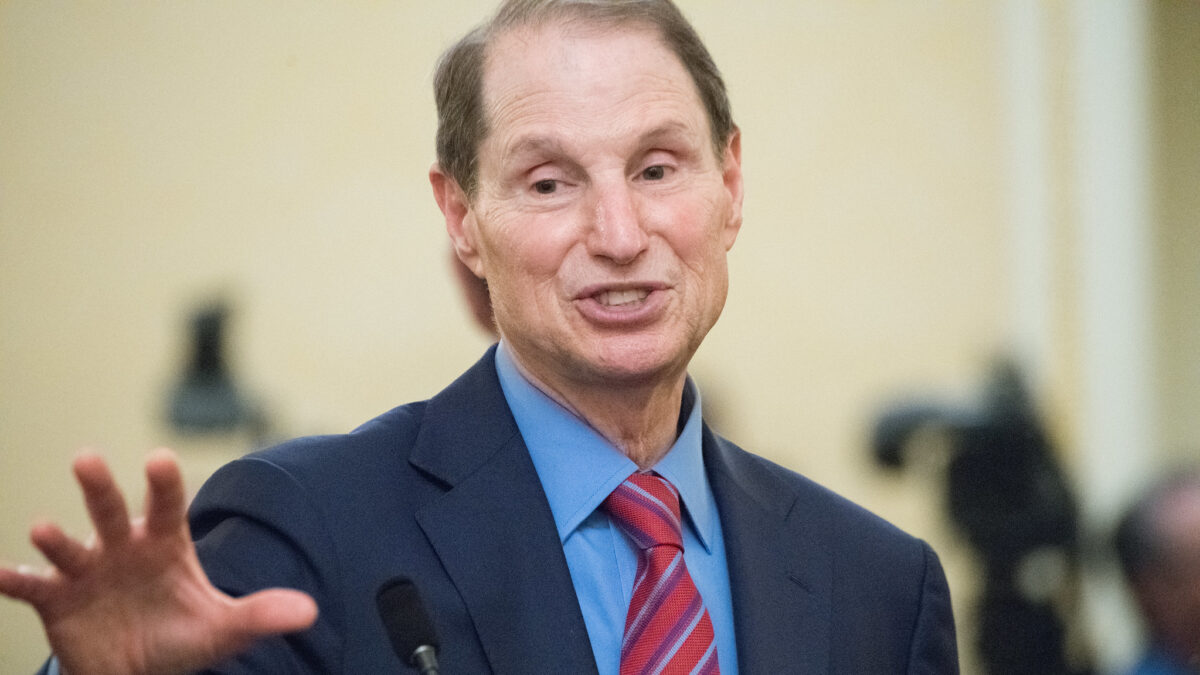
While the Ways and Means Committee will question Shapley in a closed session, the public can guess the content of much of his testimony given the high-profile nature of the case against Hunter Biden. In fact, neither Shapley nor his attorneys have ever publicly confirmed that Hunter Biden is the target of the Internal Revenue Service investigation, yet it is uniformly agreed that the whistleblower’s testimony concerns the handling of the tax probe into the president’s son.

Shapley, a 14-year veteran at the IRS, provided some insight into his likely testimony when he sat for an exclusive interview with CBS News on Wednesday. During that interview, Shapley explained that he was first assigned to the investigation in January 2020. “When I took control of this particular investigation, I immediately saw deviations from the normal process,” Shapley told CBS News. “It was way outside the norm of what I’ve experienced in the past,” the whistleblower stressed.

Shapley further claimed during the interview that “there were multiple steps that were slow-walked — were just completely not done — at the direction of the Department of Justice.” That statement coincides with the information contained in an earlier letter sent by the whistleblower’s lawyers to the oversight committees. That letter maintained that the whistleblower has detailed “examples of preferential treatment and politics improperly infecting decisions and protocols that would normally be followed by career law enforcement professionals in similar circumstances if the subject were not politically connected.” 

“People directly familiar with the case” provided more particulars to Shapley’s claims, asserting that “specific DOJ employees placed strictures on questions, witnesses and tactics investigators may be allowed to pursue that could impact President Biden.” The unnamed sources also stressed that the improper politicization of the case came from the Justice Department and FBI headquarters. 

When read together, these details raise a huge red flag because they mean the interference from the DOJ and FBI headquarters began under the Trump administration. So, who in the Trump administration was responsible for slow-walking the Hunter Biden investigation? What investigative steps were not taken? 

In a letter from Shapley’s legal team to the congressional oversight committees, he spoke of irregularities beginning in the summer of 2020 in both the DOJ Tax Division and an unnamed U.S. attorney’s office, which CNN would later report is the office of Delaware U.S. Attorney David Weiss. Weiss has been investigating Hunter Biden since 2018. 

Another detail from Shapley’s CBS News interview that foreshadows the content of his Friday testimony concerns his explanation of the “red line” meeting that convinced the IRS supervisory special agent his oath of office required him to come forward. According to Shapley, while he had been noticing deviations in the investigative process for a couple of years, he just couldn’t “fathom that DOJ might be acting unethically.” Then came an October 2022 meeting he had with federal prosecutors, after which Shapley told CBS News, “It just got to that point where that switch was turned on, and I just couldn’t silence my conscience anymore.”

While the CBS News interview did not air further details about the meeting, a letter from Shapley’s legal team described a “charged meetings on October 7, 2022,” during which the U.S. attorney — reportedly Weiss — “became aware that both the IRS and the FBI had longstanding concerns about the handling of the case” and that those concerns had been communicated up the chain of command. Then, after an Oct. 17, 2022, meeting at which Shapley continued to raise concerns, he and his investigative team were excluded from future meetings on the case.

Shapley seems poised to name names on Friday, and his attorney has told Just the News that “he’ll be able to talk about these meetings that he attended, that were with both agents and prosecutors.” Shapley summarized those meetings and distributed his notes to the IRS and other agents, his lawyer explained, and along with his emails, these documents will corroborate his story. 

The whistleblower can also identify other IRS agents who participated in the meetings and can confirm his testimony. The DOJ’s decision earlier this month to remove Shapley’s entire investigative team from the Hunter Biden investigation may backfire, serving as a catalyst to loosen the other agents’ lips.

But in the meantime, it will be Shapley doing the talking. And while Americans won’t know at once what the IRS supervisory special agent has to say, the House Ways and Means Committee has the authority to submit the information obtained from Sharpley to both the Senate and the House of Representatives, thereby making the testimony public. 

Democrats used that statutory carveout to release Trump’s tax information publicly, and Republicans should follow their lead — and soon.


Margot Cleveland is The Federalist’s senior legal correspondent. She is also a contributor to National Review Online, the Washington Examiner, Aleteia, and Townhall.com, and has been published in the Wall Street Journal and USA Today. Cleveland is a lawyer and a graduate of the Notre Dame Law School, where she earned the Hoynes Prize—the law school’s highest honor. She later served for nearly 25 years as a permanent law clerk for a federal appellate judge on the Seventh Circuit Court of Appeals. Cleveland is a former full-time university faculty member and now teaches as an adjunct from time to time. As a stay-at-home homeschooling mom of a young son with cystic fibrosis, Cleveland frequently writes on cultural issues related to parenting and special-needs children. Cleveland is on Twitter at @ProfMJCleveland. The views expressed here are those of Cleveland in her private capacity.

Emails Show Ron Wyden’s Office Lied About IRS Whistleblower ‘Backing Out’ Of Senate Meeting


BY: MARGOT CLEVELAND | MAY 25, 2023

Read more at https://thefederalist.com/2023/05/25/emails-show-ron-wydens-office-lied-about-irs-whistleblower-backing-out-of-senate-meeting/

Ron Wyden

Author Margot Cleveland profile

MARGOT CLEVELAND

VISIT ON TWITTER@PROFMJCLEVELAND

MORE ARTICLES

A spokesman for Sen. Ron Wyden, D-Ore., falsely claimed the Hunter Biden IRS whistleblower had “backed out” of an agreement to meet with the Senate Finance Committee next week, the whistleblower’s attorneys told The Federalist.

“It’s disappointing Senator Wyden’s staff is playing partisan games by releasing inaccurate information,” said the legal team representing the whistleblower, who was identified as Gary Shapley during a CBS interview Wednesday. “As emails show, our client didn’t ‘back out’ of anything because there was never anything to back out of.” 

On Wednesday, CNN reported the Senate Finance Committee’s claims, quoting Wyden’s spokesman, Ryan Carey, saying, “Committee staff on both sides agreed with counsel to meet directly with the whistleblower next week, however the whistleblower has since backed out of that agreement and declined an attempt to reschedule.” Carey added that “Chairman Wyden’s staff stand ready to arrange a meeting on terms that comply with laws protecting taxpayer data and ensure a fair and rigorous investigation.”

CNN later updated the article to include a detailed denial of the staffer’s claim by Shapley’s legal team.

Emails obtained by The Federalist between Shapley’s lawyers and Wyden’s staff confirm the whistleblower’s version of events.

On Friday, May 19, 2023, Mark Lytle, Shapley’s Nixon Peabody lawyer, arranged for a conference call between the whistleblower’s legal team and Wyden’s office to discuss logistics for their client to sit for a transcribed deposition. The next email in the thread came from a Wyden staffer the day after Lytle and his co-counsel Tristan Leavitt, the president of Empower Oversight, had dispatched their May 22 letter to the chairs and ranking members of the Senate Finance Committee, the House Ways and Means Committee, and the Senate and House Judiciary Committees, as well as Republican Sen. Chuck Grassley’s office.

In their May 22 letter, the whistleblower’s legal team summarized their version of what had transpired. They also noted that they had informed the Senate Finance Committee’s staff that Shapley would testify before the House Ways and Means Committee on Friday, May 26, and reiterated their preference for a single joint interview or, at minimum, an interview the previous day, May 25. 

“Unfortunately, the Finance Committee would not commit to a date consecutive to the House interview as an accommodation to our client’s concerns, as the staff had previously offered,” the letter stressed. Wyden’s staffers also refused to commit to an interview the Tuesday after the long Memorial Day weekend. The Senate Finance Committee’s political game-playing prompted the whistleblower’s attorneys to move forward with the House interview.

It was only then that Wyden’s office attempted to commit to an interview with the whistleblower before the Senate Finance Committee. In doing so, the staffer sent an email that both ignored Shapley’s letter and misrepresented the prior communications, the whistleblower’s legal team confirmed.  The email communications back up those claims, with the whistleblower’s legal team writing that during their Friday call, Wyden’s office “would not commit to *either* Thursday or the following Tuesday after the holiday.”

“We asked you to reconsider Thursday and you offered to check on logistics for Tuesday, expressing doubt that you could get a court reporter,” the email continued. “We did not hear from you over the weekend or Monday, and thus sent the letter articulating our position and the reasons for it.”

In response, Wyden’s staffer did not dispute that sequence of events, but instead wrote that since Tuesday was represented as a “‘distant third’ option, it was an option”: “In line with that agreement, Tuesday the 30th is the date the Committee is available to meet. Please let us know how you’d like to proceed by the end of the day.”

That final email confirms there was no agreement between the Senate Finance Committee and the whistleblower, as Wyden’s spokesman had told CNN, but only continued efforts to reach an agreement.

The Federalist requested clarification from Daniel Goshorn, the Wyden staffer on the email exchanges, asking whether the senator’s spokesman had misspoken when he said there was an “agreement” for Shapley to testify. The Federalist also asked whether Wyden’s office on Friday had been unwilling to commit to either a Thursday or a Tuesday interview. Finally, The Federalist queried Wyden’s office on why they won’t agree to a joint interview.

Goshorn did not respond with a comment by press time.

However, no matter the reason Wyden and the Democrat-controlled Senate Finance Committee have for refusing to conduct a joint interview with the House, that may be their only option at this point. The whistleblower is poised to appear on Friday before the Ways and Means Committee and indicated an unwillingness to testify again later before the Senate. 

Rep. Jason Smith, the chair of the House Ways and Means Committee, shouldn’t leave the decision up to Wyden, though, because the Senate Democrat has proven himself to be putting politics above the public interest. Smith should sidestep the political posturing and, as I explained on Tuesday, use Section 6103 of the Internal Revenue Code to open the House Ways and Means’ interview of the whistleblower to the relevant Democrat and Republican members from both the House and Senate. 

If Smith refuses to do so, that will be as inexplicable as Wyden refusing to participate in a joint hearing — leaving one to wonder if the House Republican is playing politics as well.


Margot Cleveland is The Federalist’s senior legal correspondent. She is also a contributor to National Review Online, the Washington Examiner, Aleteia, and Townhall.com, and has been published in the Wall Street Journal and USA Today. Cleveland is a lawyer and a graduate of the Notre Dame Law School, where she earned the Hoynes Prize—the law school’s highest honor. She later served for nearly 25 years as a permanent law clerk for a federal appellate judge on the Seventh Circuit Court of Appeals. Cleveland is a former full-time university faculty member and now teaches as an adjunct from time to time. As a stay-at-home homeschooling mom of a young son with cystic fibrosis, Cleveland frequently writes on cultural issues related to parenting and special-needs children. Cleveland is on Twitter at @ProfMJCleveland. The views expressed here are those of Cleveland in her private capacity.

Tag Cloud