
How The Declaration of Independence Inspired George Washington’s Underdog Army to Win
REPORTED BY: SCOTT POWELL | JULY 04, 2022
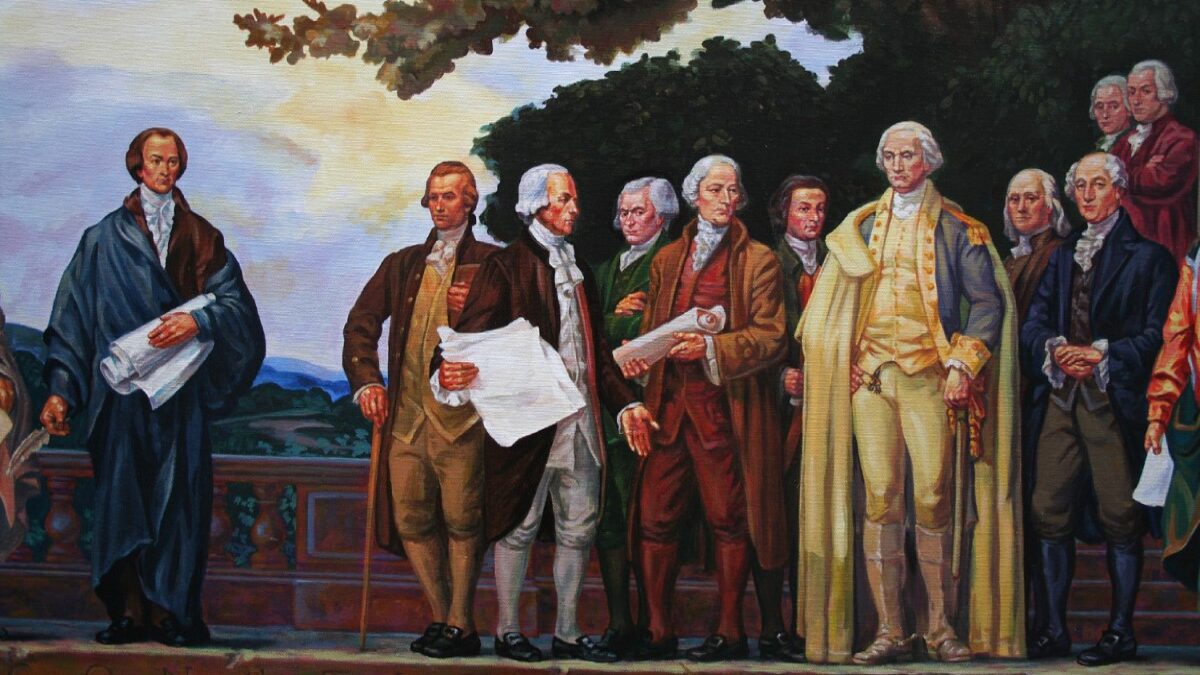
Deeply moved by the power of the Declaration’s words, George Washington ordered copies sent to all generals in the Continental Army.

SCOTT POWELL
Most Americans celebrating the July 4 holiday today don’t fully realize that the power of ideas in the Declaration of Independence was the critical enabling factor for the Americans to win the War of Independence. Compared to the British professional military, the American colonial army was simply no match—it was undermanned, underfunded, underequipped, inexperienced, and undertrained. At the outset of the war, the British Royal Navy had 270 warships deployed in American waters, while the Continental Navy had seven ships.
On July 4, 1776, in what is now Manhattan, New York, Gen. George Washington was preparing for battle. He had no idea that a Declaration of Independence was being released in Philadelphia that day, as he pondered the sobering stream of British ships coming through the Narrows and anchoring off Staten Island in New York Harbor.
A month before, Washington had written a letter to his brother, saying: “We expect a very bloody summer of it in New York… If our cause is just, as I do most religiously believe it to be, the same Providence which in many instances appeared for us, will still go on to afford its aid.”
On July 4, 1776, in Philadelphia, it was also a somber day when those 56 members of the Continental Congress committed to signing the Declaration of Independence. Each knew that becoming a signatory put a death warrant on their heads for being a traitor to Great Britain.
Thus, the first Declaration of Independence that was signed on July 4 did not have signatures identifying the committed delegates. Rather, there were two signatures on that first document: John Hancock, president of the Continental Congress, and Charles Thomson, secretary of the Continental Congress.
It took more than two weeks for the Declaration to be “engrossed”—that is, written on parchment in a clear hand. Many of the 56 delegates to the Continental Congress who had agreed to sign the document did so on August 2, but new delegates replaced some six of the original delegates and an additional seven delegates could not sign until many weeks later. Recognizing the long odds against the small and underequipped American colonial army defeating the British army and navy—the most formidable military force in the world—the Continental Congress decided to hold the 56-signatory Declaration for release at a later time.
Washington’s First Read of the Declaration
Washington was in New York preparing its defense when on July 6, 1776, a courier arrived to deliver a copy of the two-signature Declaration of Independence that had been released in Philadelphia several days before. Deeply moved by the power of the Declaration’s words, Washington ordered copies sent to all generals in the Continental Army and that chaplains be hired for every regiment to assure that, “every officer and man, will endeavor so to live and act, as becomes a Christian Soldier, defending the dearest Rights and Liberties of his country.”
Like the Mayflower Compact, the Declaration was a true covenant with God of absolute commitment, with its last sentence invoking: “with a firm reliance on the Protection of Divine Providence, we mutually pledge to each other our Lives, our Fortunes, and our sacred Honor.”
Washington read the Declaration repeatedly and became so moved that, on July 9, he called a halt to his troops’ battle preparations and announced a respite and gathering to read the Declaration to his soldiers and the townspeople. The crowd hustled down to lower Manhattan, where they gazed out at a forest of masts of the British ships at anchor in New York harbor. After the reading, when a few of the rowdies in the group spotted a statue of King George III, they pulled it down, to others’ tumultuous cheers.
By August, about 35,000 professionally trained and well-equipped British and Hessian mercenary soldiers had arrived on some 400 British ships. The number of soldiers under Washington’s command had some turnover since leaving Boston, but had grown slightly to about 18-19,000, with recent enlistees—primarily farmers, fishermen, and artisans—having no training.
When engagement with the British finally commenced on Long Island on August 27, the colonial army was quickly overwhelmed, with more than 1,000 taken prisoners. Washington decided to retreat from Long Island back to Manhattan to regroup in hope of fighting more successfully another day.
Constant Defeats, and Only a Few Key Victories
It was not to be over the next two months, as Washington’s troops faced two more devastating routs in New York—with six times more casualties than the British suffered and several thousand taken as prisoners. Washington was forced to leave New York in total and abject defeat.
It had been decided to place half the remaining American troops active in the New York campaigns under generals Lee and Gates. Washington would lead the rest and make their way south through New Jersey to Philadelphia. But for a gallant few among some 3,500 marching with Washington, nearly all thought the War for Independence was lost. Washington’s greatest challenge then was maintaining the morale, confidence, and loyalty of his diminished and discouraged troops.
Crossing over into Pennsylvania in early December, Washington’s army encamped on the banks of the Delaware River. Washington’s faith in God’s providence and his belief in the cause of independence sustained him, but he knew at this point only a decisive victory could bring about a reversal of fortune.
Just days later, intelligence from a spy revealed that a large contingent of German Hessians under British command was occupying Trenton, only nine miles away. Washington immediately began planning what would become the legendary crossing of the Delaware on Christmas night to march and strike at Trenton.
The surprise attack that ensued early the morning of December 26 was a resounding victory. A few days later, another intelligence tip was delivered, and Washington decided to make a second surprise attack on British regulars encamped in nearby Princeton.
Leading from the front, Washington displayed such courage, “with a thousand deaths flying around him,” that his men fought with greater vigor than ever and inspired the local townspeople to grab their arms and join in the fight. In short order there were many more British than American casualties, resulting in defeat with the surrender of some 300 Redcoats.
Victory Inspired by the Declaration’s Ideas
Perceiving this dual miracle as a harbinger of more victories to come, and perhaps with many recognizing the power of providence and the vital importance in the ideas manifest in the Declaration, the Continental Congress ordered the reprinting and dissemination to all the colonies of the now-famous 56-signature Declaration of Independence on January 18, 1777—more than six months after the original document had been drafted and approved.
The Revolutionary War would grind on for nearly four more years. In the end, although Washington’s continental army lost six major battles and won only three, Washington’s courage, sacrifice, and persistence inspired and sustained everyone around him.
Of the 56 signers of the Declaration, nine fought and died from wounds or hardships of the Revolutionary War. Two had sons serving in the Continental Army who died, and another five signers were captured and tortured as traitors, and later died. Twelve of the 56 Declaration signers had their homes looted and destroyed.
A Willingness to Sacrifice All, If Necessary
The Americans’ willingness to sacrifice was on display during the battle of Yorktown from September 28 to October 19, 1781—the decisive and final battle in the war for independence. Thomas Nelson, Jr. a signer of the Declaration of Independence, who succeeded Thomas Jefferson as governor of Virginia, was a native of Yorktown.
When Nelson learned that his Yorktown home had been taken over and occupied as the military headquarters for British Gen. Charles Cornwallis, he urged Washington to aim his cannons and open fire on his own home. Nelson’s home was destroyed and a few weeks later Cornwallis surrendered and acknowledged the American final victory for its complete independence.
In the minds of many, Washington remains the greatest Founding Father because of his fearless courage in battle, his incredible perseverance against unfathomable odds, and his faith in Providence that provided protection and empowered him to achieve the impossible.
As we reflect on the meaning of July 4 this year, we should celebrate and take heart that the same good ideas and principles—natural God-given rights—expressed in the Declaration of Independence that inspired Washington—are as today as they were then. With renewed courage, those who believe in these ideas will be empowered to make good triumph over evil.

 Written by Steve Guest, Media Reporter, 07/03/2016


 What Did You Say?
You must be logged in to post a comment.