
Perspectives; Thoughts; Comments; Opinions; Discussions

Posts tagged ‘FEDERALIST PAPERS’

Leftists Want Direct Democracy Because It’s Easy to Manipulate the Masses


BY: CASEY CHALK | JANUARY 03, 2024

Read more at https://thefederalist.com/2024/01/03/leftists-want-direct-democracy-because-its-easy-to-manipulate-the-masses/
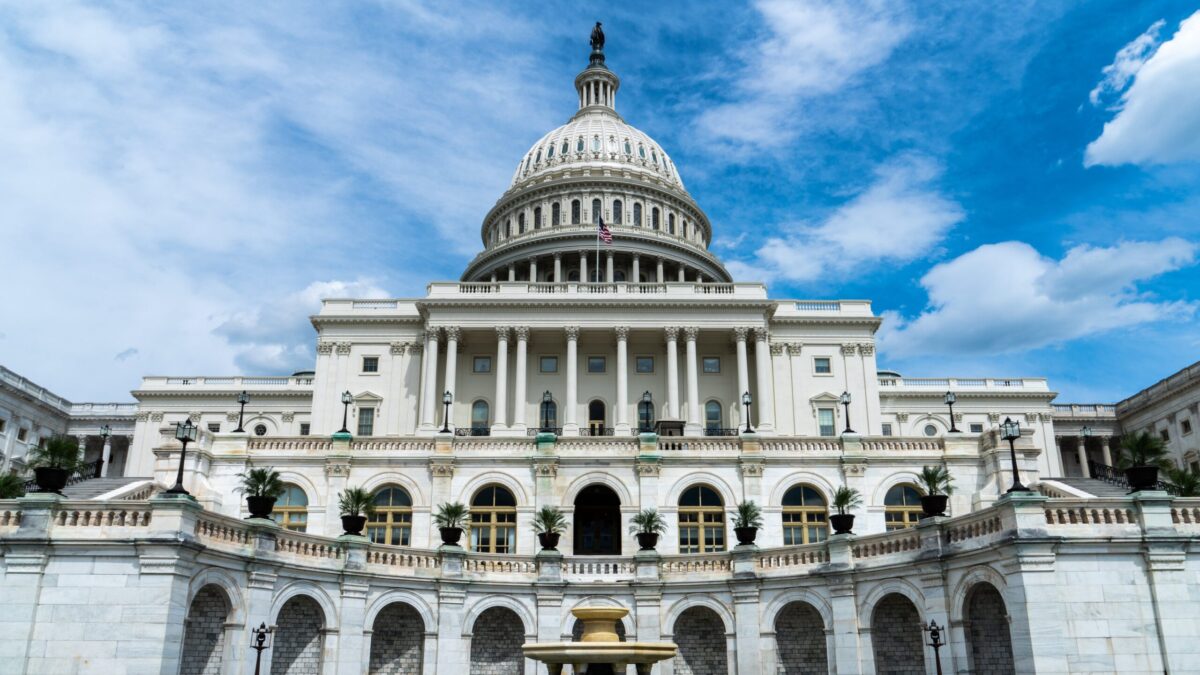

US Capitol Building

Author Casey Chalk profile

CASEY CHALK

MORE ARTICLES

“American democracy is cracking,” warns Washington Post Chief Correspondent Dan Balz in a recent column that presents some ideas to repair it. His suggestions include, among other things, proportional representation, diminishing the power of the Senate, and eliminating the Electoral College. What these three suggestions have in common is a desire to remove any intermediary institutions between the will of the people and government action — otherwise known as “direct” democracy. 

These proposals are not new. Indeed, even the framers of the Constitution were familiar with them. But the reasons why such suggestions would significantly erode the republican government envisioned by our Founding Fathers are not new either. 

Given Biden’s low approval ratings — especially in important swing states with critical Electoral College votes — as well as broader Democrat fears of a Republican takeover of the Senate, we will likely hear a renewed chorus of voices calling for direct democracy. After all, masses of individuals are much easier to manipulate than smaller families, communities, or even states. Conservatives would do well to arm themselves with the best arguments against such initiatives.

Founders Worked to Curb Direct Democracy

The framers of our Constitution felt quite strongly that direct democracy was something to avoid. In Federalist 10, for example, the Father of the Constitution James Madison warned of “the superior force of an interested and overbearing majority” on a government, or what has come to be called the “tyranny of the majority,” in which a majority of the population exerts great coercive power over minority factions.

Again in Federalist 51, Madison wrote: “[I]n the federal republic of the United States … all authority in it will be derived from and dependent on the society, the society itself will be broken into so many parts, interests, and classes of citizens, that the rights of individuals, or of the minority, will be in little danger from interested combinations of the majority.” 

Our second president, John Adams, called a unicameral legislative body — in which each member is accountable to his constituents — a “tyranny of the majority.” Adams, reflecting the opinion of that founding generation, argued for “a mixed government, consisting of three branches.” The framers took various steps to disburse power among the federal government, dividing it into three competing branches: executive, legislative, and judicial. 

But the founders’ dispersion of governing power also goes beyond the three branches. The 10th Amendment reads: “The powers not delegated to the United States by the Constitution, nor prohibited by it to the States, are reserved to the States respectively, or to the people.” In other words, unless the Constitution expressly grants certain powers to the federal government, those powers exist in the states or, even more decentralized, in local communities of Americans. 

Later Generations Understood the Threat

A generation after that founding generation, visiting French aristocrat Alexis de Tocqueville authored an extended survey of American politics and culture, Democracy in America. Tocqueville perceived that the American political system was created to resist the tyranny of the majority, “which bases its claim to rule upon numbers, not upon rightness or excellence.” Thus, Tocqueville writes:

When a man or a party suffers from an injustice in the United States, to whom do you want them to appeal? To public opinion? That is what forms the majority. To the legislative body? It represents the majority and blindly obeys it. To the executive power? It is named by the majority and serves it as a passive instrument. 

In other words, the executive branch, even with its disbursed powers, can be influenced by this tyrannical tendency to reflect the opinions of the majority of the people against minority interests at the state or community level. It was thus only through the states and local bases of power and voluntary associations that this tyrannical tendency could be avoided. 

A century after Tocqueville’s warnings, Supreme Court Justice Louis Brandeis discussed another way to understand our nation’s default desire to resist direct democracy. Brandeis was one of the first to describe the states as “laboratories of democracy.” In his New State Ice Co. v. Liebmann opinion, he explained how “a single courageous State may, if its citizens choose, serve as a laboratory; and try novel social and economic experiments without risk to the rest of the country.”  

State and local autonomy served as a means of testing laws and policies to evaluate their effectiveness before implementing across a diverse nation of states, localities, and subcultures. If something works at the micro level, other localities or states — and even potentially the federal government — can appreciate and adopt it. 

Constant Temptation of Direct Democracy

Yet such a deliberative process of testing is slow and uneven. And we Americans are often eager for speedy solutions. Political theorists, journalists, and ordinary citizens throughout American history have been frustrated by the Constitution’s manifold methods of distributing power to deter the tyranny of the majority. If a majority of the nation’s populace wants something, they posit, why shouldn’t they be able to get it? After all, as the journalist H.L. Mencken wryly commented, “Democracy is the theory that the common people know what they want, and deserve to get it good and hard.” 

Such demands especially increase at times of heightened political gridlock in which the country obviously has a particular problem or set of problems but constitutionally mandated laws and procedures thwart attempts to resolve them. When we are all vexed with our politicians for failing to act in what we believe to be the interests of the nation (and its voters), it’s easy to be sympathetic to that line of thinking. 

Yet we must beware of this temptation, which reflects what conservative political theorist Russell Kirk calls a manifestation of vox populi, vox dei — the voice of the people is the voice of God. In other words, as long as they constitute a majority, whatever the people want becomes the law of the land. 

Direct democracy thus not only represents a threat to freedom, but it is a political order that rejects hierarchies both natural and spiritual. Although these hierarchies are sometimes abused, they serve as a cautionary brake upon the whims of the masses, which — as many revolutions have demonstrated — can be quite violent and destructive. Just look at the French or Russian Revolutions, which ended up terrorizing those they claimed to represent. Millions of dead across the world reveal the problem with direct democracy.

This is the reason for state representation rather than proportional representation in the lower House, a Senate consisting of equal representation by state, the filibuster, the Electoral College, and powers relegated to the states vis-a-vis the 10th Amendment. All of it is an attempt to slow the destructive force of vox populi, vox dei

As that great French observer of American politics Alexis de Tocqueville observed: “If ever freedom is lost in America, that will be due to the … majority driving minorities to desperation…” 

Let’s do everything we can to avoid that scenario.

Casey Chalk is a senior contributor at The Federalist and an editor and columnist at The New Oxford Review. He has a bachelor’s in history and master’s in teaching from the University of Virginia and a master’s in theology from Christendom College. He is the author of The Persecuted: True Stories of Courageous Christians Living Their Faith in Muslim Lands.

Democrats Are Dangerously Close to Changing Laws So Our President Is Elected by Popular Vote


BY: ANDREW MORGAN | JULY 28, 2022

Read more at https://thefederalist.com/2022/07/28/democrats-are-dangerously-close-to-changing-laws-so-our-president-is-elected-by-popular-vote/

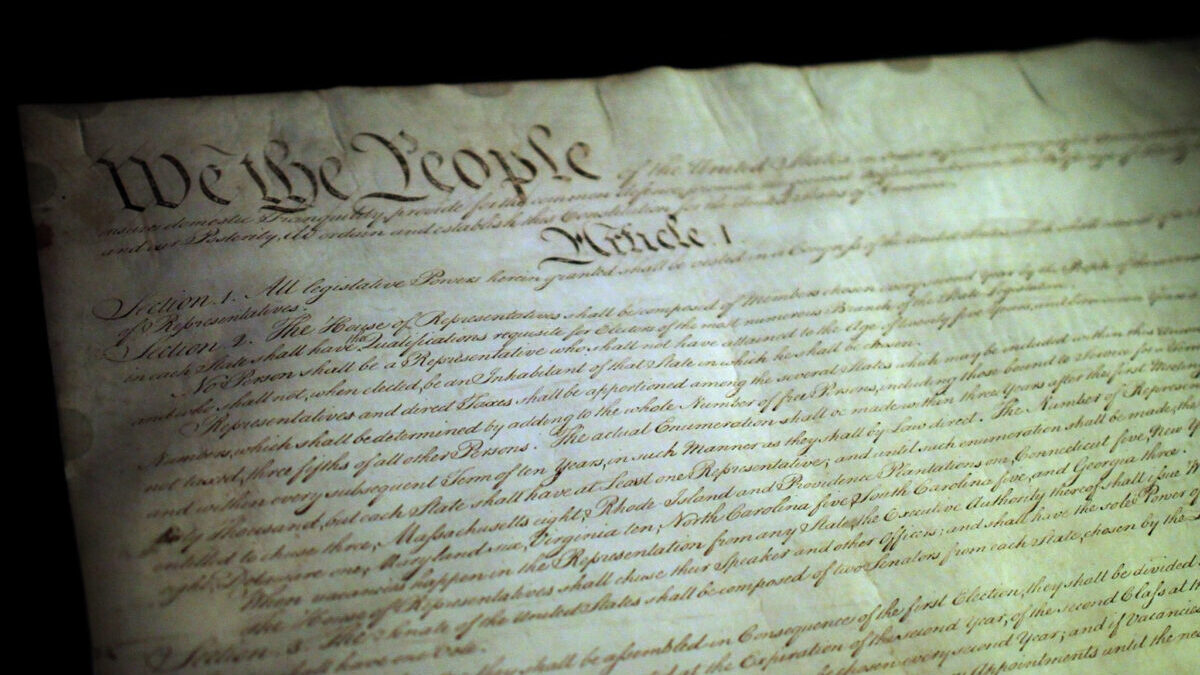
US Constitution

The left’s push for a popular vote for the presidency directly undermines the electoral system established by our Constitution.

Author Andrew Morgan profile

ANDREW MORGAN

MORE ARTICLES

The left is at it again, and conservatives need to be on high alert. The left has been pushing for a national popular vote to elect the president of the United States for years. Since 2017, 10 more states have either signed the National Popular Vote bill into law or approved the bill in one state legislative chamber. This should be a grave concern because it directly undermines the electoral system established by our Constitution. If not stopped, the American system of presidential elections will be changed potentially forever.

The National Popular Vote bill would guarantee the presidency to the candidate who receives the most popular votes in all 50 states and the District of Columbia. It has been enacted by 15 state legislatures plus Washington, D.C., and passed in 41 legislative chambers in 24 states. For the proposal to become the law of the land, enough states totaling at least 270 electoral votes would be required to enact the law, and states would then commit their electoral votes to the candidate with the most popular votes nationally, regardless of which candidate won at the state level.

The states that have enacted the compact represent 195 electoral votes: Delaware, Hawaii, Rhode Island, Vermont, Colorado, Connecticut, Maryland, Massachusetts, New Jersey, New Mexico, Oregon, Washington, Illinois, California, New York, and the District of Columbia. States with passage in one chamber include Arkansas, Arizona, Maine, Michigan, Minnesota, North Carolina, Nevada, Oklahoma, and Virginia. Successful passage in all of these states represents 283 electoral votes, enough to change the law and make our presidential election decided via popular vote rather than the Electoral College. 

Democrats have long been unhappy with the electoral process, unless, of course, their candidate won. When their candidate loses, debate begins anew about how unfair the Electoral College is. The argument is always the same. Since we conduct our elections by democratic process, it makes sense to elect our nation’s executive according to the will of the majority with a voting plurality.

Five times, presidential candidates have won elections without the popular vote: John Quincy Adams (1824), Rutherford B. Hayes (1876), Benjamin Harrison (1888), George W. Bush (2000), and Donald Trump (2016).

Minority and Less Populated Areas Would Lack Representation

The commonly heard sentiment during election cycles is “every vote matters.” However, what is not fair is that if the president is elected based on a plurality, then the minority would not have a chance of having their candidate elected. Only the concerns and interests of more heavily populated areas, such as the East and West coast cities, would be represented. Interests of the minority and less populated areas would naturally be set aside and of little interest to future presidential candidates. Worse, the executive would be beholden and accountable solely to the majority.

This condition was not the intent of our founders. Their intent was to ensure that the nation’s highest executive, as well as the executive branch, represented the interests of all Americans regardless of political affiliation. A future president would need to appeal to those concerned about not just national but also regional issues.

Further, the Electoral College provided a means to disburse and decentralize power. State electors are elected just days before and are unknown until just prior to an election to prevent undue influence to stay true to the people’s votes in their states. Our founders framed it so as to prevent collusion and cabalist (their word) behavior, preclude violence, and thwart involvement of foreign powers.

Cabalism Comes to Light

Following the 2020 election, our founders’ concerns came to light and fruition. Our national elections have been fraught with cabalist behavior, undue influence, numerous forms of cheating, as well as foreign interference. The tyranny they feared came to pass, driven by collusion among the administrative state, the legislative branch, legacy media, Big Tech, and nongovernmental organizations. An independent executive branch separate from the legislature has become an illusion.

In Federalist Paper 68, Alexander Hamilton wrote, “the process of election affords a moral certainty, that the office of the president will never fall with a lot of any man who is not in an eminent degree endowed with requisite qualifications. Talents for low intrigue and a little arts of popularity may alone suffice to elevate a man to the first owners of a single state, but it will require other talents, and a different kind of merit to establish him in the esteem and confidence of the whole union.” Hamilton would have been appalled today to have witnessed the travesty undermining his sentiment.

So why does all this matter?

An Oppressive Majority

It matters because the idea of a national popular vote is gaining steam and if adopted by enough states, the Electoral College will become irrelevant. Minority voter interests will no longer matter at the national level. Only the whims of the majority will. And the result will be precisely why Socrates opposed a democratic form of government. Once a majority is established, it finds a way to remain permanent, and the majority class will become oppressive to the minority class. There will be no means to overturn the majority, no matter how skewed the majority’s view may be.

The implications for the country are vast and would make the United States just another oppressive tyrannical state. The ultimate reason for the success of the U.S. was that its founders held a belief that we are created and guided by a higher power, and they recognized that men are inherently corruptible. They implemented controls to prevent those with ambitions from achieving outright power over the minority, thus making the U.S. unique among nations.

Left Looks to Crush the Right

The left’s tactics are in high gear, accelerating in an attempt to overwhelm conservatives and Republicans to a tipping point at which the left acquires complete control and the right becomes powerless.

The left’s all-out assault has become abundantly clear since President Joe Biden took office. As soon as Democrats attained the presidency and the narrowest of majorities in the House and Senate, they pressed forward with their agenda, nearly unimpeded had it not been for the likes of Sen. Joe Manchin, D-W.Va., and Sen. Kyrsten Sinema, D-Ariz., and perhaps divine intervention.  

Whether changing voting laws in its favor, creating crises to circumvent the laws already in place, continually flooding the courts with litigation designed to throw sand in the gears of transparent elections, or changing the electoral process altogether, the left’s efforts to gain and retain control, by any means necessary, will not relent.

In addition to ongoing election integrity efforts across the nation, it is imperative that conservatives push back attempts to advance a national popular vote. It is incumbent upon individual citizens to tell their state representatives that it is not the desire of the people to circumvent the constitutional process for electing our president.

Failure to stop a national popular vote could take generations to reverse.


Andrew Morgan is a former deputy assistant secretary of the Army, a senior executive within the Office of the Secretary of Defense, and a retired U.S. Navy captain. He received his MBA from George Washington University and master’s from National Defense University.

Tag Cloud