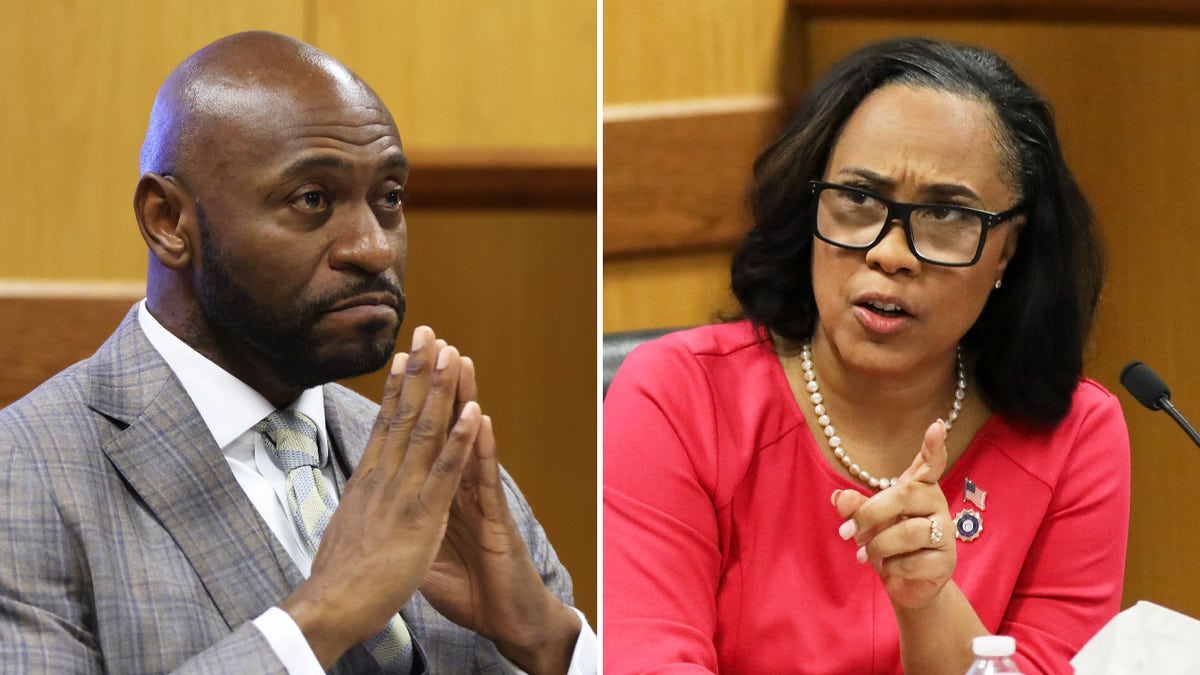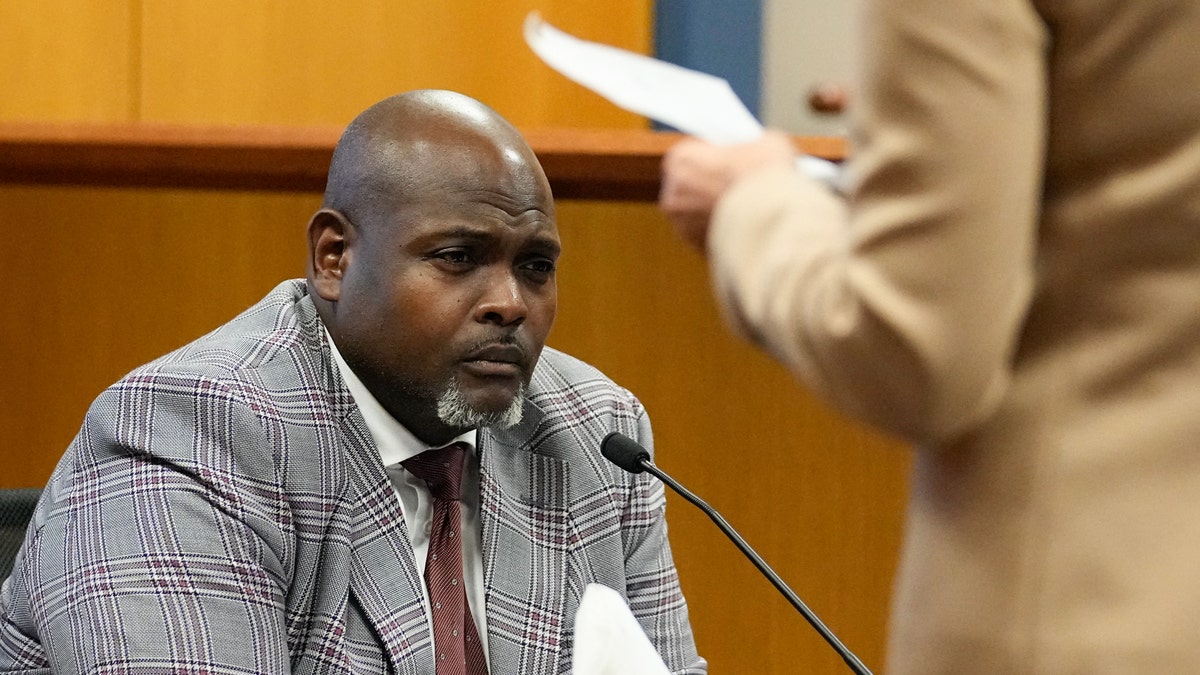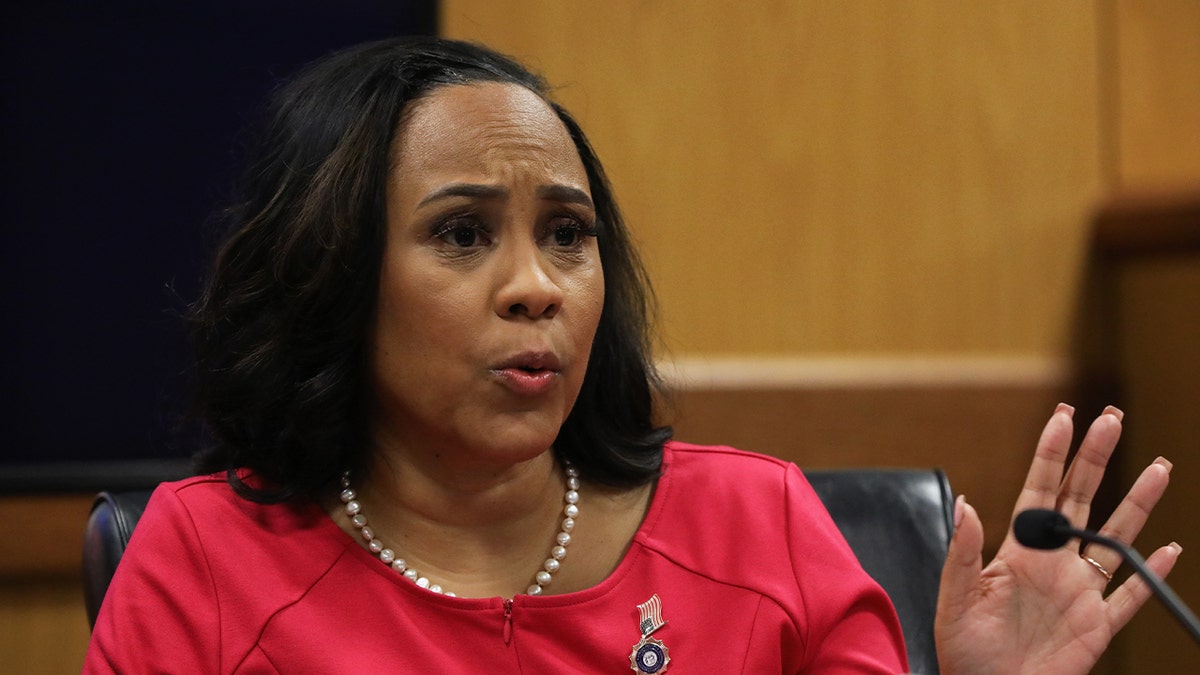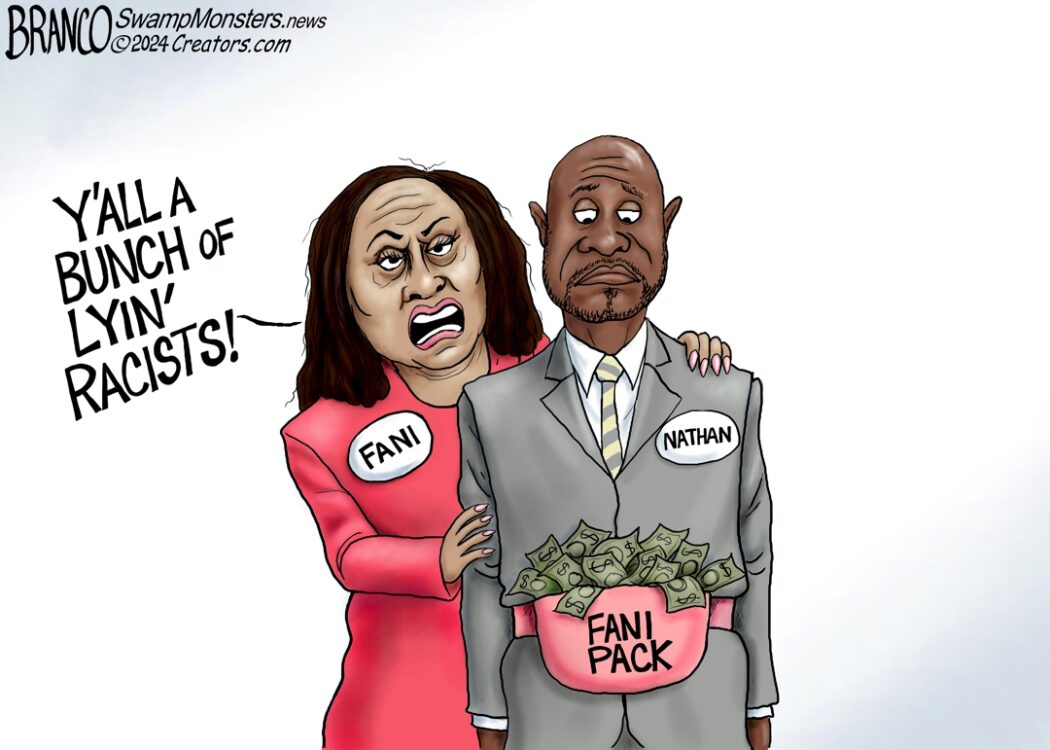
Perspectives; Thoughts; Comments; Opinions; Discussions

Posts tagged ‘FANI WILLIS’

Joe Biden’s Fingerprints Are All Over the Criminal Prosecutions of Donald Trump


BY: MARGOT CLEVELAND | JUNE 03, 2024

Read more at https://thefederalist.com/2024/06/03/joe-bidens-fingerprints-are-all-over-the-criminal-prosecutions-of-trump/
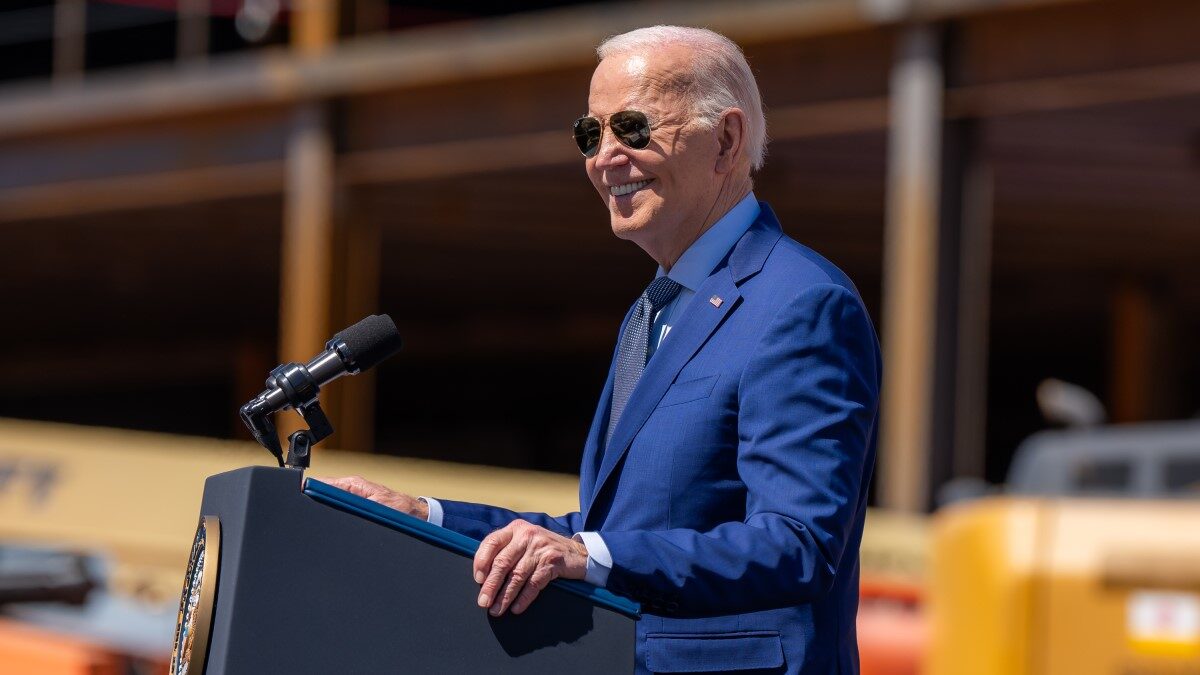

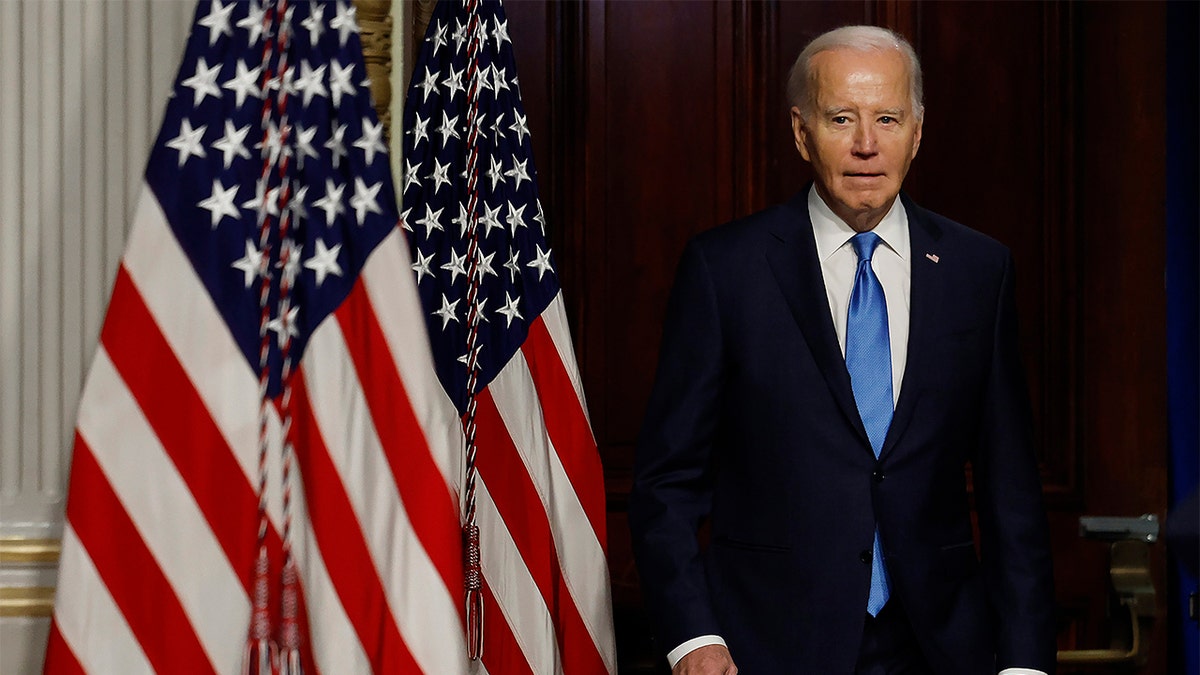
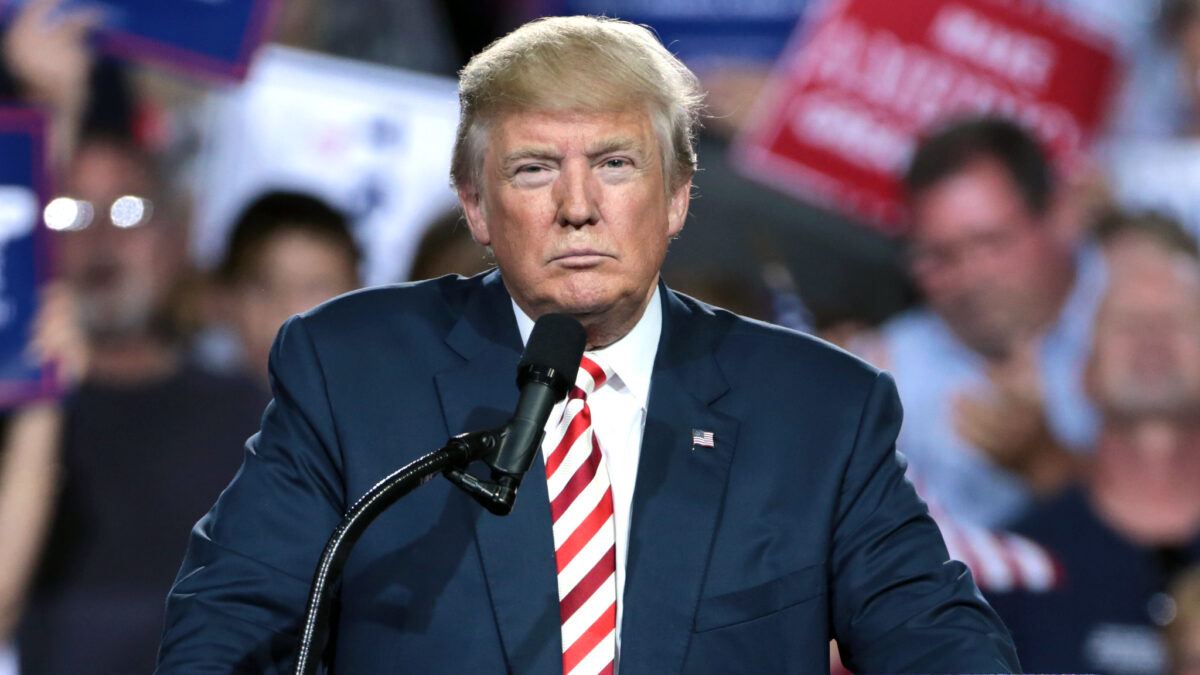
Joe Biden

Author Margot Cleveland profile

MARGOT CLEVELAND

VISIT ON TWITTER@PROFMJCLEVELAND

MORE ARTICLES

In response to Americans’ outcry over the political prosecutions of Donald Trump and a Manhattan jury convicting the former president on 34 felony counts, President Joe Biden declared, “It’s irresponsible for anyone to say this was rigged, just because they don’t like the verdict.” Coming from the Commander-in-Rigging, this proclamation means nothing.

Biden and those seeking to ensure his re-election have their hands all over Manhattan District Attorney Alvin Bragg’s prosecution of the former president. A lead prosecutor for Bragg during the trial was Matthew Colangelo. In December 2022, Colangelo left the Biden Department of Justice to “jump start” the criminal case against Trump. Biden had previously named Colangelo his acting associate attorney general—the third highest-ranking official in the DOJ.

There’s Plenty More Where That Came From

Colangelo’s role in prosecuting his former boss’s political opponent provides the most obvious evidence of the Biden administration’s involvement in the Manhattan D.A.’s criminal targeting of Trump, but the rigging started much earlier. As I previously reported, the incestuous relationship between the Manhattan D.A.’s office and Team Biden began as early as mid-February 2021. Then, “Bragg’s predecessor, District Attorney Cyrus Vance, arranged for private criminal defense attorney and former federal prosecutor Mark Pomerantz to be a special assistant district attorney for the Manhattan D.A.’s office.”

As The New York Times reported at the time, Pomerantz was to work “solely on the Trump investigation” during a temporary leave of absence from his law firm, Paul, Weiss, Rifkind, Wharton, and Garrison. “But even before being sworn in as a special assistant to the Manhattan D.A., Pomerantz had reportedly ‘been helping with the case informally for months.’” Even Democrats’ most reliable Old Grey Lady (of the evening) acknowledged, “the hiring of an outsider is a highly unusual move for a prosecutor’s office.”

Soon after the Manhattan D.A. hired Pomerantz, two of his colleagues, Elyssa Abuhoff and Caroline Williamson, also took leaves of absence from Paul, Weiss to serve as special assistant district attorneys on the Trump investigation. “For a law firm to lend not one but three lawyers to the Manhattan D.A.’s office seems rather magnanimous, until you consider Paul, Weiss’s previous generosity to Joe Biden.”

As I previously reported, during Biden’s first run for the White House, “the law firm hosted a $2,800-per-plate fundraiser for about 100 guests.” Brad Karp, the chair of Paul, Weiss, also topped the list of Biden fundraisers, bundling at least $100,000 for the then-candidate. At the time, Karp wrote in an email: “As someone who cares passionately about preserving the rule of law, safeguarding our democracy and protecting fundamental liberties, I’ve been delighted to do everything I possibly can to support the Joe Biden/Kamala Harris ticket.”

Biden’s relationship with Karp continued after his election, with the president including Karp and his wife at a state dinner with the Australian prime minister. Karp and his fellow Paul, Weiss lawyers continue to fund Biden’s re-election campaign. In fact, Biden’s connection to the firm is so strong Bloomberg branded Paul, Weiss the “Biden-Era N.Y. Power Center.”

But for Paul, Weiss lending Pomerantz to the Manhattan D.A.’s office to control the Trump investigation, the former president likely never would have been charged. According to Pomerantz, Bragg had decided “not to go forward with the grand jury presentation and not to seek criminal charges,” indefinitely suspending the investigation.

Pomerantz made those claims in the resignation letter he tendered to Bragg in early 2022, which was deliberately leaked to The New York Times. “Pomerantz’s letter and his claims that Bragg had suspended the Trump probe triggered a political firestorm, which the Manhattan D.A. sought to quell by telling the public the investigation was ongoing.” Soon after, Bragg capitulated, hiring Biden’s high-ranking DOJ lawyer, Colangelo, who proceeded to indict and convict Trump.

In contrast to the Biden-connected attorneys who secured Trump’s indictment and conviction, in late 2021, at least three career prosecutors in the Manhattan D.A.’s office asked to be removed from the investigation of Trump, reportedly “concerned that the investigation was moving too quickly, without clear evidence to support possible charges.”

Not Just Manhattan

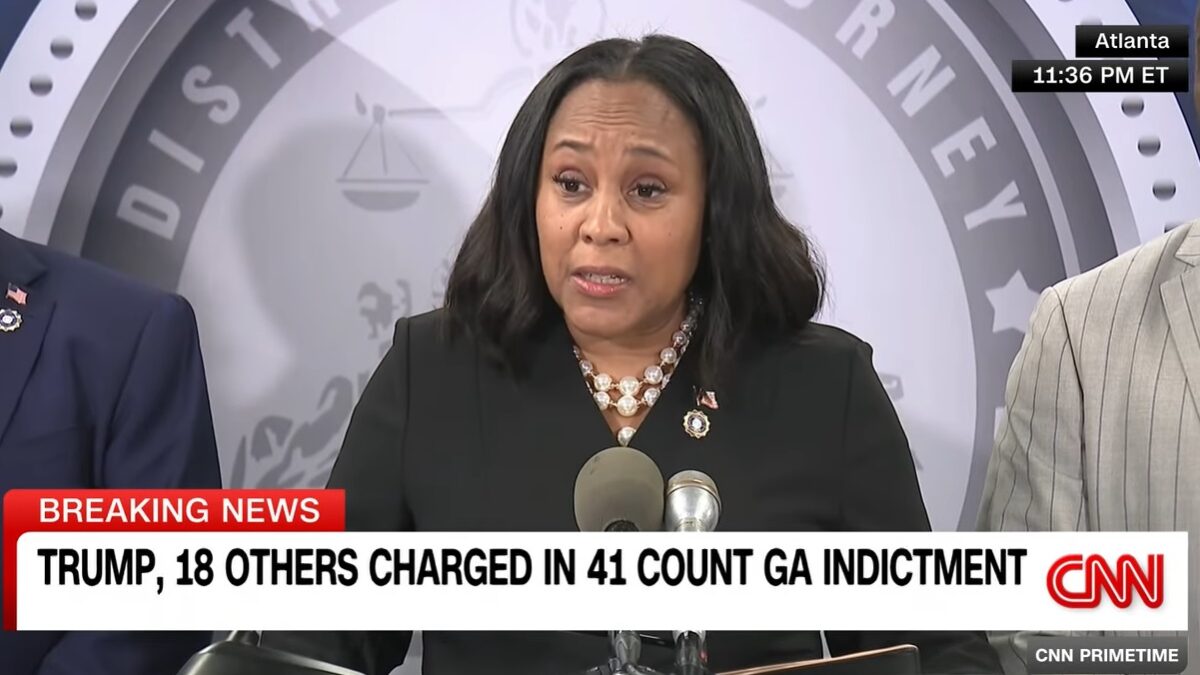
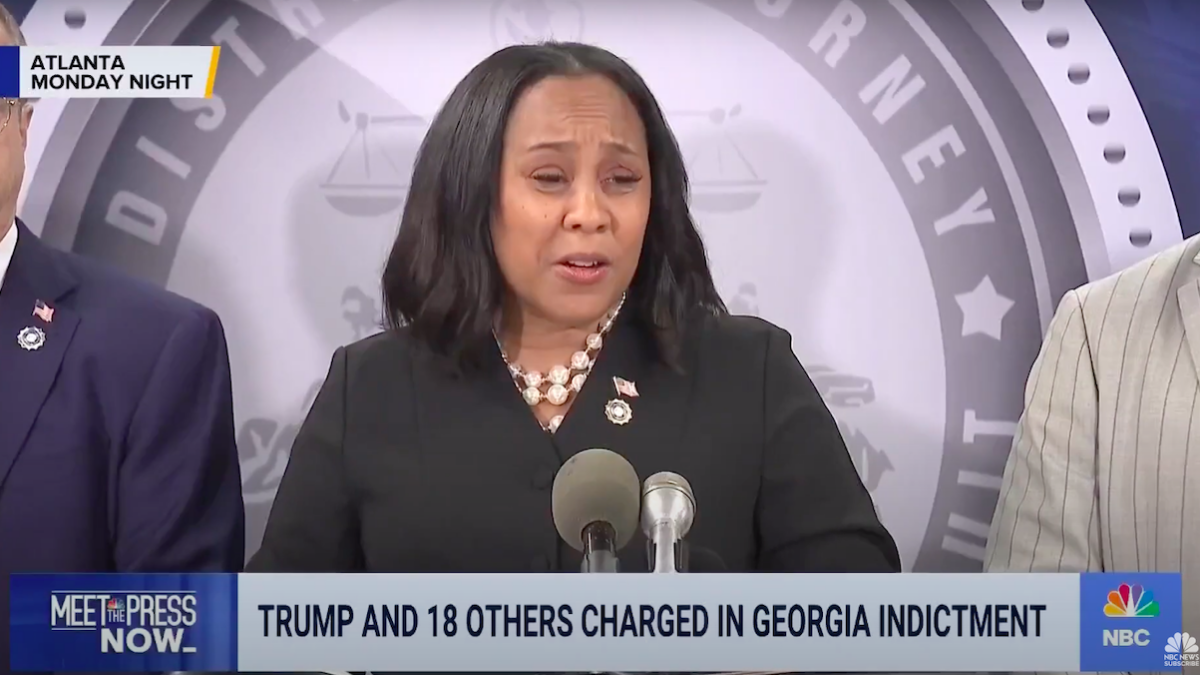
The Biden connection to the political targeting of Trump is not limited to the Manhattan D.A.’s office. In August 2023, Fulton County, Georgia District Attorney Fani Willis charged Trump and 18 other Republicans in a sprawling 98-page criminal indictment.

Earlier this year, court filings and testimony in the case related to motions to disqualify Willis and her former lover, Nathan Wade, revealed the Fulton County D.A.’s office had met with White House counsel in May 2022. Then, just three days after Trump announced his 2024 candidacy for president, Wade traveled to D.C. for an interview with the “White House,” according to Fulton County records. The Biden administration’s White House counsel’s office also dispatched two letters to Willis, according to one of her prosecutors.

Biden and his Democrat-run administration also have their fingers all over the remaining two criminal cases targeting Trump, both brought by Special Counsel Jack Smith. President Biden, according to an April 2, 2022, New York Times report, “As recently as late last year… confided to his inner circle that he believed former President Donald J. Trump was a threat to democracy and should be prosecuted.”

The Times claimed Biden had expressed frustration with Garland’s “deliberative approach” and that the president believed Trump should be prosecuted. The president “has said privately that he wanted Mr. Garland to act less like a ponderous judge and more like a prosecutor who is willing to take decisive action over the events of Jan. 6.,” the legacy outlet reported.

Biden’s attorney general would eventually appoint Smith special counsel. Smith would later charge Trump in two separate indictments—one in Florida concerning documents the former president retained, and one in D.C. with various conspiracy to defraud and obstruction charges related to Trump’s challenging the outcome of the 2020 election.

Stretching the Law Past Its Breaking Point

With the D.C. indictment, the special counsel delivered to Biden just what he wanted—a prosecution of Trump “for his role in the events of Jan. 6.” To deliver for Biden, though, required Smith to stretch the federal criminal code to the point of breaking. In the case of two of the crimes charged, in the context of Jan. 6, 2021, defendants, the Supreme Court seems poised to limit the reach of the relevant statutes—a holding that could mean that Smith charged Trump with two non-crimes.

The final criminal case pending against Trump, Smith’s documents case, also connects back to the Biden administration. That case began when the DOJ launched an investigation prompted by a referral from the national archivist related to a dispute over presidential records—even though the same archivist declined to refer Hillary Clinton to the DOJ for mishandling classified documents. Later, a top aide to Smith, Jay Bratt, would meet with “White House officials multiple times, just weeks before Mr. Smith indicted former President Donald Trump.”

That case has been delayed after it was revealed the FBI agents who executed a search warrant obtained by the Biden administration had failed to keep the documents seized from Mar-a-Lago in the same condition they were found, with the order of the materials mixed up. At the same time, it was revealed that the “classified cover sheets” depicted in the photographs of the evidence seized during the August 2022 search of Trump had been placed there by federal agents. The leak of those photographs falsely portrayed the former president as in possession of documents bearing classified cover sheets.

Biden can continue to deny his responsibility for the criminal targeting of his political opponent all he wants, but the facts tell a different story. So did the president’s malevolent smile on Friday when he was asked to respond to Trump calling himself a political prisoner and blaming the president directly.

Margot Cleveland is an investigative journalist and legal analyst and serves as The Federalist’s senior legal correspondent. Margot’s work has been published at The Wall Street Journal, The American Spectator, the New Criterion, National Review Online, Townhall.com, the Daily Signal, USA Today, and the Detroit Free Press. She is also a regular guest on nationally syndicated radio programs and on Fox News, Fox Business, and Newsmax. Cleveland is a lawyer and a graduate of the Notre Dame Law School, where she earned the Hoynes Prize—the law school’s highest honor. She later served for nearly 25 years as a permanent law clerk for a federal appellate judge on the Seventh Circuit Court of Appeals. Cleveland is a former full-time university faculty member and now teaches as an adjunct from time to time. Cleveland is also of counsel for the New Civil Liberties Alliance. Cleveland is on Twitter at @ProfMJCleveland where you can read more about her greatest accomplishments—her dear husband and dear son. The views expressed here are those of Cleveland in her private capacity.

This Week In Lawfare Land: Prosecutor Misconduct Jeopardizes Another Case


BY: STEVE ROBERTS AND OLIVER ROBERTS | MAY 10, 2024

Read more at https://thefederalist.com/2024/05/10/this-week-in-lawfare-land-prosecutor-misconduct-jeopardizes-another-case/

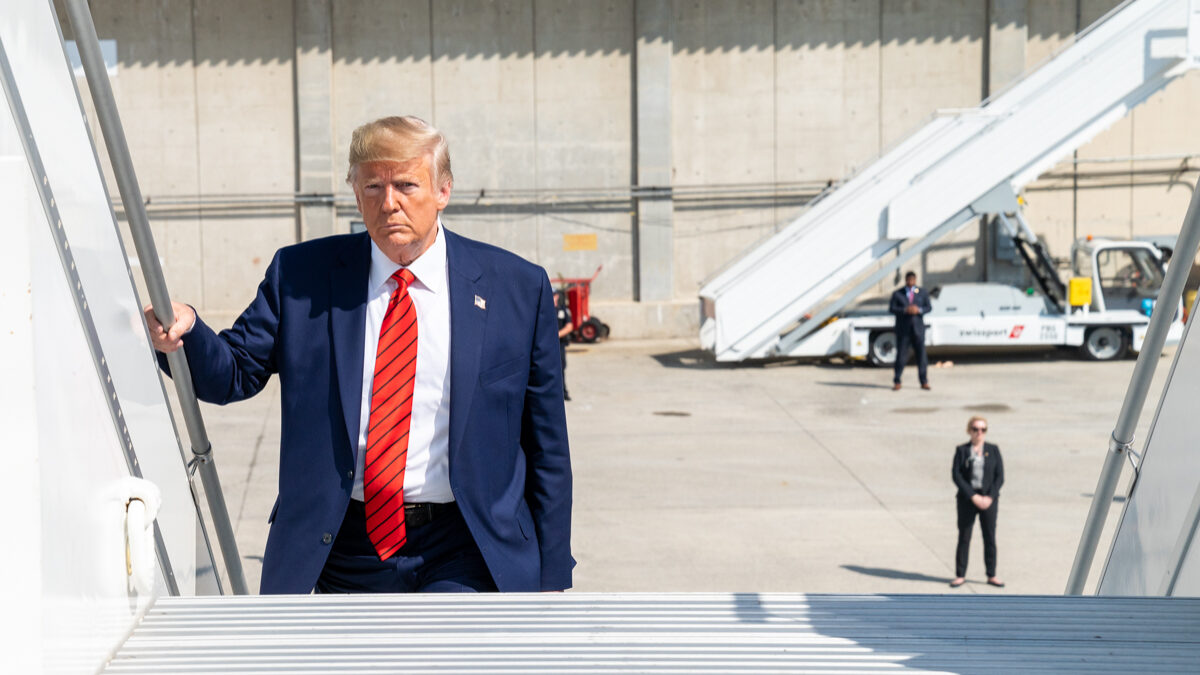
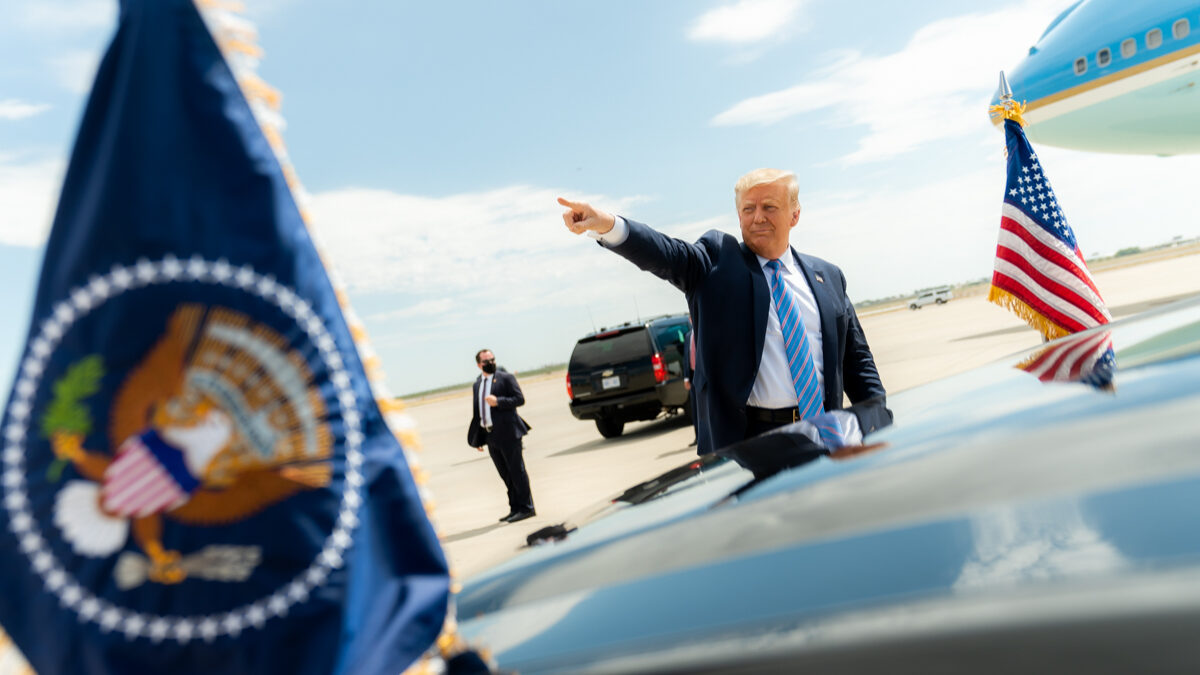
Trump points while walking to limo

Author Steve Roberts and Oliver Roberts profile

STEVE ROBERTS AND OLIVER ROBERTS

MORE ARTICLES

As the lawfare crusade continues, former President Donald Trump is racking up significant victories in court. Down in Florida, President Trump secured an indefinite delay in his criminal case involving alleged mishandling of classified documents. This delay was ordered following revelations that Special Counsel Jack Smith and prosecutors mishandled and misrepresented evidence, which is uniquely ironic given the subject matter of the underlying case. 

In Georgia, where another criminal case is pending, the Georgia Court of Appeals agreed to hear President Trump’s attempt to remove Democrat District Attorney Fani Willis from the case. The Georgia Court of Appeals is set to consider and decide this issue in the coming weeks.

It is becoming increasingly likely that the ongoing Manhattan criminal case is the only trial that President Trump will face before the November election. 

Here’s the latest information you need to know about each case.

Read our previous installments here.

Manhattan, New York: Prosecution by DA Alvin Bragg for NDA Payment

How we got here: In this New York state criminal case, Manhattan District Attorney Alvin Bragg — who The New York Times acknowledged had “campaigned as the best candidate to go after the former president” — charged former President Donald Trump in April 2023 with 34 felony charges for alleged falsification of business records. 

Trump’s former attorney Michael Cohen paid pornographic film actress Stormy Daniels shortly before the 2016 presidential election as part of a nondisclosure agreement in which she agreed not to publicize her claims that she had an affair with Trump (who denies the allegations). Nondisclosure agreements are not illegal, but Bragg claims Trump concealed the payment to help his 2016 election chances and in doing so was concealing a “crime.” 

The trial began on April 15, and jury selection was completed on April 19. Judge Merchan, a donor to Biden’s campaign and an anti-Trump cause in 2020, has issued a gag order on President Trump generally prohibiting him from publicly speaking on possible jurors, witnesses, and other personnel in this case.

Latest developments: This week, the jury heard testimony from porn performer Stormy Daniels, also known as Stephanie Clifford. Daniels and Playboy model Karen McDougal are central to this case because prosecutors allege that former President Trump paid them off and then falsified business records, to prevent negative media stories during his 2016 presidential campaign. Daniels alleges that she had a sexual encounter with President Trump in 2006, but President Trump denies the affair.

On May 8, President Trump’s attorneys cross-examined and discredited Stormy Daniels, highlighting her history of being a pornographer, her strip club tour, and her history of profiting off allegations against Trump. That same day, Judge Merchan denied a second attempt by President Trump to dismiss this case for a mistrial. President Trump’s attorneys argued that Stormy Daniels’s testimony was unfairly prejudicial against Trump due to its inconsistencies and unnecessary detail, which could improperly influence the jury. 

The jury is soon expected to hear from President Trump’s former personal attorney Michael Cohen, who is the prosecutor’s star witness. Another key witness, Karen McDougal, is not expected to testify.  

Judge Merchan handed the prosecution another win by ruling that former Federal Election Commission Chairman Bradley Smith, an expert on campaign finance-related issues, is limited as to what he can say in his testimony in the case. One of the defenses raised by the president’s legal team is that even if such payments were made, they were not necessarily to influence an election but rather to protect Donald Trump’s name, his brand, and his family. Chairman Smith was expected to testify in support of this theory, as he has long asserted that “almost anything a candidate does can be interpreted as intended to ‘influence an election’” but “not every expense that might benefit a candidate is an obligation that exists solely because the person is a candidate.” But after Judge Merchan’s ruling, Smith can now only testify as to the “general background as to what the Federal [Election] Commission is, background as to who makes up the FEC, what the FEC’s function is, what laws, if any, the FEC is responsible for enforcing, and general definitions and terms that relate directly to this case, such as for example ‘campaign contribution.’”

Fulton County, Georgia: Prosecution by DA Fani Willis for Questioning Election Results

How we got here: The Georgia state criminal case is helmed by District Attorney Fani Willis and her team of prosecutors — which until recently included Nathan Wade, with whom Willis had an improper romantic relationship. Willis charged Trump in August 2023 with 13 felony counts, including racketeering charges, related to his alleged attempt to challenge the 2020 election results in Georgia. President Trump is joined by 18 co-defendants, including Rudy Giuliani, Mark Meadows, Sidney Powell, and others. Some of President Trump’s co-defendants have reached plea deals; others have petitioned to have the case removed to federal court, each attempt of which has been denied. A trial date has not yet been set, though prosecutors have asked for a trial to begin on Aug. 5, just a few short weeks after the Republican National Convention in Milwaukee. 

Latest developments: On May 8, the Georgia Court of Appeals agreed to hear former President Trump’s attempt to disqualify Democrat District Attorney Fani Willis from the pending criminal case in Georgia. Trial court judge Scott McAfee previously denied President Trump’s attempt to remove Willis from the case, but the Georgia Court of Appeals will now determine whether that denial was permissible

Southern District of Florida: Prosecution by Biden DOJ for Handling of Classified Documents

How we got here: In this federal criminal case, special counsel Jack Smith and federal prosecutors with Biden’s Justice Department charged former President Trump in June 2023 with 40 federal charges related to his alleged mishandling of classified documents at his Mar-a-Lago residence. The trial was set to begin on May 20, 2024, but this date has now been postponed indefinitely. Additionally, venue matters: The trial is currently set to take place in Fort Pierce, Florida, in a locality that heavily backed President Trump in the 2020 election. If that remains unchanged, the demographics of the jury pool may result in a pro-Trump courtroom.  

Latest developments: On May 7, Judge Aileen Cannon postponed the trial date indefinitely in this case. In an order, Judge Cannon stated “that finalization of a trial date at this juncture … would be imprudent and inconsistent with the Court’s duty to fully and fairly consider the various pending pre-trial motions before the Court.” This delay comes after Special Counsel Jack Smith and other prosecutors admitted to tampering with evidence, stating “there are some boxes [of documents seized from Mar-a-Lago] where the order of items within that box is not the same as in the associated scans.” Prosecutors previously represented to the court that the documents were “in their original, intact form as seized.” Judge Cannon also recently unredacted documents showing the Biden administration’s involvement in this case. 

As a result of this indefinite delay, it is unlikely that a trial will occur before the November election. 

Washington, D.C.:  Prosecution by Biden DOJ for Jan. 6 Speech

How we got here: In this federal criminal case, special counsel Jack Smith and federal prosecutors charged former President Trump in August 2023 with four counts of conspiracy and obstruction related to his actions on Jan. 6, 2021. President Trump’s lawyers have argued that immunity extends to actions taken by a president while acting in his official capacity and that, in any event, the First Amendment protects his right to raise legitimate questions about a questionable election process.

Latest developments: This case is currently stalled while awaiting a ruling from the Supreme Court on former President Trump’s immunity claim.

New York: Lawsuit by A.G. Letitia James for Inflating Net Worth

How we got here: In this New York civil fraud case, Democrat Attorney General Letitia James — who campaigned on going after Trump — sued former President Trump in September 2022 under a civil fraud statute alleging that he misled banks, insurers, and others about his net worth to obtain loans, although the loans have been paid back and none of the parties involved claimed to have been injured by the deals. 

Following a no-jury trial, Judge Arthur Engoron — whom Trump’s lawyers have accused of “astonishing departures from ordinary standards of impartiality” — issued a decision on Feb. 16, 2024 ordering Trump to pay a $454 million penalty. Trump has appealed this decision and posted a required $175 million appeal bond. The appeals court plans to hold hearings on the merits of the full case in September 2024. 

Latest developments: This case mostly remains on hold.


Steve Roberts is a partner and Oliver Roberts is an associate with Holtzman Vogel Baran Torchinksy & Josefiak PLLC. They can be reached at sroberts@holtzmanvogel.com and oroberts@holtzmanvogel.com.

The Odor of Mendacity: 2024 Could Turn on Smell of Selective Prosecution from Georgia to New York


By Jonathan Turley | March 19, 2024

Read more at https://jonathanturley.org/2024/03/18/the-odor-of-mendacity-2024-could-turn-on-smell-of-selective-prosecution-from-georgia-to-new-york/

Below is my column in the Hill on the recent decision in Georgia and the “odor of mendacity” rising out of various courtrooms across the country.  It is the smell of not just selective prosecution but political bias in our legal system. It is becoming harder to deny the existence of a two-track system of justice in the country as commentators and even a few courts raise concerns over the role of politics in prosecutions.

Here is the column:

The removal of lead special prosecutor Nathan Wade from Donald Trump’s prosecution had the feel of a Southern Gothic.

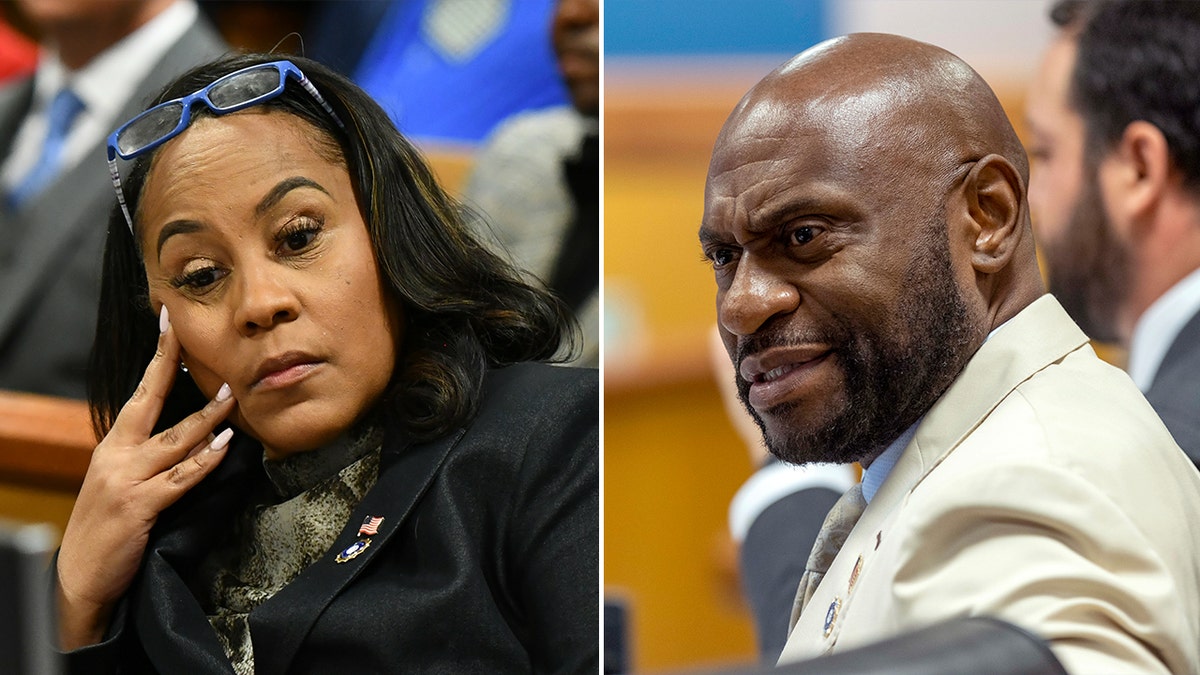
Fulton County, Ga. District Attorney Fani Willis had described Wade as “a Southern gentleman. Me, not so much.” For weeks, the public has been enthralled by accounts of Wade’s illicit affair with Willis. Then there was the roughly three-quarters of a million dollars paid to Wade before he was booted from the case this week.

Channeling Tennessee Williams in his play “Cat on a Hot Tin Roof,” Judge Scott McAfee wrote that, after their testimony, there remained “an odor of mendacity.” That odor was particularly strong after the hearings indicated that Wade may have committed perjury in his earlier divorce case, and that both Willis and Wade were credibly accused of lying on the stand about when their relationship began.

They are prosecuting defendants in the Trump case accused of the same underlying conduct, including  19 individual counts of false statements, false filings or perjury. Yet, that distinct odor noted by Judge McAfee goes beyond the sordid affairs of Willis and Wade.

For many citizens, mendacity, or dishonesty, is wafting from various courtrooms around the country. The odor is becoming intolerable for many Americans as selective prosecution is being raised in a wide array of cases. The problem is that courts have made it virtually impossible to use this claim to dismiss counts. Yet there is a disturbing level of merit to some of these underlying objections.

For years, conservatives have objected that there is a two-tier system of justice in this country. I have long resisted such claims, but it has become increasingly difficult to deny the obvious selective prosecution in a variety of recent cases and opinions.

I have long stated that the charges against Trump over documents at Mar-a-Lago are strong and based on established precedent. However, the recent decision of Special Counsel Robert Hur not to bring criminal charges against President Joe Biden has undermined even that case.

Hur described four decades of Biden serially violating laws governing classified documents. The evidence included Biden telling a third party that he had classified material in his house and actually reading from a classified document to his non-cleared ghostwriter. There is evidence of an effort to destroy evidence and later an effort of the White House to change the report. There is also Biden’s repeated denial of any knowledge or memory of the documents found in nine locations where he worked or lived.

Hur ultimately had to justify the lack of charges based on a belief that he could not secure a conviction from a D.C. jury with an elderly defendant with diminished mental faculties. Although Special Counsel Jack Smith could still proceed on obstruction counts, his prosecution of Trump for the retention and mishandling of national security documents is absurdly in conflict with the treatment Biden is receiving.

In New York, the legislature changed the statute of limitations to allow Trump to be sued while New York Attorney General Letitia James effectively ran on a pledge of selectively prosecuting him. She never specified any particular crime, just promising to bag Trump. Ultimately, James used a law in an unprecedented way to secure an absurd penalty of roughly half a billion dollars, even though no one lost a dime because of the Trump loans.

Manhattan District Attorney Alvin Bragg has also come up with an unprecedented way of using a state law to effectively prosecute Trump for a federal offense that the Justice Department has already rejected.

The same odor has been lingering in the Hunter Biden cases. The Justice Department had reached a ridiculous plea agreement with Hunter Biden that would have allowed for no jail time and a sweeping immunity agreement that would have protected him from all of his other alleged crimes.

As the plea agreement fell apart in court, the prosecutor admitted that he had never seen a defendant given such a deal over his long career. This came after the Justice Department had allowed the statute of limitations to run out on major felonies and scuttled efforts to conduct searches and interviews. Even after that embarrassing hearing, the Justice Department was still trying to preserve the agreement.

It is not just the Trump and Biden cases where there is a stench of selective prosecution. Consider a few other recent cases.

In California, U.S. District Court Judge Cormac J. Carney issued an opinion that found such evidence of selective prosecution against conservative groups. In considering a far-right group, Carney noted that the Justice Department has had sharply different approaches based on the political views of the defendants. Antifa and other leftist groups often see charges dropped, whereas federal prosecutors seek draconian sentences against conservative defendants.

“Such selective prosecution leaves the troubling impression that the government believes speech on the left more deserving of protection than speech on the right. The government remains free to prosecute those, like Defendants, who allegedly use violence to suppress First Amendment rights. But it cannot ignore others, equally culpable, because Defendants’ speech and beliefs are more offensive. The Constitution forbids such selective prosecution,” Carney noted.

That treatment was equally glaring when federal prosecutors convicted an Antifa supporter who took an ax to the door of Sen. John Hoeven’s office in Fargo. He was given no jail time, and the FBI even returned his ax. He later mocked the government by posting on social media “Look what the FBI were kind enough to give back to me!

Likewise, this week, former U.S. Attorney Rachael Rollins was disbarred after being found to have lied to investigators about leaking material to the press for political purposes. Rollins had allegedly made a clear and knowingly false statement to federal investigators, but the Justice Department just shrugged it off and refused to indict.

FBI Director James Comey received similar gentle treatment after removing FBI material and arranging for information to be leaked to the media. Meanwhile, defendants such as Trump’s National Security Adviser Michael Flynn were pursued relentlessly for making false statements to investigators under Comey’s watch.

These and other cases have fulfilled Trump’s narrative about a politically weaponized legal system. The fact is that many in cities like New York are thrilled by selective prosecution and biased sentencing decisions directed at locally unpopular figures.

The rest of us are left in courtrooms, from Georgia to Washington to New York, asking the same question of Tennessee Williams’ “Big Daddy” Pollitt: “What’s that smell in this room? …Didn’t you notice a powerful and obnoxious odor of mendacity in this room? There ain’t nothin’ more powerful than the odor of mendacity.”

Jonathan Turley is the J.B. and Maurice C. Shapiro professor of Public Interest Law at the George Washington University Law School.

Willis and the Third Option: The McAfee Order is More Ironic than Solomonic


By Jonathan Turley | March 15, 2024

Read more at https://jonathanturley.org/2024/03/15/willis-and-the-ethical-option-the-mcafee-order-is-more-ironic-than-solomonic/

Below is my column in the New York Post on the ruling in the Willis/Wade controversy. The references to the decision as “Solomonic” or “Solomonesque” might not be fair to King Solomon. Indeed, the comparison only highlights what is missing in Willis: an overriding interest in the case as opposed to their own position. While the court gave Willis two options (to transfer the case or remove her former lover), there is a third option: step aside.

Here is the column:

Many commentators reviewing the decision of Fulton County Superior Court Judge Scott McAfee to disqualify lead Special Counsel Nathan Wade but not Fulton County District Attorney Fani T. Willis as “Solomonic” or “splitting the baby” in the Trump prosecution. Indeed, it was similar in all but one respect. The baby at issue before King Solomon survived. That whole point of the story was not to kill the baby but to see which of the two women loved the baby more.

In the story from 1 Kings 3:16–28, two mothers claim the male child who Solomon declares that each can get one half. One mother immediately accepts while the second woman begs him to just give the first woman the child and not to kill him. Solomon immediately gives the second woman the child as clearly the mother who loves the baby.

But if either Wade or Willis truly loved “their baby” — the case against Trump — they would have removed themselves weeks ago. Their personal controversies have derailed the case and mired the prosecution in scandal. Ethically, this should not have been a difficult question. They should have stepped aside.

That conclusion is more than evident in Judge McAfee’s decision, which shreds their claims on the stand and outside of the courthouse.

The court describes Willis’s controversial speech at a church as “’playing the race card . . . to cast racial aspersions at an indicted Defendant’s decision to file this pretrial motion.” He hammers Willis for her lack of professional judgment and stresses, with perhaps an unintentional pun, that “providing this type of public comment creates dangerous waters for the District Attorney to wade further into.”

Judge McAfee also indicates that the testimony of Wade failed to resolve questions of filing false statements to a prior court and that his testimony on when the relationship began stood contradicted.

McAfee has done a fair job throughout the case. Moreover, he makes a valid point when he notes that this evidence does not establish a strong basis for claiming that the case was brought or pursued due to this relationship or possible financial gain. Indeed, the purpose of this case was not personal but political. While the indictments contain some valid criminal charges, they are largely minor offenses like unlawful access to voting areas. The overall racketeering claim used to ensnarl Trump is forced and weak.

The problem is that the Court casts doubt on Wade’s testimony on the relationship, but ignores that Willis effectively ratified those claims in her own testimony. Willis and Wade are both prosecuting people for the very same conduct of filing false statements with courts and making false statements. The two lawyers testified in tandem but only one was disqualified.

McAfee is no Solomon in this decision. He splits the accused to avoid making the harder decision. If he disqualified Willis, he likely would have had to disqualify her entire office. That would throw the entire case (and certainly the pre-election schedule) into doubt. So he left her with the choice:

“The prosecution of this case cannot proceed until the State selects one of two options. The District Attorney may choose to step aside, along with the whole of her office, and refer the prosecution to the Prosecuting Attorneys’ Council for reassignment. Alternatively, SADA Wade can withdraw, allowing the District Attorney, the Defendants, and the public to move forward without his presence or remuneration distracting from and potentially compromising the merits of this case.”

He is leaving Wade with no choice at all beyond an appeal. However, Willis will be allowed to place her own interests as the overriding purpose of the prosecution. In some ways, it is a result that should please no one other than Donald Trump.

The defense removed the lead special prosecutor while leaving Willis carrying more baggage than Amtrak. It does not, however, serve the interests of justice. Willis will now prosecute defendants for false statements as her own questionable testimony is likely to be investigated by the state and the bar. She could still be effectively removed or disqualified. That prospect does not appear to give Willis pause.

It is not too late for Willis to act professionally in best interests of her office and the people of Fulton County. She can step aside in light of the damning findings of the court. Otherwise, like the first woman in the trial with Solomon, she would rather see the baby sawed in half than give it up entirely.

Jonathan Turley is an attorney and professor at George Washington University Law School.

Judge Dismisses 6 Charges in Georgia Trump Indictment Ahead of Expected Fani Willis Decision


By: Katelynn Richardson @katesrichardson / March 13, 2024

Read more at https://www.dailysignal.com/2024/03/13/judge-dismisses-6-charges-in-georgia-trump-indictment-ahead-of-expected-fani-willis-decision/

Judge Scott McAfee sided with defendants in Georgia in a motion to toss certain counts of former President Donald Trump’s indictment. Pictured: Trump speaks during an election-night watch party at Mar-a-Lago on March 5, 2024, in West Palm Beach, Florida. (Photo: Win McNamee/Getty Images)

The judge overseeing the racketeering case against former President Donald Trump and his co-defendants in Georgia dismissed six counts of the indictment Wednesday. Judge Scott McAfee, who is expected to soon decide whether Fulton County District Attorney Fani Willis will be disqualified from the case over an alleged conflict of interest, sided with defendants in a separate motion to toss certain counts.

dailycallerlogoHe wrote that six counts did not “give the Defendants enough information to prepare their defenses intelligently, as the Defendants could have violated the Constitutions and thus the statute in dozens, if not hundreds, of distinct ways.”
McAfee’s ruling said that the state can still bring new indictments on the six charges, which all center on “Solicitation of Violation of Oath by Public Officer.”

“The Court’s concern is less that the State has failed to allege sufficient conduct of the Defendants—in fact it has alleged an abundance,” he wrote. “However, the lack of detail concerning an essential legal element is, in the undersigned’s opinion, fatal. As written, these six counts contain all the essential elements of the crimes but fail to allege sufficient detail regarding the nature of their commission, i.e., the underlying felony solicited.”

“Under the standards articulated by our appellate courts, the special demurrer must be granted, and Counts 2, 5, 6, 23, 28, and 38 quashed,” he wrote.

McAfee noted in a footnote that his order does not “mean the entire indictment is dismissed.”

“The State may also seek an indictment supplementing these six counts,” he wrote. He also denied defendants’ efforts to dismiss certain overt acts contained in the indictment.

“The Court made the correct legal decision to grant the special demurrers and quash important counts of the indictment brought by DA Fani Willis,” Steve Sadow, Trump’s lead defense counsel, said in a statement provided to the Daily Caller News Foundation.

“The counts dismissed against President Trump are 5, 28 and 38, which falsely claimed that he solicited GA public officials to violate their oath of office,” Sadow continued. “The ruling is a correct application of the law, as the prosecution failed to make specific allegations of any alleged wrongdoing on those counts. The entire prosecution of President Trump is political, constitutes election interference, and should be dismissed.”

McAfee is also expected to rule on the motion to disqualify Willis by the end of the week. Trump co-defendant Michael Roman accused Willis in a Jan. 8 motion of financially benefiting from appointing her lover Nathan Wade to work as special prosecutor on the case.

Willis and Wade have denied the relationship began before he was hired, though a close friend of Willis testified it began in 2019 and Wade’s former law partner supplied details about their relationship starting earlier to the attorney who filed the motion.

Originally published by the Daily Caller News Foundation

Today’s Politically INCORRECT Cartoon by A.F. Branco


A.F. Branco Cartoon – Boody Call

A.F. BRANCO | on March 13, 2024 | https://comicallyincorrect.com/a-f-branco-cartoon-boody-call/

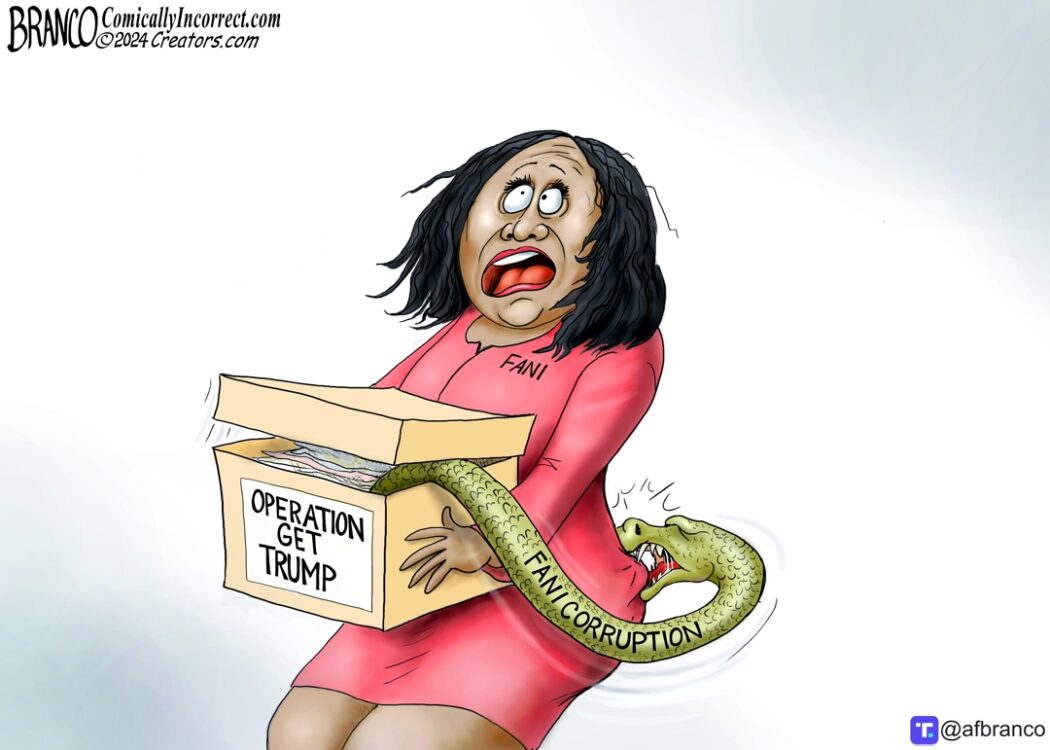
Fani Willis Corruption
A Political Cartoon by A.F. Branco 2024

Facebook Twitter Pinterest Flipboard

It looks like Fani Willis’ deranged passion for destroying President Trump bit off more than she expected, like her own fanny. Her corruption has been exposed and has jeopardized her case against Trump.

NEW REPORT: Fani Willis Conspired with Liz Cheney’s Faux J6 Committee – J6 Committee Shared Video Recordings with Fani Willis But Then Deleted the Video to Prevent Republican Lawmakers from Gaining Access To It

By Jim Hoft – March 12, 2024

Chairman Barry Loudermilk (R-GA) released his January 6 Initial Findings Report on Monday, March 11. Rep. Loudermilk is the Committee on House Administration’s Subcommittee on Oversight Chairman. “For nearly two years former Speaker Nancy Pelosi’s January 6th Select Committee promoted hearsay and cherry-picked information to promote its political goal – to legislatively prosecute former President Donald Trump,” said Chairman Loudermilk on Monday.

“It was no surprise that the Select Committee’s final report focused primarily on former President Trump and his supporters, not the security failures and reforms needed to ensure the United States Capitol is safer today than in 2021.” READ MORE…

 DONATE to A.F. Branco Cartoons – Tips accepted and appreciated – $1.00 – $5.00 – $25.00 – $50.00 – it all helps to fund this website and keep the cartoons coming. Also Venmo @AFBranco – THANK YOU!

A.F. Branco has taken his two greatest passions (art and politics) and translated them into cartoons that have been popular all over the country in various news outlets, including NewsMax, Fox News, MSNBC, CBS, ABC, and “The Washington Post.” He has been recognized by such personalities as Rep. Devin Nunes, Dinesh D’Souza, James Woods, Chris Salcedo, Sarah Palin, Larry Elder, Lars Larson, Rush Limbaugh, and President Trump.

Of Pings and Prosecutors: The Spectacular Imposition of the Willis-Wade Testimony


By: Jonathan Turley | March 6, 2024

Read more at https://jonathanturley.org/2024/03/06/of-pings-and-prosecutors-the-spectacular-imposition-of-willis-wade-testimony/

Below is my column in the New York Post on the expanding controversy surrounding the disqualification of Fani Willis and Nathan Wade. In today’s legislative hearing in Atlanta, counsel Ashleigh Merchant testified that cellphone records on one occasion show “pings” on Wade’s cellphone from his home to the vicinity of Willis’s home followed by a call to Willis and then hours of silence. The next morning, she claims, the data shows him going back to his home and texting Willis. It is only the latest example of how evidence against the two prosecutors is growing and possible explanations are dwindling in the case.  The greatest problem is how these allegations are beginning to mirror those against the defendants being prosecuted by Willis and Wade.

Here is the column:

When Fani Willis ran against her former boss Paul Howard in 2020, she highlighted the experience that she would bring to the position.

Howard was embroiled in a sexual harassment scandal involving his relationship with women in his office.

Willis offered both experience and ethical leadership, including pledging repeatedly that “I will certainly not be choosing to date people that work under me.”

Willis is now accused of the wrong type of relevant experience.

She and her lead prosecutor are not just accused of having an intimate relationship, but they are accused of some of the same underlying conduct that they are prosecuting in the election interference case against former President Donald Trump and other defendants. That includes allegations of filing false statements with courts and even influencing witnesses.

This week, another witness came forward with an explosive new allegation against Willis. In the prior hearings in Atlanta, Nathan Wade was confronted with what appears to be false statements made to the court in his divorce case, false statements that he repeated under oath in disqualification testimony. For example, Wade was asked about his denial of “a sexual relationship during the time of his marriage and separation” up to and including May 30, 2023.

That would obviously include the sexual relationship with Willis in 2022 and possibly earlier. Wade, however, denied any such sexual relationship and said he confined the question to sexual relations meaning an affair “in the course of my marriage.” Of course, his marriage was ongoing even during the divorce and the question asked about any relationship up to May 2023.

Wade and Willis have also been contradicted in their testimony by various witnesses who said they lied about their intimate relationship starting after he was hired in 2022. That includes prior text messages in which Wade’s former partner and lawyer Terrence Bradley repeatedly told opposing counsel that he was “absolutely” sure that the relationship began much earlier.

A former close friend of Willis also said they were lying.

This is notable because Wade and Willis brought 19 individual counts of false statements, false filings, or perjury against the defendants in their case. There are now substantial allegations that they may have committed the very same criminal conduct.

Now another prosecutor has come forward to say that Bradley also told her repeatedly and with complete clarity and certainty that Wade and Willis were involved long before his hiring. Those conversations allegedly occurred as late as January 2024 with Cindi Lee Yeager, a co-chief deputy district attorney for Cobb County.

What is even more alarming is Yeager’s account that she overheard Willis tell Bradley on the telephone that “they are coming after us. You don’t need to talk to them about anything about us.” If true, that call could raise questions of influencing potential witnesses.

Willis can legitimately point out that the calls was allegedly in September 2023, before Bradley was called as a witness and the current proceedings had started. However, it would indicate that Willis was aware that Bradley would be asked questions about past payments and relationships with him and his partner Wade.

If that seems loose, you should take a look at the case Willis brought against these defendants. Many of us have been critical of the overarching racketeering conspiracy alleged by Willis among the 18 defendants.

The false statement charges often dismiss plausible alternative interpretations or the paucity of evidence of intent.

They are also prosecuting the attempt to influence witnesses.

The question is whether Willis or Wade had other communications indirectly or directly with Bradley.

His testimony was widely panned and he showed all of the spontaneity and comfort of a hostage video.

Willis is a powerful political figure in Atlanta and Bradley did everything short of faking his death to avoid assisting in her disqualification.

The odds are that Judge Scott McAfee is not inclined to hold additional hearings. He is ready to rule.

It is hard to imagine these two prosecutors continuing with so many allegations hanging over the case. They have placed their personal interests before their office and their case.

However, the standard for disqualification is murky. For Willis, the case has become a modern political tragedy a la movie classic “All the King’s Men,” about a reformer who became everything that he once denounced in the corruption of powerful figures.

Willis ran against a district attorney accused of using his office to pursue sexual affairs and continues to claim that she “restored integrity” to her office through ethical leadership.

In her combative testimony, Willis attacked the media, opposing counsel and the public for questioning her actions. She declared, “You’re confused. You think I’m on trial. These people are on trial for trying to steal an election in 2020. I’m not on trial, no matter how hard you put me on trial.”

The question is whether the courts, prosecutors or bar officials will show the same vigor in pursuing these allegations against Wade and Willis that they have shown against their own defendants. If so, she could well find herself “on trial” as the allegations mount against her and her lead prosecutor.

Jonathan Turley is an attorney and professor at George Washington University Law School.

Key witness in Fani Willis case testifies he may have lied in texts about friends’ affair


By Brianna Herlihy Fox News | Published February 27, 2024 6:19pm EST | Updated February 28, 2024 10:45am EST

Read more at https://www.foxnews.com/politics/key-witness-in-fani-wilis-case-testifies-he-may-have-lied-in-texts-about-friends-affair

Former law firm partner and divorce attorney Terrance Bradley on Tuesday testified under oath regarding what he knew about Fulton County, Georgia, District Attorney Fani Willis and special prosector Nathan Wade’s personal relationship. Bradley took the stand after Judge Scott McAfee determined Bradley couldn’t claim attorney-client privilege.

Bradley, when pressed under oath, said he couldn’t recall several details and timelines about conversations he had with former client Wade about Wade’s romantic relationship with Willis. Defense attorney Ashleigh Merchant at one point referenced text messages between her and Bradley in which she had asked Bradley if he thought the relationship started before Willis hired Wade in 2021. Bradley responded “absolutely” in the text exchange.

When confronted with a record of those texts in court Tuesday, Bradley appeared to mutter “dang.” But then he said he was “speculating” in those comments. 

FANI WILLIS’ TESTIMONY WAS ‘BELLIGERENT’ AND COULD DAMAGE HER CREDIBILITY, FORMER PROSECUTOR SAYS

Fani Willis, Nathan Wade
Fani Willis, the district attorney for Fulton County, Georgia, is accused of having an “improper” romantic relationship with special prosecutor Nathan Wade. (Getty Images)

Attorney Richard Rice later asked Bradley if he makes a habit of passing on “lies about your friends.” 

“Do you tell lies about your friends? About a case of national importance?” Rice asked. 

“I could have had, I don’t know,” Bradley responded. 

Bradely said he couldn’t recall key details or specific information more than two dozen times in the roughly two-hour testimony in Fulton County Superior Court on Tuesday. He also said he had only ever discussed Wade’s relationship with Willis once with Wade.

FULTON COUNTY DA FANI WILLIS ACCUSED OF LYING ABOUT TIMING OF AFFAIR WITH TRUMP PROSECUTOR

Bradley this month avoided answering certain questions, citing attorney-client privilege. McAfee said he would hold an “in-camera” meeting with Bradley to determine if his privilege assertions are accurate. He said it appeared that Bradley may have been misusing his attorney-client privilege.

Bradley is the former law firm partner of Wade, who is accused of having an affair that financially benefited Willis after she hired him to help prosecute the election interference case against former President Donald Trump.

On Tuesday, Bradley said he hadn’t spoken to Wade in two years after having been friends for more than 10 years.

Terrance Bradley testifies
Terrence Bradley, divorce lawyer and former law partner of Nathan Wade, testifies during a hearing into misconduct allegations against Fulton County District Attorney Fani Willis at the Fulton County Courthouse in Atlanta on Tuesday. (Brynn Anderson/Pool/AFP via Getty Images)

Bradley had refused to answer some of the questions asked by defense counsel about what he knew about Wade and Willis’ relationship and when he knew, citing attorney-client privilege. Bradley, for a brief time, was Wade’s lawyer during Wade’s divorce.

McAfee determined after the in-camera meeting that Bradley’s testimony was not covered by privilege, leading to Tuesday’s testimony, which is likely the last installment of evidentiary hearings before both sides present final arguments Friday.

Lawyers for Trump and his co-defendants who are accusing Willis of having had an “improper” affair with Wade will try to connect evidence that Willis and Wade lied about when their relationship began and should therefore be disqualified from the case. 

Earlier this month, Willis’ father, John C. Floyd III, took the stand and confirmed what Willis testified to — that her father taught her to keep large amounts of cash on hand at all times. She said it was from these funds that she reimbursed Wade for luxury trips, which is why she had no record of the payments.

Floyd also said he did not meet Wade until 2023 and that he was unaware his daughter had a romantic relationship with Wade until about seven weeks ago, when allegations of Willis’ impropriety were first made in court filings.

Video

During their romantic relationship, which ended last summer, Wade and Willis vacationed in wine country in California, the Caribbean and other destinations. 

Michael Roman, a GOP political operative and co-defendant in the Trump case, first alleged that Willis had a conflict of interest in the case because she benefited financially from hiring her lover. Four co-defendants have made similar accusations.

The crux of the defense’s case is whether it can prove with a money trail that Willis has a conflict of interest in the case against Trump and should thus be disqualified.

GEORGIA DA FANI WILLIS WILL NOT TESTIFY FOR SECOND DAY ON ‘IMPROPER’ AFFAIR WITH NATHAN WADE

Willis testified that she reimbursed Wade for her share of vacation expenses in cash, but she and Wade testified there were no receipts for those transactions.

The defense, led by Merchant, is also trying to prove Willis and Wade were romantically involved prior to Wade’s employment in the DA’s office.

Both Willis and Wade insisted that their relationship started in 2022, after Wade was hired. But they contradicted testimony from Robin Yeartie, a former “good friend” of Willis and past employee at the DA’s office.

Fani Willis
Fulton County District Attorney Fani Willis testifies during a hearing in the case of the State of Georgia v. Donald John Trump at the Fulton County Courthouse  in Atlanta on Feb. 15 (Alyssa Pointer)

Yeartie said she had “no doubt” Willis and Wade’s relationship started in 2019, after the two met at a conference. 

She testified to observing Willis and Wade “hugging” and “kissing” and showing “affection” prior to November 2021 and that she had no doubt that the two were in a “romantic” relationship starting in 2019 and lasting until she and Willis last spoke in 2022.

Willis dismissed Yeartie’s testimony and said she no longer considers Yeartie a friend.

The highlight of the two-day proceeding was Willis’ own — and unexpected — testimony, which was described by one expert as “belligerent.”

She verbally sparred with lawyers for hours, at one point prompting the judge to threaten to strike her testimony. She also raised eyebrows by appearing to wear her dress backward. She did not return to the witness stand the following day. 

McAfee said at the start of the proceedings this month that it’s “clear that disqualification can occur if evidence is produced demonstrating an actual conflict or the appearance of one.”

Fox News Digital’s Chris Pandolfo contributed to this report.

Brianna Herlihy is a politics writer for Fox News Digital.

Today’s Politically INCORRECT Cartoon by A.F. Branco


A.F. Branco Cartoon – Cash Only

A.F. BRANCO | on February 23, 2024 | https://comicallyincorrect.com/a-f-branco-cartoon-cash-only/

Fani Willis Cash – Cartoon
A Political Cartoon by A.F. Branco 2024

Facebook Twitter Pinterest Flipboard

Fani Willis says she conveniently has a lot of untraceable cash lying around that she refunded her lover Nathan Wade for the expensive vacation trips they took together once she appointed him as a prosecutor against former President Donald Trump.

Fani Willis Testimony Goes Off the Rails as She Talks Piles of Cash, Taste for Grey Goose Vodka, Daddy’s Advice on Men (VIDEO)

By Chris tina Laila – Feb 15, 2024

An evidentiary hearing about alleged misconduct by Soros-backed Fulton County District Attorney Fani Willis was underway on Thursday as the judge weighs whether Willis should be disqualified from the Trump RICO case. Fani Willis took the witness stand on Thursday, and she was hostile, arrogant, and defiant! According to a motion filed by Trump’s co-defendant Michael Roman, Fani Willis “financially benefited” from a romantic relationship with top Trump prosecutor Nathan Wade.

Trump’s RICO co-defendant, Michael Roman, filed an explosive supplemental reply to Fulton County District Attorney Fani Willis and accused her of lying to the court about her affair with the top Trump prosecutor she appointed. READ MORE…

take our poll – story continues below

  • Will You Be Voting In Person November 3rd?  

DONATE to A.F. Branco Cartoons – Tips accepted and appreciated – $1.00 – $5.00 – $25.00 – $50.00 – it all helps to fund this website and keep the cartoons coming. Also Venmo @AFBranco – THANK YOU!

A.F. Branco has taken his two greatest passions (art and politics) and translated them into cartoons that have been popular all over the country in various news outlets, including NewsMax, Fox News, MSNBC, CBS, ABC, and “The Washington Post.” He has been recognized by such personalities as Rep. Devin Nunes, Dinesh D’Souza, James Woods, Chris Salcedo, Sarah Palin, Larry Elder, Lars Larson, Rush Limbaugh, and President Trump.

Fani Willis Hits Back at Misconduct Claims That Cast Doubt on Trump Case’s Future


Thursday, 15 February 2024 05:35 PM EST

Read more at https://www.newsmax.com/politics/willis/2024/02/15/id/1153773/

Fani Willis Hits Back at Misconduct Claims That Cast Doubt on Trump Case's Future
Fulton County District Attorney Fani Willis takes the stand as a witness. (AP)

Fulton County District Attorney Fani Willis took the witness stand Thursday and forcefully pushed back against what she described as “lies” about her romantic relationship with a special prosecutor during an extraordinary hearing over misconduct allegations that threaten to upend one of four criminal cases against Donald Trump.

A visibly upset Willis, who originally fought to stay off the witness stand, agreed to testify after a previous witness said her relationship with special prosecutor Nathan Wade began earlier than they had claimed. The district attorney’s testimony grew heated under questioning from a defense attorney who’s trying to remove Willis from Trump’s 2020 election interference case, with the prosecutor at one point raising papers in front of her and shouting: “It’s a lie!”

“Do you think I’m on trial? These people are on trial for trying to steal an election in 2020. I’m not on trial no matter how hard you try to put me on trial,” Willis told defense attorney Ashleigh Merchant. At another point, Willis said, “Merchant’s interests are contrary to democracy.”

Willis is expected to return to the witness stand on Friday to continue to answer questions.

The probing questions for Willis and for Wade, who testified before her, underscored the extent to which the prosecutors who pledged to hold Trump accountable are themselves now under a public microscope, with revelations about their personal lives diverting attention away from Trump’s own conduct and raising questions about the future of the case as Trump vies to reclaim the White House.

The revelation of Willis and Wade’s romantic relationship has provided an opening for Trump and his Republican allies to try to cast doubt on the legitimacy of Willis’ case, which the former president has characterized as politically motivated. Other Republicans have cited them in calling for investigations into Willis, a Democrat who’s up for reelection this year.

Trump and his co-defendants have argued that the relationship presents a conflict of interest that should force Willis off the case. Wade sought to downplay the matter, casting himself and  Willis as private people.

“There is nothing secret or salacious about having a private life,” Wade said. “Nothing.”

Robin Yeartie, a former friend and co-worker of Willis, testified earlier Thursday that she saw Willis and Wade hugging and kissing before he was hired as special prosecutor in November 2021. Wade and Willis both testified that they didn’t start dating until 2022, and that their relationship ended months ago.

During personal and uncomfortable testimony that spanned hours, Wade also admitted to having sex with Willis during his separation from his estranged wife, even though he had claimed in a divorce filing that wasn’t the case. That admission and Yeartie’s testimony together threaten to undermine the prosecutors’ credibility as they prepare for trial in the case accusing Trump and others of conspiring to overturn the 2020 presidential election results in Georgia.

If Willis were disqualified, a council that supports prosecuting attorneys in Georgia would find a new attorney to take over who could either proceed with the charges against Trump and 14 others or drop the case altogether.

Willis and Wade’s relationship was first revealed by Merchant, an attorney for Trump co-defendant Michael Roman, a former campaign staffer and onetime White House aide. Merchant has alleged that Willis personally profited from the case, paying Wade more than $650,000 for his work and then benefiting when Wade used his earnings to pay for vacations the pair took together.

Wade, who took the stand after the judge refused to quash a subpoena for his testimony, testified that he and Willis traveled together to Belize, Aruba and California and took cruises together, but said Willis paid him back in cash for some travel expenses that he had charged to his credit card.

“She was very emphatic and adamant about this independent, strong woman thing so she demanded that she paid her own way,” Wade said.

Wade was pressed by defense attorneys to answer uncomfortable questions about his relationship with Willis, prompting objections from the district attorney’s office. The hearing began with lengthy sparring between lawyers over who must answer questions.

Willis’ removal would be a stunning development. Even if a new lawyer went forward with the case, it would very likely not go to trial before November, when Trump is expected to be the Republican nominee for president. At a separate hearing in New York on Thursday, a judge ruled that Trump’s hush-money criminal case will go ahead as scheduled with jury selection starting on March 25.

In a court filing earlier this month, Willis’ office insisted that she has no financial or personal conflict of interest and that there are no grounds to dismiss the case or to remove her from the prosecution. Her filing called the allegations “salacious” and said they were designed to generate headlines.

McAfee said during a hearing Monday that Willis could be disqualified “if evidence is produced demonstrating an actual conflict or the appearance of one.” He said the issues he wants to explore at the hearing are “whether a relationship existed, whether that relationship was romantic or nonromantic in nature, when it formed and whether it continues.” Those questions are only relevant, he said, “in combination with the question of the existence and extent of any personal benefit conveyed as a result of the relationship.”

Copyright 2024 The Associated Press. All rights reserved. This material may not be published, broadcast, rewritten or redistributed without permission.

Ga. Judge: ‘Possible’ Evidence May Disqualify Willis


By Mark Swanson    |   Monday, 12 February 2024 03:46 PM EST

Read more at https://www.newsmax.com/newsfront/georgia-judge-hearing/2024/02/12/id/1153275/

Fulton County Superior Court Judge Scott McAfee said Monday that it’s “possible” the evidence that surfaced against District Attorney Fani Willis could disqualify her from the prosecuting the election interference case against Donald Trump and the remaining co-defendants. At issue is whether Willis’ admitted relationship with top prosecutor Nathan Wade “resulted in a financial benefit” to Willis by hiring him, McAfee said.

“What remains to be proven is the existence and extent of any financial benefit, again if there even was one,” McAfee said regarding his decision to move forward with a hearing.

“Because I think it’s possible that the facts alleged by the defendant [Mike Roman] could result in disqualification [for Fani Willis]. I think an evidentiary hearing must occur to establish the record on those core allegations,” the judge said.

Willis had asked McAfee to quash the subpoenas against her, Wade, and employees in the DA’s office and cancel Thursday’s hearing. McAfee rejected that.

The attorney for Roman filed a motion weeks ago for Willis to be disqualified over the relationship, which Willis finally admitted to on Feb. 2. The situation took a turn Friday when Roman’s attorney said Wade’s former law partner will “refute” claims Willis and Wade made that their relationship started after the prosecutor was appointed to lead the case against the former president.

“(Terrance) Bradley has non-privileged, personal knowledge that the romantic relationship between Wade and Willis began prior to Willis being sworn as the district attorney for Fulton County, Georgia in January 2021,” wrote Ashleigh Merchant, Roman’s lawyer.

Friday’s filing asserts their relationship began in 2019. Wade’s firm has been paid more than $653,000 since being hired by Willis in November 2021.

Records show that Wade purchased plane tickets for he and Willis to Aruba in October 2022 and San Francisco in April 2023. Roman alleges Wade spent more than $16,000 on cruises and trips in his filing, which accuses Willis of honest services fraud.

Mark Swanson 

Mark Swanson, a Newsmax writer and editor, has nearly three decades of experience covering news, culture and politics.

Related Stories:

© 2024 Newsmax. All rights reserved.

Judge to Hear Accusations Against Ga. Prosecutors


Thursday, 18 January 2024 01:36 PM EST

Read more at https://www.newsmax.com/politics/fani-willis-nathan-wade-trump/2024/01/18/id/1150101/

A judge in the election interference case against former President Donald Trump in Georgia set a hearing next month regarding accusations that the Fulton County district attorney and her lead prosecutor had an improper relationship and mishandled public money, according to a court document.

The planned Feb. 15 hearing follows accusations by co-defendant Michael Roman, who is seeking to have his indictment dismissed, that Fani Willis and the prosecutor, Nathan Wade, engaged in “an improper, clandestine personal relationship,” the Thursday court filing said.

Representatives for Willis could not be immediately reached for comment on the accusations or the hearing. Willis’ spokesman previously said the district attorney’s office would respond to the accusations through court filings.

“Sources close to both the special prosecutor and the district attorney have confirmed Willis and Wade had an ongoing, personal and romantic relationship during the pendency of Wade’s divorce proceedings,” the filing said, without naming the sources or offering any other details.

The 127-page filing also alleges that the pair profited “significantly from this prosecution at the expense of the taxpayers,” adding that Wade has been paid $653,881 as of December 2023. 

© 2024 Thomson/Reuters. All rights reserved.

Fulton County prosecutor, Fani Willis romantic partner, met with Biden White House twice before charging Trump


Brooke Singman By Brooke Singman , Brandon Gillespie Fox News | Published January 9, 2024 2:54pm EST

Read more at https://www.foxnews.com/politics/fulton-county-prosecutor-fani-willis-romantic-partner-met-biden-white-house-twice-before-charging-trump

The Fulton County, Georgia, prosecutor with whom District Attorney Fani Willis allegedly had an “improper” romantic relationship met with the Biden White House twice last year as he worked to investigate former President Trump’s alleged election interference, according to court documents.

According to a new filing from a co-defendant in the Trump case, Willis hired special prosecutor Nathan Wade, her alleged partner, to prosecute Trump and benefited financially from the relationship in the form of vacations the two took using funds that his law firm received for working the case.

Fani Willis and Nathan Wade
Fulton County, Georgia, District Attorney Fani Willis and special prosecutor Nathan Wade (Getty Images)

TOP TRUMP PROSECUTOR, GEORGIA DA ALLEGED TO BE IN ‘IMPROPER’ ROMANTIC RELATIONSHIP: COURT FILING

But also embedded in the filing are invoices for the Law Offices of Nathan J. Wade. One invoice calls attention to “Fulton County District Attorney’s Office.” Wade billed the county for a May 23, 2022, event described as “Travel to Athens; Conf with White House Counsel.” Wade charged $2,000 for eight hours at $250 an hour. Several months later, Wade billed for “Interview with DC/White House” on Nov. 18, 2022. Wade again charged $2,000 for eight hours at $250 an hour, according to the documents.

The subject of the meetings remains unclear.

Former President Donald Trump
Former President Trump (Sean Rayford/Getty Images)

The White House did not immediately respond to Fox News Digital’s request for comment.

President Joe Biden
President Biden (Chip Somodevilla/Getty Images)

“Fani Willis’ alleged romantic partner/special prosecutor coordinated with the White House while building the political prosecution of Donald Trump,” Sen. Marsha Blackburn, R-Tenn., posted on X in reaction to the filing Tuesday. “All on the taxpayer dime.”

“It has become increasingly clear that the Biden White House is directing these baseless, political prosecutions against President Trump because they know they cannot beat him fair and square at the ballot box,” MAGA Inc. spokesperson Karoline Leavitt told Fox News Digital. “This latest news about Fani Willis is disturbing yet sadly unsurprising.” 

Meanwhile, Fulton County records show Wade has been paid nearly $654,000 in legal fees since January 2022, an amount authorized by the district attorney, which is Willis in this case. The revelations come as part of a motion that was filed on behalf of former Trump campaign official Michael Roman, a co-defendant in the case, in a bid to have the charges against him dismissed. It cites “sources close to both the special prosecutor and the district attorney” as confirming “they had an ongoing, personal relationship.”

The filing also calls for the entire district attorney’s office, including Willis and Wade, to be disqualified from prosecuting the case.

In August, Willis charged Trump out of her investigation into his alleged efforts to overturn the 2020 presidential election in the state. Trump was charged with one count of violation of the Georgia RICO Act, three counts of criminal solicitation, six counts of criminal conspiracy, one count of filing false documents and two counts of making false statements.

Trump pleaded not guilty to all charges.

Roman, alongside Trump, was hit with a racketeering charge as part of Willis’ case and was charged with seven felony counts last August.

Brooke Singman is a political correspondent and reporter for Fox News Digital, Fox News Channel and FOX Business.

Operation Deplorable: A Who’s Who Of The ‘Get Trump’ Crusade


BY: TRISTAN JUSTICE | NOVEMBER 03, 2023

Read more at https://thefederalist.com/2023/11/03/operation-deplorable-a-whos-who-of-the-get-trump-crusade/

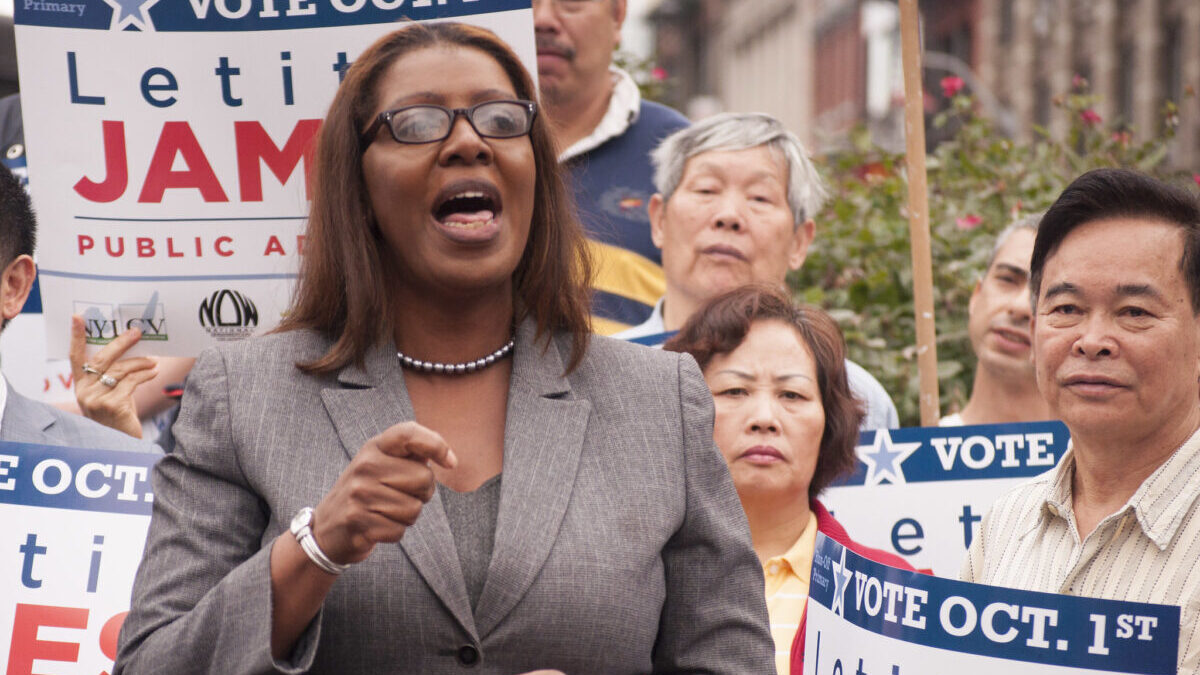
Letitia James

Author Tristan Justice profile

TRISTAN JUSTICE

VISIT ON TWITTER@JUSTICETRISTAN

MORE ARTICLES

The 2024 Republican presidential front-runner is faced with 91 state and federal charges one year from Election Day. After a series of failed attempts to capture the criminal conviction of Donald Trump, Democrats have charged their primary political opponent with nearly 100 crimes to thwart the former president’s triumphant return to the Oval Office. Here’s a “who’s who” of the key players in the Democrats’ latest crusade to achieve the top item on their policy agenda.

Alvin Bragg

Manhattan District Attorney Alvin Bragg was the first prosecutor to land the coveted indictment of Democrats’ Public Enemy No. 1. In April, the New York prosecutor unveiled a 34-count indictment against Trump, carrying a maximum 136-year prison sentence. The charges stem from 2016 hush-money payments to porn actress Stormy Daniels in a case prosecutors previously declined to pursue.

[RELATED: Yes, The Statute Of Limitations Has Passed On Bragg’s ‘Get Trump’ Case]

The Manhattan charges, however, marked the fulfillment of a campaign promise Bragg made two years ago to prosecute the former president. Prosecuting Trump was apparently the top issue of his platform in 2021.

“Bragg often reminded voters on the campaign trail that he helped sue the Trump administration ‘more than a hundred times’ as a deputy in the New York state attorney general’s office,” Reuters reported that year.

The 50-year-old prosecutor’s own supporters pointed to his ability to pursue Trump in court as a reason to back him. The New York Times reported on Bragg’s endorsement from a former U.S. attorney in July 2021.

“Preet Bharara, a former United States attorney in Manhattan who supervised Mr. Bragg and endorsed his candidacy, said Mr. Bragg had varied experience as a prosecutor, and that his work on white-collar crime and public corruption cases could come into play in the investigation into Mr. Trump,” the Times read.

Bragg was also promoted to his current office with financial support from left-wing billionaire financier George Soros. The super PAC backed by Soros, Color of Change, pledged to bankroll Bragg’s campaign with a seven-figure sum in the spring of 2021. Soon after the cash infusion, the committee pulled back $500,000 of the donation when Bragg faced allegations of sexual misconduct of his own.

Bragg’s record in New York, meanwhile, has been one of unleashed crime while prosecutors pursue politicized investigations against the most popular Republican in the country. In a Wall Street Journal op-ed last year, Soros admitted to backing candidates who promised to be soft on crime, branded as “reform prosecutors.” Bragg has held up to the pledge by prioritizing Trump instead of dangerous criminals. According to The New York Times, major crime spiked 22 percent during Bragg’s first year in office.  

Letitia James

While Bragg pursues criminal charges against the former president, New York Attorney General Letitia James has Trump in civil court on allegations of fraud. In September last year, the attorney general filed a $250 million fraud suit with the state Supreme Court in Manhattan, accusing the former president of inflating corporate assets to obtain financial benefits.

“We found that Mr. Trump, his children, and the corporation used more than 200 false asset valuations over a 10-year period,” said James at a press conference.

James, 65, won in a partial summary judgment a year later, and in October, the trial began after the judge found the Trump family, including Trump himself, liable for fraud. The judge in the case ordered the termination of Trump’s New York business license and will now examine charges by James to determine additional penalties. In October, an appeals court put a hold on the judge’s mandate to dissolve Trump’s business in the state.

The aggressive effort against the Trump family’s New York business empire marks another campaign promise fulfilled by the state attorney general. Similar to Bragg, James ran for office in 2018 on a platform to prosecute the president. When first campaigning for the statewide job five years ago, James railed against the Republican president as “illegitimate” and an “embarrassment.”

“NY Attorney General Letitia James has a long history of fighting Trump and other powerful targets,” headlined an Associated Press profile of James in September.

“Letitia James fixated on Donald Trump as she campaigned for New York attorney general, branding the then-president a ‘con man’ and ‘carnival barker’ and pledging to shine a ‘bright light into every dark corner of his real estate dealings,’” the AP reported. “Five years later, James is on the verge of disrupting Trump’s real estate empire.”

James was reelected last fall just more than a month after she unveiled the $250 million lawsuit against the Trump family. Now James is on the cusp of capturing Trump’s corporate exile from the Empire State.

Arthur Engoron

The state-friendly judge presiding over James’ civil lawsuit against Trump is a Democrat who held the former president in contempt last year over subpoena violations. Arthur Engoron is a judge in the New York Supreme Court’s 1st Judicial District who ran unopposed for the seat in the 2015 general election.

In September, Judge Engoron devalued the former president’s Mar-a-Lago Florida estate from between $426 million and $612 million, as estimated by the Trumps, to a mere $18 and $28 million.

[READ: N.Y. Judge Cherry-Picks Lowball Mar-a-Lago Appraisal To Find Trump Guilty Of Inflating Property Values]

The stunning devaluation stands in contrast to smaller properties at Palm Beach, which sold for far more. Rush Limbaugh’s former residence, for example, sold for $155 million despite a $51 million appraisal. Mar-a-Lago, meanwhile, is the only property at Palm Beach to face the waterfront on both the ocean and the waterway.

Last month, Engoron also implemented a gag order to prevent Trump from even speaking out against the accusations against him. Trump was fined twice over violations of the gag order for a combined $15,000.

Jack Smith

Jack Smith, 54, a veteran prosecutor with years spent at the Justice Department, was appointed last November to lead two of the federal efforts seeking Trump’s conviction. Now special counsel in a pair of cases prosecuting Democrats’ top political opponent, Smith was previously head of the DOJ public integrity unit from 2010 to 2015. Among his most notable cases was the prosecution of former Virginia Republican Gov. Robert McDonnell, whom the Supreme Court exonerated of a bribery conviction in 2016. Smith was also involved in the Internal Revenue Service (IRS) tax scandal targeting conservative nonprofits.

Now Smith is spearheading the federal government’s criminal efforts against Trump regarding classified documents and the events related to the Capitol riot on Jan. 6, 2021. In June, Trump was indicted with 37 counts of mishandling classified information, with three more charges handed down in the case about two months later. Smith indicted Trump with an additional four charges in a separate case this summer over objections to electoral certification, such as Democrats have made for decades.

Tanya Chutkan

Smith’s team at the Justice Department could not have landed a more friendly judge in the government’s Jan. 6 case against Trump than U.S. District Court Judge Tanya Chutkan. An activist judge with an obvious animus against the former president and his supporters, the Obama appointee was assigned to preside over the politically fraught Jan. 6 case after building a reputation as “a tough punisher of Capitol rioters.”

“Other judges typically have handed down sentences that are more lenient than those requested by prosecutors,” the AP reported. “Chutkan, however, has matched or exceeded prosecutors’ recommendations in 19 of her 38 sentences. In four of those cases, prosecutors weren’t seeking any jail time at all.”

When Trump complained the federal charges against him amounted to election interference by the DOJ, Chutkan shrugged off the accusations, saying, “That’s how it has to be.” Chutkan previously condemned comparisons between the Capitol turmoil and the far-left riots that characterized the summer of 2020 in other rulings of pro-Trump demonstrators. The fiery riots, she claimed, were actually “the actions of people protesting, mostly peacefully, for civil rights.” Chutkan said comparisons between the two “ignore[] a very real danger that the Jan. 6 riot posed to the foundation of our democracy.”

In September, Chutkan predictably denied Trump’s request to recuse herself from the Jan. 6 trial. In October, Chutkan handed down another gag order to prevent the president from speaking publicly and openly about the case. On Nov. 1, Chutkan handed down an order allowing Smith’s team to conceal evidence from Trump’s attorneys that the DOJ has identified as “classified.”

Fani Willis

Fulton County District Attorney Fani Willis in Georgia upset a six-term incumbent when she defeated her former boss, Paul Howard, three years ago. Willis, who beat Howard in the primary runoff, carried the general election unopposed after no Republicans qualified for the November contest.

Willis’ investigation of Trump and the former president’s campaign team was one of her first acts in office and will define her legacy. In August, the DA for Fulton County, which covers most of Atlanta, charged Trump with 13 counts related to the former president’s efforts to protest aspects of the 2020 election. The Georgia prosecutor also indicted 18 Trump allies, several of whom have taken plea deals. Trump adviser Jeffrey Clark, however, filed a motion on Oct. 31 to dismiss the “massive and grotesque abuse of prosecutorial power.”

A September report from The Federalist revealed Willis possesses evidence exonerating Georgia’s alternate electors but continues to pursue criminal convictions anyway.


Tristan Justice is the western correspondent for The Federalist and the author of Social Justice Redux, a conservative newsletter on culture, health, and wellness. He has also written for The Washington Examiner and The Daily Signal. His work has also been featured in Real Clear Politics and Fox News. Tristan graduated from George Washington University where he majored in political science and minored in journalism. Follow him on Twitter at @JusticeTristan or contact him at Tristan@thefederalist.com. Sign up for Tristan’s email newsletter here.

This Is Just A Preview Of How The Dishonest Media Will Lie And Mislead About Trump’s Show Trials


BY: EDDIE SCARRY | AUGUST 29, 2023

Read more at https://thefederalist.com/2023/08/29/this-is-just-a-preview-of-how-the-dishonest-media-will-lie-and-mislead-about-trumps-show-trials/

Donald Trump

Author Eddie Scarry profile

EDDIE SCARRY

VISIT ON TWITTER@ESCARRY

MORE ARTICLES

As we wait for the political show trials of Donald Trump to begin, it’s good to remember a hard and fast rule: Quotes and summaries of events reported by the corporate media are always either half wrong or deliberately misleading.

A perfect example of that truism was provided this week by Axios’ Mike Allen, who claimed Monday that Georgia Democrat prosecutor Fani Willis included an “Easter egg” in her I’m-a-very-serious-lawyer indictment. Allen said that a specific portion of the documents had “a twist” that “could spoil” Trump’s legal team’s effort to have the entire case moved to federal court, a move that could possibly secure him a more favorable jury (as opposed to the pool of “marginalized, underserved and disadvantaged” voters he would surely get in Fulton County).

That “twist” is an open letter Trump sent to Georgia Secretary of State Brad Raffensperger in September 2021, which was after the former president was out of office, thus supposedly undercutting the Trump team’s assertion that the criminal charges are purely federal in nature, rather than addressable at the county court level. In that letter, the indictment notes, Trump solicited Raffensperger to “unlawfully” undo the 2020 election outcome “and announce the true winner.”

Here’s that portion of the indictment in full:

On or about the 17th day of September 2021, DONALD JOHN TRUMP committed the felony offense of SOLICITATION OF VIOLATION OF OATH BY PUBLIC OFFICER, in violation of O.C.G.A. §§ 16-4-7 and 16-10-1, in Fulton County, Georgia, by unlawfully soliciting, requesting, and importuning Georgia Secretary of State Brad Raffensperger, a public officer, to engage in conduct constituting the felony offense of Violation of Oath by Public Officer, O.C.G.A. § 16-10-1, by unlawfully “decertifying the Election, or whatever the correct legal remedy is, and announce the true winner,” in willful and intentional violation of the terms of the oath of said person as prescribed by law, with intent that said person engage in said conduct. This was an overt act in furtherance of the conspiracy.

The New York Times on Saturday also reported the supposed “Easter egg,” which the paper said “could spoil Mr. Trump’s argument that he was intervening in the Georgia election as part of his duty as a federal official,” since he was a private citizen and not president at the time that he published the letter.

Whether this is a federal or local-level issue is beside the point. I didn’t even remember that letter to Raffensperger, which was also published in a fundraising email put out by Trump’s Save America PAC. And because of that media rule mentioned above, I went back to find exactly what it said. Naturally, what it actually said is not the way it was portrayed by the indictment nor the way it was portrayed by Fani Willis’ fangirls in the media.

The letter said that new evidence of “Large scale Voter Fraud” in Georgia had been reported in a local newspaper called the Georgia Star News, with an attached article claiming that more than 40,000 absentee ballots counted in DeKalb County were improperly tallied because they had not been documented upon their receipt by the appropriate official, as required by state election rules. “I would respectfully request that your department check this,” Trump wrote in the letter, “and, if true, along with many other claims of voter fraud and voter irregularities, start the process of decertifying the Election, or whatever the correct legal remedy is, and announce the true winner.”

None of that context is in the indictment, nor the Times article, nor the Axios report. And it’s essentially the same request from Trump that he delivered in the now infamous “perfect phone call” he made to Raffensperger and other Georgia election officials in January 2021.

The media enjoy short-handing that hourlong conversation as an effort by Trump to get the secretary of state to fabricate votes. The New York Times ominously wrote at the time that the president “pressured Georgia’s Republican secretary of state to ‘find’ him enough votes to overturn the presidential election and vaguely threatened him with ‘a criminal offense.’”

That’s not what happened there, either. In the call, Trump is audibly frustrated nearly to the point of tears, which is a little embarrassing for him, but the pressure amounts to asking over and over again for Raffensperger and Georgia election officials to examine claims of mass voter fraud, which he believes will uncover enough votes in his favor.

“I think you have to say that you’re going to reexamine it,” Trump says to Raffensperger. “And you can reexamine it, but reexamine it with people that want to find answers, not people that don’t want to find answers.”

“Well, you better check on the ballots because they are shredding ballots, Ryan,” Trump says to one of Raffensperger’s lawyers. “I’m just telling you, Ryan. They’re shredding ballots. And you should look at that very carefully.”

At another point, Trump says, “No, they [all the ballots scanned by a particular poll worker] were 100 percent for Biden— 100 percent. There wasn’t a Trump vote in the whole group. Why don’t you want to find this, Ryan? What’s wrong with you?”

The call ends with Trump stating, “We just want the truth,” which he says is that, “I won by 400,000 votes, at least. That’s the real truth. But we don’t need 400,000 votes. We need less than 2,000 votes.”

As for being “vaguely threatened” with a “criminal offense,” nobody received a threat. Trump said it would be a “criminal offense” for election officials, including Raffensperger, to have knowledge of ballot tampering and not report it. Trump did say he believed there had been ballot tampering but at no point did he say there would be a prosecution or that he had the evidence to back up his claim.

Yeah, it’s an uncomfortable conversation to listen to. But let’s not pretend it didn’t follow an election year from the ninth circle of hell. Trump might have instead tried to plant a false story with the FBI about Biden conspiring with a foreign power to fix the race but everyone copes with losing in their own way.

In the September 2021 letter to Raffensperger, Trump asked for an investigation. That’s no different than what he asked for in January of that same year. Nobody would call that criminal behavior. And that’s why the media will lie about the Trump political trials every single day.


Eddie Scarry is the D.C. columnist at The Federalist and author of “Liberal Misery: How the Hateful Left Sucks Joy Out of Everything and Everyone.”

Democrats Aren’t ‘Interfering’ In 2024 Election with Trump Trial, They’re Blatantly Rigging It


BY: JOHN DANIEL DAVIDSON | AUGUST 29, 2023

Read more at https://thefederalist.com/2023/08/29/democrats-arent-interfering-in-2024-election-with-trump-trial-theyre-blatantly-rigging-it/

Donald Trump boarding Air Force One

Author John Daniel Davidson profile

JOHN DANIEL DAVIDSON

VISIT ON TWITTER@JOHNDDAVIDSON

MORE ARTICLES

News broke Monday that U.S. District Judge Tanya Chutkan, the judge overseeing the Jan. 6-related case against Donald Trump in Washington, D.C., set a March 4, 2024, trial date for the former president.

It just so happens that March 4 is the day before Super Tuesday, when more than a dozen states, from California to Texas to Virginia, will hold Republican primary elections. What a coincidence! What this means is that Trump, the Republican front-runner by a wide margin, will not be able to campaign ahead of the most important date on the GOP primary calendar. It also means he’ll likely be tied up in court a week later on March 12, when four more states hold primary elections.

But this isn’t merely election “interference,” it’s a naked attempt to rig the 2024 election. The timing here is important, because not only will Trump be pulled off the campaign trail at a crucial time, he will almost certainly be convicted over the summer. After all, the jury in this case will be drawn from a pool that voted 92 percent for Joe Biden. No matter how outlandish and unconstitutional the charges are, no matter how utterly politicized the process is, a D.C. jury is going to convict Trump.

A summer 2024 conviction sets up the real play here, which is for blue states and counties to remove Trump from the ballot, citing a faulty and blatantly lawless reading of the 14th Amendment. Assuming Trump wins the GOP primary, this will leave Republicans with no candidate on the ballot across vast swaths of the country heading into the fall. Even if the Supreme Court steps in, if Democrats time it just right it will be too late to send out corrected, lawful ballots in time for Election Day. 

Whatever one thinks of Trump’s post-2020 election challenges — whether they were legitimate, delusional, or downright treasonous — they were nothing compared to what Democrats are trying to pull here. Consider the timeline alone. How on earth could a case involving millions of documents and hundreds of witnesses be ready for trial by March? And how does Trump already have a trial date set in his Jan. 6-related case when dozens of other Jan. 6 defendants have been rotting away in federal prison for years now?

One lawyer for Jan. 6 defendants explained on Twitter that he had a “relatively simple” Jan. 6 case that was indicted in late March in D.C., and at a recent status hearing dates were discussed for a trial in March or April 2024: “So I get a year between indictment and trial in a one-defendant relatively straight-forward J6 case. And Trump gets 8 months in a case with 12 million pages of discovery and well over 100 witnesses.”

The whole thing is a naked abuse of power — a violation of Trump’s Sixth Amendment right to effective assistance of counsel, to say nothing of his free speech rights, which DOJ Special Counsel Jack Smith is trying to criminalize

The Obama-appointed Judge Chutkan, who has a penchant for handing down harsher sentences for Jan. 6 cases than what federal prosecutors recommended, has already betrayed her politically motivated bias in this case. Her claim that Trump would get “no more or less deference than any other defendant” is contradicted by her observation that because Trump has “considerable resources” he is “not entitled to unlimited preparation time.”

In other words, because Trump is wealthy, and because the political calendar dictates that Democrats move their election-rigging scheme along quickly, Trump’s trial is getting fast-tracked. There’s no other explanation for why this trial date is being set so soon after the indictment, and why March 4 was chosen as the specific date.

As John Hasson noted on Twitter, two separate courts have now attempted to set March 4 as Trump’s trial date. In Georgia, Fulton County District Attorney Fani Willis tried to set Trump’s trial date for March 4, but Republican Gov. Brian Kemp shut it down. Now Judge Chutkan has done the same. There’s a reason it keeps coming up, and it has nothing to do with justice or a fair trial.

What we’re seeing here is the machinery of the Biden regime’s show trials at work. Remember, the point of a show trial is not to deliver justice, it’s to display power.

Everything about this process — the farcical indictments, the release of the mugshot, the timing of the trial — is designed to convey to ordinary Americans that one side, the left, has consolidated control over the most powerful institutions in our country, and resistance to their rule will be met with overwhelming force.

Democrats are not trying to hide any of this from you. They want you to see this display of power and understand what it means, which is this: You will not under any circumstances be allowed to vote for Donald Trump in 2024. So don’t even think about it — and don’t complain about it either, or you might end up just like him.


John Daniel Davidson is a senior editor at The Federalist. His writing has appeared in the Wall Street Journal, the Claremont Review of Books, The New York Post, and elsewhere. He is the author of the forthcoming book, Pagan America: the Decline of Christianity and the Dark Age to Come, to be published in March 2024. Follow him on Twitter, @johnddavidson.

HUMOR OP-ED: The Best Trump Mugshot Memes Mocking Democrats’ Indictment Frenzy as the Joke It Is


BY: JORDAN BOYD | AUGUST 25, 2023

Read more at https://thefederalist.com/2023/08/25/the-best-trump-mugshot-memes-mocking-democrats-indictment-frenzy-as-the-joke-it-is/

Donald Trump mugshot

Author Jordan Boyd profile

JORDAN BOYD

VISIT ON TWITTER@JORDANBOYDTX

MORE ARTICLES

Former President Donald Trump turned himself into the Fulton County jail for booking on Thursday night in what Democrats and corporate media desperately tried to paint as a somber “surrender.” It didn’t take long, however, for his mugshot to steal the spotlight.

Trump immediately posted the photo featuring his instantly iconic glare to X, formerly known as Twitter, and began fundraising off of it. The post, which had raked in more than 1.2 million likes by Friday morning, was the first time Trump used the social media site since the platform banned him in January 2021 and Elon Musk unbanned him in November 2022.

“ELECTION INTERFERENCE,” the accompanying text reads. “NEVER SURRENDER!”

Trump’s return to X certainly made waves but he wasn’t the only one breaking the internet on Thursday night. Democrats and their propaganda press pawns no doubt intended for Trump’s booking photo to publicly humiliate him. The hordes of Photoshop fiends online, however, were only emboldened. Dozens of memes poking fun at the deep state’s latest election interference plot are circulating on Twitter, Instagram, and Facebook. Here are the best Trump mugshot memes that prove just how silly Democrats’ indictment frenzy really is.

“Fulton County Releases First Official Portrait Of The 47th President Of The United States,” The Babylon Bee’s latest mugshot headline states.

“Me when I pull up to a Chik Fil-A on a Sunday,” Federalist Legal Correspondent Margot Cleveland quipped.

Another X user said Trump’s unimpressed scowl is the same look you give “when you get home and see that they didn’t give you any extra sauce.”

One meme masterpiece shows Trump in black and white with laser eyes. The text on the photo reads “retribution.”

The sister edit in that post, which features Trump’s mugshot in front of the infamous “f-ck around and find out graph,” is especially hilarious since Rolling Stone tried — and failed — to use the same format to mock Trump’s fourth indictment.

Several users likened Trump’s booking photo to other iconic mugshots. One meme compared Trump’s photo to that of Martin Luther King Jr.

Another X user remarked, referring to Trump’s cameo in the classic Christmas movie sequel, that his “Home Alone 2 mugshot collection is slowly expanding.”

Someone else threatened to turn Trump’s stern stare into a thermostat tinkering deterrent.

Trump even joined in the fun by reposting a more serious doctored photo of his mugshot surrounded by guns. Among those targeting Trump in the photo are the “fake news,” the “swamp,” the “deep state,” “RINOs,” and “Democrats.”

For a different kind of mugshot content, consider spicing up your playlists with this spin on Kanye West’s hit song “Gold Digger,” which takes aim at Fulton County District Attorney Fani Willis for her political hackery.


Jordan Boyd is a staff writer at The Federalist and co-producer of The Federalist Radio Hour. Her work has also been featured in The Daily Wire, Fox News, and RealClearPolitics. Jordan graduated from Baylor University where she majored in political science and minored in journalism. Follow her on Twitter @jordanboydtx.

House Republicans Launch Probe Into Fulton County’s ‘Politically Motivated’ Trump Indictments


BY: SHAWN FLEETWOOD | AUGUST 24, 2023

Read more at https://thefederalist.com/2023/08/24/house-republicans-launch-probe-into-fulton-countys-politically-motivated-trump-indictments/

Willis Indictment

Republicans on the House Judiciary Committee sent a letter to Fulton County District Attorney Fani Willis on Thursday demanding the Democrat prosecutor provide answers over her indictment of former President Donald Trump and his associates.

“Your indictment and prosecution implicate substantial federal interests, and the circumstances surrounding your actions raise serious concerns about whether they are politically motivated,” the letter reads.

Last week, Willis announced her office would be charging Trump and 18 of his associates for what she claims was an attempt to “conspire[] and endeavor[] to conduct and participate in criminal enterprise” to overturn the results of the 2020 election. Included in the bogus 98-page indictment are several acts Willis contends contributed to the “furtherance” of the so-called conspiracy, such as tweets issued by Trump encouraging people to watch Georgia legislative oversight hearings on TV and a text message asking for phone numbers sent by former White House Chief of Staff Mark Meadows.

In their letter to Willis, Republicans on the House Judiciary Committee questioned the Fulton County DA’s rationale for charging Trump and his associates and raised several examples indicating her prosecution of the former president is “politically motivated.” Among those cited is Willis’ purported launch of a new campaign fundraising site “that highlighted [her] investigation into President Trump” several days before her office indicted the former commander-in-chief.

Also referenced are public remarks by Emily Kohrs, the forewoman of the special grand jury convened by Willis, who openly bragged during interviews with regime-approved media “about her excitement at the prospect of subpoenaing President Trump and getting to swear him in.” The letter also invoked the decision by Fulton County’s superior court clerk to prematurely release “a list of criminal charges against President Trump reportedly hours before the vote of the grand jury.”

While a statement issued by the court clerk’s office originally claimed the document showing the charges against Trump was “fictitious,” the clerk later asserted it was a “mishap” and that “when [she] hit save, it went to the press queue.”

In explaining their rationale for federal oversight of the Georgia-based indictments, House Republicans referenced Willis’ alleged attempt to “use state criminal law to regulate the conduct of federal officers acting in their official capacities,” such as that of Trump and Meadows. The letter additionally raised questions about the involvement of Department of Justice Special Counsel Jack Smith and whether Willis’ office “coordinated” with Smith “during the course of [her] investigation.”

“News outlets have reported that your office and Mr. Smith ‘interviewed many of the same witnesses and reviewed much of the same evidence’ in reaching your decision to indict President Trump,” the letter reads. “The House Committee on the Judiciary (Committee) thus may investigate whether federal law enforcement agencies or officials were involved in your investigation or indictment.”

As such, House Republicans are demanding Willis turn over any and all documents related to her office’s “receipt and use of federal funds,” communications with the Smith and the DOJ, and communications between her office and any federal agency regarding her investigation into Trump and his associates by Sept. 7.


Shawn Fleetwood is a staff writer for The Federalist and a graduate of the University of Mary Washington. He previously served as a state content writer for Convention of States Action and his work has been featured in numerous outlets, including RealClearPolitics, RealClearHealth, and Conservative Review. Follow him on Twitter @ShawnFleetwood

Author Shawn Fleetwood profile

SHAWN FLEETWOOD

VISIT ON TWITTER@SHAWNFLEETWOOD

MORE ARTICLES

To Understand the Latest Crazy Trump Indictment, Check Out The 6 Types of Charges


BY: MARGOT CLEVELAND | AUGUST 16, 2023

Read more at https://thefederalist.com/2023/08/16/to-understand-the-latest-crazy-trump-indictment-check-out-the-6-types-of-charges/

Donald Trump

Author Margot Cleveland profile MARGOT CLEVELAND

VISIT ON TWITTER@PROFMJCLEVELAND

MORE ARTICLES

Late Monday, Fulton County District Attorney Fani Willis charged former President Donald Trump and 18 other defendants in a 98-page indictment that included a total of 41 different counts.

The defendants are already fighting back, with Trump’s former chief of staff, Mark Meadows, seeking to remove the case to federal court based on a statute that protects federal officials from state court prosecution for official conduct. More counteroffensives will likely follow, with other former federal officials, including Trump, presumably also seeking removal to federal court, while the remaining defendants will probably expeditiously move to dismiss the indictment on a variety of grounds. 

To get a handle on the indictment and to stay current with the various developments, it is helpful to put the charges into one of six buckets, starting with the biggest one: the alleged RICO conspiracy. 

Bucket 1: RICO 

The Racketeer Influenced and Corrupt Organizations Act (RICO) count runs some 70 pages and says all 19 defendants, “while associated with an enterprise, unlawfully conspired and endeavored to conduct and participate in, directly and indirectly, such enterprise through a pattern of racketeering activity.” The indictment next defines the “enterprise” as “a group of individuals associated in fact,” who “had connections and relationships with one another” and “functioned as a continuing unit for a common purpose of achieving the objectives of the enterprise,” which Willis maintains was “to unlawfully change the outcome of the election in favor of Trump.”

There are several problems with the RICO count, most fundamentally, as Andrew McCarthy explained in an enlightening article, RICO requires an “enterprise,” which, while not necessarily a formal entity, needs to be an identifiable group. The RICO crime, then, is “being a member of the enterprise that commits crimes, not the commission of any particular crime.”

But there must be some sort of “enterprise,” and here Willis conflates the objective — keeping Trump in power — with “the enterprise.” “It was that objective, and not the sustaining of any group, that brought them together; and once that objective was attained or conclusively defeated, the group — to the dubious extent it really was an identifiable group — would (and did) melt away,” McCarthy wrote. It’s a “good sign that you’re not dealing with a RICO enterprise,” the former federal prosecutor explained.

Without an “enterprise,” there can be no RICO crime, and the facts alleged in the indictment are such that the defendants will likely soon seek dismissal of that count. Now, Georgia law differs from federal law on RICO, and there is no saying how the state court will interpret its own RICO statute, but from a legal perspective, the claim is exceedingly weak.

The second fundamental problem with the RICO count is factual: Willis portrays the defendants as trying to unlawfully change the election in Trump’s favor, but the many actions Trump and others took involved legal proceedings and efforts to convince the legislative bodies to use their authority to address what the defendants saw as a fatally flawed election. A court is unlikely to toss the complaint on this ground, however, with factual disputes ones only a jury can resolve. 

However, if the court holds, as it appears it should, that the RICO count fails as a matter of law because there was no “enterprise,” then that factual dispute is irrelevant. Likewise, the 160-some “acts” Willis included in the indictment — everything from Trump declaring victory on Nov. 4 to tweeting that followers should watch a television newscast — allegedly in furtherance of the “RICO” conspiracy become irrelevant. 

Bucket 2: Alternate Electors

The second-biggest bucket concerns the counts related to the naming of alternative Trump electors. The crimes alleged here range from soliciting individuals to violate their oaths of office, to conspiring to file false statements or documents, to forgery. Counts 2, 6, 8-19, 23, and 37 alleged these and other crimes against various defendants all arising out of Republicans appointing an alternative slate of Trump electors who would vote for Trump in the event he prevailed in his then-pending Georgia lawsuit.

While the legacy media continue to frame these individuals as “fake electors,” as I’ve previously detailed, that is fake news. Rather, legal precedent indicates that alternative electors should be named to protect a candidate challenging the outcome of an election, as Trump was in Georgia and elsewhere. That is precisely what Democrats did in Hawaii in 1960 when Richard Nixon had been declared the victor in the state, but John F. Kennedy’s court contest remained viable. 

As a matter of law, these counts should all be dismissed because Republicans naming alternate electors was not a crime — no matter how much the press wants you to believe otherwise.

Bucket 3: Petitioning the Government for Redress

The crimes charged in Counts 5, 28, 38, and 39 fit into a third bucket that consists of efforts by Trump and others to petition the government for redress. Here, the crimes charged include solicitation of violations of oath by public officers and the making of false statements during those efforts, but the common theme is that the defendants sought to have Secretary of State Brad Raffensperger or the Georgia legislature address Trump’s allegations of voting irregularities or fraud. 

There is nothing criminal, however, in asking the secretary of state to use his authority to investigate and respond to voting irregularities or to ask the legislature to call a special session to name Trump electors. On the contrary, those activities would seemingly be protected by the constitutional guarantee of the right to petition the government for redress.

Bucket 4: False Statements

The fourth bucket holds numerous counts against a variety of defendants with the common theme being false statements charges. Count 27 alleged false statements were included in one of Trump’s election lawsuits, but lawyers are entitled to rely on information provided for others, making this count weak. Counts 7, 24, 25, and 26 all charged individual defendants with making false statements to Georgia House or Senate committees. The main issue here will be whether the defendants made the statements knowing they were false. 

Count 22 charges an attempt to make a false statement and concerns a letter DOJ lawyer Jeff Clark drafted and recommended be sent to the Georgia legislature. As I previously detailed, however, there was no impropriety in Clark’s drafting of that letter. Clark will also likely succeed in having the case against him removed to federal court and then dismissed. 

Counts 40 and 41 both involve charges of lying as well, with Count 40 alleging one defendant lied to Fulton County investigators and Count 41 alleging perjury before a grand jury. Given the target on these defendants’ backs, it’s difficult to believe they knowingly lied, but that question may end up being left to a jury to decide.

Bucket 5: Communications Related to Ruby Freeman

Counts 20, 21, 30, and 31 all involve charges concerning efforts to supposedly influence the testimony of Ruby Freeman, who was an election worker at the State Farm Arena. Here, the theory seems to be that some of the defendants attempted to pressure Freeman to lie about what happened during the vote counting. Again, it may be left to a jury to decide this issue.

Bucket 6: Accessing Voting Machines and Election Data

The final category of charges involves efforts by Sidney Powell and others to allegedly illegally access voting machines and election results. Counts 32-36 allege various crimes related to those efforts, including conspiracy to commit election fraud by tampering with machines. Once the defendants charged in those counts respond, it will be easier to assess the criminal theories proffered and any weakness in the claims.

For now, though, watch for the federal court’s holding on whether Meadows, Clark, Trump, and potentially others have the right to remove the case to federal court. Simultaneously, expect the other defendants to seek dismissal of all or part of the indictment, likely narrowing this criminal case down substantially.


Margot Cleveland is The Federalist’s senior legal correspondent. She is also a contributor to National Review Online, the Washington Examiner, Aleteia, and Townhall.com, and has been published in the Wall Street Journal and USA Today. Cleveland is a lawyer and a graduate of the Notre Dame Law School, where she earned the Hoynes Prize—the law school’s highest honor. She later served for nearly 25 years as a permanent law clerk for a federal appellate judge on the Seventh Circuit Court of Appeals. Cleveland is a former full-time university faculty member and now teaches as an adjunct from time to time. As a stay-at-home homeschooling mom of a young son with cystic fibrosis, Cleveland frequently writes on cultural issues related to parenting and special-needs children. Cleveland is on Twitter at @ProfMJCleveland. The views expressed here are those of Cleveland in her private capacity.

The Purpose of the Trump Indictments is to Demonstrate the Left’s Power


BY: JOHN DANIEL DAVIDSON | AUGUST 16, 2023

Read more at https://thefederalist.com/2023/08/16/the-purpose-of-the-trump-indictments-is-to-demonstrate-the-lefts-power/

Fani Willis talking about Trump indictments

Author John Daniel Davidson profile JOHN DANIEL DAVIDSON

VISIT ON TWITTER@JOHNDDAVIDSON

MORE ARTICLES

The latest indictment of former President Donald Trump is even more outlandish than Jack Smith’s blatant attempt to criminalize free speech. The indictment Monday out of Fulton County, Georgia, criminalizes mundane activities like asking for a phone number, texting, encouraging people to watch a televised hearing, and reserving a room at the Georgia capitol. 

These activities, according to Georgia prosecutor Fani Willis, run afoul of the state’s Racketeer Influenced and Corrupt Organizations (RICO) statute. As far as Willis is concerned, Trump’s legal efforts to challenge the election results in Georgia amounted to a criminal conspiracy, with Trump as the criminal mastermind. What that means, outlandishly, is that every phone call or tweet related to those legal efforts, every step Trump and his team took to press their legal case, counts as “an overt act in furtherance of the conspiracy.”

This is of course crazy. As more than a few people have noted since the charges dropped, according to Willis’ standard every major Democrat should be in prison on racketeering charges — including Hillary Clinton but especially Stacey Abrams, who has made a career out of denying that she lost the 2018 Georgia gubernatorial election. 

So yes, the hypocrisy is stupendous and blatant. But let me suggest that decrying the hypocrisy here is a loser’s game. What you see in these anti-Trump indictments is not hypocrisy, it’s hierarchy. We all became familiar with this concept during the Covid pandemic. Gathering for church, even outside, was against the law, but mass rioting in the streets was OK — so long as you were rioting for racial justice. Ordinary people had to let their elderly loved ones die alone and were not even allowed to bury them, yet thousands attended the funeral and memorial services for secular saint George Floyd.

Perhaps nothing better captured the hierarchy-not-hypocrisy concept than a photo of Democrat Rep. Alexandria Ocasio-Cortez at the annual Met Gala in September 2021 wearing a white gown with “tax the rich” scrawled on its backside. Set aside the idiocy of the stunt itself. In the photo, AOC isn’t wearing a face mask, but the woman helping her with her gown is. What AOC was displaying for the public was hierarchy.

As my colleague Eddie Scarry wrote at the time, “This is simply another example of those in power, those running our most influential cultural and political institutions, sending a message: There’s a new social hierarchy in America. And this one isn’t about what you can afford to do, it’s about what you’re allowed to do.”

The same analysis applies to the raft of indictments against Trump, whose post-2020 denunciations of the election are no different than those of Clinton in 2016 or most Democrats in 2000 and 2004. Democrats are allowed to question the results of an election, Republicans are not. That’s not hypocrisy, it’s hierarchy. 

Once you understand this, you begin to recognize it everywhere. Antifa thugs and BLM rioters were allowed to trash entire city blocks, torch police stations, take over neighborhoods, besiege federal courthouses — and do so with the blessing and encouragement, at times even with the complicity, of elected Democrat Party leaders. But every granny that set foot within a mile of the U.S. Capitol on Jan. 6 had better brace for a federal indictment if they haven’t already been charged.

The same goes for teachers who push transgender ideology and critical race theory on students versus the parents who object to these things being taught behind their backs. The former are courageous leaders, the latter are potential domestic terrorists, at least according to the Biden Justice Department. Ditto for the media’s treatment of the Trump family business versus the Biden family business. None of this is hypocrisy, it’s hierarchy. The left is trying to tell you something, which is that they have all the power and you have none.

The essayist N.S. Lyons (a pseudonym) put it well in a piece last August, describing the futile efforts of Team B to call out the hypocrisy of Team A:

You see, it’s possible you are under the misapprehension that you are not supposed to notice what you described as the “double-standard” in acceptable behavior between Team A and Team B. And that you think if you point out this double-standard, you are foiling the other team’s plot and holding them accountable. This might be because, in your mind, you are still in high school debate club, where if you finger your opponent for having violated the evenly-applied rules a neutral arbiter of acceptable behavior will recognize this unfairness and penalize them with demerits.

Except in reality you are not holding Team A accountable, and in fact are notably never able to hold them accountable for anything at all. Even though Team A gets to hold you accountable for everything and anything whenever they want. This is because unfortunately there is no neutral arbiter listening to your whining. In fact, currently the only arbiter is Team A, because Team A has consolidated all the power to decide the rules, and to enforce or not enforce those rules as they see fit.

With each new Trump indictment, the left’s strategy becomes increasingly clear. It isn’t to bring real criminal charges based on actual violations of the law, or to see justice applied equally and fairly even to a powerful person like Trump. The strategy is to demonstrate power and thereby humiliate and discourage Trump supporters by showing them how powerless they are.

Another aspect of this strategy, as James Lindsay explained in a Twitter thread Tuesday, is to provoke the right into reacting. This is what Lindsay calls “leftist dialectical political warfare,” or, in Trump’s case, “Operation Poke the Bear.” The purpose of such warfare, says Lindsay, is to provoke a reaction that would justify the further consolidation of power on the left.

So expect to see more “hypocrisy” — even lazy and objectively embarrassing hypocrisy of the kind we saw this week in the Georgia indictment. It doesn’t matter how laughable or outlandish the charges against Trump are, because prosecuting actual crimes and upholding the law have nothing to do with any of this.

This is about power — who has it, and who doesn’t. The people at the top are trying to tell you, the masses under them, that they can do whatever they want to you, at any time, and there’s nothing you can do to fight back. Just look what they’re doing to Trump, a former president. If they can do that to him, imagine what they can do to you.


John Daniel Davidson is a senior editor at The Federalist. His writing has appeared in the Wall Street Journal, the Claremont Review of Books, The New York Post, and elsewhere. Follow him on Twitter, @johnddavidson.

The Left’s 2020 ‘Fake Electors’ Narrative Is Fake News


BY: MARGOT CLEVELAND | MAY 15, 2023

Read more at https://thefederalist.com/2023/05/15/the-lefts-2020-fake-electors-narrative-is-fake-news/

JFK and Richard Nixon in 1960

Author Margot Cleveland profile

MARGOT CLEVELAND

VISIT ON TWITTER@PROFMJCLEVELAND

MORE ARTICLES

Headlines recently proclaimed that eight of Trump’s “fake” electors accepted immunity deals. Of course, in reporting the news, the corporate outlets all missed the real story — that the electors’ testimony failed to incriminate anyone, including Trump, and that the county prosecutors engaged in massive misconduct. Equally appalling, however, was the corrupt media’s continued peddling of the “fake electors” narrative. 

There were no “fake” electors. There were contingent Republican electors named consistent with legal precedent to preserve the still ongoing legal challenges to the validity of Georgia’s certified vote. 

Nor was appointing an alternative slate of electors some cockamamie plan devised by Trump lawyers. On the contrary, Trump’s election lawyers and the contingent electors followed the precise approach Democrats successfully used when the date Congress established for certifying an election came before the legal challenges John F. Kennedy had brought in Hawaii were decided. And that approach allowed Kennedy to be certified the winner of Hawaii’s three electoral votes on Jan. 6, 1961, even though the Aloha State had originally certified Richard Nixon the victor.

The Hawaii scenario in 1960 mirrors in every material respect the facts on the ground in Georgia on Dec. 14, 2020 — the date both the Democrat and Republican presidential electors met and cast their 16 electoral votes for Joe Biden and Donald Trump respectively. 

Here’s What Happened in Hawaii Six-0 

Election day in 1960 fell on Nov. 8 and pitted Kennedy, a Democrat, against Republican Richard Nixon. The outcome remained unknown for some time, with a total of 93 electoral votes from eight different states undecided in the days following the election. Hawaii was one of those states. 

By Dec. 9 of that year, Kennedy had accumulated enough electoral votes to win the White House, but Hawaii’s winner was still in question. While the presidency did not depend on Hawaii’s three electoral votes, Democrats there had challenged the initial returns that gave Nixon a 141-vote edge, or 0.08 percent margin of victory.

Based on the original count in favor of Nixon, the acting governor of Hawaii, Republican James Kealoha, certified the Republican electors on Nov. 28, 1960. On Dec. 13, over the objections of the state attorney general, state circuit court Judge Ronald Jamieson ordered a recount. Then, on Dec. 19, both the Nixon and Kennedy electors met, “cast their votes for President and Vice President, and certified their own meeting and votes.” 

In casting their electoral ballots for Kennedy, the three Hawaiian Democrats certified they were the “duly and legally qualified and appointed” electors for president and vice president for the state of Hawaii and that they had been “certified (as such) by the Executive.” The Hawaii electors further attested: “We hereby certify that the lists of all the votes of the state of Hawaii given for President, and of all the votes given for Vice President, are contained herein.”

Two of the three Democrat electors were retired federal judges, William Heen and Delbert Metzger, and Heen personally mailed the Democrat electoral votes to Congress on Dec. 20. In fact, the envelope containing the certificates, further attested: “We hereby certify that the lists of all the votes of the state of Hawaii given for president … are contained herein.”

Ten days later, on Dec. 30, 1960, Judge Jamieson held that Kennedy had won the election. In so holding, Jamieson stressed the importance of the Democrat electors having met on Dec. 19, as prescribed by the Electoral Count Act, to cast their ballots in favor of Kennedy. That step allowed the Hawaii governor to then certify Kennedy as the winner of Hawaii’s three electoral votes and, in turn, Congress to count Hawaii’s electoral votes in favor of Kennedy.

The Peach State Repeat

The Georgia situation in 2020 mirrored the events of 60 years ago in Hawaii. 

Election day in 2020 fell on Nov. 3, although by then many ballots had already been cast, given the adoption of mass mail-in and early voting. Trump held a lead in Georgia until the morning of Friday, Nov. 6, when Biden overtook the incumbent. With the margin remaining tight, on Nov. 11, Georgia Secretary of State Brad Raffensperger announced a statewide audit. 

Following the audit, Biden remained in the lead by approximately 12,000 votes, leading Raffensperger to certify the election results on Friday, Nov. 20, 2020. Republic Gov. Brian Kemp signed the certification the same day. Then on Nov. 21, Trump requested a recount, as allowed under Georgia law given the closeness of the count.

On Dec. 4, 2020, then-President Trump and Republican elector David Shafer filed suit in a Fulton County state court against Raffensperger, arguing tens of thousands of votes counted in the presidential election had been cast in violation of Georgia law. While Trump’s lawsuit was still pending, on Dec. 7, 2020, based on the recount, Raffensperger recertified Biden as the winner of Georgia’s 16 electoral votes by a margin of 11,779. 

Trump and Shafer’s Fulton County lawsuit contesting the election results remained pending on Dec. 14, 2020, the date the presidential electors were required by federal law to meet. Thus, while the Democrat electors met and cast their ballots for Joe Biden, the Republican electors met separately and cast their 16 votes for Trump. 

At that time, Shafer made clear the Trump electors had met and cast their votes to ensure Trump’s legal battle in court remained viable. Nonetheless, following Biden’s election, Fulton County Prosecutor Fani Willis targeted the Republican electors as part of her criminal special purpose grand jury investigation.

While the grand jury has since issued a report and been disbanded, Willis agreed to grant immunity to eight of the electors, likely to push them to implicate the other electors. However, their lawyer confirmed in a court filing that none of the electors implicated anyone in criminal activity. 

Since then, Shafer’s attorneys, Holly Pierson and Craig Gillen, wrote Willis a detailed letter reviewing the Hawaii precedent. The attorneys noted they had made three prior written requests to meet “to discuss the factual and legal issues” relevant to Shafer’s role as a contingent Trump elector but had “not yet received any response to those requests.” 

The 11-page, single-spaced letter then proceeded to detail both the Hawaii precedent for Shafer’s actions following the 2020 election and the legal advice the Republican elector received that “he and the other contingent presidential electors should meet at the state capitol building on December 14, 2020, and perform the duties of a presidential elector to preserve potential remedies in the event Trump et al. v. Raffensperger, et al. was successful.” 

In addition to detailing the Hawaii precedent from 1960, Shafer’s lawyers highlighted the fact that in contesting the 2000 election, lawyers for then-Democrat presidential candidate Al Gore cited that very precedent to support his position that two elector slates could be appointed. In fact, Democrat Rep. Patsy Mink of Hawaii suggested the 2000 Florida electoral dispute be resolved based on that Hawaii precedent too. And three Supreme Court justices in Bush v. Gore cited the Hawaii precedent as a basis for allowing the Florida recount to proceed. 

As the letter and Hawaii precedent make clear, Shafer and the other Trump electors not only did nothing wrong, but they acted prudentially to ensure that if the state court lawsuit resolved in the president’s favor, Georgia’s electoral votes would be properly counted on Jan. 6, 2020.

Here we see one of the only differences between Trump’s legal challenge and Kennedy’s: The Hawaii state court promptly resolved the merits of Kennedy’s legal challenge, while in violation of the Georgia Election Code that requires lawsuits contesting elections to be heard within 20 days, the Fulton County court delayed assigning a judge to hear Trump’s election dispute and then delayed the first scheduled hearing until Jan. 8, 2021 — two days after Congress certified Biden the winner of the 2020 election. 

Now you know the rest of the story. There were no fake electors. The question now is whether Willis will charge Shafer and others with fake crimes.


Margot Cleveland is The Federalist’s senior legal correspondent. She is also a contributor to National Review Online, the Washington Examiner, Aleteia, and Townhall.com, and has been published in the Wall Street Journal and USA Today. Cleveland is a lawyer and a graduate of the Notre Dame Law School, where she earned the Hoynes Prize—the law school’s highest honor. She later served for nearly 25 years as a permanent law clerk for a federal appellate judge on the Seventh Circuit Court of Appeals. Cleveland is a former full-time university faculty member and now teaches as an adjunct from time to time. As a stay-at-home homeschooling mom of a young son with cystic fibrosis, Cleveland frequently writes on cultural issues related to parenting and special-needs children. Cleveland is on Twitter at @ProfMJCleveland. The views expressed here are those of Cleveland in her private capacity.

Defense Attorneys Allege Massive Misconduct in Georgia’s Crumbling Get-Trump Crusade


BY: MARGOT CLEVELAND | MAY 08, 2023

Read more at https://thefederalist.com/2023/05/08/defense-attorneys-allege-massive-misconduct-in-georgias-crumbling-get-trump-crusade/

Trump talking on cell phone
Contrary to misleading headlines, none of the eight electors granted immunity in Fulton County’s anti-Trump war ‘said anything … incriminating to themselves or anyone else.’

Author Margot Cleveland profile

MARGOT CLEVELAND

VISIT ON TWITTER@PROFMJCLEVELAND

MORE ARTICLES

“At Least Eight Trump Electors Have Accepted Immunity in Georgia Investigation,” headlines uniformly blared on Friday. The legacy outlets echoing that narrative, however, buried the lead, which is that Fulton County’s get-Trump district attorney can’t even find incriminating evidence against the former president when she grants immunity to targets of her criminal investigation. A strong secondary story, also ignored or downplayed by the left-wing media, reveals multiple incidents of alleged misconduct by the D.A.’s office. 

The attorney representing eight Republicans targeted by the Fulton County D.A. filed a scathing response on Friday to the D.A. office’s motion to disqualify her from continued representation of her clients. Kimberly Debrow’s 28-page response detailed several previously unknown instances of questionable conduct by prosecutors targeting Donald Trump, his lawyers, and several high-profile Georgia Republicans. And contrary to the misleading headlines of the last several days, Debrow revealed that none of the eight individuals granted immunity “said anything in any of their interviews that was incriminating to themselves or anyone else.” 

How We Got Here

Debrow’s response began by providing an important backdrop to Fulton County D.A. Fani Willis’ motion to disqualify Debrow from the still-ongoing probe into supposed “coordinated attempts to unlawfully alter the outcome of the 2020 elections in this state.” Willis’ probe began in earnest in January of 2022, when she obtained permission from the chief judge of Fulton County to impanel a “special grand jury.” While the “special grand jury” lacked the authority to indict anyone, it had subpoena power and was also charged with issuing a report making “recommendations concerning criminal prosecution.” 

The special purpose grand jury issued its report earlier this year. Although much of the report remains under seal, in February a state court judge authorized the release of limited excerpts, including the grand jury’s conclusion “that perjury may have been committed by one or more witnesses testifying before it.” However, as I detailed when the story broke, that conclusion is meaningless without context, and the context makes clear that Willis misrepresented to the grand jury — and the American public — the substance of then-President Trump’s telephone call to Georgia Secretary of State Brad Raffensperger on Jan. 2, 2021.

Specifically, Willis falsely portrayed Trump as asking Raffensperger to “‘find 11,780 votes’ in the former President’s favor.” As the transcript of Trump’s conversation with Raffensperger established, however, the then-president did nothing of the sort. Instead, during the call, Trump’s lawyer explained to Raffensperger that “the court is not acting on our petition,” and sought an investigation into several categories of votes that appeared cast in violation of Georgia law.

While Willis branded Trump’s call to Raffensperger a “central focus” of her investigation, as Friday’s court filing reveals, the Fulton County D.A. also targeted Republicans named as “Trump electors” from the 2020 presidential election. Initially, the D.A.’s office told those electors, all 11 of whom were jointly represented by Debrow and fellow attorney Holly Pierson, they were “solely witnesses in the investigation.” Under those circumstances, they voluntarily agreed to be interviewed by Willis’ team. In late April 2022, Nathan Wade, a “private attorney” Willis hired to be special prosecutor, interviewed two electors and then canceled a third interview before unexpectedly subpoenaing the Republicans to testify before the grand jury.

A legal dispute between Wade and the defense attorneys ensued over the extent to which the Fifth Amendment’s right against self-incrimination protected the electors from being forced to respond to questions before the grand jury. Before the court had a chance to rule on the matter, however, Wade informed the court that the D.A.’s office intended to offer immunity to one or more of the electors. 

Immunity Talk

While not identifying which of the 11 electors the D.A. would offer immunity to, Wade represented that the D.A. was prepared to offer “full immunity from prosecution for any acts taken related to the December 14, 2020, meeting at the Georgia State Capitol to execute purported electoral college votes in favor of former President Donald J. Trump and former Vice President Michael R. Pence.” 

In response, Pierson and Debrow wrote to each of their clients, explained the existence and implications of the potential immunity offers, and noted whether a conflict of interest existed because the lawyers represented all 11 electors, but the D.A. would only be offering some of them immunity. The defense attorneys gave their clients a follow-up 13-page, single-spaced memo that comprehensively detailed the issues and then spoke with each client individually. All 11 electors opted to continue with joint representation and rejected the D.A.’s suggestion of immunity. 

At the time, the defense attorneys informed both the court and the D.A.’s office of their clients’ decision, noting first their fundamental distrust of “the motives and intentions of the DA and the investigative team in this case,” and “their perception that this investigation into their lawful conduct is not based on (or even interested in) the facts or the law but instead is politically motivated.” 

The defense counsel further noted their clients had “grave concerns” that if they testified truthfully “that neither they nor the other electors committed any illegal act or engaged in any sort of conspiracy with regard to the 2020 election the DA and your team would not accept that truth…” The electors thus feared prosecutors would “charge them with perjury or false statements to law enforcement officials or similar after their truthful, immunized testimony merely because the immunized witness is not in a position to tell the DA’s Office or the grand jury the story they want to hear.”

After the electors rejected the prosecutors’ overtures, the D.A.’s office responded by filing a motion to disqualify Pierson and Debrow, which would force the electors to hire new attorneys. In late November 2022, the court held that joint representation was permissible for 10 of the electors but that a conflict of interest required Chairman David Shafer to be separately represented. The electors and their attorneys then decided Pierson would represent Shafer and Debrow would represent the 10 remaining electors, and the court ruled such representation was permissible, over the D.A.’s objections.

Soon after, Debrow emailed the D.A.’s team to discuss a potential immunity deal, but it was not until April 4, 2023, that prosecutors responded. On April 7, 2023, Wade, the attorney Willis hired to be special prosecutor, provided draft immunity agreements for eight of the 10 electors. The two not offered immunity opted to obtain new legal representation, and Debrow’s remaining eight clients then accepted the revised immunity offers. Thereafter, seven of the eight electors sat for recorded interviews with Wade questioning them on behalf of the D.A.’s office and with Debrow representing them. The final elector was out of the country and thus has not yet been interviewed. 

Manipulation and Intimidation

During Wade’s questioning, Debrow claims he attempted to mislead and confuse her clients by suggesting the D.A.’s office had previously made an actual offer of immunity in late 2022, as opposed to merely floating the potential for an immunity deal. In one case, Debrow detailed how, when she attempted to clarify for her client Wade’s misleading questions, the prosecutor threatened to leave, rip up the immunity agreement, and indict the elector. 

The D.A.’s office then filed a second motion to disqualify Debrow, falsely representing to the court that “some of the electors represented by Ms. Debrow told members of the investigation team that no potential offer of immunity was ever brought to them in 2022.” The Fulton County D.A. knew that representation was false, Debrow stressed in her response, highlighting the evidence previously presented to both the court and prosecutors that detailed the extensive discussions Debrow had with her clients about the initial immunity outreach.

Willis also sought to force Debrow off the case by arguing some of her clients “stated that another elector represented by Ms. Debrow committed acts that are violations of Georgia law.” 

“This statement is categorically false, and provably so,” Debrow countered. Here, Debrow first detailed her extensive legal experience, including her service as an assistant district attorney in three Georgia counties, before stressing she was present for every interview and would have recognized any such incriminating testimony. “Nothing even similar to any such statements were made by any of the interviewed electors,” Debrow said, adding that the transcripts confirmed her representation.

Significantly, Debrow told the court that “none of the interviewed electors said anything in any of their interviews that was incriminating to themselves or anyone else,” meaning they also had not implicated Trump, his lawyers, or any of the other potential targets of Willis’ criminal investigation. That fact was lost on the reporters, however, who since Friday have focused instead on the mere fact that the eight electors had accepted immunity agreements — implying that meant they had dirt to dish.

Ignoring the Real Story

The corporate media were likewise content to ignore the allegations of serious misconduct. Those included Willis’ misrepresentation to the court about whether the electors’ attorney had informed them of the prior immunity discussion and Wade’s alleged attempt to mislead and intimidate one of the witnesses by threatening to indict him. 

Wade’s involvement here is particularly ironic given that a Fulton County judge held the special prosecution team could no longer investigate one of the electors, then-state Sen. Burt Jones, because Willis had hosted and headlined a fundraiser for Charlie Bailey — a Democrat seeking to challenge Jones in the general election for lieutenant governor. Wade, like Willis, had donated to Bailey’s campaign.

Noteworthy too is Wade’s work with Willis, as Wade was a private attorney whom Willis specifically hired to work on 2020 election investigation. Willis bringing on a pit bull to further her get-Trump efforts smells disgustingly similar to Manhattan D.A. Alvin Bragg’s use of outside “special assistant district attorneys,” including three from a high-powered, Democrat-connected law firm, to help find a way to indict Trump.

Also appalling is the attempt by Willis’ office to force Debrow off the case — a tactic sadly seen sometimes when a prosecutor proves unable to manipulate a witness into saying what the government wants. 

The trial court has yet to rule on the Fulton County D.A.’s motion to disqualify Debrow, and maybe there will be something more of concern that the prosecutor omitted from the motion. But the detailed excerpts included in Debrow’s response brief appear to doom Willis’ attempt to force the electors to hire new attorneys. And if, as Debrow’s represented, the electors said nothing “incriminating to themselves or anyone else,” much more of the Fulton County D.A.’s case is likely doomed too.


Margot Cleveland is The Federalist’s senior legal correspondent. She is also a contributor to National Review Online, the Washington Examiner, Aleteia, and Townhall.com, and has been published in the Wall Street Journal and USA Today. Cleveland is a lawyer and a graduate of the Notre Dame Law School, where she earned the Hoynes Prize—the law school’s highest honor. She later served for nearly 25 years as a permanent law clerk for a federal appellate judge on the Seventh Circuit Court of Appeals. Cleveland is a former full-time university faculty member and now teaches as an adjunct from time to time. As a stay-at-home homeschooling mom of a young son with cystic fibrosis, Cleveland frequently writes on cultural issues related to parenting and special-needs children. Cleveland is on Twitter at @ProfMJCleveland. The views expressed here are those of Cleveland in her private capacity.

Tag Cloud