Perspectives; Thoughts; Comments; Opinions; Discussions

Posts tagged ‘ERIC’

10 Lies Democrats Tell About Our Elections (And How to Refute Them)


BY: SHAWN FLEETWOOD | MAY 03, 2024

Read more at https://thefederalist.com/2024/05/03/10-lies-democrats-tell-about-our-elections-and-how-to-refute-them/

Voting stickers on voting day sign

Author Shawn Fleetwood profile

SHAWN FLEETWOOD

VISIT ON TWITTER@SHAWNFLEETWOOD

MORE ARTICLES

There is almost no subject the left won’t lie about. Whether it’s denying basic biology or fabricating “bloodbath” hoaxes about their top Republican rival, no topic is off limits for the Democrat “disinformation” police — and that includes elections.

Since the 2020 election, Democrats and their media allies have worked overtime to smear Americans concerned about the integrity of U.S. elections. No matter how legitimate these concerns may be, the left slanders anyone who challenges controversial elections won by Democrats as so-called “election deniers.”

Putting aside the fact that Democrats have questioned elections they don’t win (see the Trump-Russia collusion hoax), it’s important to highlight that the left regularly lies about America’s elections to further their party’s goal of acquiring and maintaining government power. In service of this goal, no falsehood is too great.

Here are the 10 biggest lies Democrats tell about U.S. elections so you can identify and combat these mistruths.

1. Election Integrity Laws ‘Suppress’ Voters

Under the guise of Covid, many states expanded the use of unsupervised mail-in voting, permanently changing the electoral landscape and how modern elections are conducted. With Covid-era lockdowns now in the rearview mirror, many Republican-controlled states have spent the past several years returning their election systems to pre-Covid practices and moving away from unsupervised methods.

With their election machine that thrives off the insecure mail-in system threatened, Democrats have taken to dishonestly attacking GOP-backed election integrity laws. The most common of these smears is the debunked claim that voter ID laws suppress voters, especially those who aren’t white. Of course, there’s no evidence to support such assertions, as multiple court rulings have found.

One of the more egregious examples of these attacks came from President Joe Biden, who grossly labeled a benign 2021 Georgia election law as “Jim Crow on steroids.” Contrary to Democrats’ smears, Georgia experienced record early voter turnout during the state’s 2022 midterms. A poll conducted after the election also revealed that zero percent of black Georgia voters said they had a “poor” experience voting.

2. The 2020 Election Was the ‘Most Secure in American History’

This claim from the Cybersecurity and Infrastructure Security Agency (CISA) — the “nerve center” of the federal government’s censorship operations — is just as inaccurate today as the day it was issued nearly four years ago.

From illegal election rule changes in Michigan and Pennsylvania to the unauthorized use of ballot drop boxes in Wisconsin, the 2020 election was fraught with mischief and irregularities. In unprecedented fashion, Meta CEO Mark Zuckerberg poured hundreds of millions of dollars into left-wing nonprofits, which funneled most of these “Zuckbucks” into election offices in Democrat-majority localities to push Democrat-backed voting policies and get-out-the-vote efforts.

There was also heavy involvement from U.S. intel agencies and officials to help Joe Biden leading up to the election.

Weeks ahead of the 2020 contest, the New York Post dropped a bombshell story documenting the Biden family’s foreign business dealings. Despite having authenticated the laptop as early as November 2019, the FBI spent months leading up to the election pressuring Big Tech companies such as Facebook and Twitter (now X) to be on the lookout for so-called “Russian propaganda” and “hack and leak operations.” Zuckerberg all but admitted during a 2022 interview with podcaster Joe Rogan that the company’s decision to suppress the Post story was based on the FBI’s warning.

The CIA — while allegedly coordinating with the Biden campaign — purportedly solicited signatures for a letter issued by 51 former intel officials claiming Hunter’s laptop was part of a Russian disinformation campaign. Meanwhile, Delaware U.S. Attorney David Weiss reportedly delayed his investigation into Hunter’s alleged tax law violations to avoid negatively affecting Joe’s electoral prospects.

[READ: Docs: CISA Knew Risks Of Mail-In Voting In 2020, But Got Posts About Them Censored Anyway]

3. Voter Fraud Doesn’t Exist

When it comes to defending the chaotic and irregular 2020 election, legacy media have adopted the strategy of pretending that voter fraud never happens. But recent cases of such illegalities show that isn’t true.

In December, the Louisiana Supreme Court let stand a lower court decision that the existence of voter fraud in a local sheriff’s race warranted a new election. While initial results in Caddo Parish’s November sheriff’s race indicated that Democrat Henry Whitehorn defeated Republican John Nickelson by one vote, a lawsuit filed by Nickelson and subsequent legal proceedings revealed there were enough illegal votes to call into question the election outcome.

The judge overseeing the case ultimately determined there were 11 unlawful votes cast in the race, and as such, ordered that a new election be held.

Another recent incident of voter fraud occurred in Bridgeport, Connecticut’s Democrat mayoral primary. Surveillance footage released after the September election showed what appeared to be a city employee affiliated with the incumbent mayor’s campaign “stuffing ballot boxes.” The matter prompted a superior court judge to order a new election.

4. Election Workers Are Under Siege

As America edges closer to the 2024 election, Democrats are ramping up their attacks on election oversight. On an almost weekly basis, regime-approved media outlets run article after article lamenting an alleged wave of “threats” against election workers that they blame on Trump’s 2020 election criticisms.

Of course, these same doomsday predictions didn’t materialize during the 2022 midterms. But that hasn’t stopped the press from continuing to repeat the narrative they have little evidence to support.

As I previously wrote in these pages, Democrat claims that election workers have experienced a spike in threats since the 2020 election are primarily based on “surveys” issued by leftist organizations and unsubstantiated statements from Democrat election officials. Moreover, data produced by the Biden Department of Justice indicates the issue is minimal.

5. Ranked-Choice Voting Is ‘Fair’

Often referred to as “rigged-choice voting” by its critics, ranked-choice voting (RCV) is a system whereby voters rank candidates in order of preference. If no candidate receives more than 50 percent of first-choice votes in the first round of voting, the last-place finisher is eliminated, and his votes are reallocated to the voter’s second-choice candidate. This process continues until one candidate receives a majority of votes.

RCV’s (mostly Democrat) proponents have deceptively attempted to garner support for the system by claiming it brings “fairness” to the voting process. But a quick look into RCV’s history reveals anything but a fair system.

RCV has produced election results that contradict the desires of voters, especially Republican ones. Since adopting the system, Alaska and Maine have produced elections in which the Democrat candidate was the declared winner despite the Republican candidate winning more votes in the first round of voting.

Jurisdictions employing RCV have also experienced inaccurate election results and high rates of discarded ballots.

6. Contingent Electors Are ‘Fake’ and Unlawful

After Arizona Democrat Attorney General Kris Mayes released an indictment alleging 18 Republicans illegally participated in a so-called “fake elector scheme,” media hacks are once again using this dishonest terminology to characterize Trump’s challenging of the 2020 election results as unlawful and unprecedented.

But there’s no such thing as a “fake elector,” and the naming of contingent Republican electors during the 2020 election was neither unprecedented nor unlawful. The process undertaken in states such as Georgia closely mirrored efforts taken during the 1960 presidential contest between John F. Kennedy and Richard Nixon.

[READ: The Left’s 2020 ‘Fake Electors’ Narrative Is Fake News]

Had courts ruled in Trump’s favor in lawsuits disputing the election results in battleground states, the alternate electors would have been in place to ensure the will of the people was exercised.

7. ERIC Is ‘Nonpartisan’

The Electronic Registration Information Center (ERIC) has become a favorite tool of the Democrat election machine — so naturally, the media have rushed to smear its opponents as unhinged crazies.

Deceptively marketed to states as a means to keep their voter rolls updated, ERIC is a widely used voter-roll “management” system founded by far-left activist David Becker that places a higher priority on registering new voters than on cleaning up existing voter rolls. The program inflates voter rolls by requiring member states to contact “eligible but unregistered” residents and encourage them to register to vote.

Concerns about ERIC’s ties to Becker and its refusal to change its bylaws prompted numerous GOP-led states to depart the organization. To salvage ERIC’s reputation, the media launched a seemingly coordinated campaign to position the group as “nonpartisan” and cast its opponents as “conspiracy theorists.” Of course, this coverage fails to disclose ERIC’s relationship with the Center for Election Innovation and Research (CEIR), another Becker-founded nonprofit most notable for its “Zuckbucks” interference in the 2020 election to help Biden and other Democrats.

As The Federalist previously reported, ERIC sends the voter-roll data it receives from states to CEIR. Upon receiving the data, CEIR “then develops targeted mailing lists and sends them back to the states to use for voter registration outreach.” In other words, CEIR — a highly partisan nonprofit with a history of left-wing activism — is creating lists of potential (and likely Democrat) voters for states to register in the lead-up to major elections.

8. Mail-In Voting Is Secure and Reliable

Much like the issue of voter fraud, Democrats have gone to great lengths to convince the American public that mail-in voting has zero problems and is 100 percent secure. But according to left-wing media’s own reporting, that narrative isn’t true.

In recent months, outlets such as NBC News and CBS News have published stories highlighting insecurities within the U.S. postal system. While NBC addressed the effect postal delivery delays could have on mail-in voting during the 2024 election, CBS explored the increasing problem of mail theft.

NBC even cited remarks from Rep. Sylvia Garcia, D-Texas, who expressed concern that mail delivery delays could present “difficulties” and “barriers” to voters during the November election.

9. Democrats Are the Party of ‘Democracy’

Biden and Democrats love to contend that “democracy is on the ballot” this November. The insinuation, of course, is that the republic as we know it will collapse if Trump and Republicans emerge victorious at the ballot box. Yet, for all their professed concerns about “democracy,” Democrats are doing everything in their power to destroy it.

In unprecedented fashion, the left is abusing the legal system in an attempt to imprison and bankrupt their chief political rival ahead of a major election. Spanning dozens of counts, a roughly half-a-billion-dollar fine, and five judicial venues, the Biden Department of Justice and leftist prosecutors are waging lawfare against Donald Trump to hinder his reelection prospects.

10. Biden’s Federal Election Takeover Is Just a ‘Nonpartisan’ Outreach Effort

The seriousness of Executive Order 14019 cannot be overstated. Signed by Biden in March 2021, the directive ordered hundreds of federal agencies to interfere in state and local election administration by using taxpayer dollars to engage in voter registration and get-out-the-vote activities — a policy Congress never authorized.

Under the edict, each department was instructed to draft “a strategic plan” explaining how it intended to fulfill Biden’s order, and to collaborate with so-called “nonpartisan third-party organizations” that have been “approved” by the administration to supply “voter registration services on agency premises.” While Biden and his lackies claim these outside groups are “nonpartisan,” the facts tell a different story.

Good government groups and conservative media have discovered that many of the organizations collaborating with the administration are extremely left-wing, indicating an effort to identify and register likely-Democrat voters. Among those identified are the ACLU and Demos, both of which contributed to a “progress report” tracking agencies’ compliance with the “Bidenbucks” order.


Shawn Fleetwood is a staff writer for The Federalist and a graduate of the University of Mary Washington. He previously served as a state content writer for Convention of States Action and his work has been featured in numerous outlets, including RealClearPolitics, RealClearHealth, and Conservative Review. Follow him on Twitter @ShawnFleetwood

Media Lie About This Leftist-Linked Voter Roll ‘Maintenance’ Group to Protect Democrats’ Election Machine


BY: SHAWN FLEETWOOD | DECEMBER 18, 2023

Read more at https://thefederalist.com/2023/12/18/media-lie-about-this-leftist-linked-voter-roll-maintenance-group-to-protect-democrats-election-machine/

I voted stickers on Election Day 2020

Author Shawn Fleetwood profile

SHAWN FLEETWOOD

VISIT ON TWITTER@SHAWNFLEETWOOD

MORE ARTICLES

Over the past two weeks, regime-approved press outlets have run several articles rushing to the defense of leftists’ latest scheme to inflate voter rolls with likely-Democrat voters: the Electronic Registration Information Center. Otherwise known as ERIC, this organization is a widely used voter-roll “management” system founded by Democrat activist David Becker that was “sold to states as a quick and easy way to update their voter rolls.” In reality, ERIC’s membership agreement places a higher priority on registering new voters than on cleaning up existing voter rolls.

The program inflates voter rolls by requiring member states to contact “eligible but unregistered” residents to encourage them to register to vote. When a state becomes an ERIC member, it is required to submit “all active and inactive voter files,” “all licensing or identification records contained in the motor vehicles database,” and any state files related to “voter registration functions” to the organization, which then compares this information with that submitted by other member states.

It’s after this process that ERIC compiles updated voter-roll information — including lists of voters who have multiple registrations, moved, or died, and lists of “eligible but unregistered” voters — and sends it to member states. As Victoria Marshall wrote in these pages, ERIC mandates that states engage in voter list maintenance “only after [they have] independently validated” the data they receive from the organization. In other words, “if a state does not independently validate the ERIC data, it is not required to clean its voter rolls.”

ERIC’s ties to Becker — who has since resigned from his role as a nonvoting ERIC board member — and its refusal to change its bylaws have prompted a flurry of GOP election officials to withdraw their states from the organization within the past two years. Included in this growing list are the states of Virginia, Florida, Ohio, Texas, and several others. Some of these jurisdictions, including VirginiaOhio, and Alabama, have since formed separate interstate voter data-sharing pacts to serve as an ERIC replacement.

In light of ERIC’s steady collapse, Votebeat’s Jen Fifield and Rolling Stone’s Adam Rawnsley and Asawin Suebsaeng have painted these GOP officials as “conspiracy theorists” and fomented Democrat accusations that these states are struggling to effectively share and maintain accurate voter rolls. While handing out “far-right” and “MAGA Republican” labels like candy on Halloween, these “reporters” weave a web of deception to obscure the organization’s role in Democrats’ election machine.

Both articles’ writers, for example, attempt to pin the source of Republican election officials’ concerns with ERIC on a 2022 Gateway Pundit piece about the organization, which they quickly dismiss as riddled with “conspiracy theories.” Of course, nowhere in their articles do these so-called “journalists” bother to explore one of the — if not the — most alarming details about ERIC: the group’s ties to the Center for Election Innovation and Research (CEIR), a Becker-founded nonprofit responsible for interfering in the 2020 election to help Democrats.

CEIR and the Center for Tech and Civic Life collectively received hundreds of millions of dollars from Meta CEO Mark Zuckerberg leading up to the 2020 contest. These “Zuckbucks” were then poured into local election offices throughout the country to push sloppy Democrat-backed voting policies, such as mass mail-in voting and the widespread use of ballot drop boxes. Analyses have shown these grants were heavily skewed toward Democrat municipalities, especially in swing states, effectively making it a giant Democrat get-out-the-vote operation.

As The Federalist previously reported and communication records have indicated, CEIR enjoys a transactional relationship with ERIC, which sends the voter-roll data it receives from states to CEIR. Upon receiving the data, CEIR “then develops targeted mailing lists and sends them back to the states to use for voter registration outreach.” In other words, CEIR — a highly partisan nonprofit with a history of left-wing activism — is creating lists of potential (and likely Democrat) voters for states to register in the lead-up to major elections.

Convenient how that incredibly important detail didn’t make it into the Votebeat and Rolling Stone articles, isn’t it?

Fifield then took things a step further by advancing the contrived narrative that Republican officials whose states left ERIC are having difficulty sharing voter data with other states and ensuring accuracy within their voter rolls. She bases this claim upon internal documents obtained by American Oversight, a left-wing nonprofit dedicated to “filing open records requests targeting Republican interests.”

Contrary to Fifield’s activist “reporting,” several GOP secretaries of state whose jurisdictions have departed ERIC have publicly testified under oath that they haven’t experienced any issues with managing their voter rolls since withdrawing from the organization. In October, Secretaries of State Frank LaRose of Ohio and Cord Byrd of Florida spoke before a Pennsylvania Senate committee hearing about their respective experiences with ERIC and maintaining accurate voter registration lists since departing the program.

When asked if he thought states can keep voter rolls clean without ERIC, LaRose replied, “100 percent,” and went on to debunk Democrats’ sky-is-falling talking points about what will happen if states withdraw from the organization.

ERIC “has only existed for the last 10 or 12 years, and states have had this responsibility for a long time to maintain accurate voter rolls,” LaRose said. “States absolutely can maintain the accuracy of their voter rolls if they’re intentional about it. And it’s important to use all the different tools at your disposal.”

LaRose went on to describe Ohio’s various processes of removing deceased voters, noncitizens, and other ineligible voters from its voter registration lists. He also discussed the effectiveness of data-sharing pacts with other states and noted Ohio’s intent to formulate these agreements with more states ahead of the 2024 election.

Meanwhile, Byrd explained how interstate data-sharing agreements have allowed Florida to possess greater control over its voter data, saying, “We know exactly what we’re sharing with the other state [and] they know what they’re sharing with us.” Byrd expressed hope that “through these different [memorandums of understanding] … a consistent standard will be created” when it comes to states exchanging voter data.

ERIC’s role in the left’s get-out-the-vote apparatus is bigger than Democrats are willing to admit — and that’s exactly why their regime-approved media allies will never tell their readers the truth about it.


Shawn Fleetwood is a staff writer for The Federalist and a graduate of the University of Mary Washington. He previously served as a state content writer for Convention of States Action and his work has been featured in numerous outlets, including RealClearPolitics, RealClearHealth, and Conservative Review. Follow him on Twitter @ShawnFleetwood

Ohio, Iowa Withdraw from Democrat Operative-Controlled Voter Roll ‘Maintenance’ Group ERIC


BY: VICTORIA MARSHALL | MARCH 20, 2023

Read more at https://thefederalist.com/2023/03/20/ohio-iowa-withdraw-from-democrat-operative-controlled-voter-roll-maintenance-group-eric/

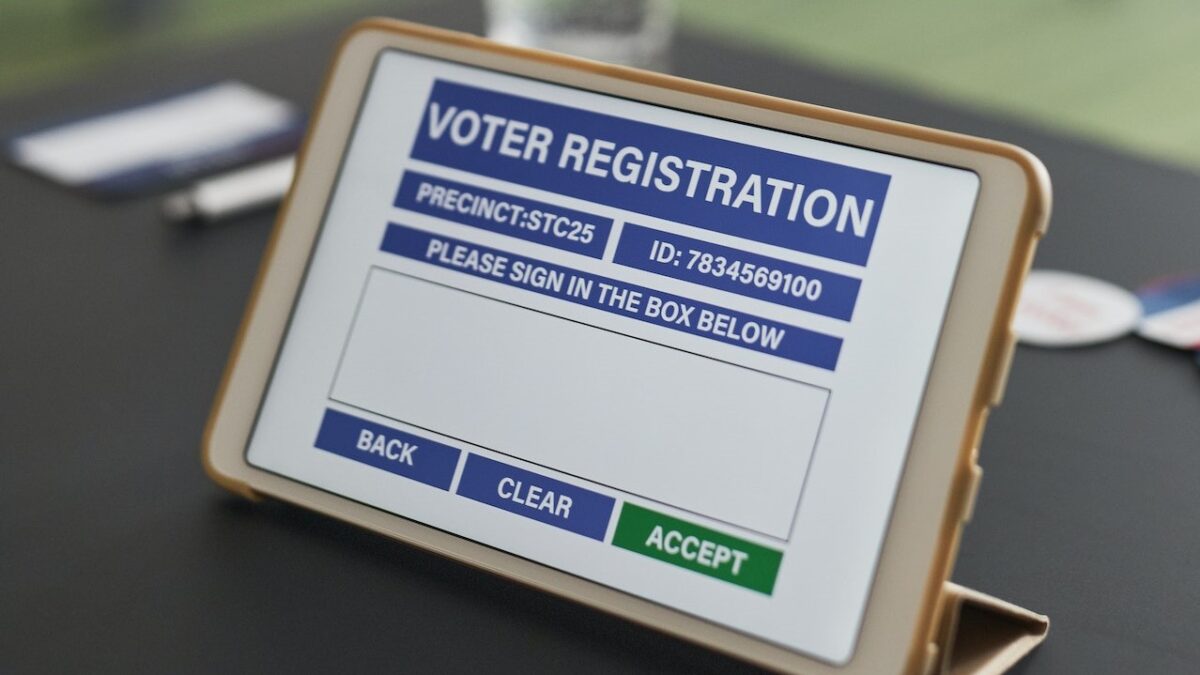
voter registration tablet

Ohio and Iowa are the latest states to withdraw from the Electronic Registration Information Center (ERIC), an interstate voter list maintenance group controlled by Democratic operatives, after a meeting of its board failed to deliver the aforementioned states’ requested reforms.

The two midwestern states follow in the steps of Florida, Missouri, and West Virginia, which withdrew from the alliance in early March over ERIC’s failure to remove its founder, Democrat operative David Becker, from its board, and its requirement that member states conduct voter registration outreach to eligible but unregistered residents in their states. Louisiana and Alabama withdrew last year.

In response to Florida, Missouri, and West Virginia’s withdrawal from the group, Ohio Secretary of State Frank LaRose sent a letter to ERIC threatening Ohio’s departure if the board did not remove Becker — or “ex-officio members” — from its bylaws and cut the requirement for states to conduct partisan voter registration outreach. Instead, states should utilize ERIC’s data-sharing services “in the manner which they believe best serves their local interests,” LaRose argued.

While Becker seemingly complied with one of LaRose’s demands by tweeting that he would not seek renomination to ERIC’s board, ERIC refused to execute LaRose’s other reforms during a March 17 board meeting.

At the meeting, two proposals were put to a vote: changing ERIC’s bylaws to allow states to choose how they utilize ERIC’s data, and pairing the voter registration outreach requirement to a report that helps states catch double voting. Both proposals failed to pass because ERIC’s bylaws require an 80 percent majority before making a change.

“ERIC has chosen repeatedly to ignore demands to embrace reforms that would bolster confidence in its performance, encourage growth in its membership, and ensure not only its present stability but also its durability,” LaRose wrote in a letter announcing Ohio’s withdrawal on March 17. “Rather, you have chosen to double-down on poor strategic decisions, which have only resulted in the transformation of a previously bipartisan organization to one that appears to favor only the interests of one political party.”

Iowa Secretary of State Paul Pate told Politico that the failed votes prevent ERIC members from doing what’s best for their states.

“Ultimately, the departure of several key states and today’s vote is going to impact the ability for ERIC to be an effective tool for the State of Iowa,” Pate said. “My office will be recommending resigning our membership from ERIC.”

As previously reported by The Federalist, ERIC is a voter roll management system used by nearly 30 states and the District of Columbia. It was created under the guise of helping states clean their rolls — i.e., remove dead and duplicate registrants — but does more to inflate them.

As a part of the alliance, member states are required to contact eligible but unregistered residents to register to vote. ERIC creates these lists of unregistered residents and sends them to member states to contact themselves. Given ERIC’s partisan origins and alliance with the Center for Election Innovation and Research (CEIR) — one of two groups that funneled $419 million in grants from Facebook founder Mark Zuckerberg to mostly-blue areas of swing states during the 2020 election — it’s likely ERIC targets Democrat-leaning residents to register.

Despite ERIC’s obvious ties to the left, corporate media outlets are characterizing states that have withdrawn from the organization and its critics as “conspiracy theorists” who are peddling disinformation. Thankfully, states like Ohio and Iowa have ignored this intimidation campaign.

“I cannot justify the use of Ohio’s tax dollars for an organization that seems intent on rejecting meaningful accountability, publicly maligning my motives, and waging a relentless campaign of misinformation about this effort,” LaRose wrote. “Additionally, I cannot accept the board’s refusal – for a third time – to adopt basic reforms to the use of ERIC’s data-sharing services.”

Alaska and Texas are two more member states considering withdrawing from ERIC.


Victoria Marshall is a staff writer at The Federalist. Her writing has been featured in the New York Post, National Review, and Townhall. She graduated from Hillsdale College in May 2021 with a major in politics and a minor in journalism. Follow her on Twitter @vemrshll.

Author Victoria Marshall profile

VICTORIA MARSHALL

VISIT ON TWITTER@VEMRSHLL

MORE ARTICLES

Here’s Where GOP Election Officials Stand On Their State’s Ties To A Leftist-Controlled Voter Roll ‘Maintenance’ Group


BY: SHAWN FLEETWOOD | MARCH 15, 2023

Read more at https://thefederalist.com/2023/03/15/heres-where-gop-election-officials-stand-on-their-states-ties-to-a-leftist-controlled-voter-roll-maintenance-group/

A bunch of 'I voted' stickers on a surface
The Federalist pressed GOP state election officials about their participation in the Electronic Registration Information Center.

Author Shawn Fleetwood profile

SHAWN FLEETWOOD

VISIT ON TWITTER@SHAWNFLEETWOOD

MORE ARTICLES

Since Missouri, Florida, and West Virginia’s recent withdrawal from the Electronic Registration Information Center (ERIC) — a widely used voter-roll management group with ties to left-wing activists — last week, America’s legacy media have been in freak-out mode. In uniform fashion, leftist outlets have labeled the legitimate concerns raised by the aforementioned states as “conspiracy theories” promoted by “election deniers” and “right-wing media.”

As The Federalist’s Victoria Marshall reported, publications like The New York Times and Associated Press have gone out of their way to run grossly dishonest headlines such as “G.O.P. States Abandon Bipartisan Voting Integrity Group, Yielding to Conspiracy Theories” and “Election conspiracies fuel dispute over voter fraud system.” Predictably, these articles whitewash the issues surrounding ERIC, particularly its refusal to “require member states to participate in addressing multi-state voter fraud” and allowance “for a hyper-partisan individual to be an ex-officio non-voting member on its governance board.”

While painted as a nonpartisan venture by corporate media, ERIC is a voter-roll management system founded by far-left activist David Becker that was sold to states as a “quick and easy way” to administer their voter rolls. When states become ERIC members, they give voter data to the group — including the records of unregistered voters. Currently, ERIC has control of voter-roll data in more than half of states and the District of Columbia.

In addition to founding ERIC, Becker is also notable for launching the Center for Election Innovation and Research (CEIR), one of the major groups that received millions of dollars from Meta CEO Mark Zuckerberg in the lead-up to the 2020 election. Such grants were then poured into local election offices throughout the country to push Democrat-backed voting policies. Analyses have shown these “Zuckbucks” were heavily skewed toward Democrat municipalities, especially in swing states, effectively making it a giant Democrat “get out the vote” operation.

As The Federalist reported, ERIC transmits the voter-roll data it receives from states to CEIR, which “then develops targeted mailing lists and sends them back to the states to use for voter registration outreach.”

While currently a non-voting member of ERIC’s board, Becker announced on Tuesday he “will not accept renomination” to the board “when [his] term expires this week,” citing Republican criticisms of the group.

Despite these alarming ties, there are still several leading GOP state election officials who continue to participate in ERIC. In light of Missouri, Florida, and West Virginia’s collective withdrawal from the coalition, The Federalist reached out to these officials to inquire whether they’re reconsidering their state’s ERIC membership.

Alaska

While speaking with state lawmakers last week, Alaska’s Division of Elections director Carol Beecher revealed she was reconsidering the state’s partnership with ERIC, citing membership costs as the primary reason. A spokeswoman from the Alaska lieutenant governor’s office confirmed this assertion but noted the state “has not decided on whether to continue” as an ERIC member.

“List maintenance is an essential process to ensure our voter list is as accurate and current as possible, and ERIC is one of the tools that Alaska uses to assist in this process,” spokeswoman Tiffany Montemayor told The Federalist. Montemayor did not, however, address whether Alaska shares the concerns about ERIC raised by Missouri, Florida, and West Virginia.

Georgia

When pressed by The Federalist on whether Georgia Secretary of State Brad Raffensberger was reconsidering his state’s ERIC membership and if he shared the concerns espoused by the three aforementioned states, Raffensberger spokesman Mike Hassinger declined to answer, instead replying, “If you really believe that ERIC is ‘an interstate alliance controlled by Democrat operatives that encourages partisan outreach efforts under the guise of simple voter roll maintenance,’ you’re an idiot.”

Ohio

While once describing ERIC as “one of the best fraud-fighting tools that we have,” Ohio Secretary of State Frank LaRose has reversed course and is threatening to withdraw his state from the organization. In a letter sent to ERIC Executive Director Shane Hamlin last week, LaRose demanded the group comply with his proposed reforms in its Friday meeting.

“I will not accept the status quo as an outcome of the next meeting,” LaRose wrote. “Anything short of the reforms mentioned above will result in action up to an[d] including our withdrawal from membership.”

As The Federalist reported, “LaRose’s proposed reforms include removing ‘ex-officio membership positions’ from ERIC’s bylaws so as to cut left-wing activist David Becker from its board, as well as no longer requiring states to send out voter registration mailers to unregistered residents.”

Iowa

According to the Associated Press, Iowa GOP Secretary of State Paul Pate is among the nation’s leading Republican election officials “who said they [have] no intention” of leaving ERIC and who have “signaled strong support for the effort.”

“ERIC is an effective tool for ensuring the integrity of Iowa’s voter rolls,” Pate told the outlet.

Texas

In Texas, state lawmakers have introduced legislation that, according to The Texas Tribune, would end the state’s participation in ERIC. Under HB 2809, the Texas secretary of state would be required to “cooperate with other states and jurisdictions to develop systems to compare voters, voter history, and voter registration lists to identify voters: whose addresses have changed,” “who have been convicted of a felony,” or “who are registered to vote in more than one state.”

A companion bill (SB 1070) has also been introduced in the state Senate.

Virginia

Unlike most U.S. jurisdictions, Virginia doesn’t have a secretary of state, meaning the state’s elections department is tasked with overseeing election administration. When pressed on whether the department is reconsidering its participation in ERIC in light of Florida, Missouri, and West Virginia’s decision to withdraw, an agency spokeswoman didn’t provide a definitive answer on the matter.

“The Department of Elections engages in ongoing and extensive list file maintenance processes,” she said. “If there are any changes made to any of these processes, they will be announced publicly.”

South Carolina

In a statement provided to The Federalist, South Carolina State Election Commission spokesman John Catalano said that while the commission has “many sources of information to remove unqualified voters for a variety of reasons,” ERIC is currently their “only source for access to critical sets of data,” including the Social Security Administration’s death files and the “list of South Carolina voters who have registered in other states.”

“While our state’s health department provides us with reports of people who have died in South Carolina, these reports do not include South Carolinians who die outside the state’s borders. The Social Security Administration death data we receive through ERIC allows us to identify these voters and make them inactive,” Catalano said. “The State Election Commission’s view is that ERIC is a valuable and currently irreplaceable tool that allows us to remove unqualified voters from the voter registration rolls.”

Leading GOP state election officials from Kentucky, Texas, Pennsylvania, Iowa, and Utah did not respond to The Federalist’s request for comment.

This article has been updated to include a statement from South Carolina’s state election commission.


Shawn Fleetwood is a Staff Writer for The Federalist and a graduate of the University of Mary Washington. He also serves as a state content writer for Convention of States Action and his work has been featured in numerous outlets, including RealClearPolitics, RealClearHealth, and Conservative Review. Follow him on Twitter @ShawnFleetwood

Tag Cloud