No One Should Be Forced to Choose Between His Faith and His Paycheck
BY: RACHEL N. MORRISON | MARCH 06, 2023
Read more at https://thefederalist.com/2023/03/06/no-one-should-be-forced-to-choose-between-his-faith-and-his-paycheck/

RACHEL N. MORRISON
Should American employees be forced to choose between making a living and freely exercising their religious beliefs? That is the question the Supreme Court is considering in Groff v. DeJoy.
On Tuesday, a diverse group submitted amicus briefs urging the court to answer that question with a resounding “no.” More than 30 briefs were filed on behalf of Christians, Jews, Hindus, Mormons, Muslims, Seventh-day Adventists, Sikhs, Zionists, religious liberty and employment law scholars, medical professionals, nonprofit organizations, states, and members of Congress, among others.
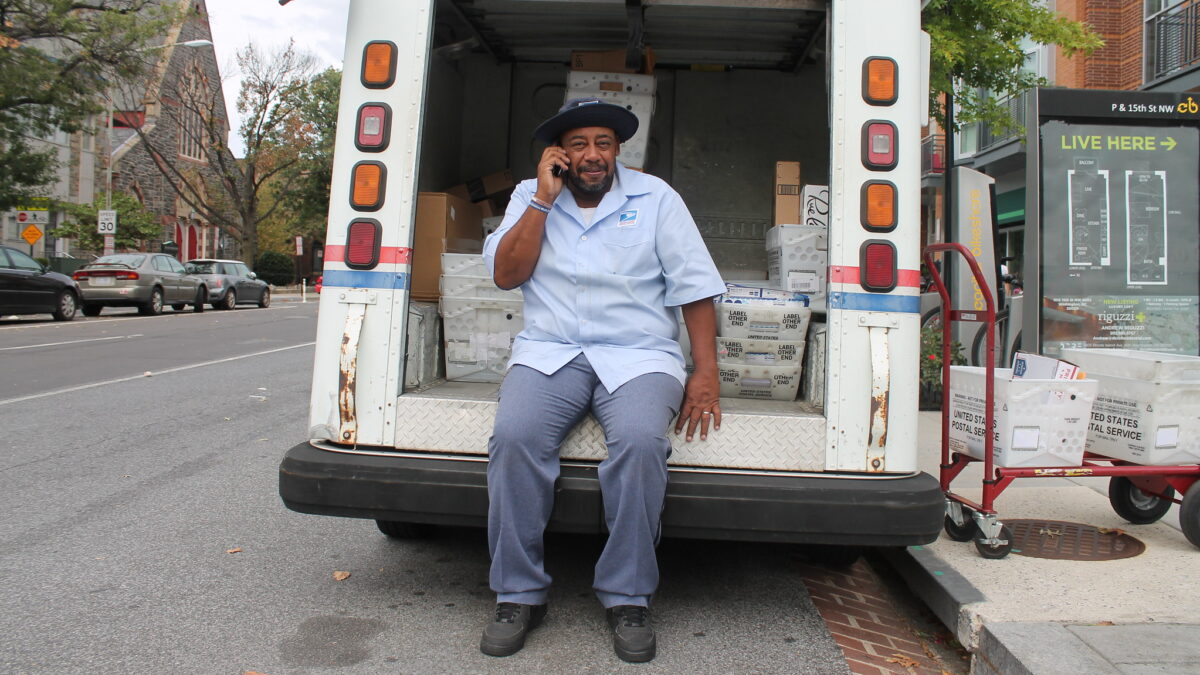
Groff involves United States Postal Service (USPS) mail carrier Gerald Groff, a Christian, who holds uncontested sincere religious beliefs about resting, worshiping, and not working on his Sunday Sabbath. After he joined USPS in 2012, USPS contracted with Amazon in 2013 to provide mail deliveries on Sundays. Initially, USPS accommodated Groff’s Sunday Sabbath observance but later required him to work Sundays.
In accordance with his religious beliefs, Groff refused to work when he was scheduled on his Sunday Sabbath, resulting in progressive disciplinary actions by USPS. Realizing his termination was imminent, Groff resigned in 2019, leading to this religious discrimination lawsuit.
This case places the future of workplace religious accommodation rights in the hands of the Supreme Court.
Religious Accommodations in the Workplace
Title VII of the Civil Rights Act of 1964 prohibits discrimination in employment on the basis of race, color, religion, sex, or national origin. Recognizing that we live in a pluralistic and religiously diverse society and that it is important for employees not to have to hide or give up their religious identities in the workplace, Congress amended Title VII in 1972 to affirmatively require employers to “reasonably accommodate” an employee’s religious observances and practices unless doing so would pose an “undue hardship on the conduct of the employer’s business.”
The necessity for a religious accommodation in the workplace arises when a job duty, rule, or policy violates an employee’s sincerely held religious belief — such as working on one’s Sabbath. In practice, Title VII’s religious accommodation right has the biggest benefit for employees of minority religions and those who have less common religious practices — from a Muslim’s hijab and daily prayers, to a Jew’s yarmulke or Friday Sabbath observance, to a Seventh-day Adventist’s Saturday Sabbath observance, and a Sikh’s kirpan (small sword), metal bracelet, unshorn hair, and beard.
In 2015, the Supreme Court held that under Title VII the clothing store Abercrombie & Fitch could not refuse to hire a female Muslim applicant because she wore a hijab in violation of the store’s “no cap” policy. As the Supreme Court explained: “Title VII does not demand mere neutrality with regard to religious practices — that they be treated no worse than other practices. Rather, it gives them favored treatment,” creating an affirmative obligation on employers.
What Does ‘Undue Hardship’ Mean?
The central issue in Groff is what the phrase “undue hardship on the conduct of the employer’s business” entails. In a 1977 case called Trans World Airlines, Inc. v. Hardison, the Supreme Court, interpreting similar language from an Equal Employment Opportunity Commission guideline in effect during the events at issue, summarily stated that “undue hardship” meant merely “more than a de minimis cost.” This formulation has been adopted as the standard for Title VII by lower court judges across the country, effectively gutting the workplace religious accommodation right Congress provided employees.
Justices, judges, legal scholars, and religious leaders, among others, have criticized the Hardison court’s undue hardship formulation. As Justice Thurgood Marshall explained in his dissent in Hardison, the decision “effectively nullifie[s]” employees’ religious accommodation rights and “makes a mockery” of Title VII.
To put it simply: Hardison’s more than de minimis standard is absurd. De minimis means “very small or trifling,” and more than de minimis means merely a smidge more than “very small or trifling.” “Undue,” in contrast, means “exceeding what is appropriate or normal” or “excessive,” which is significantly more than “very small or trifling.”
Since Hardison, and to avoid application of Hardison’s non-textual standard, Congress has explicitly defined “undue hardship” in multiple statutes as “an action requiring significant difficulty or expense.” This is true for laws requiring other types of workplace accommodations, such as the Americans with Disabilities Act (1990), which provides employees accommodations for disability, and the Pregnant Workers Fairness Act (2022), which provides employees accommodations for the known limitations related to pregnancy, childbirth, or related medical conditions.
A secondary issue in Hardison is whether undue hardship on the conduct of the employer’s business can be met by merely showing a burden on the employee’s coworkers rather than on the business itself. In Groff, the court of appeals held that USPS satisfied its burden to demonstrate undue hardship because accommodating Groff would burden the employee’s coworkers. This standard would minimize Title VII’s religious accommodation protections, subjecting them to a “heckler’s veto by disgruntled employees,” as Judge Thomas Hardiman wrote in his dissent.
Poised to Protect Religious Accommodations
The Supreme Court has had several chances in recent years to revisit Hardison, but the court finally decided it should do so in Groff. This has led many to speculate that the court will reject Hardison’s more than de minimis formulation and clarify that undue means, well, just that — undue.
Indeed, this case should be a no-brainer. It is a simple exercise in statutory interpretation and textual definitions.
An interesting wrinkle in this case, however, is that since the USPS is an arm of the federal government, it is represented in court by the Department of Justice (DOJ).
In December 2019, the DOJ, joined by the Equal Employment Opportunity Commission (the federal agency tasked with enforcing Title VII), told the court that Hardison’s formulation is “incorrect.” Indeed, in USPS’s brief urging the court not to hear Groff, DOJ merely argued the case was a “poor vehicle” to revisit Hardison and that the issue of a religious accommodation’s burden on coworkers “does not merit review.” The court clearly disagreed.
It would go against DOJ custom for the United States to change its position on Hardison. But it is unclear if the Biden administration will willingly support religious liberty, especially when it involves a Christian employee. We’ll find out when USPS files its response brief.
As evidenced by the number of amicus briefs filed by different faith traditions in support of Groff, religious accommodation rights in the workplace is an issue that all Americans, regardless of religion, can and should support. No one should be forced to choose between his religion and earning a paycheck.
Without action by the Supreme Court, employers will continue to feel safe denying religious accommodation requests because they can easily demonstrate a cost that is slightly more than de minimis. It is high time the Supreme Court remedies Hardison’s error.
Oral argument in Groff is scheduled for April 18, and a decision is expected by the end of June.
 Posted by

 Leave it to federal bureaucrats to find a way around pesky constitutional requirements. The Daily Caller


 What Did You Say?
You must be logged in to post a comment.