Inflation increased 0.4% in September from August as “core” inflation, measuring the price of goods excluding food and energy, soared above expectations to a 40-year-high, according to the Bureau of Labor Statistics (BLS).
The decline in overall inflation can be attributed largely to a decline in energy costs, although they remain elevated by 19.8% year-on-year compared to 23.8% in August, according to the BLS. Food costs remain historically high, with the overall food index falling slightly to 11.2% annually, down from 11.4% in August.
The big US data event today is, of course, the release of CPI #inflation where consensus forecasts are looking for 8.1% headline and 6.5% core. Earlier today, #Germany's annual inflation rates for September came in at 10.0% (1.9% MoM) and 10.9% (harmonized–2.2%), same as August. pic.twitter.com/CMTEjPHgb2
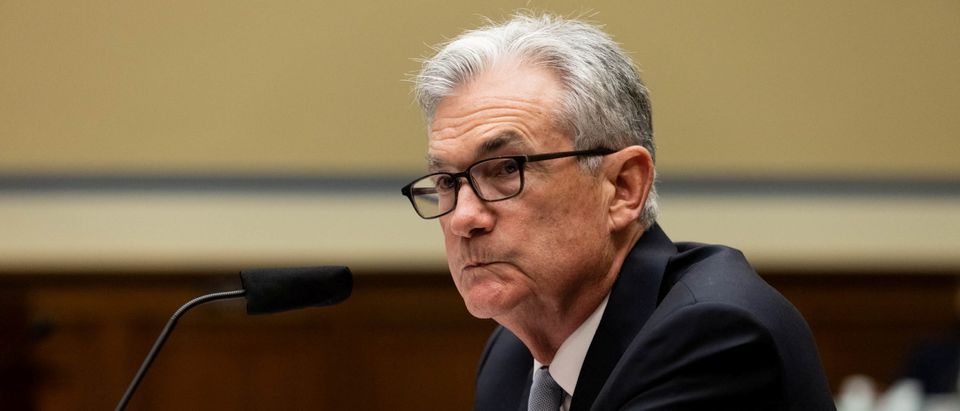
With both headline and core inflation still well above the Federal Reserve’s target of 2%, the Federal Reserve is unlikely to halt its aggressive campaign of interest rate hikes, CNBC reported Wednesday. Goldman Sachs warned investors late September that even in the event of a so-called “soft landing,” where the Federal Reserve tames inflation without inducing a recession or a significant increase in unemployment, the Fed is likely to continue aggressive rate hikes through the end of the year, raising rates from the current baseline of 3.25% up to 4.5%.
The U.S. added 263,000 jobs in September, the slowest rate of the year, as the labor market continued to cool. Bank of America’s chief U.S. economist Michael Gapen warned Monday that unemployment could spike if the Fed continues its rate hikes, pushing unemployment as high as 5.5% from its current level at 3.5%, costing the U.S. 175,000 jobs per month early next year.
“No doubt the Fed still has its work cut out for them, and if tomorrow’s CPI read is hot, don’t be surprised to see some investors come to grips with how long the road to tamer inflation may be,” Mike Loewengart, head of portfolio management at Morgan Stanley told CNBC.
The West is experiencing its third energy crisis. The first, in 1973, was caused by the near-quintupling of the price of crude oil by Gulf oil producers in response to America’s support for Israel in the Yom Kippur war. Their action brought an end to what the French call the trente glorieuses — the unprecedented post–World War II economic expansion.
The second occurred at the end of the 1970s, when Iran’s Islamic revolution led to a more than doubling of oil prices. This again inflicted great economic hardship, but the policy response was far better. Inflation was purged at the cost of deep recession. Energy markets were permitted to function. High oil prices induced substitution effects, particularly in the power sector, and stimulated increased supply.
In the space of nine months, the oil price cratered from $30 a barrel in November 1985 to $10 a barrel in July 1986. It’s no wonder that the economic expansion that started under Ronald Reagan had such long legs.
This time is different. The third energy crisis was not sparked by Saudi Arabia and its Gulf allies or by Iranian ayatollahs. It was self-inflicted, a foreseeable outcome of policy choices made by the West: Germany’s disastrous Energiewende that empowered Vladimir Putin to launch an energy war against Europe; Britain’s self-regarding and self-destructive policy of “powering past coal” and its decision to ban fracking; and, as Joseph Toomey shows in a recent powerful essay, President Biden’s war on the American oil and gas industry.
Hostilities were declared during Joe Biden’s campaign for the Democratic presidential nomination. “I guarantee you. We’re going to end fossil fuel,” candidate Biden told a climate activist in September 2019, words that the White House surely hopes get lost down a memory hole. Toomey’s paper has all the receipts, so there’s no danger of that.
As he observes, Biden’s position in 2022 resembles Barack Obama’s in 2012, when rising gas prices threatened to sink his reelection. Obama responded with a ruthlessness that his erstwhile running mate lacks. He simply stopped talking about climate and switched to an all-of-the-above energy policy, shamelessly claiming credit for the fracking revolution that his own Environmental Protection Agency (EPA) tried to strangle at birth.
Passage of the comically mistitled Inflation Reduction Act places this option beyond Biden’s reach, even if he were so inclined. Democrats are hardly going to take a vow of climate omertà when they’ve achieved a political triumph of pushing through Congress what they regard as the most significant climate legislation to date.
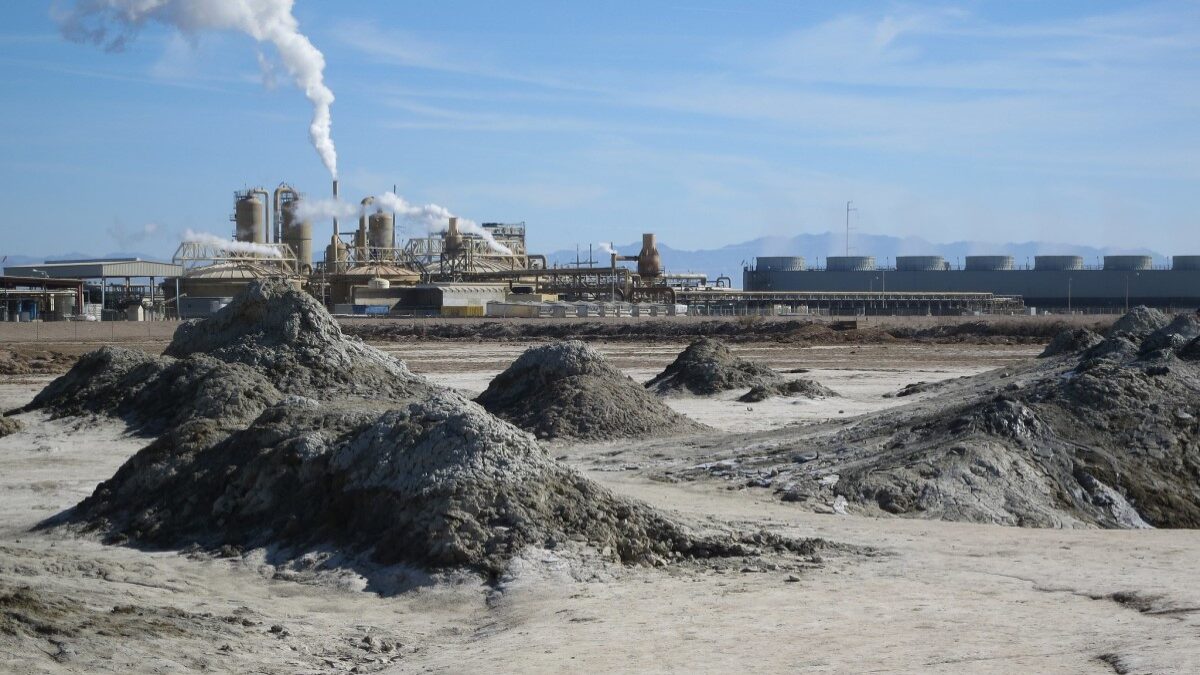
Although the price of oil has slipped back from recent highs, the factors behind high gasoline prices remain in place. Foremost among these is the steep decline in U.S. oil refinery capacity triggered when Covid lockdowns crushed demand but continued after the economy reopened. There has never been such a large fall in operable refinery capacity. Moreover, Gulf Coast refineries were operating at 97 percent of their operating capacity in June 2022. As Toomey remarks, “There isn’t any more blood to be squeezed out of this turnip.”
Toomey identifies five factors driving this decline in refinery capacity. EPA biofuel blending mandates impose crippling costs on smaller refineries. When conventional refineries are converted to processing biofuels, up to 90 percent of their capacity is lost.
Biofuel mandates cost consumers far more than federal excise taxes. Toomey demonstrates that the Biden administration’s claim that biofuel mandates protect consumers from oil-price volatility is totally false; biofuel prices, he writes, “are essentially indexed to the price of crude oil.”
Biden could order the reversal of the EPA’s retroactive biofuel threshold rules. That he has not done so demonstrates that the administration isn’t serious about making energy affordable again. High prices for fossil fuel energy are an intended part of the plan.
Corporate and Wall Street ESG policies are another factor driving refinery closures, especially of facilities owned by European oil companies to meet punishing decarbonization targets that will effectively end up sunsetting them as oil companies. If finalized as proposed, the Securities and Exchange Commission’s proposed climate disclosure rules, with the strong support of the Biden administration, will heighten the vulnerability of U.S. oil and gas companies to climate activists and woke investors to force them to progressively divest their carbon-intensive activities, such as refining crude oil, and eventually out of the oil and gas sector altogether.
To these should be added aggressive federal policies aimed at phasing out gasoline-powered vehicles in favor of electric vehicles (EVs); an administration staffed from top to bottom by militants who believe that climate is the only thing that matters in politics; and an increasingly hostile political climate (“You know the deal,” Biden said of oil executives when campaigning for the presidency. “When they don’t deliver, put them in jail”).
These policies, argues Toomey, will see China become the world’s leading oil refiner for years to come. Will Biden find himself asking China for supplies of refined gasoline? He might well find himself being saved from such an unfortunate position, made more so by Speaker Nancy Pelosi’s recent trip to Taiwan, by help from the other side of the southern border.
Mexico is constructing a $12 billion refinery, due to start producing gasoline next year. Perhaps President Biden’s next foreign trip should be to Mexico City.
Fox News host Greg Gutfeld said the U.S. government is “playing both sides” as they purchase Russian oil during a Wednesday appearance on “The Five.”
“Who is buying Russian oil right now?” Gutfeld began. “And how much is Russian oil? Is the price bottoming out, who’s keeping them afloat? If it’s us, if it’s our government, that sucks. Because we’re sitting here acting like we’re the white knights and what are we doing? We’re playing both sides.”
“We were there in Ukraine, too, so let’s not pretend like our hands are clean on this,” he continued.
Gufeld said it is similar to the U.S. government’s knowledge of gain-of-function research at the Wuhan Institute of Technology. The National Institutes of Health (NIH) admitted to funding the procedure in October, despite repeated denial from White House senior medical advisor Anthony Fauci.
President Joe Biden’s administration implemented their first round of sanctions on a small portion of the Russian oil and gas sector Wednesday to restrict U.S. oil refining technology exports to Russia. The White House confirmed the restrictions will not immediately have an impact on Russian energy but will “overtime.”
Sanctioning Russian energy has gained bipartisan support from lawmakers, political commentators and elites. Democratic West Virginia Sen. Joe Manchin criticized the U.S. for continuing to allow imports of crude oil and petroleum from Russia, while Republican Florida Gov. Ron DeSantis called for Biden and European allies to “hit” Russian President Vladimir Putin “where it counts” by harming Russia’s energy sector.
The administration invoked the Keystone XL Pipeline, which intended to carry 8,000 barrels of oil from Canada to Texas, then paused oil and gas companies from drilling on federal lands and receiving federal leases.
American Family Association
American Family Association (AFA), a non-profit 501(c)(3) organization, was founded in 1977 by Donald E. Wildmon, who was the pastor of First United Methodist Church in Southaven, Mississippi, at the time. Since 1977, AFA has been on the frontlines of Ame
NEWSMAX
News, Opinion, Interviews, Research and discussion
Opinion
American Family Association
American Family Association (AFA), a non-profit 501(c)(3) organization, was founded in 1977 by Donald E. Wildmon, who was the pastor of First United Methodist Church in Southaven, Mississippi, at the time. Since 1977, AFA has been on the frontlines of Ame
American Family Association
American Family Association (AFA), a non-profit 501(c)(3) organization, was founded in 1977 by Donald E. Wildmon, who was the pastor of First United Methodist Church in Southaven, Mississippi, at the time. Since 1977, AFA has been on the frontlines of Ame
You Version
Bible Translations, Devotional Tools and Plans, BLOG, free mobile application; notes and more
Political
American Family Association
American Family Association (AFA), a non-profit 501(c)(3) organization, was founded in 1977 by Donald E. Wildmon, who was the pastor of First United Methodist Church in Southaven, Mississippi, at the time. Since 1977, AFA has been on the frontlines of Ame
NEWSMAX
News, Opinion, Interviews, Research and discussion
Spiritual
American Family Association
American Family Association (AFA), a non-profit 501(c)(3) organization, was founded in 1977 by Donald E. Wildmon, who was the pastor of First United Methodist Church in Southaven, Mississippi, at the time. Since 1977, AFA has been on the frontlines of Ame
Bible Gateway
The Bible Gateway is a tool for reading and researching scripture online — all in the language or translation of your choice! It provides advanced searching capabilities, which allow readers to find and compare particular passages in scripture based on







 What Did You Say?
You must be logged in to post a comment.