Perspectives; Thoughts; Comments; Opinions; Discussions

Posts tagged ‘ELECTION LAWS’

The Federalist’s 2024 Battleground State Elections Guide


By: The Federalist Staff | October 10, 2024

Read more at https://thefederalist.com/2024/10/10/the-federalists-2024-battleground-state-elections-guide/

'I voted' sticker.

Author The Federalist Staff profile

The Federalist Staff

More Articles

With Election Day less than a month away, election processes and early voting are kicking into gear in several swing states around the country. With different election laws and court rulings governing election administration in each state, it can be tough to keep up with the myriad guidelines and rules governing the electoral process. That’s why The Federalist’s 2024 Battleground State Elections Guide is here to help.

From ballot return deadlines to mail-in voting rules, here are all the key dates and information you’ll need to understand the election process in swing states throughout the country this cycle.

Arizona

In-Person Early VotingBegan on Oct. 9 and ends on Nov. 1.

Mail-In Voting: Ballots began to be mailed out Oct. 9.

Ballot Return Deadlines: Mail-in ballots must be returned by 7 p.m. local time on Election Day to be counted. These ballots can be returned via mail or delivered in person. Polling locations for in-person voting on Election Day also close at 7 p.m. local time.

Ballot HarvestingArizona law stipulates that only a “family member, household member or caregiver of the voter” may return the elector’s mail-in ballot.

Mail-In Ballot Signature Requirements: All absentee voters are required to sign the affidavit on the ballot envelope in order for their vote to be tabulated. The envelope signature must match the signature on the voter’s registration form.

Voter ID: Arizona requires in-person voters to present one type of acceptable photo ID or two types of non-photo ID.

Citizenship Requirements: The U.S. Supreme Court recently allowed part of a state law to go into effect that requires eligible electors to provide documentary proof of citizenship when registering to vote via state registration form. Arizonans may still register as federal-only voters with no proof of citizenship. The Arizona Constitution further specifies only U.S. citizens can vote in elections.

Post-Election Day Ballot CuringArizona law permits a “curing” period, in which local officials are authorized to contact voters to correct signature issues on their mail ballots. Any issue must be corrected “not later than the fifth business day after a primary, general or special election that includes a federal office or the third business day after any other election.”

Major Ballot Initiatives: Arizona’s ballot is expected to be stacked with roughly a dozen ballot initiatives this November. Among the most notable are constitutional amendments to effectively legalize late-term abortion (Proposition 139), raise the threshold for citizen-initiated ballot measures (Proposition 134), give the state legislature power to limit the governor’s emergency powers (Proposition 135), and prohibit open primary elections (Proposition 133).

Also set to appear on the ballot is a constitutional amendment that would institute open primaries and allow for the adoption of ranked-choice voting for general elections (Proposition 140). Despite the discovery that roughly 38,000 pairs of signatures gathered in support of the measure were duplicates, the Arizona Supreme Court ruled that votes cast for the measure may count.

For more information on the full list of Arizona ballot measures, see here.

Biggest Election Fights: In September, Arizona election officials discovered roughly 98,000 registered voters lacking documentary proof of citizenship (DPOC) due to an error stemming from how the state’s Motor Vehicle Division shares driver’s license information with the voter registration system. As noted above, individuals who do not provide DPOC may still register as “federal-only” voters and can only cast ballots in federal races.

According to the secretary of state’s office, most of the affected voters are registered Republicans. The Arizona Supreme Court granted these electors the ability to vote full-ballot this November.

The secretary of state’s office revealed on Sept. 30 that election officials found an additional 120,000 voters affected by the issue who lack DPOC.

Georgia

In-Person Early VotingBegins on Oct. 15 and ends on Nov. 1. 

Mail-In VotingAbsentee ballots were sent to UOCAVA voters on Sept. 17.  Registrars began sending out absentee ballots for the general public on Oct. 7. The last day to request a mail-in ballot is Oct. 25. 

Ballot Return Deadlines: Absentee ballots (excluding UOCAVA ballots) must be returned by 7 p.m. local time on Election Day to be counted. These ballots can be returned in person, through the mail, or at a drop box location. Polling locations for in-person voting on Election Day also close at 7 p.m. local time. 

Ballot Harvesting: Georgia does not permit ballot harvesting, but only allows certain family members or a household member to return a voter’s ballot. (A caretaker may also return a disabled voter’s ballot.)

Mail-In Ballot Signature Requirements: Absentee ballot envelopes contain an “oath which must be signed by the voter.” Georgia also “requires the voter’s driver’s license number or state identification card number, which is compared with the voter’s registration record,” according to the National Conference of State Legislatures. If a voter is unable to sign his ballot, Georgia “law requires the voter make a mark,” according to Carroll County’s election website. Ballots lacking a signature or mark are rejected, according to Carroll County. 

Voter ID: “Georgia law requires photo identification when voting, either in person or absentee,” according to the secretary of state’s website. Acceptable forms of identification include any state or federal government-issued photo ID (including a driver’s license or a valid passport), a student ID from a Georgia public college or university, or a military or tribal photo ID.

Citizenship Requirements: Since 2010, Georgians registering to vote have been required to provide evidence of their U.S. citizenship, including a driver’s license or driver’s license number as long as the registrant has previously provided proof of citizenship to the Department of Driver Services. For those who don’t possess any of the accepted citizenship documents, Georgia law tasks the State Election Board with establishing “other documents or methods” for proving a person’s citizenship. However, it appears certain voters may be able to evade some of the safeguards in place.  

Post-Election Day Ballot Curing: Georgia law permits a “curing” period, in which local officials are authorized to contact voters to correct signature issues on their absentee ballots. The “last day for voters to cure timely submitted absentee ballots if they failed to sign the oath or information mismatch” is Nov. 8. 

Major Ballot Initiatives: Georgia will have three initiatives on the November ballot. One would create a Georgia Tax Court “with judicial power and statewide jurisdiction,” the second would provide “for a local option homestead property tax exemption,” and the third “exempts property that is valued at less than $20,000 from the personal property tax,” according to Ballotpedia

Biggest Election Fights: The conservative-led State Election Board has clashed with Democrats and Georgia’s Republican-led secretary of state’s office recently, especially on the topic of whether election officials should be forced to rubber-stamp election results even if they have concerns about the election’s administration.

Republican officials like Fulton County election board member Julie Adams argue they should be able to investigate concerns about the administration of an election before certifying the results, rather than rubber-stamping results they believe are legally dubious.

Democrats are also waging a series of legal challenges against the State Election Board, which has passed a series of rules aimed at ensuring the number of ballots cast matches the number of voters who voted, among other election integrity measures.

Michigan

Voter Registration: Michiganders can register to vote at any time up to 8 p.m. on Election Day. They can register to vote online, by mail, or in person at the local clerk’s office.

In-Person Early Voting: The Michigan Department of State tells voters early voting will be available “for a minimum of nine consecutive days, ending on the Sunday before an election.” So early voting will start Oct. 26 at the latest, but communities can start the process earlier, allowing it to run for as many as 29 days.

Mail-In Voting: Absentee ballots are available beginning 40 days ahead of every election. Voters can request a ballot from the local clerk, and can opt-in to receive absentee ballots ahead of every federal, state, and local election. After Michigan voters approved no-excuse absentee voting in 2018, Proposal 2, which passed in 2022, further instituted mail-in voting practices and myriad other election policies supported by the left.

Ballot Return Deadlines: Voters must return absentee ballots to the local clerk’s office by 8 p.m. on Election Day to be counted, but overseas voters simply need their ballots to be postmarked by Election Day and received by clerks within six days after the election.

Ballot Harvesting: Michigan law allows an immediate family member or “individual residing in your household” to return a voter’s ballot. A voter may also request the clerk who issued a ballot help return it. 

Mail-In Ballot Signature Requirements: Absentee voters must sign the envelope with a signature matching their state ID or voter registration application.

Voter ID: The state requires in-person voters to show a photo ID or sign an affidavit claiming they don’t have one. Acceptable documents include a current student ID or government ID such as (but not limited to) a U.S. passport or state driver’s license. Michigan does not require a copy of an ID to vote by mail.

Citizenship Requirements: It is illegal for noncitizens to vote in federal elections, and voter registration forms and ballot applications require a person to attest that he is a citizen, but Michigan does not require documentary proof of citizenship from would-be voters.

Post-Election Day Ballot Curing: If a signature does not match that in the local clerk’s records, Michigan law requires clerks to contact the voter to “cure” the signature and solve the issue. According to the secretary of state’s office, voters may cure their signatures until 5 p.m. the third day after the election.

Major Ballot Initiatives: Michigan will have no statewide ballot measures in November.

Biggest Election Fights: Democrat Secretary of State Jocelyn Benson fought to keep third-party candidate Robert F. Kennedy Jr. on the ballot and remove independent Cornel West from the ballot, both of which actions would likely help Vice President Kamala Harris’ chances.

The Republican National Committee has filed multiple lawsuits against Benson for her guidance to clerks on handling ballots and her alleged failure to clean the state’s voter rolls. The Public Interest Legal Foundation has also sued Benson for an alleged lack of voter roll maintenance.

Nevada

Voter Registration: The deadline to register online is Oct. 23. Mailed voter registration forms had to be postmarked by Oct. 8.

Nevada also offers same-day registration, in which eligible electors may register and vote in person during the early voting period or on Election Day. Those who choose this option must present a valid Nevada driver’s license or Nevada ID card. Voters will receive their ballots to vote after the registration process is completed.

In-Person Early VotingBegins on Oct. 19 and ends on Nov. 1.

Mail-In Voting: Every registrant listed as “active” on Nevada’s voter rolls is automatically mailed a ballot every election. Voters can request to opt out of this mailing list.

According to the National Conference of State Legislatures, Nevada law does not specify when election officials may start sending mail-in ballots to voters. State law does, however, require these officials to send electors their ballots “not later than the 14 days before the election.”

Ballot Return Deadlines: All ballots that are dropped off in person must be submitted by 7 p.m. local time on Election Day. According to the Nevada secretary of state’s office, “Mail-in ballots that are postmarked on or before the day of the election AND received by the 4th day after election day by 5 p.m., will be accepted as received and processed according to Nevada State law.”

Ballot Harvesting: Nevada law permits any “person authorized by the voter [to] return the mail ballot on behalf of the voter by mail or personal delivery to the county clerk, or any ballot drop box established in the county.”

Mail-In Ballot Signature Requirements: All electors voting via mail must sign the ballot envelope for it to be counted. The envelope signature must match the signature on the voter’s registration form.

Voter ID: Nevada does not require a person to show ID to vote. As summarized by Ballotpedia, state law requires a Nevada in-person voter to “sign his or her name in the election board register at his or her polling place.” That signature is then “compared with the signature on the voter’s original application to vote or another form of identification, such as a driver’s license, a state identification card, military identification, or another government-issued ID.”

Citizenship Requirements: Nevada law requires all eligible residents to be U.S. citizens to vote, although the state constitution does not explicitly stipulate only U.S. citizens can vote. The state does not require documentary proof of citizenship from people voting or registering to vote.

Post-Election Day Ballot CuringNevada law permits a “curing” period, in which local officials are required to contact voters to allow them to correct signature issues on their mail-in ballots or otherwise confirm the signature affixed to the ballot belonged to them. The voter “must provide a signature or a confirmation, as applicable, not later than 5 p.m. on the sixth day following the election” for the ballot to be counted.

Major Ballot Initiatives: There will be seven measures appearing on Nevada’s 2024 ballot, six of which are constitutional amendment proposals. Among the most notable are initiatives instituting ranked-choice voting (Question 3), effectively legalizing late-term abortion (Question 6), and requiring electors to present a valid form of ID in order to vote (Question 7).

[RELATED: Ranked-Choice Voting Is A Nightmare — And It’s On The Ballot In Nevada]

Biggest Election Fights: The top issue raising concerns among election integrity activists in the state is the accuracy of Nevada’s voter rolls. Organizations such as the Public Interest Legal Foundation have documented what appear to be alarming inaccuracies within the voter registration lists, such as finding some registrants’ addresses listed at bars and casinos. Efforts by the Citizen Outreach Foundation to file citizen-led challenges to have these allegedly ineligible registrants removed have been met with resistance by Democrat Secretary of State Cisco Aguilar, whose office recently issued a memo instructing local officials to stop processing the group’s challenges.

North Carolina

Voter Registration: The standard deadline to register to vote is 5 p.m., Oct. 11. However, North Carolinians can register to vote after the Oct. 11 deadline in person at early voting locations.

In-Person Early VotingBegins Oct. 17 and ends at 3 p.m. on Nov. 2.

Mail-In Voting: Any registered voter in North Carolina can vote by mail for any reason. Voters must request the ballot using an absentee ballot request form, either online or with a paper form. This year, voters must request absentee ballots by Oct. 29 at 5 p.m.

Ballot Return Deadlines: Ballots must be returned by Election Day, Nov. 5 at 7:30 p.m. (with exceptions for UOCAVA voters).

Ballot Harvesting: North Carolina law permits a near relative or legal guardian to return a voter’s absentee ballot. It is otherwise a class I felony for anyone to deliver a ballot to a voter or return it for them.

Mail-In Ballot Signature Requirements: Voters must sign their absentee ballot envelope.

Absentee ballots must be filled out in the presence of two adult witnesses who are not disqualified by other state statutes. Those two persons must print and sign their names on the application and certificate, as well as provide their addresses. Voters can also fulfill the requirement with the seal and signature of one notary public.

Voter ID: A photo ID is generally required to vote in North Carolina, but the address on the ID “does not have to match the voter registration records.”

If an in-person voter does not have a voter ID, he will be asked to either complete an ID exception form and vote provisionally, or vote provisionally and return to his county elections office with a valid ID “by the day before [the] county canvass.” North Carolinians voting by mail are required to provide a copy of a photo ID when returning their ballot, but they can also fill out an exception form. Counties are required to count provisional ballots as long as the ID exception forms are “properly completed.”

Exceptions for not showing an ID are expansive, and range from a disability to “work or school schedule” to a religious objection to being photographed. (Being the victim of a declared natural disaster occurring withing 100 days of Election Day also qualifies a voter for an ID exception.) Mail-in voters who are somehow unable to attach a copy of their ID must include either their driver’s license number or the last four digits of their Social Security number.

North Carolina does not require photo ID for voters covered under the Uniformed and Overseas Citizens Absentee Voting Act.

Citizenship Requirements: North Carolina law requires U.S. citizenship to register to vote. However, citizenship documents are not required to register.

Post-Election Day Ballot Curing: North Carolina allows for ballot curing in certain circumstances, including if the voter “did not sign the voter certification,” “signed the application in the wrong place,” or failed to include a copy of a photo ID with an absentee ballot.

Major Ballot Initiatives: North Carolina only has one ballot initiative certified to appear on the ballot this November. The Citizenship Requirement for Voting Amendment was referred to voters by the state legislature and would amend the state constitution to provide that only eligible U.S. citizens can vote in the state. The amendment would prohibit local governments from allowing noncitizens to vote.

Biggest Election Fights: The RNC has filed several lawsuits against the North Carolina State Board of Elections.

The western part of the state was also significantly damaged by Hurricane Helene, which will make it more difficult to vote in the deep-red region of the state, though state officials are in the process of implementing emergency election procedures.

Pennsylvania

Voter Registration: The deadline to register to vote in Pennsylvania is Oct. 21. The state implemented automatic voter registration in September 2023 through the Department of Motor Vehicles. Since then, anyone who gets a driver’s license and is eligible to vote is automatically registered unless they intentionally opted out of voter registration. Pennsylvanians may also register online, by mail, or in person at their county election office.   

In-Person Early Voting: Pennsylvania treats early voting and mail-in voting the same. Voters can go to their county election office, receive a mail-in ballot, vote, and submit this ballot “all in the same visit.” In-person voting starts as soon as counties start mailing out ballots, but that date is different for each county. Voters may check online with the Pennsylvania Department of State to see when their counties’ ballots are ready.

Mail-In Voting: The deadline for requesting a mail-in ballot is Oct. 29. Any registered voter may request a mail-in ballot.

Ballot Return Deadlines: The county must receive a completed ballot by 8 p.m. on Election Day, Nov. 5. Counties will not accept ballots with a postmark of Nov. 5 at 8 p.m.; the ballot must be in hand by then. 

Ballot Harvesting: Voters must return their own ballots, although there are some exceptions for voters with a disability to designate someone, in writing, to deliver their ballot. Former Democratic Gov. Tom Wolf created a stir in 2021 when he casually admitted in a radio interview that his wife violated this rule, by dropping off his ballot for him. It is not allowed in Pennsylvania, even between spouses.

Mail-In Ballot Signature Requirements: Voters mail ballots in a two-envelope system. The inner, secrecy envelope is not marked, but the outer, mailing envelope must be signed and dated.

Voter ID: Voters must provide a driver’s license number or the last four digits of their Social Security number when registering to vote, as required by federal law. Identification is also required the first time a voter casts a vote in a precinct where they will sign a voter roll book, though the ID does not have to include a photo (voters can use a utility bill or bank statement as long as it includes their name and address). After that, no identification is required as long as the voter continues in the same precinct because they sign the book each election. If a Pennsylvania voter moves to a new precinct, he will need to show identification again.

Voters who qualify for a ballot under the Uniformed and Overseas Citizens Absentee Voting Act (UOCAVA) or the Voting Accessibility for the Elderly and Handicapped Act do not need to show ID.

Citizenship Requirements: You must be a U.S. citizen and a resident of Pennsylvania at least 30 days before the next election to register to vote.

Military voters, and those who are registered in Pennsylvania but out of the country, may register to vote through UOCAVA. They may participate in federal and local elections. Pennsylvania also allows voters who once lived in the state but now live overseas and have no intention of returning to vote as “federal” UOCAVA voters. These voters may vote in federal-level elections such as president, vice president, U.S. senator, and congressional representative. They cannot vote in Pennsylvania’s local elections.

Post-Election Day Ballot CuringSome counties give voters notice and opportunity to “cure” mistakes, and some do not. State law tells counties not to count improperly marked ballots, but the Pennsylvania Department of State has issued guidance telling counties to flag ballots in need of curing so voters will receive an automatic notice informing voters they can cure their ballots. This has become a point of controversy.

Biggest Election Fights: Mail-in ballot curing has been under dispute, and in the courts for several years, and in multiple cases. Should counties toss out improperly marked ballots as the election code directs? Or does Pennsylvania Secretary of State Al Schmidt have the authority to override the law and issue guidance to mail-in voters offering them a second chance to mark their outer envelope properly? Counties have been choosing to either follow the law or the guidance, giving voters different responses to the same problem, depending on where they live.

The Republican National Committee (RNC) and the Republican Party of Pennsylvania challenged Schmidt and Pennsylvania’s 67 county boards of elections over this matter. The RNC believes voters should be held to the law as written by the elected General Assembly, which does have the authority to change the law, and so far, hasn’t. Last week, the state supreme court declined to rule on the issue before Election Day.

Wisconsin

Voter Registration: Wisconsin offers same-day voter registration, so eligible Wisconsinites can register to vote in person on Tuesday, Nov. 5, 2024 (Election Day). The deadline to register to vote by mail or online is Oct. 16.

In-Person Early Voting: Counties can offer early voting from Oct. 22 until Nov. 3, although the dates and office hours “vary by municipality.” 

Mail-In Voting: Absentee ballots begin being mailed out 47 days before November’s general election. 

Ballot Return Deadlines: All absentee ballots must be delivered no later than 8 p.m. local time on Election Day. The ballots may be returned via mail or hand-delivered to the polling place or clerk’s election office. 

Ballot Harvesting: Wisconsin law implies that only the voter shall mail the ballot or deliver it in person to the municipal clerk’s office that issued the ballot.

Mail-In Ballot Signature Requirements: All absentee voters must sign and seal the ballot certificate envelope. A witness also is required to sign the envelope and include his address.  Ballots that fail to include the required information are rejected.  

Voter ID: Wisconsin requires in-person voters to show the “original copy of their photo ID” to vote. 

Citizenship Requirements: Wisconsin’s constitution states that “Every United States citizen age 18 or older who is a resident of an election district in this state” is eligible to vote. “Citizenship is documented through a U.S. birth certificate or a Certificate of Naturalization, but proof of citizenship is not required to vote,” notes the Wisconsin Elections Commission. 

Post-Election Day Ballot Curing: This has been an on-again, off-again issue in the Badger State for several years. In February, the Wisconsin Elections Commission voted 5-1 on guidance advising clerks to accept ballots with incomplete ballot witness addresses following a Dane County Court ruling on the curing question. A Waukesha County judge in 2022 had ruled that clerks completing or fixing missing information on absentee ballot envelopes on behalf of the voter violated state law. Concerns over improperly “fixed” ballot envelopes were at issue in the 2020 election, and a subject of unsuccessful Trump campaign lawsuits challenging the results of the election in Wisconsin. A federal judge earlier this year tossed out a lawsuit by Democrat Party fixer Marc Elias’ lawfare group seeking to block Wisconsin election law requiring a witness to sign a voter’s absentee ballot.

Major Ballot Initiatives: Wisconsin voters will decide whether to amend Wisconsin’s constitution to provide that “only” U.S. citizens 18 or older may vote in national, state or local elections. Currently the constitution states that “every” U.S. citizen 18 or older may vote. Citizen Only Voting Amendment advocates argue the existing language leaves a loophole that would allow Wisconsin municipalities and the state to open elections to noncitizens, as has been done in other states and the District of Columbia. 

Biggest Election Fights: Wisconsin’s four-year battle over the widespread use of absentee ballot drop boxes was decided by a new liberal-led court, just in time for the 2024 general election. In a 4-3 ruling in July, the court endorsed the return of absentee ballot drop boxes, opening the door to the same kind of election shenanigans that plagued the Badger State in 2020. The decision overturned the Wisconsin Supreme Court’s 4-3 ruling by the conservative majority in 2022 banning the widespread use of the drop boxes.

For more election news and updates, visit electionbriefing.com.
10 Lies Democrats Tell About Our Elections (And How to Refute Them)


BY: SHAWN FLEETWOOD | MAY 03, 2024

Read more at https://thefederalist.com/2024/05/03/10-lies-democrats-tell-about-our-elections-and-how-to-refute-them/

Voting stickers on voting day sign

Author Shawn Fleetwood profile

SHAWN FLEETWOOD

VISIT ON TWITTER@SHAWNFLEETWOOD

MORE ARTICLES

There is almost no subject the left won’t lie about. Whether it’s denying basic biology or fabricating “bloodbath” hoaxes about their top Republican rival, no topic is off limits for the Democrat “disinformation” police — and that includes elections.

Since the 2020 election, Democrats and their media allies have worked overtime to smear Americans concerned about the integrity of U.S. elections. No matter how legitimate these concerns may be, the left slanders anyone who challenges controversial elections won by Democrats as so-called “election deniers.”

Putting aside the fact that Democrats have questioned elections they don’t win (see the Trump-Russia collusion hoax), it’s important to highlight that the left regularly lies about America’s elections to further their party’s goal of acquiring and maintaining government power. In service of this goal, no falsehood is too great.

Here are the 10 biggest lies Democrats tell about U.S. elections so you can identify and combat these mistruths.

1. Election Integrity Laws ‘Suppress’ Voters

Under the guise of Covid, many states expanded the use of unsupervised mail-in voting, permanently changing the electoral landscape and how modern elections are conducted. With Covid-era lockdowns now in the rearview mirror, many Republican-controlled states have spent the past several years returning their election systems to pre-Covid practices and moving away from unsupervised methods.

With their election machine that thrives off the insecure mail-in system threatened, Democrats have taken to dishonestly attacking GOP-backed election integrity laws. The most common of these smears is the debunked claim that voter ID laws suppress voters, especially those who aren’t white. Of course, there’s no evidence to support such assertions, as multiple court rulings have found.

One of the more egregious examples of these attacks came from President Joe Biden, who grossly labeled a benign 2021 Georgia election law as “Jim Crow on steroids.” Contrary to Democrats’ smears, Georgia experienced record early voter turnout during the state’s 2022 midterms. A poll conducted after the election also revealed that zero percent of black Georgia voters said they had a “poor” experience voting.

2. The 2020 Election Was the ‘Most Secure in American History’

This claim from the Cybersecurity and Infrastructure Security Agency (CISA) — the “nerve center” of the federal government’s censorship operations — is just as inaccurate today as the day it was issued nearly four years ago.

From illegal election rule changes in Michigan and Pennsylvania to the unauthorized use of ballot drop boxes in Wisconsin, the 2020 election was fraught with mischief and irregularities. In unprecedented fashion, Meta CEO Mark Zuckerberg poured hundreds of millions of dollars into left-wing nonprofits, which funneled most of these “Zuckbucks” into election offices in Democrat-majority localities to push Democrat-backed voting policies and get-out-the-vote efforts.

There was also heavy involvement from U.S. intel agencies and officials to help Joe Biden leading up to the election.

Weeks ahead of the 2020 contest, the New York Post dropped a bombshell story documenting the Biden family’s foreign business dealings. Despite having authenticated the laptop as early as November 2019, the FBI spent months leading up to the election pressuring Big Tech companies such as Facebook and Twitter (now X) to be on the lookout for so-called “Russian propaganda” and “hack and leak operations.” Zuckerberg all but admitted during a 2022 interview with podcaster Joe Rogan that the company’s decision to suppress the Post story was based on the FBI’s warning.

The CIA — while allegedly coordinating with the Biden campaign — purportedly solicited signatures for a letter issued by 51 former intel officials claiming Hunter’s laptop was part of a Russian disinformation campaign. Meanwhile, Delaware U.S. Attorney David Weiss reportedly delayed his investigation into Hunter’s alleged tax law violations to avoid negatively affecting Joe’s electoral prospects.

[READ: Docs: CISA Knew Risks Of Mail-In Voting In 2020, But Got Posts About Them Censored Anyway]

3. Voter Fraud Doesn’t Exist

When it comes to defending the chaotic and irregular 2020 election, legacy media have adopted the strategy of pretending that voter fraud never happens. But recent cases of such illegalities show that isn’t true.

In December, the Louisiana Supreme Court let stand a lower court decision that the existence of voter fraud in a local sheriff’s race warranted a new election. While initial results in Caddo Parish’s November sheriff’s race indicated that Democrat Henry Whitehorn defeated Republican John Nickelson by one vote, a lawsuit filed by Nickelson and subsequent legal proceedings revealed there were enough illegal votes to call into question the election outcome.

The judge overseeing the case ultimately determined there were 11 unlawful votes cast in the race, and as such, ordered that a new election be held.

Another recent incident of voter fraud occurred in Bridgeport, Connecticut’s Democrat mayoral primary. Surveillance footage released after the September election showed what appeared to be a city employee affiliated with the incumbent mayor’s campaign “stuffing ballot boxes.” The matter prompted a superior court judge to order a new election.

4. Election Workers Are Under Siege

As America edges closer to the 2024 election, Democrats are ramping up their attacks on election oversight. On an almost weekly basis, regime-approved media outlets run article after article lamenting an alleged wave of “threats” against election workers that they blame on Trump’s 2020 election criticisms.

Of course, these same doomsday predictions didn’t materialize during the 2022 midterms. But that hasn’t stopped the press from continuing to repeat the narrative they have little evidence to support.

As I previously wrote in these pages, Democrat claims that election workers have experienced a spike in threats since the 2020 election are primarily based on “surveys” issued by leftist organizations and unsubstantiated statements from Democrat election officials. Moreover, data produced by the Biden Department of Justice indicates the issue is minimal.

5. Ranked-Choice Voting Is ‘Fair’

Often referred to as “rigged-choice voting” by its critics, ranked-choice voting (RCV) is a system whereby voters rank candidates in order of preference. If no candidate receives more than 50 percent of first-choice votes in the first round of voting, the last-place finisher is eliminated, and his votes are reallocated to the voter’s second-choice candidate. This process continues until one candidate receives a majority of votes.

RCV’s (mostly Democrat) proponents have deceptively attempted to garner support for the system by claiming it brings “fairness” to the voting process. But a quick look into RCV’s history reveals anything but a fair system.

RCV has produced election results that contradict the desires of voters, especially Republican ones. Since adopting the system, Alaska and Maine have produced elections in which the Democrat candidate was the declared winner despite the Republican candidate winning more votes in the first round of voting.

Jurisdictions employing RCV have also experienced inaccurate election results and high rates of discarded ballots.

6. Contingent Electors Are ‘Fake’ and Unlawful

After Arizona Democrat Attorney General Kris Mayes released an indictment alleging 18 Republicans illegally participated in a so-called “fake elector scheme,” media hacks are once again using this dishonest terminology to characterize Trump’s challenging of the 2020 election results as unlawful and unprecedented.

But there’s no such thing as a “fake elector,” and the naming of contingent Republican electors during the 2020 election was neither unprecedented nor unlawful. The process undertaken in states such as Georgia closely mirrored efforts taken during the 1960 presidential contest between John F. Kennedy and Richard Nixon.

[READ: The Left’s 2020 ‘Fake Electors’ Narrative Is Fake News]

Had courts ruled in Trump’s favor in lawsuits disputing the election results in battleground states, the alternate electors would have been in place to ensure the will of the people was exercised.

7. ERIC Is ‘Nonpartisan’

The Electronic Registration Information Center (ERIC) has become a favorite tool of the Democrat election machine — so naturally, the media have rushed to smear its opponents as unhinged crazies.

Deceptively marketed to states as a means to keep their voter rolls updated, ERIC is a widely used voter-roll “management” system founded by far-left activist David Becker that places a higher priority on registering new voters than on cleaning up existing voter rolls. The program inflates voter rolls by requiring member states to contact “eligible but unregistered” residents and encourage them to register to vote.

Concerns about ERIC’s ties to Becker and its refusal to change its bylaws prompted numerous GOP-led states to depart the organization. To salvage ERIC’s reputation, the media launched a seemingly coordinated campaign to position the group as “nonpartisan” and cast its opponents as “conspiracy theorists.” Of course, this coverage fails to disclose ERIC’s relationship with the Center for Election Innovation and Research (CEIR), another Becker-founded nonprofit most notable for its “Zuckbucks” interference in the 2020 election to help Biden and other Democrats.

As The Federalist previously reported, ERIC sends the voter-roll data it receives from states to CEIR. Upon receiving the data, CEIR “then develops targeted mailing lists and sends them back to the states to use for voter registration outreach.” In other words, CEIR — a highly partisan nonprofit with a history of left-wing activism — is creating lists of potential (and likely Democrat) voters for states to register in the lead-up to major elections.

8. Mail-In Voting Is Secure and Reliable

Much like the issue of voter fraud, Democrats have gone to great lengths to convince the American public that mail-in voting has zero problems and is 100 percent secure. But according to left-wing media’s own reporting, that narrative isn’t true.

In recent months, outlets such as NBC News and CBS News have published stories highlighting insecurities within the U.S. postal system. While NBC addressed the effect postal delivery delays could have on mail-in voting during the 2024 election, CBS explored the increasing problem of mail theft.

NBC even cited remarks from Rep. Sylvia Garcia, D-Texas, who expressed concern that mail delivery delays could present “difficulties” and “barriers” to voters during the November election.

9. Democrats Are the Party of ‘Democracy’

Biden and Democrats love to contend that “democracy is on the ballot” this November. The insinuation, of course, is that the republic as we know it will collapse if Trump and Republicans emerge victorious at the ballot box. Yet, for all their professed concerns about “democracy,” Democrats are doing everything in their power to destroy it.

In unprecedented fashion, the left is abusing the legal system in an attempt to imprison and bankrupt their chief political rival ahead of a major election. Spanning dozens of counts, a roughly half-a-billion-dollar fine, and five judicial venues, the Biden Department of Justice and leftist prosecutors are waging lawfare against Donald Trump to hinder his reelection prospects.

10. Biden’s Federal Election Takeover Is Just a ‘Nonpartisan’ Outreach Effort

The seriousness of Executive Order 14019 cannot be overstated. Signed by Biden in March 2021, the directive ordered hundreds of federal agencies to interfere in state and local election administration by using taxpayer dollars to engage in voter registration and get-out-the-vote activities — a policy Congress never authorized.

Under the edict, each department was instructed to draft “a strategic plan” explaining how it intended to fulfill Biden’s order, and to collaborate with so-called “nonpartisan third-party organizations” that have been “approved” by the administration to supply “voter registration services on agency premises.” While Biden and his lackies claim these outside groups are “nonpartisan,” the facts tell a different story.

Good government groups and conservative media have discovered that many of the organizations collaborating with the administration are extremely left-wing, indicating an effort to identify and register likely-Democrat voters. Among those identified are the ACLU and Demos, both of which contributed to a “progress report” tracking agencies’ compliance with the “Bidenbucks” order.


Shawn Fleetwood is a staff writer for The Federalist and a graduate of the University of Mary Washington. He previously served as a state content writer for Convention of States Action and his work has been featured in numerous outlets, including RealClearPolitics, RealClearHealth, and Conservative Review. Follow him on Twitter @ShawnFleetwood

Loophole In ‘Weak’ North Carolina Voter ID Law Lets Just About Anyone Cast A Ballot


BY: BRIANNA LYMAN | MARCH 12, 2024

Read more at https://thefederalist.com/2024/03/12/loophole-in-weak-north-carolina-voter-id-law-lets-just-about-anyone-cast-a-ballot/

Sign in New Hampshire requiring photo ID

Author Brianna Lyman profile

BRIANNA LYMAN

VISIT ON TWITTER@BRIANNALYMAN2

MORE ARTICLES

North Carolinians who didn’t present a photo ID when voting during the presidential primary last week were still permitted to cast a ballot, thanks to exceptions that Soros-backed groups supported including in the state’s voter ID law.

On March 5, more than 1.7 million North Carolina voters were asked to show a photo ID to vote in the presidential primary, in the first major election since the law went into effect. Most of those voters appeared to successfully present an ID and cast a ballot. Still, according to preliminary counts, more than 1,000 voters cast what is known as a “provisional ballot” due to “ID not provided,” according to the state’s election board (NCSBE). Of those more than 1,000 voters, 546 later returned to show their IDs. But another 607 voters never showed a photo ID, instead simply signing a form claiming that a “reasonable impediment” prevented them from presenting an ID.

The Law Doesn’t Actually Compel Voters to Show Photo ID

The North Carolina general assembly initially passed a series of election-related laws in 2013. After facing legal challenges to the voter ID requirement, the state legislature presented a revised voter ID law in 2015 that included the “reasonable impediment” exception, but the U.S. Court of Appeals for the 4th Circuit nevertheless struck down the voter ID requirement in 2016. Republicans spent the next several years fighting in the courts to pass some type of voter ID laws while North Carolinians voted in 2018 to approve a state constitutional amendment establishing a photo ID requirement.

Most recently, the North Carolina Supreme Court — which had flipped from a Democrat-majority to a Republican-majority — overturned a past decision by the same court and thus permitted the photo ID requirement to go into effect.

The current version says that a voter who does not present a photo ID due to a “reasonable impediment” may still cast a provisional ballot so long as he provides “a current utility bill, bank statement, government check, paycheck, or other government document,” his voter registration card, or the last four digits of his Social Security number and birth date.

If a voter still fails to present any of those documents, the law says he can simply complete a declaration stating that he is who he says he is — aka the “honor system.” He must also designate on the form that a “reasonable impediment” — such as disability or illness, lack of transportation, lack of birth certificate or other documents needed to obtain a photo ID, work schedule, or family responsibilities — has prevented him from providing an ID. Other acceptable reasons include a voter having lost his ID or simply “not know[ing] photo ID was required for voting.”

The ID exception form is also accepted for mail-in voters who cannot include a copy of their photo ID with their ballots, according to voting instructions posted by the Mecklenburg County government.

‘Nobody Will Be Turned Away’

Thirty-six other states currently mandate some form of voter ID, but Republicans who have worked on election integrity efforts say North Carolina’s law is the “weakest” of them all.

“You can literally put any kind of excuse you want on the ‘Reasonable Impediment’ form and be given a ballot. It’s not hard at all to vote,” Chairman of the Lee County Republican Party James Womack told The Federalist.

“This ‘Reasonable Impediment’ thing is really a weakness in the law, it’s the weakest voter ID law in the country when you consider almost anyone can walk in and say ‘Oh, I lost my ID’ and cast a provisional ballot,” Womack continued. “They really didn’t make an attempt this year, in Senate Bill 747, to update anything that was in the case of ‘Reasonable Impediment.’”

Executive Director of Voter Integrity Project of North Carolina Jay DeLancy wrote in 2015 after an earlier, similar version of the law was passed that it was a “stunning betrayal” to all state residents who wanted to see “real voter ID” laws. DeLancy said at the time that, while he did not believe Republicans in the legislature purposely gutted the photo ID provisions, “their inexperience in election fraud analysis leads them to believe the new loophole ‘won’t be a big deal’ in our state.”

Provisional ballots can theoretically be rejected, but those cast based on a “reasonable impediment” to providing voter ID can only be rejected if a county elections board unanimously finds that the information a voter gives in the ID exception form is false. It’s unclear, however, how a county board would be able to discern whether a person’s claimed impediment to obtaining an ID is genuine. Besides, Womack noted these voters likely wouldn’t be rejected due to a fear that lawsuits would be lodged alleging voter suppression.

“What they did, this law, neuters the ability of the board to reject those ballots no matter how ridiculous the excuse is that the voter uses,” DeLancy told The Federalist. “It defies common sense.”

DeLancy told The Federalist he believes Republicans in the legislature thought they would be “clever” and include the “reasonable impediment” provision as a way to avoid having the voter ID law tossed.

Womack speculated that then-House Rules Chairman Rep. David Lewis included the last-minute “compromise language” to help the legislation pass. He noted Republicans had to work in bipartisan fashion since, at the time, they did not hold a supermajority in either state legislature and the Reasonable Impediment provision would alleviate concerns from the left that there would be an “undue burden on people who didn’t have photo ID.”

Womack said the provision likely didn’t get much attention since the legislation got stuck in the courts for years but argued that now that it has gone into effect “people are starting to expose its weaknesses.”

“There’s all kinds of excuses you can put on the form and you’ll still be granted the right to vote, nobody will be turned away,” he added.

DeLancy said the provision should be fixed ahead of November’s election “or else” it leaves the door open for potential abuse.

Soros-Linked Group Cheered ‘Reasonable Impediment’ Exception

When North Carolina’s 2013 law was challenged in court shortly after it was signed, the leftist groups behind the legal fight included the NAACP and the Advancement Project. The Advancement Project had received nearly $4 million between 1999 and 2012 from the Soros-funded Open Society Project. The Foundation to Promote Open Society contributed more than half a million to the Advancement Project between 2009 and 2012, according to Influence Watch. Later suits targeting the law were brought by other election-interference groups like the ACLU.

When Republicans proposed a revision adding the “reasonable impediment” exception to the law in 2015, the Soros-backed group Democracy North Carolina spent weeks “encouraging hundreds of citizens to attend and speak out” at hearings regarding the legislation and celebrated the inclusion of the “reasonable impediment” provision.


Brianna Lyman is an elections correspondent at The Federalist.

If Democrats Love ‘Democracy,’ Why Do They Attack Election Security Measures Voters Want?


BY: SHAWN FLEETWOOD | FEBRUARY 02, 2024

Read more at https://thefederalist.com/2024/02/02/if-democrats-love-democracy-why-do-they-attack-election-security-measures-voters-want/

Voter registration sign.

Author Shawn Fleetwood profile

SHAWN FLEETWOOD

VISIT ON TWITTER@SHAWNFLEETWOOD

MORE ARTICLES

“We are the party of democracy!”

That’s the asinine campaign message Democrats are using heading into the 2024 election to convince voters that Donald Trump and his “MAGA Republican” supporters are an existential threat to the republic. Because as everyone knows, the political party that attempts to throw its primary political opponent off the ballot and into prisonprosecutes praying pro-lifers; targets practicing Catholics; interferes in elections to its candidates’ benefit; and coordinates with Big Tech to silence dissent online is the standard-bearer of “democracy.”

For all their disingenuous rhetoric about upholding the will of the people, Democrats are actively fighting against Americans’ wishes — especially when it comes to the integrity of U.S. elections.

Last week, the Honest Elections Project (HEP) released a report recommending 14 policies for states to implement to ensure an electoral process that’s fair and accountable to the people. Democrats are actively fighting against many of the commonsense practices outlined in the analysis despite their popularity amongst the American electorate.

Take, for instance, voter ID requirements. In July, the HEP released survey data showing that a whopping 88 percent of U.S. voters back laws requiring eligible citizens to show a form of identification in order to cast their ballot. Polling by Gallup in 2022 produced similar results, with 79 percent of respondents in favor of a photo ID requirement. But that doesn’t seem to matter to Democrats, whose acolytes have spent years ignoring voters’ wishes and engaging in dishonest lawfare to dismantle states’ existing voter ID requirements.

From Ohio to New Hampshire, leftist lawyers and groups have filed frivolous lawsuits aimed at gutting voter ID statutes. Many of these suits are based on unsubstantiated claims that such laws “disenfranchise” nonwhite voters.

While courts across the country have repeatedly determined their “voter suppression” arguments to be bogus, Democrats’ continuous use of nonwhite voters as a crutch to smear popular voter ID laws shows how little respect they have for “democracy.” The aforementioned HEP poll also showed the vast majority of black (82 percent) and Hispanic (83 percent) voters support such requirements in order to vote. Gallup found that 77 percent of nonwhite respondents supported photo ID laws. If Democrats truly respected the will of the American voter, as they regularly claim to do, why are they trying to undercut a policy most of them support?

But it’s not just voter ID requirements. Democrats are actively waging a nationwide campaign to demolish numerous policies recommended by the HEP that ensure secure elections and are supported by the majority of U.S. voters.

While most of the electorate (89 percent) believes “American elections should only be for American citizens,” that hasn’t stopped Democrats from attempting to authorize noncitizen voting throughout the country. Last year, for example, Rhode Island Democrats introduced legislation to authorize localities to allow illegal aliens to vote in their municipal elections. Some cities, such San Francisco, New York City, and Washington, D.C, have already passed measures permitting certain noncitizen voting.

In response to left-wing nonprofits dumping hundreds of millions of Zuckbucks into local election offices during the 2020 election to benefit Joe Biden, elected officials and voters in 27 states enacted measures restricting election offices’ ability to accept and use private monies to administer elections. In response, several of those same Democrat-aligned groups formalized the U.S. Alliance for Election Excellence as a way of circumventing these “Zuckbucks” bans and therefore violating the will of the people in the aforementioned states.

The same dynamic can also be seen regarding mail-in voting. Most voters (66 percent) support terminating no-excuse mail voting “as long as states offer two weeks of early in-person voting, including weekends.” Meanwhile, Democrats — who used the Covid lockdowns as a pretext for expanding the use of vote-by-mail and other insecure election practices — have continued to push unsupervised mail balloting across the country. Some states, such as Nevada, automatically mail individuals listed on the state’s voter rolls a ballot ahead of elections.

Whether it’s banning foreign money in elections, ensuring transparency in the elections process, or backing election audits, the story remains the same: Democrats actively oppose policies supported by voters that bring accountability and security to the U.S. elections system. Their screeds about being the party of “democracy” are a dishonest talking point designed to obfuscate their contradictory actions and smear their political opponents as extremists.


Shawn Fleetwood is a staff writer for The Federalist and a graduate of the University of Mary Washington. He previously served as a state content writer for Convention of States Action and his work has been featured in numerous outlets, including RealClearPolitics, RealClearHealth, and Conservative Review. Follow him on Twitter @ShawnFleetwood

Senator Marco Rubio Op-ed: Democrats’ Voting Rules Takeover Is a Threat to Democracy


Commentary BY: Sen. MARCO RUBIO | JANUARY 12, 2022

Read more at https://thefederalist.com/2022/01/12/democrats-voting-rules-takeover-is-a-threat-to-democracy/

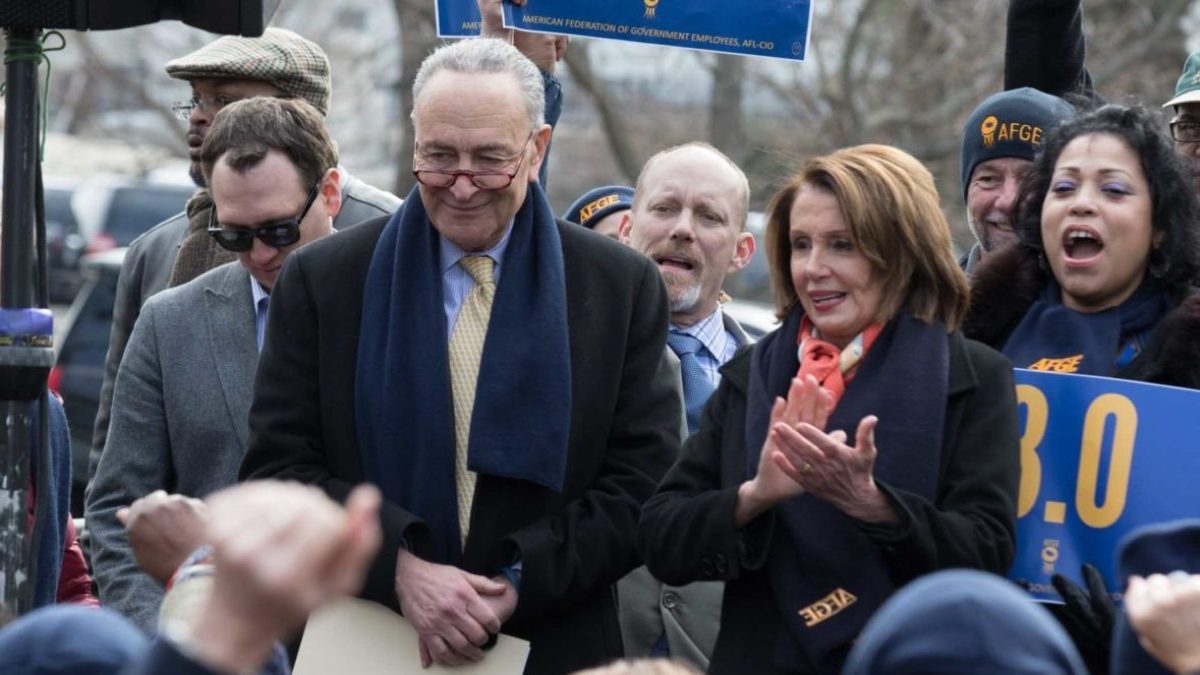
Chuck Schumer

When Senate Majority Leader Chuck Schumer, D-N.Y., announced Senate Democrats’ New Year’s resolution to abolish the filibuster and ram through a partisan federal takeover of election administration, he framed it as an attempt to protect “free and fair elections,” the “foundation of our democracy,” from state governments. In reality, it is the leftist elites and their corporate allies, not the states, that pose the greatest threat to our constitutional system.

Free and fair elections are the foundation of our democracy, but the Democrats’ concerns about election rights are totally baseless. Progressives from all over the country — from President Joe Biden to Georgia gubernatorial candidate Stacey Abrams and Schumer  claim that Republicans are passing “voter suppression laws” to exclude their political opponents from the vote.

In reality, it is easier to vote in 2022 than it ever has been. Voter registration has been streamlined, and record turnouts show that Americans of all backgrounds are freely exercising their rights.

The left’s proposed reforms would restrict Americans’ freedom, not expand it. Legalizing ballot harvesting, for instance, would present more opportunities for corruption.

More generally, taking election administration powers away from the states and handing them to the federal government would not eliminate the potential for abusing those powers, it would just make it easier for officials in Washington, D.C., to abuse them — and it would further undermine our system of federalism.

In 2020, when election integrity fears swept other parts of the country, the state of Florida conducted its elections with peace, security from interference, and respect for all citizens, all in the midst of a worldwide pandemic. This is proof that with strong leadership, state governments are perfectly capable of holding the responsibility of election administration. Ironically, this year will be the first time that the president’s home state of Delaware allows in-person early voting, whereas Florida has had it for years. 

Left’s Broader Effort to Consolidate Power

Democrats’ campaign to centralize elections is part of a broader effort to consolidate power in the hands of a leftist elite class. This class wants to use that power to silence and disempower anyone who dissents from their radical progressive agenda.

Case in point: the very same people who said in 2005 that restricting the filibuster would mean losing to “the passions of the moment” and spell “doomsday for democracy” — Biden and Schumer  — want to eliminate the rule now that they are in power.

This power grab masquerading as democracy reform is bigger than just what goes on in the Senate. In 2020, leftist politicians closed churches and restricted in-home religious services while they let political protests, and eventually full-scale riots, go unnoticed. In 2021, critical race theory advocates indoctrinated our children and tried to remove parents from our schools. And this year, the Biden administration will begin forcing millions of Americans to get a Covid-19 vaccine to keep their jobs.

Collaboration from Communists and Corporations

In this movement, the political left has been aided by social media giants and mega-corporations. To gain favor with the Marxists in Washington, D.C., Facebook, YouTube, and Twitter censor dissenting voices, labeling unpopular views as “misinformation.” Amazon blacklists conservative authors. And banks that taxpayers bailed out in 2008 cancel accounts based on Orwellian “reputational risk.”

Of course, behind closed doors many of these same companies are in bed with a genocidal regime, the Chinese Communist Party. While they are eager to appear human rights champions, they lobby for trading goods made with slave labor and protect communist propaganda from negative customer reviews. It makes sense that corporations comfortable with totalitarianism abroad would be happy to silence dissent in the United States.

Those of us who are not on board with the progressive agenda should take note. America is still a free nation, and it will take some time before the situation here begins to resemble the dystopia that is communist China. But if it can happen anywhere, it can happen here, and censorship and consolidation of power are two important steps on the road to tyranny.

Americans need to remember where the greatest threats to our democracy really lie. If we focus our attention on exaggerated problems and imaginary fears, rather than the leftist elite power grab unfolding before our very eyes, we do so at our own peril.


Corporate Media’s Jan. 6 Anniversary Coverage Is All About Silencing Republicans


Reported BY: JOHN DANIEL DAVIDSON | JANUARY 04, 2022

Read more at https://thefederalist.com/2022/01/04/corporate-medias-jan-6-anniversary-coverage-is-all-about-silencing-republicans/

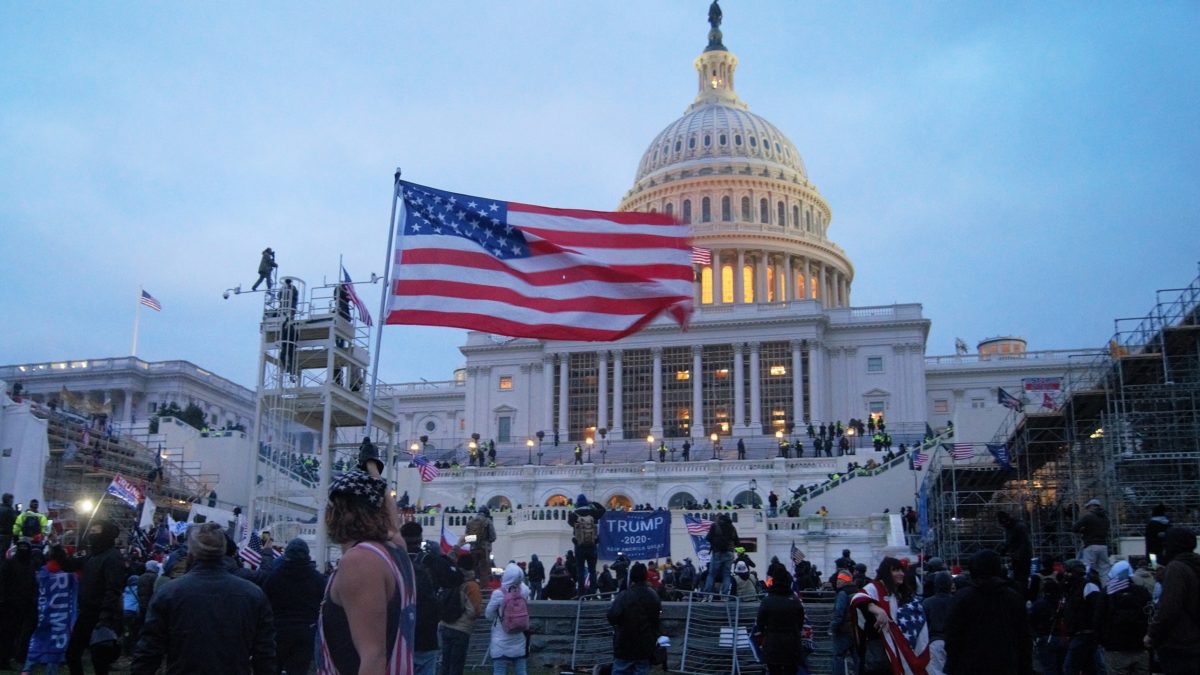
Alengthy New York Times editorial over the weekend has set the stage for this week’s Jan. 6 anniversary coverage. “Every Day Is Jan. 6 Now,” declare the Times editors, warning that Republican lawmakers in 41 states “have been trying to advance the goals of the Jan. 6 rioters — not by breaking laws but by making them.”

The argument itself, that tweaking state election law is somehow a subversion of democracy, is absurd and incredibly lazy. But it’s important to note, if only because it will serve as the baseline narrative for the entire corporate media’s Jan. 6 coverage this week. Their message — they will all have more or less the same message — is simple: all Republicans are insurrectionists, the GOP is the enemy of the people, and the only way to preserve American democracy is to ensure that only Democrats can win elections.

To make this case, the Times’ editors had to stage a kind of linguistic insurrection. Lawful, constitutional efforts by elected representatives to change state election laws amount, in the Times’ telling, to a “bloodless, legalized” insurrection that “that no police officer can arrest and that no prosecutor can try in court.”

That’s no different than saying “speech is violence.” It’s nonsensical. By definition, there’s no such thing as a “bloodless, legalized” insurrection, any more than there could be a “mostly peaceful” riot. That said, the Times editors are wrong about one thing: state laws, including state election laws, can and often are challenged in court. 

But the nonsense here serves a purpose. If the Jan. 6 riot can be conflated with perfectly valid GOP-led efforts to shore up state election rules, then perhaps those efforts can be wholly undermined, regardless of what voters in red states want. The irony is that it isn’t GOP lawmakers trying “to wrest control of electoral votes from their own people,” as the Times editors charge; it’s the Democrats and their media allies.

Consider that last year, 44 states enacted some 285 bills related to elections. In blue states, those bills tended to loosen certain election rules and requirements, especially for mail-in and absentee ballots. That makes sense given that Democrats tend to vote by mail-in ballot far more often than Republicans. Making mail-in and absentee voting easier is merely a way to boost Democratic votes in any given state. It’s simple.

By contrast, Republican-led states tended to pass laws limiting or more strictly defining the rules for mail-in and absentee voting, on the theory that absentee balloting is inherently less secure and more susceptible to fraud, especially when paired, as it often is, with practices like ballot-harvesting.

Republican lawmakers’ motivation here was to prevent a repeat of the free-for-all of the 2020 election, which saw a raft of last-minute changes to mail-in and absentee voting rules, justified on account of the pandemic. Many Republicans rightly felt that judges who overruled state legislatures and re-wrote state elections laws by fiat (as happened in Pennsylvania), undermined the integrity of the election.

By passing such reforms, Republican lawmakers were responding to actions taken by Democrats, unelected public health officials, and Democrat-friendly judges to overhaul state election rules ahead of 2020. If you wanted to be disingenuous about it, you could argue that Democrats staged a “bloodless, legalized” insurrection before the 2020 election even took place.

That’s why the Times and the rest of the corporate press want so badly to talk about Jan. 6 instead of getting into the nitty gritty of what these Republican-passed election reforms actually do. You’ll notice the media always describe these laws as “restricting voter access,” even when they do no such thing. The entire conversation is a bit of legerdemain, nothing more. That’s why you’ll never read a piece in the corporate press about how Georgia’s new election law, which President Joe Biden called “Jim Crow on steroids,” actually makes voting easier than it is in Biden’s home state of Delaware.

Remember that when you read breathless remembrances of the Jan. 6 riot at the U.S. Capitol this week. Yes, the riot was bad and should have been put down with overwhelming force — just as the riots all throughout the summer and fall of 2020 should have been.

But the actions of a relatively small group of rioters that day have absolutely nothing to do with the perfectly valid efforts of GOP lawmakers to ensure that election rules are not changed at the last minute by unelected judges or public health officials. Equating the two, pretending they share a common cause and motivation, is a way to discredit the valid arguments of Republicans, smear them as “insurrectionists,” and eventually justify efforts to silence them.


John Daniel Davidson is a senior editor at The Federalist. His writing has appeared in the Wall Street Journal, National Review, Texas Monthly, The Guardian, First Things, the Claremont Review of Books, The New York Post, and elsewhere. Follow him on Twitter, @johnddavidson.

Tag Cloud