
A Third of All DC District Judges Were Not Born in United States
By: Beth Brelje | March 25, 2025
Read more at https://thefederalist.com/2025/03/25/a-third-of-all-dc-district-judges-were-not-born-in-united-states/
Beth Brelje
Visit on Twitter@BethBrelje
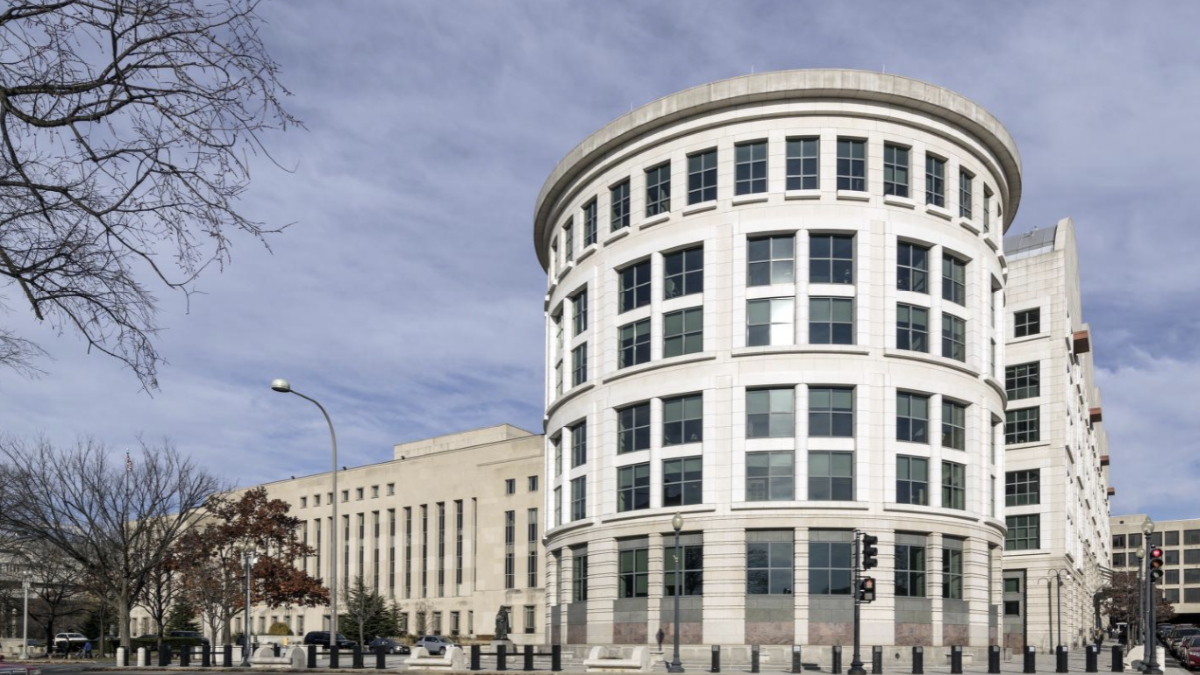
The United States District Court for the District of Columbia, the source of many of the cases interfering with President Donald Trump’s authority, has 15 judges, (Counting Chief Judge James Boasberg) and five of them were born outside the United States.
While country of origin doesn’t come up in most jobs, it is worth asking if judges with ties to foreign nations and cultures are the right ones to make decisions affecting the U.S. military or immigration.
The concept of foreign-born judges is a newer phenomenon in this district. In addition to the 15 main judges, the D.C. District has 10 older, senior judges who still occasionally hear cases in the district. This group, nominated as far back as Ronald Reagan the 1980s, were all born in the U.S.
But starting in 2014, former President Barack Obama appointed Judge Tanya Sue Chutkan, born in Kingston, Jamaica. She was in the U.S. by 1979, attending George Washington University. Before sitting on federal court, she had no experience as a judge. Chutkan is overseeing the legal challenge to DOGE’s work to slash excess government spending.
Obama also appointed Judge Amit P. Mehta to the D.C. court. Mehta also had no previous experience as a judge. Mehta was born in Patan, Gujarat, India. He and his parents came to the U.S. when he was a baby, age one. He was raised in Maryland. Mehta will oversee four January 6 civil cases that aim to blame Trump for injuries and squeeze money, court time, and political embarrassment out of him.
The other three foreign born judges were nominated by former President Joe Biden.
Judge Ana Cecilia Reyes was nominated in 2021, also with no prior experience as a judge. She was born in Montevideo, Uruguay and moved to Spain, and while still a child, moved to Louisville, Kentucky, where she grew up. She is the first openly LGBT Latina to be appointed to this court. Reyes presided over an objection to Trump’s executive order declaring “gender dysphoria” as “inconsistent” with the “high standards for troop readiness,” as The Federalist’s Shawn Fleetwood reported. Reyes blocked Trump’s order with a preliminary injunction.
The first Muslim and Arab American in the D.C. district court, Judge Amir Hatem Mahdy Ali was born and raised in Canada to Egyptian parents. According to his Questionnaire for Judicial Nominees, Ali was not required to register for the U.S. Selective Service. That is because he was not a citizen until 2019. He graduated from the University of Waterloo in Ontario, Canada with a software engineering degree in 2008 and then attended Harvard Law School in the U.S., graduating with a law degree in 2011. He worked as a volunteer on Biden’s 2020 transition team and for a phone bank in support of Biden’s presidential campaign. He worked for some nonprofits but never served as a judge until Biden appointed him in 2024. Amir has written extensively and negatively about Trump’s so-called “Travel ban,” a 2017 Executive Order which restricted travel to the U.S. from seven predominantly Muslim countries for 90 days.
In his writing, he said, “prejudice and intolerance” were “the very hallmark of [Trump’s] campaign against Muslims.”
Before he was a judge, Ali spoke at the National Press Foundation and gave tips to reporters about how to cover the courts.
When confirmed, Amir was a member of the Capital Area Muslim Bar Association; Muslim American Judicial Advisory Council; National Arab American Bar Association; National Association of Criminal Defense Lawyers; National Police Accountability Project; and the Native American Bar Association of D.C., among others.
Ali single handedly restored $2 billion in USAID spending to foreign nonprofit contractors that the Trump Administration had paused for 90 days, in a stunning overreach of authority last month.
The newest judge on the D.C. District Court is also foreign born.
Before slinking out of office, Biden and his handlers got Judge Sparkle Sooknanan confirmed. She was sworn in Jan. 2, 2025. Born in the dual-island nation Trinidad and Tobago in 1983, she left her home country at age 16 to pursue college and graduated from Brooklyn Law School in 2010.
She was a law clerk for Supreme Court Justice Sonia Sotomayor, and during the Biden Administration she was the principal deputy assistant attorney general in the Civil Rights Division for the Department of Justice before Biden tapped her for her first ever judge gig in the D.C. Court, according to her Questionnaire for Judicial Nominees.
Last week, Sooknanan dutifully did her part to slow Trump’s agenda, ordering the reinstatement of Democrat Susan Grundmann to the Federal Labor Relations Authority, a move that keeps the board in a Democrat majority.
None of these cases have gone in front of conservative judges in conservative states, say in Missouri or South Dakota. They all happened to land in the laps of judges that have spoken out or ruled against Trump or his policies in the past.
Out of all the judges in the nation, all five foreign-born judges of the D.C. District court managed to get their fingerprints on a controversial Trump case.
The United States is in the midst of a soft coup. Not the violent kind that takes out a nation’s leader, but one orchestrated by judicial actions that choke off executive power before our eyes.
We have seen other obvious, corrupt schemes in plain sight before. The Biden basement presidential campaign of 2019; the “insurrection” that wasn’t; the mask and vaccine mandates; the Biden is mentally competent story; the “flawless” Afghan withdrawal; the “secure” borders; and the incompetent candidate swap to Kamala Harris, made Americans realize the best chance we have to stop corruption is to vote it out.
The public did its part by voting in a clear mandate for Trump’s agenda. But corruption is still visible, though court decisions by unelected activist judges. The only remedy now is for the Supreme Court to step in and this time, get its hands dirty, deliberate, and make real decisions based on the Constitution.
Beth Brelje is an elections correspondent for The Federalist. She is an award-winning investigative journalist with decades of media experience.

 What Did You Say?