
Perspectives; Thoughts; Comments; Opinions; Discussions

Posts tagged ‘Democracy in America’

Leftists Want Direct Democracy Because It’s Easy to Manipulate the Masses


BY: CASEY CHALK | JANUARY 03, 2024

Read more at https://thefederalist.com/2024/01/03/leftists-want-direct-democracy-because-its-easy-to-manipulate-the-masses/
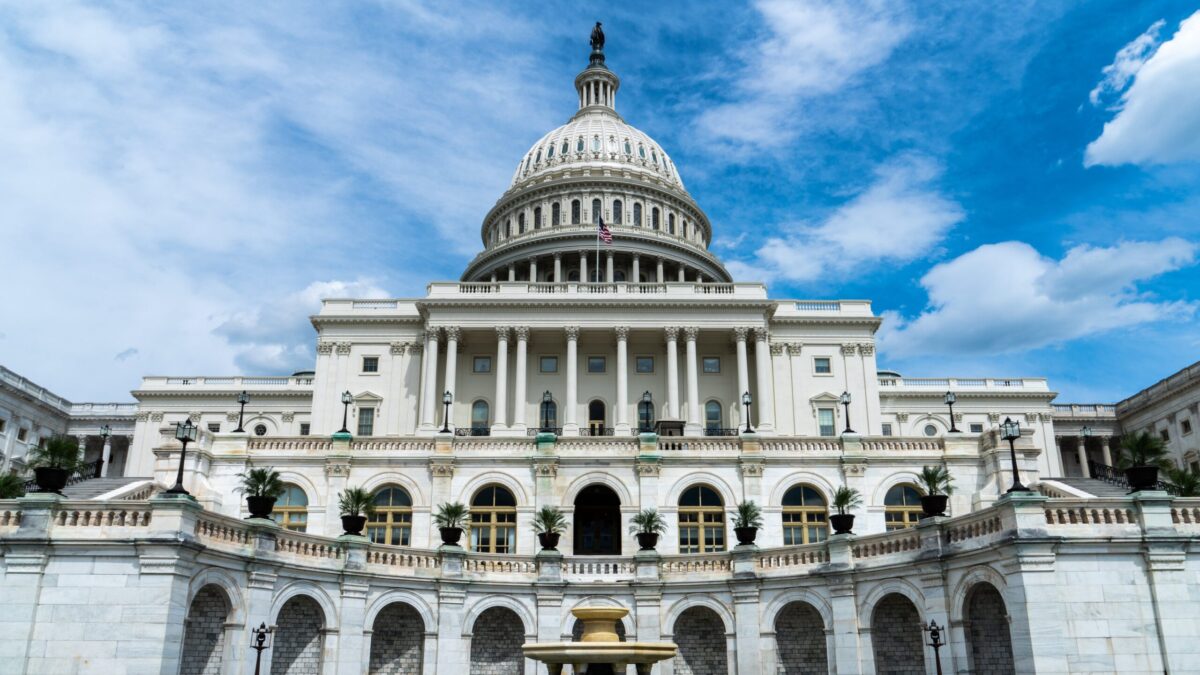

US Capitol Building

Author Casey Chalk profile

CASEY CHALK

MORE ARTICLES

“American democracy is cracking,” warns Washington Post Chief Correspondent Dan Balz in a recent column that presents some ideas to repair it. His suggestions include, among other things, proportional representation, diminishing the power of the Senate, and eliminating the Electoral College. What these three suggestions have in common is a desire to remove any intermediary institutions between the will of the people and government action — otherwise known as “direct” democracy. 

These proposals are not new. Indeed, even the framers of the Constitution were familiar with them. But the reasons why such suggestions would significantly erode the republican government envisioned by our Founding Fathers are not new either. 

Given Biden’s low approval ratings — especially in important swing states with critical Electoral College votes — as well as broader Democrat fears of a Republican takeover of the Senate, we will likely hear a renewed chorus of voices calling for direct democracy. After all, masses of individuals are much easier to manipulate than smaller families, communities, or even states. Conservatives would do well to arm themselves with the best arguments against such initiatives.

Founders Worked to Curb Direct Democracy

The framers of our Constitution felt quite strongly that direct democracy was something to avoid. In Federalist 10, for example, the Father of the Constitution James Madison warned of “the superior force of an interested and overbearing majority” on a government, or what has come to be called the “tyranny of the majority,” in which a majority of the population exerts great coercive power over minority factions.

Again in Federalist 51, Madison wrote: “[I]n the federal republic of the United States … all authority in it will be derived from and dependent on the society, the society itself will be broken into so many parts, interests, and classes of citizens, that the rights of individuals, or of the minority, will be in little danger from interested combinations of the majority.” 

Our second president, John Adams, called a unicameral legislative body — in which each member is accountable to his constituents — a “tyranny of the majority.” Adams, reflecting the opinion of that founding generation, argued for “a mixed government, consisting of three branches.” The framers took various steps to disburse power among the federal government, dividing it into three competing branches: executive, legislative, and judicial. 

But the founders’ dispersion of governing power also goes beyond the three branches. The 10th Amendment reads: “The powers not delegated to the United States by the Constitution, nor prohibited by it to the States, are reserved to the States respectively, or to the people.” In other words, unless the Constitution expressly grants certain powers to the federal government, those powers exist in the states or, even more decentralized, in local communities of Americans. 

Later Generations Understood the Threat

A generation after that founding generation, visiting French aristocrat Alexis de Tocqueville authored an extended survey of American politics and culture, Democracy in America. Tocqueville perceived that the American political system was created to resist the tyranny of the majority, “which bases its claim to rule upon numbers, not upon rightness or excellence.” Thus, Tocqueville writes:

When a man or a party suffers from an injustice in the United States, to whom do you want them to appeal? To public opinion? That is what forms the majority. To the legislative body? It represents the majority and blindly obeys it. To the executive power? It is named by the majority and serves it as a passive instrument. 

In other words, the executive branch, even with its disbursed powers, can be influenced by this tyrannical tendency to reflect the opinions of the majority of the people against minority interests at the state or community level. It was thus only through the states and local bases of power and voluntary associations that this tyrannical tendency could be avoided. 

A century after Tocqueville’s warnings, Supreme Court Justice Louis Brandeis discussed another way to understand our nation’s default desire to resist direct democracy. Brandeis was one of the first to describe the states as “laboratories of democracy.” In his New State Ice Co. v. Liebmann opinion, he explained how “a single courageous State may, if its citizens choose, serve as a laboratory; and try novel social and economic experiments without risk to the rest of the country.”  

State and local autonomy served as a means of testing laws and policies to evaluate their effectiveness before implementing across a diverse nation of states, localities, and subcultures. If something works at the micro level, other localities or states — and even potentially the federal government — can appreciate and adopt it. 

Constant Temptation of Direct Democracy

Yet such a deliberative process of testing is slow and uneven. And we Americans are often eager for speedy solutions. Political theorists, journalists, and ordinary citizens throughout American history have been frustrated by the Constitution’s manifold methods of distributing power to deter the tyranny of the majority. If a majority of the nation’s populace wants something, they posit, why shouldn’t they be able to get it? After all, as the journalist H.L. Mencken wryly commented, “Democracy is the theory that the common people know what they want, and deserve to get it good and hard.” 

Such demands especially increase at times of heightened political gridlock in which the country obviously has a particular problem or set of problems but constitutionally mandated laws and procedures thwart attempts to resolve them. When we are all vexed with our politicians for failing to act in what we believe to be the interests of the nation (and its voters), it’s easy to be sympathetic to that line of thinking. 

Yet we must beware of this temptation, which reflects what conservative political theorist Russell Kirk calls a manifestation of vox populi, vox dei — the voice of the people is the voice of God. In other words, as long as they constitute a majority, whatever the people want becomes the law of the land. 

Direct democracy thus not only represents a threat to freedom, but it is a political order that rejects hierarchies both natural and spiritual. Although these hierarchies are sometimes abused, they serve as a cautionary brake upon the whims of the masses, which — as many revolutions have demonstrated — can be quite violent and destructive. Just look at the French or Russian Revolutions, which ended up terrorizing those they claimed to represent. Millions of dead across the world reveal the problem with direct democracy.

This is the reason for state representation rather than proportional representation in the lower House, a Senate consisting of equal representation by state, the filibuster, the Electoral College, and powers relegated to the states vis-a-vis the 10th Amendment. All of it is an attempt to slow the destructive force of vox populi, vox dei

As that great French observer of American politics Alexis de Tocqueville observed: “If ever freedom is lost in America, that will be due to the … majority driving minorities to desperation…” 

Let’s do everything we can to avoid that scenario.


Casey Chalk is a senior contributor at The Federalist and an editor and columnist at The New Oxford Review. He has a bachelor’s in history and master’s in teaching from the University of Virginia and a master’s in theology from Christendom College. He is the author of The Persecuted: True Stories of Courageous Christians Living Their Faith in Muslim Lands.

Would We Have Our ‘American Freedoms’ Without Christianity?


waving flagBy Daniel Mann March 21, 2016

One skeptic wrote, “The only responsible way to make law is to ignore religion, because it would be impossible to please everyone.”

Well, it is impossible to “please everyone,” no matter what law is passed.

However, our laws and values cannot be religion-free; they cannot be based on scientifically proven facts. This notion is entirely mistaken. Science can only tell us what is, not what should be. Therefore, our laws can never be free from anyone’s values and/or religious beliefs.

Another equally erroneous assumption is that the First Amendment to our Constitution prohibits public religious reasoning or expression. A mere look at the Declaration of Independence (July 4, 1776; beginning of the second paragraph) should dispel this notion:

“We hold these truths to be self-evident, that all men are created equal, that they are endowed by their Creator with certain unalienable Rights, that among these are Life, Liberty and the pursuit of Happiness.”

Our Founding Fathers recognized that our “unalienable Rights” did not originate from the passing fads and whims of governments, which could easily take back the “rights” it had granted, but upon our unchanging and merciful God who created us in His image. He therefore retains a loving interest in our welfare, punishing anyone who violates it.

Not surprisingly, these same sentiments are reflected in the speeches and writings of our Founding Fathers. For most of them, Christianity wasn’t an optional appendage. It had to be part of the solid foundation of the new republic. In God of Liberty, historian Thomas S. Kidd writes:

“Whether evangelical or rationalist, most Patriots assumed that Christianity would, in some sense, be the cornerstone for the preservation of the new American Republic.”

In his 1796 Farewell Address, the beloved George Washington reiterated these broadly accepted sentiments:

“Of all the dispositions and habits which lead to political prosperity, religion and morality are indispensible supports. In vain would that man claim the tribute of patriotism, who should labor to subvert these great pillars…The mere politician, equally with the pious man, ought to respect and cherish them…reason and experience both forbid us to expect that national morality can prevail in exclusion of religious principle.” AMEN

These sentiments were broadly held. Kidd writes,

“Through the era of the Civil War most Americans would continue to believe that the Christian religion should assist government in lifting people’s moral dispositions, so that they might contribute positively to the freedom of the Republic. Even the skeptical Thomas Jefferson believed that Christianity, in it original purity, ‘is a religion of all others most friendly to liberty.’”

What a contrast to the assertions of the New Atheists that Christianity destroys everything it touches.

Our second president, John Adams, who became a Unitarian, expressed a similar sentiment in a letter to his cousin Samuel:

“All projects of government, founded in the supposition or expectation of extraordinary degrees of virtue [apart from Christianity], are evidently chimerical.”AMEN

These weren’t just the sentiments of American patriots. The Frenchman, deist and lapsed Catholic, Alexis de Tocqueville, extensively traveled the States, starting in 1831, endeavoring to investigate the stability and monumental success of this new republic. In Democracy in America, he wrote, “The religious atmosphere was the first thing that struck me on arrival in the United States.” While the French Revolution had taken out its vengeance on the clergy, killing more than a hundred priests, the American Revolution embraced the Christian faith. According to Kidd, Tocqueville observed,

The partnership of religion and liberty lay at the heart of America’s political success. To Tocqueville, the American’s Christian ethos kept democracy’s worst features in check…Freedom by itself would inexorably degenerate into rabid selfishness, but religion nurtured the purposefulness of freedom. In the American model, according to Tocqueville, ‘freedom sees religion as the companion of its struggles and triumphs, the cradle of its infancy, and the divine source of its rights.’”

This position is diametrically opposed to today’s secularists who want to silence and marginalize religious expressions and symbols and to reserve the public sphere for their stealth religion of secularism – moral relativism, multiculturalism, and religious pluralism. In contrast to this,

“Tocqueville asserted that more than any other political systems, egalitarian democracies needed the ballast of religion. Equality of condition and opportunity, which was more evident in America than anywhere else in the world tended ‘to isolate men from each other so that each thinks only of himself.’ People in an egalitarian democracy naturally become consumed with selfish lusts and desires, exhibiting a greater willingness to harm those who stood in the way of their advancement. Religion, teaching the obligation of love toward God and man, created motivations essential to healthy democracy.”

Why is religion viewed oppositely today? Perhaps, as Tocqueville had suggested, Americans have become so “consumed with selfish lusts and desires” that the teachings of the Bible are now viewed with contempt and as an impediment to our immediate self-satisfaction? Although among the Founding Fathers, there were many who were either rationalists or deists, they were positively disposed to the Christian faith:

“Tocqueville manifested a view of religion not unlike that of several prominent founding fathers, including Jefferson…maintaining that it was essential for the masses to keep believing in Christianity—or at least in good and evil—and in the eternal rewards in the afterlife.”

It would be wrong to assume that the separation of church and state reflected any disdain towards religion. Instead, it had been advanced by the majority of evangelicals who had been marginalized and even imprisoned by a state-supported religion. They wanted, above all else, the freedom to practice their religion without any interference from the state. Disestablishment of religion from the state would ensure this:

“Disestablishment hardly reflected government hostility to religion, however. Under the canopy of disestablishment and religious freedom, the churches in America flourished in astounding ways. Whatever Jefferson meant by his ‘wall of separation,’ hardly anyone across the religious spectrum in America believed that separation should entail government antagonism toward religion or the elimination of religious rhetoric or symbols from the political sphere. Whatever their personal convictions about religion, Patriots typically believed that virtue sustained a republic and that religion was the most common resource that trained people in virtue.”AMEN

While the secularism of yesterday endeavored to ensure the vitality of religion and its continual impact upon the public domain, the “secularism” of today is the very opposite. It robustly exercises religious viewpoint discrimination in favor of protecting its own politically correct orthodoxy.

This is a secularism that seems to want to protect our “selfish lusts and desires,” at the expense of religious freedom. Tocqueville and the Founding Fathers saw in Christianity the necessary counter-balance to this self-centered freedom. We will see how it all plays out.Death of a nation Die true battle Picture1 In God We Trust freedom combo 2

Tag Cloud