
Perspectives; Thoughts; Comments; Opinions; Discussions

Posts tagged ‘Deficit’

California’s Income-Based Electric Bills Show It Cares More About Control Than Climate


BY: CHUCK DEVORE | APRIL 20, 2023
Read more at https://thefederalist.com/2023/04/20/californias-income-based-electric-bills-show-it-cares-more-about-control-than-climate/

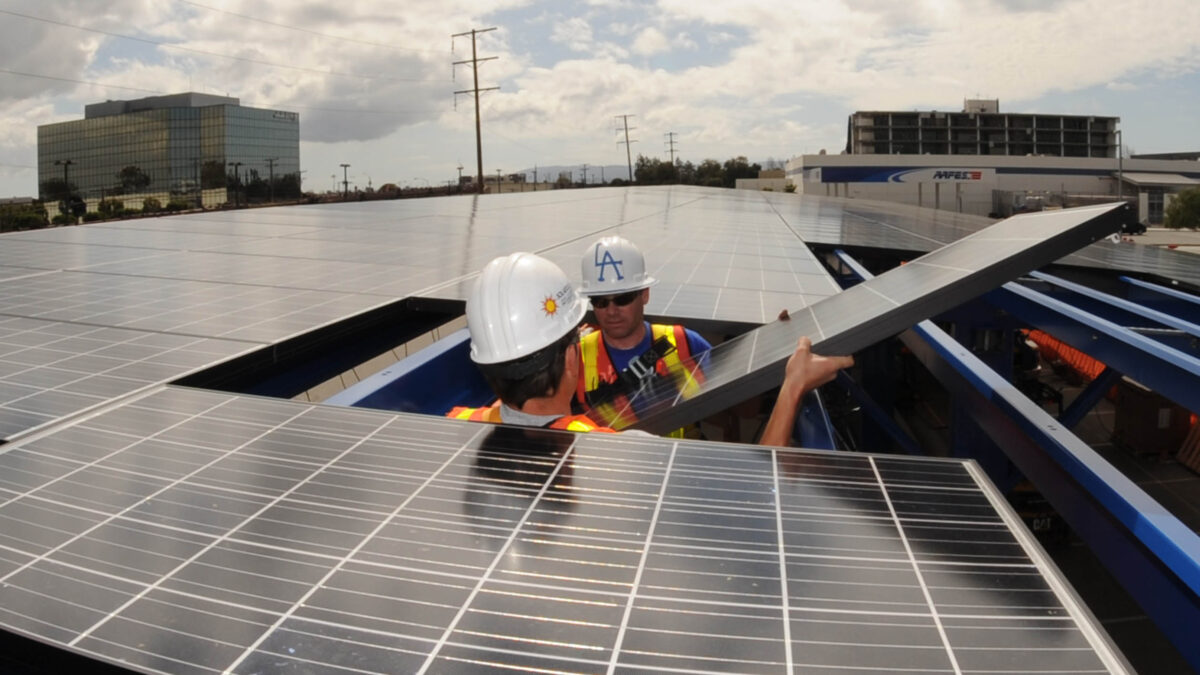
solar panels generate energy in California
The electrical pricing scheme may work as income redistribution social policy, but it fails the test of reducing energy consumption.

Author Chuck DeVore profile

CHUCK DEVORE

VISIT ON TWITTER@CHUCKDEVORE

MORE ARTICLES

What’s behind California’s shift to paying for electricity based on income? In a few words, it’s the consequence of California’s futile fight against climate change.

California’s quixotic pursuit to save the planet by reducing greenhouse emissions has had three broad and irrefutable consequences. It has made energy more expensive; costlier energy has accelerated the deindustrialization of the state; and, the best irony of all, the offshored manufacturing has increased greenhouse gas emissions by pushing production to dirty, coal-fired China, with goods then shipped back to California for consumption.

The latest twist in California’s arrogant tale of energy virtue signaling is playing out with a major restructuring in how Californians are charged for their electricity. For decades, consumers paid for electricity — as well as other utilities such as water and natural gas — with a tiered system that charged more for resources used above a baseline amount. For electricity, the baseline was determined by three things: the consumer’s use of electricity, the region, and the season.

This system meant consumers who used a lot of electricity would pay far more for each kilowatt hour of that additional electricity than they would for their baseline allocation.

This tended to hit lower-income consumers who ran their air conditioning too much, though the Golden State also has a separate program to reduce costs for low-income residents known as California Alternate Rates for Energy (CARE).

But with California’s electric prices pushing from where they’ve traditionally been — about sixth-highest among the contiguous 48 states, behind New York and New England — to the second-highest in the nation after Hawaii last year, costs on the working poor were rising too much. To paraphrase a colorful politician, “The electric bill is too damn high.”

Thus, the California legislature last year passed Assembly Bill 205, which mandated an end to the tiered system of electric rates and instituted in its place a system where each would pay according to his ability to help those in need. (Of course, it sounds better in the original German, “Jeder nach seinen Fähigkeiten, jedem nach seinen Bedürfnissen.”) The bill goes into effect no later than July 1, 2024, with the stated aim that “low-income ratepayers in each baseline territory would realize a lower average monthly bill without making any changes in usage.”

One unintended consequence of ditching the old baseline allocation scheme is all ratepayers, regardless of income, will now have far less incentive to conserve electricity, since each additional unit of electricity used will be priced the same, with overall prices reduced.

Higher Income Will Pay More

In preparation for the rollout of the new electric charges, California’s big, regulated utilities have proposed their new rate plans to the California Public Utilities Commission (CPUC). Depending on the provider, ratepayers would pay a fixed fee based on three household income tiers, plus charges for electricity use. Household income would be validated by a third party, likely the agency that collects the state income tax, the California Franchise Tax BoardThe three proposed household income tiers and their fixed rates are: $28,000 to $69,000 — $20 to $34 a month, depending on the provider; $69,000 to $180,000 — $51 to $73 a month; and more than $180,000 — $85 to $128 a month.

Median household income in California in the years 2017-2021 was $84,097, meaning that an average California family could, under the proposed rate structure, pay a flat fee of $876 per year for their electricity while charges for kilowatt hours used would decline by 33-42 percent depending on the provider. The net effect would be an increase of about $90 a year for the average household and up to $750 more annually for higher-income households. Ironically, households living in homes with rooftop solar would see some of the highest increases in electrical costs under the new rate structure. Lower-income households are expected to see savings of up to $300 per year.

Increasing Fees Rather Than Taxes

One big advantage to California policymakers of heavily regulating public utilities is the ability to use these energy and water corporations as de facto arms of the welfare state.

California’s Constitution requires a two-thirds majority to increase taxes, but a simple majority to increase fees. The CPUC’s total control over California’s utilities means state lawmakers can direct the CPUC to change its rate structures to take more from those earning more and give to those earning less — all without a penny flowing into or out of the state treasury — something that’s particularly attractive today in a state that went from an almost $100 billion surplus last year to an expected $30 billion deficit this year.

And in that, the CPUC commissioners, appointed by Gov. Gavin Newsom, are willing accomplices in the class struggle for fair electricity bills and energy justice. Of the five commissioners, four are attorneys, with backgrounds in “environmental justice,” air quality, low-income assistance, and climate change — electricity generation, not so much. Though the CPUC’s mission is to ensure “that consumers have safe, reliable utility service at reasonable rates, protecting against fraud, and promoting the health of California’s economy,” it’s clear now that all that really matters is figuring out how to shield low-income voters from the costly consequences of California’s green energy crusade.

Moreover, while the electrical pricing scheme may work as income redistribution social policy, it fails the test of reducing energy consumption — laying bare the fact that California policymakers care more about control than they do the climate.

Chuck DeVore is chief national initiatives officer at the Texas Public Policy Foundation, vice chairman of the Golden State Policy Council, a former California legislator, and a retired U.S. Army lieutenant colonel. He’s the author of “The Crisis of the House Never United—A Novel of Early America.”

Biden’s Budget Breakdown: How the Big Government Binge Overtaxes, Overspends, And Overborrows


BY: CHRISTOPHER JACOBS | MARCH 10, 2023

Read more at https://thefederalist.com/2023/03/10/the-censorship-complex-isnt-a-tinfoil-hat-conspiracy-and-the-twitter-files-just-dropped-more-proof/

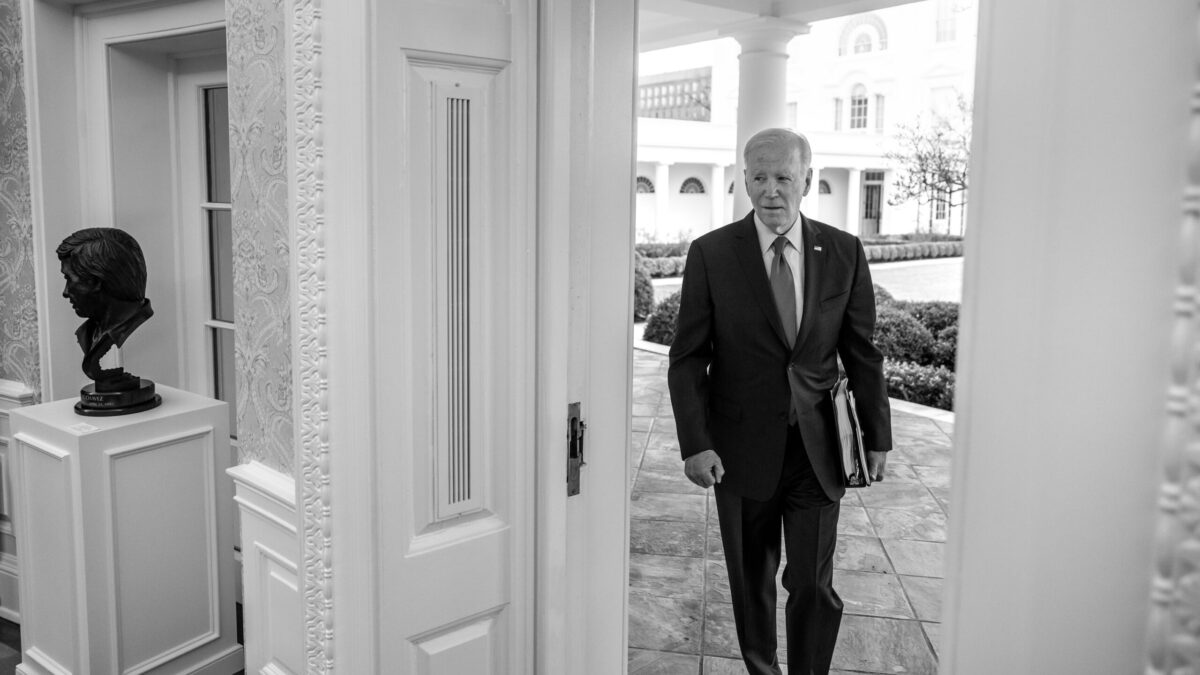
Biden walking into oval office
A review of the budget’s main summary tables illustrates a tax, spend, and borrow vision designed to expand government further.

Author Christopher Jacobs profile

CHRISTOPHER JACOBS

VISIT ON TWITTER@CHRISJACOBSHC

MORE ARTICLES

President Biden finally released his budget on Thursday, more than a month after the Budget Act’s statutory deadline. The document should have come with a five-word warning attached: “Hold on to your wallet.”

The budget includes thousands of pages of arcana and technical details, all of which will come to light further in the coming days. But a preliminary review of the budget’s main summary tables illustrates a familiar pattern among Democrats — a tax, spend, and borrow vision designed to expand government further. Here are some of the “highlights” (more like lowlights) from the summary document.

Taxes Too Much

Overall, the administration says the budget proposes $4.7 trillion in tax increases — a staggering sum in any season, but particularly when the economy faces recession risks. Among the highest profile revenue hikes:

  • $437 billion from “a minimum income tax on the wealthiest taxpayers”
  • $493 billion from changes to the “global minimum tax regime”
  • $238 billion from increasing the tax on stock buybacks
  • $306 billion from applying Medicare taxes to pass-through income — a “loophole” that President Biden himself spent the past six years exploiting
  • $344 billion from increasing the rate of said Medicare tax from 3.8 percent to 5 percent for those earning over $400,000
  • $1.3 trillion from increasing the corporate tax rate from 21 percent to 28 percent
  • $200 billion from other “reforms” to business taxation
  • $549 billion from adopting the undertaxed profits rule regarding international taxes
  • $66 billion from “reform[ing] taxation of foreign fossil fuel income”
  • $37 billion from “modify[ing] energy taxes”
  • $235 billion from increasing the top marginal rate for high-income earners
  • $214 billion from higher taxes on capital gains
  • $23 billion from higher taxes on the retirement plans of “high-income taxpayers”
  • $77 billion from changes to estate and gift taxes
  • $50 billion from “clos[ing] loopholes”
  • $105 billion in revenue assumed by extending the IRS enforcement money included in last year’s Inflation (Reduction) Act. The proposal to extend and expand the IRS’ ability to audit and potentially harass taxpayers comes shortly after an analyst at the Tax Policy Center admitted that the Service let President Biden off the hook for failing to pay his own taxes.

Whatever anyone thinks about the merits of these individual proposals, they cumulatively would have a significant — and negative — impact on the economy. Taxing energy producers in particular would lead to less exploration and higher prices at the pump, at a time when American families are still suffering from high inflation.

These tax increases come with the added irony that Biden himself did not “pay his fair share” of Medicare taxes, according to numerous tax experts. On a budget preview call with reporters Thursday, Office of Management and Budget Director Shalanda Young refused to recognize Biden’s hypocrisy — but the American people will.

Spends Too Much

Where will all the budget’s new tax revenue go? In many cases, to more spending and an expansion of the welfare state. Among the proposals included are several from Biden’s failed Build Back Bankrupt agenda:

  • $424 billion for child care
  • $200 billion for “free, universal preschool”
  • $236 billion for a permanent extension of Obamacare insurance subsidies to the wealthy
  • $200 billion for a government-run health program in the states that have not expanded Medicaid to the able-bodied under Obamacare
  • $96 billion to double the Pell Grant
  • $90 billion for “free community college”
  • $104 billion for housing subsidies
  • $150 billion for home and community-based services in Medicaid
  • $325 billion for “national, comprehensive paid family and medical leave”
  • $429 billion for an expanded child tax credit. However, according to Treasury’s revenue explanations, the higher credit would apply for 2024 and 2025 only. In December 2021, the Congressional Budget Office estimated the 10-year cost of a permanent extension of this policy at $1.6 trillion, or almost four times the amount included in the budget.
  • $156 billion for an expanded Earned Income Tax Credit
  • $76 billion for behavioral health care
  • $1 billion to “make permanent the income exclusion for forgiven student debt.” While this number seems like a comparatively small amount, in reality it would pave the way for a future administration to pass another massive giveaway in student “loan forgiveness,” without triggering federal income taxes on the amount of debt canceled.

Over and above the details of the specific proposals, the budget ignores the inescapable fact that subsidizing programs increases rather than decreases their costs. The proposals will encourage colleges, child care providers, insurance companies, and others to jack up their rates, knowing that the federal government will pay the difference. To put it another way, the budget’s spending will raise inflation, even as its tax increases will kill economic growth.

Borrows Too Much

Even with all the tax increases Biden has proposed, it still won’t begin to make up for the new spending he plans, and the cost of servicing the debt from Washington’s Covid spending binge the past several years. The budget also proves how the debt has worsened under this president:

  • Table S-2 of the budget states that, if enacted in full, the budget would reduce 10-year deficits by $2.857 trillion. But last month, the Congressional Budget Office released its analysis of the 10-year budget, which showed that since last May, the projected 10-year deficit has increased by $3.082 trillion. In other words, even if all the Biden “deficit reduction” gets enacted, our nation will still be $200 billion worse off fiscally than it was just 10 short months ago.
  • The budget as proposed would lead to deficits of at least $1.5 trillion in every year of the 10-year budget window. By the last year of the budget window, they would total $2 trillion — and rising.
  • By the time President Biden intends to leave office in 2029 (assuming he gets reelected), interest on the debt will total over $1 trillion per year. By that point, we will be devoting more than 10 percent of the federal budget just to pay the interest on our debt.
  • Deficits will remain near or above 5 percent of GDP for the foreseeable future — much faster than our economy can grow, meaning that debt will continue to rise and rise as far as the eye can see.

To say this budget ignores reality is putting it mildly. Here’s hoping lawmakers can finally restore some sanity to a perpetual Washington spending spree that has grown completely out of control.


Chris Jacobs is founder and CEO of Juniper Research Group, and author of the book “The Case Against Single Payer.” He is on Twitter: @chrisjacobsHC.

US No Longer in Top 10 of Most Economically Free Countries


The following article is more evidence of the importance of the 2014 elections. So, why is the media, even FOX, so focused on the 2016 elections?

Jerry Broussard (MrB)

<><><><><><><><><><><><>


WWW.LASTRESISTANCE.COM

http://lastresistance.com/4381/us-longer-top-10-economically-free-countries/#Hs0W1ORs3RdeuQuC.99

Posted By on Jan 14, 2014

ball and chain

The Wall Street Journal and the Heritage Foundation released their 2014 Index of Economic Freedom, and, unsurprising to most of us, the United States has dropped out of the top ten most economically free countries. This is due in part to our escalating economic regulations and out-of-control debt, but it also has to do with growing freedoms in other parts of the world. The Wall Street Journal reports:

The most improved players are in Eastern Europe, including Estonia, Lithuania and the Czech Republic. These countries have gained the most economic freedom over the past two decades. And it’s no surprise: Those who have lived under communism have no trouble recognizing the benefits of a free-market system. But countries that have experimented with milder forms of socialism, such as Sweden, Denmark and Canada, also have made impressive moves toward greater economic freedom, with gains near 10 points or higher on the index scale. Sweden, for instance, is now ranked 20th out of 178 countries, up from 34th out of 140 countries in 1996.


The U.S. and the U.K., historically champions of free enterprise, have suffered the most pronounced declines. Both countries now fall in the “mostly free” category. Some of the worst performers are in Latin America, particularly Venezuela, Argentina, Ecuador and Bolivia. All are governed by crony-populist regimes pushing policies that have made property rights less secure, spending unsustainable and inflation ever more threatening.

I think it’s important for us to realize that the United States is being plunged into an economic quagmire that European and Eastern nations have already suffered through and are exiting. While we extol the virtues of government regulations, universal blah blah blah, and socialist utopias, former socialist states are abandoning these same ideologies in favor of the laissez-faire economic policies that traditionally characterized the US. And why are formerly socialist countries abandoning socialist policies? Because they just don’t work. I don’t know how long it will take for us to figure that out. How many other countries need to destroy themselves pursuing socialism before everyone just agrees that big government top-down economic controls paralyze economies and dissipate economic potential? Seriously. This is frustrating.

Tag Cloud