It’s been a banner week for authoritarians in Europe, and it’s only Wednesday.
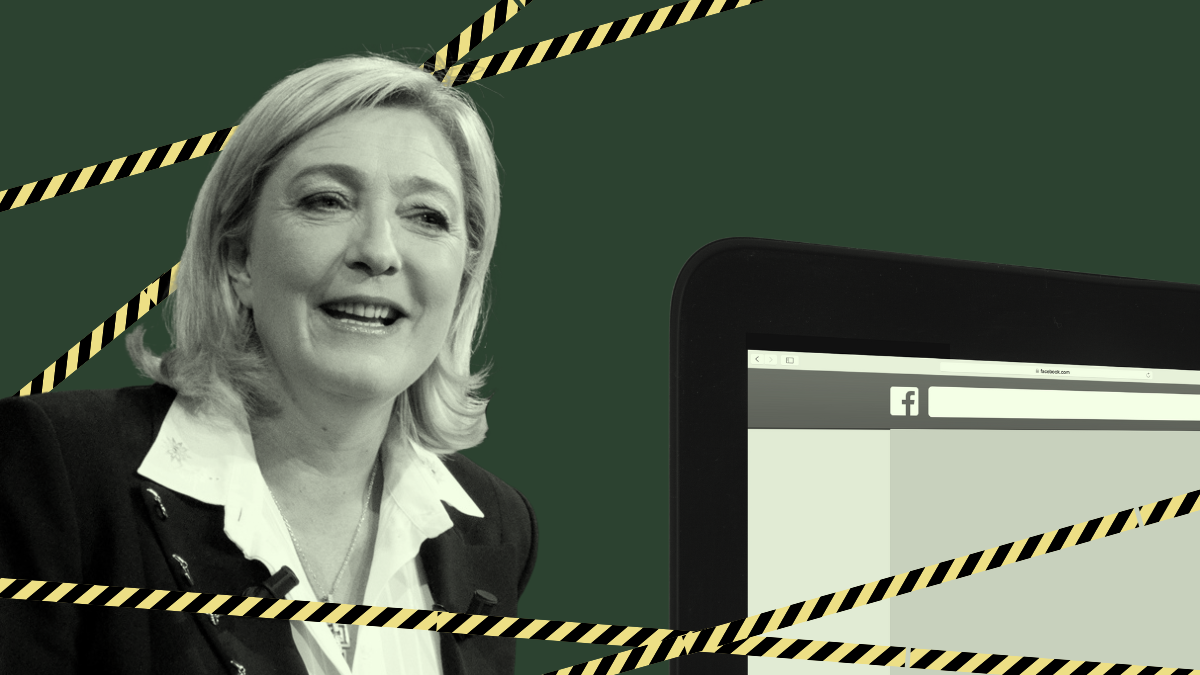
On Monday, a French court banned Marine Le Pen, the leader of the right-wing National Rally party and the frontrunner in the 2027 presidential election, from seeking public office for the next five years. The same day, The Telegraph reported that a toddler had been booted from a U.K. preschool for being insufficiently supportive of LGBT politics. Over the weekend, a British couple revealed they had been arrested based on complaints they expressed in a WhatsApp chat about their daughter’s public school.
This is exactly the kind of crackdown on free expression that Vice President J.D. Vance chastised complicit European leaders about in February, in an address at the Munich Security Conference. This week’s insanity further proves Vance’s dire warnings were right.
Vance called out the U.K., Germany, Sweden, and the European Union for censoring and criminalizing the free expression of their citizens, citing police raids against Germans for comments posted online and the prosecution of a British man who dared to pray in silence outside of an abortion facility.
“[A]cross Europe, free speech, I fear, is in retreat,” he said. That may have been an understatement.
France isn’t the first country to bar political opposition candidates from its elections. In December, Romania’s highest court suspended its presidential election, blaming Russian interference. (Where have we heard that one before?) Calin Georgescu, who cast himself as a Trumpy “Romania first” candidate, took the lead in the country’s first round of voting before the court canceled the election and then barred Georgescu from running again.
Meanwhile, leftists in the German parliament have been threatening a ban on Germany’s prominent right-wing party, Alternative für Deutschland (AfD). In January, lawmakers considered asking the country’s highest court to “examine whether the AfD is an anti-constitutional party,” which Politico characterized as the “first step toward legally banning it under German law.” Leftist lawmaker Carmen Wegge, one of the partisans behind the effort, claimed AfD posed “dangers to democracy” as she tried to ban the party from the democratic process.
Now, France is the latest in what Vance described as a disturbing trend of “European courts canceling elections and senior officials threatening to cancel others.”
In addition to her five-year ban on seeking office, Le Pen, who held a double-digit lead over the next closest candidate in France’s presidential election, was also slapped with a fine and a prison sentence for which she’ll likely be subject to two years of house arrest. Like U.S. President Donald Trump, Le Pen was accused of complex financial crimes that were alleged to have taken place years ago, with her opponents eagerly invoking the “rule of law” to defend their prosecution of political opponents. The similarities weren’t lost on Trump himself.
After the verdict was disclosed, Le Pen told reporters, “I am eliminated, but in reality, it’s millions of French people whose voices have been eliminated.”
She’s right, the voices of European citizens are being silenced — and not just by courts disenfranchising them by booting their preferred candidates from elections. From parents to preschoolers, Europeans are no longer free to express their views without fear of retribution from the government.
Since Britain’s “Online Safety Act” went into effect in October 2023, authorities have charged 292 people and convicted 67 under the anti-speech law. Among other things, the law criminalizes“false information intended to cause non-trivial harm” and targets “mis- and disinformation.” Months before the law went into effect, a mother posted footage of police arresting her autistic daughter for commenting that a female police officer looked like her lesbian grandmother. A spokesman for the West Yorkshire Police confirmed to the BBC that “a 16-year-old had been arrested on suspicion of a homophobic public order offence.”
On Sunday, the U.S. State Department’s Democracy, Human Rights, and Labor Bureau issued a statement expressing concern “about freedom of expression in the United Kingdom.” The State Department drew attention to the case of Livia Tossici-Bolt, a 62-year-old woman who stood trial last month for holding a sign near an abortion facility with the words “here to talk, if you want.”
As U.K. Prime Minister Keir Starmer tries — so far, unsuccessfully — to escape imminent tariffs from the Trump administration, Britain’s authoritarian speech codes undermine Starmer’s case for special treatment from the United States. According to The Telegraph, someone “familiar with trade negotiations” said the U.K. deserves “no free trade without free speech.”
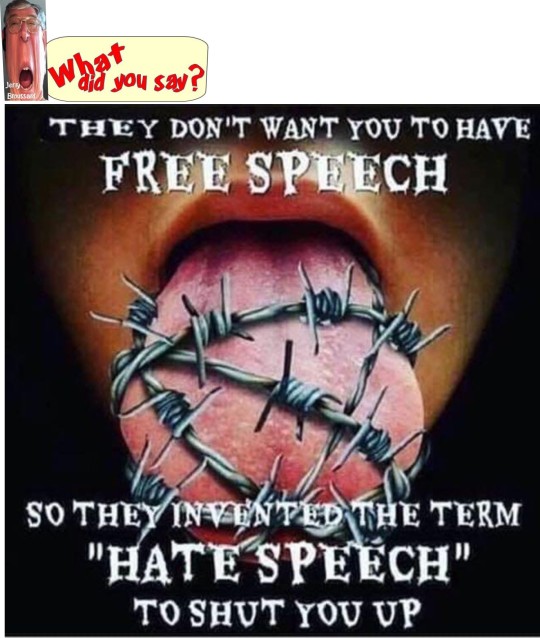
Things are no better in Germany, where 16 separate “online hate task forces” are tasked with tracking down online commenters who are accused of publishing false or “hateful” speech. Just one of those 16 units “works on around 3,500 cases a year,” according to a report from CBS.
German prosecutors readily admitted to CBS that in their country it is a “crime to insult somebody in public” or even to repost false information online. Germans whose speech lands on the wrong side of the statute may have their homes raided by armed police, be slapped with fines or imprisoned, and/or have their phones and laptops confiscated.
The European Union’s Digital Services Act, which took effect last year, ensures speech that authorities deem “hateful” can be punished across the continent. Trump’s Federal Communications Commission Chairman Brendan Carr blasted the law as “incompatible” with the “free speech tradition.”
Jailing citizens for the expression of ideas and barring political candidates from elections are two sides of the same authoritarian coin. Neither is compatible with self-government.
“[S]hutting down media, shutting down elections, or shutting people out of the political process,” as Vance told European leaders in February, “is the most surefire way to destroy democracy.”
He was right. Unfortunately, European leaders appear to have taken his statement as an instruction manual instead of an urgent warning.
Elle Purnell is the elections editor at The Federalist. Her work has been featured by Fox Business, RealClearPolitics, the Tampa Bay Times, and the Independent Women’s Forum. She received her B.A. in government from Patrick Henry College with a minor in journalism. Follow her on Twitter @_ellepurnell.
The crackdown on free speech continues in the United Kingdom as officials use recent rioting to justify a roundup of citizens who they view as “pushing harmful and hateful beliefs.” The government is ramping up arrests of those with “extremist ideologies” in the latest wave of arrests. The crackdown includes those accused of misogynist views. In my book, “The Indispensable Right: Free Speech in an Age of Rage,” I discuss how difficult it is to get a free people to give up freedoms. They have to be afraid, very afraid. For that reason, governments tend to attack free speech during periods of public anger or fear. That pattern is playing out, yet again, in the United Kingdom. The recent anti-immigration riots have given officials a renewed opportunity to use anti-free speech laws to target those with opposing views. For years, I have been writing about the decline of free speech in the United Kingdom and the steady stream of arrests. A man was convicted for sending a tweet while drunk referring to dead soldiers. Another was arrested for an anti-police t-shirt. Another was arrested for calling the Irish boyfriend of his ex-girlfriend a “leprechaun.” Yet another was arrested for singing “Kung Fu Fighting.” A teenager was arrested for protesting outside of a Scientology center with a sign calling the religion a “cult.” Last year, Nicholas Brock, 52, was convicted of a thought crime in Maidenhead, Berkshire. The neo-Nazi was given a four-year sentence for what the court called his “toxic ideology” based on the contents of the home he shared with his mother in Maidenhead, Berkshire.
While most of us find Brock’s views repellent and hateful, they were confined to his head and his room. Yet, Judge Peter Lodder QC dismissed free speech or free thought concerns with a truly Orwellian statement: “I do not sentence you for your political views, but the extremity of those views informs the assessment of dangerousness.”
Lodder lambasted Brock for holding Nazi and other hateful values:
“[i]t is clear that you are a right-wing extremist, your enthusiasm for this repulsive and toxic ideology is demonstrated by the graphic and racist iconography which you have studied and appeared to share with others…”
Even though Lodder agreed that the defendant was older, had limited mobility, and “there was no evidence of disseminating to others,” he still sent him to prison for holding extremist views.
After the sentencing Detective Chief Superintendent Kath Barnes, Head of Counter Terrorism Policing South East (CTPSE), warned others that he was going to prison because he “showed a clear right-wing ideology with the evidence seized from his possessions during the investigation….We are committed to tackling all forms of toxic ideology which has the potential to threaten public safety and security.”
“Toxic ideology” also appears to be the target of Ireland’s proposed Criminal Justice (Incitement to Violence or Hatred and Hate Offences) law. It covers the possession of material deemed hateful. The law is a free speech nightmare. The law makes it a crime to possess “harmful material” as well as “condoning, denying or grossly trivializing genocide, war crimes, crimes against humanity and crimes against peace.” The law expressly states the intent to combat “forms and expressions of racism and xenophobia by means of criminal law.”
The Brock case proved, as feared, a harbinger of what was to come. The home secretary, Yvette Cooper, has vowed to crack down on people “pushing harmful and hateful beliefs.” That includes what she calls extreme misogyny.
Cooper said that the problem revealed by the recent protests was “gaps in the current system” and stressed that “it’s not OK any more to ignore the massive growing threat caused by online hatred towards women and for us to ignore it because we’re worried about the line, rather than making sure the line is in the right place as we would do with any other extremist ideology.”
She added: “For too long governments have failed to address the rise in extremism, both online and on our streets, and we’ve seen the number of young people radicalized online grow. Hateful incitement of all kinds fractures and frays the very fabric of our communities and our democracy.”
For free speech advocates, it is chilling to hear UK officials state that they have been too lax on free speech in the past and must now take censorship and arrests more aggressively. The United Kingdom has a myriad of laws criminalizing speech with vague terms allowing for arbitrary enforcement. For example, Public Order Act 1986 prohibits any expressions of racial hatred, defined as hatred against a group of persons by reason of the group’s color, race, nationality (including citizenship) or ethnic or national origins.
Section 18 of the Act specifically includes any speech that is “threatening, abusive, or insulting.” An arrest does not have to be based on a showing of intent to “stir up racial hatred,” but can merely be based on a charge that “having regard to all the circumstances racial hatred is likely to be stirred up thereby.”
For those Americans who have remained silent during as this anti-free speech movement grows, you need only to look to the United Kingdom to see what this movement means for our “indispensable right.” That wave has now reached our shores, and it will require each one of us to defend a right that defines us all.
Three years ago, we discussed the conviction of a British man for “toxic ideologies,” under the draconian laws criminalizing inciteful or dangerous speech. The erosion of free speech appears to have only accelerated in the UK. As is often the case, the attacks on free speech increase during periods of unrest, anger or fear. With the recent anti-immigration riots, British authorities have used their laws to round up a large number of citizens expressing anti-immigrant views and some have already been convicted. Those cases include Wayne O’Rourke, 35, who has been sentenced to three years in prison for “stirring up racial hatred.”
As I have previously written, the riots were triggered by false reports spread online about the person responsible for an attack at a Taylor Swift-themed dance event that left three girls dead and others wounded. Despite false claims about his being an asylum seeker, the alleged culprit was an 18-year-old British citizen born to Rwandan parents. The government and news outlets were quick to challenge these accounts, but violent riots have raged across the country, including such despicable acts as burning immigrant housing. There is no question that the government should crack down on such violence and arrest those engaging in criminal conduct. However, the government immediately pursued those who were expressing hateful or inciteful views.
In my book, “The Indispensable Right: Free Speech in an Age of Rage,” I discuss the collapse of free speech protections in Europe and the United Kingdom specifically. That discussion includes the case of Nicholas Brock, 52, who was convicted for his collection of racist and extreme right material in his home. Detective Chief Superintendent Kath Barnes, Head of Counter Terrorism Policing South East (CTPSE) acknowledged that others might collect such items for historical or academic purposes but Brock crossed the line because he agreed with the underlying views:
“From the overwhelming evidence shown to the jury, it is clear Brock had material which demonstrates he went far beyond the legitimate actions of a military collector…Brock showed a clear right-wing ideology with the evidence seized from his possessions during the investigation….We are committed to tackling all forms of toxic ideology which has the potential to threaten public safety and security.”
That “commitment” is evident in a slew of arrests after the recent riots.
The United Kingdom is an example of what I describe as a pattern of “rage rhetoric” becoming “state rage” in these periods of unrest.
Once again, many of these postings are worthy of condemnation as racist and inflammatory. Many of us have done so. Defending free speech is not a defense of the underlying viewpoints but rather the right to express opposing viewpoints. Good speech can then rebut the bad speech.
The United Kingdom is now committed to silencing opposing views through censorship and criminal charges. As discussed in the book, such laws have never succeeded in history. Not once. They have never killed “toxic ideologies” or deterred any movement. What they do is suppress the free speech of everyone in an ill-conceived effort to legislatively ban hate in society.
An example is found in Germany, which has long had some of the harshest censorship and criminalization laws. According to polling, only 18 percent of Germans feel free to express their opinions in public. Fifty-nine percent of Germans do not even feel free expressing themselves in private among friends. Only 17 percent feel free to express themselves on the internet. They have silenced the wrong people, but there is now a massive censorship bureaucracy in Europe and the desire to silence opposing voices has become insatiable.
Recently, I wrote about the chilling message of Metropolitan Police Commissioner Sir Mark Rowley that not only will British authorities arrest citizens for anti-immigration postings but may pursue others in countries like the United States for stirring up trouble. Now, they are imprisoning “keyboard warriors,” who express inciteful thoughts.
According to the local Lincolnshire Free Press, O’Rourke encouraged his 90,000 followers to join the protests and told them how to remain anonymous during protests. That is similar to many posts on the left by groups like Antifa. O’Rourke wrote such postings as “People of Southport where the f**k are you, get out on the street,” “give them hell lads,” and “Sunderland, go on lads.”
Notably, his counsel Lucia Harrington assured the court that her client wants to “re-educate” himself on these issues. His self-imposed “reeducation” was not enough for Judge Catarina Sjolin Knight, who denounced O’Rourke and “[t]he flames fanned by keyboard warriors like you.”
Lincolnshire Chief Superintendent Kate Anderson promised more such cases for those espousing disfavored views: “This charge demonstrates that we will take fast and decisive action against anyone suspected of sharing harmful content online. We retain a commitment to proactively police and keep people safe across the county.”
Many others have been similarly charged. That includes first offender William Nelson Morgan, 69, who was seen holding a stick and refusing to disperse at a protest at a library in West Yorkshire. He was sentenced to two years and eight months in prison even though he did not take part in rioting. While there can be legitimate charges and penalties for a failure to disperse, the roughly three-year sentence seems fueled on the content of his viewpoints rather than his specific actions.
Likewise, Billy Thompson, 31, received 12 weeks in jail for posting emojis depicting minorities and a gun with inflammatory language. He did not participate in the rioting. There are many more such cases being reported daily.
As in Germany, years of prosecuting free speech has achieved nothing beyond chilling the speech of all citizens. For years, I have been writing about the decline of free speech in the United Kingdom and the steady stream of arrests.
There is an alternative to criminalizing speech. You can punish criminal conduct including proportionate sentencing for the failure to disperse. You can then allow free speech to combat false or hateful viewpoints. British politicians have acknowledged that a large number of citizens hold anti-immigration views. Cracking down on such viewpoints will change few minds and likely only reaffirm the anger directed against the government. Opposition to these laws has fallen to a dwindling number of free speech advocates in the UK, including author J.K. Rowling. Rowling has opposed a Scottish law, the Hate Crime and Public Order (Scotland) Act 2021, that criminalizes speech viewed as “stirring up hatred” relating to age, disability, religion, sexual orientation, transgender identity or being intersex. That crime covers insulting comments and anything “that a reasonable person would consider to be threatening or abusive.”
For those in the United States who have remained silent in the face of our own anti-free speech movement, Europe offers a glimpse into our future if we do not fight to preserve this indispensable right.
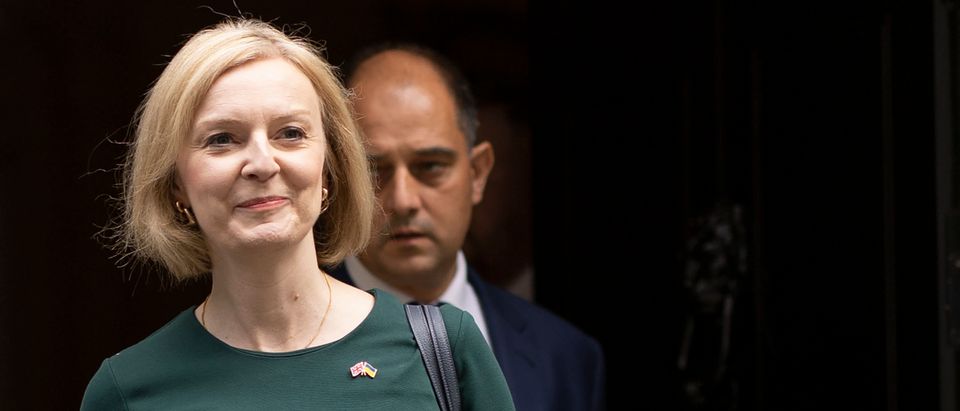
British Prime Minister Liz Truss said Thursday that she is lifting the ban on fracking to help her country reduce exorbitant energy prices.
Truss, who was appointed as the new Conservative Prime Minister on Tuesday, announced in the House of Commons that she will enable oil and gas developers to seek permission from the government to increase domestic fuel supplies as the U.K. looks to combat its energy crisis. Truss said she hopes to get fracking operations started within the next six months and is also approving 100 new exploration licenses for oil and gas drilling in the North Sea. (RELATED: British Pound Hits Lowest Level Against US Dollar In 37 Years)
“We will make sure that the U.K. is a net energy exporter by 2040,” Truss told parliament. “We are supporting this country through this winter and next, and tackling the root causes of high prices so we are never in the same position again.”
Fracking, a process that harvests oil and gas from buried shale rock, was banned in England in 2019 by the Conservative Party due to concerns about the safety of the practice, according to the 2019 Conservative Party Manifesto.
PRESTON, ENGLAND – SEPTEMBER 16: An aerial view of the Cuadrilla shale gas extraction (fracking) site at Preston New Road, near Blackpool on September 16, 2019 in Preston, England. (Photo by Christopher Furlong/Getty Images)
Truss also placed a £2,500 ($2,888) cap on skyrocketing household electricity bills for two years as part of an economic package that could cost the U.K. about £150 billion ($172 billion). Soaring utility costs have caused thousands of Britons to protest price hikes and refuse to pay their bills until they are reduced by the government, according to the protest group Don’t Pay U.K.
“We are facing a global energy crisis, and there are no cost-free options,” she stated.
Sanctions on Russian fuel supplies as well as the cut-off of natural gas via the Nord Stream 1 pipeline are causing British and European electricity prices to spike as countries look to ration fuel supplies ahead of winter. Additionally, the U.K. aims to reach net-zero emissions targets by 2050 by implementing a carbon emissions trading scheme that lowers the competitiveness of fossil fuels and accelerates investments in green energy, according to the U.K. government.
The British Department for Business, Energy and Industrial Strategy did not immediately respond to the Daily Caller News Foundation’s request for comment.
American Family Association
American Family Association (AFA), a non-profit 501(c)(3) organization, was founded in 1977 by Donald E. Wildmon, who was the pastor of First United Methodist Church in Southaven, Mississippi, at the time. Since 1977, AFA has been on the frontlines of Ame
NEWSMAX
News, Opinion, Interviews, Research and discussion
Opinion
American Family Association
American Family Association (AFA), a non-profit 501(c)(3) organization, was founded in 1977 by Donald E. Wildmon, who was the pastor of First United Methodist Church in Southaven, Mississippi, at the time. Since 1977, AFA has been on the frontlines of Ame
American Family Association
American Family Association (AFA), a non-profit 501(c)(3) organization, was founded in 1977 by Donald E. Wildmon, who was the pastor of First United Methodist Church in Southaven, Mississippi, at the time. Since 1977, AFA has been on the frontlines of Ame
You Version
Bible Translations, Devotional Tools and Plans, BLOG, free mobile application; notes and more
Political
American Family Association
American Family Association (AFA), a non-profit 501(c)(3) organization, was founded in 1977 by Donald E. Wildmon, who was the pastor of First United Methodist Church in Southaven, Mississippi, at the time. Since 1977, AFA has been on the frontlines of Ame
NEWSMAX
News, Opinion, Interviews, Research and discussion
Spiritual
American Family Association
American Family Association (AFA), a non-profit 501(c)(3) organization, was founded in 1977 by Donald E. Wildmon, who was the pastor of First United Methodist Church in Southaven, Mississippi, at the time. Since 1977, AFA has been on the frontlines of Ame
Bible Gateway
The Bible Gateway is a tool for reading and researching scripture online — all in the language or translation of your choice! It provides advanced searching capabilities, which allow readers to find and compare particular passages in scripture based on





 What Did You Say?
You must be logged in to post a comment.