Perspectives; Thoughts; Comments; Opinions; Discussions

Posts tagged ‘ALEXIS DE TOCQUEVILLE’

Leftists Want Direct Democracy Because It’s Easy to Manipulate the Masses


BY: CASEY CHALK | JANUARY 03, 2024

Read more at https://thefederalist.com/2024/01/03/leftists-want-direct-democracy-because-its-easy-to-manipulate-the-masses/

US Capitol Building

Author Casey Chalk profile

CASEY CHALK

MORE ARTICLES

“American democracy is cracking,” warns Washington Post Chief Correspondent Dan Balz in a recent column that presents some ideas to repair it. His suggestions include, among other things, proportional representation, diminishing the power of the Senate, and eliminating the Electoral College. What these three suggestions have in common is a desire to remove any intermediary institutions between the will of the people and government action — otherwise known as “direct” democracy. 

These proposals are not new. Indeed, even the framers of the Constitution were familiar with them. But the reasons why such suggestions would significantly erode the republican government envisioned by our Founding Fathers are not new either. 

Given Biden’s low approval ratings — especially in important swing states with critical Electoral College votes — as well as broader Democrat fears of a Republican takeover of the Senate, we will likely hear a renewed chorus of voices calling for direct democracy. After all, masses of individuals are much easier to manipulate than smaller families, communities, or even states. Conservatives would do well to arm themselves with the best arguments against such initiatives.

Founders Worked to Curb Direct Democracy

The framers of our Constitution felt quite strongly that direct democracy was something to avoid. In Federalist 10, for example, the Father of the Constitution James Madison warned of “the superior force of an interested and overbearing majority” on a government, or what has come to be called the “tyranny of the majority,” in which a majority of the population exerts great coercive power over minority factions.

Again in Federalist 51, Madison wrote: “[I]n the federal republic of the United States … all authority in it will be derived from and dependent on the society, the society itself will be broken into so many parts, interests, and classes of citizens, that the rights of individuals, or of the minority, will be in little danger from interested combinations of the majority.” 

Our second president, John Adams, called a unicameral legislative body — in which each member is accountable to his constituents — a “tyranny of the majority.” Adams, reflecting the opinion of that founding generation, argued for “a mixed government, consisting of three branches.” The framers took various steps to disburse power among the federal government, dividing it into three competing branches: executive, legislative, and judicial. 

But the founders’ dispersion of governing power also goes beyond the three branches. The 10th Amendment reads: “The powers not delegated to the United States by the Constitution, nor prohibited by it to the States, are reserved to the States respectively, or to the people.” In other words, unless the Constitution expressly grants certain powers to the federal government, those powers exist in the states or, even more decentralized, in local communities of Americans. 

Later Generations Understood the Threat

A generation after that founding generation, visiting French aristocrat Alexis de Tocqueville authored an extended survey of American politics and culture, Democracy in America. Tocqueville perceived that the American political system was created to resist the tyranny of the majority, “which bases its claim to rule upon numbers, not upon rightness or excellence.” Thus, Tocqueville writes:

When a man or a party suffers from an injustice in the United States, to whom do you want them to appeal? To public opinion? That is what forms the majority. To the legislative body? It represents the majority and blindly obeys it. To the executive power? It is named by the majority and serves it as a passive instrument. 

In other words, the executive branch, even with its disbursed powers, can be influenced by this tyrannical tendency to reflect the opinions of the majority of the people against minority interests at the state or community level. It was thus only through the states and local bases of power and voluntary associations that this tyrannical tendency could be avoided. 

A century after Tocqueville’s warnings, Supreme Court Justice Louis Brandeis discussed another way to understand our nation’s default desire to resist direct democracy. Brandeis was one of the first to describe the states as “laboratories of democracy.” In his New State Ice Co. v. Liebmann opinion, he explained how “a single courageous State may, if its citizens choose, serve as a laboratory; and try novel social and economic experiments without risk to the rest of the country.”  

State and local autonomy served as a means of testing laws and policies to evaluate their effectiveness before implementing across a diverse nation of states, localities, and subcultures. If something works at the micro level, other localities or states — and even potentially the federal government — can appreciate and adopt it. 

Constant Temptation of Direct Democracy

Yet such a deliberative process of testing is slow and uneven. And we Americans are often eager for speedy solutions. Political theorists, journalists, and ordinary citizens throughout American history have been frustrated by the Constitution’s manifold methods of distributing power to deter the tyranny of the majority. If a majority of the nation’s populace wants something, they posit, why shouldn’t they be able to get it? After all, as the journalist H.L. Mencken wryly commented, “Democracy is the theory that the common people know what they want, and deserve to get it good and hard.” 

Such demands especially increase at times of heightened political gridlock in which the country obviously has a particular problem or set of problems but constitutionally mandated laws and procedures thwart attempts to resolve them. When we are all vexed with our politicians for failing to act in what we believe to be the interests of the nation (and its voters), it’s easy to be sympathetic to that line of thinking. 

Yet we must beware of this temptation, which reflects what conservative political theorist Russell Kirk calls a manifestation of vox populi, vox dei — the voice of the people is the voice of God. In other words, as long as they constitute a majority, whatever the people want becomes the law of the land. 

Direct democracy thus not only represents a threat to freedom, but it is a political order that rejects hierarchies both natural and spiritual. Although these hierarchies are sometimes abused, they serve as a cautionary brake upon the whims of the masses, which — as many revolutions have demonstrated — can be quite violent and destructive. Just look at the French or Russian Revolutions, which ended up terrorizing those they claimed to represent. Millions of dead across the world reveal the problem with direct democracy.

This is the reason for state representation rather than proportional representation in the lower House, a Senate consisting of equal representation by state, the filibuster, the Electoral College, and powers relegated to the states vis-a-vis the 10th Amendment. All of it is an attempt to slow the destructive force of vox populi, vox dei

As that great French observer of American politics Alexis de Tocqueville observed: “If ever freedom is lost in America, that will be due to the … majority driving minorities to desperation…” 

Let’s do everything we can to avoid that scenario.

Casey Chalk is a senior contributor at The Federalist and an editor and columnist at The New Oxford Review. He has a bachelor’s in history and master’s in teaching from the University of Virginia and a master’s in theology from Christendom College. He is the author of The Persecuted: True Stories of Courageous Christians Living Their Faith in Muslim Lands.

Christians Have Done the Most to Promote Liberty and Equality in America


BY: PAUL KRAUSE | MAY 30, 2023

Read more at https://thefederalist.com/2023/05/30/christians-have-done-the-most-to-promote-liberty-and-equality-in-america/

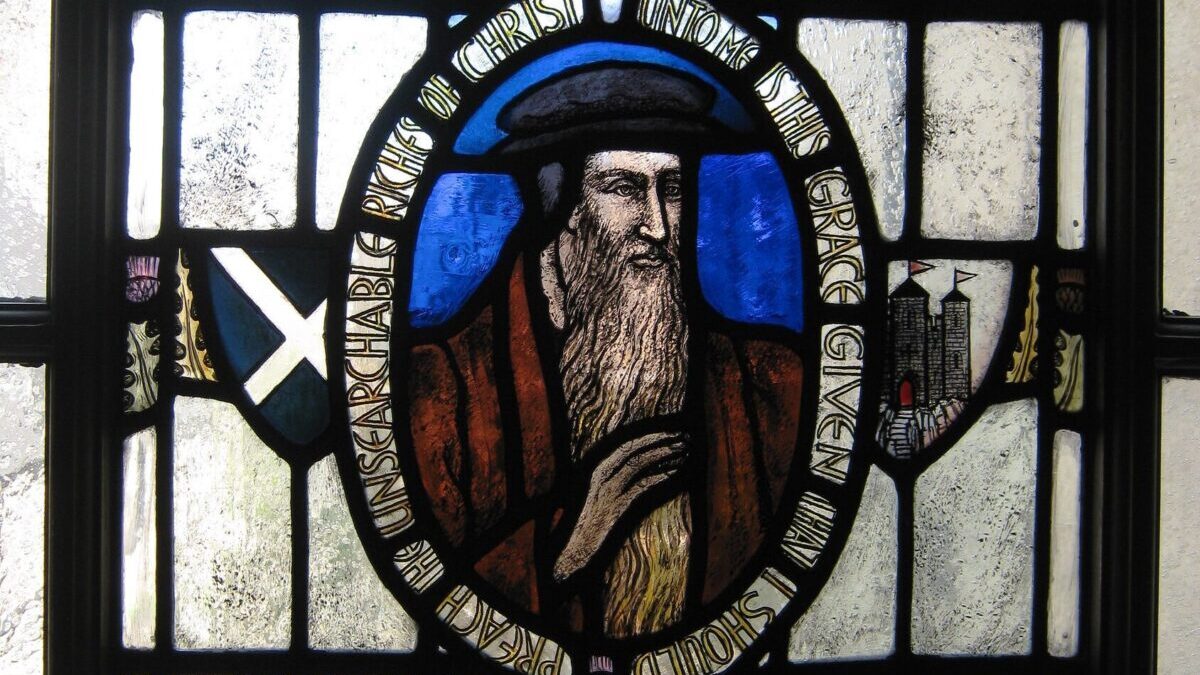
John Knox on stained glass window

Author Paul Krause profile

PAUL KRAUSE

MORE ARTICLES

The most uneducated but wildly popular critique of Christianity in America — especially on social media —  is that Christianity has been a bastion of oppression and intolerance. So much so that the advancements made in liberty and equality over the centuries have come only when America and American leaders have rejected Christianity. In his new book Proclaim Liberty Throughout All the Land, historian Mark David Hall offers a concise corrective to this inaccurate and often ignorant hot-take and popular narrative.

Hatred of Christianity is one of the pillars of the current anti-American ideology that permeates universities and the governing spirit of our ruling elite. Mockery of Christians, especially evangelicals, is also one of the core tenets of progressive culture. This hostility and mockery are unwarranted. Far from being agents of oppression and anti-intellectualism, Hall highlights how Christians have been the bedrock of social activism advancing liberty and equality, as well as promoting education reform, increasing literacy, and publishing newspapers and magazines.

We are all familiar with the asinine proclamations of America as a secular country, that progress, liberty, and equality are atheist ideals, and that committed Christians are the greatest threat to America’s future. Yet, as Hall forcefully rebuts, “it is simply false to claim that liberty and equality have been advanced primarily when America’s leaders embrace progressive manifestations of religion or reject faith altogether.”

Looking at the Puritans, the American Revolution, evangelical social reform prior to the Civil War, and contemporary debates over religious liberty, Hall reveals what used to be well-known: Christianity has been the heart of true social progress and explosive advancements in human liberty, equality, and democratic government.

Puritans and Foundations of Liberty

To celebrate the 200th anniversary of the landing of the Pilgrims, Daniel Webster, one of the most important senators the United States ever had, lauded the Pilgrims and Puritans as champions of the liberty that our “civil and religious liberty” grew from. Today, however, it is common to imagine Puritans as petty tyrants, intolerant theocrats, and bah humbug killjoys.

When I was a student at Yale taking classes on American Puritanism, our professor went to great lengths to de-indoctrinate us of the popular stereotypes of the Puritans. The Puritans were among the most educated people at the time, established our most venerable institutions of higher education, promoted the advancement and discoveries of Enlightenment science, vigorously advocated for public literacy, and enjoyed a good laugh, beer, and sex.

The real history of the Puritans that I learned at Yale is covered again by Hall in his opening chapter deconstructing the lies of secularists and anti-Christian writers and hacktivists portraying the Puritans in a dark and inaccurate light. The Puritans, our author reminds us, “valued natural rights, government by the consent of the governed, and limited government; they were convinced that citizens have a right, and perhaps even a duty, to resist tyrannical government.” When traveling through the lands the Puritans helped to build in the 1830s, Alexis de Tocqueville remarked, “Puritanism was not merely a religious doctrine, but corresponded in many points with the most absolute democratic and republican theories.”

As historians and scholars of Puritanism have long asserted, the democratic ethos of congregationalist church politics helped develop the local customs of self-government in New England that would form the basis for “Democracy in America,” as Tocqueville famously put it. But what about the banishment of certain Baptist dissenters and the Salem witch trials, the critic asks? These events did happen, but they are drastically overblown by contemporary critics.

The banishment of a handful of religious dissenters in Massachusetts was only after these rabble-rousing individuals repeatedly, and deliberately, returned to cause trouble and disturb the peace. Also, Hall reminds us, when compared to Europe, where more than 100,000 men and women were prosecuted as witches and half sentenced to death, only 272 individuals in America were ever charged with witchcraft. The Salem witch trials, which happened in 1692, marked the last execution of a witch in North America. In Europe, witches were still executed as late as 1782.

Completing his overview of the Puritans, Hall writes that the Puritans “created political institutions that were more democratic than any the world had ever seen, and they strictly limited civil leaders by law.”

Rebellion to Tyrants Is Obedience to God

Another one of the popular putdowns of Christianity by its critics (and even some Christians) is that Christianity doesn’t permit rebellion to tyrannical government but supports tyrannical government. In a gross and deeply literalist reading of the Apostle Paul in Romans (somewhat ironic all things considered), these critics assert that because a single passage in the New Testament supposedly teaches obedience to government, which is ordained by God, the American revolutionary patriots rejected Christian teachings and had to utilize secular and Enlightenment arguments to advance the cause of liberty during the American Revolution.

Again, this is patently false, as any decently educated person knows. Kody Cooper and Justin Dyer recently published a superb book, The Classical and Christian Origins of American Politics, addressing this myth in detail. Hall, too, quickly covers the problems of this critique. Highlighting Calvinist theological history (something that these critics have no knowledge of, despite their claims of educated intelligence), covering important names known to students of theology, such as John Ponet, John Knox, George Buchanan, Samuel Rutherford, and even John Cotton (grandfather of Cotton Mather), Hall shows that Christian theological history had come to see rebellion to tyrants as obedience to God and Scripture.

Moreover, most of the popular and patriotic arguments for revolution were not conversant with theorists such as John Locke but with Scripture. The Old Testament, especially, was appealed to by the patriotic clergy in favor of revolution. Christians, far from submitting to tyranny, offered complex theological arguments against tyranny and, therefore, helped formulate a political theology of liberty and equality in the process.

Evangelicals Against Oppression

Perhaps the most common trope that our contemporary anti-Christian elite culture pushes is the tyrannical and ignorant evangelical Christian. This, too, is a stereotype with little basis in history. In fact, many of our best institutions of higher learning were founded by evangelical Christians even if they have since departed from that faith that gave birth to them (Harvard, Yale, and Oberlin, to name a few). The first opponents of slavery and proponents of abolition were the heirs of the Puritans, such as the Rev. Samuel Sewall, who published the first anti-slavery writing in 1700.

Motivated by a vigorous religious faith, the Second Great Awakening was the fire that fueled anti-slavery and abolitionist politics in antebellum America. Men and women of Methodist, Baptist, and congregationalist (Puritan) backgrounds were oftentimes the leading champions of liberty and equality for African-Americans and indigenous Americans. As Hall writes, it was American evangelicals, and especially evangelical women, who most actively “oppos[ed] the evils of slavery and Indian removal.”

During the antebellum years, American evangelicals sought to “work together to help end social evils” and established “thousands of organizations aimed at alleviating suffering and reforming society.” Evangelicals were on the front lines of creating new educational institutions, promoting education reforms to advance public literacy, and establishing newspapers as a means of confronting social evils. Furthermore, Evangelicalism, originally a religious minority grouping, was deeply indebted to religious liberty as the means for its social growth and prominence.

This spirit of religious social reform for liberty led to the contemporary defense of religious liberty as the bedrock on which all liberty and equality before the law stands: “Christian legal organizations have been among the best advocates for religious liberty for all, including citizens who embrace non-Christian faiths,” Hall writes.

Why Christianity Matters to America

In Proclaim Liberty Throughout All the Land, Hall gives us yet another triumphant and important book to correct the polemical, inaccurate, and deeply misleading public presentation of the relationship between Christianity and American politics. Far from the evil bogeyman and religion of oppression that ungrateful critics claim, Christianity has been a positive force for good and the growth of liberty and equality. In fact, America has been best when it has reached into the heart of Christianity for its social reforms and advancement of liberty and equality rather than rejecting Christianity.


Paul Krause is the editor-in-chief of VoegelinView. He is the author of “Finding Arcadia: Wisdom, Truth, and Love in the Classics” (Academica Press, 2023), “The Odyssey of Love: A Christian Guide to the Great Books” (Wipf and Stock, 2021), and contributed to “The College Lecture Today” (Lexington, 2019) and “Making Sense of Diseases and Disasters” (Routledge, 2022).

Tag Cloud