
Perspectives; Thoughts; Comments; Opinions; Discussions

Posts tagged ‘ALEXANDER HAMILTON’

America’s Founders Didn’t Support Open Borders, And Neither Should We


BY: HELEN RALEIGH | MAY 10, 2023

Read more at https://thefederalist.com/2023/05/10/americas-founders-didnt-support-open-borders-and-neither-should-we/


european immigrants at Ellis Island

Author Helen Raleigh profile

HELEN RALEIGH

VISIT ON TWITTER@HRALEIGHSPEAKS

MORE ARTICLES

There is little evidence that the founders advocated for a free-for-all, open-door immigration policy.  

From the very beginning, even in the absence of immigration law, the founders knew America had to set boundaries. Their top three concerns were the qualifications, assimilation, and allegiance of newcomers. The founders emphasized the moral character and contributions newcomers would bring. 

Not only should new migrants have good moral character, but they should also place “high importance to the respectability and character of the American name” and do their best to “preserve its good fame from injury,” as Rep. James Jackson, a Democratic-Republican from Georgia, said in 1790. The founding generation didn’t want convicts and criminals as new immigrants.  

George Washington preferred skilled new immigrants, such as “useful mechanics and some particular descriptions of men or professions.” James Madison wanted the “worthy part of mankind to come and settle amongst us,” so they can “increase the wealth and strength of the community; and those who acquire the rights of citizenship, without adding to the strength or wealth of the community are not the people we are in want of.”  

How can a new immigrant increase the wealth and strength of a community? Rep. John Laurance clarified:  

Every person who comes among us must do one or the other; if he brings money, or other property with him, he evidently increases the general mass of wealth, and if he brings an able body, his labor will be productive of national wealth, and an addition to our domestic strength. Consequently, every person, rich or poor, must add to our wealth and strength, in a greater or less degree. 

Assimilation Strengthens and Protects  

The United States was founded upon specific ideas and moral principles, as expressed by the eloquent words of the Declaration of Independence. Thomas Jefferson believed that “it is for the happiness of those united in society to harmonize as much as possible in matters which they must of necessity transact together.”  

He feared that if new immigrants believed different ideas, then “with their language, they will transmit [them] to their children. In proportion to their numbers, they will share with us the legislation. They will infuse into it their spirit, warp and bias its direction, and render it a heterogeneous, incoherent, distracted mass.”  

Benjamin Franklin shared Jefferson’s concerns. Some people today accuse Benjamin Franklin of being anti-immigration because of the disparaging words he said about German immigrants. In fact, Franklin was anything but opposed to immigration. He published the first German newspaper in America, the Philadelphische Zeitung, in 1732Franklin was not against immigration; he was concerned that a lack of assimilation would be harmful to immigrants’ happiness and damning to the unity and longevity of the republic.  

George Washington expressed a similar concern: that immigration does not benefit America when immigrants congregate and “retain their language, habits and principles (good or bad) which they bring with them.”  

Instead, he firmly believed that new immigrants or their descendants should, “by an intermixture with our people … get assimilated to our customs, measures and laws: in a word, soon become one people.”  

Immigrants Must Pledge Allegiance 

No matter what drives them to America, some immigrants retain residual loyalty to their countries and cultures of birth. To become Americans, the founders believed immigrants needed to give up prior allegiances and pledge an oath of fidelity to the U.S. In Alexander Hamilton’s words:  

The safety of a republic depends essentially on the energy of a common national sentiment; on a uniformity of principles and habits; on the exemption of citizens from foreign bias and prejudice; and on the love of country which will almost invariably be found to be closely connected with birth, education, and family.  

John Quincy Adams, in an 1819 letter to Moritz von Furstenwarther, a German citizen who was considering moving to the U.S. and had asked Adams for a job, stated that the U.S. is a land “not of privileges, but of equal rights.” Thus, Adams warned Furstenwarther that new immigrants like him:

Must cast off the European skin, never to resume it. They must look forward to their posterity, rather than backward to their ancestors; they must be sure that whatever their own feelings may be, those of their children will cling to the prejudices of this country, and will partake of that proud spirit. 

Citizenship Isn’t Cheap

While some founders believed an oath of allegiance and a declaration to stay in America were sufficient for citizenship, others did not want to give out citizenship too cheaply.  

They pointed out that some foreign sailors had voted in Philadelphia’s assembly elections after taking oaths of allegiance and then left America, having never intended to stay. This kind of practice not only results in election fraud but also threatens the “safety of a republic” because a foreigner who rejects American principles and ideas would vote against them. 

Therefore, some founders thought “some security for their [immigrants’] fidelity and allegiance was requisite besides the bare oath.” The additional security the founders sought was property ownership or residency.  

Property ownership has been used to distinguish citizens from aliens since the Roman Empire. Some founders wanted to “see the title of a citizen of America as highly venerated and respected as was that of a citizen of old Rome.”  

During the House of Representatives debate on immigration law in Philadelphia in 1790, the majority of the founders regarded it as essential that an individual have a period of residency in the U.S. prior to gaining citizenship. Residency achieved two purposes, according to Rep. Michael Stone: 

First, that he should have an opportunity of knowing the circumstances of our Government, and in consequence thereof, shall have admitted the truth of the principles we hold. Second, that he shall have acquired a taste for this kind of Government. And in order that both these things may take place, in such a full manner as to make him worthy of admission into our society.

Founders extensively debated how long residency should be. Some suggested two years, while others suggested five years or even longer. But all agreed the residency requirement should be long enough to “give a man an opportunity of esteeming the Government from knowing its intrinsic value,” which “was essentially necessary to assure us of a man’s becoming a good citizen.”  

Hamilton, the most famous immigrant to America, opposed limiting any congressional office to either native-born Americans or immigrants who met the residency requirement. People suspected later that he was trying to make himself eligible for the U.S. presidency.  

Hamilton’s actual argument at the Constitutional Convention showed he was more concerned about ordinary immigrants. He pointed out, “Persons in Europe of moderate fortunes will be fond of coming here, where they will be on a level with the first citizens. I move that the section be so altered as to require merely citizenship and inhabitancy.”

The majority overruled Hamilton’s proposal by requiring future U.S. House Representatives to meet a seven-year residency requirement, U.S. senators a nine-year residency, and presidents a 14-year residency.  

Helen Raleigh, CFA, is an American entrepreneur, writer, and speaker. She’s a senior contributor at The Federalist. Her writings appear in other national media, including The Wall Street Journal and Fox News. Helen is the author of several books, including “Confucius Never Said” and “Backlash: How Communist China’s Aggression Has Backfired.” Her latest book is the 2nd edition of “The Broken Welcome Mat: America’s UnAmerican immigration policy, and how we should fix it.” Follow her on Parler and Twitter: @HRaleighspeaks.

Democrats Are Dangerously Close to Changing Laws So Our President Is Elected by Popular Vote


BY: ANDREW MORGAN | JULY 28, 2022

Read more at https://thefederalist.com/2022/07/28/democrats-are-dangerously-close-to-changing-laws-so-our-president-is-elected-by-popular-vote/

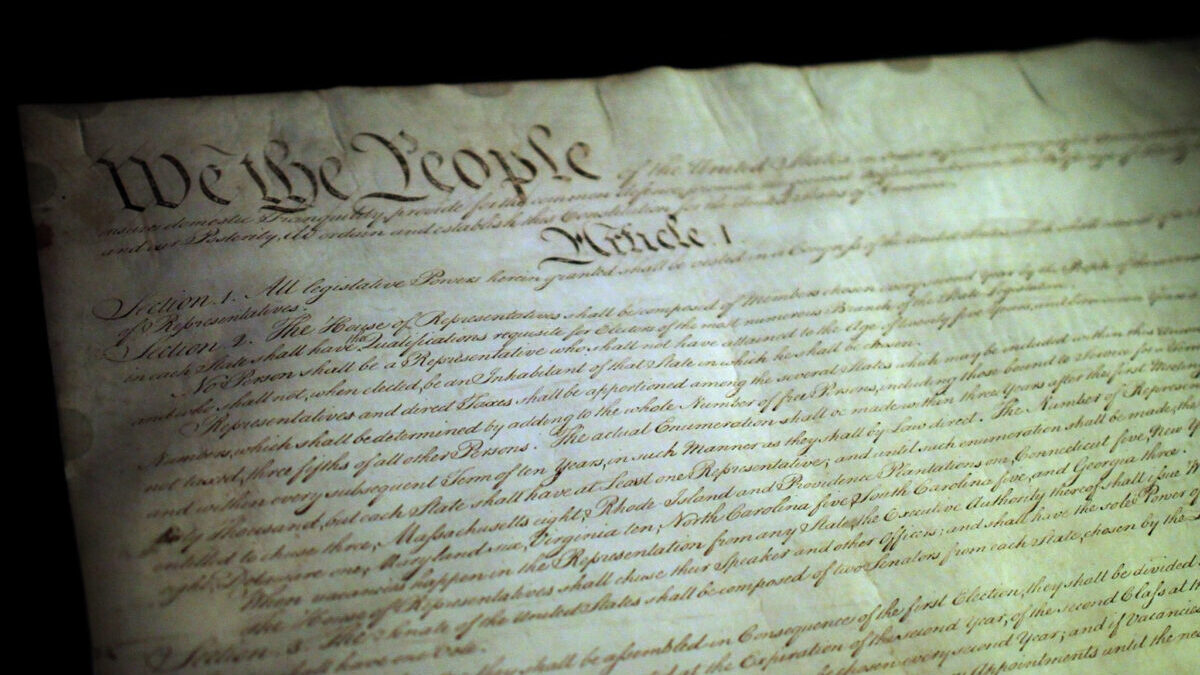
US Constitution

The left’s push for a popular vote for the presidency directly undermines the electoral system established by our Constitution.

Author Andrew Morgan profile

ANDREW MORGAN

MORE ARTICLES

The left is at it again, and conservatives need to be on high alert. The left has been pushing for a national popular vote to elect the president of the United States for years. Since 2017, 10 more states have either signed the National Popular Vote bill into law or approved the bill in one state legislative chamber. This should be a grave concern because it directly undermines the electoral system established by our Constitution. If not stopped, the American system of presidential elections will be changed potentially forever.

The National Popular Vote bill would guarantee the presidency to the candidate who receives the most popular votes in all 50 states and the District of Columbia. It has been enacted by 15 state legislatures plus Washington, D.C., and passed in 41 legislative chambers in 24 states. For the proposal to become the law of the land, enough states totaling at least 270 electoral votes would be required to enact the law, and states would then commit their electoral votes to the candidate with the most popular votes nationally, regardless of which candidate won at the state level.

The states that have enacted the compact represent 195 electoral votes: Delaware, Hawaii, Rhode Island, Vermont, Colorado, Connecticut, Maryland, Massachusetts, New Jersey, New Mexico, Oregon, Washington, Illinois, California, New York, and the District of Columbia. States with passage in one chamber include Arkansas, Arizona, Maine, Michigan, Minnesota, North Carolina, Nevada, Oklahoma, and Virginia. Successful passage in all of these states represents 283 electoral votes, enough to change the law and make our presidential election decided via popular vote rather than the Electoral College. 

Democrats have long been unhappy with the electoral process, unless, of course, their candidate won. When their candidate loses, debate begins anew about how unfair the Electoral College is. The argument is always the same. Since we conduct our elections by democratic process, it makes sense to elect our nation’s executive according to the will of the majority with a voting plurality.

Five times, presidential candidates have won elections without the popular vote: John Quincy Adams (1824), Rutherford B. Hayes (1876), Benjamin Harrison (1888), George W. Bush (2000), and Donald Trump (2016).

Minority and Less Populated Areas Would Lack Representation

The commonly heard sentiment during election cycles is “every vote matters.” However, what is not fair is that if the president is elected based on a plurality, then the minority would not have a chance of having their candidate elected. Only the concerns and interests of more heavily populated areas, such as the East and West coast cities, would be represented. Interests of the minority and less populated areas would naturally be set aside and of little interest to future presidential candidates. Worse, the executive would be beholden and accountable solely to the majority.

This condition was not the intent of our founders. Their intent was to ensure that the nation’s highest executive, as well as the executive branch, represented the interests of all Americans regardless of political affiliation. A future president would need to appeal to those concerned about not just national but also regional issues.

Further, the Electoral College provided a means to disburse and decentralize power. State electors are elected just days before and are unknown until just prior to an election to prevent undue influence to stay true to the people’s votes in their states. Our founders framed it so as to prevent collusion and cabalist (their word) behavior, preclude violence, and thwart involvement of foreign powers.

Cabalism Comes to Light

Following the 2020 election, our founders’ concerns came to light and fruition. Our national elections have been fraught with cabalist behavior, undue influence, numerous forms of cheating, as well as foreign interference. The tyranny they feared came to pass, driven by collusion among the administrative state, the legislative branch, legacy media, Big Tech, and nongovernmental organizations. An independent executive branch separate from the legislature has become an illusion.

In Federalist Paper 68, Alexander Hamilton wrote, “the process of election affords a moral certainty, that the office of the president will never fall with a lot of any man who is not in an eminent degree endowed with requisite qualifications. Talents for low intrigue and a little arts of popularity may alone suffice to elevate a man to the first owners of a single state, but it will require other talents, and a different kind of merit to establish him in the esteem and confidence of the whole union.” Hamilton would have been appalled today to have witnessed the travesty undermining his sentiment.

So why does all this matter?

An Oppressive Majority

It matters because the idea of a national popular vote is gaining steam and if adopted by enough states, the Electoral College will become irrelevant. Minority voter interests will no longer matter at the national level. Only the whims of the majority will. And the result will be precisely why Socrates opposed a democratic form of government. Once a majority is established, it finds a way to remain permanent, and the majority class will become oppressive to the minority class. There will be no means to overturn the majority, no matter how skewed the majority’s view may be.

The implications for the country are vast and would make the United States just another oppressive tyrannical state. The ultimate reason for the success of the U.S. was that its founders held a belief that we are created and guided by a higher power, and they recognized that men are inherently corruptible. They implemented controls to prevent those with ambitions from achieving outright power over the minority, thus making the U.S. unique among nations.

Left Looks to Crush the Right

The left’s tactics are in high gear, accelerating in an attempt to overwhelm conservatives and Republicans to a tipping point at which the left acquires complete control and the right becomes powerless.

The left’s all-out assault has become abundantly clear since President Joe Biden took office. As soon as Democrats attained the presidency and the narrowest of majorities in the House and Senate, they pressed forward with their agenda, nearly unimpeded had it not been for the likes of Sen. Joe Manchin, D-W.Va., and Sen. Kyrsten Sinema, D-Ariz., and perhaps divine intervention.  

Whether changing voting laws in its favor, creating crises to circumvent the laws already in place, continually flooding the courts with litigation designed to throw sand in the gears of transparent elections, or changing the electoral process altogether, the left’s efforts to gain and retain control, by any means necessary, will not relent.

In addition to ongoing election integrity efforts across the nation, it is imperative that conservatives push back attempts to advance a national popular vote. It is incumbent upon individual citizens to tell their state representatives that it is not the desire of the people to circumvent the constitutional process for electing our president.

Failure to stop a national popular vote could take generations to reverse.


Andrew Morgan is a former deputy assistant secretary of the Army, a senior executive within the Office of the Secretary of Defense, and a retired U.S. Navy captain. He received his MBA from George Washington University and master’s from National Defense University.

Tag Cloud