Perspectives; Thoughts; Comments; Opinions; Discussions

Posts tagged ‘2020 riots’

‘Let Minneapolis burn’: Retired police lieutenant rips Gov Walz for surrendering city to rioters


By Andrew Mark Miller Fox News | Published August 15, 2024, 3:29pm EDT

Read more at https://www.foxnews.com/politics/retired-police-lieutenant-rips-walz-surrendering-city-rioters

MINNEAPOLIS – A retired police lieutenant in Minnesota is pushing back against the narrative that Gov. Tim Walz is a “moderate” and tells Fox News Digital that the governor “intentionally” let Minneapolis burn during the 2020 riots because he “truly doesn’t like police.”

“He is not a moderate, he has never been a moderate and here in Minnesota he has been anti-police, he has raised taxes, he is nowhere near being a moderate,” retired Minnesota State Patrol Lt. John Nagel told Fox News Digital.

“He’s anti-police, defund the police, when you have police families, and we have an officer killed in the line of duty, when that family looks at the governor and says we don’t want you at the funeral. That should tell you a great deal of how law enforcement in general feels about Walz.”

Last year, the widow of Pope County Sheriff’s Deputy Josh Owen, who was killed in the line of duty responding to a domestic violence call, told Walz he was not invited to her late husband’s funeral because “he does not support law enforcement,” Alpha News reported.
SHOP OWNER REVEALS HEART-WRENCHING EXPERIENCE AFTER BLM RIOTS ‘DESTROYED’ HIS STORE ON GOV WALZ’S WATCH

John Nagel Walz
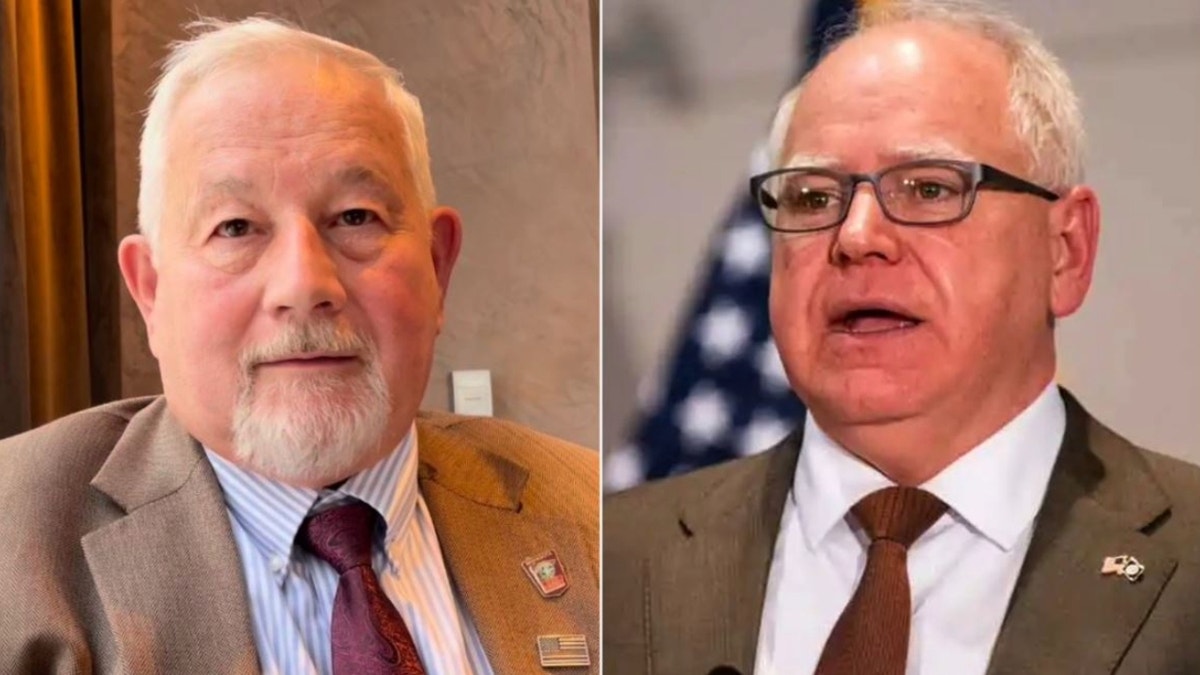
Retired Minnesota State Police Lt. John Nagel blasted Gov. Tim Walz’s relationship with police.

Nagel told Fox News Digital that a major reason law enforcement in Minnesota is unhappy with Walz was his slow response when asked to send in the National Guard as the city burned during the 2020 George Floyd riots, which Walz has faced fierce criticism for since becoming the Democratic vice-presidential nominee. Nagel, who is running for office as a Republican in Minnesota House District 46A, explained that he believes the slow response was due in part to a political calculation.

“We’re hearing this over and over and over again, he let Minneapolis burn,” Nagel said. “I think he intentionally let Minneapolis burn.”
MINNESOTA MURDER STATS ROSE UNDER WALZ’S LEADERSHIP AS HE TRIES TO TIE VIOLENT CRIME TREND TO TRUMP: DATA

George Floyd riots
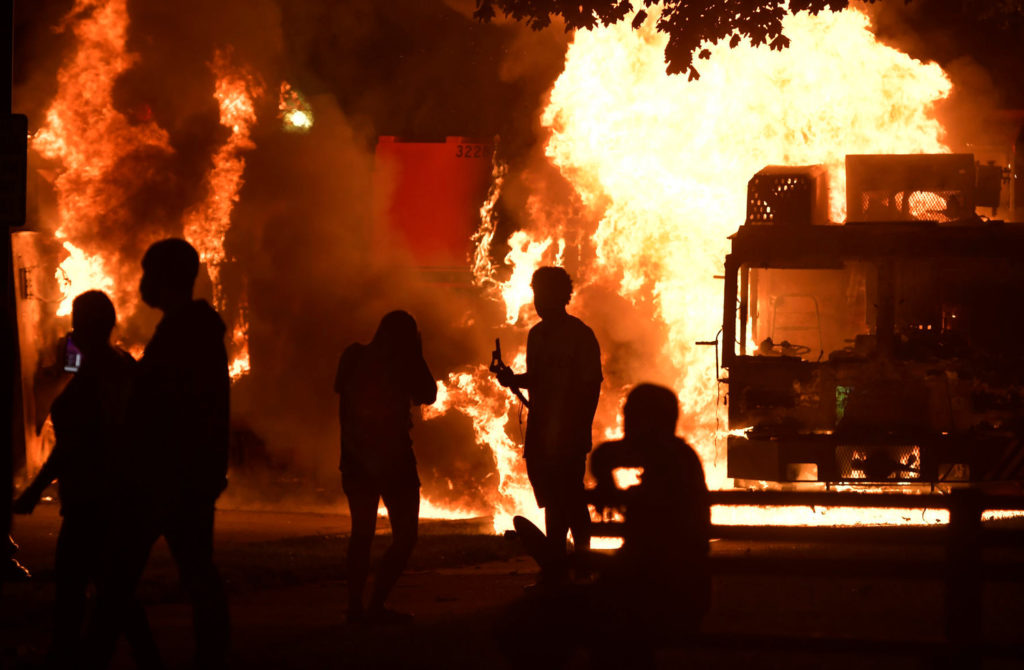
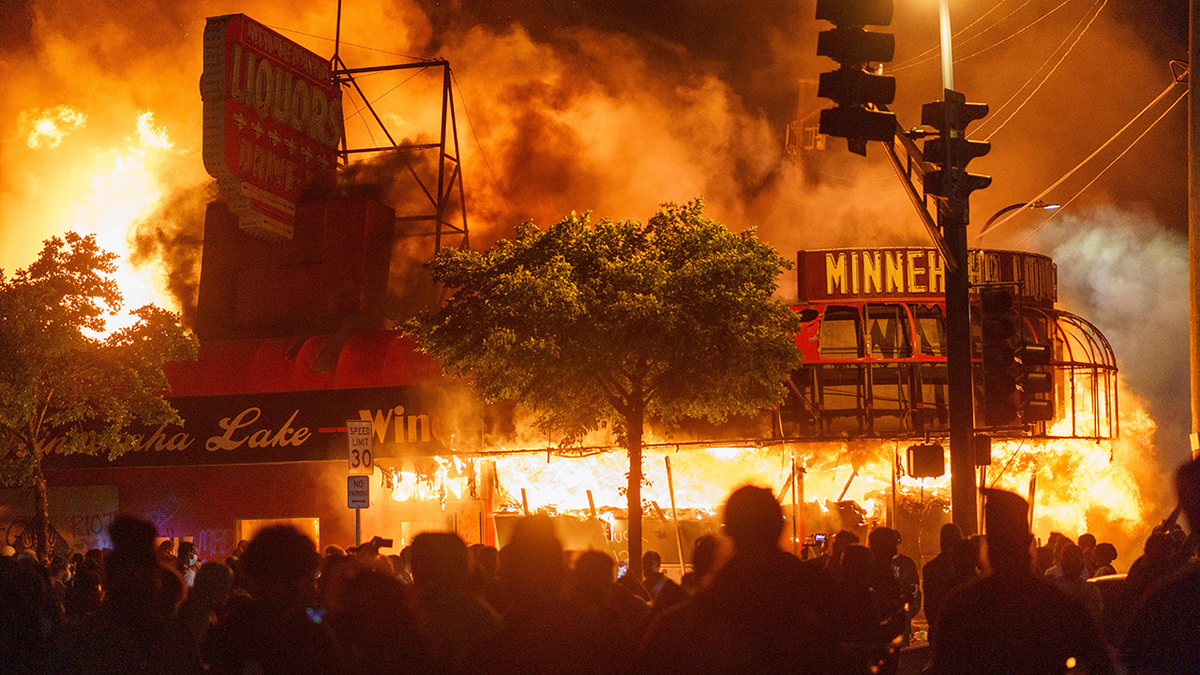
Building goes up in flames during the George Floyd riots in 2020. (Getty Images)

“I think it was all part of a much greater scheme because he truly doesn’t like the police. [Minnesota Attorney General] Keith Ellison has never liked the police. They have been involved with people who are defunding the police.”

Walz, who publicly backed “alternatives to policing” as the Minnesota City Council was pushing to disband the police department in 2020, has been widely criticized by Republicans for not doing more to support law enforcement during the riots. 

“Tim Walz let Minneapolis burn for three straight nights without doing anything,” GOP Rep. Pete Stauber, who represents Duluth, Minnesota and surrounding areas, previously told Fox News Digital. “And he called the riots, he stated their actions were, this is a quote, ‘righteous anger.’ Hundreds of millions of dollars in damage to family businesses and buildings in Minneapolis.”

Stauber told Fox News Digital the “vast majority” of law enforcement in Minnesota are “disgruntled” with Walz’s “lack of support.”

MINNESOTA DEM LAWMAKER DEFENDS WALZ AGAINST ‘RADICAL’ LABEL FROM GOP: ‘COULDN’T DISAGREE MORE’
Kamala-Harris-And-Running-Mate-Tim-Walz-Make-First-Appearance-Together-In-Philadelphia
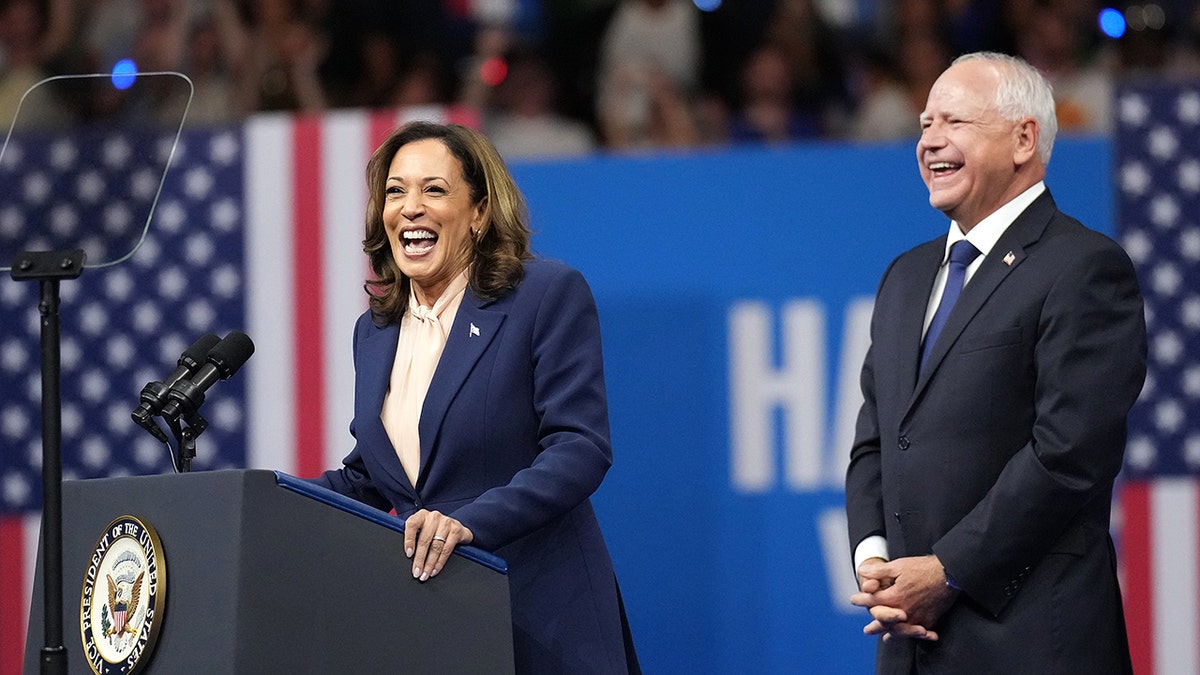
Vice President Kamala Harris and Gov. Tim Walz appear on stage together during a campaign event at Temple University in Philadelphia. (Andrew Harnik/Getty Images)

Nagel, who served in uniform for 30 years, told Fox News Digital that Democrat policies are “hurting Minnesota,” causing people to leave “in droves” and argued that Walz has played a key part in the “dismantling of public safety in Minnesota.”

Fox News Digital asked Nagel what he thinks voters who were not familiar with Walz need to know about him from a veteran law enforcement officer’s perspective.

“I think they need to understand that he’s not truthful, I think they need to understand that he’s power hungry, they need to understand that he’s not doing this for the good of the people,” Nagel said. 

“He’s doing it for the good of himself, and he is going to be lockstep with whatever the Democrats want, and I think it would be, just take a look at Minnesota, he’s ruined Minnesota along with this trifecta of the Democrats. Can you only imagine what he’s going to be able to do with your federal tax dollars? And when North Korea decides to knock on the door, he and his president, are they going to be able to actually handle a national crisis when he couldn’t handle a crisis in Minneapolis?”

Fox News Digital reached out to the Harris-Walz campaign for comment and did not receive a response.

Andrew Mark Miller is a reporter at Fox News. Find him on Twitter @andymarkmiller and email tips to AndrewMark.Miller@Fox.com.

Will America Heed the Warnings of Panama’s Violent Riots?


BY: CASEY CHALK | NOVEMBER 23, 2023

Read more at https://thefederalist.com/2023/11/23/will-america-heed-the-warnings-of-panamas-violent-riots/

Panama

Author Casey Chalk profile

CASEY CHALK

MORE ARTICLES

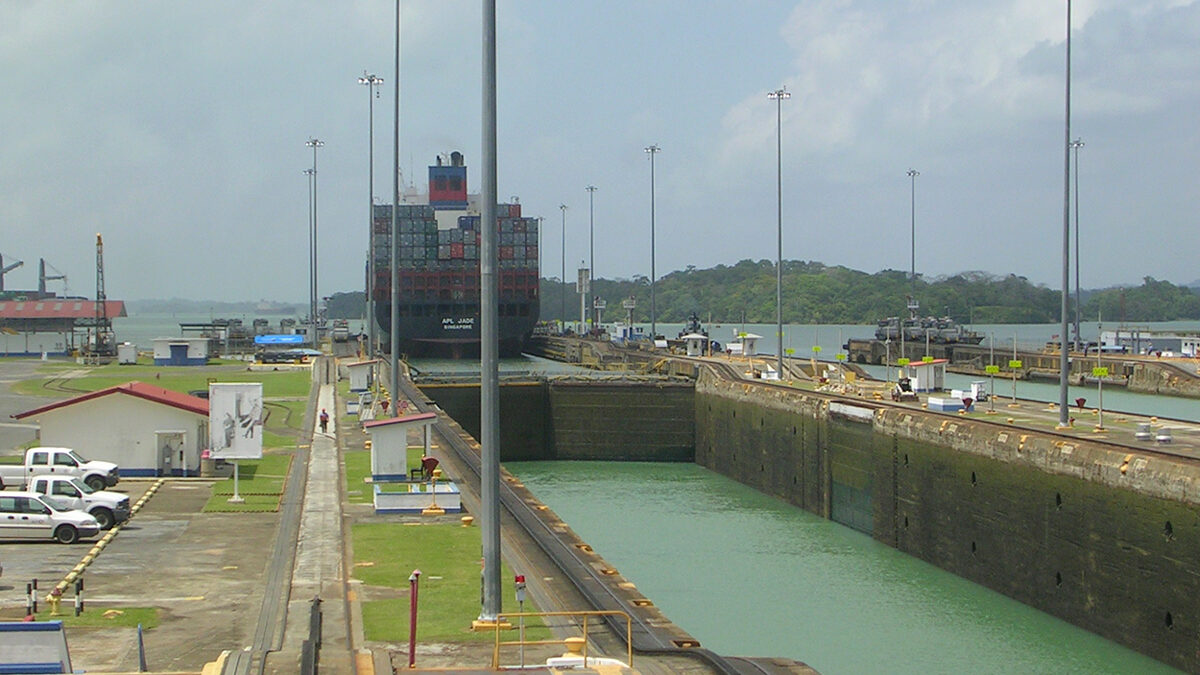
Many Americans have seen the footage of 77-year-old American lawyer Kenneth Darlington approaching and engaging a group of demonstrators blocking the Pan-American Highway in Panama before firing his handgun. Darlington is currently in Panamanian custody for killing two people during the incident. But what most Americans don’t know is what is going on in Panama, and what has been going on here for more than a month. Yet they should, because the unrest in this Central American country — home to a canal through which 40 percent of all U.S. container traffic travels — should serve as a warning as to what might await our own nation.

Holding a Nation Hostage

Since late October, protests have roiled Panama because of a government contract with Canadian mining company First Quantum Minerals, which would grant the company rights to mine massive deposits of copper for years. The Cobre Panama mine already contributes almost 5 percent of the nation’s GDP. However, many Panamanians view the contract as unfair, too favorable to the Canadian company, and an ecological threat, especially given that almost 9 percent of national GDP comes from the tourism industry and the country’s many celebrated nature reserves. Thus the contract has united labor unions and environmental activists against the Panamanian government for negotiating the contract under what they perceive as poor terms.

These protesters are highly organized and have been quite efficient at bringing Panama’s society and economy to its knees. Major roads across the country have been routinely blocked, as have various ports. Roadblocks in certain parts of the country have prevented fresh produce grown in the agricultural region of Chiriqui from reaching the capital, where more than a third of all citizens live. Many fruits and vegetables, including bananas, have been unavailable for weeks. Thousands of Panamanians who live outside the city have been unable to commute to their jobs. Major tourist attractions — such as the World Heritage Site Casco Viejo, the historic section of the city — have often been inaccessible, affecting the hundreds of businesses located there. United Airlines even canceled flights into the city because the roads to and from Tocumen International Airport were blocked.

The alleged murder of two Panamanians by a U.S. citizen has provoked international headlines, but there has been extensive other violence and crime. Clashes have resulted in several other deathsmany stores have been vandalized, and enterprising demonstrators have established checkpoints at major thoroughfares where they shake down passersby for money.

Multiple American friends of mine have been robbed at these checkpoints, and one of them was pulled out of his car and beaten so badly he required more than a dozen stitches, including to his skull. In that example, Panamanian police stood nearby and did nothing until after the criminals had robbed my friend and left him lying on the road. (It was, if you can believe it, the second time he had been attacked and almost killed by criminals in Panama).

Panamanian police have engaged with demonstrators when they’ve congregated en masse and threatened government buildings or the financial district but have been notably absent elsewhere in the capital or broader country. Why, I’ve wondered, do the police not simply clear these roadblocks and tell protesters that even if they have the right to demonstrate, they are not free to cripple the country?

“They aren’t paid enough for that,” was the response from one American expat I asked who has lived in Panama for more than two decades. The typical response from the government and security forces to these kinds of protests, which happen fairly regularly, including last year, is to give demonstrators extensive latitude to express their frustrations. It is, authorities believe, a sort of “release valve” that will eventually lose steam.

Does Any of This Sound Familiar?

I hope I have provided enough details for readers to recognize the similarities between what is happening in Panama in the past two months and what happened in the United States more than three years ago. Between May 26 and June 8, rioters caused between $1-2 billion worth of damage in about 20 states, making it the costliest example of civil disorder in U.S. historyAn estimated 25 people died in the riots. In some cities, such as Minneapolis and Chicago, police were ordered to stand down from intervening while rioters looted or destroyed businesses and even police stations.

The results of city governments punishing, castigating, and defunding their own police forces despite rising mob violence, looting, and destruction of property are readily apparent today. Urban crime has risen dramatically since 2020, as has the national murder rate, both of which have remained much higher than they were pre-pandemic. Many city police forces (including the New York and Chicago Police Departments) are plagued by underfunding and retention issues. Shoplifting and carjackings are soaring in places like Washington, D.C., which has police staffing levels at their lowest in a half-century. Why would anyone want to sign up for that kind of dangerous, underappreciated work? One might say they aren’t paid enough for this.

What Comes Next?

In Panama, popular frustrations over the roadblocks are growing. Working-class Panamanians are increasingly vocal in their anger toward road closures that have lost them as much as one month’s pay — when you’re already poor, that kind of financial loss is more than an annoyance, it’s debilitating. Some clashes have already occurred between laborers and protesters, and if this crisis isn’t resolved soon, there’s likely to be more protests, and they’ll probably be more violent.

Panama’s elite, who live in tony districts such as Costa del Este — which could easily pass for downtown Miami or San Diego — have been thus far largely insulated from the damage caused by more than a month of protests. They may not have butterhead lettuce for their salads or bananas for their smoothies, but they’ll make do, much as the American elite class did in 2020. Yet, also like America, the continued wealth and success of the elite class and their neighborhoods can distract from decaying infrastructure, a massive divide between rich and poor, and systemic corruption.

How long, one wonders, will everyday citizens put up with a system so obviously biased toward those wealthy and powerful enough to shield themselves from increasingly common criminality and violence on their streets? How long will the police protect those who view them as expendable, and even as a politically expedient scapegoat? In Panama, we may learn the answer soon. Perhaps Americans should be pursuing policy options with regard to public safety and police forces that ensure we won’t have to ask that question ourselves.


Casey Chalk is a senior contributor at The Federalist and an editor and columnist at The New Oxford Review. He has a bachelor’s in history and master’s in teaching from the University of Virginia and a master’s in theology from Christendom College. He is the author of The Persecuted: True Stories of Courageous Christians Living Their Faith in Muslim Lands.

Kyle Rittenhouse judge slams ‘vast amount’ of ‘irresponsible and sloppy journalism’ surrounding case


Reported by PHIL SHIVER | November 02, 2021

Read more at https://www.theblaze.com/news/rittenhouse-judge-slams-irresponsible-sloppy-journalism/

The judge presiding over the highly anticipated Kyle Rittenhouse homicide trial recently criticized what he called a “vast amount” of “irresponsible and sloppy journalism” covering the events surrounding the case.

While speaking with potential jurors during the jury selection process on Monday, Kenosha County Circuit Court Judge Bruce Schroeder said that those selected for the task may need to disregard much of what they have heard in the media about the case.

“This case has become very political. It was involved in the politics of the last election year,” Schroeder said in the court session, adding, “To this day, you can go out and read things from all across the political spectrum about this case, most of which is written by people who know nothing.”

“The price we pay for having a free press is a lot of irresponsible and sloppy journalism,” he continued, adding that his charge “is not an attack on the media” but a reality check for potential jurors about the need for a fair and impartial trial.

Schroeder said that he has read some things about the case that have been “perfect,” but noted that most of the reporting has either been “sloppy” or “deliberately biased.”

“It can be frightening,” he added while urging jury candidates to abandon their presuppositions and focus solely on the evidence presented at trial. He reminded them that the right to a fair trial is an important right guaranteed by the U.S. Constitution.

What’s the background?

The news comes only days after Schroeder ruled that the men Rittenhouse, 18, fatally shot or wounded on Aug. 25, 2020, in Kenosha, Wisconsin, can’t be referred to as “victims” by prosecutors — but can be called “rioters” and “looters.”

Rittenhouse — then 17 — allegedly took a gun to riots in the city in order to defend local businesses against looting and ransacking in the wake of a white police officer’s shooting of Jacob Blake, a black man. During the mayhem, Rittenhouse shot three men, killing two. Rittenhouse was charged with multiple felonies, including first-degree intentional homicide, first-degree reckless homicide, attempted first-degree reckless homicide, and first-degree reckless endangering safety. If convicted, he could serve a mandatory life sentence in prison.

Rittenhouse’s defense team has insisted he was acting in self-defense, and videos of the shootings from that night appear to back up his claims. He later told reporters he doesn’t regret taking a gun to protests on the night of the shootings, saying he “would’ve died” if he hadn’t.

By Monday evening, 20 jurors had been selected, and now the trial is set to be heard.

(H/T: Townhall)

Potential Jurors In The Kyle Rittenhouse Trial Are Scared, And They Have Every Reason To Be

NOVEMBER 2, 2021 | By Eddie Scarry

Read more at https://thefederalist.com/2021/11/02/potential-jurors-in-the-kyle-rittenhouse-trial-are-scared-and-they-have-every-reason-to-be/

Kenosha County, Wis., Circuit Court Judge Bruce Schroeder has a fanciful idea: That the trial he’s overseeing that includes murder charges against 18-year-old Kyle Rittenhouse can be removed from politics. He said so on Monday during jury selection. “We don’t want to fall into the trap,” he said, “that many in the media have, a large percentage of the media, and discuss this as a political trial or that there are bigger factors at stake in this trial.”

How naive. Of course this is a trial of political consequence and of course there are bigger factors at stake. The potential jurors know it, and that’s why during selection several of them expressed concern that their city or they personally might be the targets of rioting or harassment, regardless of the verdict the jury renders. All of the potential jurors are kept anonymous until after the trial is over but here’s a sample of what some of them said during selection:

—One said that no matter the verdict, “half the country will be up in arms about it.”

— Another said, “I’m more afraid of our community and the outsiders of our community that are coming in… It just brings us back to August (2020).” She also said she was “potentially” afraid of reliving riots depending on the verdict.

— A third said it was “scary” to be on a case like this one, specifically citing “riots” and wondering aloud, “Am I gonna get home safe?”

Those are legitimate concerns. We saw what happened earlier this year in Minneapolis, when businesses and restaurants boarded up their storefronts in anticipation of a possible acquittal of former police officer Derek Chauvin, who ultimately was convicted of killing George Floyd. If things don’t go a certain way in politically charged trials like that, despite evidence leading a deliberate jury to the opposite conclusion, well, that might very well mean more rioting, looting, arson, and violence. Potential jurors in the Rittenhouse trial received the message loud and clear that this isn’t just a murder trial. This is about the broader question of whether some types of political violence are acceptable, even necessary.

Rittenhouse is charged with the murder of two men and the attempted murder of a third. All relevant parties are white (sadly robbing the media of a beloved racially charged narrative) and it isn’t disputed that each of them had been chasing the teen and attempting to apprehend his weapon. All of it was in the context of several nights of destructive rioting in Kenosha, which resulted in a total of $50 million in damages to the city. The mayhem was sparked by the police shooting of Jacob Blake, a black man who was wanted for violating a restraining order stemming from claims he had sexually assaulted a woman. Blake is on video resisting his arrest and defying police orders by moving to enter his vehicle as they tried to apprehend him.

The city went up in flames and the national media to this day characterize the chaos as a “Black Lives Matter march” because they, along with leaders in the Democratic Party, believe all of it was justified.

Rittenhouse may have been in the wrong place at the wrong time, but that’s not a crime and it’s not what he’s on trial for. He’s on trial for shooting men who pursued him and made moves to grab his gun, something that is seen on video, testified by at least one witness, and written out in the state’s own complaint against Rittenhouse.

A jury will inevitably render its verdict, but contrary to what the judge says, there’s no way around it— this is a political trial and that should scare the jurors.

Eddie Scarry is the D.C. columnist at The Federalist and author of “Privileged Victims: How America’s Culture Fascists Hijacked the Country and Elevated Its Worst People.”

Media Outrage Over Capitol Riot Isn’t About Defending Democracy, It’s About Wielding Power


Written by John Daniel Davidson  JANUARY 8, 2021

Media Outrage Over Capitol Riot Isn’t About Defending Democracy, It’s About Wielding Power

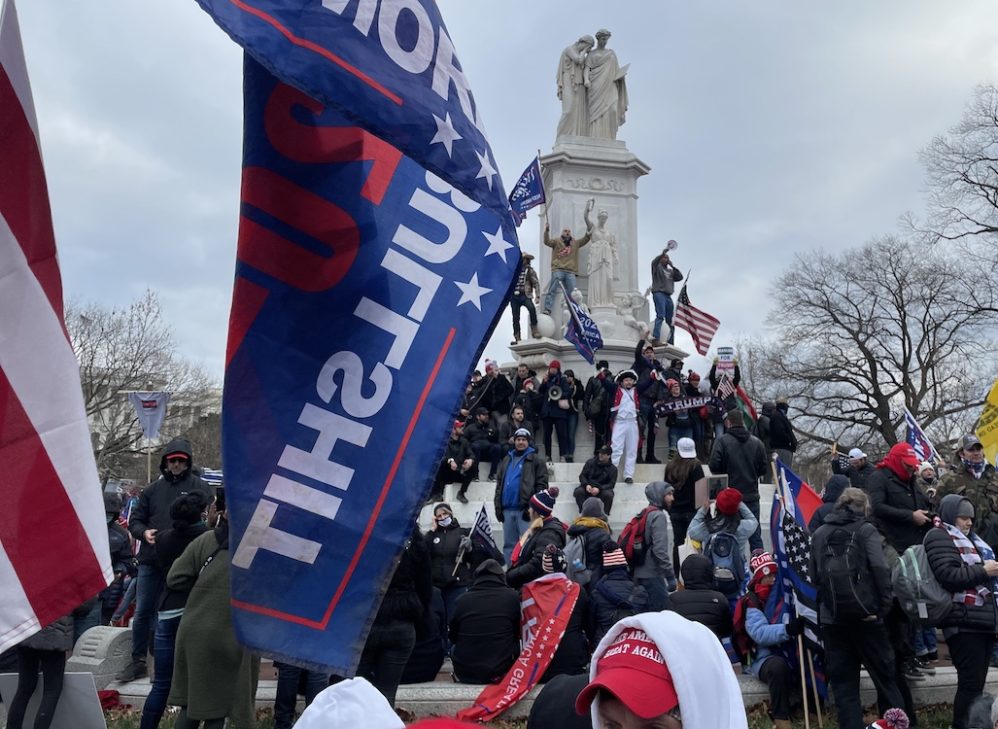
After the pro-Trump mob stormed the U.S. Capitol on Wednesday, Twitter blue-checks, politicians, and elite corporate journalists wailed and rent their garments in outrage. But they weren’t really outraged.

Yes, the breach of the capitol was appalling and disturbing. Most people didn’t see it coming and were understandably shocked when images of MAGA bros fighting capitol police began popping up on social media (although the authorities should have been better prepared, most of all D.C. Mayor Muriel Bowser, who had earlier rejected offers of additional law enforcement.) There’s no question the protesters who decided to riot should be prosecuted, as all rioters everywhere should be.

But elite outrage is not really about what happened at the capitol—about the “sacred citadel of our democracy being defiled” and so on. The outrage, like almost all expressions of righteous indignation from our elites in the Trump era, is performative. It is in service of a larger purpose that has nothing to do with the peaceful transfer of power and everything to do with the wielding of power.

Specifically, it’s about punishing supporters of President Trump. If the pro-Trump mob can be depicted as “terrorists” and “traitors,” then there’s almost nothing we shouldn’t do to silence them. Right? Rick Klein, the political director at ABC News, said the quiet part out loud on Thursday when he mused (in a now-deleted tweet) that getting rid of Trump is “the easy part” and the more difficult task will be “cleansing the movement he commands.”

That’s not the kind of language you use when you’re in the business of reporting the news. It’s the kind of language you use when you’re in the business of social control.

A lot of people on the right have noted the supposed hypocrisy of media elites like Klein, but it’s not really hypocrisy because Klein and his comrades don’t really have a problem with violent mobs storming into buildings and smashing windows, so long as they agree with the mob’s agenda. That’s why corporate media was so tolerant of much larger and more dangerous mobs destroying American cities for months on end last year. When Black Lives Matter rioters stormed city halls and police stations, burned down churches, and ransacked shopping districts in major U.S. cities, killing dozens and destroying livelihoods, the media offered support for the rioters’ cause, which they invoked time and again to justify their criminal acts.

That’s why CNN’s Chris Cuomo said, “Please, show me where it says protesters are supposed to be polite and peaceful.” That’s why his colleague, Don Lemon, compared the riots to the Boston Tea Party, saying, “This is how our country started.”

That’s why Rep. Alexandria Ocasio-Cortez argued “the whole point of protesting is to make ppl uncomfortable.” That’s why incoming Vice President Kamala Harris urged her supporters to contribute to a fund to pay bail for militant anarchists who set fire to Minneapolis. That’s why reporters at MSNBC and CNN described fiery, riotous scenes as “mostly peaceful protests”—sometimes while buildings and cars burned in the background.

As my colleague Tristan Justice recently chronicled, this default posture of support for the riots was pervasive in the media. GQ, Slate, Mother Jones, Time Magazine, Vox, The New York Times, NPR—all of them ran news stories, analyses, and columns justifying the violence, praising the rioters, and mulling over the deeper meaning of it all. Condemnations were few and attenuated.

They won’t do that about the pro-Trump rioters at the capitol. In his monologue Wednesday night, Tucker Carlson made the good point that we have to find a way through our political divisions and this moment of crisis. Above all, we have to learn to live together.

There’s no option to peacefully divide and go our separate ways, so if we want to fix this, he said, we need to try to understand why Ashli Babbitt, the woman who was shot and killed in the capitol, was there in the first place. What was she doing there?

Our elites—in the media, in corporate America, in politics—have no interest in that question. They don’t want to understand people like Babbitt because they don’t actually want to share a republic with them. To paraphrase Rick Klein of ABC News, they want to cleanse the country of Trump supporters, period.

It won’t be easy. Trump’s supporters aren’t just going to disappear because Anderson Cooper thinks they’re gross. Plenty of media people, along with plenty of Democratic leaders, spent Wednesday and Thursday arguing that Trump gave the protesters the idea to storm the capitol, that he egged them on and incited them.

But the media, which sowed the wind all year long with loose talk about riots, did far more to bring down the whirlwind on Wednesday than Trump did. When you argue for months and months that there’s nothing wrong with rioting or mob action or fighting with the police, and that we have to try to understand the rioters and their complaints, don’t be surprised if a certain segment of the population takes you at your word.

None of this is to excuse or defend the people who stormed the capitol. Like the mobs that stormed through American cities this spring and summer, they should have been stopped—by force, if necessary. Turns out Sen. Tom Cotton was right all along.

But it is to say that both groups were motivated by strongly held beliefs that, in their minds, justified rioting. In the case of Black Lives Matter and Antifa, it was the belief that America is in the throes of white supremacy and systemic racism, and that police kill disproportionate numbers of black people. In the case of the pro-Trump mob at the capitol, it was the belief that the election was stolen, rigged, fraudulent, and that no one would listen to them or take them seriously.

I happen to think both these sets of claims, on the BLM side and the Trump side, are misguided and wrong. But not our media elites. They are squarely on the side of the BLM mob and against the pro-Trump mob, and they have zero interest in trying to understand why all those people showed up at the Capitol on a Wednesday in January.

They do, however, have a keen interest in cracking down on the wrong kind of mob. Their outrage isn’t just a performance or a pose. It’s also a mask hiding something worse than hypocrisy: anticipation.

ABOUT THE AUTHOR:
John is the Political Editor at The Federalist. Follow him on Twitter.
Photo Emily Jashinsky

Tag Cloud