Perspectives; Thoughts; Comments; Opinions; Discussions

Posts tagged ‘Special Counsel Jack Smith’

How Jack Smith Destroyed His Own Case Against Trump


By: Jonathan Turley | January 13, 2025

Read more at https://jonathanturley.org/2025/01/13/how-jack-smith-destroyed-his-own-case-against-trump/

Below is my column in The Hill on the one thing that the forthcoming report of Special Counsel Jack Smith will not address: how he destroyed his own case against Donald Trump. Smith will be something of a tragic figure for future special counsels. The only thing missing is a shirt reading, “I spent over two years and $50 million dollars and all I got was this lousy t-shirt (and a redacted report).”

Here is the column:

The expected release of Special Counsel Jack Smith’s report will occur as early as this weekend, albeit without those sections dealing with the Florida documents case. (Other defendants are still facing prosecution in that case.) However, the most glaring omission will be arguably an explanation of how Smith lost this war without firing a single shot in a trial.

After more than two years, two separate cases and countless appeals (not to mention more than $50 million spent), Smith left without presenting a single witness, let alone charge, at trial. It is an example of how a general can have the largest army and unlimited resources and yet defeat himself with a series of miscalculations.

History probably won’t be kind to Smith, whose record bespeaks a “parade general” — a prosecutor who offered more pretense than progress in the prosecution of an American president.

Indeed, this report will be one of Smith’s last chances to display a case that notably never got close to an actual trial. One-sided and unfiltered, it will have all of the thrill of a Sousa march of a regiment in full dress. We know because we have seen much of this before. At every juncture, Smith has taken his case out on parade in the court of public opinion.

The Smith report will reportedly concern only the Washington case alleging crimes related to Jan. 6 and the 2020 election — a case that was always a bridge too far for Smith.

When first appointed, Smith had a straightforward and relatively easy case to make against Trump over his removal and retention of presidential materials. The case was not without controversy. Some of us questioned the selective nature of the prosecution given past violations by other presidents, particularly as shown by the violations of President Biden going back decades found by another special counsel.

However, the case originally focused on the conspiracy and false statements during the federal investigation into the documents at Mar-a-Lago. Those are well-established crimes that Smith could have brought to trial quickly with a solid shot for conviction.

But Smith’s undoing has always been his appetite. That was evident when he was unanimously reversed by the Supreme Court in his case against former Virginia Gov. Bob McDonnell (R).

In Florida, Smith was in signature form. He took a simple case and loaded it up with press-grabbing charges regarding the retention of classified material. In so doing, he slowed the case to a crawl. As a defense lawyer who has handled classified documents cases, I said at the outset that I did not believe he could get this case to a jury before the 2024 election, and that after that election, Smith might not have a case to present. Smith had outmaneuvered himself.

Then came the Washington filing, the subject of this forthcoming report. It was another vintage Smith moment. Smith played to the public in a case that pushed both the Constitution and statutory provisions beyond the breaking point. He simply could not resist, and he was only encouraged after the assignment of Judge Tanya Chutkan, a judge viewed by many as predisposed against Trump.

In a sentencing hearing of a Jan. 6 rioter in 2022, Chutkan had said that the rioters “were there in fealty, in loyalty, to one man — not to the Constitution.” She added then, “[i]t’s a blind loyalty to one person who, by the way, remains free to this day.” That “one person” was then brought to her for trial by Smith.

The D.C. case was doomed from the outset by both a prosecutor and judge who, in their zeal to bag Trump, yielded to every temptation. As time ticked away, Smith became almost apoplectic in demanding an expedited path to trial, including cutting short appeals. After refusing to recuse herself, Chutkan seemed to indulge Smith at every turn. But the Supreme Court failed to agree that speed should trump substance in such reviews.

With both cases slipping out of his grasp, Smith then threw a final Hail Mary. He asked Chutkan to let him file what was basically a 165-page summary of this report against Trump before the election. There was no apparent reason for the public release of the filing, except to influence the election — a motivation long barred by Justice Department rules. Chutkan, of course, allowed it anyway, despite admitting that the request was “procedurally irregular.” It did not work. Although the press and pundits eagerly repeated the allegations in the filing, the public had long ago reached its own conclusion and rendered its own verdict in November.

In my view, Smith’s D.C. case would never have been upheld, even if he had made it to a favorable jury in front of a motivated judge. As established by the court in Trump v. United States, Smith could not rely on much of his complaint due to violating constitutionally protected areas.

Smith responded to the immunity decision again in typical Smith fashion, largely keeping the same claims with minimal changes. His new indictment was to indictments what shrinkflation is to consumer products — the same package with less content. As in the McDonnell case, Smith was going for conviction at all costs, despite a high likelihood of the case eventually being overturned.

Then the public effectively put an end to both cases by electing Trump.

The Smith investigation should be a case study for future prosecutors in what not to do. An abundance of appetite and arrogance can prove as deadly as a paucity of evidence and authority.

Ironically, Smith will not be the only special counsel offering such a cautionary tale. The report of Special Counsel David Weiss into the Hunter Biden controversy will also be released soon. Weiss was widely denounced for allowing major crimes to lapse against Hunter Biden and offering an embarrassing sweetheart plea deal that collapsed in open court. Notably, Weiss succeeded by minimizing his charges (for the wrong reason). In that way, Weiss has one claim that Smith does not: He made it to court and secured a conviction. Indeed, he was about to prosecute a second case when President Biden pardoned his son.

Weiss’s report will likely only increase questions over his failure to pursue Hunter more aggressively. For Smith, the question is whether he was too aggressive, to the detriment of his own prosecution.

Prosecutions are not the sole measure of success for a special prosecutor. At times, the report itself can be of equal, if not greater, importance to the public.

This is not one of those cases.

The public will be given Smith’s detailed account of a case that was never brought and would likely never have held up. At more than $50 million, it is arguably the biggest flop since “The Adventures of Pluto Nash. The difference is that it did not take more than two years to watch Eddie Murphy’s film disaster, and the actor did not then write up a report on how good the movie really was.

Jonathan Turley is the Shapiro Professor of Public Interest Law at George Washington University. He is the author of “The Indispensable Right: Free Speech in an Age of Rage.”

Adversarial Process or Oppo Research? Judge Agrees to Release More Trump Material Before the Election


By: Jonathan Turley | October 11, 2024

Read more at https://jonathanturley.org/2024/10/11/adversarial-process-or-oppo-research-judge-chutkan-agrees-to-release-more-smith-material-before-the-election/

It appears that U.S. District Judge Tanya Chutkan and Special Counsel Jack Smith are not done yet in releasing material in advance of the election. In a previous column, I criticized the release of Smith’s  180-page brief before the election as procedurally irregular and politically biased, a criticism shared by CNN’s senior legal analyst and other law professors. Nevertheless, on Thursday, Judge Chutkan agreed to a request from Smith to unseal exhibits and evidence in advance of the election. The brief clearly contains damning allegations, including witness accounts, for Trump. The objection to the release of the brief was not a defense of any actions taken on January 6th by the former president or others, but rather an objection to what even the court admitted was an “irregular” process.

As discussed earlier, Smith has been unrelenting in his demands for a trial before the election. He has even demanded that Donald Trump be barred from standard appellate options in order to expedite his trial. Smith never fully explained the necessity of holding a trial before the election beyond suggesting that voters should see the trial and the results — assaulting the very premise of the Justice Department’s rule against such actions just before elections.

To avoid allegations of political manipulation of cases, the Justice Department has long followed a policy against making potentially influential filings within 60 or 90 days of an election. One section of the Justice Department manual states “Federal prosecutors… may never select the timing of any action, including investigative steps, criminal charges, or statements, for the purpose of affecting any election.”

Even if one argues that this provision is not directly controlling or purely discretionary, the spirit of the policy is to avoid precisely the appearance in this case: the effort to manipulate or influence an election through court filings.

With no trial date for 2025, there is no reason why Smith or Chutkan would adopt such an irregular process. The court could have slightly delayed these filings until after the approaching election or it could have sealed the filings.

If there is one time where a court should err on the side of avoiding an “irregular” process, it is before a national election. What may look like simply an adversarial process to some looks like oppo research to others.  Delaying the release would have avoided any appearance of such bias.

For Smith, the election has long been the focus of his filings and demands for an expedited process. Smith knows that this election is developing into the largest jury verdict in history. Many citizens, even those who do not like Trump, want to see an end to the weaponization of the legal system, including Smith’s D.C. prosecution. Trump has to lose the election for Smith to be guaranteed a trial in the case.

Chutkan has given the Trump team just seven days to oppose her order. That would still allow the material to make it into the public (and be immediately employed by the media and Harris campaign) just days before the election. The move will only increase criticism that this looks like a docket in the pocket of the DNC.

It is telling that, once again, the timing just works out to the way that is most politically impactful. Many are left with a Ned Flanders moment of “well, if that don’t put the “dink” in co-inky-dink.”

Smith is No Longer in a Hurry: Special Counsel Moves To Slow Down District Court Judge


By Jonathan Turley | August 9, 2024

Read more at https://jonathanturley.org/2024/08/09/smith-is-no-longer-in-a-hurry-special-counsel-moves-to-slow-down-district-court-judge/

For over a year, Special Counsel Jack Smith has made one element the overriding priority in his prosecution of former president Donald Trump: speed. Smith repeatedly moved to curtail Trump’s appellate rights and demand expedited appeals to try to secure a conviction before the election. In that effort, he found an equally motivated judge in U.S. District Judge Tanya S. Chutkan, who virtually turned her court into a rocket docket to try Trump. Now, in a neck-breaking change of direction, Smith is trying to slow down Chutkan who appears again ready to pull out the stops in this case.

After the mandate in the case was returned to her, Judge Chutkan immediately resumed her high-speed scheduling to look at the pre-trial issues after the Court reversed her earlier rulings on the basis of presidential immunity.

The past problem with a court making speed the priority is that it does not allow much time to create a record. The remand will now require Judge Chutkan to do so on the question of what charges and evidence may be barred under the ruling in Trump v. United States.

As it has in the past, the c=Court adopted a three-tiered approach to presidential powers based on the source of a presidential action. Chief Justice John Roberts cited Youngstown Sheet and Tube Co. v. Sawyer, in which the court ruled against President Harry Truman’s takeover of steel mills.

In his famous concurrence to Youngstown, Justice Robert Jackson broke down the balance of executive and legislative authority between three types of actions. In the first, a president acts with express or implied authority from Congress. In the second, he acts where Congress is silent (“the zone of twilight” area). In the third, the president acts in defiance of Congress.

In this decision, the Court adopted a similar sliding scale. It held that presidents enjoy absolute immunity for actions that fall within their “exclusive sphere of constitutional authority” while they enjoy presumptive immunity for other official acts. They do not enjoy immunity for unofficial or private actions.

Only hours after receiving the mandate, Judge Chutkin scheduled an Aug. 16 conference to lay out the schedule and issues going forward. The former version of Jack Smith would have been delighted. He did not even see the need for the right for an en banc appeal in previously pushing for a pre-election trial.

Now, however, Smith is telling Judge Chutkin to slow down already.

Smith told the court that “The Government continues to assess the new precedent set forth last month in the Supreme Court’s decision in Trump v. United States. Although those consultations are well underway, the Government has not finalized its position on the most appropriate schedule for the parties to brief issues related to the decision.”

He has asked for a three-week delay to further consider what he wants to do. It is not clear if the press and pundits will now charge Smith with “slow walking” the case.

The question is whether Smith is considering a drastic move in light of the calendar and the ruling. There is, of course, always the possibility that he either throws in the towel or opts for a post-election trial. That would certainly go against the grain of Smith, who has always pushed both the law and the calendar to the breaking point. However, as some of us have been arguing for months, he may no longer view a trial as a plausible objective.

There is also the possibility that Smith will do something that some of us have discussed over the last year: pare down his case. Smith has always been undone by his appetite. As shown in his 8-0 reversal in his conviction of former Virginia Governor Bob McDonnell, Smith has rarely shown moderation as a prosecutor.

His overloaded criminal complaints created this disaster for his team. In Florida, Smith unwisely loaded up the prosecution with controversial charges on the retention of classified material. It not only triggered difficult challenges but slowed the case to a crawl as the parties dealt with classification laws. Had he proceeded solely on obstruction charges, he might have secured his trial before the election (and before the recent ruling on immunity). Even if the reduced case was heard by the Court on immunity, an obstruction case would have been far stronger for Smith.

The same is true with the D.C. case. Smith loaded up the case to raise the January 6th speech and other issues. Most were unnecessary, but Smith used his press conference to denounce the January 6th riot.

A three-week delay will give Smith ample time (in addition to the weeks following the Supreme Court decision) to deliberate. However, it will take roughly a month off the calendar for just internal debate with the election only three months away.

So, even with a judge who appears chomping at the bit to resume the fast track to trial, Smith now wants more time. Even before this request, it was hard to see how a trial could be held before the election. Now it seems a virtual certainty that any trial will have to await the results of the election. As I wrote in 2023, the odds were against a federal trial before the election, which would convert the voters into the largest jury in history.

Special counsel in Trump case unconstitutional, former Reagan AG says


By Brianna Herlihy Fox News | Published December 21, 2023 12:41pm EST

Read more at https://www.foxnews.com/politics/special-counsel-trump-case-unconstitutional-former-reagan-ag-says

Former Attorney General Ed Meese has presented arguments to the Supreme Court that they should reject Special Counsel Jack Smith’s requests because he was unconstitutionally appointed in the first place. Meese, along with law professors Steven G. Calabresi and Gary S. Lawson, filed a friend-of-the-court brief Wednesday to present the case that Attorney General Merrick Garland’s appointment of Smith — a private citizen — is in violation of the Appointments Clause of the Constitution. 

“Not clothed in the authority of the federal government, Smith is a modern example of the naked emperor,” the brief states. 

“Improperly appointed, he has no more authority to represent the United States in this Court than Bryce Harper, Taylor Swift, or Jeff Bezos,” they argued. 

RED STATE AGS BLAST SPECIAL COUNSEL PUSH FOR SCOTUS TO RUSH TRUMP CASE: ‘PARTISAN INTERESTS’

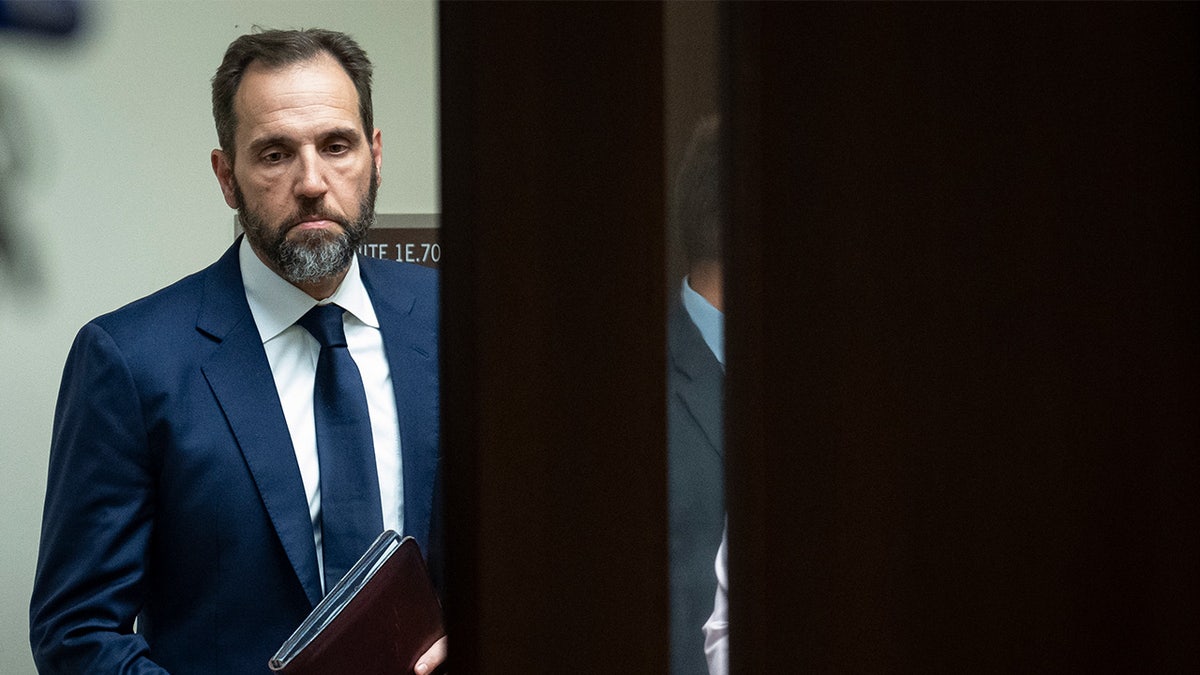
Jack Smith, special counsel
Special Counsel Jack Smith arrives to give remarks on a recently unsealed indictment, including four felony counts against former President Donald Trump in Washington, D.C., on Aug. 1. (Drew Angerer/Getty Images)

The brief was filed in response to Smith’s request to the court to expedite former President Donald Trump’s case arguing presidential immunity for his actions on Jan. 6, 2021, which are connected to criminal charges brought by Smith. Meese argues that the “illegality” of Smith’s appointment is “sufficient to sink Smith’s petition, and the Court should deny review.” 

Messe and company noted in the brief that Smith was appointed “to conduct the ongoing investigation into whether any person or entity [including former President Donald Trump] violated the law in connection with efforts to interfere with the lawful transfer of power following the 2020 presidential election or the certification of the Electoral College vote held on or about January 6, 2021.”

While Garland cited as statutory authority for this appointment, Meese argues that “none of those statutes, nor any other statutory or constitutional provisions, remotely authorized the appointment by the Attorney General of a private citizen to receive extraordinary criminal law enforcement power under the title of Special Counsel.”

“Second, even if one overlooks the absence of statutory authority for the position, there is no statute specifically authorizing the Attorney General, rather than the President by and with the advice and consent of the Senate, to appoint such a Special Counsel,” the former AG wrote. 

SPECIAL COUNSEL JACK SMITH CALLS ON SUPREME COURT TO RULE ON TRUMP IMMUNITY CLAIM

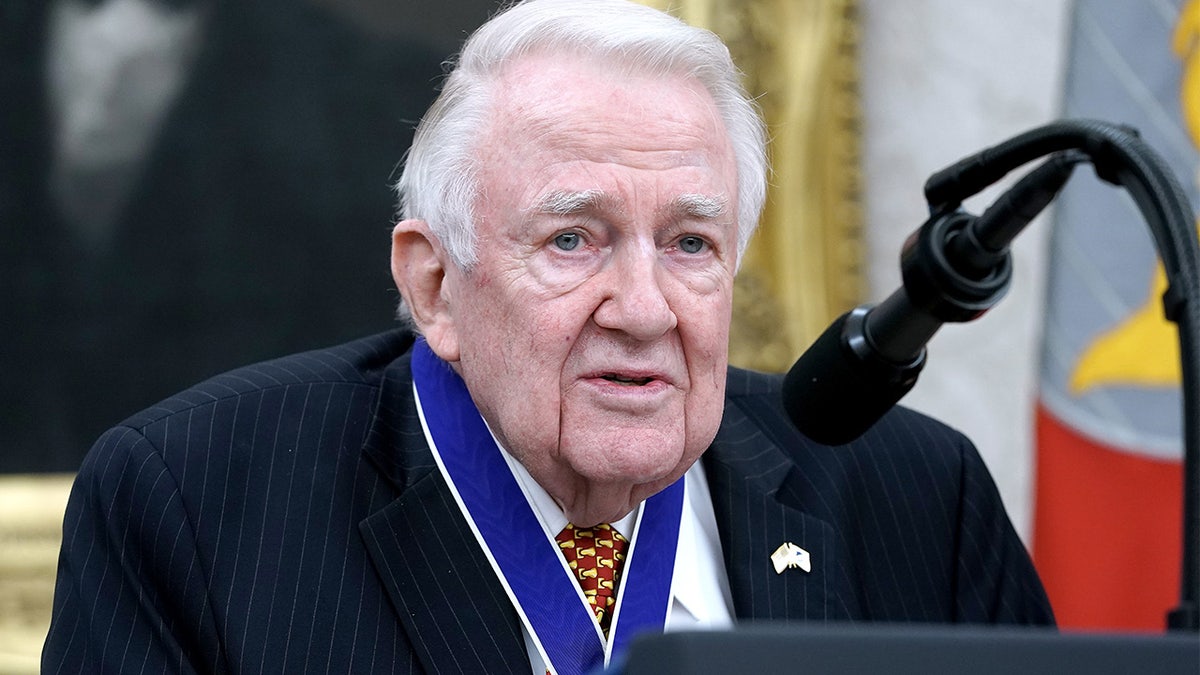
Ed Meese at microphone
Former Attorney General Edwin Meese delivers remarks after being awarded the National Medal of Freedom by President Donald Trump during a ceremony in the Oval Office at the White House in Washington, D.C., on Oct. 8, 2019. (Chip Somodevilla/Getty Images)

“Under the Appointments Clause, inferior officers can be appointed by department heads only if Congress so directs by statute… and so directs specifically enough to overcome a clear-statement presumption in favor of presidential appointment and senatorial confirmation. No such statute exists for the Special Counsel,” he added. 

Meese, who served as attorney general under former President Reagan, said “the Special Counsel, if a valid officer, is a superior (or principal) rather than inferior officer, and thus cannot be appointed by any means other than presidential appointment and senatorial confirmation regardless of what any statutes purport to say.”

Earlier this month, Smith petitioned the high court to decide Trump’s immunity claims in his case facing charges related to his efforts to overturn the 2020 election results. 

FEDERAL JUDGE DENIES TRUMP’S CLAIM OF PRESIDENTIAL IMMUNITY IN SPECIAL COUNSEL JACK SMITH’S JAN. 6 CASE

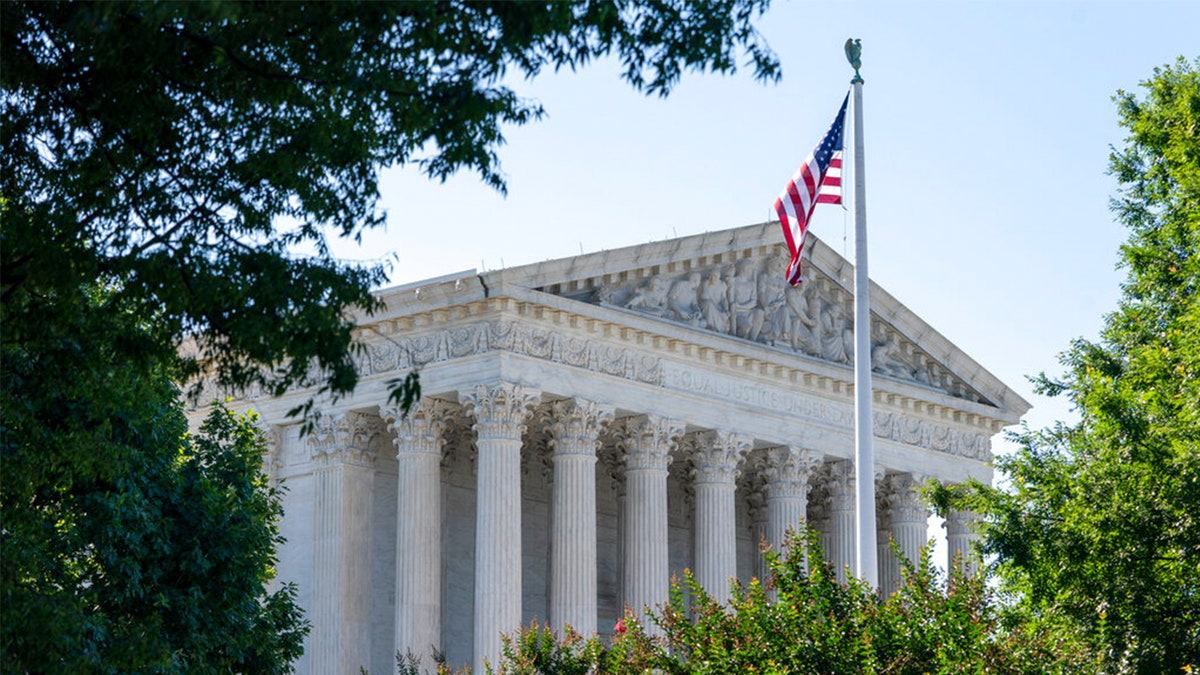
US Supreme Court building
The Supreme Court in Washington, D.C. (AP Photo/Jacquelyn Martin)

Smith asked for expedited consideration of the case to essentially have the high court take over jurisdiction before the lower federal courts have fully decided the matter.

CLICK HERE TO GET THE FOX NEWS APP 

Smith wants the court to expedite the claims in hopes to keep Trump’s Washington, D.C., trial — scheduled to begin March 4 — on track.

Brianna Herlihy is a politics writer for Fox News Digital.

Tag Cloud