Perspectives; Thoughts; Comments; Opinions; Discussions

Posts tagged ‘Keystone XL Pipeline’

Keystone Pipeline cancellation was ‘mistake,’ economist under Obama, Clinton admits — and slowing oil permits, ‘being hostile’ toward natural gas were errors, too


By DAVE URBANSKI | October 10, 2022

Read more at https://www.theblaze.com/news/keystone-pipeline-cancellation-was-mistake-economist-under-obama-clinton-admits/

JASON SZENES/AFP via Getty Images

Larry Summers — who served as treasury secretary under former President Bill Clinton and was the director of the National Economic Council under former President Barack Obama — admitted during a Friday interview on Wall Street Week that cancelling the Keystone Pipeline was a “mistake” and that slowing oil permits and “being hostile as a country” toward natural gas were errors as well.

What are the details?

During the interview, Summers was asked about the OPEC+ move to slash oil production by 2 million barrels a day in order to control prices — a move that was a blow to President Joe Biden, who made a trip to Saudi Arabia over the summer to implore oil kingpins there to increase production in order to lower gas prices.

Specifically, Summers was asked if the oil production downturn will have “larger macroeconomic effects” and possibly speed us into a global recession.

“There’s nothing good in this,” Summers replied.

Later he added that “we made a mistake by canceling the Keystone pipeline. We made a mistake by slowing down all kinds of permitting activity. We made a mistake by being hostile as a country to natural gas.”

He also said that “we made a mistake in the Congress a few weeks ago when we didn’t pass” the program from Democrat U.S. Senator Joe Manchin of West Virginia to expand permitting.

“We crucially need regulatory relief, or we’re not gonna get renewables online fast, and we’re not going to get the transmission lines that are necessary for renewables to become a large part of our energy fast,” Summers added. “So, the real lesson [of] this is we need a different kind of energy strategy than the one that we’ve had. We need a strategy that is balanced rather than an unbalanced strategy of total hostility to fossil fuels, or God knows the kind of total strategy of favoring fossil fuels that we had … even egregious favoritism toward Saudi Arabia that we saw during the Trump administration. We need to find a balance. And I think we’re making our way in that direction.”
Wall Street Week – Full Show 10/07/2022 youtu.be

Taxpayers could be on the hook for more than $15 billion after Biden canceled Keystone XL pipeline permit


Reported by CHRIS ENLOE | July 06, 2021

Read more at https://www.theblaze.com/news/taxpayers-15-billion-biden-canceled-keystone-xl-pipeline/

Taxpayers may be on the hook to compensate the Canadian energy company behind the Keystone XL pipeline project. Just as he promised, President Joe Biden revoked the permit for the Keystone XL pipeline on his first day in office. The move appeased climate change hawks, but resulted in thousands of hardworking construction workers losing their jobs. TC Energy, the Canadian-based company responsible for the pipeline, is seeking to recover more than $15 billion in damages caused by Biden’s permit cancellation.

In a news release last week, the company said it had “filed a Notice of Intent to initiate a legacy North American Free Trade Agreement (NAFTA) claim under the United States-Mexico-Canada Agreement to recover economic damages resulting from the revocation of the Keystone XL Project’s Presidential Permit.”

The notice was filed with the State Department.

The announcement comes after TC Energy officially canceled the Keystone XL pipeline project last month. The company said it would “coordinate with regulators, stakeholders and Indigenous groups to meet its environmental and regulatory commitments and ensure a safe termination of and exit from the project.” That means, according to Yahoo Finance, undoing pipeline construction that was already completed. Only about 10% of construction was finished.

The 1,179-mile pipeline with an $8 billion price tag would have transported 800,000 barrels of crude oil per day from the tar sands of Canada through the United States. The Biden administration has not yet responded to TC Energy’s claim.

The Biden administration was also sued by 21 states for canceling the Keystone XL construction permit. Those states alleged Biden exceeded his presidential authoring in revoking the permit.

Revocation of the Keystone XL pipeline permit is a regulation of interstate and international commerce, which can only be accomplished as any other statute can: through the process of bicameralism and presentment. The President lacks the power to enact his ‘ambitious plan’ to reshape the economy in defiance of Congress’s unwillingness to do so. To the extent that Congress had delegated such authority, it would violate the non-delegation doctrine. But Congress has not delegated such authority: It set specific rules regarding what actions the President can take about Keystone XL and when. The President, together with various senior executive officials, violated those rules. The action should be set aside as inconsistent with the Constitution and the Administrative Procedure Act, 5 U.S.C. §§ 500, et seq.

Among the states that joined the lawsuit included Texas, Montana, Alabama, Arizona, Arkansas, Georgia, Indiana, Kansas, Kentucky, Louisiana, Mississippi, Missouri, Nebraska, North Dakota, Ohio, Oklahoma, South Carolina, South Dakota, Utah, West Virginia, and Wyoming.

Alaska and Florida have since joined the lawsuit.

13 States Sue Biden Administration Over Federal Oil And Gas Leasing Ban


Reported by THOMAS CATENACCI, REPORTER | March 24, 2021

Read more at https://dailycaller.com/2021/03/24/louisiana-jeff-landry-thirteen-states-lawsuit-energy-oil-gas-leasing-president-joe-biden-administration/

  • A coalition of 13 states sued President Joe Biden’s administration Wednesday over its Jan. 27 ban of new oil and gas leasing on federal lands.
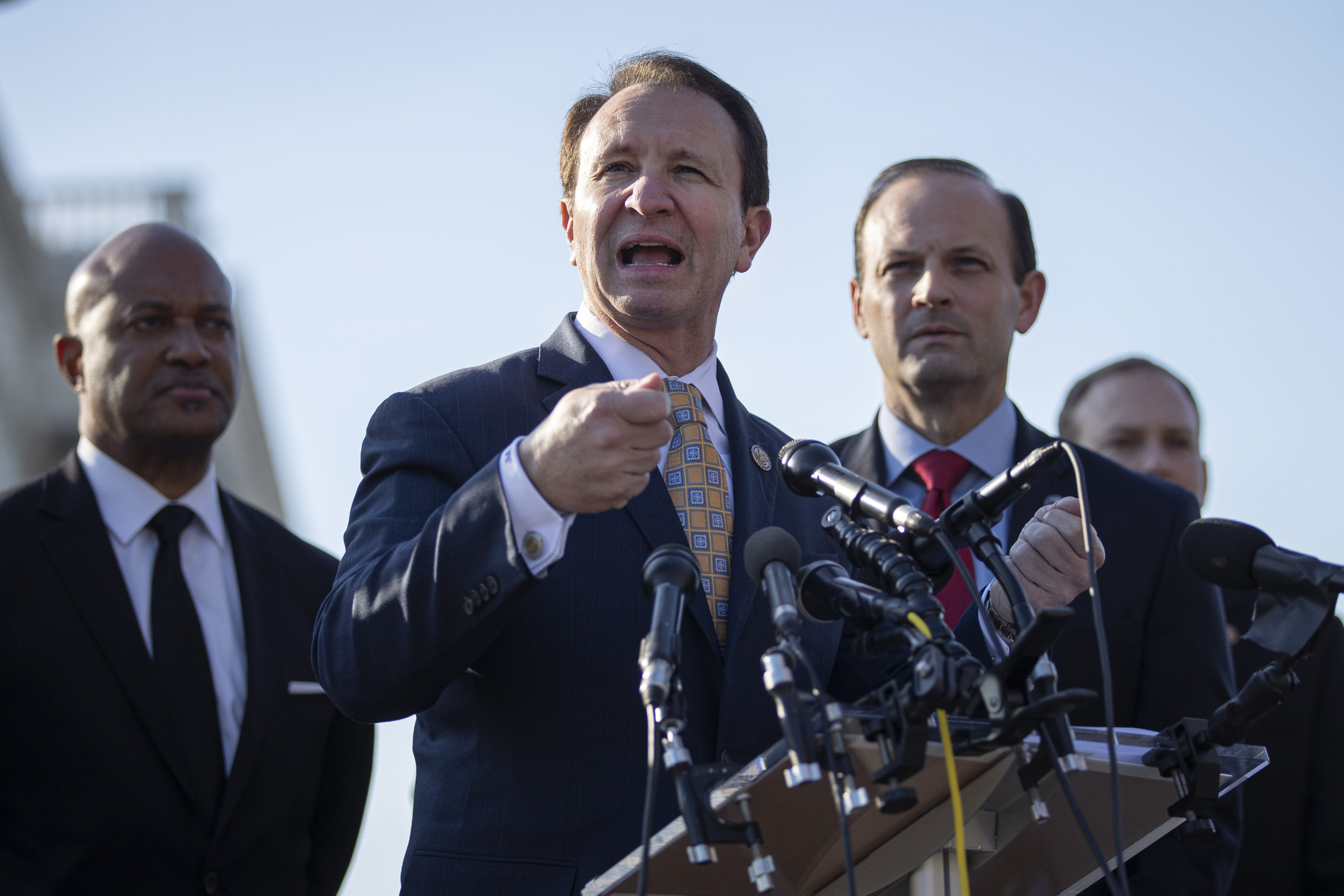
  • “By executive fiat, Joe Biden and his administration have single-handedly driven the price of energy up,” Louisiana Attorney General Jeff Landry said during a press conference Wednesday.
  • Biden’s executive order violated both the Outer Continental Shelf Lands Act and the Mineral Leasing Act, which affirm Congress’ intent to use U.S. resources to achieve energy independence, the lawsuit alleged.

A coalition of 13 states sued President Joe Biden’s administration Wednesday over its January ban of new oil and gas leasing on federal lands. The 13-state coalition argued that President Joe Biden’s Jan. 27 executive order banning new oil and gas leases on federal lands was unlawful, according to the lawsuit filed Wednesday afternoon in U.S. District Court for the Western District of Louisiana. Louisiana Attorney General Jeff Landry announced the lawsuit alongside state lawmakers and energy officials.

“By executive fiat, Joe Biden and his administration have single-handedly driven the price of energy up — costing the American people where it hurts most, in their pocketbooks,” Landry said during a press conference Wednesday. “Biden’s Executive Orders abandon middle-class jobs at a time when America needs them most and put our energy security in the hands of foreign countries, many of whom despise America’s greatness.”

Biden’s executive order violated both the Outer Continental Shelf Lands Act and the Mineral Leasing Act, which affirm Congress’ intent to use U.S. resources to achieve energy independence, the lawsuit alleged. The leasing ban forces the U.S. to be more dependent on foreign energy sources.

“For decades, Congress has embraced responsible development of our natural resources as a means of achieving energy independence – a matter of national security,” Landry said. “They have discarded vulnerable dependence on foreign oil, which is why the court should reject the Biden Ban.”

While the purpose of Biden’s executive action is to fight climate change, the action amounts to a massive divestment of environmental protection projects, according to Landry.

Days before he signed the executive order, Biden directed the Department of Interior to pause existing oil and natural gas leases on public lands and offshore waters. The agency is conducting a review of the current leases.

The announcement is the latest lawsuit filed by a state against the Biden administration. A coalition of 21 states sued Biden on March 17, arguing he overstepped his constitutional authority when he revoked the federal permit for the Keystone XL Pipeline on his first day in office.

Twelve states sued the Biden administration over its climate policies on March 8. One day later, two states sued the administration over its immigration policies.

A group of Republican attorneys general threatened further legal action against the Biden administration in a letter to Department of Treasury Secretary Janet Yellen last week. The 21 attorneys general demanded clarity on Biden’s position regarding state tax policy.

This story has been updated.

Keystone XL pipeline clears major hurdle


Reported

Keystone XL pipeline clears major hurdle
© Getty

Developers of the Keystone XL pipeline secured approval Monday for the pipeline to run through Nebraska, clearing a key hurdle in the years-long fight to build the project. The decision came after a rupture in TransCanada’s Keystone system spilled an estimated 210,000 gallons of oil in South Dakota last week, an incident that rankled opponents of the XL expansion.

Nebraska regulators approved plans for Keystone XL to cross the state, though the approval didn’t cover TransCanada’s preferred route through the state. The commission voted 3-2 to move the project forward. The approval comes eight months after President Trump issued a presidential permit for the $8 billion, 860 barrel per day project. Nebraska’s decision is not the last work on the project, but it is one of the last major hurdles remaining for the project.

Only the Trump administration has to issue permits for the pipeline now, though several permitting decisions — including Nebraska’s — are subject to legal challenges. TransCanada itself still has to decide whether to build the pipeline, an economic question that is far from settled.

TransCanada said in a brief statement that it is evaluating the Nebraska regulators’ decision to approve the pipeline route that the company did not favor.

“As a result of today’s decision, we will conduct a careful review of the Public Service Commission’s ruling while assessing how the decision would impact the cost and schedule of the project,” TransCanada CEO Russ Girling said in the statement.

Keystone has long been a flashpoint for anti-fossil fuel activists, who have rallied environmentalists, tribes and local landowners against the pipeline. TransCanada plans for the pipeline to transport oil from Alberta, Canada, to existing infrastructure in Nebraska, where it will then travel to refineries.

The Obama administration in 2015 blocked TransCanada’s application for a presidential permit, something the project requires because it crosses the border with Canada. That decision effectively stalled the project. But Trump revived the pipeline earlier this year, signing an executive order fast tracking its reconsideration. In March, he approved the presidential permit, kick starting a new debate over the project.

Trump often highlights his decision to revive the project as a key accomplishment of his first year in office.

Regulators in Montana and South Dakota, the two other states Keystone XL would cross, have already approved the pipeline, making Nebraska the last major backstop. The Public Service Commission held a series of hearings on the matter this year and considered more than 500,000 comments on the proposed route across the state.

“It’s been a long path to today’s approval and the Commission should be commended,” said Jack Gerard, the president of the American Petroleum Council oil industry group.

“Pipelines such as this enhance our ability to safely deliver North American energy to our world class refineries, which in turn provide the fuels and products we all rely on every day.”

Only one commissioner spoke for or against the project on Monday. Crystal Rhoades, an Omaha-area commissioner, questioned the economic impact of the pipeline on Nebraska and warned that a spill from the pipeline would impact environmentally sensitive areas of the state. She also said it could violate the rights of landowners in the state.

The commission’s decision is a legal decision subject to appeal, something opponents of the pipeline have said they will do. Developers still need to secure approval from two federal agencies, and permitting decisions in South Dakota and federally are the subject of environmentalist and tribal lawsuits.

“Regardless of the Public Service Commission’s decision today, millions of people across the country will continue to speak out and demand that the Keystone XL project never gets built,” Michael Brune, the executive director of the Sierra Club, said Monday.

“It is disappointing that the Public Service Commission sided with a foreign oil company over the interests of American communities who would be threatened by this pipeline, but we remain confident that Keystone XL will never be built.”

Thursday’s spill from a sister pipeline added a late twist to the Keystone XL saga.

TransCanada’s Keystone pipeline spilled about 210,000 gallons of oil in rural South Dakota on Thursday, with the pipeline shutting down for repair and cleanup work. Environmentalists hammered TransCanada for the spill and warned that it previewed potential spills from the larger Keystone XL project. But Nebraska law bars commissioners from considering the threat of an oil spill when permitting pipelines, because spill prevention and cleanup is a federal issue rather than a state one.

Despite the Monday approval, TransCanada still has not made a final decision to build Keystone XL.

Company executives told investors earlier this month that they would make a final investment decision in the coming months, based largely on Nebraska’s decision and on whether there is enough interest from oil companies who would be potential customers.

“I think we let those two events play out and that will give us greater visibility into our final investment decision,” Paul Miller, president of the company’s pipelines business, told investors.

“We’re quite encouraged with the results that we’ve seen.”

—Updated at 12:53 p.m.

These Maps Destroy Any Objections to Keystone XL Pipeline


http://freebeacon.com/blog/these-maps-destroy-any-objections-to-keystone-xl-pipeline/

An activist dressed as a polar bear participates in a protest vigil in Lafayette Park across from the White House

On Friday, President Barack Obama extended the decision on Canada’s Keystone XL pipeline until after the 2014 midterm elections. Announced on a Friday afternoon (the Good Friday holiday, no less) the story was barely covered by mainstream media outlets already heading out of town for their extended Easter weekend.

In a call with reporters on Friday, a Senior State Department official speaking on background said the administration “felt that it is important to have additional information and a better understanding of what that route might be, because it could have implications for the environmental, cultural and socioeconomic impacts that are being evaluated by the agencies.”

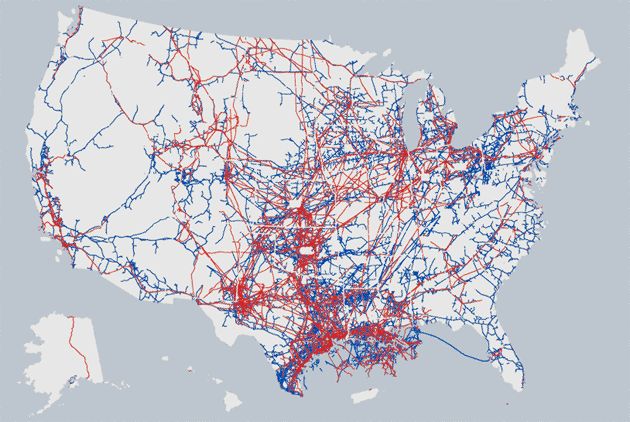
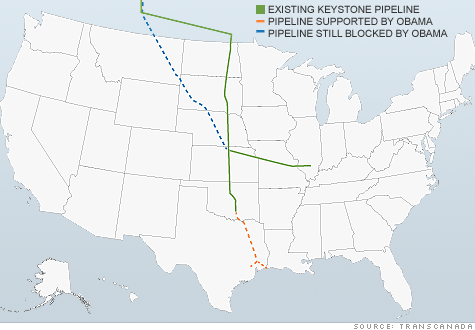
This explanation is spurious, at best. The U.S. portion of Keystone will consist of 1,078 miles of 30″ pipeline. Sounds like a major environmental issue, right? Not when compared to the already existing 2.3 million miles of pipeline already in the U.S. pumping petroleum, gas, and chemical products every day.

via ProPublica

To hear Obama warn against Keystone, you’d think this 1,000 miles of new pipe would be the deal-breaker in his campaign promise to slow the rise of the ocean’s tides. It defies any sense of logic or reason to suggest that 1,000 miles of new pipeline, installed with 2014 technology, would somehow endanger humanity when we already have 2,300 times that much already working without catastrophe.

kestonexl

So what is at play in this decision?

The answer could be found in the New York Times just two months ago:

A billionaire retired investor is forging plans to spend as much as $100 million during the 2014 election, seeking to pressure federal and state officials to enact climate change measures through a hard-edge campaign of attack ads against governors and lawmakers.Tyranney Alert

How would a billionaire environmentalist effect the President’s unpopular decision to delay the Keystone decision? Politico connected some of the dots:

He spent millions on the 2013 Massachusetts Senate and Virginia governor’s races, helping Democrats Ed Markey and Terry McAuliffe prevail, and has become one of the most outspoken opponents of the proposed Keystone XL oil pipeline. The group has also showed signs it’s willing to go after Democrats who support Keystone, possibly including vulnerable Louisiana Sen. Mary Landrieu.

Bottom line: There’s money in them thar anti-Keystone hills!

Most observers believe Obama will eventually make the obvious decision to allow Keystone. Big Labor supports it as well as a majority of U.S. senators, including many from his own party.

That’s what makes the delay so transparently cynical: As long as the Keystone question is open, the big money from deep-pocketed donors who have an obsession with global warming will continue to gush into the Democrat’s coffers.

Tag Cloud