
Perspectives; Thoughts; Comments; Opinions; Discussions

Posts tagged ‘James Madison’

Leftists Want Direct Democracy Because It’s Easy to Manipulate the Masses


BY: CASEY CHALK | JANUARY 03, 2024

Read more at https://thefederalist.com/2024/01/03/leftists-want-direct-democracy-because-its-easy-to-manipulate-the-masses/
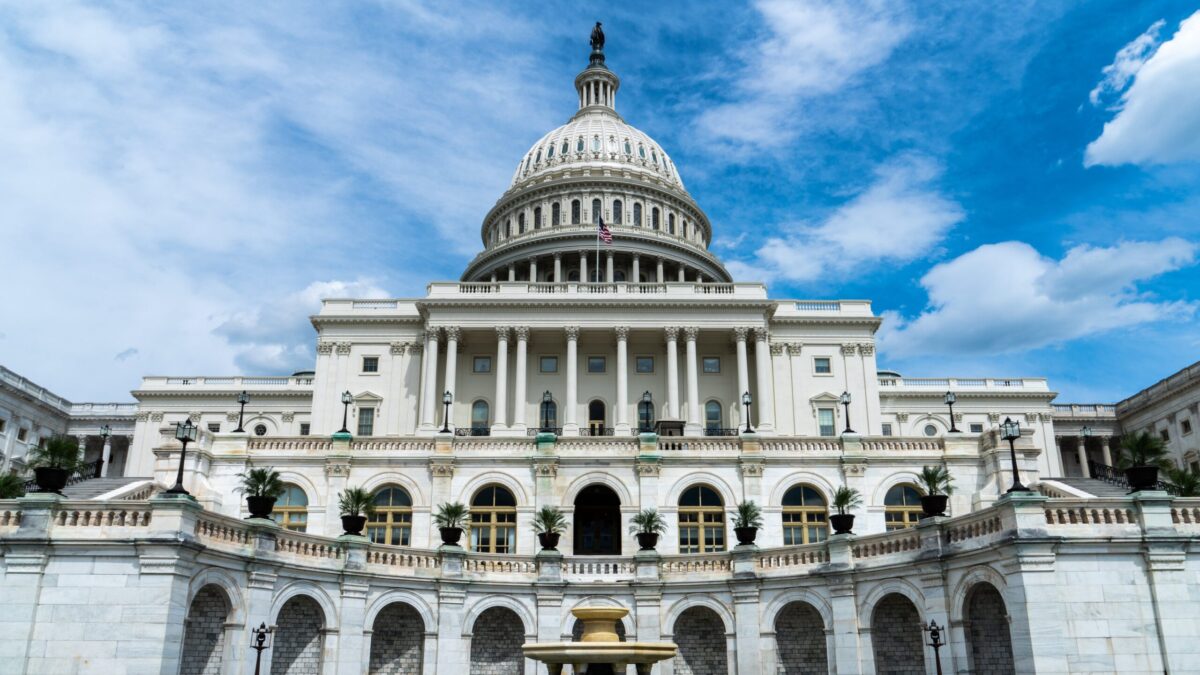

US Capitol Building

Author Casey Chalk profile

CASEY CHALK

MORE ARTICLES

“American democracy is cracking,” warns Washington Post Chief Correspondent Dan Balz in a recent column that presents some ideas to repair it. His suggestions include, among other things, proportional representation, diminishing the power of the Senate, and eliminating the Electoral College. What these three suggestions have in common is a desire to remove any intermediary institutions between the will of the people and government action — otherwise known as “direct” democracy. 

These proposals are not new. Indeed, even the framers of the Constitution were familiar with them. But the reasons why such suggestions would significantly erode the republican government envisioned by our Founding Fathers are not new either. 

Given Biden’s low approval ratings — especially in important swing states with critical Electoral College votes — as well as broader Democrat fears of a Republican takeover of the Senate, we will likely hear a renewed chorus of voices calling for direct democracy. After all, masses of individuals are much easier to manipulate than smaller families, communities, or even states. Conservatives would do well to arm themselves with the best arguments against such initiatives.

Founders Worked to Curb Direct Democracy

The framers of our Constitution felt quite strongly that direct democracy was something to avoid. In Federalist 10, for example, the Father of the Constitution James Madison warned of “the superior force of an interested and overbearing majority” on a government, or what has come to be called the “tyranny of the majority,” in which a majority of the population exerts great coercive power over minority factions.

Again in Federalist 51, Madison wrote: “[I]n the federal republic of the United States … all authority in it will be derived from and dependent on the society, the society itself will be broken into so many parts, interests, and classes of citizens, that the rights of individuals, or of the minority, will be in little danger from interested combinations of the majority.” 

Our second president, John Adams, called a unicameral legislative body — in which each member is accountable to his constituents — a “tyranny of the majority.” Adams, reflecting the opinion of that founding generation, argued for “a mixed government, consisting of three branches.” The framers took various steps to disburse power among the federal government, dividing it into three competing branches: executive, legislative, and judicial. 

But the founders’ dispersion of governing power also goes beyond the three branches. The 10th Amendment reads: “The powers not delegated to the United States by the Constitution, nor prohibited by it to the States, are reserved to the States respectively, or to the people.” In other words, unless the Constitution expressly grants certain powers to the federal government, those powers exist in the states or, even more decentralized, in local communities of Americans. 

Later Generations Understood the Threat

A generation after that founding generation, visiting French aristocrat Alexis de Tocqueville authored an extended survey of American politics and culture, Democracy in America. Tocqueville perceived that the American political system was created to resist the tyranny of the majority, “which bases its claim to rule upon numbers, not upon rightness or excellence.” Thus, Tocqueville writes:

When a man or a party suffers from an injustice in the United States, to whom do you want them to appeal? To public opinion? That is what forms the majority. To the legislative body? It represents the majority and blindly obeys it. To the executive power? It is named by the majority and serves it as a passive instrument. 

In other words, the executive branch, even with its disbursed powers, can be influenced by this tyrannical tendency to reflect the opinions of the majority of the people against minority interests at the state or community level. It was thus only through the states and local bases of power and voluntary associations that this tyrannical tendency could be avoided. 

A century after Tocqueville’s warnings, Supreme Court Justice Louis Brandeis discussed another way to understand our nation’s default desire to resist direct democracy. Brandeis was one of the first to describe the states as “laboratories of democracy.” In his New State Ice Co. v. Liebmann opinion, he explained how “a single courageous State may, if its citizens choose, serve as a laboratory; and try novel social and economic experiments without risk to the rest of the country.”  

State and local autonomy served as a means of testing laws and policies to evaluate their effectiveness before implementing across a diverse nation of states, localities, and subcultures. If something works at the micro level, other localities or states — and even potentially the federal government — can appreciate and adopt it. 

Constant Temptation of Direct Democracy

Yet such a deliberative process of testing is slow and uneven. And we Americans are often eager for speedy solutions. Political theorists, journalists, and ordinary citizens throughout American history have been frustrated by the Constitution’s manifold methods of distributing power to deter the tyranny of the majority. If a majority of the nation’s populace wants something, they posit, why shouldn’t they be able to get it? After all, as the journalist H.L. Mencken wryly commented, “Democracy is the theory that the common people know what they want, and deserve to get it good and hard.” 

Such demands especially increase at times of heightened political gridlock in which the country obviously has a particular problem or set of problems but constitutionally mandated laws and procedures thwart attempts to resolve them. When we are all vexed with our politicians for failing to act in what we believe to be the interests of the nation (and its voters), it’s easy to be sympathetic to that line of thinking. 

Yet we must beware of this temptation, which reflects what conservative political theorist Russell Kirk calls a manifestation of vox populi, vox dei — the voice of the people is the voice of God. In other words, as long as they constitute a majority, whatever the people want becomes the law of the land. 

Direct democracy thus not only represents a threat to freedom, but it is a political order that rejects hierarchies both natural and spiritual. Although these hierarchies are sometimes abused, they serve as a cautionary brake upon the whims of the masses, which — as many revolutions have demonstrated — can be quite violent and destructive. Just look at the French or Russian Revolutions, which ended up terrorizing those they claimed to represent. Millions of dead across the world reveal the problem with direct democracy.

This is the reason for state representation rather than proportional representation in the lower House, a Senate consisting of equal representation by state, the filibuster, the Electoral College, and powers relegated to the states vis-a-vis the 10th Amendment. All of it is an attempt to slow the destructive force of vox populi, vox dei

As that great French observer of American politics Alexis de Tocqueville observed: “If ever freedom is lost in America, that will be due to the … majority driving minorities to desperation…” 

Let’s do everything we can to avoid that scenario.


Casey Chalk is a senior contributor at The Federalist and an editor and columnist at The New Oxford Review. He has a bachelor’s in history and master’s in teaching from the University of Virginia and a master’s in theology from Christendom College. He is the author of The Persecuted: True Stories of Courageous Christians Living Their Faith in Muslim Lands.

America’s Founders Didn’t Support Open Borders, And Neither Should We


BY: HELEN RALEIGH | MAY 10, 2023

Read more at https://thefederalist.com/2023/05/10/americas-founders-didnt-support-open-borders-and-neither-should-we/

european immigrants at Ellis Island

Author Helen Raleigh profile

HELEN RALEIGH

VISIT ON TWITTER@HRALEIGHSPEAKS

MORE ARTICLES

There is little evidence that the founders advocated for a free-for-all, open-door immigration policy.  

From the very beginning, even in the absence of immigration law, the founders knew America had to set boundaries. Their top three concerns were the qualifications, assimilation, and allegiance of newcomers. The founders emphasized the moral character and contributions newcomers would bring. 

Not only should new migrants have good moral character, but they should also place “high importance to the respectability and character of the American name” and do their best to “preserve its good fame from injury,” as Rep. James Jackson, a Democratic-Republican from Georgia, said in 1790. The founding generation didn’t want convicts and criminals as new immigrants.  

George Washington preferred skilled new immigrants, such as “useful mechanics and some particular descriptions of men or professions.” James Madison wanted the “worthy part of mankind to come and settle amongst us,” so they can “increase the wealth and strength of the community; and those who acquire the rights of citizenship, without adding to the strength or wealth of the community are not the people we are in want of.”  

How can a new immigrant increase the wealth and strength of a community? Rep. John Laurance clarified:  

Every person who comes among us must do one or the other; if he brings money, or other property with him, he evidently increases the general mass of wealth, and if he brings an able body, his labor will be productive of national wealth, and an addition to our domestic strength. Consequently, every person, rich or poor, must add to our wealth and strength, in a greater or less degree. 

Assimilation Strengthens and Protects  

The United States was founded upon specific ideas and moral principles, as expressed by the eloquent words of the Declaration of Independence. Thomas Jefferson believed that “it is for the happiness of those united in society to harmonize as much as possible in matters which they must of necessity transact together.”  

He feared that if new immigrants believed different ideas, then “with their language, they will transmit [them] to their children. In proportion to their numbers, they will share with us the legislation. They will infuse into it their spirit, warp and bias its direction, and render it a heterogeneous, incoherent, distracted mass.”  

Benjamin Franklin shared Jefferson’s concerns. Some people today accuse Benjamin Franklin of being anti-immigration because of the disparaging words he said about German immigrants. In fact, Franklin was anything but opposed to immigration. He published the first German newspaper in America, the Philadelphische Zeitung, in 1732Franklin was not against immigration; he was concerned that a lack of assimilation would be harmful to immigrants’ happiness and damning to the unity and longevity of the republic.  

George Washington expressed a similar concern: that immigration does not benefit America when immigrants congregate and “retain their language, habits and principles (good or bad) which they bring with them.”  

Instead, he firmly believed that new immigrants or their descendants should, “by an intermixture with our people … get assimilated to our customs, measures and laws: in a word, soon become one people.”  

Immigrants Must Pledge Allegiance 

No matter what drives them to America, some immigrants retain residual loyalty to their countries and cultures of birth. To become Americans, the founders believed immigrants needed to give up prior allegiances and pledge an oath of fidelity to the U.S. In Alexander Hamilton’s words:  

The safety of a republic depends essentially on the energy of a common national sentiment; on a uniformity of principles and habits; on the exemption of citizens from foreign bias and prejudice; and on the love of country which will almost invariably be found to be closely connected with birth, education, and family.  

John Quincy Adams, in an 1819 letter to Moritz von Furstenwarther, a German citizen who was considering moving to the U.S. and had asked Adams for a job, stated that the U.S. is a land “not of privileges, but of equal rights.” Thus, Adams warned Furstenwarther that new immigrants like him:

Must cast off the European skin, never to resume it. They must look forward to their posterity, rather than backward to their ancestors; they must be sure that whatever their own feelings may be, those of their children will cling to the prejudices of this country, and will partake of that proud spirit. 

Citizenship Isn’t Cheap

While some founders believed an oath of allegiance and a declaration to stay in America were sufficient for citizenship, others did not want to give out citizenship too cheaply.  

They pointed out that some foreign sailors had voted in Philadelphia’s assembly elections after taking oaths of allegiance and then left America, having never intended to stay. This kind of practice not only results in election fraud but also threatens the “safety of a republic” because a foreigner who rejects American principles and ideas would vote against them. 

Therefore, some founders thought “some security for their [immigrants’] fidelity and allegiance was requisite besides the bare oath.” The additional security the founders sought was property ownership or residency.  

Property ownership has been used to distinguish citizens from aliens since the Roman Empire. Some founders wanted to “see the title of a citizen of America as highly venerated and respected as was that of a citizen of old Rome.”  

During the House of Representatives debate on immigration law in Philadelphia in 1790, the majority of the founders regarded it as essential that an individual have a period of residency in the U.S. prior to gaining citizenship. Residency achieved two purposes, according to Rep. Michael Stone: 

First, that he should have an opportunity of knowing the circumstances of our Government, and in consequence thereof, shall have admitted the truth of the principles we hold. Second, that he shall have acquired a taste for this kind of Government. And in order that both these things may take place, in such a full manner as to make him worthy of admission into our society.

Founders extensively debated how long residency should be. Some suggested two years, while others suggested five years or even longer. But all agreed the residency requirement should be long enough to “give a man an opportunity of esteeming the Government from knowing its intrinsic value,” which “was essentially necessary to assure us of a man’s becoming a good citizen.”  

Hamilton, the most famous immigrant to America, opposed limiting any congressional office to either native-born Americans or immigrants who met the residency requirement. People suspected later that he was trying to make himself eligible for the U.S. presidency.  

Hamilton’s actual argument at the Constitutional Convention showed he was more concerned about ordinary immigrants. He pointed out, “Persons in Europe of moderate fortunes will be fond of coming here, where they will be on a level with the first citizens. I move that the section be so altered as to require merely citizenship and inhabitancy.”

The majority overruled Hamilton’s proposal by requiring future U.S. House Representatives to meet a seven-year residency requirement, U.S. senators a nine-year residency, and presidents a 14-year residency.  


Helen Raleigh, CFA, is an American entrepreneur, writer, and speaker. She’s a senior contributor at The Federalist. Her writings appear in other national media, including The Wall Street Journal and Fox News. Helen is the author of several books, including “Confucius Never Said” and “Backlash: How Communist China’s Aggression Has Backfired.” Her latest book is the 2nd edition of “The Broken Welcome Mat: America’s UnAmerican immigration policy, and how we should fix it.” Follow her on Parler and Twitter: @HRaleighspeaks.

Bill of Rights’ Most Important Liberty: Religion


waving flagWritten by Bethany Blankley

John-Adams-Quote-Liberty-Lost1

The Bill of Rights, the first ten amendments to the Constitution, listed non-negotiable constitutionally guaranteed freedoms in specific order, unchanged since 1791. James Madison, its chief architect, listed freedom of religion first; then speech, press, assembly, petition, right to keep and bear arms, and freedom from forced quartering of military members in one’s home.

Freedom from civil government overreach and interference was essential to establishing sustainable civil order and a just rule of law; the first ten amendments — only 468 words — were added to protect what the founders considered “preexisting rights” from federal government “encroachment.”

Freedom of religion was un-mistakenly listed as the first freedom of the Bill of Rights. And the term “religion” was well understood from its original context derived from the State of Virginia’s Bill of Rights. In Article 1, Section 16, Virginia’s Bill of Rights defines “religion” as “the duty which we owe to our Creator… the manner of discharging… [of which] can be directed only by reason and conviction, not by force or violence.”

(Many significant words and phrases used to write the Bill of Rights to the U.S. Constitution were selected from preexisting documents and individual state constitutions’ declaration of rights, which provided more detailed definitions.)

Virginia’s Bill of Rights legally defined “religion” as a means to secure freedom from government coercion, which enabled a foundational protection for other freedoms. The Bill of Rights, by defining religion, allows people to believe and act by “reason or conviction” without fear of being coerced to violate their “dictates of conscience.” In this way, religion is jurisdictional– the Bill of Rights ensures that the government cannot force a citizen to violate his/her conscience.AAA02

James Madison articulated in Memorial and Remonstrance:

“The Religion … of every man must be left to the conviction and conscience of every man; and it is the right of every man to exercise it as they may indicate. This right in its nature is an unalienable right. It is unalienable; because the opinions of men … cannot follow the dictates of other men: It is unalienable also; because what is here a right towards men, is a duty towards the Creator. … This duty is precedent both in order of time and degree of obligation, to the claims of Civil Society.”GOD

Madison believed that citizens were first “subject[s] of the Great Governor of the Universe,” who must first make his/her “allegiance to the Universal Sovereign” before they could consider being a “member of Civil Society.”ONE NATION

He considered religion first and foremost “immune” from any and all civil authorities. The wording used for the First Amendment’s two religion clauses were specifically straightforward: “Congress shall make no law respecting an establishment of religion, or prohibiting the free exercise thereof …” All matters of religion were exempted from civil authority.

Madison asserted:

“In matters of Religion, no man’s right is abridged by the institution of Civil Society, and that Religion is wholly exempt from its cognizance.”

want_rel_liberty_rAs a legal and jurisdictional matter, Madison asserted that all men are first subject to God as an immutable fact based on the Christian worldview (Mark 12:17, Psalm 24:1). It was imperative to specify that no government could ever have authority over one’s relationship with God. Understanding that even governmental authority itself originates from God (Romans 13:1) — moral standards could not be mutually exclusive from rule of law.

Furthermore, freedom of conscience, under the jurisdiction of freedom of religion, established the next four freedoms guaranteed by the First Amendment. They include freedom of speech, freedom of the press, freedom to peacefully assemble, and freedom to petition the government for a redress of grievances. These four freedoms granted constitutional security for “residual sovereignty” of the people, not the government. The Bill of Rights ensured freedom of religion as the foundation for all other liberties. No other amendments were possible if freedom of religion had not first been guaranteed as an unalienable right.One Nation Under God

Bethany Blankley; http://BethanyBlankley.com

Bethany Blankley is a political analyst for Fox News Radio and has appeared on television and radio programs nationwide. She writes about political, cultural, and religious issues in America. She worked on Capitol Hill for four U.S. Senators and one U.S. Congressman, for a former New York governor, and for several non-profits. She earned her masters degree in theology from The University of Edinburgh, Scotland and her bachelors degree in politics from the University of Maryland. Follow her @bethanyblankley & BethanyBlankley.com.049590d9aa5e45170821a5ba6f11ac12  SCOTUS Death lost forever liberty 

freedom combo 2

What founders want to teach Obama this July 4


waving flagPosted By author-image Chuck Norris On 06/28/2015

Article printed from WND: http://www.wnd.com

URL to article: http://www.wnd.com/2015/06/what-founders-want-to-teach-obama-this-july-4

I commend President Obama for giving the eulogy at the funeral of Rev. Clementa Pinckney, who was gunned down along with eight other precious souls during a Bible study at their Charleston Church. Obama said some honorable and moving words about the fallen. He also spoke at length about amazing grace – and even sang about it.

But then he stirred what I call the nebulous and confusing religious pot by stating: “If we can find that grace, anything is possible. If we contacted that grace – can tap that grace, everything can change.”

“If we can find”? “If we contacted … can tap”? “If”?

The president is right that “anything is possible” and “everything can change” with God’s amazing grace. But he ought not to have spoken with such ambiguity, doubt and conditionality as “if” finding grace were wishing upon a star or discovering a needle in a haystack.

America’s founders – as well as most presidents throughout history – were unequivocally certain about the role of faith in our republic. They were without hesitation or doubt when they spoke about the bedrock of religion in society and human hearts. Our founders knew without it, they were sunk as well as our nation.

On the eve of another Independence Day, I think it’s critical that we reconsider exactly how our founders expected religion to breathe life into our nation and play out in society. If we don’t, we run the risk of crippling our country and shredding it at its seams. Indeed, we’ve already traveled too far down the road of religious degradation by omitting God from classrooms to historic monuments. We have also bastardized our founders’ first tenet of religion (First Amendment) and totally abandoned their understanding and call for its primary purpose in our republic. Let me explain.

Our founders’ first tenet of religion is captured in the First Amendment of the U.S. Constitution. You know the words: “Congress shall make no law respecting an establishment of religion, or prohibiting the free exercise thereof.” In short, religious liberty will reign in our new nation. Congress shall protect individuals from forced sectarianism unlike it was done in England, and choice and freedom are to be protected and secured from the tyranny of government.burke

Well, that isn’t our First Amendment today, or at least how most secular progressives interpret it. They explain and use it solely as a buffer from keeping religious opinion or discussion – in any way, shape or form – out of every governmental or public arena. But that is the polar opposite of the First Amendment’s very purpose, which was to protect and preserve religious practice and liberty in any place, including in the halls of government.

As I wrote in my New York Times best-seller, “Black Belt Patriotism,” though Jefferson is generally hailed as the chief of church-state separation, proof that Jefferson was not trying to rid government of religious (specifically Christian) influence comes from these facts: He endorsed using government buildings for church meetings, signed a treaty with the Kaskaskia Indians that allotted federal money to support the building of a Catholic church and to pay the salaries of the church’s priests, and repeatedly renewed legislation that gave land to the United Brethren to help their missionary activities among the Indians.

Some might be completely surprised to discover that just two days after Jefferson wrote his famous letter citing the “wall of separation between Church & State,” he attended church in the place where he always had as president: the U.S. Capitol. The very seat of our nation’s government was used for sacred purposes. The Library of Congress’ website notes, “It is no exaggeration to say that on Sundays in Washington during the administrations of Thomas Jefferson (1801-1809) and of James Madison (1809-1817) the state became the church.”

President John Adams spoke about how central God was to be in our republic, when he said, “Our Constitution was made only for a moral and religious people. It is wholly inadequate to the government of any other.”

And to what religion was Adams referring? He gave us an answer when he wrote, “The general principles on which the Fathers achieved independence were the only Principles in which that beautiful Assembly of young Gentlemen could Unite. … And what were these general Principles? I answer, the general Principles of Christianity, in which all these Sects were united.”

Our Founders believed religion (specifically Christianity) would serve as the basis for morality and decency. They warned us specifically that, to abandon that foundation for our ethics, would leave society in civil unrest—just as we see today in run amuck classrooms and homes across the nation and people treating one another with such malevolence.

George Washington also warned future Americans of this very problem in his presidential farewell address: “Of all the dispositions and habits which lead to political prosperity, religion and morality are indispensable supports. … And let us with caution indulge the supposition that morality can be maintained without religion. Whatever may be conceded to the influence of refined education on minds of peculiar structure, reason and experience both forbid us to expect that national morality can prevail in exclusion of religious principle.”

Well, the present leaders of our nation (including the Supreme Court) have turned a deaf ear to Washington’s warning and taken him up on his challenge to try to maintain “morality … without religion.”tyrants

America is now like it was in the time of the Judges in the Old Testament: “In those days there was no king in Israel; everyone did what was right in his own eyes” (Judges 21:25). That’s how it is today – with God being abandoned, so is our moral basis, and everyone is doing what is right in their own eyes. We’ve lost our moral compass, and that includes our president.

As a result, the president is as lost as the most wayward and rebellious youth. Instead of conveying any form of positive Washington conviction about the role of religion, President Obama casts conditional clauses (“If”) and doubt. He might have sounded like a preacher this past week in Charleston, but the truth is he is a charlatan chameleon when it comes to religion and specifically Christianity. Indeed he’s been known to mock it as he did in 2006 when he gave the following secular progressive diatribe against it.

As my friend and editor of WND, Joseph Farah, noted in 2012, Obama’s speech was given before an audience led by socialist Jim Wallis at the Call for Renewal conference. It starts getting interesting around the 26-minute mark, when Obama first made the point publicly that “whatever we once were, we are no longer a Christian nation.”

Obama went on, “Even if we had only Christians in our midst, if we expelled every non-Christian from the United States of America, whose Christianity would we teach in the schools?” Obama asks rhetorically. “Would it be James Dobson’s or Al Sharpton’s? Which passages of Scripture should guide our public policy? Should we go with Leviticus, which suggests slavery is OK – and that eating shellfish is an abomination? Or we could go with Deuteronomy, which suggests stoning your child if he strays from the faith? Or should we just stick to the Sermon on the Mount – a passage that is so radical that it’s doubtful that our own Defense Department would survive its application. So before we get carried away, let’s read our Bibles now. Folks haven’t been reading their Bibles.”muslim-obama

Regarding Obama’s words, I conclude not with my comments but those of John Witherspoon, a signer of the Declaration of Independence and president of the College of New Jersey (1768-94; now Princeton University), who said, “He is the best friend to American liberty, who is most sincere and active in promoting true and undefiled religion, and who set himself with the greatest firmness to bear down on profanity and immorality of every kind. Whoever is an avowed enemy of God, I scruple not to call him an enemy to his country.”You cannot be right for America if you're wrong with God

(Next week, I’ll expand on my thoughts here in my Independence Day weekend column, “In God we still must trust.” In the meantime, I highly encourage your reading of my New York Times bestseller, “Black Belt Patriotism,” where you will find loads more about what our founders actually thought, practiced, and wanted for our country)

The Founders Put Article 5 in Place to Stop an Out of Control Federal Government


Posted on February 21, 2015 by Conservative Byte

URL of the Original Posting Site: http://conservativebyte.com/2015/02/founders-put-article-5-place-stop-control-federal-government/

Scene_at_the_Signing_of_the_Constitution_of_the_United_States

A Response to Publius Huldah

Michael Farris, J.D., LL.M.
Chancellor, Patrick Henry College

Anonymous blogger Publius Huldah attacks the Founder’s solution for a runaway federal government with a series of ad hominems and misdirections. A perpetual naysayer, she can propose no better solution of her own, other than the extra-constitutional doctrine of nullification. Huldah betrays her lack of credibility in the opening line of her email when she says there is no such thing as a Convention of States. Contrary to her assumption, that phrase is not a fabrication of ours. It comes from the very first Article V application which was filed by the state of Virginia in 1789.1 If she objects to that phrase, she had best take it up with the Founders. The bulk of her article is a giant ad hominem directed against our organization and Professor Robert Natelson. Behind all this bluster, her argument rests on two easily refuted facts: (1) the Constitutional Convention of 1787 was a runaway convention, and (2) James Madison had concerns that Article V didn’t lay out the convention process in sufficient detail. I have already debunked the first claim as a myth in my response to Mr. DeWeese, so here I will focus on the second.

It is true that at the Constitutional Convention Madison raised some questions about “the form, quorum, &c” of such a convention. But according to Madison’s own notes, the motion to add a Convention of States to Article V passed “nem. con.” “without objection.”2 Apparently Madison had his doubts put to rest, or he didn’t consider them important enough to vote against the proposed change to Article V. If a Convention of States were the terrible constitutional reset button that Huldah describes, surely Madison, or at least one of the other Framers, would have voted against it.

As it turns out, the Founders strongly supported it. In fact, Madison later expressed his staunch support for Article V in Federalist No. 43. In praise of Article V he wrote:

“The mode preferred by the convention, seems to be stamped with every mark of propriety. It guards against that extreme facility, which would render the constitution too mutable; and that extreme difficulty, which might perpetuate its discovered faults.”

There can be no doubt that Madison, like the other Founders, was a champion for Article V.

Mr. DeWeese and Ms. Huldah can’t get their own story straight. DeWeese attacks the credibility of the Founders, particularly James Madison, the Father of the Constitution, by accusing them of illegally adopting the Constitution. Huldah, on the other hand, expects us to venerate this supposed tyrant and hang on his every word. How strange that they should so heavily rely on the same man they accuse of a felony.more evidence

Of course, as I have argued at length, history vindicates Madison and the other Framers. We are quite right to listen to them, and their unanimous support for a Convention of States speaks volumes.

1 1 ANNALS OF CONG. 258–59 (J. Gales, Sr. ed., 1834) (H.R. May 5, 1789), available at http://article5library.org/gettext.php?doc=1418.

2 5 DEBATES ON THE ADOPTION OF THE FEDERAL CONSTITUTION 551 (Jonathan Elliot ed., 1827), available at http://files.libertyfund.org/files/1909/1314.05_Bk.pdf.

FOR MORE ANSWERS TO OBJECTIONS, AND MYTHS ABOUT THE CONVENTION OF STATES GO TO www.conventionofstates.com

 Freedom with Prayer

Tag Cloud