Perspectives; Thoughts; Comments; Opinions; Discussions

Posts tagged ‘Hedieh Mirahmadi’

Opinion Op-ed: Fighting evil in a modern world


Commentary By Hedieh Mirahmadi, Exclusive Columnist| Thursday, August 12, 2021

Read more at https://www.christianpost.com/voices/fighting-evil-in-a-modern-world.html/
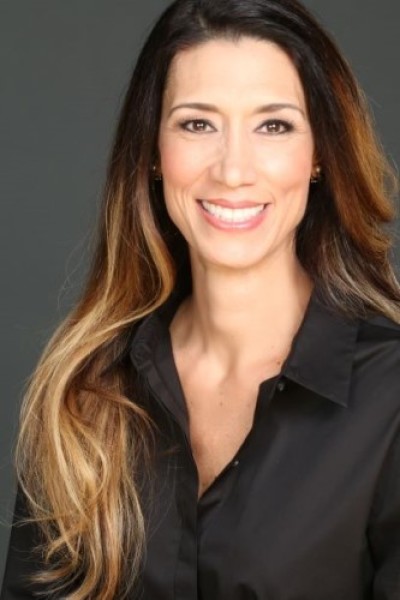
Hedieh Mirahmadi
Courtesy of Hedieh Mirahmadi

In the book of Romans, the Apostle Paul is writing to a church that just came out of a very depraved lifestyle, so when he gives these warnings, they relate to it. It is astonishing how these words still resonate over 2,000 years later.

“Therefore God gave them over in the sinful desires of their hearts to sexual impurity for the degrading of their bodies with one another. They exchanged the truth about God for a lie, and worshiped and served created things rather than the Creator… Because of this, God gave them over to shameful lusts. Even their women exchanged natural sexual relations for unnatural ones. In the same way the men also abandoned natural relations with women and were inflamed with lust for one another… Although they know God’s righteous decree that those who do such things deserve death, they not only continue to do these very things but also approve of those who practice them.” (Romans 1: 24-27, 32)

The most alarming aspect of how similar we are is that “those that know the righteous decree” are either foolishly or knowingly supporting precisely the kind of immorality we are warned to avoid. Modern ideas of the “woke culture”gender fluidity, legitimizing same-sex relationships, and humanism are not biblical principles.  According to the American Humanist Association, “Religious Humanism is without a god, without a belief in the supernatural, without a belief in an afterlife, and without a belief in a “higher” source of moral values.” How then can a Christian then find common ground with such ideals?

On the opposite end of the spectrum, the Lord also commands the church to be as one body, united in faith under one Spirit. However, unity is impossible without agreement. The Body of Christ must be unified around the ultimate truth that is contained in the Bible. Though we all have sinned and fallen short of God’s ideals, the Church should not condone immoral principles. All of humanity needs salvation, but it requires repentance from sin, the desire to turn away from it, and the acceptance of Christ as Lord and Savior.

These seemingly contradictory principles leave Christians with the difficult task of reconciling the commandment to avoid evil and achieving unity within the Body of Christ. We must be wise enough to distinguish between people simply acting foolish or naive instead of espousing wickedness. Being wise is not as the culture defines it but being wise in the ways of God means following His commands. Through knowledge of God’s word and prayer, we will gain the discernment and wisdom to know the difference.   

Kids are being indoctrinated to believe that if it feels good, do it. They are being taught there is no absolute truth — not their gender, the notion of marriage only being between a man and woman, and even rejecting the founding principles of our country.  

Professors say you can’t legislate morality, but of course, you can! That is why we do not drive 100mph in a school zone, and child pornography is a crime. Morality isn’t something you invent; it comes from God. Tacit support by the Church of principles that stem from a denial of God’s law leads to the destruction of our youth, our families, and eventually the moral fabric of our country. God can and does gives such a society over to its wicked desire.

“Furthermore, just as they did not think it worthwhile to retain the knowledge of God, so God gave them over to a depraved mind so that they do what ought not to be done. They have become filled with every kind of wickedness, evil, greed, and depravity.” (Romans 1: 28-29)

Sometimes, believers are following trends in our culture out of ignorance. We extend grace and compassion for them until it becomes clear they are unwilling to relent in support of depravity. As God says in Jude, “And on some have compassion, making a distinction; but others save with fear, pulling them out of the fire, hating even the garment defiled by the flesh.”

Other times, Christians have a hero mentality, thinking they can “save” people, but we must understand that some people do not want to be saved. They are filled with unresolved trauma, anger and resentment that only the Lord can change if He so chooses.

“But mark this: There will be terrible times in the last days. People will be lovers of themselves, lovers of money, boastful, proud, abusive, disobedient to their parents, ungrateful, unholy, without love, unforgiving, slanderous, without self-control, brutal, not lovers of the good, treacherous, rash, conceited, lovers of pleasure rather than lovers of God— having a form of godliness but denying its power. Have nothing to do with such people.” (2 Timothy 3:1-5)

Notice again, Paul warns that the threat will come from those claiming a “form of godliness,” but he does not say to pursue them relentlessly. We simply have to avoid them.

We should not be too proud of ourselves or so enamored with our civilization that we do not heed God’s warnings. If we accept modern principles that defy God’s law, purposely or unwittingly, it leads to a debased mind where God no longer reigns over our lives and the lives of our families and communities. Yes, we love our neighbors and pray for their salvation, but we cannot compromise the Gospel to please them.

Hedieh Mirahmadi was a devout Muslim for two decades working in the field of national security before she experienced the redemptive power of Jesus Christ and has a new passion for sharing the Gospel.  She dedicates herself full-time to Resurrect Ministry, an online resource that harnesses the power of the Internet to make salvation through Christ available to people of all nations, and her daily podcast LivingFearlessDevotional.com.

Commentary: As a former Muslim, I believe in faith in the public square


Commentary By Hedieh Mirahmadi, Exclusive Columnist| Thursday, July 29, 2021

Read more at https://www.christianpost.com/news/as-a-former-muslim-i-believe-in-faith-in-the-public-square.html/

Hedieh Mirahmadi
Courtesy of Hedieh Mirahmadi

When I first became a Christian, I looked forward to a quiet life, basking in the love and beauty of having met my Lord and Savior.

Since I spent most of my adult life deeply engrossed in political battles over one issue or another, and serving my country in ways that were quite dangerous, the prospect of serenity was quite appealing. It was not more than three months that went by before the Lord gave me the vision for my ministry so others could experience the redemptive power of Christ.

At first, I wanted to ignore the call and pretend I didn’t hear it correctly. Starting a ministry and being public with my Christian faith meant I could be attacked or even physically harmed by Muslims seeking to impose the penalty of apostasy. It meant I was going back into battle. However, the Lord was relentless.

The inspirations came to me like a flood nearly every day, and then I heard the words, “Hedieh, you are battle-tested, combat-ready.” It made me laugh out loud because it was so true. My whole life and career were preparing me for this new mission to spread the Gospel at a time when being a follower of Christ is increasingly under attack. 

I have lived and worked in places where I escaped the outbreak of civil war, was shot at in the marketplace, and nearly lost my toes from frostbite because the heating in our compound turned off.  The Lord took all the inner fortitude and discipline of my past and combined it with the courage and strength that comes from being in relationship with Him.

He was using it all so I can serve the Kingdom. Whether it is writing columns and doing radio interviews, or witnessing to my hairstylist and speaking out at a School Board meeting, my faith in Christ is at the forefront of all that I do.  I often remember the Scripture, “Whatever I tell you in the dark, speak in the light; and what you hear in the ear, preach on the housetops,” (Mathew 10:27).

Some would say my enthusiasm stems from being a relatively new Christian, but I beg to differ. I had the good fortune of listening to former Secretary of State Mike Pompeo at church last week, and he made it so clear why all Americans should think of our faith in this way.

Mr. Pompeo talked about being an openly devout Christian during his time as Secretary of State, and how it informed all he did.  Though being asked ‘how does being a Christian impact your life?’ often had a negative connotation, that was irrelevant to him.  He responds with conviction and recounts his words that are clearly meant to inspire us:

“[Our faith] impacts everything you do; it informs every action that you take. It impacts how you think about the world, how you interact with people, and every day in your work life. Our founders believed deeply this was right and that the capacity to exercise our religion freely was important, and it mattered. …My oath was to the nation, I raised my right hand and swore that I would support defend the American Constitution, but I knew that if I did that with the Lord in my heart, I’d be more successful at delivering on that very outcome.”

Whether it was President Sisi in Egypt or Chairman Kim of North Korea, world leaders respected him for it, and there is nothing un-American or unbiblical about it. In his seminal speech in Cairo, he began the remarks saying, “I’m Mike Pompeo, and I’m an evangelical Christian.” His speechwriters tried to remove it, but he insisted on keeping it in.  He knew it was essential not because he wanted to talk about Christianity in a Muslim nation, but he wanted them to understand that the believers of Christ wanted good things for people everywhere and that it’s our responsibility to be faithful, no matter where we are. There is not one line that gets him more questions or comments about even to this day. Leaders of every faith, Christians, Jews, and Muslims worldwide, say they appreciated his honesty. They appreciated that he kept faith in the public square. They admired the discipline with which he practiced his faith. They appreciated his courage to talk about his values so they could better understand how our nations could work alongside each other to deliver better lives for people across the world.

Though some US officials criticized his openness, it never deterred him. Unfortunately, many government representatives wrongly interpret that the First Amendment prohibits talking about faith, but it does not. The freedom of religion is meant to protect the rights of people of all faiths to practice their religion without encroachment from the government. In my experience, it is a lack of religious conviction in our government officials that has led to disastrous policy decisions.

I will never forget being in a closed-door meeting at the White House during the Obama Administration, where a small group of us was invited to address the President on “countering violent extremism.” After nearly an hour of our passionate pleas and recommendations for stricter policies towards state sponsors of terrorism and other stringent measures, the President says he didn’t “get religion” and would not let people drag him into a war over it. Quite frankly, this sentiment explains why he did virtually nothing about the explosion of violence in the Middle East during his tenure. Suppose many of our senior US diplomats cannot appreciate the impact religion has on the way people live their lives and determine their priorities. How then can we properly represent our country as a nation founded on Judeo-Christian values?

Secretary Pompeo went on to say, “There’s no separation between faith and country because God governs in the affairs of men. Our success depends on virtuous people. Wherever that is— volunteering in the parking lot at church or serving in government. Our faith should form our character and inform our opinions.”

Being a Christian should be part of whatever we do. It’s not proselytizing; it is a belief that whatever religion someone believes in, they should be allowed to practice it freely. Hopefully, they will find the power of Christ revealed to them.   If our faith is not public and visible, how can we call others to faith in Christ? It is not just about being a good person.

How then shall they call on Him in whom they have not believed? And how shall they believe in Him of whom they have not heard? And how shall they hear without a preacher? (Romans 10:14)

I am eternally grateful for receiving salvation after practicing Islam freely in the US for decades.  I also cherish the freedom to share my new faith with others. “For I am not ashamed of the gospel of Christ, forit is the power of God to salvation for everyone who believes,” (Romans 1:16).

Hedieh Mirahmadi was a devout Muslim for two decades working in the field of national security before she experienced the redemptive power of Jesus Christ and has a new passion for sharing the Gospel.  She dedicates herself full-time to Resurrect Ministry, an online resource that harnesses the power of the Internet to make salvation through Christ available to people of all nations, and her daily podcast LivingFearlessDevotional.com.

Tag Cloud