Perspectives; Thoughts; Comments; Opinions; Discussions

Posts tagged ‘ELVIS CHAN’

What Congress Should Ask The FBI Agent Involved In Censoring Hunter Biden Laptop Story


BY: MARGOT CLEVELAND | SEPTEMBER 20, 2023
Read more at https://thefederalist.com/2023/09/20/what-congress-should-ask-the-fbi-agent-involved-in-censoring-hunter-biden-laptop-story/

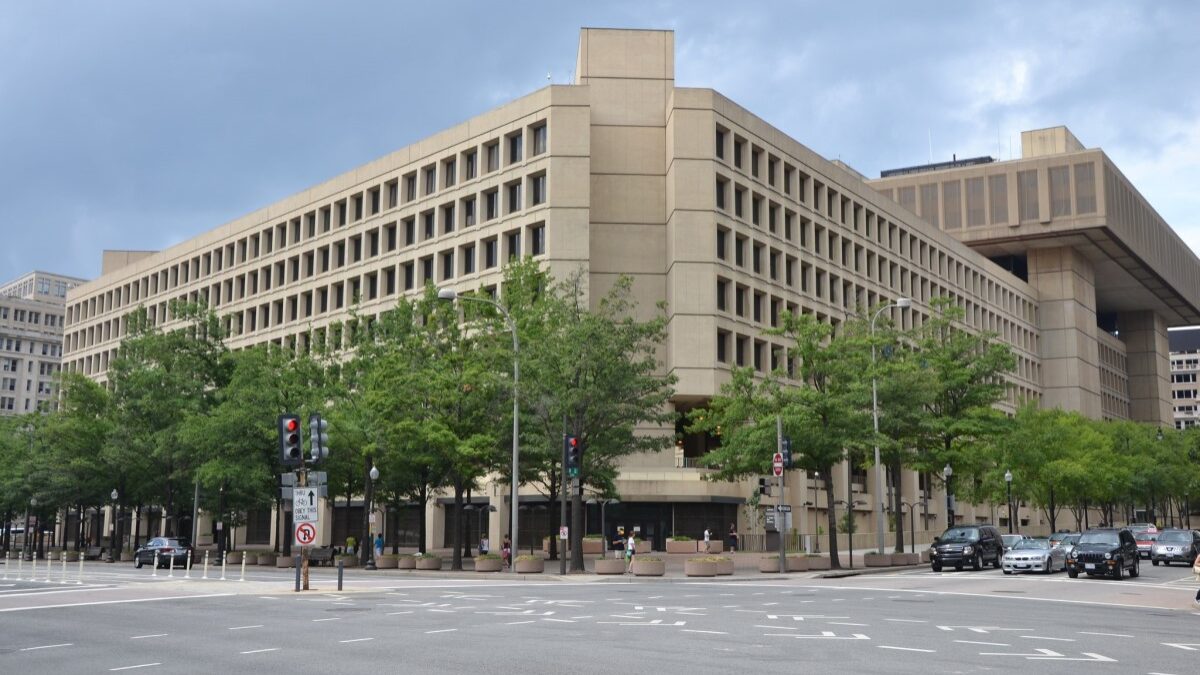
FBI headquarters

Author Margot Cleveland profile

MARGOT CLEVELAND

VISIT ON TWITTER@PROFMJCLEVELAND

MORE ARTICLES

On Friday, the House Judiciary Committee subpoenaed Elvis Chan, the lead FBI agent involved in mass social media censorship, to appear for a September 21, 2023 deposition. Last week’s subpoena followed Chan’s failure to appear for a scheduled voluntary interview to face questioning about the federal government’s role in burying the Hunter Biden laptop story in the month before the 2020 election.

While that scandal is much bigger than Chan, he is first in line to untangling the truth about how the government interfered in the 2020 election by running an info op to convince voters the Hunter Biden’s laptop was Russian disinformation. Given Chan’s testimony in the civil lawsuit brought by Missouri and Louisiana and several individual plaintiffs in Missouri v. Biden, as well as since-uncovered documents from Facebook, the importance of questioning Chan cannot be overstated.

What Chan Said

In Missouri v. Biden, the plaintiffs sued the Biden administration and numerous agencies and government officials, including the FBI and Chan. They alleged the federal defendants violated the First Amendment by, among other things, coercing and significantly encouraging “social-media platforms to censor disfavored [speech].” After filing suit, the plaintiffs filed a motion for a preliminary injunction and then obtained an order allowing for expedited discovery.

Since then, the district court has entered a preliminary injunction barring several federal agencies from coercing tech giants into censoring speech. The Fifth Circuit Court of Appeals narrowed the injunction but upheld many of the lower court’s legal conclusions. The Supreme Court is currently considering the Biden administration’s motion for a stay of the injunction.

What matters to the House’s subpoena of Chan is what the expedited discovery in Missouri v. Biden uncovered. It included the plaintiffs’ deposition of Chan. In his deposition, Chan testified he was one of the “primary” FBI agents who communicated with social media companies about so-called “disinformation.”

Specifically, “During the 2020 election cycle, Chan coordinated meetings between the FBI’s Foreign Influence Task Force (FITF) and at least seven of the major tech giants, including Meta/Facebook, Twitter, Google/YouTube, Yahoo!/Verizon Media, and Microsoft/LinkedIn,” with meetings occurring weekly as the election neared. 

In questioning Chan, the plaintiffs’ attorneys pushed him on several points related to the censorship of the Hunter Biden laptop, forcing Chan to acknowledge the FBI regularly raised the possibility of “hack and dump” operations with senior officials at the various tech companies. Those discussions included the FBI warning of a potential hack-and-leak occurring in advance of the 2020 election, much like the Democratic National Committee (DNC) hack and WikiLeaks release of internal emails. 

Attorneys for the plaintiffs also quizzed Chan on the identity of the government officials who discussed “hack-and-dump Russian operations” with the tech giants. Chan identified Section Chief Laura Dehmlow, along with four FBI officials who attended Department of Homeland Security Cybersecurity and Infrastructure Security Agency (CISA) meetings. Chan named Brady Olson, William Cone, Judy Chock, and Luke Giannini as some of the individuals who had discussed the supposedly impending hack-and-leak operation. Chan claimed not to recall, though, whether anyone within the FBI suggested he raise the possibility of Russian hack-and-dump operations with the tech giants.

That Chan and others warned big tech of the potential for a pre-election hack-and-dump operation is huge. As Chan also testified, the government had no specific intelligence suggesting there were plans for such an operation. Nonetheless, the warnings prompted Twitter and Facebook to censor the Hunter Biden laptop story following The New York Post’s story breaking.

FBI Played Social Media Companies

While the government had no reason to believe a hack-and-leak operation was in the works, several of the FBI agents involved in warning the social media companies knew Hunter Biden had abandoned his laptop at a computer repair store and that the material on the laptop was genuine. That includes Chan, Demhlow, and at least three other individuals connected to the FBI’s FITF.

Chan did not reveal these details in his Missouri v. Biden deposition. Instead, Dehmlow informed the House of these facts during her deposition. Among other things, Dehmlow testified that soon after The New York Post broke the Biden laptop story, somebody from Twitter asked the FBI whether the laptop was real. An analyst in the FBI’s Criminal Investigative Division confirmed, “Yes, it was.’” An FBI lawyer on the call then immediately interjected, “No further comment.”

Dehmlow further testified that several individuals on the FBI’s FITF knew the laptop was real, including then-FITF Section Chief Brad Benavides and the unit chief. Dehmlow then confirmed that after the call with Twitter, the FBI had internal deliberations about the laptop and that later when Facebook asked about the authenticity of the laptop, Dehmlow responded, “No comment.”

During his deposition in the Missouri v. Biden case, Chan confirmed Dehmlow’s representation that in response to the Facebook inquiry, she had replied, “No comment.” Chan, however, then claimed he was not aware of any other inquiries from social media companies concerning the Hunter Biden laptop.

Was Chan Telling the Truth?

Last month, House Judiciary Chair Jim Jordan revealed his committee had obtained internal documents from Facebook that call into question Chan’s testimony. “I spoke with SSA Elvis Chan (FBI San Francisco) on 15 October 2020, as a follow up to the call with the Foreign Influence Task Force on 14 October,” one Facebook document read, contradicting Chan’s claim that he knew of no other inquiries from social media companies.

“I asked SSA Chan whether there was any update or change. . . as to whether the FBI saw any evidence suggesting foreign sponsorship or direction of the leak of information related to Hunter Biden as published in the New York Post story,” Facebook’s memorandum continued. According to Facebook’s internal document, Chan stated “that he was up to speed on the current state of the matter within the FBI and that there was no current evidence to suggest any foreign connection or direction of the leak.” Chan further assured Facebook “that the FBI would be in contact if any additional information on this was developed through further investigation.”

Chan’s claim to Facebook that he was “up to speed on the current state of the matter” also seemingly conflicted with Chan’s testimony in the Missouri v. Biden case that he had “no internal knowledge of that investigation,” and “that it was brought up after the news story had broke.” It is also difficult to reconcile Chan’s claim — that the laptop was only brought up after the Post ran the story — with Dehmlow’s testimony that several individuals on the FITF knew the laptop was real, including an FBI analyst.

What the House Should Ask Chan

The House should explore these inconsistencies with Chan and further quiz him on both Dehmlow’s testimony and the Facebook documents. Chan should also be quizzed on with whom else he discussed the potential for a hack-and-leak operation.

We know from Chan’s Missouri v. Biden deposition that he had served as the supervisor for the Russia-adept cyber squad that investigated the DNC server hack before the San Francisco office handed it to FBI headquarters. Chan testified in that deposition that he would have discussed national security cyber-investigations involving Russian matters with Sean Newell, a deputy chief at the DOJ National Security Division who had also worked on the DNC hack. Chan should be pushed further on whether Newell or anyone else who worked on the DNC hack had raised the issue of a 2020 hack-and-release repeat.

If so, the question then becomes whether they knew of the existence and authenticity of the Biden laptop. That question proves significant because it appears the hack-and-leak narrative was peddled to the social media companies to prime them to censor the laptop story. So, knowing who knew the laptop story was accurate but still fed the hack-and-leak hysteria will point to the players responsible for interfering in the 2020 election by silencing the truthful reporting of the Hunter Biden laptop story.

Chan may refuse to testify, however, even pursuant to a subpoena, or the Department of Justice may direct Chan not to submit to congressional questioning, forcing Republicans to enforce the subpoena in court. We’ll know tomorrow if either scenario plays out or if Chan comes clean with what he knows.
Margot Cleveland is an investigative journalist and legal analyst and serves as The Federalist’s senior legal correspondent. Margot’s work has been published at The Wall Street Journal, The American Spectator, the New Criterion (forthcoming), National Review Online, Townhall.com, the Daily Signal, USA Today, and the Detroit Free Press. She is also a regular guest on nationally syndicated radio programs and on Fox News, Fox Business, and Newsmax. Cleveland is a lawyer and a graduate of the Notre Dame Law School, where she earned the Hoynes Prive—the law school’s highest honor. She later served for nearly 25 years as a permanent law clerk for a federal appellate judge on the Seventh Circuit Court of Appeals. Cleveland is a former full-time university faculty member and now teaches as an adjunct from time to time. Cleveland is also of counsel for the New Civil Liberties Alliance. Cleveland is on Twitter at @ProfMJCleveland where you can read more about her greatest accomplishments—her dear husband and dear son. The views expressed here are those of Cleveland in her private capacity.

Did FBI’s Censorship Liaison Hide Colleagues’ Connection to the Hunter Biden Scandal?


BY: MARGOT CLEVELAND | MAY 04, 2023

Read more at https://thefederalist.com/2023/05/04/did-fbis-censorship-liaison-hide-colleagues-connection-to-the-hunter-biden-scandal/

guy in FBI jacket talking on the phone
A close analysis of the Missouri v. Biden court filings suggests the FBI is not being forthright in identifying the players involved

Author Margot Cleveland profile

MARGOT CLEVELAND

VISIT ON TWITTER@PROFMJCLEVELAND

MORE ARTICLES

Evidence is mounting that both the Biden campaign and the federal government interfered in the 2020 election by running an info op to convince voters the Hunter Biden laptop was Russian disinformation. Missouri and Louisiana have unearthed some of the most damning evidence in their First Amendment lawsuit against the Biden administration, but a close analysis of the court filings suggests the FBI is not being forthright in identifying the players involved.

As part of the lawsuit Missouri and Louisiana’s attorneys general initiated, the states obtained limited initial discovery. Among other things, the plaintiffs obtained a list of government officials who communicated with Twitter about so-called content moderation and the deposition testimony of Elvis Chan, the assistant special agent in charge of the FBI’s San Francisco Cyber Branch.

In his deposition, Chan testified that he is one of the “primary” FBI agents who communicates with social media companies about so-called disinformation. During the 2020 election cycle, Chan coordinated meetings between the FBI’s Foreign Influence Task Force (FITF) and at least seven of the major tech giants, including Meta/Facebook, Twitter, Google/YouTube, Yahoo!/Verizon Media, and Microsoft/LinkedIn. Those meetings occurred at first quarterly and then monthly and weekly as the election neared. 

In questioning Chan, attorneys representing Missouri and Louisiana pushed him on several points related to the censorship of the Hunter Biden laptop. The lawyers succeeded in eliciting testimony from Chan that the FBI regularly raised the possibility of “hack and dump” operations with senior officials at the various tech companies. Those discussions included the FBI warning the companies of a potential hack-and-leak occurring shortly before the 2020 election, like the Democratic National Committee hack and WikiLeaks that occurred in 2016. 

The plaintiffs also quizzed Chan on the names of any government officials who discussed “hack-and-dump Russian operations” with the tech giants. Chan mentioned Section Chief Laura Dehmlow, “among others.” But Chan then danced around who those others were, saying he couldn’t recollect. Chan eventually identified four FBI officials that attended Department of Homeland Security Cybersecurity and Infrastructure Security Agency (CISA) meetings at which the FBI discussed the risk of hack-and-leak operations. These officials were Brady Olson, William Cone, Judy Chock, and Luke Giannini.

Regarding whether anyone within the FBI suggested Chan should raise the possibility of Russian hack-and-dump operations with the tech giants in 2020, Chan repeatedly said he could “not recall,” but at one point acknowledged, “They may have, but I don’t recollect at this time.”

The plaintiffs in Missouri v. Biden claim Chan’s “I do not recall,” is not credible. They say it is “facially implausible that Chan does not recall whether other federal officials discussed warning platforms about ‘hack-and-leak’ operations during 2020, especially after the fiasco of censorship of the Hunter Biden laptop story.” Furthermore, the plaintiffs added, “the only aspect of [Chan’s] internal discussions with the FBI about hack-and-leak operations that he does not recall is whether someone from the FBI suggested or directed him to raise the issue with social-media platforms.”

Uncovering whether someone — and if so, who — directed Chan or other FBI agents to warn tech companies about a potential hack-and-leak operation is necessary to unravel the extent of the government’s info ops. Did FBI agents with knowledge of either the Hunter Biden laptop or the existence of damaging communications possessed by other governments, such as Ukraine or China, prompt Chan and others to warn of an impending hack-and-leak to protect the Biden family from any fallout?

Chan also appeared less than forthcoming when questioned about whether he had discussed the 2020 election with any of the people involved in the DNC hack. Here, an unnoticed tidbit from Chan’s deposition proves interesting: Chan testified that he served as the supervisor for the Russian cyber squad that investigated the DNC server before the San Francisco office handed it off to FBI headquarters. 

When asked whether “subsequent to the 2016 investigation of the hack of the DNC server,” he had “any communications with anyone involved in that investigation about the possibility that a hack-and-leak operation” could happen prior to the 2020 election, Chan initially provided a misleading response, saying he did “not remember discussing the potential for a 2020 election with any of the FBI personnel because they had moved on to different roles.” 

Catching Chan’s narrowing of the question from “anyone” to “FBI personnel,” the plaintiffs’ attorney quickly queried, “and people outside the FBI?” Chan then noted he would have discussed national security cyber investigations involving Russian matters with Sean Newell, a deputy chief at the DOJ National Security Division who also worked on the DNC hack. But Chan refused to say whether Newell or anyone else who worked on the DNC hack had raised the issue of a 2020 hack-and-release repeat.

Chan’s reticence raises red flags. But piecing together two exhibits filed in the Missouri v. Biden case reveals a thread to pull to start getting some answers. 

Exhibit 23 used during Chan’s deposition includes a series of emails related to the DNC hack that were filed in the special counsel’s criminal prosecution of former Clinton campaign attorney Michael Sussmann. In addition to Chan and Newell, the emails include names of about another dozen government agents. 

When those names are cross-checked against the names of the federal officials with whom Twitter “had meetings or discussions” about so-called content moderation issues — a list Twitter provided the plaintiffs in Missouri v. Biden in response to a third-party subpoena — two names overlap: Chan and Jonathan Sills.

Sills, an attorney with the FBI’s Office of General Counsel, appeared in several emails in which Sussmann and the FBI discussed logistical details for conveying a copy of the DNC server data to the FBI. Given Sills was only added to the email threads when they discussed whether the FBI would pay CrowdStrike to make a copy of the data, it seems unlikely Sills had a broader involvement in the DNC hack-and-release investigation.

But why then was Sills communicating with Twitter about so-called content moderation issues? Was it about payments to Twitter? Or something else?

Recall we still don’t know the identities of the “folks in the Baltimore field office and at HQ that are just doing keyword searches for violations,” as then-Twitter legal executive Stacia Cardille complained in a Nov. 3, 2020, email to Jim Baker, the then-deputy general counsel for Twitter. “This is probably the 10th request I have dealt with in the last 5 days,” Cardille noted.

Remember also that the FBI’s Baltimore field office provided coverage to the Delaware U.S. attorney’s office out of which the Hunter Biden investigation was being run — to the extent FBI headquarters allowed.

When reached by phone in his D.C. office, Sills told The Federalist he was not authorized to comment on the matter, which is unfortunate because the people who can comment seem not to recollect the most pertinent points. A follow-up email to Sills went unanswered.

Eventually, though, these threads will all be pulled when discovery occurs in Missouri v. Biden. While some will lead nowhere, as the initial discovery proves, there is much to learn about the government’s involvement in the Hunter Biden info ops and its role in censoring speech on social media.


Margot Cleveland is The Federalist’s senior legal correspondent. She is also a contributor to National Review Online, the Washington Examiner, Aleteia, and Townhall.com, and has been published in the Wall Street Journal and USA Today. Cleveland is a lawyer and a graduate of the Notre Dame Law School, where she earned the Hoynes Prize—the law school’s highest honor. She later served for nearly 25 years as a permanent law clerk for a federal appellate judge on the Seventh Circuit Court of Appeals. Cleveland is a former full-time university faculty member and now teaches as an adjunct from time to time. As a stay-at-home homeschooling mom of a young son with cystic fibrosis, Cleveland frequently writes on cultural issues related to parenting and special-needs children. Cleveland is on Twitter at @ProfMJCleveland. The views expressed here are those of Cleveland in her private capacity.

Tag Cloud