
Perspectives; Thoughts; Comments; Opinions; Discussions

Posts tagged ‘economic policies’

Justin Haskins Op-ed: Bidenomics strikes again: Shocking number of full-time jobs lost over past 5 months


Justin Haskins By Justin Haskins Fox News | Published April 25, 2024 5:00am EDT

Read more at https://www.foxnews.com/opinion/bidenomics-strikes-again-shocking-number-full-time-jobs-lost-over-past-5-months

As the Biden White House continues to brag about the alleged success of its economic policies, government data shows the country is hemorrhaging full-time jobs. According to the U.S. Bureau of Labor Statistics, the number of Americans reporting full-time employment dropped by more than 1.7 million jobs from November 2023 to the end of March 2024, the most recent month for which data is available. That’s a decline of 1.33% over a five-month period. Excluding job losses related to the COVID-19 lockdowns in 2020, the recent drop in full-time employment is the largest five-month decline since the Great Recession in 2009, 15 years ago.
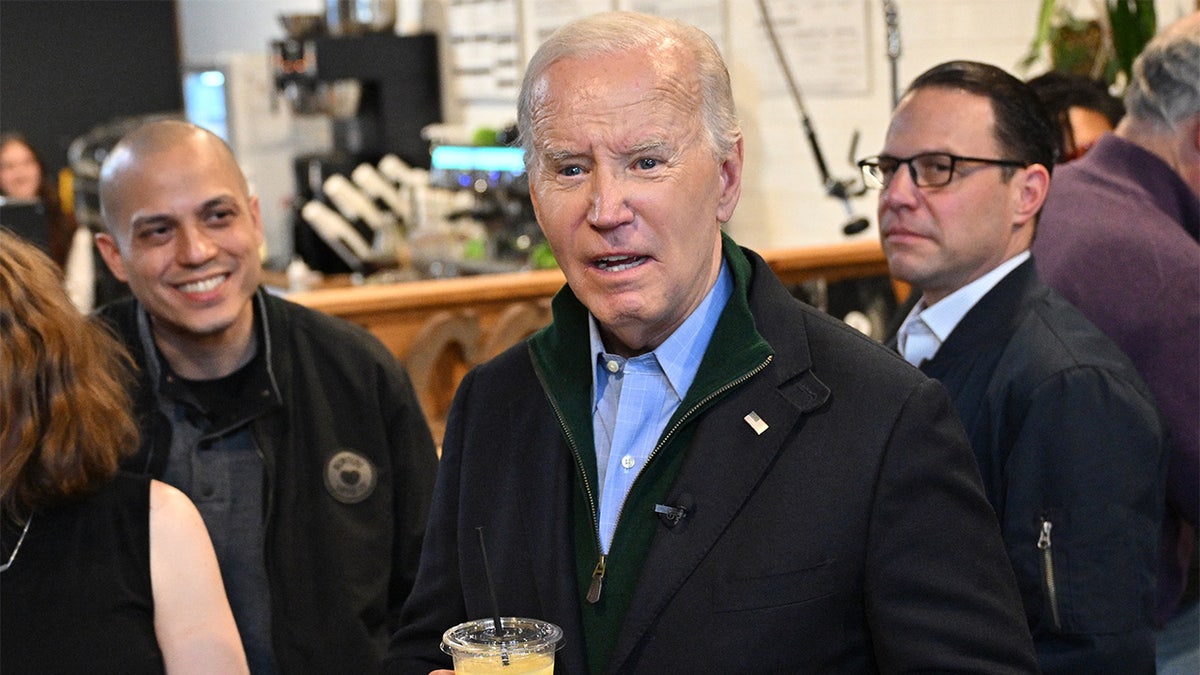
President Joe Biden at a coffee shop
President Biden visits Nowhere Coffee shop in Emmaus, Pennsylvania, on Jan. 12, 2024, as he touts his Bidenomics agenda. (Mandel Ngan/AFP via Getty Images)

Before that, the last time the number of full-time jobs declined this much over a similar period was in 1994.

WHITE HOUSE STILL INSISTS ‘BIDENOMICS’ IS EFFECTIVE DESPITE DEMOCRATS ALL BUT DITCHING SLOGAN: REPORT

Despite these remarkable figures, the Biden administration has continued to boast about its economic policies. For example, on April 11, the White House’s official X account claimed, “Under Bidenomics, our economy has created 15 million jobs and unemployment has remained under 4% for the longest stretch in 50 years.”

Video

The Biden administration has made similar claims for much of the president’s time in office. At best, they are wildly misleading.

Although it’s true that total employment has increased dramatically since Biden entered the White House, the vast majority of those jobs were recovered from the coronavirus-related government lockdowns. They are not “created” jobs.

MAJOR CONSERVATIVE GROUP UNVEILS BIDENOMICS.COM TO TARGET PRESIDENT’S ECONOMIC POLICIES

Compared to employment figures recorded in January 2020, immediately prior to the COVID-19 pandemic, the number of jobs added under Biden’s tenure is just 2.98 million, an unimpressive figure compared to many of his predecessors.

Video

During Donald Trump’s first three years in office, the U.S. economy added 6.33 million jobs, more than double the figure recorded in the Biden era. These numbers are made even more remarkable by the fact that, excluding the 2020 coronavirus lockdown, Biden’s government has spent more money in a three-year period than any other president in history.

DESPITE THE SPIN, AMERICANS KNOW THIS TRUTH ABOUT BIDENOMICS

Two of the four highest federal deficits ever recorded have occurred under Biden, and a third, the $1.4 trillion deficit in 2009, happened while Biden was serving as Barack Obama’s vice president.

Video

Biden’s economic agenda of dramatically increasing the size and power of government programs, raising taxes, and imposing increasingly more regulations on businesses has been a complete and utter failure. Not only has it been killing full-time jobs in recent months, it also is the driving factor behind America’s lingering inflation problem.

As difficult as it is for the Biden White House to understand, when a government consistently spends far more money than it receives in tax revenue and turns to money-printing policies to pay the bills, inflation increases. And when inflation gets out of control, as it has been for years now, most people get poorer. Based on the Consumer Price Index’s inflation estimates, an American family buying $200 worth of groceries in January 2021, when Biden took office, would have to spend $238 today to purchase the same products.

Video

Most Americans can barely afford to pay basic living expenses. The average cost of rent has increased dramatically. The average sales price of a home and the cost of mortgages have skyrocketed.

The cost of purchasing a new car has increased by thousands of dollars in just a few years.

The American people are suffering under the Biden administration’s economic agenda. And based on the recent full-time jobs data outlined earlier in this article, the situation is not likely to improve while Biden’s failing policies remain in place.

CLICK HERE TO READ MORE FROM JUSTIN HASKINS

Justin Haskins is the director of the Socialism Research Center at The Heartland Institute and a New York Times bestselling author.

Today’s Politically INCORRECT Cartoon


waving flagHandy Hillary

Monday October 17, 2016

This 2017 election we’ve heard about inappropriate groping by Trump, but could Hillary be guilty as well?

Inappropriate Groping / Cartoon by A.F. Branco ©2016.

To see more Legal Insurrection Branco cartoons, click here.

A.F. Branco 2017 Calendar <—- Order Here!

doners

A Newcomer to Populism? Hillary Clinton Campaign Begs to Differ


waving flagBy AMY CHOZICK, April 21, 2015

 URL of the Original Posting Site: http://mobile.nytimes.com/2015/04/22/us/politics/hillary-clintons-quest-to-prove-her-populist-edge-is-as-strong-as-elizabeth-warrens.html?referrer=&_r=1

Hillary Rodham Clinton, in Keene, N.H., on Monday, spoke with David Stabler, president of Whitney Brothers, a manufacturer of children’s furniture. Ian Thomas Jansen-Lonnquist for The New York Times

CLAREMONT, N.H. — In her first week as a 2016 presidential candidate, Hillary Rodham Clinton seemed to channel another high-profile Democrat. “The deck is stacked in their favor,” Mrs. Clinton said of the wealthy and powerful. “My job is to reshuffle the cards.” The line echoed a phrase that helped make Senator Elizabeth Warren the populist icon of her party. “The game is rigged,” Ms. Warren often says. “Rigged to work for those who have money and power.”

Before that there was Mrs. Clinton’s tribute to Ms. Warren in Time magazine. “She never hesitates to hold powerful people’s feet to the fire,” Mrs. Clinton wrote in the issue honoring the top 100 influential people.

For anyone who wondered what kind of economic message Mrs. Clinton would deliver in her campaign, the first few days made it clear: She is embracing the ideas trumpeted by Ms. Warren and the populist movement — that the wealthy have been benefiting disproportionately from the economy, while the middle class and the poor have been left behind. And the policies Mrs. Clinton is advancing, like paid sick leave for employees and an increase in the minimum wage, align with that emphasis.

But now, the former secretary of state must convince voters that she is the right messenger for the cause of inequality, not simply seizing on it out of political expedience. Nothing stings her inner circle more than the suggestion that their candidate is late to these issues. Mrs. Clinton was the original Elizabeth Warren, her advisers say, a populist fighter who for decades has been an advocate for families and children; only now have the party and primary voters caught up. “I don’t know why we have this semicollective amnesia about her past positions,” said Neera Tanden, president of the Center for American Progress and Mrs. Clinton’s policy director in 2008. “She’s following no one on these issues.”

But affirming Mrs. Clinton’s sincerity as a populist, especially given her reputation for caution and careful consideration of political moves, is proving an uphill battle. The assessment by Bloomberg Politics after Mrs. Clinton’s first campaign stops was that she is “terrified of the left.”

Senator Elizabeth Warren, left, and Hillary Rodham Clinton at a hearing for John Kerry’s confirmation as secretary of state in 2013. Christopher Gregory / The New York Times

It is easy to forget that for years, Mrs. Clinton weathered criticism that she was too liberal, the socialist foil to her husband’s centrist agenda. Economists in the Clinton administration referred to the first lady and her aides as “the Bolsheviks.” In Mrs. Clinton’s 2008 presidential campaign, she positioned herself as the populist candidate to the left of Barack Obama on several economic issues, angering some of her Wall Street donors and earning broad support among organized labor and working-class voters.

Advisers have lists at the ready outlining Mrs. Clinton’s calls as early as 2007 to eliminate the so-called carried interest loophole, roll back the Bush-era tax cuts for the wealthy, impose tighter regulations on derivatives and place limits on chief executives’ compensation. “Let’s finally do something about the growing inequality that is tearing our country apart,” Mrs. Clinton said during her campaign, appearing at the Take Back America conference, a gathering of liberal groups, in June 2007. “The top 1 percent of our households hold 22 percent of our nation’s wealth. Enough with corporate welfare. Enough with golden parachutes. And enough with the tax incentives for companies to shift jobs overseas.”Liberalism a mental disorder 2

A 16-page dossier, titled “Hillary Clinton: A Lifetime Champion of Income Opportunity” and assembled by a close friend and adviser to Mrs. Clinton, calls Ms. Warren a “footnote.” The document, provided to The New York Times, presents 40 instances in which Mrs. Clinton took the same stance as Ms. Warren on issues — from organized labor to tax increases on the wealthy — in some cases years before the senator’s ascent in the national spotlight.

But that was then and this is now, when everything Mrs. Clinton does will be viewed through the lens of a party under the influence of Ms. Warren and her blistering critique of the financial sector.

Robert B. Reich, a secretary of labor during the Clinton administration who has advised Mrs. Clinton’s campaign, said the comparison with Ms. Warren “personalizes it far too much.” … “This is a broad-based movement to take back our democracy and make the economy work for everybody instead of a small group at the top,” he said.

For seven years, Mrs. Clinton has been out of domestic policy, and in that time the populist movement caught fire. In the years Mrs. Clinton served as secretary of state and since she left the State Department in early 2013, she has become more associated with the centrist policies of the Bill Clinton years than with policies of raising taxes on the wealthy and increasing government services that have become widely adopted on the left. “This perception comes because she wasn’t involved in the discussion for so long,” Anita Dunn, a Democratic strategist, said of Mrs. Clinton. Because, she added, in the White House “she had this reputation as being the very left-wing, liberal, Elizabeth Warren type.”Party of Deciet and lies

During the same period when Mrs. Clinton was absent from domestic debates, the policies of the Bill Clinton years have been recast. In her 2008 campaign, Mrs. Clinton touted the prosperity of the 1990s. Today, the trade deals, Wall Street deregulation, and deficit reduction Mr. Clinton oversaw are often blamed as contributing to the current divide between a tiny sliver of the wealthiest and the vast majority of Americans.

“I remember when Bill Clinton was running in 1992 and his line was ‘putting people first,’” said Dean Baker, an economist and co-director of the Center for Economic and Policy Research. “He just didn’t follow through on that,” and instead emphasized deficit reduction and trade deals, he added.

On Friday, Mrs. Clinton subtly distanced herself from the trade policies associated with the 1990s. In response to a trade agreement reached Thursday by Republican and Democratic leaders, her spokesman, Nick Merrill, said Mrs. Clinton believes that any trade deal should protect American workers, raise wages and create jobs in the United States. “The goal is greater prosperity and security for American families, not trade for trade’s sake,” Mr. Merrill said in a statement.

Mrs. Clinton will begin to present more specific policy proposals next month. In the meantime, she has expressed support for an increase in the minimum wage, paid family medical leave and closing corporate tax loopholes.

In a meeting with economists this year, Mrs. Clinton intensely studied a chart that showed income inequality in the United States. The graph charted how real wages, adjusted for inflation, had increased exponentially for the wealthiest Americans, making the bar so steep it hardly fit on the chart. Mrs. Clinton pointed at the top category and said the economy required a “toppling” of the wealthiest 1 percent, according to several people who were briefed on Mrs. Clinton’s policy discussions but could not discuss private conversations for attribution.Picture2

Still, Mrs. Clinton will pitch that “toppling” with a very different style than Ms. Warren, a bankruptcy expert whose populist message has been laser-focused on holding Wall Street accountable. Mrs. Clinton will present proposals for changes in the tax code as a way of also investing in education, infrastructure and communities.

Mrs. Clinton “wakes up asking how she can accomplish real things for families, not who she can attack,” said Gene B. Sperling, an economic adviser in the Clinton and Obama administrations. He added, “When she shows that fighting populist edge, it is for a purpose.”Liberalism a mental disorder 2In Review Picture6 OARLogo

Tag Cloud