Perspectives; Thoughts; Comments; Opinions; Discussions

Posts tagged ‘DWIGHT D. EISENHOWER’

80 Years After D-Day, Remember the Men Who Liberated the World


BY: TIM GOEGLEIN | JUNE 06, 2024

Read more at https://thefederalist.com/2024/06/06/80-years-later-remember-the-d-day-invasion-that-liberated-the-world/
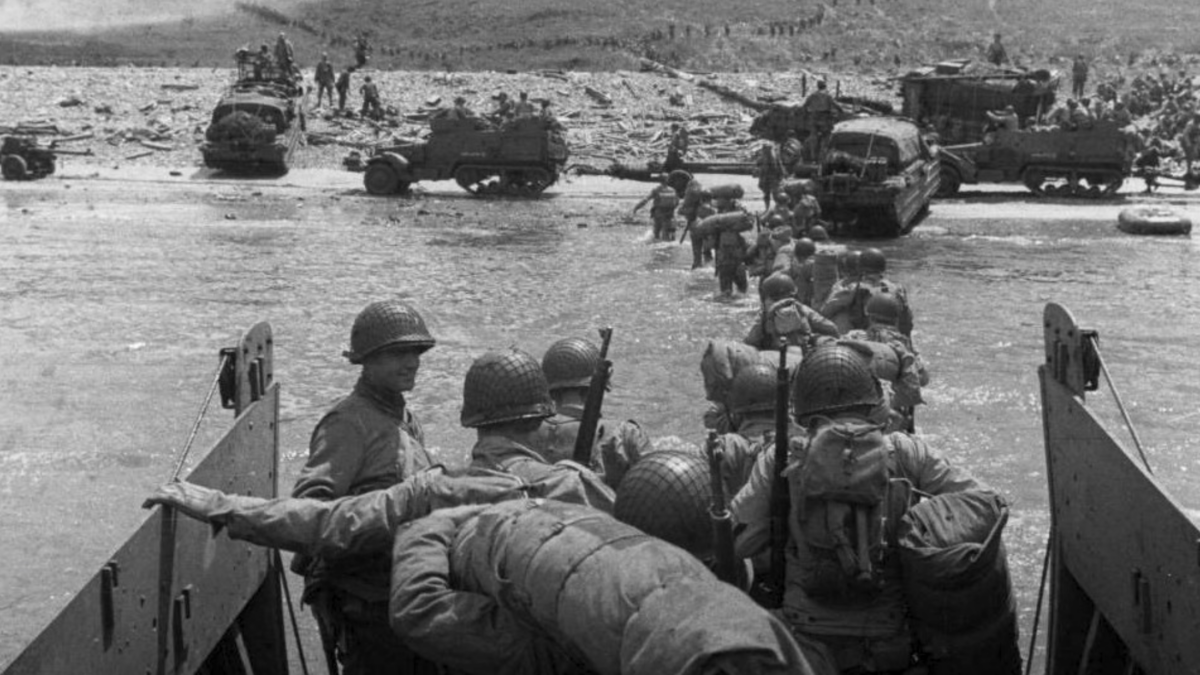

Soldiers coming ashore at Normandy on D-Day.

Author Tim Goeglein profile

TIM GOEGLEIN

MORE ARTICLES

June 6 marks the 80th anniversary of American, British, and Canadian troops landing on the coast of Normandy, France, in the greatest military mobilization in history, also known as D-Day. The New York Times reports that “fewer than 200 veterans of the allied invasion of Normandy, which marked a turning point in World War II, are still alive and sound enough to attend this year’s D-Day reunion in France.”

In the words of Gen. Dwight D. Eisenhower, whose team had been planning the mobilization for over a year, “These men came … to storm these beaches for one purpose only, not to gain anything for ourselves, not to fulfill any ambitions America had for conquest, but to preserve freedom.”

Eisenhower knew the importance and difficulty of the task ahead. If the mission failed, it would set back Allied efforts to defeat Nazi Germany for at least a year, resulting in the inhumane extermination of millions of more Jews and the deaths of countless thousands of soldiers.

As Winston Churchill and President Franklin Roosevelt believed, the D-Day invasion was essential if freedom were to flourish and Christian civilization — rooted in the inherent respect for and dignity of all humankind — were to be saved.

That is why in the wee hours before the launch of the invasion, Eisenhower told the courageous soldiers they were about to “embark upon the Great Crusade” and the “eyes of the world are upon you.”

He then concluded, “Let us all beseech blessing of Almighty God upon this great and noble undertaking.”

The fighting was fierce indeed. More than 4,400 Allied soldiers of the 156,000 deployed from the United States, Great Britain, and Canada would lose their lives. Another 10,200 were injured, including 6,600 Americans. Those who fought later said the waters of Normandy turned red from all the blood spilled.

Forty years later, at the 40th anniversary of D-Day, President Ronald Reagan gave a touching tribute to those men who stormed the Normandy beaches, in particular the most treacherous, Pointe du Hoc, saying:

The men of Normandy had faith that what they were doing was right, faith that they fought for all humanity, faith that a just God would grant them mercy on this beachhead or on the next. It was the deep knowledge — and pray God, we have not lost it — that there is a profound, moral difference between the use of force for liberation and the use of force for conquest. You were here to liberate, not to conquer, and so you and those others did not doubt your cause. And you were right not to doubt.

He continued:

You all knew that some things are worth dying for. One’s country is worth dying for, and democracy is worth dying for, because it’s the most deeply honorable form of government ever devised by man. All of you loved liberty. All of you were willing to fight tyranny, and you knew the people of your countries were behind you.

Yet, despite the importance of this mission, its memory fades with each passing generation.

President Reagan warned us about this in his 1989 farewell address to the nation: “You know, four years ago, on the 40th anniversary of D-Day, I read a letter from a young woman writing to her late father, who’d fought on Omaha Beach. Her name was Lisa Zanatta Hehn, and she said, ‘We will always remember, we will never forget, what the boys at Normandy did.’”

He added, “Well, let’s help her keep her word. If we forget what we did, we won’t know who we are.”

But unfortunately, we are not keeping our word. For instance, one poll found that 12 percent of Americans thought Dwight Eisenhower fought in the Civil War (which ended 25 years before he was born), instead of leading the D-Day invasion! Perhaps even worse, another survey found that only 43 percent of Americans know the real reason we celebrate Memorial Day. These sad statistics are just another example of how neglecting to teach American history in our schools has taken a toll on our national memory.

This is tragic. Perhaps it is our time for us, as parents, to do what else President Reagan encouraged us to do in his farewell address: “An informed patriotism is what we want. And are we doing a good enough job teaching our children what America is and what she represents in the long history of the world? All great change happens in America at the dinner table. So, tomorrow night in the kitchen I hope the talking begins.”

That is why I wrote my bookToward a Perfect Union: The Moral and Cultural Case for Teaching the Great American Story, to equip parents to do this, so our children and their children will never forget the bravery of the men who stormed the beaches and climbed the cliffs of Pointe-du-Hoc to preserve freedom. If we do not teach this, the freedom they fought so valiantly for will become a forgotten memory. So, 80 years later, let’s never forget the history of D-Day.

Timothy S Goeglein is vice president of Focus on the Family in Washington, and author of the book Toward a More Perfect Union: The Cultural and Moral Case for Teaching the Great American Story (Fidelis, 2023).

How Trump Derangement Gave Birth To The Censorship-Industrial Complex


BY: MARGOT CLEVELAND | FEBRUARY 24, 2023

Read more at https://thefederalist.com/2023/02/24/how-trump-derangement-gave-birth-to-the-censorship-industrial-complex/

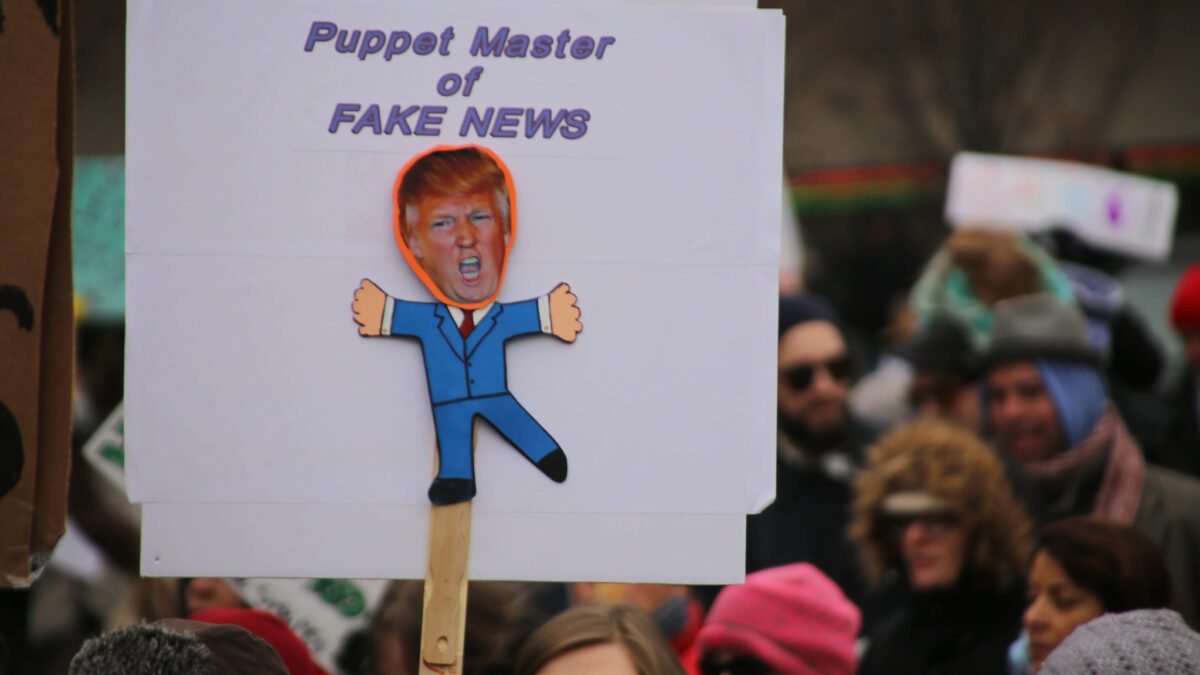
Trump Derangement fake news protest sign in a crowd of people
Unlike the military-industrial complex, the Censorship Complex affects all aspects of governance, controlling the information available to you on every topic.

Author Margot Cleveland profile

MARGOT CLEVELAND

VISIT ON TWITTER@PROFMJCLEVELAND

MORE ARTICLES

The Biden administration may have abandoned plans to create a “Disinformation Board,” but a more insidious “Censorship Complex” already exists and is growing at an alarming speed. 

This Censorship Complex is bigger than banned Twitter accounts or Democrats’ propensity for groupthink. Its funding and collaboration implicate the government, academia, tech giants, nonprofits, politicians, social media, and the legacy press. Under the guise of combatting so-called misinformation, disinformation, and mal-information, these groups seek to silence speech that threatens the far-left’s ability to control the conversation — and thus the country and the world.

Americans grasped a thread of this reality with the release of the “Twitter Files” and the Washington Examiner’s reporting on the Global Disinformation Index, which revealed the coordinated censorship of speech by government officials, nonprofits, and the media. Yet Americans have no idea of the breadth and depth of the “Censorship Complex” — and how much it threatens the fabric of this country.

In his farewell address in 1961, President Dwight D. Eisenhower cautioned against the “potential for the disastrous rise of misplaced power” via the new sweeping military-industrial complex. Its “total influence — economic, political, even spiritual — [was] felt in every city, every statehouse, every office of the federal government.” Replace “military-industrial” with “censorship,” and you arrive at the reality Americans face today.

Origins of the Censorship Complex

Even with the rise of independent news outlets, until about 2016 the left-leaning corporate media controlled the flow of information. Then Donald Trump entered the political arena and used social media to speak directly to Americans. Despite the Russia hoax and the media’s all-out assault, Trump won, proving the strategic use of social media could prevail against a unified corporate press. The left was terrified. 

Of course, Democrats and the media couldn’t admit their previous control over information converted to electoral victories and that for their own self-preservation, they needed to suppress other voices. So instead, the left began pushing the narrative that “disinformation” — including Russian disinformation — from alternative news outlets and social media companies handed Trump the election.

The New York Times first pushed the “disinformation” narrative using the “fake news” moniker after the 2016 election. “The proliferation of fake and hyperpartisan news that has flooded into Americans’ laptops and living rooms has prompted a national soul-searching, with liberals across the country asking how a nation of millions could be marching to such a suspect drumbeat. Fake news, and the proliferation of raw opinion that passes for news, is creating confusion,” the Times wrote, bemoaning the public’s reliance on Facebook.

“Narrowly defined, ‘fake news’ means a made-up story with an intention to deceive, often geared toward getting clicks. But the issue has become a political battering ram, with the left accusing the right of trafficking in disinformation, and the right accusing the left of tarring conservatives as a way to try to censor websites,” the Times wrote, feigning objectivity. But its conclusion? “Fake and hyperpartisan news from the right has been more conspicuous than from the left.” 

Two days later, Hillary Clinton repeated the narrative-building phrase, condemning what she called “the epidemic of malicious fake news and false propaganda that flooded social media over the past year.” But then, as if to remind Democrats and the legacy press that he had wrestled control of the narrative from them, Trump branded left-wing outlets “fake news” — and just like that, the catchphrase belonged to him. 

Disinformation Is Scarier if It’s Russian

That didn’t deter the left in its mission to destroy alternative channels of communication, however. The media abandoned its “fake news” framing for the “disinformation” buzzword. “Misinformation” and “mal-information” were soon added to the vernacular, with the Department of Homeland Security even defining the terms.

But silencing conservatives would require more than merely labeling their speech as disinformation, so the various elements of the Censorship Complex deployed what they called “the added element of Russian meddling” in the 2016 election, with Clinton amplifying this message and blaming the spread of social media misinformation for her loss. 

Priming the public to connect “disinformation” with Russia’s supposed interference in the 2016 election allowed the Censorship Complex to frame demands for censorship as patriotic: a fight against foreign influence to save democracy!

The Censorship Complex Expands

The Censorship Complex’s push to silence speech under the guise of preventing disinformation and election interference hit its stride in 2017, when FBI Director Christopher Wray launched the Foreign Influence Task Force (FITF) purportedly “to identify and counteract malign foreign influence operations targeting the United States.” 

The “most widely reported” foreign influence operations these days, Wray said, “are attempts by adversaries — hoping to reach a wide swath of Americans covertly from outside the United States — to use false personas and fabricated stories on social media platforms to discredit U.S. individuals and institutions.” Wray’s statement perfectly echoed the claims Clinton and Democrats had peddled ad nauseam in the press, and it foreshadowed how the Censorship Complex would soon mature. 

The launch of the FITF in 2017 brought together numerous representatives from the deep state. The FBI’s Counterintelligence, Cyber, Criminal, and Counterterrorism Divisions worked closely with the Office of the Director of National Intelligence, the Department of Homeland Security, and other intelligence agencies, as well as “state and local enforcement partners and election officials.”

Significantly, the FITF viewed “strategic engagement with U.S. technology companies, including threat indicator sharing,” as crucial to combatting foreign disinformation. That perspective led to the FBI’s hand-in-glove relationship with Twitter, which included monthly and then weekly meetings with the tech giant, some of which CIA representatives attended. This symbiotic relationship also led to the censorship of important — and true — political speech, such as the New York Post’s reporting on the Hunter Biden laptop, which exposed the Biden family’s pay-to-play scandal right before a critical presidential election.

State Department Renovates Its Wing 

In 2011, by executive order, the Department of State established the Center for Strategic Counterterrorism Communications to support government agencies’ communications “targeted against violent extremism and terrorist organizations.” While renamed the Global Engagement Center in 2016, the center’s counterterrorism mission remained largely unchanged. But then at the end of that year, Congress expanded the Global Engagement Center’s authority, directing it “to address other foreign state and non-state propaganda and disinformation activities.” And with language straight out of the Russia hoax playbook, the John S. McCain National Defense Authorization Act for Fiscal Year 2019 further refined the Global Engagement Center’s mission:

The purpose of the Center shall be to direct, lead, synchronize, integrate, and coordinate efforts of the Federal Government to recognize, understand, expose, and counter foreign state and foreign non-state propaganda and disinformation efforts aimed at undermining or influencing the policies, security, or stability of the United States and United States allies and partner nations.

Together, the State Department and the many intelligence agencies behind the FITF worked not just with Twitter but with the array of tech giants, such as Google and Facebook, pushing for censorship of supposed mis-, dis-, and mal-information. But the deep state was not alone. The “disinformation” contagion also reached the Hill, nonprofits, think tanks, and academic institutions with both politics and a desire to suckle at the federal teat driving a frenzied expansion of the project. Together these groups pushed for even more silencing of their opponents, and the Censorship Complex boomed.

The danger Eisenhower warned the country of in 1961 is mild in comparison to the threat of the Censorship Complex. Unlike the military-industrial complex that reached only one function of the federal government, the Censorship Complex affects all aspects of governance, controlling the information available to you and your fellow Americans on every topic.


Margot Cleveland is The Federalist’s senior legal correspondent. She is also a contributor to National Review Online, the Washington Examiner, Aleteia, and Townhall.com, and has been published in the Wall Street Journal and USA Today. Cleveland is a lawyer and a graduate of the Notre Dame Law School, where she earned the Hoynes Prize—the law school’s highest honor. She later served for nearly 25 years as a permanent law clerk for a federal appellate judge on the Seventh Circuit Court of Appeals. Cleveland is a former full-time university faculty member and now teaches as an adjunct from time to time. As a stay-at-home homeschooling mom of a young son with cystic fibrosis, Cleveland frequently writes on cultural issues related to parenting and special-needs children. Cleveland is on Twitter at @ProfMJCleveland. The views expressed here are those of Cleveland in her private capacity.

Tag Cloud