
Perspectives; Thoughts; Comments; Opinions; Discussions

Posts tagged ‘Brad Raffensperger’

To Understand the Latest Crazy Trump Indictment, Check Out The 6 Types of Charges


BY: MARGOT CLEVELAND | AUGUST 16, 2023
Read more at https://thefederalist.com/2023/08/16/to-understand-the-latest-crazy-trump-indictment-check-out-the-6-types-of-charges/

Donald Trump

Author Margot Cleveland profile MARGOT CLEVELAND

VISIT ON TWITTER@PROFMJCLEVELAND

MORE ARTICLES

Late Monday, Fulton County District Attorney Fani Willis charged former President Donald Trump and 18 other defendants in a 98-page indictment that included a total of 41 different counts.

The defendants are already fighting back, with Trump’s former chief of staff, Mark Meadows, seeking to remove the case to federal court based on a statute that protects federal officials from state court prosecution for official conduct. More counteroffensives will likely follow, with other former federal officials, including Trump, presumably also seeking removal to federal court, while the remaining defendants will probably expeditiously move to dismiss the indictment on a variety of grounds. 

To get a handle on the indictment and to stay current with the various developments, it is helpful to put the charges into one of six buckets, starting with the biggest one: the alleged RICO conspiracy. 

Bucket 1: RICO 

The Racketeer Influenced and Corrupt Organizations Act (RICO) count runs some 70 pages and says all 19 defendants, “while associated with an enterprise, unlawfully conspired and endeavored to conduct and participate in, directly and indirectly, such enterprise through a pattern of racketeering activity.” The indictment next defines the “enterprise” as “a group of individuals associated in fact,” who “had connections and relationships with one another” and “functioned as a continuing unit for a common purpose of achieving the objectives of the enterprise,” which Willis maintains was “to unlawfully change the outcome of the election in favor of Trump.”

There are several problems with the RICO count, most fundamentally, as Andrew McCarthy explained in an enlightening article, RICO requires an “enterprise,” which, while not necessarily a formal entity, needs to be an identifiable group. The RICO crime, then, is “being a member of the enterprise that commits crimes, not the commission of any particular crime.”

But there must be some sort of “enterprise,” and here Willis conflates the objective — keeping Trump in power — with “the enterprise.” “It was that objective, and not the sustaining of any group, that brought them together; and once that objective was attained or conclusively defeated, the group — to the dubious extent it really was an identifiable group — would (and did) melt away,” McCarthy wrote. It’s a “good sign that you’re not dealing with a RICO enterprise,” the former federal prosecutor explained.

Without an “enterprise,” there can be no RICO crime, and the facts alleged in the indictment are such that the defendants will likely soon seek dismissal of that count. Now, Georgia law differs from federal law on RICO, and there is no saying how the state court will interpret its own RICO statute, but from a legal perspective, the claim is exceedingly weak.

The second fundamental problem with the RICO count is factual: Willis portrays the defendants as trying to unlawfully change the election in Trump’s favor, but the many actions Trump and others took involved legal proceedings and efforts to convince the legislative bodies to use their authority to address what the defendants saw as a fatally flawed election. A court is unlikely to toss the complaint on this ground, however, with factual disputes ones only a jury can resolve. 

However, if the court holds, as it appears it should, that the RICO count fails as a matter of law because there was no “enterprise,” then that factual dispute is irrelevant. Likewise, the 160-some “acts” Willis included in the indictment — everything from Trump declaring victory on Nov. 4 to tweeting that followers should watch a television newscast — allegedly in furtherance of the “RICO” conspiracy become irrelevant. 

Bucket 2: Alternate Electors

The second-biggest bucket concerns the counts related to the naming of alternative Trump electors. The crimes alleged here range from soliciting individuals to violate their oaths of office, to conspiring to file false statements or documents, to forgery. Counts 2, 6, 8-19, 23, and 37 alleged these and other crimes against various defendants all arising out of Republicans appointing an alternative slate of Trump electors who would vote for Trump in the event he prevailed in his then-pending Georgia lawsuit.

While the legacy media continue to frame these individuals as “fake electors,” as I’ve previously detailed, that is fake news. Rather, legal precedent indicates that alternative electors should be named to protect a candidate challenging the outcome of an election, as Trump was in Georgia and elsewhere. That is precisely what Democrats did in Hawaii in 1960 when Richard Nixon had been declared the victor in the state, but John F. Kennedy’s court contest remained viable. 

As a matter of law, these counts should all be dismissed because Republicans naming alternate electors was not a crime — no matter how much the press wants you to believe otherwise.

Bucket 3: Petitioning the Government for Redress

The crimes charged in Counts 5, 28, 38, and 39 fit into a third bucket that consists of efforts by Trump and others to petition the government for redress. Here, the crimes charged include solicitation of violations of oath by public officers and the making of false statements during those efforts, but the common theme is that the defendants sought to have Secretary of State Brad Raffensperger or the Georgia legislature address Trump’s allegations of voting irregularities or fraud. 

There is nothing criminal, however, in asking the secretary of state to use his authority to investigate and respond to voting irregularities or to ask the legislature to call a special session to name Trump electors. On the contrary, those activities would seemingly be protected by the constitutional guarantee of the right to petition the government for redress.

Bucket 4: False Statements

The fourth bucket holds numerous counts against a variety of defendants with the common theme being false statements charges. Count 27 alleged false statements were included in one of Trump’s election lawsuits, but lawyers are entitled to rely on information provided for others, making this count weak. Counts 7, 24, 25, and 26 all charged individual defendants with making false statements to Georgia House or Senate committees. The main issue here will be whether the defendants made the statements knowing they were false. 

Count 22 charges an attempt to make a false statement and concerns a letter DOJ lawyer Jeff Clark drafted and recommended be sent to the Georgia legislature. As I previously detailed, however, there was no impropriety in Clark’s drafting of that letter. Clark will also likely succeed in having the case against him removed to federal court and then dismissed. 

Counts 40 and 41 both involve charges of lying as well, with Count 40 alleging one defendant lied to Fulton County investigators and Count 41 alleging perjury before a grand jury. Given the target on these defendants’ backs, it’s difficult to believe they knowingly lied, but that question may end up being left to a jury to decide.

Bucket 5: Communications Related to Ruby Freeman

Counts 20, 21, 30, and 31 all involve charges concerning efforts to supposedly influence the testimony of Ruby Freeman, who was an election worker at the State Farm Arena. Here, the theory seems to be that some of the defendants attempted to pressure Freeman to lie about what happened during the vote counting. Again, it may be left to a jury to decide this issue.

Bucket 6: Accessing Voting Machines and Election Data

The final category of charges involves efforts by Sidney Powell and others to allegedly illegally access voting machines and election results. Counts 32-36 allege various crimes related to those efforts, including conspiracy to commit election fraud by tampering with machines. Once the defendants charged in those counts respond, it will be easier to assess the criminal theories proffered and any weakness in the claims.

For now, though, watch for the federal court’s holding on whether Meadows, Clark, Trump, and potentially others have the right to remove the case to federal court. Simultaneously, expect the other defendants to seek dismissal of all or part of the indictment, likely narrowing this criminal case down substantially.

Margot Cleveland is The Federalist’s senior legal correspondent. She is also a contributor to National Review Online, the Washington Examiner, Aleteia, and Townhall.com, and has been published in the Wall Street Journal and USA Today. Cleveland is a lawyer and a graduate of the Notre Dame Law School, where she earned the Hoynes Prize—the law school’s highest honor. She later served for nearly 25 years as a permanent law clerk for a federal appellate judge on the Seventh Circuit Court of Appeals. Cleveland is a former full-time university faculty member and now teaches as an adjunct from time to time. As a stay-at-home homeschooling mom of a young son with cystic fibrosis, Cleveland frequently writes on cultural issues related to parenting and special-needs children. Cleveland is on Twitter at @ProfMJCleveland. The views expressed here are those of Cleveland in her private capacity.

Defense Attorneys Allege Massive Misconduct in Georgia’s Crumbling Get-Trump Crusade


BY: MARGOT CLEVELAND | MAY 08, 2023

Read more at https://thefederalist.com/2023/05/08/defense-attorneys-allege-massive-misconduct-in-georgias-crumbling-get-trump-crusade/

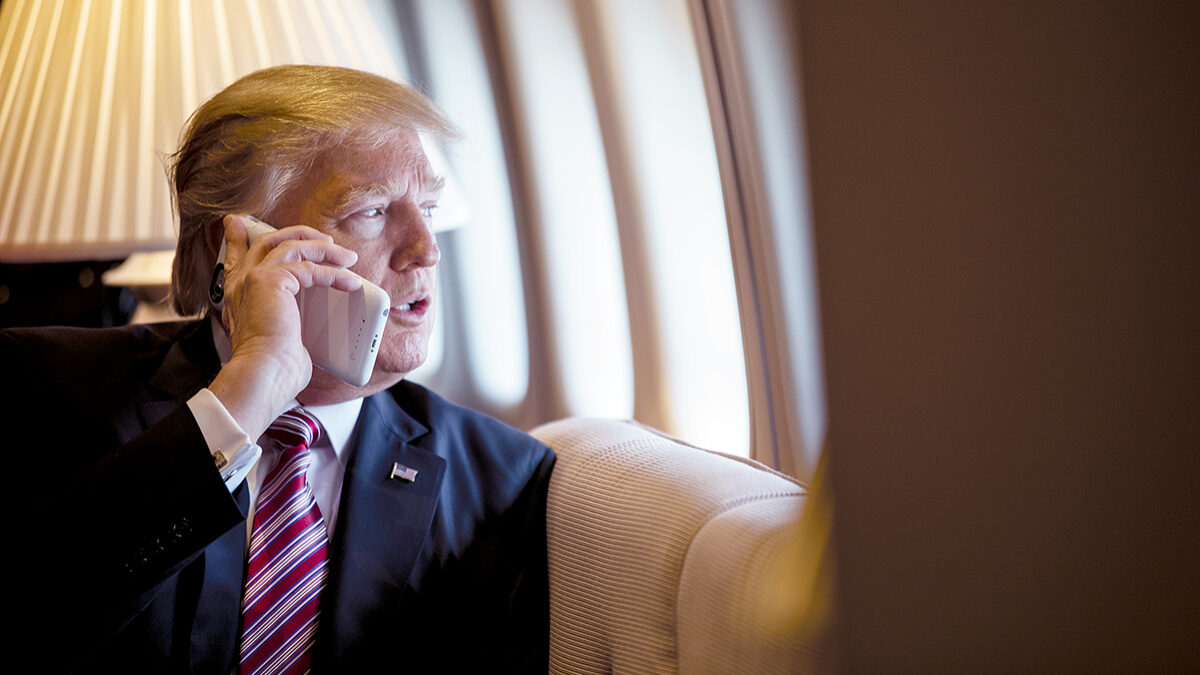
Trump talking on cell phone
Contrary to misleading headlines, none of the eight electors granted immunity in Fulton County’s anti-Trump war ‘said anything … incriminating to themselves or anyone else.’

Author Margot Cleveland profile

MARGOT CLEVELAND

VISIT ON TWITTER@PROFMJCLEVELAND

MORE ARTICLES

“At Least Eight Trump Electors Have Accepted Immunity in Georgia Investigation,” headlines uniformly blared on Friday. The legacy outlets echoing that narrative, however, buried the lead, which is that Fulton County’s get-Trump district attorney can’t even find incriminating evidence against the former president when she grants immunity to targets of her criminal investigation. A strong secondary story, also ignored or downplayed by the left-wing media, reveals multiple incidents of alleged misconduct by the D.A.’s office. 

The attorney representing eight Republicans targeted by the Fulton County D.A. filed a scathing response on Friday to the D.A. office’s motion to disqualify her from continued representation of her clients. Kimberly Debrow’s 28-page response detailed several previously unknown instances of questionable conduct by prosecutors targeting Donald Trump, his lawyers, and several high-profile Georgia Republicans. And contrary to the misleading headlines of the last several days, Debrow revealed that none of the eight individuals granted immunity “said anything in any of their interviews that was incriminating to themselves or anyone else.” 

How We Got Here

Debrow’s response began by providing an important backdrop to Fulton County D.A. Fani Willis’ motion to disqualify Debrow from the still-ongoing probe into supposed “coordinated attempts to unlawfully alter the outcome of the 2020 elections in this state.” Willis’ probe began in earnest in January of 2022, when she obtained permission from the chief judge of Fulton County to impanel a “special grand jury.” While the “special grand jury” lacked the authority to indict anyone, it had subpoena power and was also charged with issuing a report making “recommendations concerning criminal prosecution.” 

The special purpose grand jury issued its report earlier this year. Although much of the report remains under seal, in February a state court judge authorized the release of limited excerpts, including the grand jury’s conclusion “that perjury may have been committed by one or more witnesses testifying before it.” However, as I detailed when the story broke, that conclusion is meaningless without context, and the context makes clear that Willis misrepresented to the grand jury — and the American public — the substance of then-President Trump’s telephone call to Georgia Secretary of State Brad Raffensperger on Jan. 2, 2021.

Specifically, Willis falsely portrayed Trump as asking Raffensperger to “‘find 11,780 votes’ in the former President’s favor.” As the transcript of Trump’s conversation with Raffensperger established, however, the then-president did nothing of the sort. Instead, during the call, Trump’s lawyer explained to Raffensperger that “the court is not acting on our petition,” and sought an investigation into several categories of votes that appeared cast in violation of Georgia law.

While Willis branded Trump’s call to Raffensperger a “central focus” of her investigation, as Friday’s court filing reveals, the Fulton County D.A. also targeted Republicans named as “Trump electors” from the 2020 presidential election. Initially, the D.A.’s office told those electors, all 11 of whom were jointly represented by Debrow and fellow attorney Holly Pierson, they were “solely witnesses in the investigation.” Under those circumstances, they voluntarily agreed to be interviewed by Willis’ team. In late April 2022, Nathan Wade, a “private attorney” Willis hired to be special prosecutor, interviewed two electors and then canceled a third interview before unexpectedly subpoenaing the Republicans to testify before the grand jury.

A legal dispute between Wade and the defense attorneys ensued over the extent to which the Fifth Amendment’s right against self-incrimination protected the electors from being forced to respond to questions before the grand jury. Before the court had a chance to rule on the matter, however, Wade informed the court that the D.A.’s office intended to offer immunity to one or more of the electors. 

Immunity Talk

While not identifying which of the 11 electors the D.A. would offer immunity to, Wade represented that the D.A. was prepared to offer “full immunity from prosecution for any acts taken related to the December 14, 2020, meeting at the Georgia State Capitol to execute purported electoral college votes in favor of former President Donald J. Trump and former Vice President Michael R. Pence.” 

In response, Pierson and Debrow wrote to each of their clients, explained the existence and implications of the potential immunity offers, and noted whether a conflict of interest existed because the lawyers represented all 11 electors, but the D.A. would only be offering some of them immunity. The defense attorneys gave their clients a follow-up 13-page, single-spaced memo that comprehensively detailed the issues and then spoke with each client individually. All 11 electors opted to continue with joint representation and rejected the D.A.’s suggestion of immunity. 

At the time, the defense attorneys informed both the court and the D.A.’s office of their clients’ decision, noting first their fundamental distrust of “the motives and intentions of the DA and the investigative team in this case,” and “their perception that this investigation into their lawful conduct is not based on (or even interested in) the facts or the law but instead is politically motivated.” 

The defense counsel further noted their clients had “grave concerns” that if they testified truthfully “that neither they nor the other electors committed any illegal act or engaged in any sort of conspiracy with regard to the 2020 election the DA and your team would not accept that truth…” The electors thus feared prosecutors would “charge them with perjury or false statements to law enforcement officials or similar after their truthful, immunized testimony merely because the immunized witness is not in a position to tell the DA’s Office or the grand jury the story they want to hear.”

After the electors rejected the prosecutors’ overtures, the D.A.’s office responded by filing a motion to disqualify Pierson and Debrow, which would force the electors to hire new attorneys. In late November 2022, the court held that joint representation was permissible for 10 of the electors but that a conflict of interest required Chairman David Shafer to be separately represented. The electors and their attorneys then decided Pierson would represent Shafer and Debrow would represent the 10 remaining electors, and the court ruled such representation was permissible, over the D.A.’s objections.

Soon after, Debrow emailed the D.A.’s team to discuss a potential immunity deal, but it was not until April 4, 2023, that prosecutors responded. On April 7, 2023, Wade, the attorney Willis hired to be special prosecutor, provided draft immunity agreements for eight of the 10 electors. The two not offered immunity opted to obtain new legal representation, and Debrow’s remaining eight clients then accepted the revised immunity offers. Thereafter, seven of the eight electors sat for recorded interviews with Wade questioning them on behalf of the D.A.’s office and with Debrow representing them. The final elector was out of the country and thus has not yet been interviewed. 

Manipulation and Intimidation

During Wade’s questioning, Debrow claims he attempted to mislead and confuse her clients by suggesting the D.A.’s office had previously made an actual offer of immunity in late 2022, as opposed to merely floating the potential for an immunity deal. In one case, Debrow detailed how, when she attempted to clarify for her client Wade’s misleading questions, the prosecutor threatened to leave, rip up the immunity agreement, and indict the elector. 

The D.A.’s office then filed a second motion to disqualify Debrow, falsely representing to the court that “some of the electors represented by Ms. Debrow told members of the investigation team that no potential offer of immunity was ever brought to them in 2022.” The Fulton County D.A. knew that representation was false, Debrow stressed in her response, highlighting the evidence previously presented to both the court and prosecutors that detailed the extensive discussions Debrow had with her clients about the initial immunity outreach.

Willis also sought to force Debrow off the case by arguing some of her clients “stated that another elector represented by Ms. Debrow committed acts that are violations of Georgia law.” 

“This statement is categorically false, and provably so,” Debrow countered. Here, Debrow first detailed her extensive legal experience, including her service as an assistant district attorney in three Georgia counties, before stressing she was present for every interview and would have recognized any such incriminating testimony. “Nothing even similar to any such statements were made by any of the interviewed electors,” Debrow said, adding that the transcripts confirmed her representation.

Significantly, Debrow told the court that “none of the interviewed electors said anything in any of their interviews that was incriminating to themselves or anyone else,” meaning they also had not implicated Trump, his lawyers, or any of the other potential targets of Willis’ criminal investigation. That fact was lost on the reporters, however, who since Friday have focused instead on the mere fact that the eight electors had accepted immunity agreements — implying that meant they had dirt to dish.

Ignoring the Real Story

The corporate media were likewise content to ignore the allegations of serious misconduct. Those included Willis’ misrepresentation to the court about whether the electors’ attorney had informed them of the prior immunity discussion and Wade’s alleged attempt to mislead and intimidate one of the witnesses by threatening to indict him. 

Wade’s involvement here is particularly ironic given that a Fulton County judge held the special prosecution team could no longer investigate one of the electors, then-state Sen. Burt Jones, because Willis had hosted and headlined a fundraiser for Charlie Bailey — a Democrat seeking to challenge Jones in the general election for lieutenant governor. Wade, like Willis, had donated to Bailey’s campaign.

Noteworthy too is Wade’s work with Willis, as Wade was a private attorney whom Willis specifically hired to work on 2020 election investigation. Willis bringing on a pit bull to further her get-Trump efforts smells disgustingly similar to Manhattan D.A. Alvin Bragg’s use of outside “special assistant district attorneys,” including three from a high-powered, Democrat-connected law firm, to help find a way to indict Trump.

Also appalling is the attempt by Willis’ office to force Debrow off the case — a tactic sadly seen sometimes when a prosecutor proves unable to manipulate a witness into saying what the government wants. 

The trial court has yet to rule on the Fulton County D.A.’s motion to disqualify Debrow, and maybe there will be something more of concern that the prosecutor omitted from the motion. But the detailed excerpts included in Debrow’s response brief appear to doom Willis’ attempt to force the electors to hire new attorneys. And if, as Debrow’s represented, the electors said nothing “incriminating to themselves or anyone else,” much more of the Fulton County D.A.’s case is likely doomed too.


Margot Cleveland is The Federalist’s senior legal correspondent. She is also a contributor to National Review Online, the Washington Examiner, Aleteia, and Townhall.com, and has been published in the Wall Street Journal and USA Today. Cleveland is a lawyer and a graduate of the Notre Dame Law School, where she earned the Hoynes Prize—the law school’s highest honor. She later served for nearly 25 years as a permanent law clerk for a federal appellate judge on the Seventh Circuit Court of Appeals. Cleveland is a former full-time university faculty member and now teaches as an adjunct from time to time. As a stay-at-home homeschooling mom of a young son with cystic fibrosis, Cleveland frequently writes on cultural issues related to parenting and special-needs children. Cleveland is on Twitter at @ProfMJCleveland. The views expressed here are those of Cleveland in her private capacity.

Raffensperger’s Own Team Was Saying “Bad, Bad Things” Were Happening in Fulton County Elections — He Ignored Them and Attacked Trump Instead (VIDEO)


Reported By Jim Hoft | Published June 17, 2021

Read more at https://www.thegatewaypundit.com/2021/06/raffenspergers-team-saying-bad-bad-things-happening-fulton-county-elections-ignored-attacked-trump-instead-video/

Back in January Georgia Secretary of State Brad Raffensperger told “60 Minutes” the state of Georgia, “Had safe, secure, and honest elections.”

Of course, NOTHING could be further of the truth.

This was after a Gateway Pundit report exposed Georgia election officials repeateldy feeding hundreds and possibly thousands of ballots through the voting machines late at night in Atlanta, Georgia after the election observers were sent home.

Earlier this week a Fulton County Georgia election official admitted that the chain of custody documents that are legally required per state law are missing from 24% of the ballots from the 2020 election.  

Brad Raffensperger, the corrupt Secretary of State in Georgia is ultimately responsible.  For the first time an elections official admitted the chain of custody documents are missing in Georgia per the Georgia Star. Then today John Solomon and Just The News reported that an audit of documents found that more than 100 batches of absentee ballots are missing in Fulton County Georgia!

Later this morning John Solomon told the War Room that Brad Raffensperger’s own team was saying that “bad, bad things” were coming out of Fulton County.

Didn’t Brad Raffensperger continuously say it was a perfect election? Now we know for a fact that he knew there was all sorts of problems all along?

Jim Hoft

Jim Hoft is the founder and editor of The Gateway Pundit, one of the top conservative news outlets in America. Jim was awarded the Reed Irvine Accuracy in Media Award in 2013 and is the proud recipient of the Breitbart Award for Excellence in Online Journalism from the Americans for Prosperity Foundation in May 2016.

Tag Cloud