REPORTED BY: BETH WHITEHEAD | JULY 15, 2022
Read more at https://thefederalist.com/2022/07/15/heres-why-the-media-dont-want-you-to-know-about-the-massive-protests-going-on-around-the-globe/
Discontent with left-wing policy failures is triggering massive protests all over the world. Just don’t expect to read all about it in the New York Times.

BETH WHITEHEAD
MORE ARTICLES
If you skim the front pages of major corporate news outlets, you’ll find no mention of the economic protests raging in Spain, Morocco, Greece, and the United Kingdom.
On The Washington Post homepage these days, you’ll find headlines such as, “How To Deal With A Chatty Coworker Who Won’t Get Out Of Your Office,” but you won’t find mention of the more than 100,000 people protesting in Madrid. You’ll find the story of a gay union entitled, “What’s Two ‘Yentas’ Plus One Senator? A Lifetime Together” at The New York Times, but you won’t see a single heading on the more than 10,000 protesters in Athens. Corporate media has largely glossed over the tens of thousands of farmers in the Netherlands who clogged up roadways and distributions centers by holding Canadian-trucker-convoy-style demonstrations to protest radical climate policies.
According to the Carnegie Endowment for International Peace, which records protests worldwide, 11 countries are currently seeing protests of more than 1,000 people in response to the rising cost of living and other economic woes in 2022. As of July 5, Carnegie had recorded protests of more than 120,000 people in France, 100,000 in Spain, 10,000 in Greece, 10,000 in Kazakhstan, 10,000 in Sri Lanka, 10,000 in India, 5,000 in Iran, 5,000 in Peru, 1,000 people in Argentina, 1,000 in Morocco, and 1,000 in the U.K.
Many of the French protesters took to the streets on May Day for salary increases and against President Emmanuel Macron’s increase of the retirement age. Fifty-four people were reportedly arrested in Paris after some demonstrations turned violent. France’s economy, Europe’s third-largest, shrank in the first quarter of 2022, and in June, inflation shot up 5.8 percent compared to last year. Protesters also held demonstrations in March, with some complaining they had lost 15 to 20 percent of their purchasing power. Meanwhile, France’s answer to inflation? Keep spending; the country is throwing $20.4 billion at the problem.
In Spain, with gas subsidies, direct grants, and an increase in the minimum wage, the socialist-leaning government has seen only rising inflation rates (10.2 percent), and the accompanying price hikes are driving thousands of people onto the streets to protest. The country is finding out the hard way what a 40 percent reliance on renewable energy will do to the labor market. With its high unemployment rate at 13.65 percent as of the first quarter of 2022, labor shortages are raising prices on staple grocery items to an almost 30-year high. Thousands of demonstrators protested in March for relief in the form of tax cuts.
Meanwhile, it’s no surprise that any supply issues, aggravated or initiated by the Russia-Ukraine war, would burden Greece’s weakened economy that only just emerged from a decade-long crisis in 2018 to be sent right back by Covid shutdowns in 2020. In April, thousands gathered at a labor union-organized rally outside parliament in protest of inflation, which followed a February demonstration where about 10,000 people showed up to protest electricity prices that had leaped 56 percent, fuel prices that had jumped 21.6 percent, and natural gas prices that had skyrocketed 156 percent in January.
In India, a country locked in a vicious cycle of going into debt to pay off interest of former debts, the increasing cost of living is racking the country. In March, an estimated 50 million workers participated in a two-day strike to protest the loss of jobs and income, with communist groups organizing rallies in May decrying the high rate of inflation.
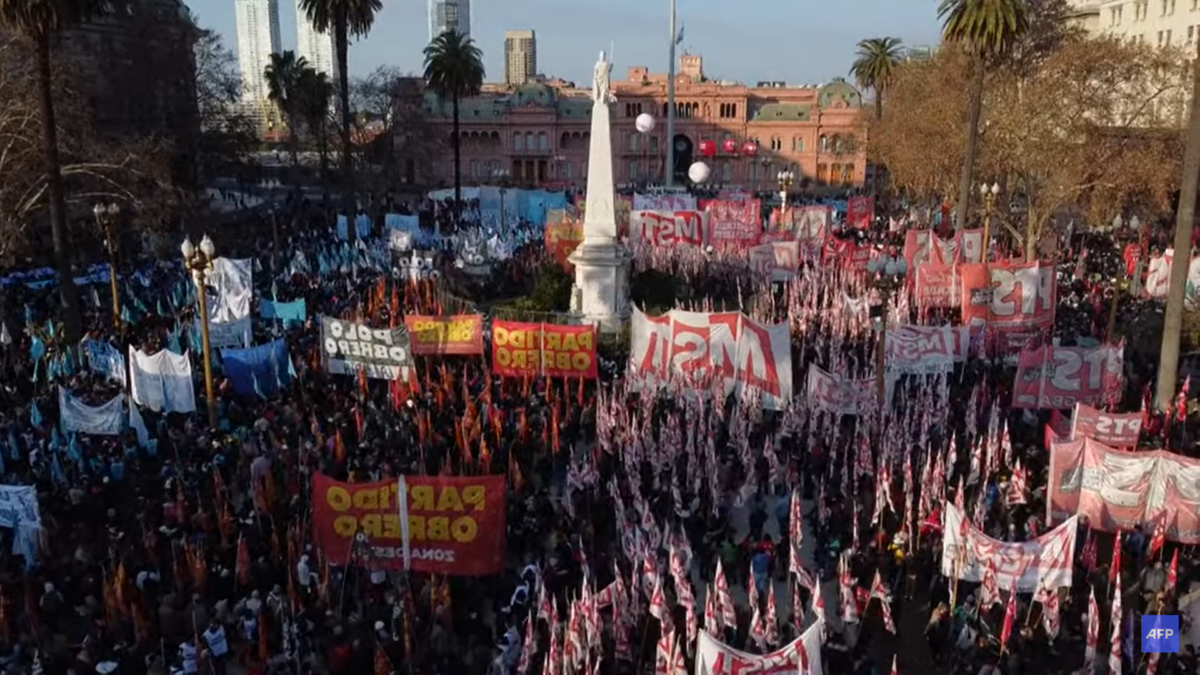
The socialist government in Argentina that led the country to default seven times and produced the largest decline in the relative standard of living in the world since 1900 is trying to do something new. On Monday, Argentina’s new economy minister Silvina Batakis announced her plan to cut the fiscal deficit — a proposal more than a thousand Argentines are protesting.
Decades of government spending and faulty economic policies have led to Argentina’s inflation rate growing to 58 percent. Prices are liquid and through the roof, with iPhones costing six months’ rent and a two-hour plane ticket equaling the cost of a month’s college tuition. Batakis plans to hold Argentina to the terms of a $44 billion debt deal it made earlier this year with the International Monetary Fund. Thousands of Argentines meanwhile flocked to protest against the economic hardships felt by the country upon cutting spending and took up banners crying for Argentina’s separation from the IMF.
The United Kingdom is suffering from a high 9.1 percent inflation rate as of May, and many are tired of the government’s response. Brits flocked out in February to protest rising costs of living, with demonstrations held in at least 25 towns and cities and signs reading, “tax the rich” and “freeze prices not the poor.” The U.K.’s inflation rate was already at 5.4 percent in January of this year due in part to the 2020 Covid shutdowns, but it has since almost doubled, largely due to the EU’s sanctions on Russian oil. In June, thousands marched down central London in protest, wanting the government to boost its welfare response.
Still reeling from the worst drought it has had in 40 years, Morocco is seeing price spikes on even the most basic goods. Thousands of Moroccans joined protests in February to decry the increasing cost of living, with unions staging more demonstrations in April. The country has high unemployment rates and large public debt, along with a heavy reliance on imports.
Aside from a scant headline here and there, America’s most popular news providers, The Washington Post, New York Times, CNN, and NBC, did not cover these protests, despite the French and Spanish protests being 10 to 100 times larger than the protests these corporate media giants did report.
None of these four major outlets wrote a single line on the protests of more than 100,000 demonstrators in Spain, more than 10,000 in Greece, more than 1,000 in Morocco, and more than 1,000 in the U.K. The New York Times published one lone article on the strike in India, where an estimated 50 million people walked off the job. The Washington Post has two small articles on the Argentinian protests of more than 1,000 as inflation appears set to hit 70 percent, and it has reported once on the May Day protests in France where more than 120,000 people protested government pension reforms. NBC mentioned the May Day protests once in a world report. This is the entire 2022 coverage by these media giants of these countries’ protests over economic turmoil.
Of these 11 countries, only four made any major headlines. The corporate press oftentimes only highlights these economic protests when they get so loud they can no longer be ignored, as we saw with Kazakhstan’s kill order to quell protests and the Sri Lankans’ attack on their president’s home. Over the weekend, the biased media finally began covering the Sri Lanka protests that are over 10,000 people strong — but only because footage of demonstrators swarming the president’s residence by the thousands on Saturday went viral.
Corporate media won’t talk about the rest of these protests because the countries are struggling from economically disastrous policies akin to President Joe Biden’s. Any show of economic turmoil in EU member states could be traced back to EU sanctions on Russia or green energy failures, which would fly in the face of the corporate media’s agenda. Many of these countries have inflationary monetary policies.
The leftist media will tell you about Sri Lanka, Kazakhstan, Iran, and Peru, however, but only to bolster its pro-Ukraine/anti-Russia narrative that denies the realities of war to promote Biden’s efforts to empty our pockets and replenish Ukraine’s.
In its treatment of the Kazakhstan protests, The Washington Post made sure to mention the country’s relationship with Russia. The Times’ articles on the Sri Lanka protests framed the economic downturns in terms of problems stemming from Russia’s invasion and ignored Sri Lanka’s Green Deal ban on chemical fertilizer that ultimately crashed its economy. Both CNN’s coverage of protests in Iran and NBC’s reports of those in Peru likewise stressed the Russia-Ukraine war as the cause for economic turmoil.
The media only highlight these world protests when they grow too big to ignore or when the facts can be skewed toward their preferring narratives. Cherry-picking which protests to highlight gives media cover to paint them as isolated incidents in non-Western countries instead of a worldwide trend showing the consequences of embracing left-wing policies. After all, Biden is making the same blunders in the United States, and corporate media can’t have Americans connecting those dots.
The U.S. labor market is in shambles. Inflation has skyrocketed to a 40-year high at 9.1 percent. The Biden administration is drawing down our emergency oil reserves, shipping it overseas to nations that can’t function on their “Green Energy” policies any more than we can. Irony alert: The oil will go through a European pipeline despite Biden citing climate conservation to shut down our own Keystone pipeline.
Discontent with these policy failures is triggering massive protests all over the world. Just don’t expect to read all about it in the New York Times.
Beth Whitehead is an intern at The Federalist and a journalism major at Patrick Henry College where she fondly excuses the excess amount of coffee she drinks as an occupational hazard.





 What Did You Say?
You must be logged in to post a comment.