Perspectives; Thoughts; Comments; Opinions; Discussions

Posts tagged ‘2024 PRESIDENTIAL PRIMARY’

Loophole In ‘Weak’ North Carolina Voter ID Law Lets Just About Anyone Cast A Ballot


BY: BRIANNA LYMAN | MARCH 12, 2024

Read more at https://thefederalist.com/2024/03/12/loophole-in-weak-north-carolina-voter-id-law-lets-just-about-anyone-cast-a-ballot/

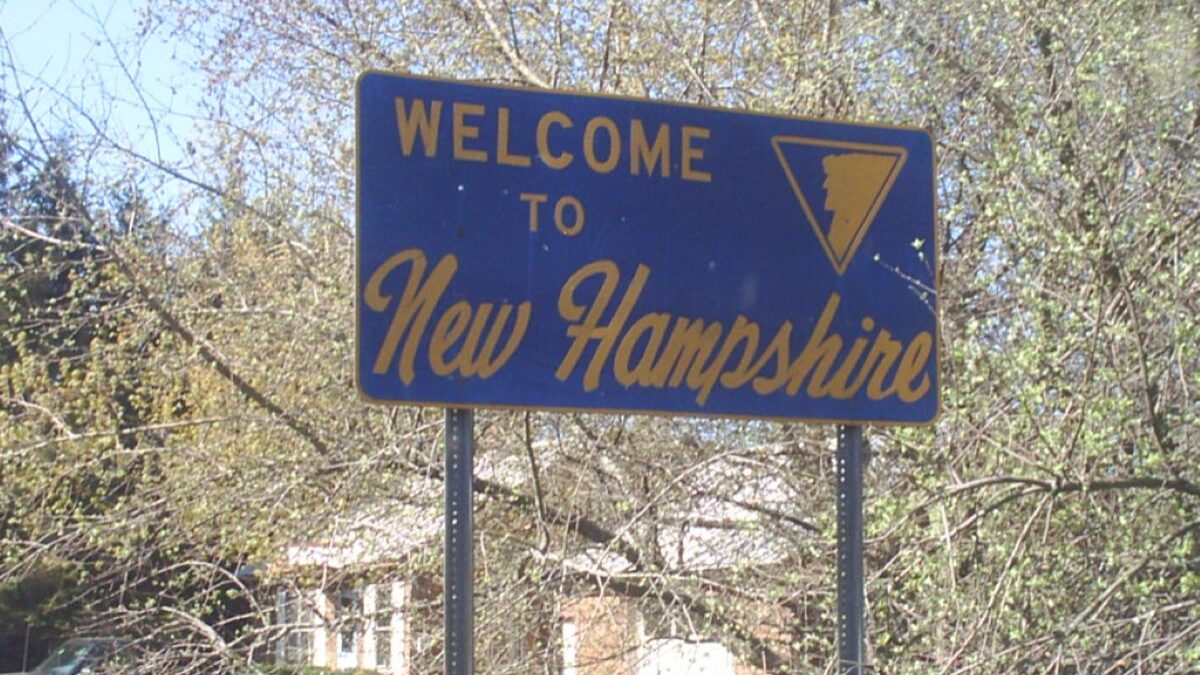
Sign in New Hampshire requiring photo ID

Author Brianna Lyman profile

BRIANNA LYMAN

VISIT ON TWITTER@BRIANNALYMAN2

MORE ARTICLES

North Carolinians who didn’t present a photo ID when voting during the presidential primary last week were still permitted to cast a ballot, thanks to exceptions that Soros-backed groups supported including in the state’s voter ID law.

On March 5, more than 1.7 million North Carolina voters were asked to show a photo ID to vote in the presidential primary, in the first major election since the law went into effect. Most of those voters appeared to successfully present an ID and cast a ballot. Still, according to preliminary counts, more than 1,000 voters cast what is known as a “provisional ballot” due to “ID not provided,” according to the state’s election board (NCSBE). Of those more than 1,000 voters, 546 later returned to show their IDs. But another 607 voters never showed a photo ID, instead simply signing a form claiming that a “reasonable impediment” prevented them from presenting an ID.

The Law Doesn’t Actually Compel Voters to Show Photo ID

The North Carolina general assembly initially passed a series of election-related laws in 2013. After facing legal challenges to the voter ID requirement, the state legislature presented a revised voter ID law in 2015 that included the “reasonable impediment” exception, but the U.S. Court of Appeals for the 4th Circuit nevertheless struck down the voter ID requirement in 2016. Republicans spent the next several years fighting in the courts to pass some type of voter ID laws while North Carolinians voted in 2018 to approve a state constitutional amendment establishing a photo ID requirement.

Most recently, the North Carolina Supreme Court — which had flipped from a Democrat-majority to a Republican-majority — overturned a past decision by the same court and thus permitted the photo ID requirement to go into effect.

The current version says that a voter who does not present a photo ID due to a “reasonable impediment” may still cast a provisional ballot so long as he provides “a current utility bill, bank statement, government check, paycheck, or other government document,” his voter registration card, or the last four digits of his Social Security number and birth date.

If a voter still fails to present any of those documents, the law says he can simply complete a declaration stating that he is who he says he is — aka the “honor system.” He must also designate on the form that a “reasonable impediment” — such as disability or illness, lack of transportation, lack of birth certificate or other documents needed to obtain a photo ID, work schedule, or family responsibilities — has prevented him from providing an ID. Other acceptable reasons include a voter having lost his ID or simply “not know[ing] photo ID was required for voting.”

The ID exception form is also accepted for mail-in voters who cannot include a copy of their photo ID with their ballots, according to voting instructions posted by the Mecklenburg County government.

‘Nobody Will Be Turned Away’

Thirty-six other states currently mandate some form of voter ID, but Republicans who have worked on election integrity efforts say North Carolina’s law is the “weakest” of them all.

“You can literally put any kind of excuse you want on the ‘Reasonable Impediment’ form and be given a ballot. It’s not hard at all to vote,” Chairman of the Lee County Republican Party James Womack told The Federalist.

“This ‘Reasonable Impediment’ thing is really a weakness in the law, it’s the weakest voter ID law in the country when you consider almost anyone can walk in and say ‘Oh, I lost my ID’ and cast a provisional ballot,” Womack continued. “They really didn’t make an attempt this year, in Senate Bill 747, to update anything that was in the case of ‘Reasonable Impediment.’”

Executive Director of Voter Integrity Project of North Carolina Jay DeLancy wrote in 2015 after an earlier, similar version of the law was passed that it was a “stunning betrayal” to all state residents who wanted to see “real voter ID” laws. DeLancy said at the time that, while he did not believe Republicans in the legislature purposely gutted the photo ID provisions, “their inexperience in election fraud analysis leads them to believe the new loophole ‘won’t be a big deal’ in our state.”

Provisional ballots can theoretically be rejected, but those cast based on a “reasonable impediment” to providing voter ID can only be rejected if a county elections board unanimously finds that the information a voter gives in the ID exception form is false. It’s unclear, however, how a county board would be able to discern whether a person’s claimed impediment to obtaining an ID is genuine. Besides, Womack noted these voters likely wouldn’t be rejected due to a fear that lawsuits would be lodged alleging voter suppression.

“What they did, this law, neuters the ability of the board to reject those ballots no matter how ridiculous the excuse is that the voter uses,” DeLancy told The Federalist. “It defies common sense.”

DeLancy told The Federalist he believes Republicans in the legislature thought they would be “clever” and include the “reasonable impediment” provision as a way to avoid having the voter ID law tossed.

Womack speculated that then-House Rules Chairman Rep. David Lewis included the last-minute “compromise language” to help the legislation pass. He noted Republicans had to work in bipartisan fashion since, at the time, they did not hold a supermajority in either state legislature and the Reasonable Impediment provision would alleviate concerns from the left that there would be an “undue burden on people who didn’t have photo ID.”

Womack said the provision likely didn’t get much attention since the legislation got stuck in the courts for years but argued that now that it has gone into effect “people are starting to expose its weaknesses.”

“There’s all kinds of excuses you can put on the form and you’ll still be granted the right to vote, nobody will be turned away,” he added.

DeLancy said the provision should be fixed ahead of November’s election “or else” it leaves the door open for potential abuse.

Soros-Linked Group Cheered ‘Reasonable Impediment’ Exception

When North Carolina’s 2013 law was challenged in court shortly after it was signed, the leftist groups behind the legal fight included the NAACP and the Advancement Project. The Advancement Project had received nearly $4 million between 1999 and 2012 from the Soros-funded Open Society Project. The Foundation to Promote Open Society contributed more than half a million to the Advancement Project between 2009 and 2012, according to Influence Watch. Later suits targeting the law were brought by other election-interference groups like the ACLU.

When Republicans proposed a revision adding the “reasonable impediment” exception to the law in 2015, the Soros-backed group Democracy North Carolina spent weeks “encouraging hundreds of citizens to attend and speak out” at hearings regarding the legislation and celebrated the inclusion of the “reasonable impediment” provision.


Brianna Lyman is an elections correspondent at The Federalist.

Why Trump Is Winning by Double Digits Heading into Iowa


BY: EMILY JASHINSKY | JANUARY 15, 2024

Read more at https://thefederalist.com/2024/01/15/why-trump-is-winning-by-double-digits-heading-into-iowa/

Rallygoers lined up to enter the Target Center arena for a Donald J. Trump for President rally in Minneapolis, Minnesota.

Author Emily Jashinsky profile

EMILY JASHINSKY

VISIT ON TWITTER@EMILYJASHINSKY

MORE ARTICLES

Nobody did it. Probably, at least.

It’s the morning of the Iowa caucus and, in the words of the Des Moines Register, “Donald Trump retains a commanding lead.” This comes according to the outlet’s latest poll, which shows Trump with a staggering 28-point advantage going into the “coldest caucus” in years.

This should chill the Beltway most of all. The Des Moines Register now puts Ron DeSantis in third place at 16 percent, down four points to Nikki Haley, a number just outside the margin of error. This is a shocking failure on the part of DeSantis, a successful populist who tapped an army of Beltway pundits to put nearly all the campaign’s eggs in the Iowa basket. But add DeSantis’ 16 points together with Haley’s 20, and Trump is still up by double digits. Consider also that many millions more ad dollars were spent touting DeSantis and Haley.

Republican voters just prefer Trump. In RealClearPolitics’ polling average, Trump is at 52.5 percent in Iowa and 61.4 percent nationally. He leads by double digits in New Hampshire. Sure, Haley and even DeSantis could over-perform the polls in Iowa, head into New Hampshire and South Carolina with momentum, over-perform there, and cruise into Super Tuesday on March 5 with an influx of cash and confidence.

The odds are low but not impossible. There’s a path if you squint. Yet it requires convincing an enormous swath of the Republican electorate — which has moved further and further into Trump’s corner over the last year — to suddenly pivot.

In 2016, Trump led Iowa by about five points in RCP’s final average. He lost by about three points to Ted Cruz. Trump was polling just under 30 percent. Nationally, he hovered around 35 percent. Well over half of the Republican primary electorate preferred a candidate other than Trump as the caucus kicked off.

DeSantis, according to RCP, was at one point about 13 points behind Trump. He’s now almost 40 points behind the former president nationally.

Democrats’ lawfare coincided with a rise in the polls for Trump. Counterintuitive as it may seem, the indictments were always going to make it difficult for another GOP candidate to poll more competitively. To her credit, Nikki Haley has been steadily eating away at DeSantis’ comfortable second-place position since the fall. (DeSantis led in New Hampshire until Haley started gaining on him in mid-September.) In Iowa, nearly half of Haley’s voters say they would vote for President Biden over Trump. She likely has a ceiling in most states that’ll make it tough to compete down the line.

Ultimately, if Iowa shakes out anywhere near the polling, it will mark the beginning of the end for DeSantis’ much-anticipated political experiment: Can Trump be defeated by a candidate with all the benefits and none of the baggage?

Perhaps the most frustrating takeaway from DeSantis’ slump is that we still don’t know the answer to that question because he allowed Beltway vest aficionados and their friends in the donor class to steer his career off course. When Trump finally attacked Vivek Ramaswamy two days before Iowa, the long-shot candidate’s response was a vision of what could have been for DeSantis.

“Yes, I saw President Trump’s Truth Social post,” Ramaswamy posted on X. “It’s an unfortunate move by his campaign advisors, I don’t think friendly fire is helpful. Donald Trump was the greatest President of the 21st century, and I’m not going to criticize him in response to this late attack.”

He added, “I’m worried for Trump. I’m worried for our country. I’ve stood up against the persecutions against Trump, and I’ve defended him at every step,” later concluding, “I want to save Trump & to save this country. Let’s do it together. You won’t hear any friendly fire from me.”

Back in September, The New York Times reported on a memo from an anti-Trump PAC helmed by Club for Growth President David McIntosh. The memo, McIntosh wrote, “shares findings from our attempts to identify an effective approach to lower President Trump’s support among Republican primary voters so we can maximize an alternative candidate’s ballot share when the field begins to consolidate.”

The takeaway from their research was perhaps the most important observation of the primary cycle, though should have been obvious from the moment every candidate entered the race.

“Broadly acceptable messages against President Trump with Republican primary voters that do not produce a meaningful backlash include sharing concerns about his ability to beat President Biden, expressions of Trump fatigue due to the distractions he creates and the polarization of the country, as well as his pattern of attacking conservative leaders for self-interested reasons,” McIntosh wrote. “It is essential to disarm the viewer at the opening of the ad by establishing that the person being interviewed on camera is a Republican who previously supported President Trump, otherwise, the viewer will automatically put their guard up, assuming the messenger is just another Trump-hater whose opinion should be summarily dismissed.”

Whatever you think of Ramaswamy (he previewed a potential Iowa surprise in an interview with The Federalist here), his response to Trump captured the lesson of that memo almost effortlessly. He’s been doing it for months.

On DeSantis, a popular and successful governor with a healthy war chest, that approach to Trump would almost certainly have improved his odds. It’s why Florida voters loved him. Politically, at least, running against Trump didn’t need to mean attacking him. The governor’s approach didn’t need to change. (I say this as someone endlessly sympathetic to the merits of DeSantis’ arguments on this particular question.)

The McIntosh memo should have been understood by DeSantis’ campaign before it ever launched. Republican voters who see Democrats relentlessly trying to put Trump in prison don’t trust GOP politicians who proactively attack him, often echoing the same critiques made by the same people who pushed the Russia-collusion hoax.

It looks like DeSantis will lose Iowa and New Hampshire. As of now, at least, it looks like Nikki Haley will too. Easily. If that’s the case, it’s remarkable how much money and effort was invested in campaigns that got the biggest question wrong from the beginning, especially the one campaign that should have known better.


Emily Jashinsky is culture editor at The Federalist and host of Federalist Radio Hour. She previously covered politics as a commentary writer for the Washington Examiner. Prior to joining the Examiner, Emily was the spokeswoman for Young America’s Foundation. She’s interviewed leading politicians and entertainers and appeared regularly as a guest on major television news programs, including “Fox News Sunday,” “Media Buzz,” and “The McLaughlin Group.” Her work has been featured in the Wall Street Journal, the New York Post, Real Clear Politics, and more. Emily also serves as director of the National Journalism Center, co-host of the weekly news show “Counter Points: Friday” and a visiting fellow at Independent Women’s Forum. Originally from Wisconsin, she is a graduate of George Washington University.

The DNC Is Engaged In ‘Unlawful Voter Suppression’ Ahead Of Primaries, New Hampshire AG Says


BY: SHAWN FLEETWOOD | JANUARY 10, 2024

Read more at https://thefederalist.com/2024/01/10/the-dnc-is-engaged-in-unlawful-voter-suppression-ahead-of-primaries-new-hampshire-ag-says/

'Welcome to New Hampshire' sign.

The office of New Hampshire Attorney General John Formella issued a cease-and-desist order to the Democratic National Committee (DNC) on Monday after the committee purportedly violated the state’s voter suppression laws.

On Jan. 5, the co-chairs of the DNC’s Rules and Bylaws Committee submitted a letter to the New Hampshire Democratic Party (NHDP) demanding the state party comply with DNC guidance to “take steps to educate the public that January 23rd” — the date set for the jurisdiction’s Democrat presidential primary — “is a non-binding presidential preference event and is meaningless and the NHDP and presidential candidates should take all steps possible not to participate.”

The memo came nearly a year after the DNC passed a new early presidential primary calendar for 2024. The updated calendar, supported by President Biden, sought to make South Carolina the first state on the Democrat presidential primary schedule. While Iowa and New Hampshire, respectively, have historically marked the first electoral contests in the presidential primary process for both major political parties, the DNC’s decision to schedule South Carolina first was, as NBC News described, due to Iowa’s caucuses being viewed as “too white and too undemocratic.”

Someone needs to press the DNC for some definitions, like their definition of “democracy.” They through around the term so much, and the context of what they’re saying does not match the 200 plus years definition of democracy. And while you’re at it, what in the world does, “too white and too undemocratic” mean?

Despite state law mandating New Hampshire host a presidential primary “7 days or more immediately preceding the date on which any other state shall hold a similar election,” the DNC told the NHDP that the Jan. 23 primary scheduled by the New Hampshire secretary of state “cannot be used as the first determining stage of the state’s delegate selection process and is considered detrimental.” The guidance further informed the state party that no “delegates or alternates shall be apportioned” and no “scheduling of events related to the selection of delegates or alternates in New Hampshire may be” based on the Jan. 23 election.

HUH????????

In his cease-and-desist order to the DNC, Assistant Attorney General Brendan O’Donnell underscored how “[f]alsely telling New Hampshire voters that a New Hampshire election is ‘meaningless’ violates New Hampshire voter suppression laws,” and further ordered the organization to stop engaging in such “unlawful” conduct.

“Regardless of whether the DNC refuses to award delegates to the party’s national convention based on the results of the January 23, 2024, New Hampshire [D]emocratic Presidential Primary Election, that election is not ‘meaningless.’ Your statements to the contrary are false, deceptive, and misleading,” O’Donnell wrote. “Telling the public or any person qualified to register to vote or vote in New Hampshire that the [aforementioned election] is ‘meaningless,’ or soliciting NHDP or any other party to make such statements, constitutes an attempt to prevent or deter another person from voting or registering to vote based on fraudulent, deceptive, misleading, or spurious grounds or information.”

O’Donnell further warned the DNC that he reserved the right to pursue further legal action.

It’s worth mentioning that the DNC’s decision to hold South Carolina’s primary before the party’s Iowa caucus and New Hampshire primary is designed to benefit Biden. During the 2020 Democrat presidential primary cycle, the Delaware Democrat lost both Iowa and New Hampshire, finishing fourth and fifth, respectively. It was his dominating victory in South Carolina’s primary that put Biden on track to become Democrats’ 2020 presidential nominee.


Shawn Fleetwood is a staff writer for The Federalist and a graduate of the University of Mary Washington. He previously served as a state content writer for Convention of States Action and his work has been featured in numerous outlets, including RealClearPolitics, RealClearHealth, and Conservative Review. Follow him on Twitter @ShawnFleetwood

Author Shawn Fleetwood profile

SHAWN FLEETWOOD

VISIT ON TWITTER@SHAWNFLEETWOOD

MORE ARTICLES

Tag Cloud